
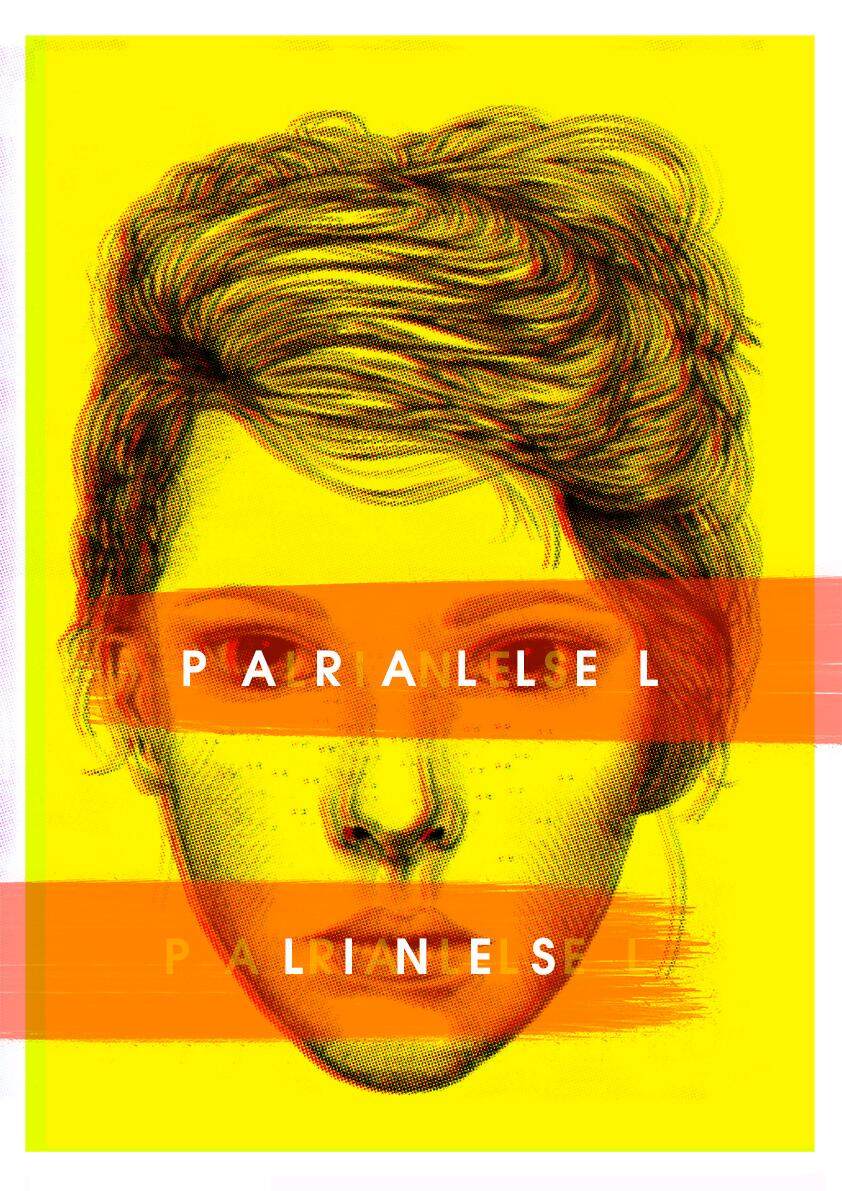
Dirty Protest have got their filthy (but ever-so-skilful) hands on Katherine Chandler’s fearlessly written and deeply felt play, Parallel Lines, which won the inaugural Wales Drama Award last year. And, as is the case whenever Dirty Protest put on something, it’s brimming with ferocious intensity and unflinching controversy. Directed with daring nerve by Catherine Paskell, this is a play with a wicked sting in its tail.
The narrative follows the parallel lives of fifteen year-old, Steph (played exceptionally with sexually-charged audacity by Rachel Redford) and her teacher, Simon (Gareth Pierce; equally superb). The divide is established through Signe Beckmann’s split stage – on the left (subtly political, perchance?), Steph and her mother’s grubby kitchen, worktop contaminated by empty mugs and unwashed dishes; and on the right, the spotless, chic-er kitchen belonging to Simon and his wife, Julia (a suitably overwrought Lisa Diveney) who are two middle class teachers too preoccupied with their jobs to consider each other’s infidelities. Steph and Simon’s lives collide when an accusation is made but everything is kept delectably ambiguous, at least until the earth-shattering conclusion.
Chandler writes with unabashed obscenity during the tumultuous rows between Steph and her mother, whose tragicomic nuances are embodied by the brilliant Jan Anderson. During monologues, however, the writing style becomes somewhat poetic; for example, in describing Steph’s deepest emotions, Chandler applies beautiful expression that retains adolescent uncertainty as well as something quite lyrical and emotional. It has an air of experience about it.
This is yet another triumph for Dirty Protest. It is comforting to be in the knowledge that theatre so courageous and yet so authentic is being made right now. Here is a theatre company whose consistence trumps any I know of working in Britain today, and Parallel Lines is another gleaming badge for their already glittering lapel.
All posts by Sam Pryce
Review Eat, Pray, Laugh: Barry Humphries’ Farewell Tour – Wales Millennium Centre, Cardiff, Young Critic SamPryce

After 58 star-studded years as Australia’s foremost character comedian, Barry Humphries, now 79, is bidding his ‘possums’ farewell, hanging up the lilac wig and cat-eye glasses – as well as the outlandish costumes of his other characters – with this glittering extravaganza. Humphries shows no sign whatsoever of age as he dons different personas within the space of a scene change. His stage presence remains as commanding as ever and he has no trouble in squeezing plenty chuckling from his audience. However, whilst his performance had few faults, some of his material has perhaps yellowed over time.
The majority of the first half comprises a humorously unhygienic cookery show from the embodiment of political incorrectness that is the nose-picking, crotch-scratching, spit-slinging Sir Les Patterson. Some devoted fans foolishly chose front row seats and despaired when they were soaked by Sir Les’ soaring saliva. The comic material from Sir Les Patterson is as vulgar as ever – e.g. a bulging prosthetic penis that’s frequently rubbed against his glamorous assistants, regular racial slurs (i.e. calling his Chinese assistant a ‘slant’ and a ‘slopey’), farting profusely, etc. It seems as though his ‘blue’ side had slightly dated comedic connotations, but then it’s forgivable since the character is meant to be that crude. That’s the beauty of being a character comedian – one can hate the character but not the comedian, since that’s what the comedian wanted in the first place.
A brief visit is made by Les’ brother, Gerard Patterson (a new character), a predatory, paedophilic priest whose jokes mainly consist of euphemisms towards the young male assistant of his. The audience are then slightly baffled by a sketch from Sandy Stone, a rather obscure Humphries character from the late 50s (I think). With Sandy Stone, Humphries delivers an Alan Bennett-esque soliloquy from an elderly deceased man that’s meant to showcase Humphries emotional side but unfortunately, the monologue is so ill-fitting with the rest of the show that it loses its poignancy leaving the audience desperately looking for laughs. Bad move there, Barry.
He redeems himself though – and massively so – with his monstrously funny creation who needs no introduction. Arriving in sequined ballgown on a huge glittering elephant, Dame Edna Everage (whoops, there’s her introduction) is a character that we’re all going to miss dearly. Her familiar audacity and ferocity is all the more endearing and she’s especially vicious when she targets audience members. The portrayal of Dame Edna does not even feel like one; she seems to be her own person. Humphries’ virtuosic ability to transform into her is totally unfathomable which proves that she is completely timeless and will survive as one of comedy’s most iconic creations.
So, a flawless farewell this isn’t. But a fond one, it is. Humphries returns onstage at the finale in tuxedo and trilby and gives his final bow in classic showbiz style, confirming his identity as ultimately, a hugely talented showman. A standing ovation is compulsory.
Review: Tonypandemonium by Rachel Trezise ” Scenes explode in-yer-face, up-yer-nose, down-yer-trousers, behind-yer-back, on-yer-lap” Park and Dare Theatre, Treorchy, Young Critic Sam Pryce
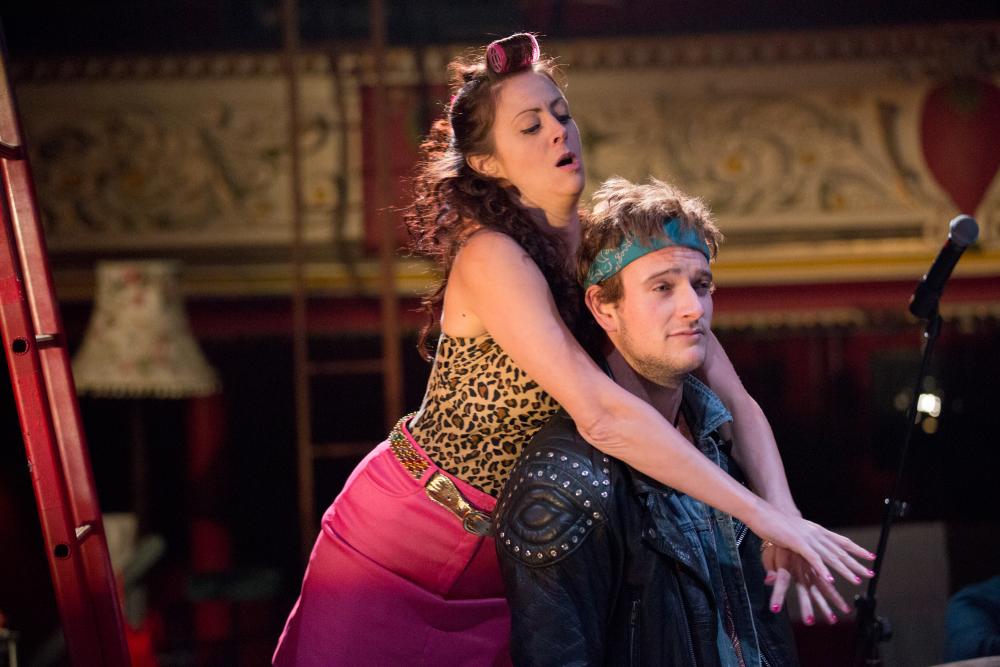
National Theatre Wales have taken refuge in the ornate auditorium of the Park & Dare Theatre and have brought a season of dazzling, groundbreaking productions and showcases of new Welsh writing to the presumably bewildered residents of Treorchy (no offence to any Treorch-ites). And guess who’s written a play especially for the occasion? Rachel Trezise – a startlingly original (and Welsh) writer, winner of the EDS Dylan Thomas Prize and all-round DNA lottery winner, who is Welsh. Here, she has brought us Tonypandemonium – a scintillating tour-de-force displaying the turbulent but ultimately love-driven relationships between mother and daughter. To everyone who saw the title and smiled, this play is for you. And if you didn’t smirk at the title, well, go and see it anyway.
Our protagonist Danielle, clad in punk attire and armed with a tattoo needle, paints the skins of locals in her tattoo parlour with her own, wryly autobiographical artwork. However, when Danielle is told of her alcoholic mother’s diagnosis with cirrhosis of the liver, she is plunged back into her past and is forced to recall her entire tumultuous relationship with her. The audience are the recipients of this Proust-esque recollection, subjected to a succession of progressively vicious mother-daughter showdowns culminating in their mutual realisation of the attention and affection they desire from each other. Peppered amongst these ritual rows are a thread of past lovers that Deborah – the stumbling, vodka-swigging, Shirley Bassey-belting mother – had charmed. The finished product is a virtuosic display of Trezise’s versatility in writing, switching deftly from riotous moments of Welsh smut to raw scenes of drama, as well as a hugely exhilarating theatrical experience.
Staged in (or just about) the round, the audience never know where to look next, which is all the more exciting. Scenes explode in-yer-face, up-yer-nose, down-yer-trousers, behind-yer-back, on-yer-lap; it feels as though we’re inside this girl’s head. We are the spectators of Danielle’s jumbled, discordant memories. The set is an amalgamation of ladders, armchairs, microwaves and hospital beds that embodies the unstable psychological conditions of the characters’ mindsets and their experiences. Crying out for each other’s attention, the characters grab a microphone and deliver a clip comeback, riling the others to chat back in a manner that sounds shockingly similar to an ordinary Welsh family home.
The cast are just as phenomenal as the play. Tamara Brabon, Molly Elson and Sarah Williams maintain the feistiness inherent to Danielle as they span through the decades, strutting irreverently across the stage demanding our attention. Adam Redmore has the shoulders shaking with laughter as Deborah’s lover Tommy Sexton, giving progressively phony anecdotes of his encounters with rock stars. The real star, though, is Siwan Morris’ Olivier-worthy portrayal of the promiscuous, brittle, intoxicated mother, Deborah. Siwan Morris is an utter sensation and does the material the justice it deserves, and then some.
Get yourselves up and over the Bwlch to see Tonypandemonium. It’s a total riot.
Review: One Flew Over the Cuckoo’s Nest “two hours of ruthlessly engaging electroconvulsive entertainment” Young Critic Sam Pryce
Review: One Flew Over the Cuckoo’s Nest – Chapter Arts Centre, Cardiff
Reviewed by Sam Pryce
Under the innovative directorial eye of Nerys Rees, this throttling production of Ken Kesey’s novel of the same name is much more unsettling than usual. With the addition of a surging mechanical soundtrack and disquieting lighting, the well-worn narrative has been successfully revived proving its timeless significance and its powerfully disturbing premise.
The oppressed and browbeaten patients of a psychiatric ward are given a newfound confidence when McMurphy saunters onto the scene. Believing he can get away with feigning insanity to escape the isolation of a prison cell, McMurphy realises his error when his insolence is challenged by everyone’s favourite literary battleaxe, Nurse Ratched. Determined to start a revolution against Nurse Ratched’s crippling regime, a rebellion is stirred amongst the previously docile patients in what promises to be a fascinating, explosive exploration of madness and the notion of sacrifice. In this production, director Nerys Rees toys with the idea of McMurphy being a saviour to the inmates, seeing as his irreverence helps to eliminate their inhibitions. When McMurphy eventually receives electroconvulsive therapy, he is splayed across a crucifix emphasising the concept that McMurphy sacrifices himself for the lives of the patients.
Whilst the entire company gave intelligent and disconcertingly believable performances, there were a few that deserve extra praise. Andreas Constantinou boasts all the audacious bravado required for a loveable McMurphy, coupling razor-sharp wit with a genuine desire to help his unhinged acquaintances. Darren Freebury-Jones injects visceral emotion and a sensitive rawness into his performance as Chief Bromden, Dale Matthews’ Billy Bibbit is adorable as ever and Scott Patrick causes copious cackling as Martini. And who could fault Delyth Mai-Coleman’s ruthlessly sadistic and brazenly sexualised Nurse Ratched? With pre-show improv in the foyer thrown in, the audience is able to get up-close-and-personal with insanity with the patients are let loose to wander, pester and interact with the evening’s spectators, creating a discomforting air even before the audience have taken their seats
As worn-out a tale as Cuckoo’s Nest may be, this production breaks the barriers and subjects its audience to two hours of ruthlessly engaging electroconvulsive entertainment. This is theatre that stops the audience coughing.
Dandelion Review “The writing, the lighting, the acting, the set – it’s, quite frankly, flawless” by Young Critic Sam Pryce
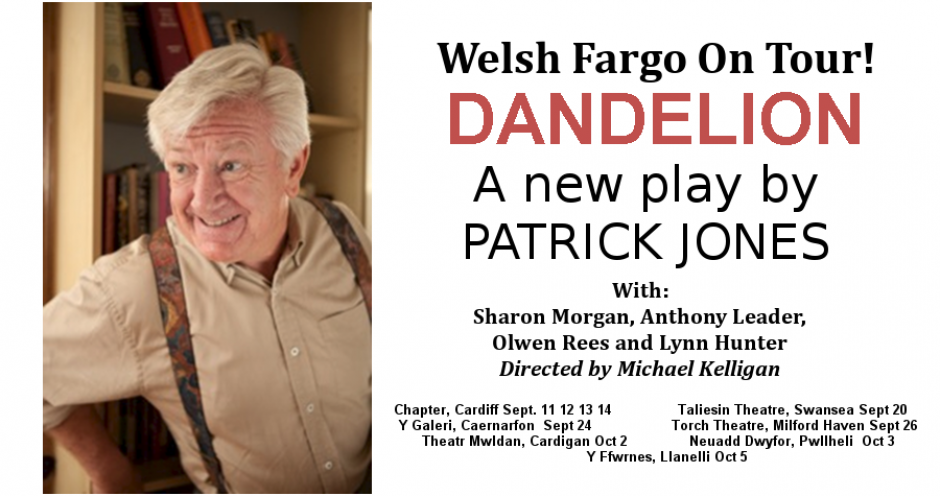
This was the first play to make me cry. Not because it was so awful, of course; but because its story, characters and premise would bring tears to even the most cynical of eyes. In fact, the work of Patrick Jones has always been intensely emotional. His poetry is especially controversial and visceral, tackling subjects as taboo as male sufferers of domestic violence. Even the most fearless of playwrights, Harold Pinter, called his work “very strong stuff.” In November 2008, bookselling giant Waterstones cancelled an appearance from Jones at one of their stores after a pious religious group protested outside due to alleged blasphemy.
However, in Dandelion, Jones considers a gentler yet equally anguished subject – old age. Four characters – three women and one man – recount their lives through a crescendo of remember-whens slumped in armchairs awaiting imminent death. Written from actual encounters when Jones served as writer-in-residence at a hospice, this makes the stories in Dandelion all the more distressing. Death has now become a comfort to these dwindling flames; something to look forward to as the days drag on. They are the dandelions withering away in a garden already blossoming new life. It’s a truly heartbreaking premise, made even more so by the intermittent poetic monologues, showcasing Patrick Jones’ scintillating talent for poignant lyricism. Alongside the grief are some outright hilarious scenes played with as much adroitness and dexterity as the more sombre moments.
The acting is simply exceptional. Anthony Leader plays Ernest with the vitality and energy of a young boy, determined to show that his age isn’t getting him down. Sharon Morgan’s deeply moving portrayal of Rachel puts on a brave face despite the inner turmoil brought on by her tragic past. Olwen Rees wrenches the heart strings as Mary, playing her with wide-eyed innocence, and Lynn Hunter gets the audience cackling with her sour, acerbic comments.
The writing, the lighting, the acting, the set – it’s, quite frankly, flawless. It is rare that a play produces as much tears from laughter as it does from grief. As hackneyed a phrase as this may be: this play will make you live a better life. It’s a drama of universal empathy that beats any amount of dreary soap operas. Get off your settee and bag yourself a ticket before you end up like them.
Dandelion is at Taliesin Arts Centre, Swansea on September 20; Y Galeri, Caernarfon on September 24; Torch Theatre, Milford Haven on September 26; Theatr Mwldan, Cardigan on October 2; Neuadd Dwyfor, Pwllheli on October 3 and Y Ffwrnes, Llanelli on October 5.
Review: WNO’s Paul Bunyan – Wales Millennium Centre Young Critic Sam Pryce

Bearded adolescents in plaid shirts, sopranos disguised in mascot-esque cat costumes and a pre-recorded, omnipresent, convincingly American Stephen Fry are what to expect of the Welsh National Youth Opera’s production of Benjamin Britten’s Paul Bunyan, currently at the Wales Millennium Centre. The sprightly, young cast of what seemed like eighty-odd certainly injected some youthful joie de vivre into this operetta – if I can call it that – yet the dated humour and disjointed plot left the audience slightly bemused.
Britten and Auden collaborated on Paul Bunyan when they relocated to America in the 1940s due to their mutual pacifistic views. Inspired by the consumer capitalism that swamped America during this time, they went on to write this satirical, sardonic take on the American Dream using the eponymous folkloric character – a giant lumberjack called Paul Bunyan. Auden (of Four Weddings and a Funeral fame) targets plenty of minorities in his charmingly witty libretto – namely, the Swedish, whom he depicts as dithering idiots with names like Andy Anderson and Hel Helson. It’s odd that he didn’t compose their lines as simply, ‘hurdy-gurdy-purdy’. Come to think of it, this mirrors another nonchalantly racist comment in another of Britten’s operas: Billy Budd. In Billy Budd, one of the ship’s staff proclaims that he doesn’t like the French ‘with their hoppity-skippity ways’. So… That was a bit naughty, wasn’t it, Benjamin?
What Paul Bunyan lacks in plot and sense is made up for with the exceptional talent of the company. Elgan Llyr Thomas makes an impeccable Jonny Inkslinger; the independent wannabe novelist who arrives at Paul Bunyan’s logging camp in search of food. Ross Scanlon and Vanessa Bowers are clear rising talents vocally and the quintet of mentally-deficient Swedes is suitably amusing. The entire ensemble’s enthusiasm is worthy of admiration and Only Boys Aloud’s soaring voices pack some oomph into a previously oomph-less operetta.
Director Martin Constantine has tried his utmost to update the relevance of Paul Bunyan with the addition of a young boy watching the entire show on television in his bedroom. He is essentially being sold the American Dream through advertising and this political undertone the operetta now holds is especially profound today. A notable moment in the production is when Paul announces he is to leave and the entire company enters in what looks like army uniforms, making a thought-provoking statement on the effects of mass consumerism on our minds.
Structurally, it’s messy. Sudden arguments are littered hither and thither and a romantic interest is established without even so much as a solo aria proclaiming it. This is more the fault of Auden and Britten than anything else. When the operetta first opened, it was subjected to a tourbillion of vitriolic reviews. The music isn’t at all moving nor is it memorable which, I admit, isn’t peculiar for Britten (ooh, what am I like?!). However, if one were to look at it as a piece of intermittently humorous light entertainment with a modest political message at its heart, Paul Bunyan is worth seeing for the promising talent of our up-and-coming opera stars.
Paul Bunyan will be at the Wales Millenium Centre on 23rd and 24th August.