
Babulus

Tower of Babel, says a friend next to me.
Communication, that’s what it’s about, she says, all the different ways of communicating.
I’m not sure about the bear, I find the bear creepy. Oh, she says, I like the bear.
Did you like the dance as a whole? Oh yes, mesmerising. I like going to things with you, I see things I wouldn’t otherwise see.
I see things I wouldn’t otherwise see. This is one of them for me too.
I was facilitating art classes last week with older people in hospitals and care homes and one of them, Brian, was unable to speak or hear. Don’t worry, the nurse said, he will make you understand him. And he did. Brian painted flowers, big colourful flowers. We chatted with our hands, our faces and our paint. We did not need to use our voices. It was a dance between two people.
Babulus is a dance between five people, one of whom is a bear now and again. A bizarre, fluffy, comedic yet sentient and sympathetic character to foil the darker elements of tied hands and closed mouths. I still found it creepy. The clown in the classroom, the slapstick to the poignant. I realise that this is just me – everyone else loved the softer element, the balance, the reference to a childhood toy. I still have my Bear, he sleeps with me still and he is my most valuable possession so I do get it, I get the thinking, I just don’t like it until I watch her loose a dancer’s bonds, quietly, softly.
But the dance itself? Oh it is superb. The dancers come together, push apart, come together, push apart using movement, chatter, language, sticky tape, song and light. They are beautifully choreographed, they are beautifully lit. It is mesmerising. There are two themes I particularly like: the holding of hands over each other’s mouths; and the bunching together babbling in their mother tongues. I like that they emerge from behind us, that they make eye contact with us, that they threaten us and engage with us. They laugh with us too.
It is the dance between two people, one with his hand over her mouth with her twisting away to speak, that I will remember most – they roll into and over each other in a balletic, deceptive, controlling, power struggle. I wish I could see this again and again. It called to me.
It is also one of the best after show discussions I have ever attended. The performers, dancers, are as engaging vocally as they have been throughout their piece. Clever, open, responsive to their audience, they are indeed communicating at all levels. Not babbling at all, really.
Event: Bablulus
Seen: 1930, 17th February, 2017
Reviewer: Helen Joy for 3rd Act Critics
Running: Friday 17 February – Saturday 18 February
Cost : Tickets: £12/£10; Age 11+
Running time: approx. 50mins
Links: http://www.chapter.org/babulus
Production: Gwyn Emberton and ilDance collaboration
Music: Oscar Collin
Lighting and design: Joe Fletcher
Direction: Sara Lloyd
Babulus was created and toured with the support of Arts Council Wales, Gothenburg International Theatre and Dance Festival, The Work Room, Wales Arts International, Göteborg Stad, Västra Götalandsregionen, NDCWales, Ballet Cymru, Balettakademien Stockholm, Konstnärsnämnden, and Arts Promotion Centre Finland.
All posts by Helen Joy
Review: Love’s Poisoned Chalice season – Madam Butterfly & Le Vin Herbe
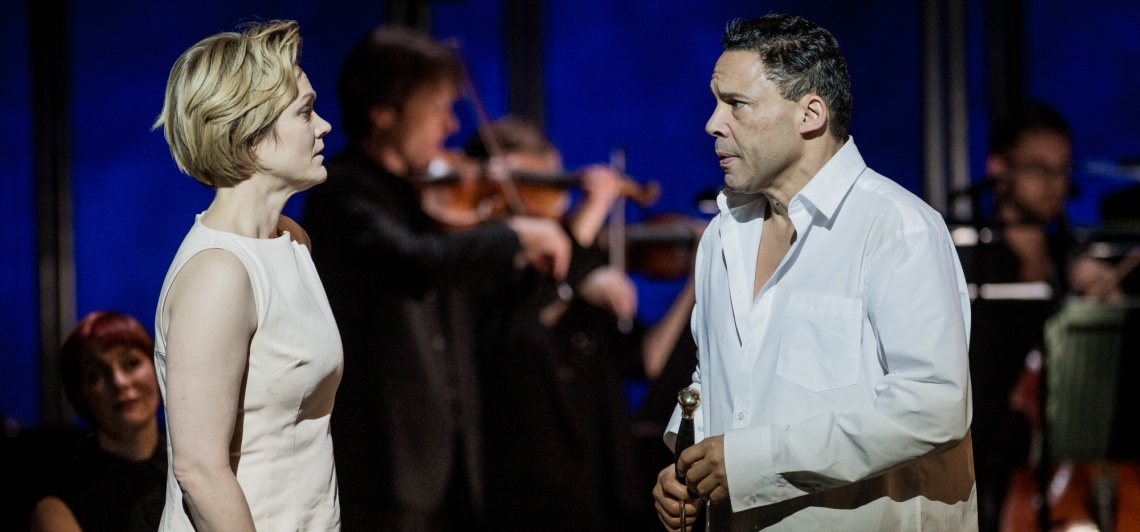
Madam Butterfly & Le Vin Herbe
Love’s Poisoned Chalice
Welsh National Opera at Wales Millenium Centre
Madam Butterfly
Sweet little Butterfly is but 15. A child. A beautiful, lost child to us.
Pinkerton is to our eyes horribly unattractive, horrible in deed, fact and person. I don’t want him anywhere near her.
But, she is in love and he is in lust.
He is the archetypal American soldier – overpaid, oversexed and over here. He has the tacit and overt support of his colleagues. He blinds Butterfly’s friends and family with his pomp and wealth.
It is an arranged marriage. Butterfly enters into it with enthusiasm and a love for Pinkerton which is not reciprocated.
He, of course, leaves her. She brings up their child with the help of her servant, Suzuki, over the 3 years of his absence in hope and penury. Pinkerton returns with his American wife and they assume the boy as their own. Butterfly kills herself. She has loved too much.
Not a new story in any sense. It is utterly predictable and pitiful. And honest.
I have seen this production before but I have not heard or seen such an utterly perfect Butterfly before. She is a little light burning into the sepia staging. She sings with her soul on fire.
Le Vin Herbe 
The story of Tristan and Iseult the fair. Accidental lovers brought together by circumstance and potions. Their love is inconvenient and uncontrollable. Their exile and their isolation disrupted by a secret visit from the king, Iseult’s husband to be, who leaves his sword to show his lenience. The lovers overthink his intentions and return to their respective lives at court.
Tristan marries Iseult of the white hands who takes her revenge on his love for the ‘other woman’ when he is dying. Iseult returns to die over his dead body. The brambles entwine their bodies for eternity.
An outstanding production. Skeletal, dark, passionate, ironic. Show-stealing leads against an outstanding chorus. This is a well-known story well told and chest-beatingly hot.
A few thoughts:
Now, both of these operas are about love and life and fate and death. They both imply you can love too much. They both sing to us of the nasty twisty business of chance and tell us that passion will end badly. They both show us women who give up their hearts to their men, to their lords and masters.
Butterfly sees a way to a happy, comfortable, settled life with her soldier and gives up her faith, family and friends to do so. Iseult gives up a husband, crown, wealth and status to follow her knight into the woods to live in a poor shed full of flowers.
Pinkerton makes no sacrifices; he is not in love. Butterfly, Tristan and Iseult are all in thrall to love and make the ultimate sacrifice. Pinkerton is rewarded for his disinterest.
Messing with fate is clearly a bad idea but the music it invokes is not. These are two visually and vocally disparate operas with similar stories to tell. They are well chosen, well cast and masterly.
Madam Butterfly’s Un Bel Di Vedremo is Puccini at his best; Le Vin Herbe is opera at its best.
Event: Madam Butterfly, Puccini
Seen: Feb 10, 2017
Website: https://www.wno.org.uk/event/madam-butterfly-0
Running: Friday, February 10, 2017 – Saturday, April 29, 2017
Conductor Lawrence Foster (until 4 Mar). Andrew Greenwood (from 24 Mar)
Director Joachim Herz
Revival Director Sarah Crisp
Designer Reinhart Zimmermann
Costume Designer Eleonore Kleiber
Chorus Master Stephen Harris
Lieutenant Benjamin Franklin Pinkerton Jonathan Burton
Goro marriage broker Simon Crosby Buttle
Suzuki a servant Rebecca Afonwy-Jones
Sharpless the American consul David Kempster
Cio-Cio-San (Madam Butterfly) Karah Son
A Welsh National Opera production, sung in Italian
……………………..
Event: Le Vin Herbe, Frank Martin
Seen: Feb 17, 2017
Running: Thursday, February 16, 2017 – Tuesday, April 25, 2017
Conductor James Southall
Director Polly Graham
Designer April Dalton
Lighting Designer Tim Mitchell
Storytellers Full Company
Iseult’s mother Catherine Wyn-Rogers
Iseult the Fair Caitlin Hulcup
Brangien, companion Rosie Hay
Mark King of Cornwall Howard Kirk
Tristan his nephew Tom Randle
Duke Hoël a nobleman Stephen Wells
Kaherdin his son Gareth Dafydd Morris
Iseult of the White Hands Sian Meinir
Solo narrators Anitra Blaxhall, Rosie Hay, Sarah Pope, Joe Roche, Howard Kirk, Stephen Wells, Catherine Wyn-Rogers
A Welsh National Opera production, sung in English
Gala Night, National Dance Company Wales
How lovely to dress up for a night out! Even lovelier to be asked to attend something as special as this: a Christmas Fundraising Gala for the National Dance Company Wales!
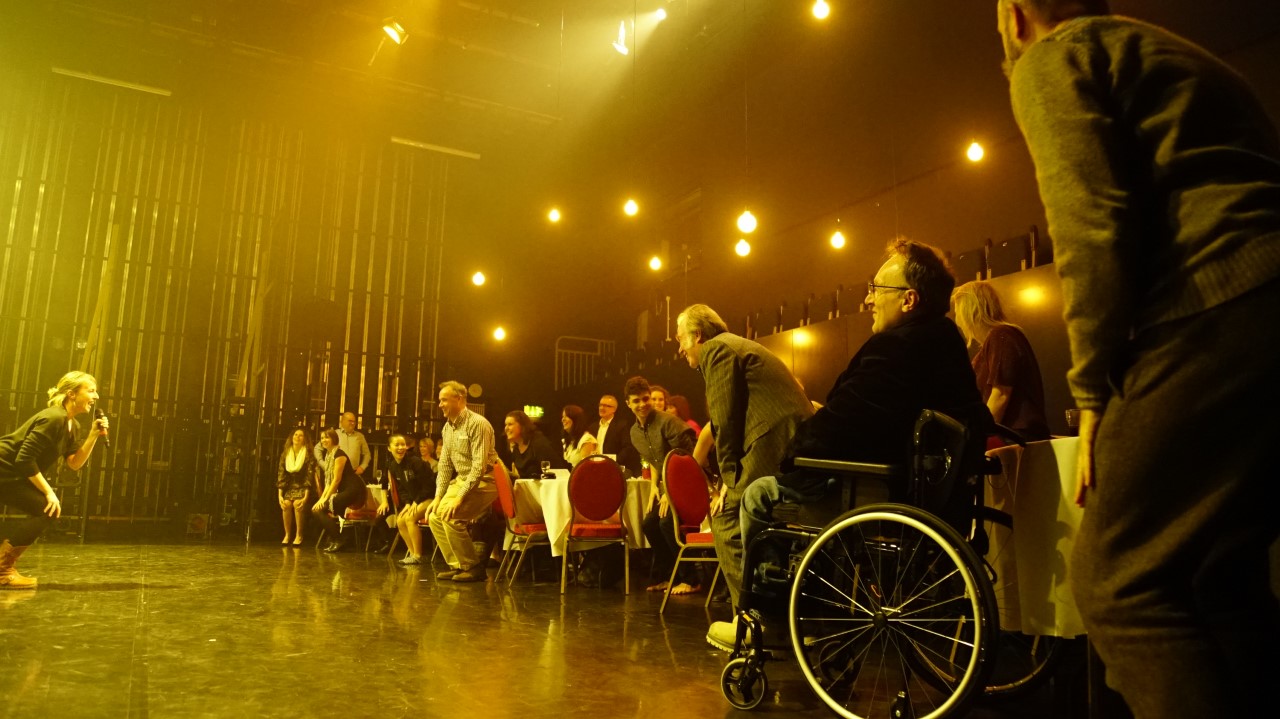
Guided into the dark, starry-lit heart of the school, its stage, we are invited to mingle before sitting at beautifully festive tables to watch the show. We are at the front of the stage, level with our hosts and muddled up with dancers, board members, sponsors, families and friends. It is delightful. It is the entirely predictable warm welcome from this Company which we all value so highly.
Now, this is a night with a purpose. A showcase of dancing wares to one end – to raise awareness and support for the dancers, their Company, their outreach work and their hopes and aspirations for themselves and others.
And so it begins.
Marc (Rees) compered the evening in tremendous style and humour. Caroline (Finn) and Paul (Kaynes) are practised and fluent with the passion for their business they so want us to share. They say,
We have a responsibility to take dance across Wales, so as many people as possible can experience what it is to dance.
They choose tonight to share with us –
The invisible work that we do, the beautiful and valuable work that we do.
They want to sustain and develop this work, react to people’s needs, make a difference and look after their dancers, keep them well for the hard work they do – and we get it.
We are shown videos, evidence of NDCW dancers working with children, adults, people living with Parkinsons –
I know it’s cheesy but dancing makes me happy.
Is there a finer accolade? One line tells us all we need to know. What these remarkable, dedicated people do benefits young and old alike. Speaking of young, we are now given a performance – This is a Really Difficult Interview, created by Karol Cysewski and performed by the NDCWales Associates.
It is 13 minutes of difficult and complex dance performed perfectly by a large group, aged between 14 and 19. It is not hard to see that nurturing the future talent in dance is worthy for many reasons but what is surprising, is that they demonstrate their professionalism and ability so comfortably.
I hadn’t expected anything so wonderful. I don’t know what to say. It’s so emotional
– says someone next to me, clearly struggling with her responses.
It’s very competitive, says another, it’s very hard to get in, you know. Not enough boys, it’s harder for the girls. They are good, aren’t they?
Now, to make a difference, you can’t just tell people about things, you have to make them experience them too. And blow me, Lee (Johnson) has us all on our feet… some braver than others and on the stage while the rest of us toe tap around our chairs! What a hoot!
How clear it becomes that in dance there is activity, laughter, companionship and effort. A simple coordinated routine and we all feel on top of the world – and we all sit back down, renewed and ready to listen.
We are also here to learn about new projects. Andrew (Miller) and Marc (Rees) tell us about R17 and P.A.R.A.D.E. :
An immersive and radical reimagining of Ballets Russes’s 1917 Parade,
And it is to be a participative and flamboyant dance event through the streets of Cardiff to the stage of the Wales Millennium Centre to the glorious cacophony of Satie’s music. There will be Dr. Who, there will be Revolution at the Senedd, there will be oranges thrown.
This is a major collaboration between NDCW, WNO, WMC and the RCMD which marks the centenary of the Russian Revolution. Tickets are on sale now at https://www.wmc.org.uk/Productions/2017-2018/DonaldGordonTheatre/Parade/
Lastly, before the Christmas carousing closes the evening, we are treated to Animatorium. Ok, so I am biased. I saw this in rehearsal and on the pavement outside. I feel the inner thrill of recognition and anticipation. I am excited to see this again. I do not expect the reactions around me:
Ooh, I’ve gone all goose-pimply, says one, rubbing her arms and wiping an eye.
Cheesy, goose-pimply – this work is incredible; the work these dancers and their team do is incredible. Do not take my word for it – please go and see them, learn to dance with them, help them continue what they do best –and let them develop their influence, making people happy.
They do all this through public funding, supporters, sponsors and ticket sales; but you can help too:
In the New Year, NDCW will be launching LIFT, a new supporter scheme. Information will be available at http://www.ndcwales.co.uk/en/about/support-us/our-current-supporters/ where other means of donating are available as well.
In the meantime, please get yourself a ticket. You won’t regret it.
Caroline Finn – Artistic Director
Paul Kaynes – Chief Executive
Lee Johnston – Rehearsal Director
Andrew Miller – Executive producer of R17
Marc Rees – Director and Curator of Contemporary Performance and Installation
Reviewed, Saturday, 2nd December, 2016
Kiss Me Kate, WNO
I am a woman who is rarely lost for words. I have no idea where to begin on this one.
So, let’s go with my first thoughts:
I witnessed an opera audience splutter and stutter into laughter and whoops of delight as a show became progressively funnier and livelier and more and more colourful.
My dear, this isn’t opera… it’s, um, a musical.
Shock horror! The Welsh National Opera does musical all right. It’s borderline panto.
It is singing, talking, dancing, ballet, tap – it is Baltimore, it is Shakespeare, it is Cole Porter.
We rush from dusty backstage to technicolour onstage with a rapacious love for the piece which infects everyone in the building.
There is even a stuffed mule.
Not funny, dear.
Oh it is. It is carry me out of here laughingly funny! It is a showcase for this multi- talented cast and how much they seem to enjoy their moments in the spotlight. Revelling in the bawdiness, the burlesque and the slapstick.
Asses seem to have quite a prominent role, one way and another.
It reminds me at times of The Good Old Days, vaudeville at its finest, people laughing at themselves in the story, in the audience. I fancy we should all be wearing doublets and bodices. A round of the Old Bull and Bush at the end wouldn’t go amiss, such is the atmosphere.
Well, I wasn’t expecting that!
Kate sings the songs of the wild and sexy and shrewish, Petruchio was an operatic twinkly eyed pirate, the gunmen do one of the best duets since Michael Ball and Les Dennis in Hairspray; and Bianca and Lucentio are utterly joyous in both song and dance.
It is obscenely good entertainment.
We come out to Christmas trees and misty cold, buzzing with that warm fuzzy feeling you get from a performance well done.
But this is Cardiff, a city, like many others, with a dark underbelly. There, under the lit arches of the Wales Millennium Centre, is a man completing a broadsheet crossword. I give him the change I find in the bottom of my bag – it is a paltry amount but it is the only cash I have. I apologise for my meanness. He smiles and calls me back.
Look at this, pretty lady.
My friend and I turn back and he shows us a magic trick with a 20p coin and wishes us a Merry Christmas.
Event: Kiss Me Kate
Seen: 06 Dec, 2016
Reviewer: Helen Joy for 3rd Act Critics
Running: 06 Dec – 10 December 2016
Cost : Tickets: £7 – £43
Running time: Approximately 2 hour 50 minutes with one interval
Links: https://www.wmc.org.uk/Productions/2016-2017/DonaldGordonTheatre/KissMeKateDec16/
5 stars – spectacular
A Welsh National Opera production, sung in English
Conductor James Holmes
Director Jo Davies
Set & Costume Designer Colin Richmond
Lighting Designer Ben Cracknell
Choreographer Will Tuckett
Fred Graham / Petruchio Quirijn de Lang
Lilli Vanessi / Katherine Jeni Bern
1st Gunman Joseph Shovelton
2nd Gunman John Savourin
Music and Lyrics Cole Porter
Book Bella and Samuel Spewack
Critical Edition David Charles Abell and Seann Alderking.
BAFTAS the Welsh way, a personal response by Helen Joy
I leave St David’s Hall, feet hurting & makeup failing, holding a paper napkin full of warm quiche and Welsh rarebit. Outside, sitting cross-legged on the floor with his back against a wall is a homeless man with a lap full of BAFTA chocolates, still in their fancy boxes. Would you like something savoury? Ooh, yes please. Here, enjoy.
What is it about us that believes there is a difference between the ordinary folk and the extraordinary, the stars, the celebs? Do we judge what makes us special by our material wealth, our social standing, our academic success, the number of people who recognise us? I am as happy as the next post-80s socialite to be in her glad rags and jewels for a night but I am concerned that with all that money and status and happiness abounding tonight, that homeless person has a lap full of freebie chocolate. Maybe someone will write him a cheque.
Other people will talk about the glitz and the nominees and the winners and the glitterballs of a spectacular night. I want to talk about ordinary people, the social aspects of an awards event and the curious exclusivity of the Welsh Language.
To start again, I am standing in the press pen wishing I had a mallow ice-cream cornet to wave at people like a mike, asking for an interview. I am strangely confused by the lack of enthusiasm of journalists to actually talk to the guests. One old hack prefers to cover news events, another happily interviews in Welsh, armed with his iphone on record. Two reviewers behind me barely talk to each other. Others think that we four from Get the Chance are better turned out than the stars.
Which brings me to another reflection on society today (sic), what happened to Black Tie occasions meaning black tie? This is not about class, this is about respecting the invitation from the organisers, sponsors, guests, nominees and attendees; as well as the public so patiently waiting along the barricades. This is the BAFTA’s after all – a visual feast. The men generally are smart but very few bow ties and a nasty selection of daps on show. So few women sweep the red carpet in elegant attire that the ones I spot, I approach at the party later and tell them how lovely they looked, how professional. Each one crumbles in gratitude and enjoys the compliment. So few walk with confidence, I hesitate to use the word deportment but high heels and tight dresses usually benefit from a fine carriage.. why are all these extraordinary women so lacking in assurance? Perhaps it is their ordinariness revealed.
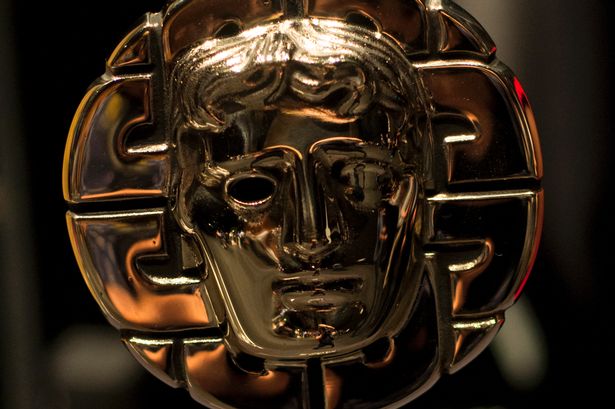
Everyone is friendly. Perhaps it helps that no one is 100% sure who everyone else is; there is no differentiation between attendees – we are all mucking in together in the audience, in the party, in the bars, taking selfies with the BAFTA masks. This makes for a remarkably easy atmosphere and a great buzz. We are all extraordinary; both inside and outside the building.
But is this exclusive? I am disappointed by the Welshness of it all. I know, it’s the Welsh BAFTA’s, BAFTA Cymru; but this is designed to celebrate the wonderful dramatic work in Wales and share it, not create a club based on linguistics. I was born in Wales, I have some Welsh language and I was educated here in Cardiff. Am I alone in thinking that this thing is not for the likes of me? There are not many people lining those barricades along The Hayes, the lack of press, the scuttling into the Hall, the dressing-down, the determination to celebrate smallness over scale. It feels just a little bit poor, the content just a little bit too fashionable. A fab party but not a BAFTAs, a magnificent glorification of TV and Film, helping to get those important messages out there – it’s OK to have fun, it’s right to tell your story, it’s good to want to change the world.
It feels just a little bit ordinary, whatever that is. We should have more pride and shout it out. It is time for another wafer, monsieur; and I think most of us ordinary folk would also prefer something savoury, something more substantial.
Caveat
Every evening in Cardiff I see more and more homeless people; last night, when leaving the WMC on a cold, foggy night, sitting in a corner against the main building was a man completing a broad sheet newspaper. We interrupted him to give him what cash we had about us – a paltry handful of change as it turned out – but he would not take it without giving us something in return. He gave us a magic trick. We enjoyed a chat and a laugh together and went on our way. I wished I had some warm quiche for him too.
Review NDCW Autumn Tour ‘Folk’ by Helen Joy
 (4 / 5)
Profundis, They Seek to find the Happiness they Seem, Folk
Profundis
In whispered tones of reverence, I am told: it is, oooh, wonderful, you’re in for a treat…
A woman in purple stands hugging herself in dance. She is singular, beautiful.
The spot light shifts to a gloriously sexy scene, a woman in white revelling in her spot-lit body writhes on the stage. She is right in front of me, I can see into her eyes. I am mesmerised. Carted away by men in black, the performance erupts into a fantasy of colour, dance, commentary, music and comedy. It is at once surreal, curious and charming. Sinister. Younger audiences find this funnier; we are awkward, we laugh in the wrong places. The dancers say that they find their voices in dance not in language but have enjoyed this challenge, being free to be themselves, to speak, to interpret freely within the confines of the psalm. De Profundis.
It is the creation of genius. It has the feel of a masterpiece. It is an abstract painting come to life. It is Kandinsky dancing. Of all the images, I am left with the man in red knuckling his way across the floor, man as ape as movement to music. A treat, indeed.
The Seek to Find the Happiness They Seem
Dance partners in black and navy and they trip through the dark, faces lit like portraits looming out of Rembrandt. Oh, this is exquisite. They are so lovely to watch. Perfectly in unison, Fred and Ginger ducking and diving and dancing in front of us, I can feel the warm swoosh of air across my face as they sweep past.
To Richter, they fail, their sense of loss and confusion is complete.
Folk
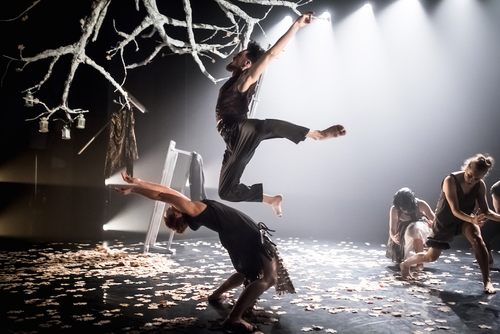
Bosch. It is a Bosch in all its painted madness cavorting in front of us. It is a crazy world. It rises from the soil of Autumn leaves into this crepuscular land. It is a topsy turvy place, a slight inversion, sensitive to struggling personality, to groupings, pairings and isolation.
Something warm and heavy, muted and visceral, carefully cadaverous, so beautiful from a distance but gently sinister close up. It is a convoluting palette of earth. It is breathtaking.
To see these dancers up close and personal, the bandages on their toes, the straps around their knees, the sweat on their faces, each muscle flexing, is to see perfection. To hear their feet feel the ground, to see expression in every tiny movement, is to see beauty.
I want to pull this piece into the night air, I want to let them free to scatter real leaves, dancing under real trees.
I want to press Stop: I want to fix them like statues and examine every moment. I cannot watch it all and I have missed so much but oh, I have taken something magical, ethereal, wonderful away with me.
http://www.ndcwales.co.uk/en
Enjoyed: 14th November, 2016 at NDCW, Cardiff
Profundis
Choreography: Roy Assaf
Music and Sound: Uoon I, Alva Noto (Vrioon Electronic)
Enta Omri, Umm Kulthum (Original 1964 Live Recording)
Lighting Design: Omer Sheizaf
Costume Design: Angharad Matthews
Costume: Deryn Tudor
Angharad Griffiths
They Seek to Find the Happiness They Seem
Choreographer: Lee Johnston
Music: Max Richter
Lighting: Joe Fletcher
Costume: Zepur Agopyan
Dancers: Matteo Marfoglia, Elena Thomas
Folk
Choreographer: Caroline Finn
Visual Artist: Joe Fletcher
Music: Assorted (see website below)
Lighting: Joe Fletcher
Costume: Gabriella Slade
Dancers: Josef Perou, Camille Giraudeau, Matteo Marfoglia, Mathieu Geffre, Angela Boix Duran, Elena Thomas, David Pallant, Josie Sinnadurai, Ed Myhill
http://www.ndcwales.co.uk/en/what-s-on/autumn-tour-folk/
Review Snout Sherman Theatre by Helen Joy
 (3 / 5)
This is a tricky one. The write up says that this is a play which examines ethical farm practices and may put you off your pie. This is not quite what we get. It is not ‘Fun’ but it is ‘Food, Drink and Drama’. Or did I miss something?
I take three friends with me –we are all women, all farmers and two of us keep pigs. We discuss the play we have seen and the pie we have eaten a lot. In fact, we talk about it over chips later on Penarth Pier and again in the week. It has made us think. But perhaps not in the way Playwright Kelly Jones would like us to.
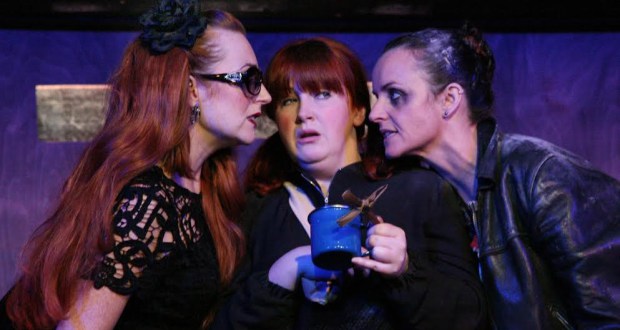
Cast members Sally Reid, Michele Gallagher and Clare Cage
Photographic credit Kirsten McTernan
It is a play about 3 little pigs, 3 women acting as pigs and as women. They are in a trailer heading for the slaughter house. Their actions and conversations are an odd mixture of supposed pig talk and young women chatter. They grunt occasionally. One is a cross carrying faithful type who misses her sister, one is a punky type who misses her lover and the other is a party going good time girl. A bit stereotypical. They work out that they are not going to a show but to the abattoir and so forth.
Now here’s a problem. Facts. Anyone who knows anything about pigs, knows that they don’t carry hairbrushes or wear crosses. They also don’t get electric shocks for bad behaviour when they squeal in a trailer. They might wander into a shed to watch a farmer, er, enjoy himself but we are pretty sure that we don’t know anyone who finds pigs that attractive.
When they talk about life, death and the lack of control over their lives, something resonates with me. Do they contemplate the meaning of life? Do we, as owners, play God?
Pigs are fun to be around precisely because they are calculating, funny and usually, miles ahead of their keepers. But we keep them also because they can be eaten. The speech at the end, before they trot out to their doom, is tediously predictable and aimed at converting the audience to vegetarianism, I think. My colleagues are not impressed and feel that this last scene spoils an otherwise interesting and thought-provoking play.
Then we have the after-show discussion. Lots of people have stayed behind for this and we are keen to debate the ideas raised in the performance.
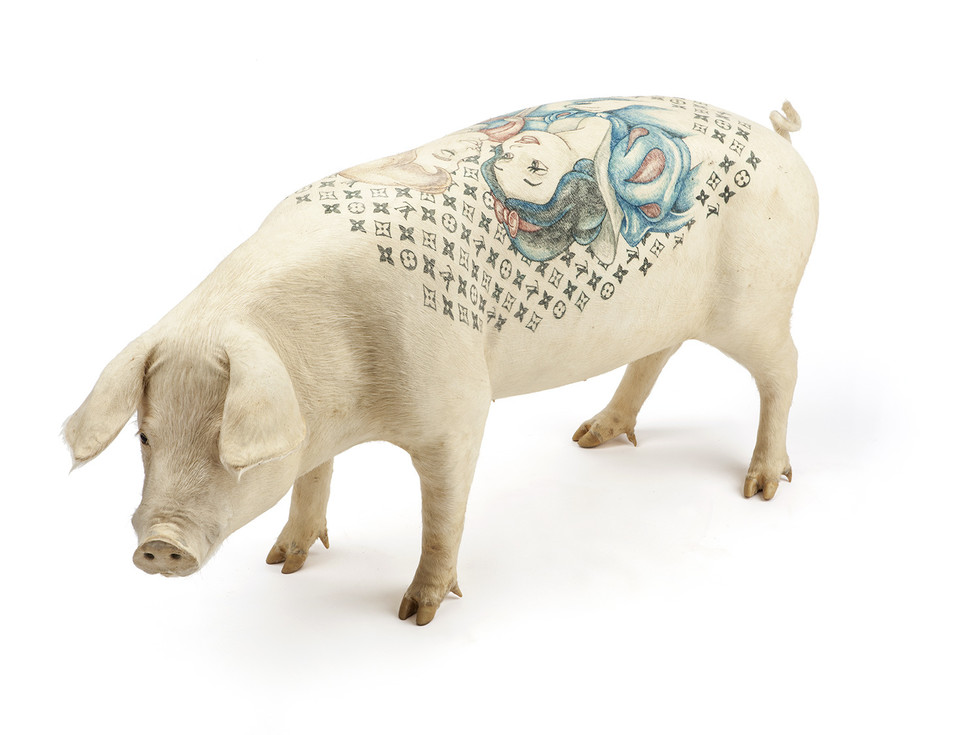
But there is a surprise. Jones take an unexpected stance. She tells us about tattooed pigs and cruelty. She then explains that the play is actually about feminism; she uses the pigs to slaughter as metaphor for seeing women as meat, as bodies to be cut up into pieces, as porn, as without control. Oh. I see now. This makes sense of scenes previously lost to me.
We discuss life and end of life, self-determinism, women’s rights, farming practices and eating meat. The audience is enthusiastic and picks up a particular thread with zeal: why have a play about killing animals and then give us a meat pie? Where does that meat come from, asks another. But it’s about women, not pigs, really.
We get it.
It makes even more sense when Jones explains to me that she had taken a 1hr40min play and made it into a 40min production. Sometimes, we need to rewrite not just slash and edit or we lose the meaning of a piece. The playwright cannot attend every production to explain. The metaphor is clever, her idea is sound and with tweaking, would make an outstanding work.
I looked up the use of tattooed pigs for handbags – can’t be true, we said, but it was: art as an excuse for profit. Deeply shocking. I can see where she is coming from and Jones definitely is on to something here.
Enjoyed: 10th November, 2016 at The Sherman Theatre, Cardiff
Playwright: Kelly Jones
Director: Kenny Miller
Actors:
Coco Clare Cage
Lacey Michele Gallagher
Viv Sally Reid
http://www.shermantheatre.co.uk/performance/theatre/a-play-a-pie-and-a-pint-november-16/
Review Romeo a Juliet, Ballet Cymru by Helen Joy
(4 / 5)
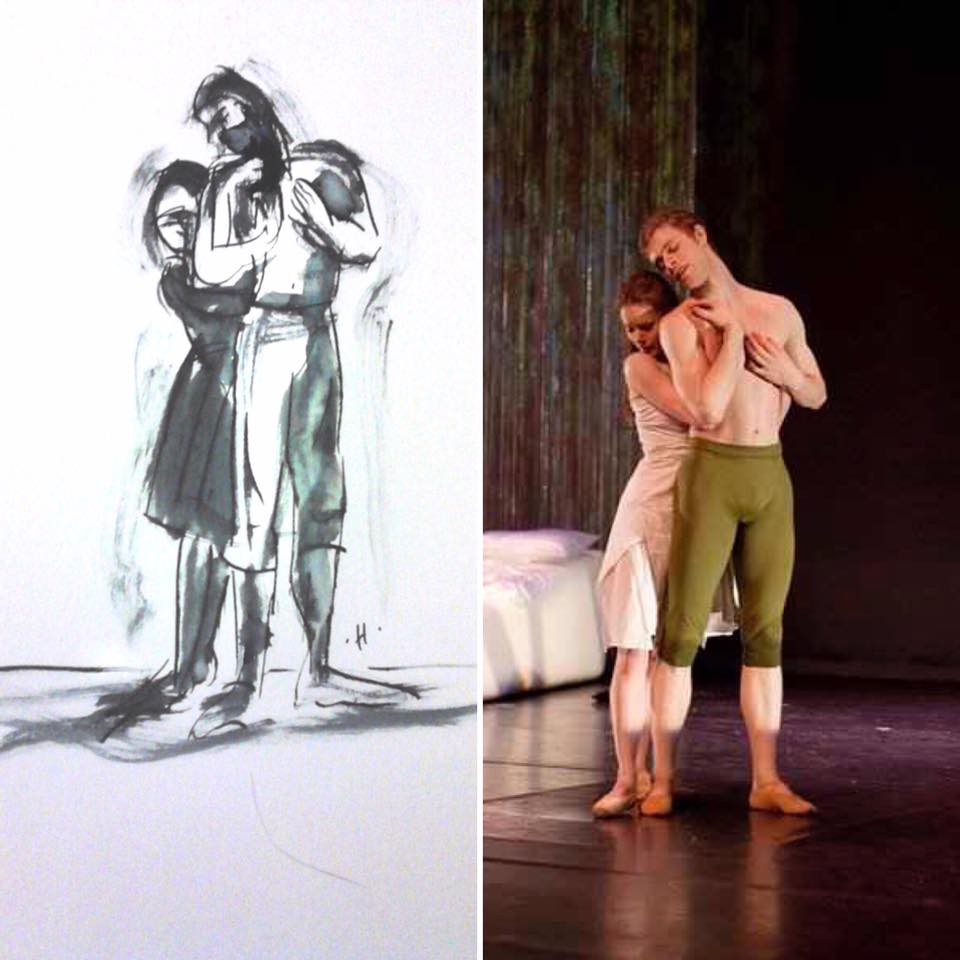
Bonfire Night. Newport’s riverside is looking crystal sharp in the cold air and the backdrop of fireworks reflect in the still water of the Usk…a poetic start to the poetry of the Bard in motion.
Good ol’ Will. It’s a well-known tale and we have all seen many interpretations over the years. Ballet Cymru will mime and dance its way through the verse in this very smart and suitable location.
And it is quirky and funny and sad in all the right places. It is strangely lovely with pearl curtains and warehouse projections; costumes peculiarly appropriate to the setting and the story.
With clog dancing.
How could you not love the clog dancing? The thump of the wood on the floor as the orchestra roars into Prokofiev’s finest. The masks, the confidence, the arrogance of the piece. Startling, angry, manly, perfectly placed. I am not alone in loving this, this visceral interlude.
A hard line drawn against the softness of Romeo and Juliet, the continuum of life against the void.
And I have to say, I love the fight scenes. I can see that the love scenes are beautifully played out, the emotions expressed exquisitely in dance; but the fight scenes capture the sense of boyish adventure. Protagonists from families expectantly discordant run rings around each other, play-fighting until blood is shed. The boys are men. Tybalt commands the stage. Mercutio burns brightly and then, revelling in his wordy end, burns out. The swords are sheathed. The music, the movements are oddly exciting to this complex choreography and I can see eyes shining with some primal lust around me.
How does ballet do this? How can this carefully designed dance portray the random acts of a few hapless young folk so well? I ask a dancer, the Friar, what a certain move means – this apparent lifting of the arms of another: ah, it’s about domination, about instruction, about control.
It is all about control. It’s about putting words to movement; movement to music. It’s taking this extraordinarily gifted troupe of dancers and giving them a different language to speak. It is every inch of the body telling a love story, a tragedy, as beautifully and as elegantly as it can.
The dancers play their roles with finesse and candour. It is not an easy story to tell and they do tell it beautifully.
We leave to see the last of the fireworks explode over the town and kick the Autumn leaves a little before we go. And I ask my friend, what do you think? “Well, more memorable than conventional productions I’ve seen.’ Yeah. I’d go with that.
Huge thanks to Patricia Vallis and cast for making us all so welcome at The Riverfront, Newport.
Enjoyed: 5th November, 2016, at The Riverfront, Newport
Touring: November to December, see website for details
http://welshballet.co.uk/
Dancers
Lydia Arnoux Anna Pujol
Andreamaria Battaggia Allegra Vianello
Gwenllian Davies Dylan Waddell
Miguel Fernandes Daniel Morrison
Mark Griffiths Robbie Moorcroft
Artistic Director Darius James
Assistant Artistic Director Amy Doughty
Associate Artistic Director Marc Brew
Composer Prokofiev
Original Play William Shakespeare
Review Quentin Blake: Inside Stories National Museum of Wales by Helen Joy
(4 / 5)
Charming.
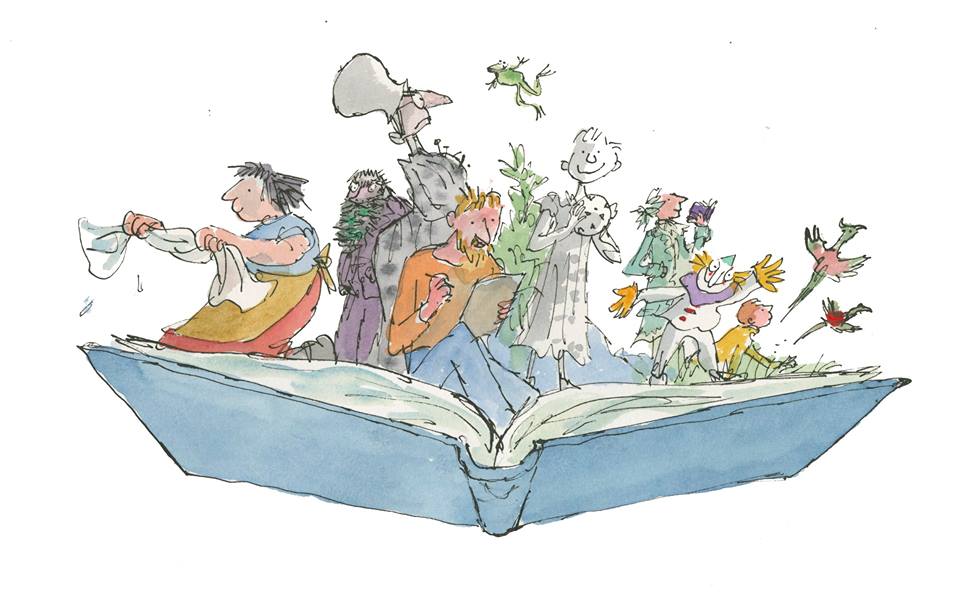
Somehow these odd, quirky, scratchy drawings become pretty and delicate in this high, light gallery.
It’s wallpaper, says the guide, as we check out the canopy of characters clambering down the walls.
It was especially made for us. People want to buy it. They can’t.
He smoothes it along the wall, loves it.
The text, that’s vinyl lettering.
It’s honest, candid, an extension of the drawings, tucked under the pictures, telling us something about the artist as much as his work and in his hand.
I hear children: ooh, it’s Matilda… Mummy, look, it’s Matilda.
I see Michael Rosen’s heart on the walls at the far end. Blake chooses his pens and brushes as carefully as Rosen chose his words to describe his grief. Beautiful.
The guide loves this exhibition. He loves this Museum. We talk about the need to attract children to keep the funding. Museum having to morph from repository and display to school and play.
There is a low table with low stools. All bright colours and soft plastics. Books and pencils, bits of paper.
Here, which one to do you want to do?
This one, Mummy. Mrs Twit. I’m not very good. I can’t draw.
How sick am I of hearing this cri de couer. Who tells a child they can’t draw? Who?
So, we all sit down and pick up the colour pencils and the paper and we draw. The adults copy Blake. The children copy the adults. I just draw chickens.
How do we hang them on the wall?
Just clip them in front of the other pictures.
But I don’t want to hide any?
They’ll all be cleared away weekly.
Oh. Some of these are wonderful.
The guide lights up: yes, look at these – talented.
They all are.
Blake would want them all on display. He is happy to share his warts n all, so should we be happy to show off all our talents. Art is feeling, is communication – no right or wrong.
I get that the Museum needs income, I get that it should attract children for many good reasons but let the adults in too.
This exhibition is a truly refreshing expression of human frailties and our spirit, our humour, our ability to find laughter and hope everywhere. Blake shows us through caricature and exaggeration what it is to be a child, an adult, a human being, a creature of this world. It is humanity in ink. Deceptively simple.
As my Father always said, it takes genius to simplify, to explain. Blake does this perfectly.
I go home and I spend an evening replacing the nib in my great-grandfather’s pen and I start to draw.
16th July – 20th November, 2016
Free, suitable for all ages
https://museum.wales/cardiff/whatson/8916/Quentin-Blake-Inside-Stories/
Review Bouncers Black Rat Productions by Helen Joy
(4 / 5) Absolutely outstanding!
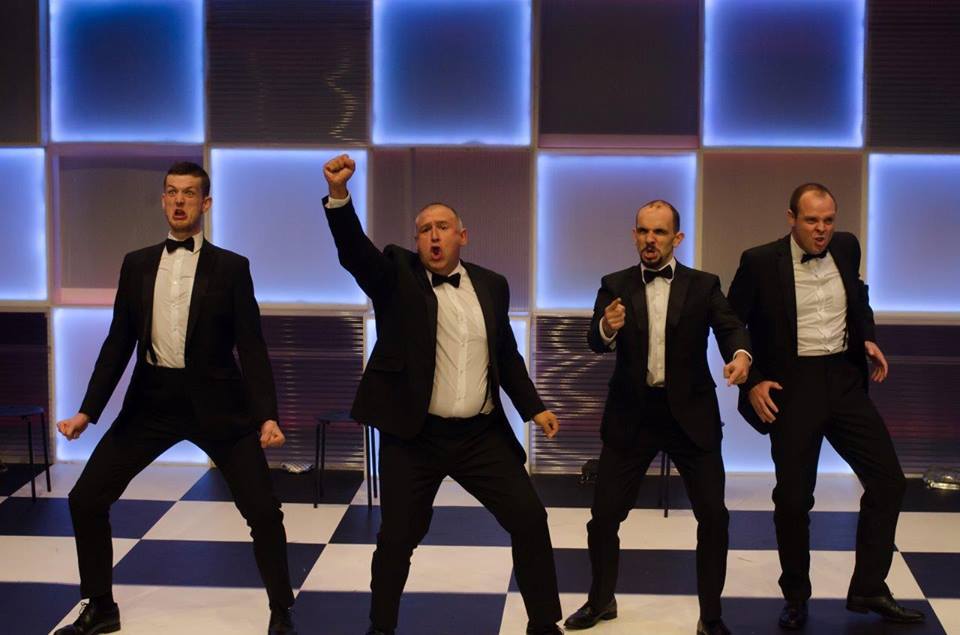
4 men, bouncers, take us through the trials and tribulations of life on the door.
It’s funny, it’s much harder to write about something worth seeing, worth talking about. Why is that?
Is it because we are naturally more gifted at criticising than complimenting? Well, here goes.
Let me think: anything I don’t like? Nope. Anything anyone around me doesn’t like? Not that I can tell. An awful lot of cringing though; a lot of us are wincing at the characters as we see ourselves enacted, exaggerated, ridiculed – our past lives revealed in all their glory..
How do they know how women behave in the Ladies? Eurgh that is painful to watch. But we laugh till our sides ache. I am sure the men in this packed audience feel the same about themselves. I can see eyes narrowing and teeth bared in the grimaces of ‘ooh I’ve done that’.
Some really nice touches – the bouncers are in role at the doors of the Institute and the bar is open, with plastic glasses to take our wine in with us – a la nightclub!
The set is deceptively simple and lights and action flick cleverly between scenes, from dance floor to pavement to lavatories.
The bouncers are mimics, their grasp of personalities male and female perfectly belied in their body language, mannerisms, speech and form.
But it is not all lads on a night out, girls on the razz, bouncers doing a job; there is a darkness to all this light bouncing off the glitter-ball of life.
There are some very clear messages. Some clearer than others and pronounced with some pathos through our senior bouncer’s speeches (he makes 4). Lucky Eric, he isn’t.
It’s about tempers and frustrations, sadness, loss, the impact of antisocial jobs on our lives, the careless sex after careless imbibing of the demon drink.
It is using humour to make us listen and think. It is a play which shows us how so little has changed, each generation must find its way through the social challenges of finding, and keeping, a partner.
It tells us about the power of alcohol to affect our emotions, our sense of personal responsibility and our sex drive. It is about the consequences of actions taken under the influence.
We are forced to reflect on the nice girl, Susie, eating her pizza whilst being humped against a wall at the back of the club. Not so funny.
It winds down, like the party it is, to the point where we are all ready to go home.
Laughter, reminiscence and social commentary – the simple bear necessities of life have come to us. There is much to talk about.
Deserves to be on the London stage. The Abigail’s Party of Blackwood!
http://www.blackratproductions.co.uk/bouncers-2016/
Cast
Gareth John Bale
Sam Davies
Ross Ford
Morgan Hopkins
Production Team
Writer John Godber
Director Richard Tunley
Designer Hilary Statts
Lighting Designer Robin Bainbridge
Running October to November, please check Black Rat Productions website for details.