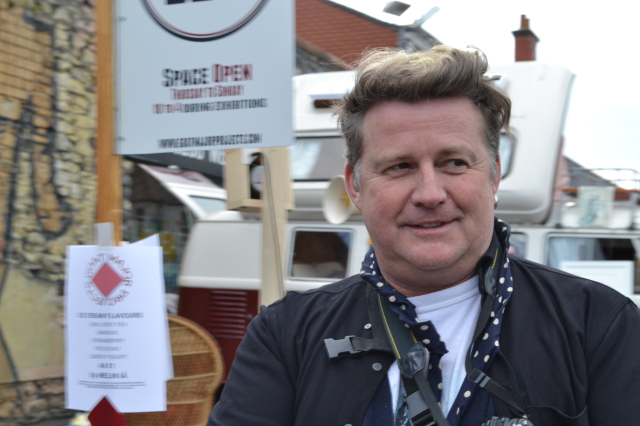
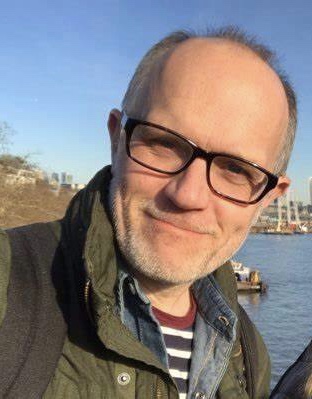
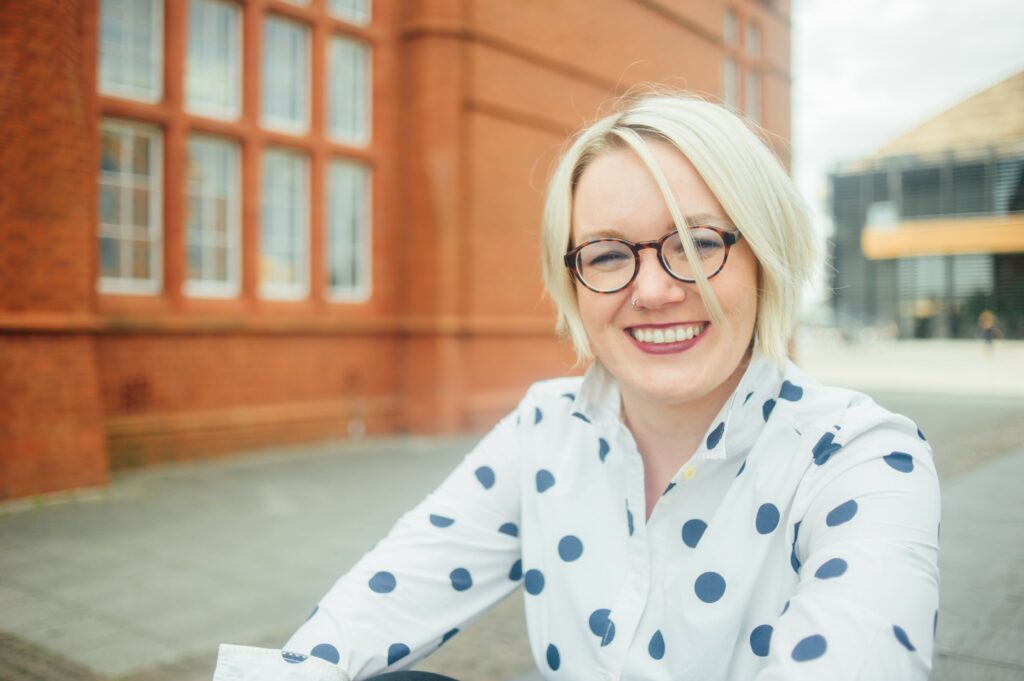
Hi I am Guy the project coordinator for Get The Chance. I am a trained secondary teacher of Art and Design and have taught at all Key Stages in England and Wales. I am also an experienced theatre designer and have designed for many of the theatre companies in Wales.
Recent arts graduates and alumni of Mess Up The Mess Theatre commissioned to collaborate with young people to create digital sharing with Pontardawe Art Centre
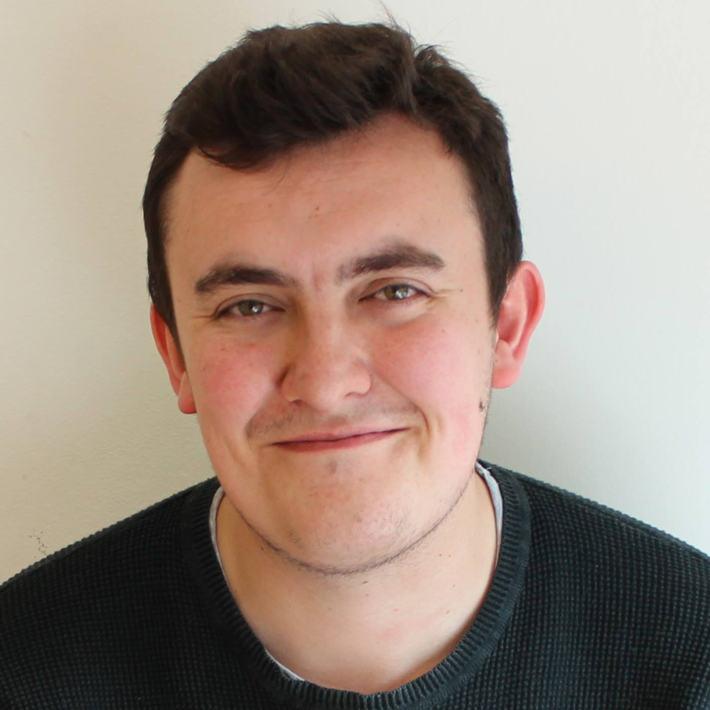
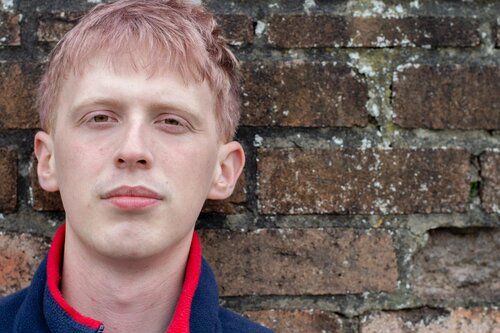
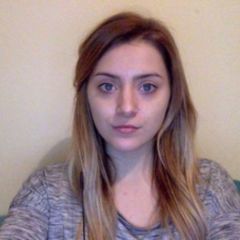
Mess Up The Mess have been commissioned by Pontardawe Art Centre to collaborate with three recent graduate freelancers and emerging artists to support the development of both their participatory practice and own creative work. The emerging artists are Cerian Wilshere-Davies, Callum Bruce-Phillips and Ciaran Fitzgerald, all alumni of Mess up the Mess Theatre Company.
The artists have been working with groups of young people since January 2021 and are preparing for an evening of digital sharing of the work they have been creating. Cartref / Home will be available to watch online on 25th March at 7pm.
Mess Up The Mess are particularly excited about working alongside these young artists as they have all been members since they were 12-14 years old and have been on a journey of 10+ years with the company.
The Project – Cartref / Home explores the theme of home and using comedy to have fun at home. The artists and young people have been creating their own fantasy spaces that make them feel happy, silly, adventurous or safe. Exploring fantasy, folklore and the spaces and worlds we choose to make home, the groups have been getting ready to share the work they’ve been creating online.
Asking questions like – what landscapes, objects and characters would you like to imagine up in your space? What kind of environment makes you excited? What kind of environment do you want to play or be silly in? Maybe it’s in nature, in a space with lots of other creatures and people or maybe it’s an indoor space that is just for you. These spaces might be calm and quiet, or they might be somewhere that you find really funny.
Callum Bruce-Phillips is a Film & TV Studies/English Literature graduate from Aberystwyth University and is currently working towards his MA in Film Producing. Ciaran Fitzgerald is a writer and facilitator from Port Talbot. He wrote his first play in 2013 for Mess Up The Mess, and hasn’t looked back. In 2019 he graduated from the BA Scriptwriting degree at the University of South Wales in Cardiff. Cerian Wilshere-Davies is a facilitator, theatre maker and comedian, recently graduated from the University of Salford.
The artists are facilitating and guiding the development of the young people’s own work, alongside creating their own. Mess up the Mess Artistic Director Sarah Jones has been mentoring the team. The commission has included masterclasses in areas linked to the creative project; working bilingually with Bethan Marlow, participatory film makingwith Tom Barrance and inclusive approaches to making digital art with Taking Flight.
Ciaran Fitzgerald said of the masterclasses;
“Our workshops with Tom Barrance definitely increased my confidence in terms of filmmaking. I hadn’t done much video editing previously and with Tom’s guidance I’m really pleased with what I produced, and will definitely add it to my practice in the future. After our session with Bethan Marlow, I felt that the barriers to working bilingually had been broken down. Bethan made the whole concept really inclusive and introduced some really useful strategies that I will definitely be using in my future practice. Taking Flight’s workshop on inclusion was really useful and enjoyable. It was really good to have a refresh on things that I already knew, but also to learn new things about accessibility in the arts, and perhaps challenge some preconceptions I had. I definitely want to implement BSL and Audio Description creatively into my work in the future.”
Sarah Jones, Artistic Director of Mess Up The Mess said:
“We are excited about this project for so many reasons including the opportunity to commission artists who have come through Mess Up The Mess. I remember meeting each of these artists and have been honoured to learn and collaborate alongside them over the last 10 years. We are hugely grateful to Pontardawe Art Centre for the opportunity to continue a professional collaboration with them and enable them to pursue their practice at such a difficult time for the arts and young people. They are exceptional and inspiring creatives who have the power to inspire and develop a safe and nurturing place for our current young participants to make new work and look after their wellbeing.”
Cerian is a facilitator, theatre maker and comedian, recently graduated from the University of Salford with have a 1st class degree in Comedy Writing and Performance. Cerian is interested in creating work that focuses on Welsh heritage and expression of identity.
Callum Bruce-Phillips
Callum is a Film & TV Studies/English Literature graduate from Aberystwyth University and is currently working towards his MA in Film Producing. During his undergraduate degree Callum worked with the University’s Centre for Widening Participation, Equality and Social Inclusion, where he worked with young and vulnerable people from different underrepresented backgrounds. This experience has inspired Callum to pursue a career as a community film maker, whose focus is widening access within the film industry, to groups currently underrepresented.
Ciaran Fitzgerald
Ciaran is a writer and facilitator from Port Talbot. He wrote his first play in 2013 for Mess Up The Mess, and hasn’t looked back. In 2019 he graduated from the BA Scriptwriting degree at the University of South Wales in Cardiff, and is currently developing his first commissioned play ‘Chasing Rainbows’ with Pontardawe Arts Centre. Ciaran is interested in developing work with strong characters at its heart, particularly aimed at young people. Being a fluent Welsh speaker, identity is a key aspect of the work he makes, along with key principles of access and inclusivity.
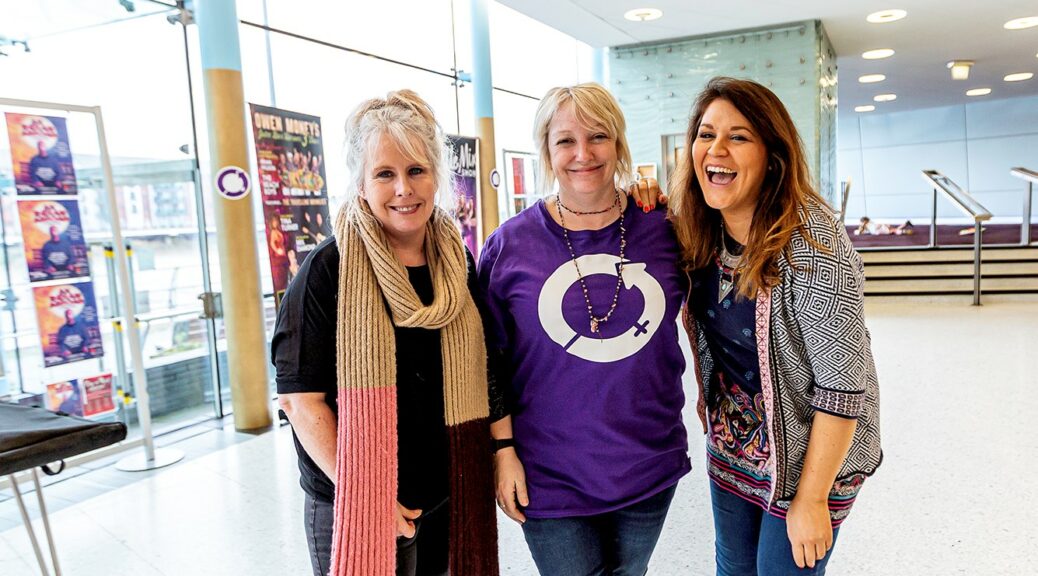
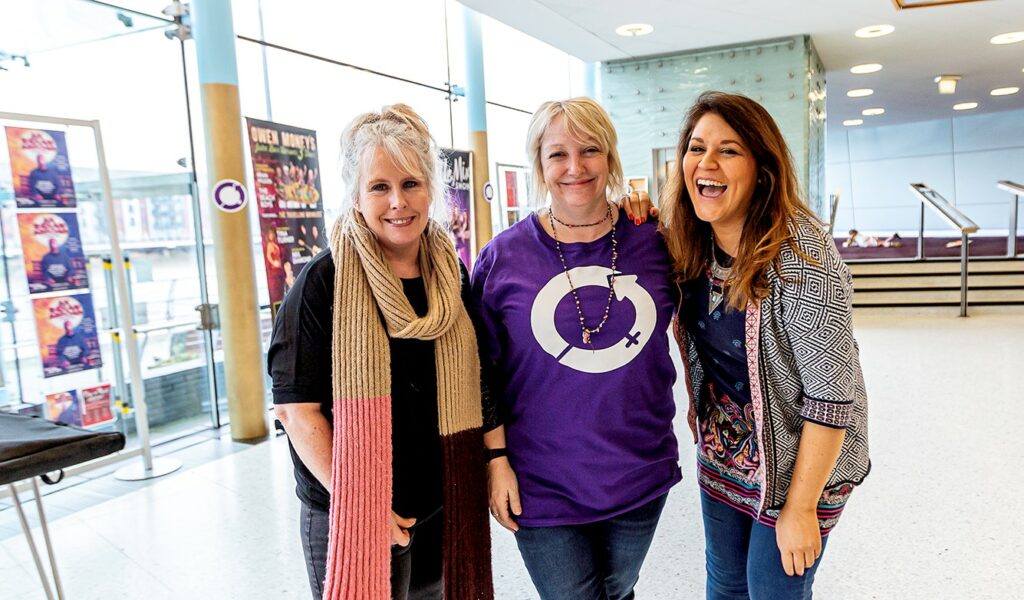
This year for International Women’s Day (IWD), The Riverfront Theatre & Arts Centre in Newport take their International Women’s Day celebrations online with a programme of events taking place on social media throughout the day on Monday 8th March.
As the theatre is unable to open due to government guidelines, The Riverfront have taken the decision to still celebrate International Women’s Day in these challenging times and showcase a range of wonderful activities that can be joined and enjoyed from home. The theme for IWD 2021 is Choose to Challenge, as a challenged world is an alert world and from challenge comes change.
Community Arts Development Officer and International Women’s Day co-ordinator Sally-Anne Evans comments ‘It’s fantastic to be working on International Women’s Day again this year as it is always a great opportunity to come together and celebrate. This year we want to highlight the amazing creativity in our communities, and we are sharing our event virtually with some amazing activities both on the day and throughout the following week.
We are focussing on our female artists, musicians and makers to share their work, as well as offering links to activities and workshops run by other groups and partners. A lot has happened in a year, but it feels good to be able to provide a platform for people to share and celebrate together. More than ever it feels like we need it.’
Throughout the day there will be a range of activities taking place from fitness to writing, crafts to music, dance to reflection. There will be the opportunity to dance along to the IWD 2020 Zumba routine choreographed by Newport Live instructor Mandy Knight and her Thursday morning FitSteps class, and there will be a live low intensity Functional Flow fitness class hosted by Newport Live instructor Erin.
Performance piece ‘Tripping Through Newport’s Underbelly’ which was devised and performed by Marega Palser will also be showcased. This BOSCH Observation piece is a journey through underpasses, subways and some of Newport’s in between zones that people move through rather than stay in. Spaces that are home for some, dumping grounds for others.
Digital events hosted by IWD partners will be showcased including a Therapeutic writing workshop, an IWD pub quiz and an informative talk and interactive singalong on the hymn ‘The March of the Women.’ The Riverfront also encourages you to take some time and think about what you Choose to Challenge this year, whether that’s calling out gender bias or inequity, celebrate women’s achievements or making a change in your own life to help create an inclusive world. Share how you #ChooseToChallenge on social media.
The Riverfront’s International Women’s Day celebrations will end at 7pm with a pre-recorded bilingual musical set featuring opera director and creative producer Rhian Hutchings performing alongside multi-instrumentalist and singer Stacey Blythe.
On Saturday 13th March The Riverfront is partnering with the Kotatsu Japanese Animation Festival to support the WOW Film Festival Women’s Film Club event Kotatsu Shorts: Women Make Animation. This free event will screen a hand-picked selection of animated shorts made by up-and-coming female animators working in Japan that are suitable for all ages. The ticket for this event will also include access to a live creative workshop on Zoom with Japanese animator and illustrator Chie Arai showing you how to draw a girl in a kimono.
In the weeks following International Women’s Day the Riverfront will also be showcasing inspirational female artists, organisations and groups within our creative communities across social media, including an exclusive performance from Aleighcia Scott. If you would like to be featured contact sally-anne.evans@newportlive.co.uk sharing your work and let us know why IWD is important to you and what you would #ChooseToChallenge.
To keep up to date with The Riverfront’s program of events for International Women’s Day follow them on social media, Facebook.com/ TheRiverfront or visit newportlive.co.uk/IWD.
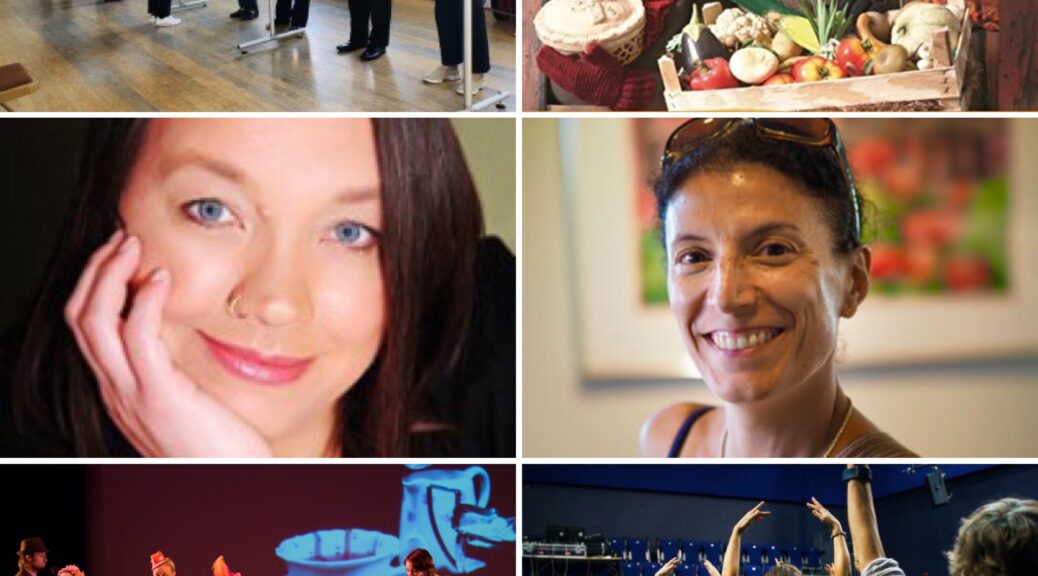
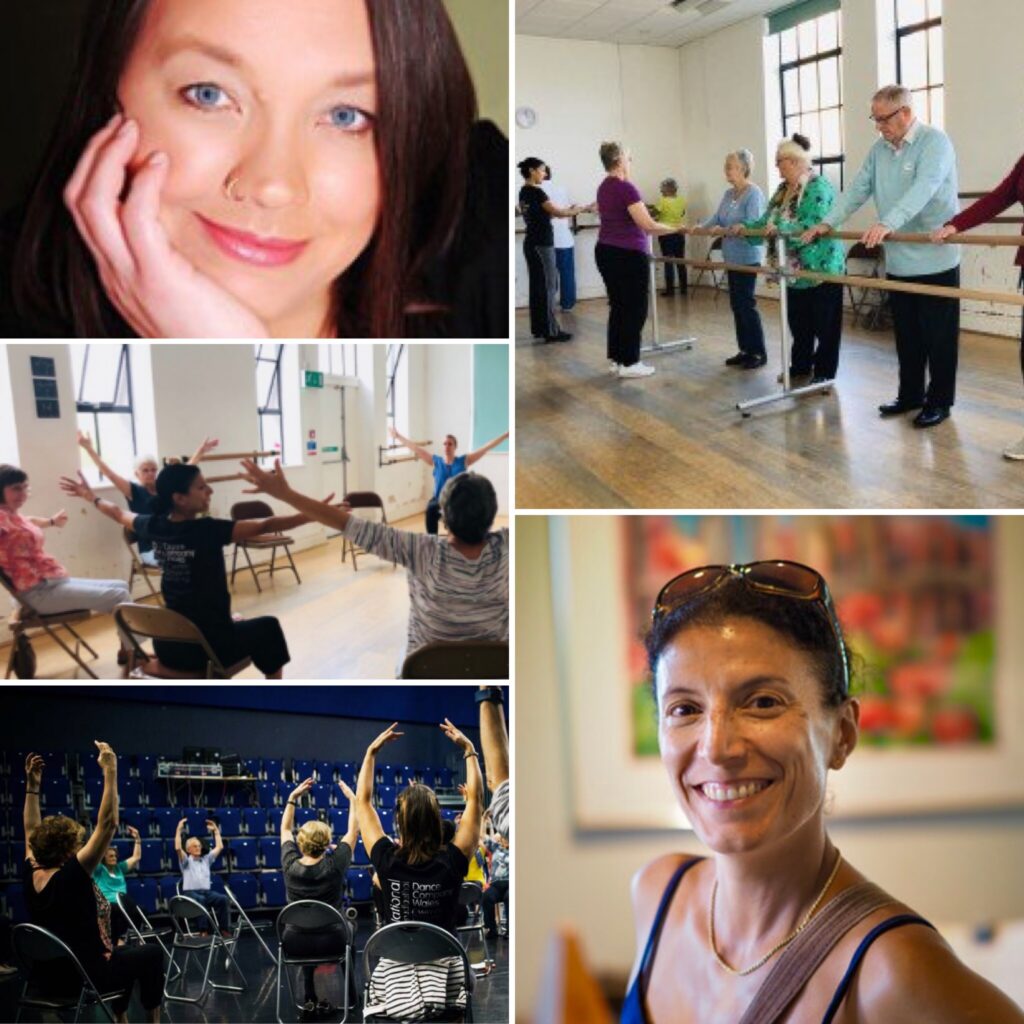
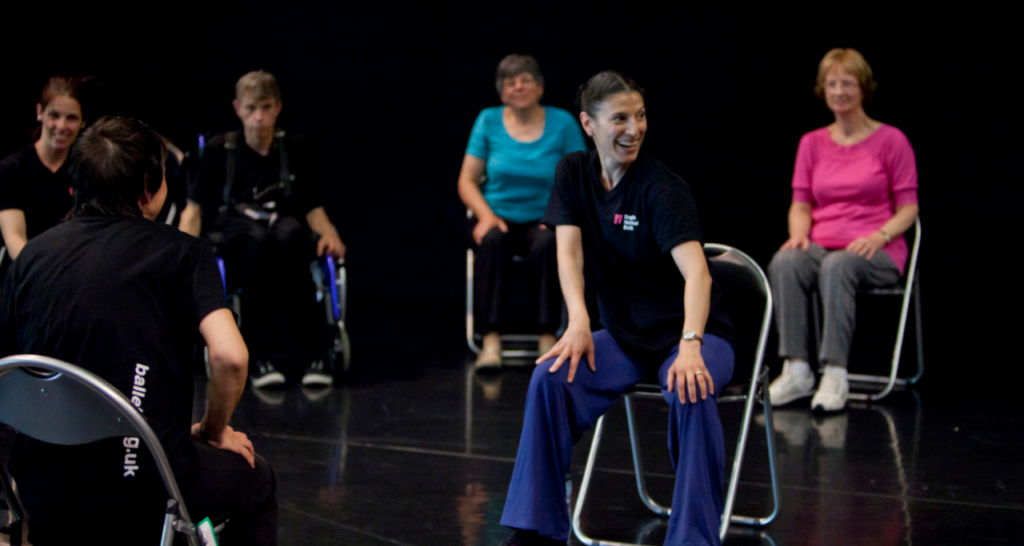
Images Helen Wood, Yvette Halfhide, credit Dave Wilson and Dance for Parkinsons Class.
In this interview the Director of Get the Chance, Guy O’Donnell chats to Wales based Dancer Yvette Halfhide and Musician Helen Woods. They jointly deliver the English National Ballet/National Dance Company Wales, Dance for Parkinson’s programme. ENB’s Dance for Parkinson’s programme has been running since 2008. NDCWales is an affiliated hub of ENB’sprogramme.
Hi Yvette and Helen, great to meet you both can you give our readers some background information on yourself please?
Yvette: Hi everyone, My name is Yvette Halfhide and I live with my family near Bridgend in South Wales. I graduated (many years ago now!) from Central School of Ballet and have been a dancer, choreographer, teacher, rehearsal director, creative movement session leader, as well as other jobs connected to dance and the arts. I am currently associate dance artist for the Dance for Parkinson’s Programme initially set up by English National Ballet and run, in partnership with National Dance Company Wales in Cardiff.
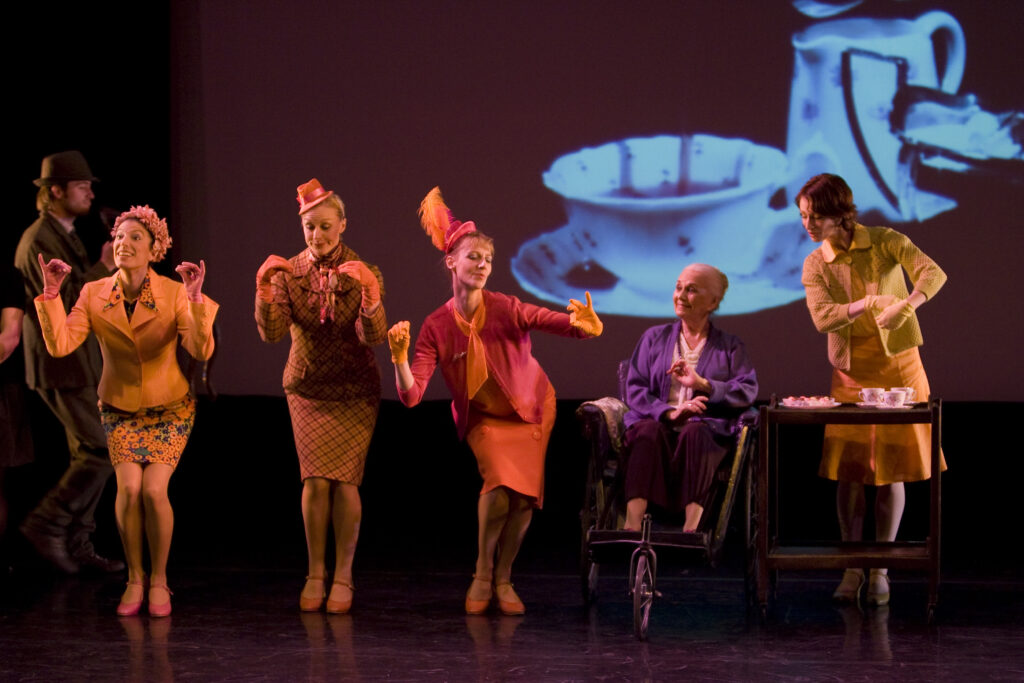
Black Maria, 2007, Green Box Productions, Sadlers Wells.Above: Aunt Maria (Ruth Posner) takes tea with the Mrs Urs (Yvette Halfhide, Justine Berry, Debbie Camp) served by Betty (Katherine Kingston).
Helen: Hey all, My name is Helen Woods and I moved to Cardiff in 1997 – so I’ve been in Wales for nearly half my life…..nearly. I studied at Dartington College of Arts graduating with a degree in Music and Visual Performance. I work as a freelance composer and musician and have been lucky enough to have worked on a huge variety of projects including Street theatre with a Brazilian dancer, the Tiddly Proms (a show for under 5s that I write the music for and perform as Cherry Pie)
Community musicals, 2 operas for children and in 2013 I received a Creative Wales award to work on my own music writing a flute and piano sonata and a suite of pieces about some of my ancestors. I am currently associate musician for the Dance for Parkinson’s Programme and have the constant pleasure of working with Yvette.
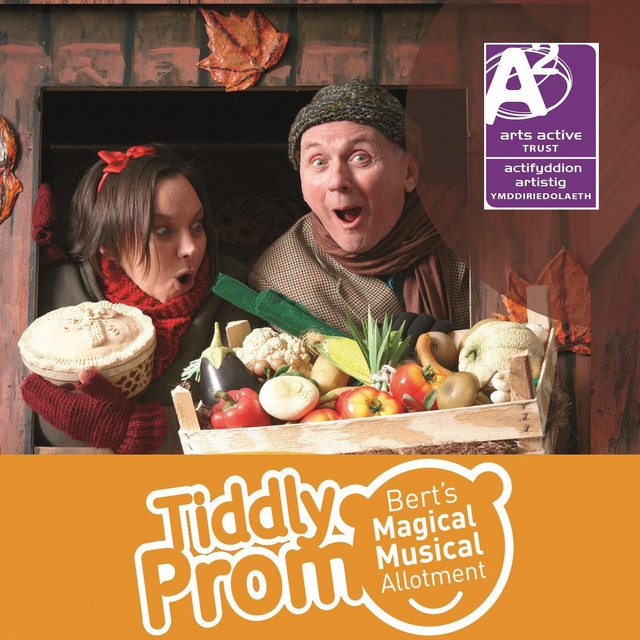
Helen Woods, Richard Berry, Berts Magical Musical Allotment, Tiddly Proms
What got you interested in the arts?
Yvette: Both my parents were keen on the arts in their own way. My mother loves all types of dance, musical theatre and theatre, and my father really enjoyed his opera and classical music, so I was lucky to be introduced at a young age to those forms.
Helen: Like Yvette, my parents gave me every encouragement to explore music and dance as a child. When I was four, my older sister was learning the recorder at school and I wanted to learn so my dad bought us a book and a recorder so that we would learn together. He used to leave for work quite early in the morning so we’d always start before the others were up, I loved that time with my Dad. My mum had always wanted to learn the piano but money had not allowed so she was incredibly supportive.
You have been delivering English National Ballets/National Dance Company Wales, Dance For Parkinson’s class since 2015. Dancing has been shown to support people with Parkinson’s to develop confidence and strength, whilst temporarily relieving some participants of these symptoms in everyday life. You have a dance and musical background; how do you use your artistic skills and background when delivering class?
Yvette: I think that as someone who delivers such an expressive art form, it is important for the participants to see that expression when you deliver, so you could say that you are performing as you teach. If you can convey how much you enjoy dancing (and a particularly wonderful experience when with live music, which is at the heart of the programme) then hopefully that enthusiasm is transferred onto those people in your class.
If someone living with Parkinson’s was interested in attending but didn’t think of him or herself as a dancer or singer would they be able to join?
Yvette: Absolutely. Speaking from a dancer’s perspective I truly believe that if you can move, you can dance. A simple gesture can become an exquisite piece of dance if done with intention.
Helen: From a music perspective – we sing because we love to sing, not to be a choir – we sing for ourselves.
Due to Covid-19 you had to cancel physical class delivery and move onto dancing on the Zoom platform. How did you approach this and how have your members found this change?
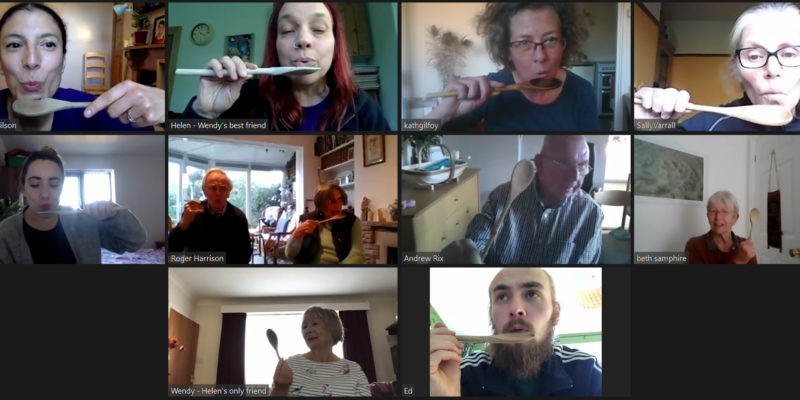
It is a very different way of delivering a dance class. The challenges of using new technology can be a barrier to some people wanting to move online, but we have found that those that have, have embraced it enthusiastically. NDCWales also work with Digital Communities Wales to support our members to get online and active.
We have found that when working through exercises, adding verbal instructions or imagery in the form of lyrics onto the music helps participants remember the movements. I would say that most participants would prefer to be in the studio dancing together but a major advantage of moving online is that we are able to reach individuals literally anyywhere in the world. Since starting Zoom sessions, as well as our regular participants from Wales, we have had people from England also join us.
This coming March you are piloting two new Zoom classes in North Wales with Coleg Cambria in Wrexham and Pontio in Bangor. What might these new classes consist of?
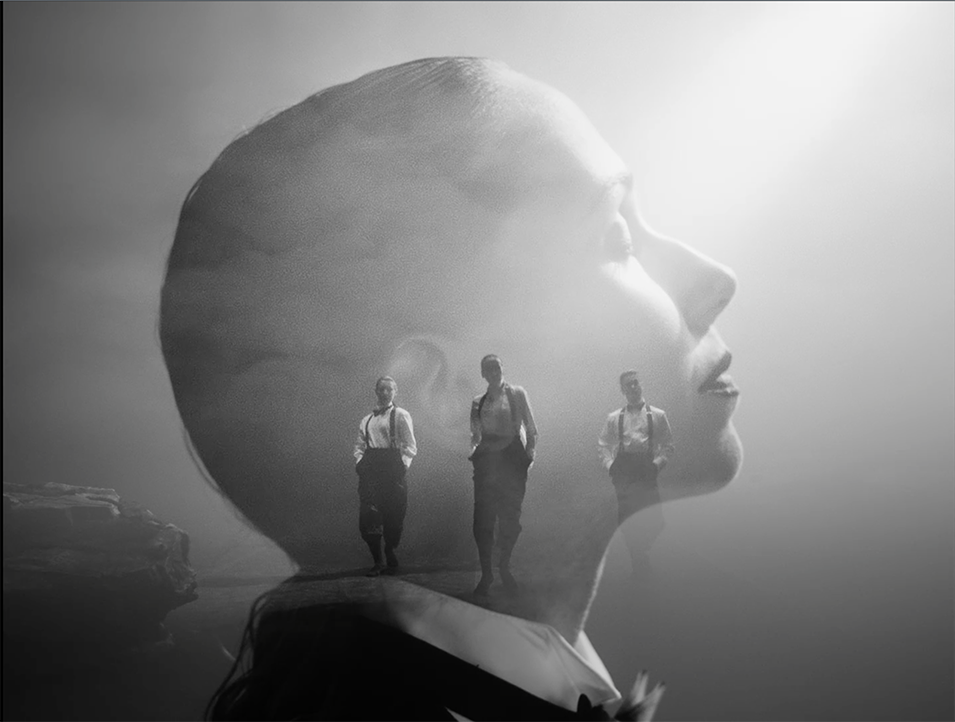
The sessions in North Wales will still follow the regular Dance for Parkinson’s format that works through specific exercises focusing on the different symptoms of Parkinson’s. Each term, we focus on a piece of work that is in either English National Ballet or National Dance Company Wales’ current repertoire and for this part of the term we will be exploring – a fun, Cuban-inspired homage to the black and white silent movie era.
What do you personally see as being the key to the delivery of a project such as this?
I think offering a fun, high-quality dance session that motivates those attending to continue to be as mobile as possible whilst developing an appreciation for the arts is key to the delivery of the project.
How would you like the project to develop?
According to the Parkinson’s UK website there are around 145,000 people living with Parkinson’s in the UK and that correlates to about 7,600 of those individuals living in Wales. We are only reaching a very small number. It would be fantastic if we were able to set up more hubs across all of Wales so that people living Parkinson’s have access to a Dance for Parkinson’s Class near to where they live. Admittedly, not every person living with Parkinson’s may want to attend a dance class, but it would be lovely to be able to offer every person living with the condition that option.
If you were able to fund an area of the arts what would this be and why?
There are so many abandoned buildings around the UK that have the potential to be turned into these wonderful creative and artistic centres. Whether that be a site-specific installation, a live performance or a place for artists from all genres to come together to exchange ideas. There is such a wealth of history and beauty in many of these places – it would be wonderful to bring to them a new lease of life.
What excites you about the arts at the moment?
It has been a really challenging period for the arts at the moment, but I would say what inspires me perhaps more than excites me is the resilience of artists. Somehow, in spite of the theatres closing, performances postponed indefinitely, projects on hold, artists from all genres are still finding ways to be creative, to use this time to reflect on their work and find ways to express themselves.
What was the last really great thing that you experienced that you would like to share with our readers?
As part of our training delivering the Dance for Parkinson’s sessions, English National Ballet invited all of the associate dance artists and musicians to come together (online) to explore the repertoire, chat with some of the creative team, exchange ideas and have time to reflect on our practice. It was just before Christmas and after nine months of lockdown I felt tired and drained but after the training, I was re-invigorated and had a renewed sense of purpose. Just coming together with other artists, I was reminded of that support; and it reiterated to me how important it is to be able to have the opportunity to connect and engage with like-minded people.
Hi Jack great to meet you, can you give our readers some background information on yourself please?
Hi, I’m Jack. I graduated in 2019 from Royal Holloway, University of London with a BA in English and Theatre Studies. I’m a dirty Leeds fan, a chaotic book-worm and a prospective East 15 Acting School student.
What got you interested in the arts?
Musicals. I’m a hardcore thespian at heart. The unbridled joy of singing and dancing with a group of people at such a young age instilled within me the transformative qualities of the arts. Singing in particular engendered a keen interest in poetry; something I focused on for my undergraduate thesis. Everyone should sing and dance more.
It’s great to be able to discuss some positive news about a new play being produced and performed during this difficult Lockdown period. You have just directed BEAR by Bridgend based writer Jon Berry and it can be listened to now here…
…I believe the plays production has hadsome ups and downs?
Jon Berry and I were running auditions for BEAR in a comically cupboard sized space in the furthest corner of the Sherman Theatre, early March 2020 – our eyes set firmly on the Scottish capital. We had secured financial help from the Carne Trust and were assembling a company to take BEAR to the Fringe. Needless to say, the rest is history. Throughout the pandemic we met as a creative team and continued to rehearse and discuss the piece virtually, but the length of the pandemic took its toll and the viability of a live production at a venue vanished.
BEAR Playwright Jon Berry
Some months ago I thought to myself ‘enough is enough’ and with a bit of tenacity and good faith I pitched the project to some folk at Awen. I was looking for financial support for my actors as well as some much needed publicity. Awen were very generous and I was able to not only pay the actors involved but also myself, as well as the writer Jon and even get a fabulous motion designer on board to bring an even greater reality to the voices.
And now for the inevitable question, why should we listen to Bear?
Bear is a piece about crisis and community, family and blame; themes that we have all experienced intensely over the past 11 months. All the characters are managing their own crises whilst giving so much of themselves to a seemingly ‘bigger’ cause; a missing daughter. In addition to the arresting textural quality of Jon’s writing the audio drama features beautiful animation by Cardiff based animator Emma Davies. It’s a play about resilience and keeping an eye on hope, something that I believe will resonate profoundly with all who choose to listen.
Cardiff based animator Emma Davies
The production has been supported by Awen Cultural Trust who are they and how did they come to be involved?
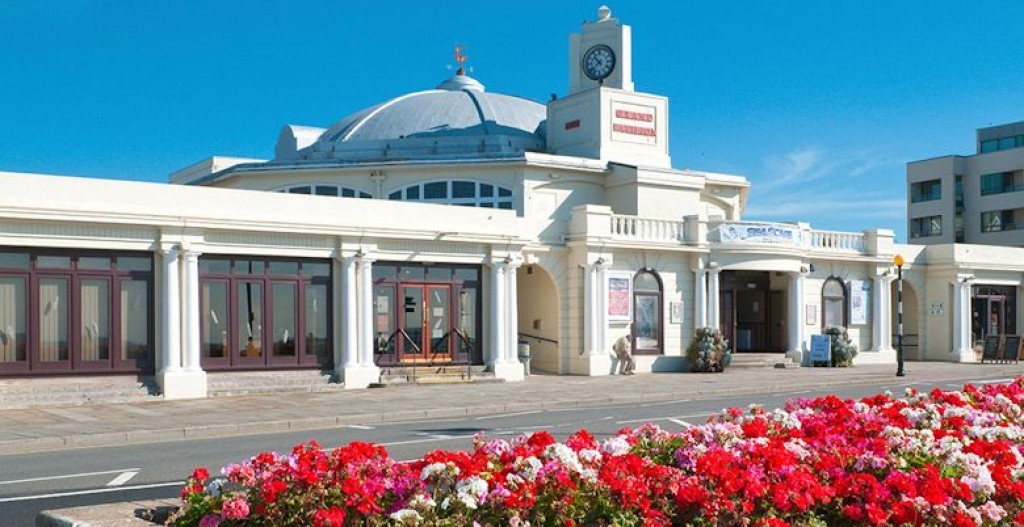
Awen Cultural Trust is a charitable organisation focusing on the enhancement and accessibility of cultural opportunities in the Bridgend area. I first encountered Awen as an employee at one of their beautiful venues. I joined after finishing my degree, as a Front of House assistant before successfully applying for a Duty Manager role at The Grand Pavilion Theatre, Porthcawl.
The Grand Pavilion Theatre, Porthcawl.
It was there that I forged some great relationships and organised ‘WHIP’ (Working Hard in Progress); my first collaboration with Jon Berry.
WHIP was, at its bare bones, a scratch night. We invited writers from around South Wales to send in new writing that they felt needed critical attention. Each writer had a six hour rehearsal process spread over 3 weeks where they could essentially ‘R and D’ their work with some local actors. Jon and I would aid the directors dramaturgically. The process culminated in a sold out event at an Awen venue where each writer celebrated their work as well as receiving the opportunity to ‘Q & A’ with the live audience. Lots of drinks were drunk and brilliant stories were shared – a cracking event we hope to revisit soon.
I believe you are based in Bridgend? Are there many opportunities to pursue a career in the arts where you live in this area of Wales?
Yes, I am based in sunny Porthcawl – a wee seaside resort for the beautiful and the damned. Sadly there aren’t a great deal of opportunities, particularly when you surpass the adulthood milestone. There are loads of Youth orientated events in the area, which is an amazing kickstart for anybody’s creative career, but nothing that really caters to those over the age of 18. Nothing that is readily available at least.
Get the Chance works to support a diverse range of members of the public to access cultural provision. Are you aware of any barriers that creatives in Wales face. If you do what might be done to remove these barriers?
Diversity in the decision rooms of funding. Diversity in the creative teams. Diversity in the Front of House staff. It’s not enough for some of these big buildings and organisations to “discuss diversity” and talk about a community of people, they need to talk to them directly, include them in the discussion. We need to fundamentally change the makeup of who is creating and watching work. Reassessing the arbiter’s of taste in the Arts is a monumental task, but it’s necessary.
There was an important scheme some years ago from ACE called ‘Change Makers’. It was a fund directed at increasing senior leadership in art and culture by helping to develop a cohort of leaders who were POC or disabled by means of targeted senior leadership training.
With the roll out of the Covid-19 vaccines, the arts sector is hopeful audiences will return to venues and theatres. If theatres want to attract new audiences what do you think they should do?
Theatres are proper funny places. They are beautiful, intricate, complex and unlike any other building you will find. But they are buildings. And people make buildings. Theatres need to serve their community like never before and I believe this is vital. They need to be producing and creating theatre that seeks interlocutors, rather than just presenting to an audience; reflect the social geography of a location.
I always think of the panto model. It’s a big day out. It’s an event and not just a performance in a theatrical space with lights and actors and pricey ice cream. How do we generate that excitement and enthusiasm for every show all year round?
What excites you about the arts in Wales?
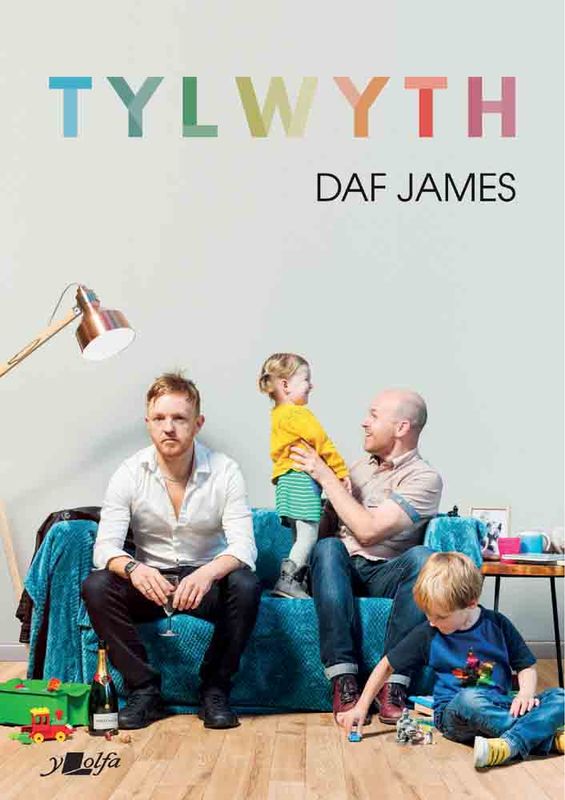
Honestly? The Welsh language. I was born in North Yorkshire and only made the move to Wales at 10 years old. Learning the language was, and remains to be, daunting. Yet with the very recent strong and youthful charge for Welsh independence the language has gained a new found pertinence for my friends and I. We’ve all seriously started learning. I think the Arts has to take hold of this and broadcast it for everyone to hear. Whilst employed at Awen I witnessed some astonishing bilingual theatre for young audiences, and only just before lockdown took hold I watched the tragically hilarious Tylwyth (Kin) by Theatr Genedlaethol Cymru at the Sherman Theatre. Tylwyth, performed entirely in Welsh, was a revelation to me as a director.
Firstly, I found that I understood so much through gesture and scenography, which is a completely separate phenomena. But more impressive was that, as a non-Welsh-speaker, I was still completely immersed in the language, the jokes, the fillers, everything! It opened my eyes (and ears) to the beautiful complexity of working and creating in Welsh and I think we should hold onto that dearly and not as a novelty either.
What was the last really great thing that you experienced that you would like to share with our readers?
There are so many brilliant acts of art I have witnessed over lockdown, not least theatre. However, I have to give my immediate thoughts to France’s ‘Lupin’.
A Netflix mini-series that captures all the slickness of a Bond chase montage at one glance, only to be peppered by the implausibility and wit of Jonny English on steroids, the next. It was a perfect watch from beginning to end. Short, clever and all in another language. Language was no obstacle in this charming espionage thriller that was a much needed binge-worthy bit of fun to kick off (hopefully) a much better year.
Get the Chance supports volunteer critics to access a world of cultural provision. We receive no ongoing, external funding. If you can support our work please donate here, thanks.
Helo, fy enw i yw Cerian a dwi’n hwylusydd ymgysylltu ieuenctid am yr Amgueddfa Cymru. Rydyn ni’n dechrau prosiect newydd am bobl ifanc LHDT+ o oedran 16- 25. Enw’r prosiect yw Trawsnewid, bydd y prosiect yn canolbwyntio ar y thema o drawsnewidiadau. Trwy’r prosiect byddwn ni’n archwilio pobl draws a gwrthiant cydymffurfio rhywedd o hanes Cymraeg a’r profiadau o bobl sy’n byw heddiw.
Bydd cyfarfod bob ail wythnos gyda’r bobl ifanc, bydd y sesiynau yn weithdai creadigol sy’n archwilio’r thema o’r prosiect gyda’r cyfle am y cyfranogwyr i redeg sesiynau eu hunain. Trwy’r prosiect byddwn ni’n gweithio tuag at cynnal ddigwyddiadau fel trosfeddiannu’r Amgueddfa yn yr Amgueddfa genedlaethol y Glannau yn Abertawe ac arddangosfa o’r gwaith sy’n cael ei chreu dros y prosiect. Bydd y prosiect yn cael ei addasu am y diddordebau’r grŵp fel celf, perfformio, ysgrifennu creadigol neu hanes.
Bydd y prosiect yn dechrau gyda sesiwn ar lein am 6yp ar y 24ain o Chwefror, byddwn ni’n cyflwyno’r prosiect, cyfarfod ei’n gilydd a dylunio cerdyn post sy’n cael ei ysbrydoli gan y casgliad LHDT+ yr amgueddfa.
Os ydych chi eisiau cymryd rhan yn y prosiect, cael unrhyw gwestiynau am y brosiect neu yn gwybod unrhyw berson ifanc gyda diddordeb i gymryd rhan anfon e-bost i: cerian.wilshere@museumwales.ac.uk
Hello, my name is Cerian and I am a youth engagement facilitator for Amgueddfa Cymru- National Museum Wales. We are about to start a project for LGBTQ+ young people aged 16-25. The project is called Trawsnewid and is going to be focused around the theme of transformations. Throughout this project we will be exploring trans and gender non-conforming figures in Welsh history and lived experiences today.
There will be a bi-weekly meeting with the young people, these sessions will be creative workshops exploring the theme of the project with the opportunity for the participants to run their own sessions. Throughout the project we will be working towards putting on our own events such as a museum takeover at the Waterfront Museum in Swansea and an exhibition of the work created throughout the project. The project will be tailored to the interests of the group, whether that’s history, art, creative writing, performance etc.
The project will begin with an online session on the 24th February at 6pm, we will be introducing the project, getting to know each other and designing our own postcard inspired by the museum’s LGBT+ Collection.
If you would like to get involved in the project, find out any more information about the project or know of any young people who would be interested please email: cerian.wilshere@museumwales.ac.uk
Local artist and The Riverfront Theatre and Arts Centre’s Associate Artist, Connor Allen, has successfully received a £20,000 award from the Live Work Fund from Jerwood Arts.
The fund received over 1,200 applicants and Connor is one of just 33 artists across the UK to have been successful.
Connor will be using the funding to set up a collective of professional black artists working across various artistic disciplines, of all ages and based in Wales. The collective will support the development of artists during the challenges faced due to the current pandemic including mentoring, sharing and supporting each other’s practice as well as providing increased representation and professional opportunities for more black artists to grow and progress. Members will work together to learn and develop as well as to give back to the arts community and inspire the younger generation of black artists in the making.
The Live Work Fund has been created in direct response to the impact the Covid pandemic has had on self-employed artists across the UK and is the result of four major arts funders (Jerwood Arts, Wolfson Foundation, Esmée Fairbairn Foundation and The Linbury Trust) coming together to award a total of over £660,000 to successful applicants.
About the bursary and project Connor said “My growth as an artist and the development of this project and my collective idea wouldn’t have been possible without the Jerwood bursary and the support of many organisations such as The Riverfront who have been instrumental in my success since me becoming Associate Artist.
“I believe that the impact of my collective idea can be exciting and influential on the landscape because it will allow artists of colour in Wales the opportunity to develop themselves and explore their craft alongside my own exploration throughout 2021. This has the potential to nurture the next wave of exciting Welsh artists of colour which in my opinion is awesome and so much needed.”
Since graduating from Trinity Saint David as an Actor, Newport-born Connor Allen has worked with companies such as The Torch Theatre, Sherman Theatre, Tin Shed Theatre and National Theatre Wales. He joined The Riverfront Theatre & Arts Centre as Associate Artist in 2020.
During the past 12 months, despite the difficult circumstance the pandemic has created for artists, Connor has written and performed multiple pieces across South Wales including Dom’s Drug Prayer as part of Sherman Theatre’s Ten and The Making of a Monster at Le Public Space’s Right Now Online Theatre Fest. He was also commissioned by Literature Wales to create an online album of creative mediums, 27, a collection of thoughts from his life, the journey he has been on and the lessons he has learnt.
Olivia Harris, Creative Producer for The Riverfront said “We’ve been working with Connor for some time now and are delighted his talent has been recognised with this bursary. He truly deserves it and we can’t wait to see where it takes him and go on this journey with him.”
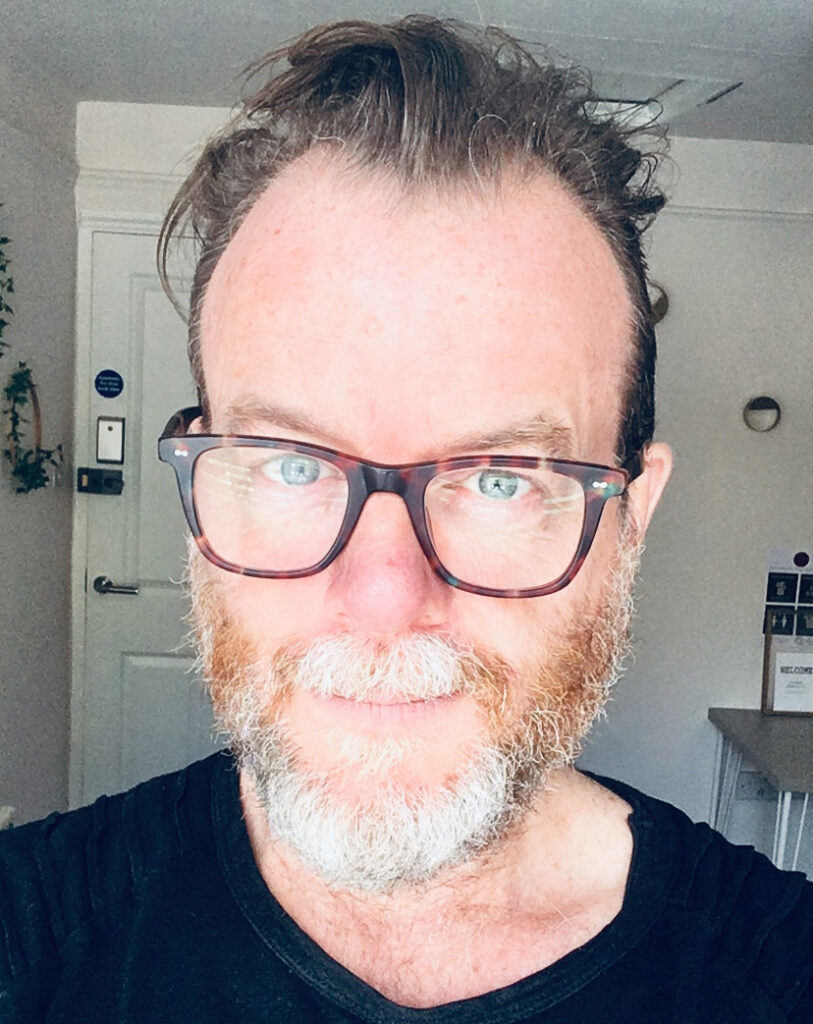
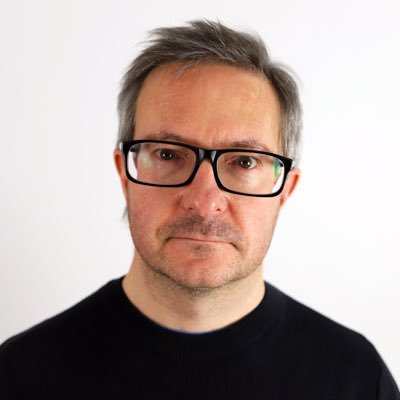
In our latest Playwright interview Director of Get the Chance Guy O’Donnell chats to Wales based Playwright Neil Bebber. Neil discusses his career to date, his latest project “Short Stories for Stressed Grown-Ups”and his thoughts on opportunities for Playwrights in Wales.
Hi Neil great to meet you, can you give our readers some background information on yourself please?
Hello! I’m a playwright, screenwriter, copywriter and graphic designer. I enjoy cycling, sea swimming, hiking at night under star-stuffed skies, endlessly scrolling though Netflix trying to find something good to watch, cooking (though my recent attempts at culinary genius have fallen short) and playing online Scrabble with strangers. For the record, I haven’t lost a game. Yet.
So, what got you interested in the arts?
Pantomime. Probably. I remember the feeling I had watching a school panto when I was maybe ten years old. The Seven Dwarves had left for the day to hi-ho off to work and Snow White was left alone in the space. A sequence followed where she just made the most of having the space to herself and I was transfixed.
From an early age, I was curious about the world. Talking to people as soon as I could talk. Asking “why” even more than most other kids. That question can take a child either way. Science allows us to understand how something works. The arts allow us to explore how something makes us feel. I’m a combination of the two. But, having turned down a potentially lucrative career in banking, in favour of a poorly-paid graphic design “apprenticeship” (that’s a whole other story!) I’d chosen my path.
Can you tell us about your writing process? Where do your ideas come from?
I used to fool myself into believing the romantic notion that I could only write when I was wallowing in a pool of self-indulgent pity, but I now realise that’s not true. I don’t know who said it, but writers write. So, the most important part of the process is to start by writing something.
It’s a cliché, but it is a muscle. And the more you do it, the easier it gets. And the more addictive it is. On the many courses I’ve been on, the forensic detail of process has been useful, but I’ve always got more from the automatic writing exercises. It’s a great way to unlock the unconscious mind and discover those seeds lurking in there between the teeth of doubt.
And I make a lot of notes. The romance of a notepad and fountain pen has been superseded by the iphone, but I’m glad that, should I ever hit a pothole on my bike and find myself flattened by an oncoming bus, nobody will ever get to access my notes. There’s a lot of strange musings there. Today I wrote a paragraph about how a crow, battered by the wind, seemed to be perfectly content to walk across the road sideways. And how that might serve as a metaphor. But I don’t know what for yet.
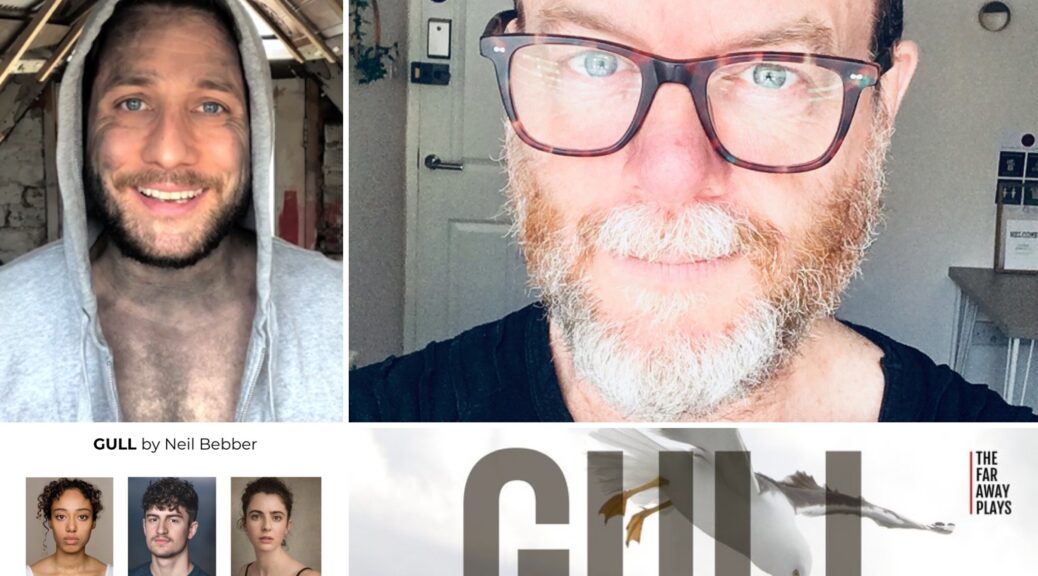
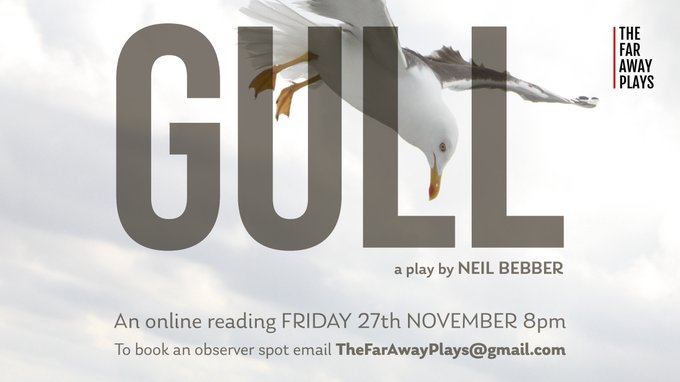
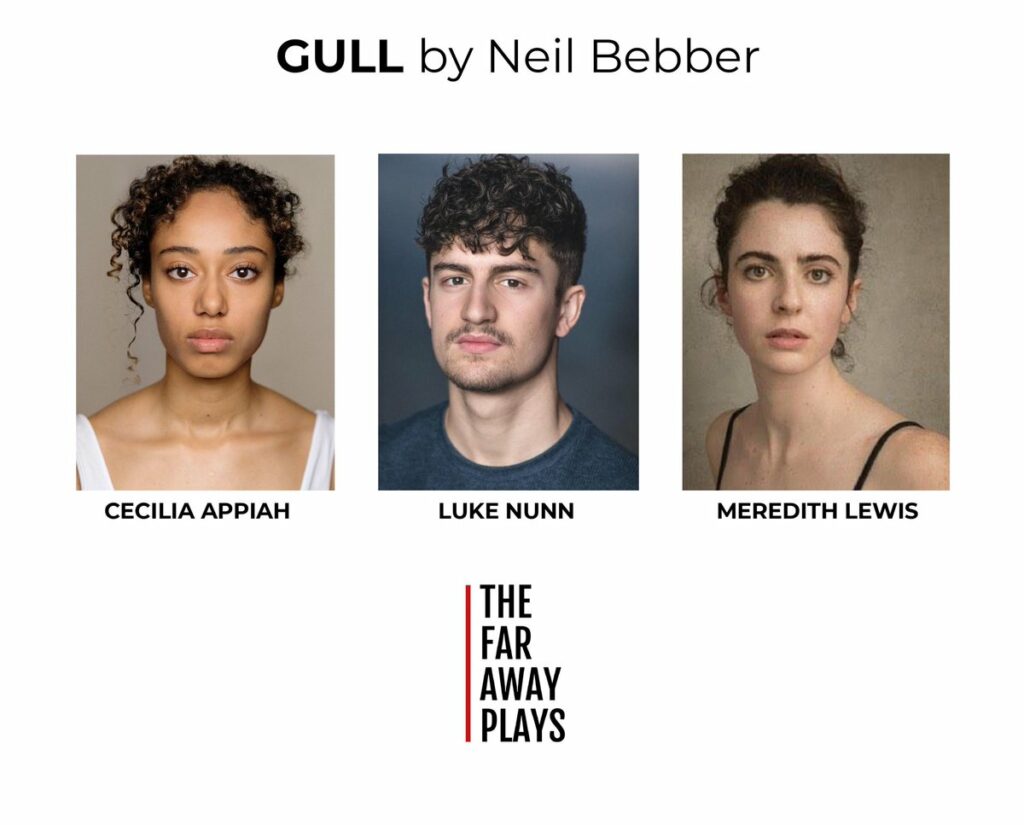
GULL, the play recently read on Zoom by the brilliant The Far Away Plays came about like that. A note about watching gulls rip apart bin bags and hungrily tuck into a pile of used nappies. The revulsion fed the atmosphere of the play.
In terms of dialogue, I believe that writing good dialogue is more about listening than writing. Before our freedoms were curtailed by a microscopic enemy, I used to sit in a lot of coffee shops, just listening to exchanges and watching people’s body language. In recent years, I probably haven’t been the best company, socially, choosing to observe and makes notes, rather than get involved.
Can you describe your writing day? Do you have a process or a minimum word count?
Writing days vary depending on the project. I’m also lucky enough to be able to supplement an artist’s income with commercial copywriting. But, either way, I start early. Check emails, social media between 8 and 8.30 and then make a start on the writing. At the moment I’m in the process of editing an audio play for a competition, writing a new speculative TV drama and also writing, recording and editing my stories for my YouTube channel, “Short Stories for Stressed Grown-Ups”.
Producing my own work has also made me realise the amount of time that’s needed for its design and promotion. The “Short Stories…” project needed to have an eye-catching brand, as well as accompanying visuals for each story. And all of this needs to be shared with the online world. I hope I’m finding the balance between, “oh, that’s interesting, I’m so glad he let me know” and “for God’s sake, not another post about his bloody stories!” If there’s anyone brave enough out there, do let me know!
Why and where do you write?
I write because I have something to say. About something I‘ve seen or something I’ve heard. Or something I feel passionately about.
I write because it’s a compulsion. A bit of an addiction. Especially when I get to see how an audience responds to it, good or bad. Maybe that’s some deep-seated need for validation. But then maybe that’s why any artist creates anything.
I write because it helps me repair. Relax. Forget. Make sense of a world (or of people) I don’t always understand.
I write because it’s satisfying and often surprising to be taken on a journey by imaginary characters, into unfamiliar scenarios and behaviours.
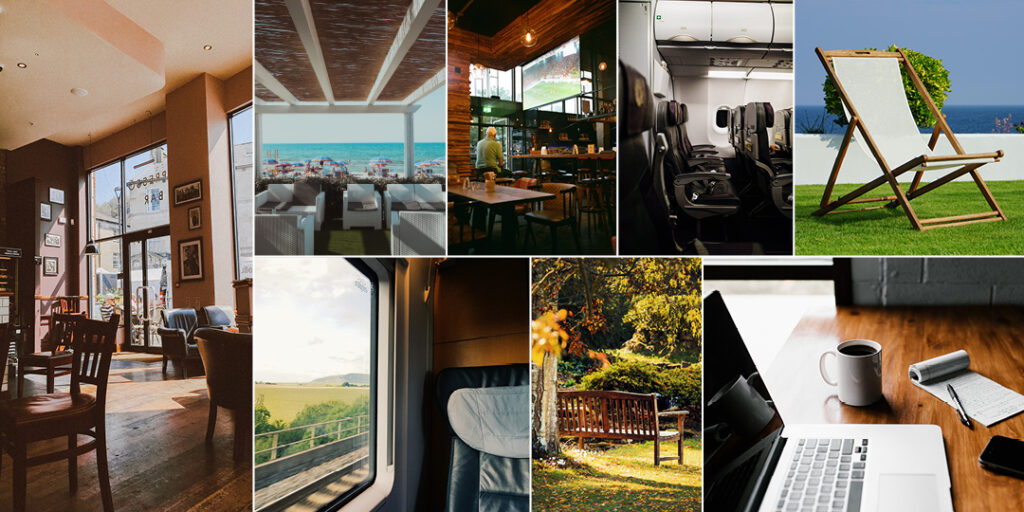
In terms of where I write, I can write anywhere. As long as I have something to balance a laptop on and a reasonably comfortable chair to sit on, I can write. There’s no ritual, no lucky desk or chair of inspiration. So, the photo is of a number of places where I could easily write. And the list is always being added to…
You are a prolific writer working across multiple mediums and forms. How has the Covid-19 Pandemic affected you and your creative process?
It was clear from the beginning that the lockdown, and the continuing response to a global pandemic, was going to fundamentally change a world that relied on the physical gathering of human beings in close proximity, whether audience or performer.
But, pretty early on, I saw an opportunity to get work out to a wider audience. Admittedly, it’s not the same experience as sitting in a studio theatre, tightly-packed with an appreciative audience, breathing the same air and having a collective experience.
When Jordan Bernarde contacted me about re-staging BREATHE (to avoid him climbing the walls during the first lockdown), after a short and successful run at The Bread & Roses the year before, I jumped at the chance. And it’s success has shown that there’s an audience for online theatre.
Theatres talk a lot about diversifying their audience base and this provides the perfect opportunity to do just that. Anyone who might previously have been intimidated by physically visiting a venue, can now watch a performance online and maybe discover that it isn’t the inaccessible, exclusive experience they may have expected. And, from a writer’s perspective, there’s an entire planet’s worth of connected people looking for content. The challenge is standing out amongst the noise!
From my own point of view, there’s been a shift towards demand for more audio drama. I’ve been working on a new play for the Papatango prize, which this year will be awarded to three audio works. And I was commissioned at the end of last year to write a multiple choice audio drama, which would be navigated purely through using Alexa. Exciting stuff!
One of your latest initiatives is the new new YouTube-based spoken word project, ‘Short Stories for Stressed Grown-ups’
You’ve written a number of short stories, which you’ve also narrated yourself. This is how you’ve described the project:
“Remember when you were a kid? And how it felt to be all tucked up and have a story read to you? What a shame that, as adults, we don’t get to enjoy the sheer, indulgent escapism of those moments anymore. Well, now that’s changed. Short Stories for Stressed Grown-ups by Neil Neil is now live! So all you have do is find somewhere quiet, where you won’t be disturbed, and listen to an original short story that will transport you from the troubles of your day.
Whether you use it to help you get off to sleep, or to re-set in the middle of a busy day, every story is written just for you.”
What response have you had to this new area of writing and storytelling?
The short stories were a suggestion by a producer friend of mine, Simon Regan, who I’d worked with on an arts podcast, EVOLUTIONS, shortly before the pandemic kicked off
I was frustrated at the time it took to get work “out there” so he suggested I might do it myself.
I researched the short story market, as well as potential gaps in provision for audio content and I thought a combination of meditative and escapist character-based short stories, narrated in the style of a bedtime story, might work.
The response has been really encouraging. The audience has been very frank about what’s working and what isn’t, the real-time feedback giving me an opportunity to modify the style and content of each new story. I’m also keen to interact with the audience, using names for characters taken from contents pages and maybe asking for suggestions on story ideas and destinations.
It’s great to know, too, that these stories are temporarily distracting people from the stresses of their day and, in some cases, helping them sleep. I’m hoping my voice doesn’t have the same effect during face-to-face conversations, when we return to the “real” world!
In November your latest play GULL was read online by the team at The Far Away Plays. We think the Far Away Plays have been one of the highpoints of creative activity in Wales during the Pandemic. Have you had an opportunity to listen to any of the other Far Away Plays, play readings? And how was it to have your latest play produced on Zoom?
GULL was originally scheduled to be performed at WMC’s Ffwrnes Scratch night in March 2020, but then the world plunged into chaos. So I was thrilled when The Far Away Plays chose it for one of their online performances late last year. Their commitment to getting work out to online audiences, as well as dealing with all the logistical stages in between, has been immense.
I was also excited to be able to cast three incredible RWCMD alumni. Luke Nunn, Cecilia Appiah and Meredith Lewis were just some of the standout actors from 2020 and it was a real privilege to witness their brilliantly instinctive and nuanced performances, especially given the limited time they had to rehearse.
The director James O’Donnell also deserves a special mention. Having put a callout on social media for a director at late notice, James answered the call. The way he was able to take a potentially static medium and turn it into such a dynamic performance was miraculous. I always get really nervous before any production of my work, but it was clear within minutes that GULL was in safe hands, so I was actually able to sit back and enjoy it!
I’m waiting to hear from FAP if there’s a recording I might be able to share with all of the Artistic Directors who weren’t able to make it, because, as good as it was to see the work performed online, this play would (and this team!) clearly work brilliantly on stage.
There are a range of organisations supporting Welsh and Wales-based writers, I wonder if you feel the current support network and career opportunities feel ‘healthy’ to you? Is it possible to sustain a career as a writer in Wales and if not what would help?
“Healthy” might be a misleading term. The opportunities are available, but I wonder how writers are made aware of them. For opportunities, my go-to is BBC Writer’s Room Opportunities page. Then I check London Playwrights, which is another brilliant resource. I’m not sure if there’s a central database for opportunities in Wales. If not, it would be great to have one, where all aspects of writing were covered, plays, films, TV, etc.
Also, there are a number of theatres offering writer’s courses and residences, but there are rarely the resources available to sustain the momentum, once they’ve happened. I’ve been on three writer’s courses and one residency and none of these led to a tangible, ongoing relationship with the respective theatres.
In terms of sustaining a writing career, I think it’s important to diversify. I’m lucky to also be a freelance copywriter and graphic designer, but, even if I was commissioned to write three plays a year, the income generated wouldn’t be enough to sustain a family, mortgage and other regular day-to-day commitments. From what I can gather, to make any sort of living, TV writing seems to the way forward. Ideally I’d like to be able to do a bit of everything, though, as I’ve been lucky enough to so far.
If you were able to fund an area of the arts in Wales what would this be and why?
I think a TV writing academy would be a valid investment now. As Wales becomes used increasingly as a destination for production, and companies like Bad Wolf continue to thrive, a joined up, sustained TV writing “lab” could help nurture home-grown talent and ensure Wales was increasingly self contained, moving forward. Especially given the increase in demand for content from online providers like Netflix and Prime.
Diversity. The sheer extent of opportunities to make and view art for a country with a reasonable small population. I’m hesitant to use the term, “punching above its weight”. Oh, too late. I have.
And then there’s always the occasional parallel universe curveball of one of Tactile Bosch’s performance art nights. That’s what first made me realise I was living in a capital city. Ah, I miss Kim Fielding. What a lovely man.
Image Credit Emmageliot’s Blog
What was the last really great thing that you experienced that you would like to share with our readers?
There are so many things that have either left me speechless, laugh uncontrollably or made me cry, sometimes all at the same time.
I remember sitting down in my office (in the middle of the first lockdown), with headphones on, to watch Complicite’s “The Encounter”, and feeling within minutes as if I’d been transported to another world, by both the performance and its remarkable aural soundscape. Not sure if it’s still available to view online, but there’s more, here:
Charlie Kaufmann’s “I’m Thinking of Ending Things” (on Netflix), whilst sometimes being incomprehensible, felt like a pure artist’s vision, unimpeded by the demands of people-pleasing. Maybe the best art is selfish. And this felt like that. But in the best possible way.
And no conversation (I say conversation, though this has all been a bit one way) with me goes without a music mention. The Dandy Warhols’ 13 Tales from Urban Bohemia has been my favourite album for years. And at the end of last year, they performed a live stream of it, in its entirety, for the first time. For that hour, I was there, front and centre, dancing like a kid in a sweet shop. The sweets being the songs. But not in jars. Obviously.
Anyway, that’s three. Because there’s never any shortage of great things to share.
Thanks for your time
And thank you for this brilliant opportunity to ramble.
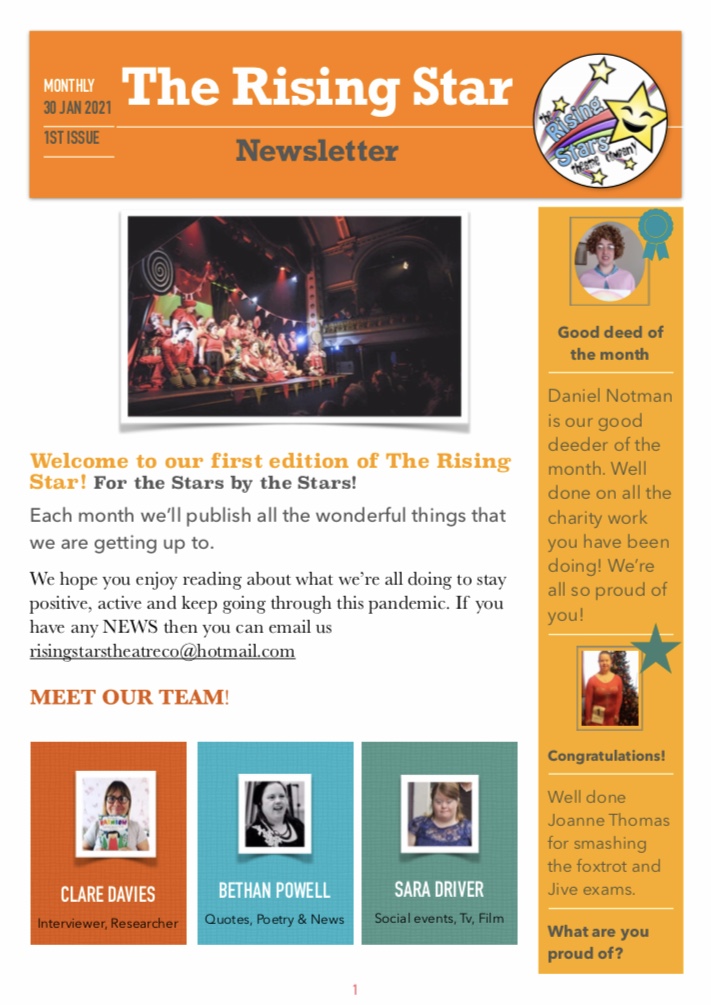
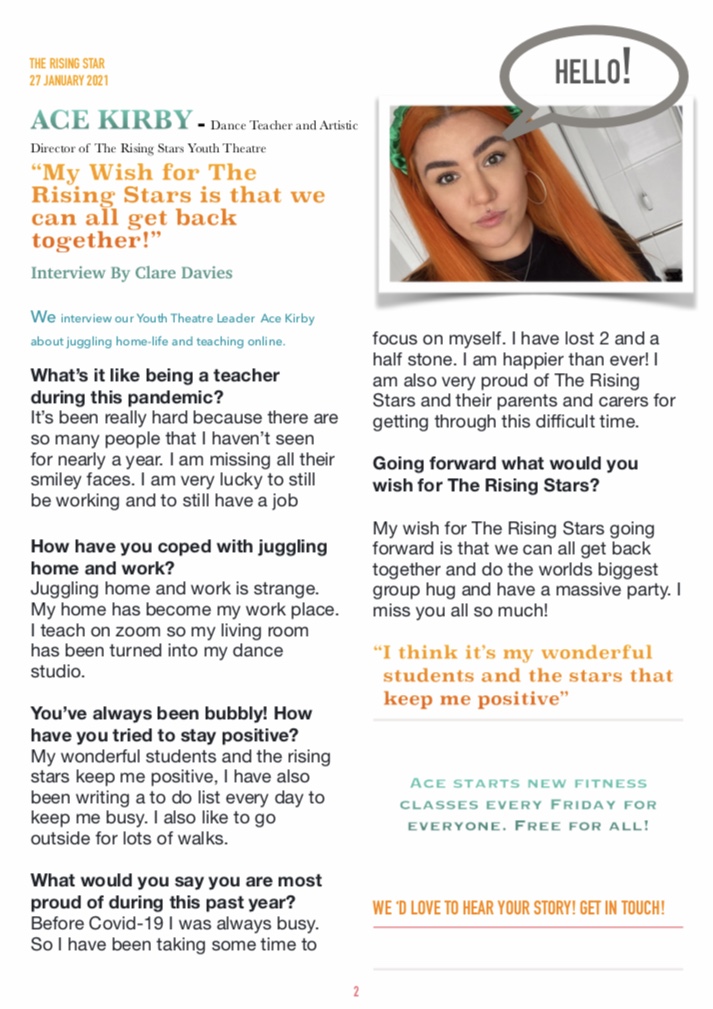
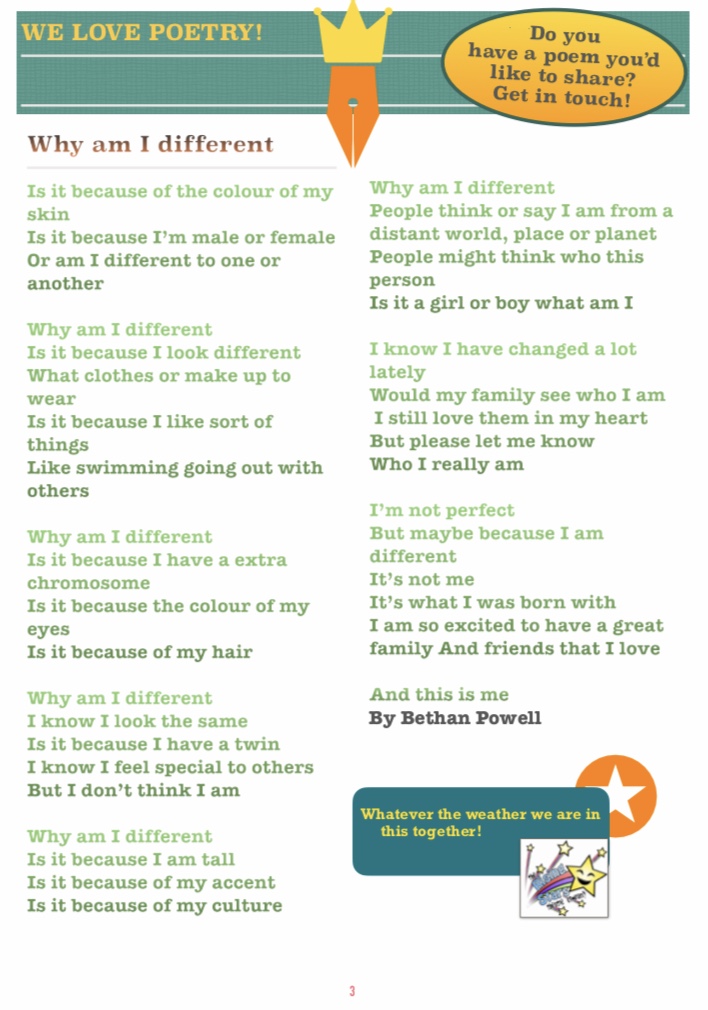
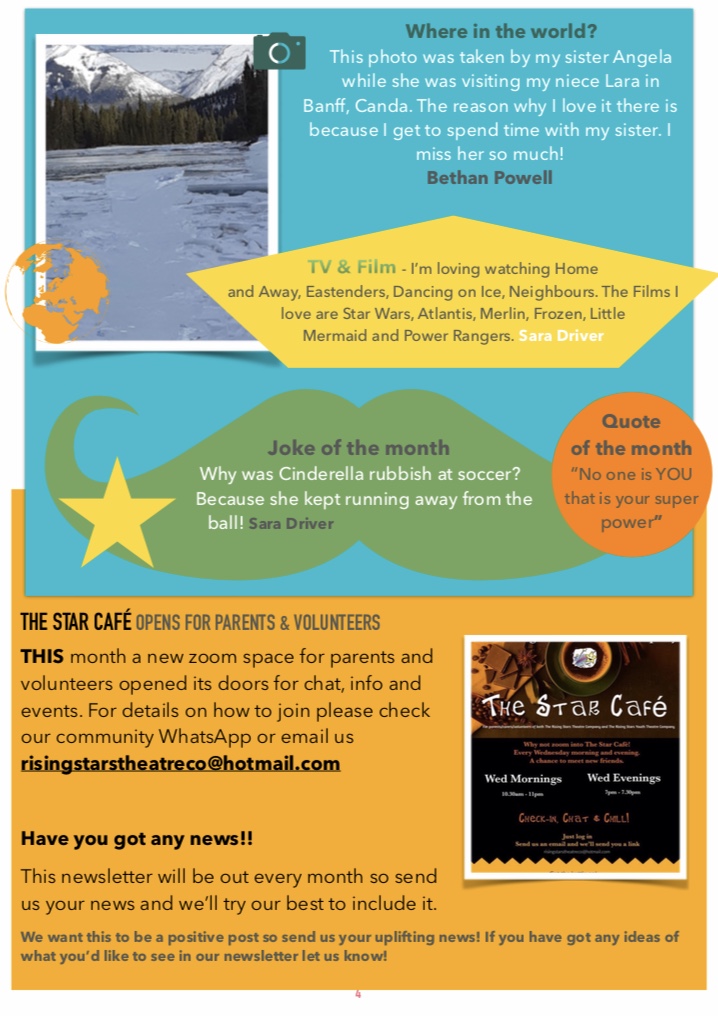
We are happy to share the Newsletter for The Rising Stars.
Please find some information on the group below
The group was originally The Spotlight Theatre Company, which was funded and run by Interplay. When the funding was withdrawn in 2007 we were devastated. All our members have learning or physical disabilities, and there are so few opportunities for them outside of school/ college/ work that we as parents felt we must do something about it. So, we formed a committee and The Rising Stars Theatre Company was born. We rely entirely on charitable contributions and grant applications.
We now meet every Thursday evening from 7-9pm at Friends of the Young Disabled, Cwmbwrla, Swansea under the leadership of Michelle McTernan and Nicola Woodrow. New members are by invitation only and at the moment we are full to capacity! We perform two shows a year, and are available to perform at fundraising events etc
Our mission statement reads as follows.
To promote, maintain, improve and advance the health , well-being, education and citizenship of young people and adults with disabilities, particularly those within the Neath Port Talbot , Swansea and the surrounding areas, as well as for public benefit by the promotion and advancement of the arts; in particular, but not exclusively the arts of drama, music and dance. Also to offer opportunities to perform in integrated stage performances.
You can find out more about the group at their Facebook page here
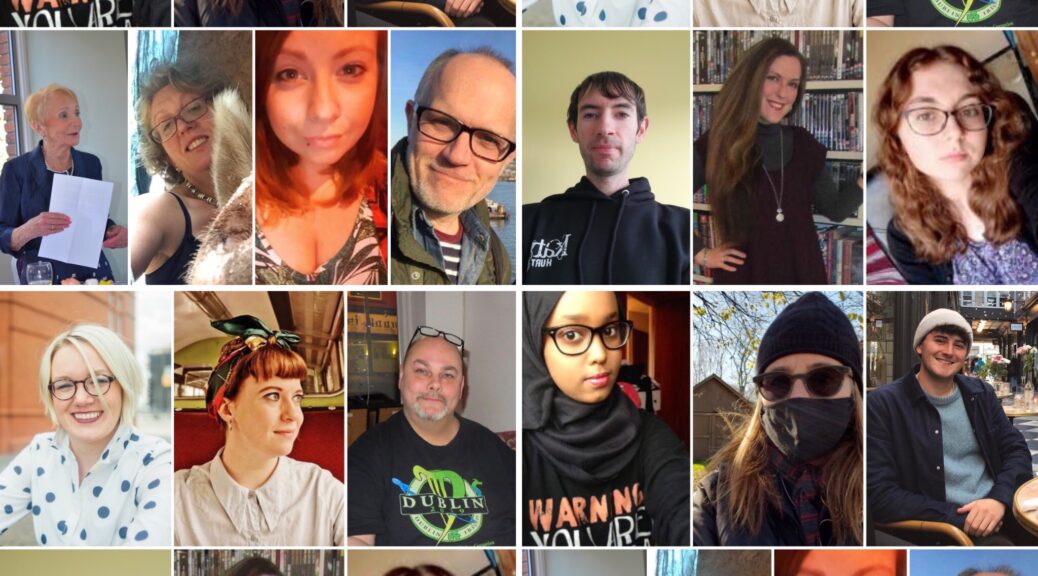
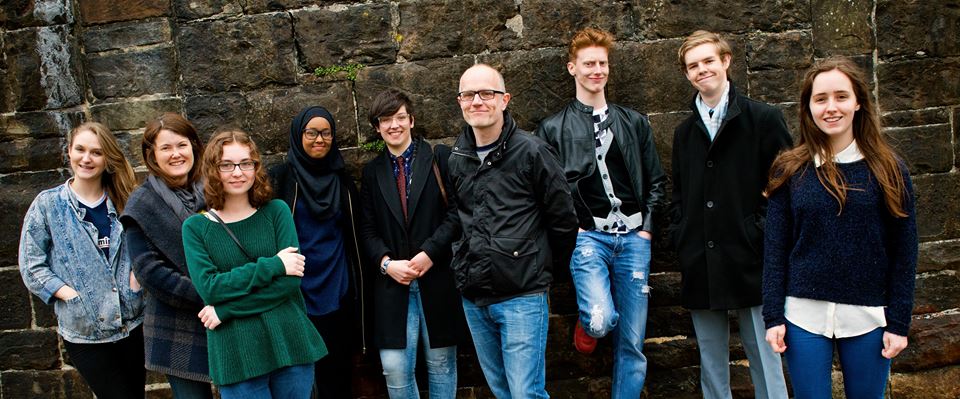
In the article below members of the Get the Chance team share why the work of Get the Chance is important to them and their lives.
You can make a donation to support the work of Get the Chance here
Guy O’Donnell, Volunteer Director
Hi my name is Guy O’Donnell and I am the director of Get the Chance. In this short article our team share with you how vital Get the Chance is to them and their lives. If you can support our work, please donate at the link above.
Get the Chance is a social enterprise based in South Wales. We are Wales based with an international outlook. We work to create opportunities for a diverse range of people, to experience and respond to sport, art, culture and live events. We use our online magazine website as a platform to showcase our members activities. We provide a fantastic opportunity to develop cultural critical voices and ensure that people from certain groups of society, people that are often forgotten or unheard, are given a platform to share, review and discuss their lives and critique work in a public platform.
Not only have we supported conversations about the arts and culture in Wales, but we’ve also broken-down barriers and asked questions about who actually gets to critique art. It is this democratisation of criticism that is crucial to a healthy and thriving artistic community that listens to everyone. Thank you.
Gemma Treharne-Foose, Volunteer Director and Critic.
Hi, my name is Gemma Treharne-Foose. I’m a board member and volunteer with Get the Chance. We’re a community of volunteers, activists and enthusiasts dedicated to expanding the reach of arts, culture and sports in Wales. At Get the Chance, we exist to create a space and a platform for people to participate, engage in and respond to theatre, arts and culture. In particular, we help people who are perhaps traditionally hard to reach and support them to access and experience these spaces.
Part of the work we do with our community is to encourage and support them to build up their skills, responding to, vlogging about, and writing about their experiences accessing arts, theatre and culture, and also helping them access particular schemes and initiatives with partner organisations.
At the moment the arts and live event industries in Wales are hurting and they’re struggling right now as they try to access support and gain audiences in these uncertain times. I believe this is an arts emergency and I want part of my work with Get the Chance to support the industry to get back on its feet again and to get audiences enjoying live events and theatre again.
If you also want to support and highlight Welsh theatre, arts and culture then I’d encourage you to get involved. Let’s shine a light on the amazing work happening right now in Wales. The show must go on!
Barbara Michaels, Volunteer Critic.
As one of the most senior reviewers who has known Guy O’Donnell for many years, I can’t stress enough how important it is that Get the Chance continues to support the youngsters who want to become involved in the arts, many of them with the aim of a career in the media.
During the time over the years I’ve been reviewing, I’ve been really impressed by the young people who are coming up into the ranks, who have become very knowledgeable and very enthusiastic about their involvement with theatre. Unless we get some financial support, it’s going to be so difficult to continue with an organisation like Get the Chance which does so much good, giving opportunities to young people who wouldn’t have them.
With the cost of seeing the performances of opera and ballet and theatre rising, and inevitably it is going to rise more, it is absolutely vital that we have some support both financially and in all aspects of an organisation like Get the Chance. Thank you.
Kevin B Johnson, Volunteer Critic
Hi my name is Kevin, I work in an office, I like long walks on sunny beaches and I’m Sagittarius. Apart from that, I’m a member of Get the Chance because I like seeing new shows, new films and sharing them with other people, bringing my discoveries to others and getting a chance to view them. I like to highlight what I love about the shows that I’ve seen.
Becky Johnson, Volunteer Critic
Hi my name is Becky Johnson and I’m a member of Get the Chance. I’m actually a freelance dance artist based in Cardiff and I’m a member of Get the Chance alongside that. So with my practice I tend to create work, I tend to perform and I tend to teach, and a big part of me being an artist is making sure that I can see as much work as possible and then also understand the wider perspectives, on not only dance but also the arts in general and the things that are going on in our current climate and our local area.
So with having Get the Chance alongside of it, it allows me to access these different things and to get opportunities to see these, which I wouldn’t necessarily financially be able to do otherwise. Also, it allows me to have that time dedicated to just look at these things analytically and also just to really try and understand what is going on in what I’m watching and what I’m seeing, rather than just watching it and acknowledging what’s happening. Writing with Get the Chance gives me an opportunity to use my voice to promote the things that I really care about and things I’m passionate about, the things I think need to be highlighted, whether that’s something that’s problematic that I see in a show or something that I think’s wonderful that needs to be shown more of and we need to see more of.
Another opportunity that I’ve had recently which has been amazing is the opportunity to interview people that I’m very proud to have had the opportunity to speak to and to be able to give them a voice to speak about their platform and what they’re doing. This is really important to me as a lot of these issues are very important and very close to home and I think it’s something that without this platform I wouldn’t be able to do.
I’ve always loved writing, it’s something that I did always want to pursue but by being a member of Get the Chance I’ve been able to continue my writing in a way that’s still linked with my practice. It means that I can find the balance of both of these feeding each other. I’m really grateful for having this opportunity.
Leslie R Herman, Volunteer Critic
Get the Chance has been one of the ways I’ve been able to maintain a connection to the arts and culture in Wales. I’m writing this message from New York City. It is mid-August 2020. I’ve been unable to get back to Wales due to the Covid pandemic and the global lockdown. Not only am I really missing Wales, I’m missing connection, to people, to places and to the arts and culture that I’ve grown to love and live for – arts and culture that have helped me thrive throughout my life.
At the moment it really feels like we’re all of us spinning in our own orbits and cyberspace is our most vital tool but if that’s all we’ve got, I’m afraid it’s way too nebulous for me. I need to feel more grounded.
Get the Chance really has given me the opportunity to get grounded and to connect to people, to the arts, to culture. It’s given me the opportunity to mentor young people and it’s given me the opportunity to extend and rebuild my own career. What’s marvellous about get the chance is its open and flexible approach to giving people a chance to connect to culture. Why don’t you give Get the Chance a chance?
Beth Armstrong, Volunteer Critic
Hi! My name’s Beth. I’m 24, and I’m from Wrexham, North Wales, and I’m currently training to be a primary school teacher. I’m a member of Get the Chance because it allows me to watch a great range of theatre performances which I wouldn’t normally get to see due to financial reasons, and also allows me to see a really diverse range of different kinds of theatre which I think is great for expanding my knowledge and experience of theatre in general.
Having my work published online is a great opportunity for me because it allows me to have a wide audience for my writing, and it also allows me to engage with other reviewers and read their work as well, so it’s a really fantastic opportunity.
Samuel Longville, Volunteer Critic
When I left university, Get the Chance was a really amazing, creative outlet for me. I was able to see so much theatre for free which would have been really difficult at the time, having left university as a not very well-off student. I was working a quite tedious nine-to-five job at the time so Get the Chance really served as that kind of creative outlet for me, allowing me to see as much theatre as possible, and not only to see it but to think about it critically and write reviews about it. So it really let me utilise the things I’d learned on my drama course at university.
I’m soon to start an MA in Arts Management at Royal Welsh College of Music and Drama and I think, without Get the Chance, my enthusiasm possibly could have wavered over the past year, and I still may be stuck doing the same nine-to-five job that I was previously doing. So I really can’t thank Guy and Get the Chance enough for all the opportunities they gave me over the past year.
Helen Joy, Volunteer Critic
Hi! My name is Helen Joy, and I’m here to talk a little bit about my experiences with Guy O’Donnell and his extraordinary Get the Chance. I joined Get the Chance as a 3rd Act Critic when it started, which is a couple of years ago now, and I was a little less grey(!), and it has given me the most extraordinary opportunities that I would not have had the opportunity to take otherwise. For example, I was able to go to the Opera regularly, something I never thought I’d be able to do or that I would enjoy. I’ve been a keen follower of modern dance – ditto, never thought I’d do that – and it’s also given me the chance to really think about how I evaluate things.
So, for example, much more recently, I was given the chance to interview Marvin Thompson. I think this gave me one of the biggest challenges I’ve had for a long time. He, and the experience of planning and conducting an interview, and recording it visually and hourly on Zoom, made me really think about, not just how I wanted to react to him and to his work, but how I felt about it.
Often, I fall into a particular category: of the classic middle-aged, white, educated woman, where the opportunities are already ours, and we’re very lucky with that, but we’re also quite a silent group. People don’t really want to hear what we’ve got to say, which is why we tend to shout it from the rooftops I think; or why, equally, we disappear into the aisles of supermarket. This has given me and my colleagues tremendous opportunities to re-find our voices and to share them, to listen to what other generations have to say. It’s been a really important experience for me. Long may it continue. Thank you!
Barbara Hughes-Moore, Volunteer Critic.
My name is Barbara Hughes-Moore, and I recently completed my Doctorate in Law and Literature at Cardiff School of Law and Politics on Gothic Fiction and Criminal Law. So by day, I’m a scholar, a reviews editor, and a research assistant; and by night, I write longer retrospective pieces on film and television through a gothic and criminal lens on my personal blog.
I’m a member of Get the Chance because its mission is all about increasing the visibility of, and accessibility to, the arts for everyone. Since becoming a member, I have attended and reviewed numerous theatre productions at the Sherman Theatre, the New Theatre, and Chapter Arts Centre. I’ve been a featured speaker on the Sherman Theatre’s post-show panels. And, more recently, I’ve had the pleasure of interviewing director Alison Hargreaves on her short film Camelot for the Uncertain Kingdom Anthology. Most importantly of all, Get the Chance has not only given me a voice – it has given me the space, the opportunity, and the confidence to use it.
Gareth Williams, Volunteer Critic
Hi! My name is Gareth. I am 29 years old and I live in North East Wales, and I’ve been asked to say why I’m a member of Get the Chance, and I want to answer by slightly rephrasing the question in order to say what Get the Chance means to me. And first of all, it means having the opportunity to respond to the arts in Wales; to contribute to the discussion around arts and culture in Wales; and to engage with various art forms.
To that end, it is an opportunity to support and promote artists and organisations, particularly those that I’m passionate about. So for me, that looks like theatre, particularly the work of Theatr Clwyd in Mold; music – I’m a fan of country music, and it’s great to be able to showcase Welsh country music talent on the Get the Chance website – and TV drama. Welsh TV drama is going through a bit of a golden age at the moment, and it’s great to be able to be a part of that as somebody who critically reviews these shows as a writer.
I’ve always been much better at writing than speaking. I’ve never been very good at expressing an opinion though because of low self-esteem and confidence. But being a member of Get the Chance has given me an opportunity to express an opinion. It’s increased my self-esteem and my confidence to speak about how I feel about the things that I see and watch and listen to and engage with. And I think, for me, that is the most important thing about being a member of Get the Chance: that opportunity to express an opinion which, a couple of years ago, I would not have had the confidence to do.
Sian Thomas, Volunteer Critic
Hi! My name is Sian. The main reason I joined Get the Chance is because I love reading and I’ve always loved reading, and I really like having a definitive place where I can put down my thoughts on any piece of media and see people respond in so many different ways, and even the authors of the books that I’ve reviewed responding in so many different ways as well. It’s really lovely to have that kind of freedom of expression and I really value being a member.
Amina Elmi, Volunteer Critic
I am a member of Get the Chance because it gives me a platform where I can speak my mind . It allows me to give my opinion and being able to do so enables me to explore the media, the news and whatever preferred genre or medium of entertainment I want.
When it was introduced to me I was into writing and that has helped shape what dreams and ideals I have while also keeping my writing skills at a solid, good level. I am fortunate to be a part of Get The Chance because it has given me opportunities that I would not have had otherwise.
Hannah Goslin, Volunteer Critic
I am a member of Get the Chance because theatre and the arts is what I eat, live and breath. To be able to connect with fellow performers, practitioners, critics and journalists is a wonderful chance to learn, be inspired and to network.
Creating opportunities for a diverse range of people to experience and respond to sport, arts, culture and live events. / Lleisiau amrywiol o Gymru yn ymateb i'r celfyddydau a digwyddiadau byw