
All posts by Gemma Treharne Foose

Communications/PR/Digital. Copy Writing. Valley Girl. Siarad Cymraeg. Japan fan. Roller Derby. Feminist. Cake maker. Lover of all things glittery and theatrical. Mam. Wife to an American. Views personal.

REVIEW: THE GOOD EARTH, CHAPTER ARTS CENTRE 20TH SEPTEMBER 2016

28994264051_75d362151a_z
 out of 5 stars (3 / 5)
Black grit, sunshine and avocados: what makes a ‘life in the valleys’ play? 

I am always slightly filled with dread and anxiety when I see any show which is based in the South Wales Valleys. Firstly there’s the debate about where the ‘valleys’ begins and where Cardiff ends. Cardiff dwellers seem to assume that ‘the valleys’ starts somewhere north of Llandaff, while also lumping in Bridgend and much of Swansea as well – well we all sound ‘Welshy’ don’t we?

My childhood friend is insistent to the point of violence that our home town (Tonyrefail, in case you’re interested) is categorically technically in ‘the valleys’ and absolutely and most definitely outside the perimeter of the ‘Rhondda’. This is important (ol’rite?!). What she has against the Rhondda I don’t know. You’d swear it had a negative reputation or something!

 The problem with ‘valleys plays’ 
Back to my earlier point about ‘valleys plays’, depending on the producers – the accents in some plays may range from broad Llanelli to Mid-Merthyr and back again.  You may get a mash up of Stella (Sky) meets Hi-De-Hi meets Frank Vickery. And well, how can I say this politely? Sometimes we sound a bit….thick. I know, I know…I might be projecting my own negative prejudices and assumptions here…it’s an issue for me and I’m getting help. But I’m really not sure whether the ‘simple’ depiction of some of the characters is meant to be a source of comedy or whether this appears to be an attempt to broadly tar us all with the same brush. There is a danger of lazy stereotyping which I’m hyper aware of. Unfortunately, this was my starting reference point even before going in to the play.
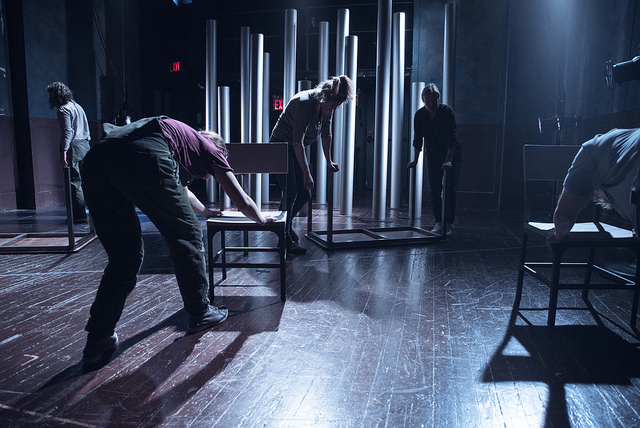
As you may have picked up I probably have a chip on my shoulder the size of a Christmas ham where all this is concerned.  It’s often not comfortable viewing for me. And I’m going to be frank, I found the first 10 minutes of ‘The Good Earth’ a hard watch as I tuned in to the story…the accents, the blocking and the furniture scraping across the stage.
28994252181_3d361706f7_z
Tidy little melodies 
Musically, the cast gelled wonderfully and I adored the additions of the Welsh hymns and lullabies interspersed with the scenes. The song ‘Mae gen i dipyn o dy bach dwt’ (Translated as ‘Tidy little house’) was a perfect song for the backdrop of the play, which appears to be based on a real story.  Villagers in a mountainside village are threatened with being moved from the community they love and have lived in for generations. We see a family and their extended friends and family battling the local authority (and each other) as they fight it out.
We’re introduced to all the people ‘all living in a big long street’ – all ‘Mr’ and ‘Mrs’…one by one.  It all sounds very lovely and cosy. I cringe at the mention of seeing sheep from a window. (Really? Most kids don’t see a single bloody sheep til they visit Folly Farm when they’re 10!). But bit by bit, the innocence and sweetness of little Jackie (played by Gwenllian Higginson) wins me over and helps me lower my defenses.
Vol-au-vont observations… 
There are some really crisp references and superb lines which echo and crystalise life growing up in the valleys (for me anyway). Ever been ‘bastard cold’ or ‘bastard tamping’? Mam Dina describes her situation as ‘Bastard hard’…and of course you always know Mam’s gonna blow when there is a ‘bastard’ before the next word! You will of course be familiar with vol-au-vonts, which has been standard fayre in the valleys since the seventies and remains so to this day. In fact people go to funerals mostly to eat vol-au-vonts at the wake. True story.
I adored the little scene where Dina puts on a spread and is cross-examining poor Gwen with her preparation technique. There’s an uncomfortable pause as Gwen described putting ‘a touch of black pepper’ on the vol-au-vont as a finish. ‘A bit much that is, Gwen’ came the response.  I had the same type of experience when I tried to buy an Avocado in Porth a few months back – the cashier in Morrisons looked at me with pity and distrust as I described how I was going to make Guacamole with it.
28452919153_b5f68c6108_z
There’s an interesting scene with James (played by Mike Humphries) as he gives an impassioned speech to the local authority representatives… People here don’t want jobs given to them that don’t benefit the community, how can they be grateful for poor housing, they need help and there are no public services and the community is crumbing. It’s an all too familiar story and one for which there are few solutions, particularly where the South Wales valleys are concerned.  I’m always interested to see attempts to re-write this story, this bleak fate of ours. And I want to hear from the dissenting voices too. Why was it that Gwen wanted to leave the village? For me, there is no romance for me in always sticking with the old – but maybe I’m missing the point.  I choose to look to the sky in the valleys, not focusing at the bleak bits and obsess on the tragedy of the past all of the time.  This is what I’d like to see more of in Welsh theatre. We are more than our past – and this doesn’t mean we are being discourteous or lacking in respect for those who toiled and bore the brunt of an unfair system.
What about the avocado-buying types? 
Ultimately, I’m wondering when there have ever been jobs that haven’t exploited the working man, whether coal mining, factories or McDonalds Drive-Thru’s. A whole generation is now in the position of being ‘the working poor’ or possibly part of a family that have never worked. Our communities are not as they were. We’re moving on…slowly. We’re even buying avocados now! But seriously…this play contrasts wildly with what many of us find in our own streets – there are no Mams scrubbing the steps anymore, we don’t know our neighbours names and it’s not the thought of leaving that frightens us, it’s staying in one place forever.The opening song in the play sings about the grimness and the blackness from Merthyr to Blaenau to Rhondda. That sets the scene really. Try finding the sunshine when you’re battling with these assumptions (maybe that’s why my school friend gets so tetchy about NOT being from the Rhondda). She now lives in Chippenham, so I doubt people look at her funny when she buys avocados.

This wasn’t the most uplifting of plays, but it throws up a million questions that will keep you pondering long after you’ve seen it – do our roots really matter, do they define who we are, is a house just a house…and do you like ‘fruit compost’ with your cheesecake? (Possibly one of the best lines of the night!).

Duration: approx 1hr 20min, no interval 

Director: Rachael Boulton
Musical Direction: Max Mackintosh
Co-produced with Motherlode and RCT Theatres, in association with Chapter, Wales Millennium Centre and Blackwood Miners Institute, supported by Arts Council of Wales.

Review Wonderman, Gagglebabble by Gemma Treharne-Foose

wonderman_web_social

 out of 5 stars (5 / 5) Unmissable

A lucid, slightly seasick jazz-kissed dream

Have you ever had a dream and woken up not quite knowing if what you’ve just experienced was real? That hazy half-sleep mode when your sleep-induced mind hallucination feels like it could be real for a moment? Wonderman – an adaptation of Roald Dahl’s stories for adults perfectly captures the sheer silliness and absurdity of your dreams and the haunted ‘recollections’ of a shell-shocked airman during the Second World War.

Brought to us by Gagglebabble, National Theatre Wales and the Wales Millennium Centre, the show took place in Tramshed’s wonderful pub-theatre venue. Lit by fairy lights outside and with a dim candle-lit, stripped-down vibe inside the performance space, this was a fitting and cosy venue for the performance. Mingling with other audience members and taking in our pints felt informal and exciting – there was already the imposing presence of a 6-piece band, who were gathering in the bar getting ready to take us on an epic journey in to the mind of the troubled airman.

The band line up really is superb and Gagglebabble’s Lucy Rivers (who created the music, played multiple parts and devised the show with Hannah McPake and Daf James) has a magnetic stage presence, as does Hannah McPake. McPake plays an absolutely cracking rendition of a Brighton landlady who perfectly toes the line between Mumsy and psychotic taxidermist waiting to pounce.  Adam Redmore’s depiction of a traumatised, paranoid airman in the midst of a hallucinogenic dream is wonderful and raw.

14370352_10154651637710649_7294233822563557305_n

The music and lyrics move the sequences along beautifully, the overall pace and energy is good and there are plenty of hearty chuckles and clever lines throughout.  Director Amy Leach manages to inject joy and colour in to a storyline that has the potential to be so dark and in such an engaging way – it is frantic, but it is clever and warm. I loved the way the storylines and dream sequences joined up at the end.

Dahl’s works in general exude a childlike charm  – and there are echoes of his characterisation present in his most famous children’s stories in this production – menacing enough to give you the chills, but without too much bitterness or poison.

Chatting with audience members before and after the show, Dahl leaves his mark on people in different ways.

We’re reminded of Dahl when we think of the sheer terror invoked by the TV adaptation of ‘Tales of the Unexpected’ (especially THAT clown under the bed) and of the way that even the most horrid and dodgy characters still have you rooting for them.

We get a weird perverse thrill when Mrs Trunchbull is on the scene and similarly, you’re fascinated by the somewhat pervy Uncle Oswald. In this production, we can’t help but like and want to believe the tender wife who clobbers her husband, the kooky landlady and the funny Jamaican guy who wants a souvenir of the airman’s finger.  At one point, the audience even cheers for the airman’s finger to be chopped off. There is a lot of chopping threat in this production…and you will never look at a leg of lamb without smiling again!

It is mad-cap, it is fantastic and the whole thing was a lucid, slightly sea-sick jazz-kissed dream. It’s quite fitting that the opening night for ‘Wonderman’ should fall on the centenary since the birth of one of Wales’ literary gems.

There’s an excited chatter, a feel-good buzz all over town as Cardiff prepares for a mammoth weekend of celebrating all things Dahl in the ‘City of the Unexpected’ events.

For me, this was completely unexpected – a surprise full of cheeky mischief, made by misfits…and if you too are looking for a chop-tittlingly toe-tapplingly lush-winkingly good time, you need to shake your tail and get over there to see this show (try the chips in the ‘Waiting Room’ bar/restaurant next door to the venue, too – lush!)

Type of show: Theatre

Title: Wonderman
Venue: Tramshed
Dates: 13 September – 18 September, PN 13th September
Devised by: Daf James, Hannah McPake and Lucy Rivers
Music by: Lucy Rivers
Design: Hayley Grindle
Technical: Joshua Carr (Lighting), Dan Lawrence (Sound), Lucy Cullingford (Chpreography & Movement), Bryony Tayler (Costume)
Cast / Musicians include: James Clark (Piano), PeteKomor (Double Bass), Hannah McPake (The Landlady), Mark O’Connor (Drums), Adam Redmore (The Airman), Lucy Rivers (The Wife), Joe Shire (The man from the South).
Running time: 1hr 45min
 

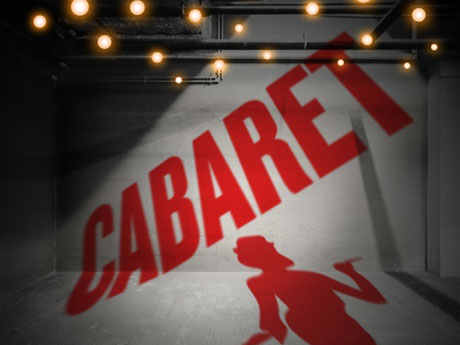
REVIEW ‘CABARET’ (RICHARD BURTON COMPANY) RWCMD GEMMA TREHARNE-FOOSE

cabaret-no-heading-web
 out of 5 stars (4 / 5) Very Good!

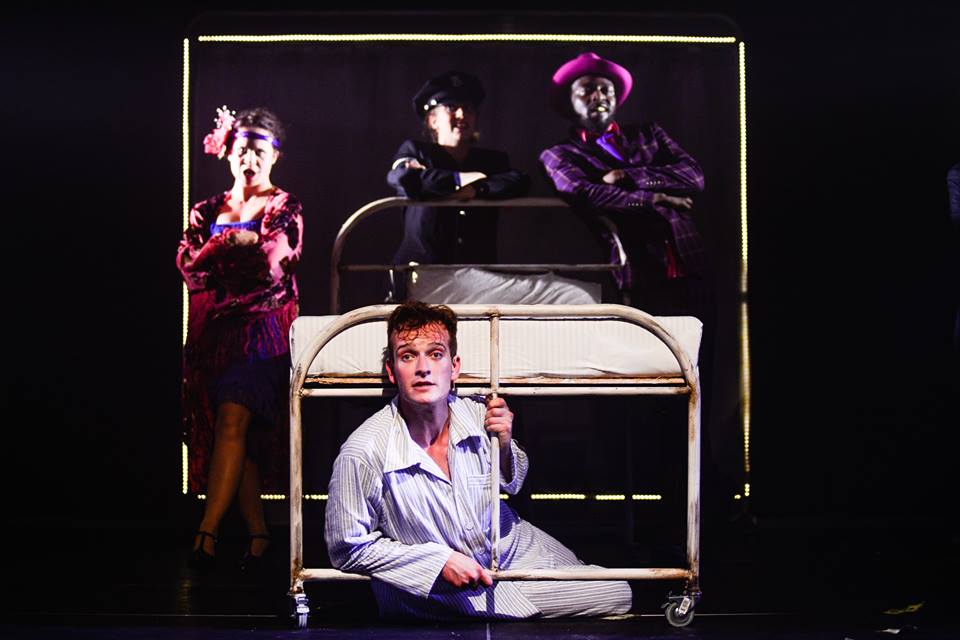
Whatever is in the water in the Royal Welsh College of music and drama, I want some of it for myself. Despite being a fan of many years of the soundtrack for the musical and Liza Minnelli’s legendary portrayal of Bowles in the film version – I hadn’t until tonight seen the full stage version of the production.

The musical tells the story of the seemingly wild and carefree days of Berlin in the 1930s and the outrageous goings on at the Kit Kat club, a place where the harshities of the rise of right wing ideology and the slow tentacles of anti-Semitism and Nazism will eventually bring the party to an end. Until then, as the fabulously quirky emcee reminds us: ‘Outside your life is disappointing….in here, life is beautiful!’

For those who are unfamiliar with the usual style of the musical, the usual depictions are famous for some of iconic choreographer Bob Fosse’s trademarks – bowler hats, canes. gloves, black clothes, wooden chairs, a smoky vintage jazz club, waistcoats, stockings and sleek buns. This production has turned the classic Cabaret on its head. It gives us 50 shades of sass. It has been dry humped by Beyonce and licked by Miley Cyrus. If as I did, you should see this show with your Mam, she may disapprove of the sexy stuff – far too many open legs and bending over perhaps. This may of course encourage you to like it even more. Corey Jones’ uninhibited performance may make your Nan or you Mam blush, but he and the cast execute Tom Jackson Greave’s choreography beautifully. I loved the freshening and brightening up of Jessica Campbell Plover’s costume design: flashes of pink bra or turquoise stockings and some strategically placed PVC bondage tape, a sweep of Adam-ant style eye make-up brought some a more modern and edgy look to the cast. The look and feel in the Richard Burton theatre was fresh and industrial – pendant lights lowering and raising up to complement the mood and pace of the songs, a cage wall which will remind you of the musical and film ‘Chicago’ and a stripped down feel rather than focussing solely on the style of the 1920s/30s.

Although the role of Sally Bowles can be a difficult one to pull off once you have seen Liza Minnelli mic drop it in the 1972 film version, Adena Cahill’s vocals are incredible and her performance of the song ‘ Maybe this time’ was blinding. Special mention also to Rosie Archer as Freulein Schneider and Dafydd Gape as Herr Schultz for their sweet portrayal of a blossoming relationship than never has an opportunity to come to fruition. The story of the play is as relevant in 2016 as it was when the play was first performed in the 60s, during a time of great civil unrest in the US. Politics and all the ugliness that comes with it is absolutely about us all, whether we realise it or not. At one point, Nazi sympathiser Ernst Luvig (played by Tom Corbishley) tells exasperated American Clifford Bradshaw (played by Jonathan Radford): “Enough politics…what does it matter anyway?”. Sally poo-poos Clifford and encourages him run an errand for the Nazis, as it’s ‘nothing to do with them anyway’. The friends and associates we think we know…we actually don’t. But life is a Cabaret and the show goes on, eventually. As Fraulein Schneider tells Cliff about all the hardships she previously encountered: ‘I survived’. It’s a message worth remembering this last week, especially.

I doff my bowler hat and wave my jazz hands excitedly in the direction of the Royal Welsh College. The show was a little bit saucy and a little bit rude…and I for one found it bloody ‘wunderbar’.

Type of show: Theatre
Title: Cabaret
Venue: Royal Welsh College of Music and Drama
Dates: 22-30 June
Director: Paul Kerryson
Music: John Kander
Lyrics: Fred Ebb
Musical Director: Nathan Jones
Choreographer: Tom Jackson Greaves
Set Designer: Tina Torbey
Lighting Designer: Becky Heslop
Costume Designer: Jessica Campbell Plover

Review ‘Meet Fred’ Hijinx Theatre by Gemma Treharne-Foose

2016-02-15-19-06-59-2-560-1-1455563219-

 out of 5 stars (5 / 5) – Unmissable

Imagine being cast in a role you had no idea you were expected to play. You hadn’t even been invited to the audition. Instead you are plonked uncomfortably and awkwardly in the spotlight. The script is already written for you and you are presented with a comically ridiculous set of choices and no map to navigate through. Did I forget to mention that as you are trying to navigate through and find your feet, those in charge will periodically cut the budget leaving you powerless (or in Fred’s case, legless….in more ways than one!).

As part of the company’s Unity Festival, Hijinx (in association with Blind Summit) depict the harsh realities of people – with learning disabilities or otherwise – who have the misfortune of encountering the dreaded ‘system’. Using the Japanese art of ‘Bunraku’, a traditional form of puppet theatre, the company innovatively develop Fred’s story and we see the physical hurdles and ridiculous red tape slowly building up to Fred’s breaking point. Special credit must be given to the three puppeteers who so skilfully manipulate the simple cloth puppet, the level of detail in his movement and the execution of the physical comedy in the piece is absolutely superb. You won’t want to take your eyes off Fred and as the set and settings within the play are moved around, we are introduced to additional characters, all playing an often unwelcome part in Fred’s so-called ‘co-production’. There are real innovative and stand out scenes throughout: Fred’s encounter with a job-centre official and the absurd jobs they offer him (or threaten to stop his ‘Puppetry Living Allowance’), a hilariously-choreographed dance scene and the subsequent drinking session that follows and Fred fighting through the elements as cast members create a wind tunnel/rain storm.

The script is super sharp and clever without having too much of a sting and the cast (especially puppeteer Dan McGowan as the voice of Fred) is first class. At one point, the fourth wall is broken and the audience becomes part of the action as Fred tried to entertain children at a birthday party – the audience become part of the party too. The audience at Porter’s ‘The Other Room’, a theatre/pub venue were clearly moved and fully engaged with the piece. We were all rooting for Fred as the Director (or ‘twat in the green hat’ as Fred describes him) leads him to despair. We are called to question the outdated and elitist attitudes and myths that are still so prevalent. There is a heart-breaking scene where Fred – set up on a date encounters a clearly disgusted Lucille. ‘Am I not what you were expecting?’ says Fred, shrinking before us.

In a post-Brexit age of austerity, of care plans and service managers and outcomes and all the corporate jargonese that dehumanises and distances us from actual feelings and real life – it’s easy to overlook that underneath the paperwork and formalities, there is a person with a voice and ideas of their own (if people just care to listen). This collaborative, devised piece is one of the most creative and original pieces I have seen in a long time. ‘Meet Fred’ is a script with teeth. This is about the freedom to make choices without fear of repercussions and the freedom to write your own script. Hijinx manage to perfectly walk the line between edgy and impactful theatre without bringing you down. Go experience this piece, Meet Fred yourself…your life will be richer for it.

https://youtu.be/avLfU_r7ceU
Type of show: Theatre
Title: Meet Fred
Venue: The Other Room
Dates: 28th
Author: Devised by Hijinx Theatre
Director: Ben Pettitt-Wade
Ben Pettitt-Wade: Director
Ceri James: Lighting Designer
Tom Ayres: Technician
Martin Vick: Stage Manager
Dan McGowan: Puppeteer & Voice of ‘Fred’
Morgan Thomas: Puppeteer
Craig Quat: Puppeteer
Lindsay Foster: Lucille and The Maker
Richard Newnham: Jack
Tom Espina & Giulia Innocenti of Blind Summit: Puppetry Dramaturg
Running time: 60mins

Review Into the Woods, Everyman Theatre, Cardiff, by Gemma Treharne-Foose

rsz_1rsz_everyman_group_shot_b-MAND-USE-THIS

 out of 5 stars (4 / 5)

This review was written prior to the E.U. Referendum vote

With the UK teetering on the edge of an E.U Brexit, the superb opening night of Everyman’s production of ‘Into the woods’ seemed almost prophetic: ‘be careful what you wish for’.

Set in the leafy grounds of Sophia Gardens, Cardiff Everyman have created a little haven for enjoying six pieces of outdoor theatre productions this summer. The opening night of the summer line up saw Stephen Sondheim’s notoriously wordy and complex piece brought to life by the energetic ensemble cast.

Those unfamiliar with the plot will see many familiar characters from Western fairy tales: Cindarella, charming princes, an evil witch, Rapunzel, Little Red Riding Hood, Jack and his magic beans and the big bad wolf. Richard Tunley’s direction and Rob Thorne’s dramatic musical arrangement brings the piece to life via a live band tucked beyond the stage. There are whimsical and bohemian touches to the set, dashing costumes and beautiful puppetry (milky the cow and those pigeons…watch your eyes!). Audiences are taken on an extended musical romp through a tangled but hilarious set of interweaving stories – with a very modern twist. Little Red Riding Hood (played by the fantastic Darcy Welch) now has an attitude – and a knife – and she’s not afraid to use it!, Cindarella’s really not that bothered about the prince and the faithful baker’s wife who wants a baby has a ‘moment of madness’ in the forest with the prince.

Sondheim’s tongue-in-cheek take at the underlying sexism, cheesiness and saccharine plots of our well-known fairy tales is a thing of brilliance. There are some pantomime moments too – an added aside to the audience, a knowing look, in jokes, a moment when Rapunzel (Giaccolina Crothers) got her plait stuck in the branches of the set and the baker’s wife (Laura Phillips) doesn’t miss a beat, dashing across the stage shouting ‘I’ll help you, love!’. There are also deeper undercurrents at work here though – and we see the subtleties at work via Rapunzel and Jack’s struggle for independence from their over bearing parents (‘If you love them…you have to let go…’) and with the grass always being greener on the other side. The prince gets his woman, but even he is bored by the princess…the baker and his wife find life with a baby isn’t all that romantic!

With all the unpredictabilities of staging an outdoor theatre festival (in Wales!) Everyman has all bases covered. The audience seating area is covered, the sound and music was good – despite some police sirens and late-night revellers passing by. The weather mercifully held off. The stripped down aspect, the breeze and the general mood is just right and Everyman seems to have thought of everything, from renting blankets to keep the evening chill at bay, to Dusty Knuckle Pizza and Otley beers in the pretty, lantern-lit area outside. It is exceedingly pleasant and a little sanctuary from the surrounding city.

As darkness descends and we get into the second half after the interval, the set and surrounding trees around the outdoor venue are beautifully lit. There are some stand out moments for me, the macho squaring up of the two princes during the ‘agony’ song (with great comic execution by Lewis Cook and Tom Elliot), James Rockey’s gormless portrayal of Jack and his zero-to-hero transformation and those terrible sisters and their dark (but funny) comeuppance.

The show was epic in every sense – the length and the spectacle. Just following and listening and watching left me exhausted, there is a lot to see. But this production is stunning. I left with those dance sequences and riffs singing in my ears and beating in my heart.

Director: Richard Tunley

Musical Director: Rob Thorne Jnr

Stage Manager: Raynor Phinnemore

Production Designer Bethany Seddon

Costume Supervisor: Kelly Ellis

Wardrobe Mistress: Rosie Berry

Everyman Theatre Company, Cardiff.

http://everymanfestival.co.uk

Review Miramar, Triongl By Gemma Treharne-Foose

Miramar banner
 
 out of 5 stars (3 / 5)
 

An Englishman’s home is his castle, so the saying goes. But what happens when your husband (quite literally) finds himself in the shit and croaks it thanks to his fondness for the horses, leaving you destitute and homeless?

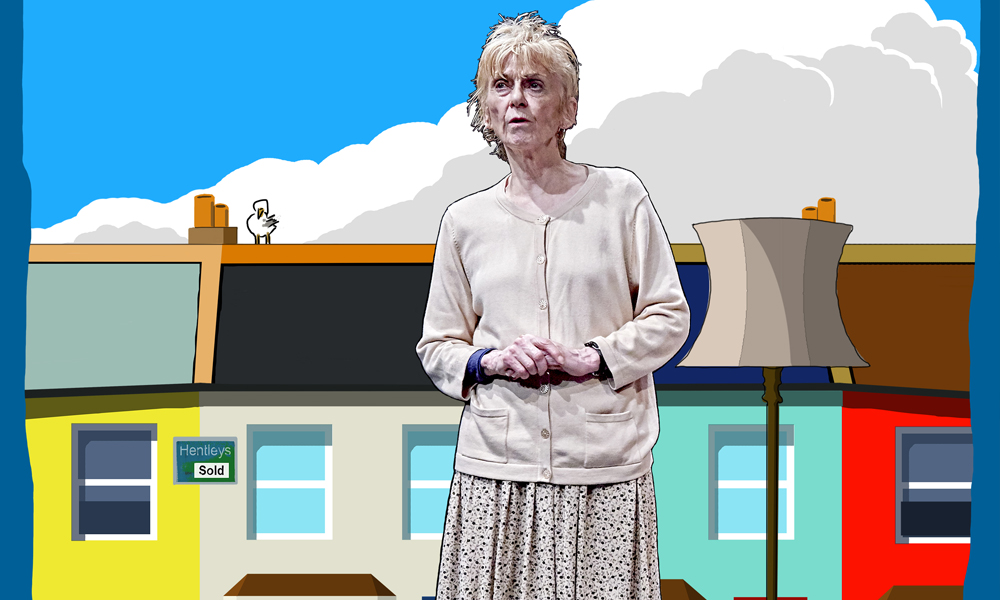
Triongl’s devised production ‘Miramar’, explores what are quite madcap and surreal circumstances in a small, intimate domestic comedy. Valmai Jones perfectly plays the part of interfering and curmudgeonly Enid. Vulnerable and stubborn, she finds herself put up by her friend Myfanwy following her misfortune and is horrified to find herself at the age of 74 sleeping in the Arsenal-themed room of her friend’s Grandson. She’s forced to watch as part-time holiday home landlords strip her house of her possessions as they create their little Welsh minimalist haven. Welsh speakers will recognise the subtle (and not so subtle) references and nods to ongoing anxieties and concerns about second homes in Welsh speaking communities here. Triongl play on these scenarios, contrasting the home-spun familiarities and eccentricities of Welsh speaking communities with the somewhat square and distant characters of Miriam and Martin, the couple from Swindon who purchase Enid’s old house. There are language barriers, eye-rolls and asides to the audience as these are played out. Jones’ comic timing and tense/jerky body language are absolutely spot on.

Hilarity ensues when Miriam and Martin’s daughters show up unexpectedly to the house only to find that Enid (disguising herself as neighbour Myfanwy) has moved in. We are taken down a number of paths and alternative ‘this is what could have happened’ scenes as Enid tries to cover up her manipulation and excuses as she plays one sister off against another. Becoming embroiled in the sisters’ bickering and back-story, the tangled comedy culminates in a sweet ending which will tickle you pink.

Audience members who don’t speak Welsh may struggle to get the full meaning and richness of Enid’s monologues in Welsh but the production helpfully gives a ‘cheat sheet’ to audience members delivered at the start (in character) by Enid herself. So you can find out just what Enid means when she says ‘cachu’ (shit), ‘Ty haf’ (holiday home) and ‘di gartref’ (homeless). This production will capture your attention to the very end and Welsh speakers will (ironically) feel right at home with the observations and cross overs between English and Welsh, village and city, old and new and all the complexities that go with it.

For all the ‘funnies’ in the play, there’s a sober message, which was highlighted by a post-play talk by Shelter Cymru. 97% of its cases are related to cases like Enid’s, not just homelessness out on the streets, financial insecurity is on the rise and we are typically only two pay packets away from homelessness ourselves. Miramar reminds us that we all need a place to call our own and to feel secure; whether it’s a place with china dogs and pink throws or stripped floorboards and minimalism.


Type of show: Theatre
Title: Miramar
Venue: Chapter Arts Centre
Dates: 16 & 17 June 2016
Author(s): Rebecca Smith-Williams
Director: James Williams
Lighting Design: Dan Young
Technical: Richard Balshaw (Production Stage Manager) and Jorge Lizalde (Graphic Design)
Cast includes: Valmai Jones (Enid), Rebecca Knowles (Alice) and Rebecca Smith-Williams (Georgina).
Co-producer: Rebecca Knowles
Running time: 65 mins


Review Billy Elliot WMC by Gemma Treharne-Foose

Template-main-Billy-Elliot
 out of 5 stars (4 / 5)
 

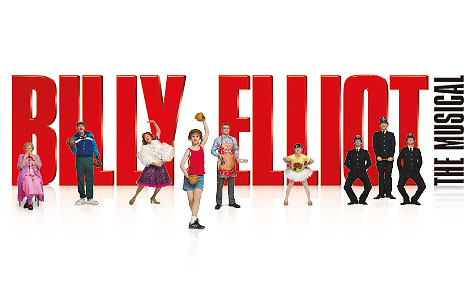
Fans of the original Billy Elliott movie, also directed by Stephen Daldry can expect a little bit of extra magic from the Wales Millennium Centre’s hosting of the hugely successful Billy Elliott production.

Charismatically led by the mesmerising young actor Lewis Smallman, the show takes us on a pleasing detour from the original film script. We not only see brand new additions to the story but lengthier explorations in to the characters of Billy’s Mam, Nana and Michael (who you may remember has a penchant for his sister’s clothes and has a soft spot for his friend Billy). There are plenty of cheeky exchanges and gritty working class banter courtesy of the superb ensemble cast and the kind of unguarded and politically incorrect observations and comments reminiscent of drunk uncles or grandfathers at Christmas. This was the eighties, after all!

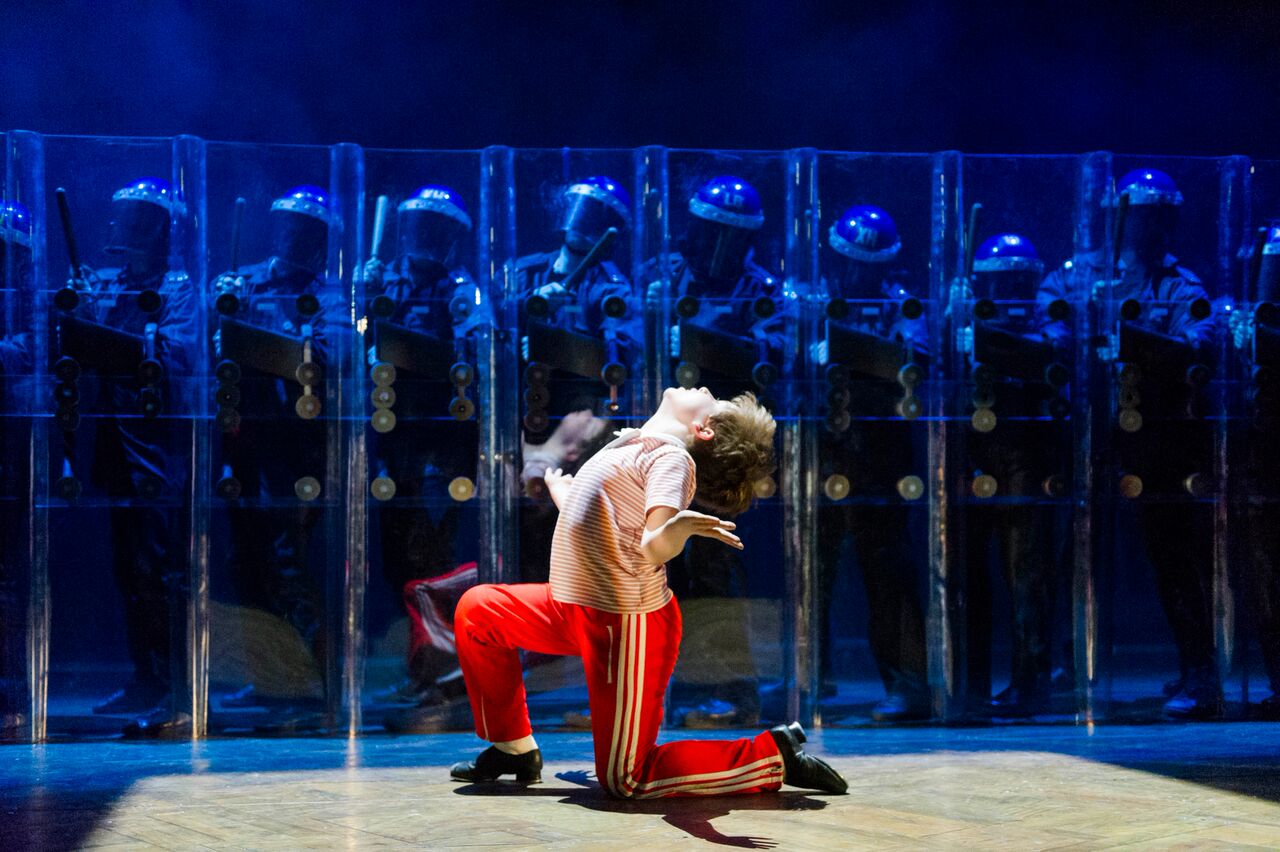
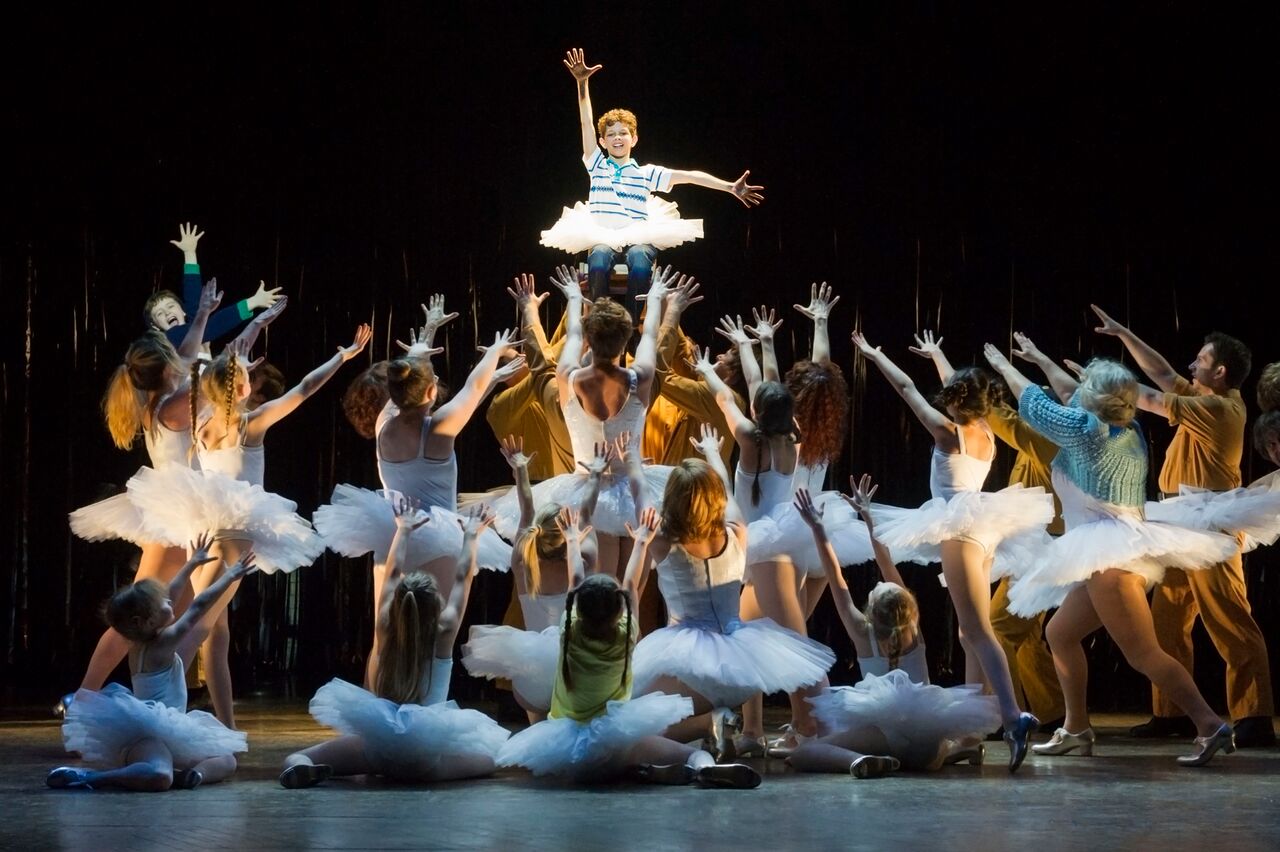
The show respectfully and tastefully contextualises a time of great fear and a sense of national panic about the fate of mining communities, punctuated by the innocence and childish sense of fun of Billy and his fiend Michael. The two battle with conforming to the unwelcome stereotypes and limitations placed upon them in the masculine mining communities during the miner’s strike. Throughout the whole production, the community is at war with the police on the picket lines and the sense of hatred towards Margaret Thatcher is palpable. There are sprinklings of ‘Maggie Maggie Maggie Maggie – out, out, out!’ chants, naughty jokes, insults, political Thatcher and Heseltine puppets and an incredibly designed giant Margaret Thatcher (milk snatcher) model emerging from the stage at one point, which will remind you of the ‘Spitting Image’ years. There is a simply spectacular scene where Billy and his ballet classmates are in the middle of a lesson while dancing coppers clash with picketing miners…the story telling in Darling’s choreography, use of pace and the physicality of the actors was a powerful highlight for me.

unspecified-1

I loved the additional scene in the musical where Andrea Miller’s character Nanna paints a picture of what life was like for women when ‘men went out to mine’. For all the much-romanticised community spirit and camaraderie of the mining men…life was pretty shit for the women left behind.

unspecified-2

Nanna’s rebelliousness and Joie de vivre as she literally gives the finger to gender stereotypes and misogyny is infectious and this nod to gender politics and male chauvinism was later echoed when Billy caught Michael trying on dresses. Michael innocently asks ‘What’s wrong with being dressed as a girl?’, as if dressing as a girl is worse than actually being one. There is a fantastically camp and cute scene where Michael and Billy deliver an incredible call to action during their energetic and playful dance piece: be who you want to be – dress and all!

While Daldry’s movie gave us pacy cinematic editing and a razor sharp script, it’s fair to say the script for the on-stage production doesn’t quite match the quality of the original film script. Some of the lyrics and exchanges are a little simple and at times clichéd. On the first night of its long run, some of the Geordie accents were a bit ropey and there were some sound issues with a creaking set BUT we are more than compensated with incredible choreography thanks to Peter Darling. This is a real shot of adrenaline in the arm and a classic feel-good show. Go see this show, take your Mam…wear a tutu, even – you won’t regret it.

unspecified

Title: Billy Elliott
Venue: Wales Millennium Centre
Dates (15th June-16 July), PN 15th June.
Book and Lyrics by Lee Hall
Director: Stephen Daldry
Design: Ian Macneil
Technical: Costume by Nicky Gillibrand; Lighting by Rick Fisher, Sound by Paul Arditti.
Cast includes: Anette McLaughlin, Martin Walsh, Andrea Miller and Scott Garnham.
Producer(s) Tim Bevan, Eric Fellner, Jon Finn and Sally Greene.
Running time: 3hrs
 

Review Before I Leave NTW by Gemma Treharne-Foose

 
13339590_10153481568316898_1358871885230660125_n
 out of 5 stars (3 / 5)

It’s taken me a while to process what I saw on Tuesday night at the Sherman Theatre, Cardiff. National Theatre Wales seemed to create a sensory experience before even setting foot in the theatre space. As we settled in our seats, the lady next to me commented how much the set looked just like a nursing home – I was sure the heat of the auditorium and (I thought) faintest smell of disinfectant were part and parcel of the show – or was I imagining it? It seems I’d misjudged the show and its assumed setting before it even began.

The play won over the audience from the get-go as the characters emerge and we begin to see small vignettes and glimpses into their lives. These scenes cross over, interrupt one another and interface with their communal experience of singing in a choir. The set, beautifully designed by Anna Fleischle and her team, contextualises the rich landscape and history of the community where it is set on five digital windows, creating a vivid backdrop for the action on stage. This staging helps build up momentum and keep the play pacey and light, full of visual morsels and edgy, familiar riffs and melodies. The songs had a visible, moving effect on the audience as the connections between the songs and the choir members were played out. We see how the tangled personal lives of our loved ones are at odds with bureaucratic ‘local service providers’ and how at odds we are as a system to provide well-meaning person-centred care and support. There is one poignant moment where ex-police officer ‘Evan’ struggles to comprehend why a social worker is giving him a ‘needs assessment’ using an iPad: ”In my day, we had a pencil and a pad’, he muses while the social worker retorts: “Yes but I can see a whole street in New York LIVE if I want to…”. “Why…?” Evan says, completely exasperated by the whole thing. In that precise moment, Evan becomes our Dad, our Uncle, our Granddad…and probably us in the future, too.

Miner ‘Rocky’ is trapped in his past as an ex-picketing Collier and there is an on-going clash as Evan and Rocky dredge up previous battles fought during the Miners’ strike. Throughout the play we see dear  Evan crumble as his daughter Gemma facilitates his confusion and takes advantage of his finances, causing him to lose his home and his grip on his own life and independence. We’re introduced to ex-punk Joe and his wife Dyanne who is doing her best to cope with Joe’s diagnosis of early onset Alzheimers. The first half, culminating in a rousing rendition of ‘Hurt’ by Nine Inch Nails/Johnny Cash, was tender and bittersweet.

The second half delves more in to the personal struggles of the characters as their meeting hub, the local library, is earmarked for closure as part of austerity measures (“Tory bastards!” Rocky spits out….and his frustrations with Tory Britain in the 80s seem as relevant as ever). As Joe struggles to comprehend and find words to air his frustrations, the couple clash causing Joe to lash out – there is a powerful scene between them as Joe becomes frightened and agitated and the police are called. Meanwhile, ex-librarian and Opera singer Marjorie is losing her grip on her orderly lifestyle and not even post-it notes can help her anymore. Will she be able to find her voice again?

In the second half, the pace of the play seemed to lose the hold for me slightly and lacked the initial punch of the first half. At times, the play reminded me of Jonathan Larson’s ‘Rent’ and seemed awkward in places as the scenes became longer. Rocky’s character was troubling for me. Jones clearly has a fondness for the Valleys and a clear message about their demise and future challenges. But the play does teeter very close to the edge of romanticism and sentimentality for a time when ‘everyone stood up for their rights’ and our communities were OK then. I find it awkward when the stereotype of the ‘wistful, mournful miner’ finds his way in to so many plays depicting Welsh/Valleys life (and this is coming from the Granddaughter of a Rhondda miner). There was something not quite right about the face-off between Rocky and the ‘Hoody’ who betrayed him.

That being said, the eventual coming together of Evan and Rocky was touching. They are after all, two sides of the same coin; both insecure, frightened and haunted by their past. Gemma’s treatment of her sweet Father Evan highlights the ugly side of all of us; too lacking in time, too impatient and to wrapped up in our own lives to care about the stuff that really matters. There is nothing like dementia or Alzheimer’s to drive this reality home. We see that it is all-encompassing and full of conflict for all who are touched by it. But it is a leveller, too. And we are reminded that living well is just as important as managing the condition. Exasperated by the choir’s experience at the ‘Britain’s Got Talent’ audition in Cardiff, mild-mannered Marge pipes up: “We are not SUFFERING from Alzheimer’s, we are living with it!”

The choir remind us that a diagnosis of Alzheimer’s does not mean that they ‘become’ their illness. There are shadows and small reminders that they are still there, if we care to look for them. In Isabelle’s tapping (as an ex-secretary), Ex-punk Joe not conforming when his wife wants him to get ready for an appointment: ‘Naughty boy!’ he shouts. This is what he was…and perhaps still is: a rebel at heart. We see it in the resilience and strength of character of Evan, despite being hemmed in and pressured to move in to a care home. This play is all of us. We are all Evan and Rocky and Gemma and the patronising stand-in choir director. Patrick Jones reminds us that even when the soul of a community is shut-down, threatened and it seems that all hope is lost, we are strongest when we find our community – wherever or whatever that community means to you.

Theatre
Before I Leave
Venue: Sherman Theatre
Dates: 27 May – 11 June, PN 31st May
Director: Matthew Dunster
Written by: Patrick Jones
Design: Anna Fleischle
Technical: Heddwyn Davies/Andy Evans (Sound), Dyfan Jones (Music), Angharad Matthews (Costume), Dick Straker (Video designer), Joe Fletcher (Lighting)
Cast includes: Desmond Barrit (Evan), Olwen Rees (Isabelle), Dafydd Hywel (Rocky), Llinos Daniel (Gemma), Martin Marquez (Joe), Melanie Walters (Dyanne) and Oliver Wood (Scott)
Running time: 2hrs 30min
 

Review Bird Sherman Cymru by Gemma Treharne-Foose

13239044_994479253922086_7392841637526267269_n

 out of 5 stars (4 / 5)

“We can’t escape who we are”

‘Bird’s popularity is simply soaring at the moment. As it approaches the end of its successful run in the Sherman, I (fashionably late as always), rocked up to the Sherman on Thursday night to finally see what the fuss was all about. The play, written by Katherine Chandler and directed by Rachel O’Riordan, focuses on two girls (Ava played by Georgina Henshaw and Tash played by Rosie Sheey) living in a care home facility finding their way in a world which has so far been  cruel to them. They are on the cusp of something and we feel it intensely – but what?

The opening scenes between Ava and her Mother (played by Siwan Thomas) are awkward, desperate and heart-breaking to watch, setting the scene for the play. A raw, nervy and tense romp through the concepts of family, motherhood, friendship, coercion and control. The story of the play is depressingly commonplace (for those who have ever worked in/been associated with social care)  Georgia Henshaw’s performance as Ava is simply spellbinding to watch as she squirms, paces and darts around frantically on stage. The girls, bound by tragedy and victims of terrible circumstance, are headed towards something they do not even understand themselves. Who will love these girls and who will look after them? Dare they even dream that there could be another life, another fate for them?

The play flitters between moments of light laughter and innocence, the joy of the affections the girls have for each other and the murky, intimidating relationships closing in on Ava and Tash. There are some difficult scenes and parallels echoing tragedies in recent years in Glasgow and Rochdale. There are moments in the play where your heartbreak for Ava’s and her (perhaps) inevitable fate  will punch you in the gut.

“We can’t escape who we are” (Tash)

The play seems timely with recent reports suggesting that children in care homes are over-represented in the criminal justice system and criminalised over minor incidents.

‘Children in care should not be prosecuted for minor offences, a report looking at their over-representation in the criminal justice system says. The review for the Prison Reform Trust calls on the government to draw up new procedures to protect these children from criminalisation.’

http://www.bbc.co.uk/news/education-36342621
http://www.prisonreformtrust.org.uk/Portals/0/Documents/In%20care%20out%20of%20trouble%20summary.pdf

There has been an increasing focus on plays like Bird acting as a form of ‘cultural tourism’ or ‘poverty porn’. We’re saturated with so-called poverty porn in wider popular culture. In recent times, television shows like Benefit Street, Shameless and even the Jeremy Kyle show sensationalise and feed in to the wider dominant narrative around the deserving poor vs. underserving poor. Our tolerance and understanding of these central characters often depends on the characterisation of the subjects/case studies within the production: are they even trying to change? Are they worthy? Are they a lost cause? Damaged goods? Could they ever be ‘useful citizens’, whatever that means. Are theatre productions like Bird, Boy (Almedia Theatre, London) and Re:Home (The Yard, London) recreating a similar kind of ‘human zoo’ that we see so often on the TV?

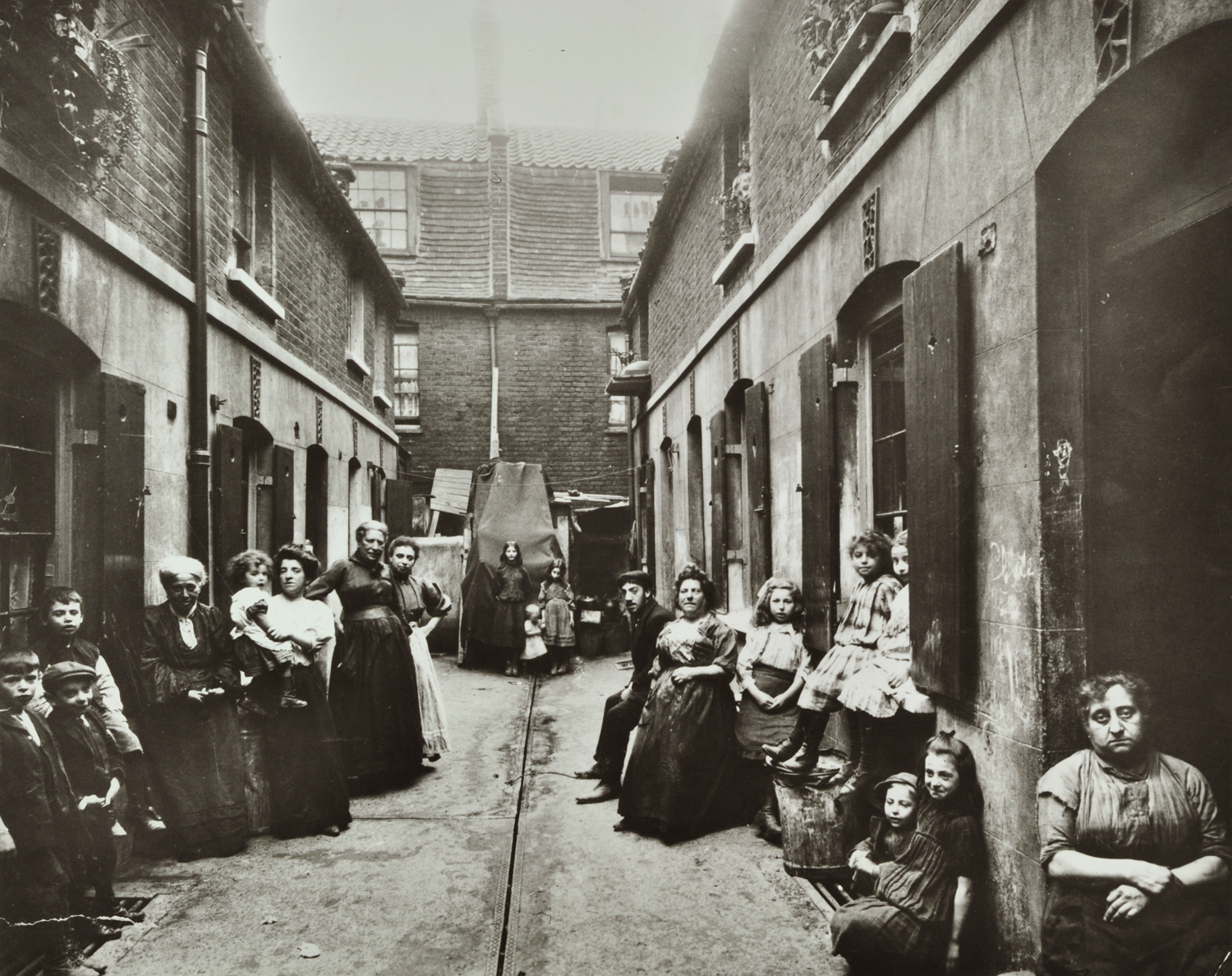
Depicting poverty in popular culture can have positive consequences on our understanding on social class and real poverty.  The appalling slums and workhouses depicted in Dickens’ novels serve as a form of social commentary of life in Britain during rapid industrialisation and urban growth.

“In the little world in which children have their existence, whosoever brings them up, there is nothing so finely perceived and so finely felt, as injustice.” Charles Dickens

Slum-119569

Slum housing in Providence Place, London, 1909. Copyright: © London Metropolitan Archives 

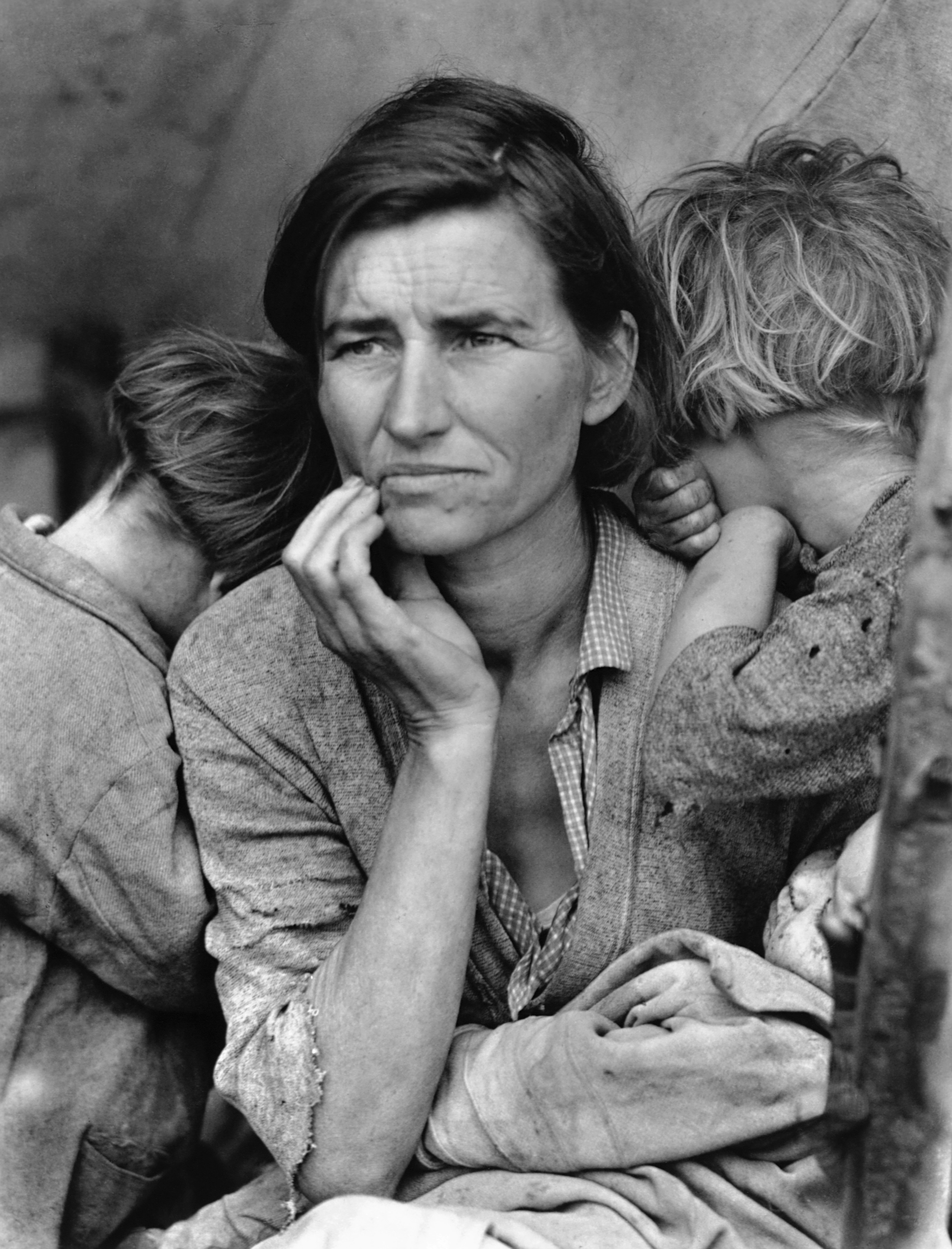
Stateside, documentary photographer Dorothea Lange’s photograph of a desperate and hungry mother during the Great depression would propel the Government in to action to aid migrant labourers and their families.

1936 --- Florence Owens Thompson, 32, a poverty-stricken migrant mother with three young children, gazes off into the distance. This photograph, commissioned by the FSA, came to symbolize the Great Depression for many Americans. --- Image by © CORBIS

Migrant Mother Dorothea Lange

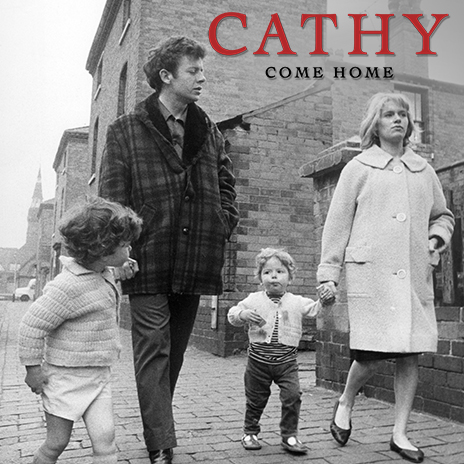
In 1960s Britain, we were rocked by Ken Loach’s drama documentary ‘Cathy Come Home’, which exposed the harsh realities of homelessness and unemployment. (Loach continues to focus on this themes with his film  ‘I, Daniel Blake’ recently winning the  Palme d’Or at Cannes. ) ‘Cathy Come Home’ caused outrage, prompting a debate in Parliament and leading to the establishment of the charity ‘Crisis’. It is a great example of how culture can influence the political agenda and is widely recognised as one of the greatest drama documentaries ever made.

cathy_come_home_packshot_464x464_0

Theatre like Bird can challenge us and take us out of our comfort zone  Are we actually mobilised and ready for any sort of real change in ‘Austerity Britain?’ and does the play actually inspire you to do anything with your emotional investment in the characters? Are we now too apathetic to be shocked in to action? It is surprising that in the play it is Lee who highlights how disconnected Ava – and we – are with the wider world. “Human contact – it’s important.” Yet as he tells Ava, we are too busy looking at our phones to connect (face-to-face) with one another and have difficult conversations. Are we also too busy being manipulated that we are now more focussed on debating over who ‘deserves’ our help and feathering our own nests?

Theatre can and should be a vehicle for social change, just like a well-made viral video or popular cause campaign. Plays like Bird can shine a light on the problem. Could more be done to  help audiences think about solutions? Could charities and outreach organisations capitalise on these engaged audiences? In much the same way as the creation of the charity ‘Crisis’ was born from ‘Cathy Come Home’ Like so many of those who’ve been coming to see Bird and emerging from the theatre positive, pumped and ready to make change in society, charities may well be in a prime position to help. A text donation, a volunteering opportunity – anything! That’s something I’d like to see take off…

Drama

Bird
Sherman theatre
May 26th

By Katherine Chandler
Director Rachel O’Riordan
Designer Kenny Miller
Lighting Designer Kevin Treacy
Composer and Sound Designer Simon Slater
Assistant Director Elgan Rhys
Casting Director Sophie Parrott CDG
Cast
Ava – Georgia Henshaw
Claire – Siwan Morris
Dan – Connor Allen
Lee – Guy Rhys
Tash – Rosie Sheehy
Running time: 1hr 20 mins.

Why you dont need to be a tweed wearing old boy to review Theatre by Gemma Treharne-Foose

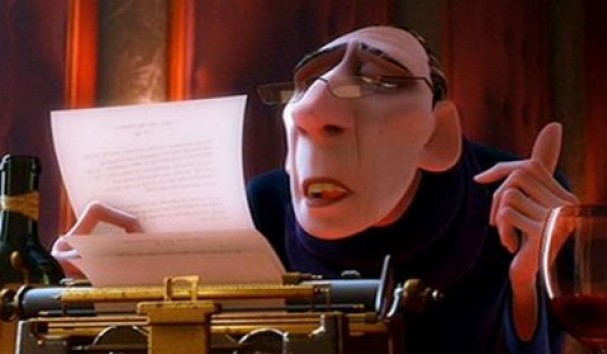
ratatouille-e1318013231726

Gemma responds to Danielle Tarento’s comments about online criticism

https://www.thestage.co.uk/news/2016/danielle-tarento-unpaid-bloggers-often-lack-intellectual-background-to-write-theatre-reviews/

Theatre is not about how much you know, who you know or what else you’ve seen. Your reaction to theatre as an art form, as entertainment is deeply personal and unique. For many of us…you know, the other 55m of us who live outside London; the closest we get to watching theatre is on an annual trip to the Christmas Panto (ah, those precious memories of Park and Dare in Treorchy are still alive and well!).

Danielle Tarento thinks that anyone without ‘an intellectual or historical background’ shouldn’t have the honour of reviewing theatre. This is a shockingly elitist and classist viewpoint. If marginalised and under-represented groups and communities didn’t feel excluded and ‘un-entitled’ enough to enjoy theatre and possibly feel inspired to write about it before, Tarento takes us back to the ‘good old days’. Those days when theatre could only be written about by a privileged, privately educated few…and you’d have to buy the broadsheets of course (old chap) to read about it.

Are full-time critics even relevant any more? Surely critics are facing the same fate of the old journo hack typing away at ‘his’ typewriter. A dying breed in the traditional sense. As I’m sure many journalism graduates will attest to – ‘journalists’ are two-a-penny now and anyone with something to say can publish, blog, become an interest sensation or develop an on-line following. Does this represent a threat to the written word, the demise of polished prose or the end of intellectual debate? Far from it. Journalism and the meteoric rise and reach of social media platforms has resulted in the diversification and democratisation of knowledge. It has opened up opportunities to engage with others, to share and to debate, even to participate in art, theatre and film remotely. It has become a lifeline for the isolated and the hard-to-reach, those who lack the funds to catch a cab to the West End on a Saturday night and get paid (handsomely) to do so. ‘Un-cultured amateurs’ will happily spend their last £12 on a cheap seat at a show and beg a family member to drive them 35 miles to get there. They’ll scrimp and save for those chances to just be in the audience and share in the magic. What is there to be gained in creating divisions and driving wedges between audiences and full-time critics, anyway? We are all part of the conversation and we all have something equal to say – and that is to be celebrated.

unnamed

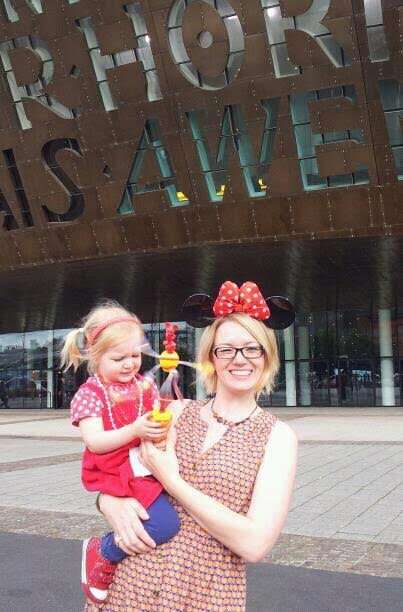
Gemma at Disney’s Mickey Mouse show at the Wales Millennium Centre

Tarento may be right that ‘two-a-penny’ community/amateur critics don’t have the full knowledge of the art-form, but it is precisely this reason that makes these reviews worth reading. Amateur critics are not out to impress people with their fantastic knowledge or their rich CV of experience, they are responding to theatre in a pure, untainted way. They are only what they feel. Theatre directors and practitioners take their cues from audience response as well as critics…and some take no cues from critics at all. Amateur critics represent the audience, while critics represent…well, something else entirely! They are paid to watch theatre and produce an entertaining article they should be out of their nit-picking. London-based theatre critics are viewing theatre from a narrow prism of opportunity and life chances. Most of us out here in the real word are the true theatre champions, the enthusiasts, the geeks, the am-dram community. We love theatre because of what it brings us on a personal level – warmth, inclusion, memories, escapism, a deeply moving experience that we want to re-live over and over again because we love it, not because we are paid to write about it. The days of the tweed-wearing, pipe-smoking, hoity-toity critics peering over their horn-rimmed spectacles are over…and they know it. As for you, Tarento I’ll see you not in court….but in the theatre (darling!).

All of the contributors for Get the Chance are volunteers. They attend activity and review in their own free time. They are all part of the Spice Time Credit network and receive one Time Credit for every hour of volunteering.

http://www.justaddspice.org/get-involved/get-started-with-time-credits