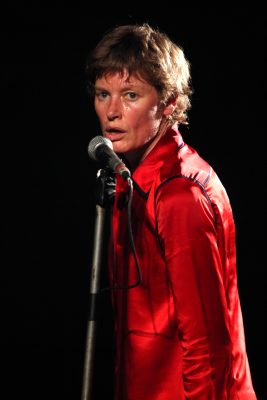
All posts by Eva Marloes

Dance is a Work of Love – An Interview with Rosalind Crisp by Eva Marloes

I meet Rosalind Crisp in the upstairs theatre at Chapter. ‘This is my space,’ she says. She takes long strides and almost dances to get to her bag. She asks me whether I’m a dancer and looks a little disappointed when I tell her that I’m not. I tell her that I’ve been started to write about dance recently and have fallen in love with it. ‘With a dancer?’ she asks. ‘No, with dance.’ She looks surprised and bemused. She ponders where to have the interview and some lunch. She thinks the café downstairs might be too noisy for my recorder. I tell her that she needs to eat. I feel I’m taking her away from her safe haven to plunge her into the midst of eaters and drinkers, and a film crew filming just outside the café.

Crisp is one of the foremost choreographers in contemporary dance worldwide. In 2015, she was awarded the highest recognition in France as Chevalier de l’Ordre des Arts et Lettres; yet she is unassuming, kind, and generous. She gives me her time freely and doesn’t mind when my questions become an interrogation. She takes time to explain her aesthetics and idea of dancing without a hint of pride.

Crisp recounts her journey as dancer and choreographer and says, “Some time ago there was a shift, I think it’s when I started working on my own. … In the beginning it was catching the movements and later it was about the way I was producing the movements which has led to my work of the last 15 years.’ 

Crisp’s radical approach is a close observation of where the body wants to go, the patterns established by years of training and habits, the ‘history,’ as she calls it, of the training that dancers have and that stops them from being aware of where the movement comes from and making different choices. She says, “I suppose I noticed with dancers that if they do things unquestioned that doesn’t interest me, … I would call it the history stuck with them. They haven’t questioned it in that moment. It has more power over them than the present moment because they’re forgetting. They do that and don’t realise that it’s actually just their history speaking,” she laughs.

Crisp’s idea of unlearning dance is a gaining of awareness of movement. She says, “I got very interested in what happens before a movement, what happened after I moved … how actually not do the dancing that I thought was dancing in order to open up a bigger view of what it might be.” 

The awareness she seeks takes many years of rigorous training to develop. She says, “I have the same dancers for years and years. … I never say ‘do this or that,’ they’re so deeply in the work. They’re so amazing. They learn so thoroughly to dive into someone’s work. … It amazes me. They’re incredible. They bring so much. They bring this enormous commitment to go wherever I wanna go. … They do it in their own way. It’s given back to me other flavours of the work. … They’re not trying to get it, they’re taking it where it needs to go.” 

Crisp’s openness is to the audience too. In undoing dance, she also wants to undo performance. She seeks a connection with the audience by going beyond showing a piece. She reaches out to her audience. She says, “I call it withness. A lot of dancing is being on your own, in your own world, with your eyes shut in the studio, then there’s an audience and it’s a whole other thing. It needs a lot of practice to develop that. It took me a long time to learn how to be with an audience and not just present something for them or at them. … I really love being with the audience. … it’s kind of melting that distance between us.” 

I ask her how she connects with the audience. She says, “I just want them to be so involved that there’s nowhere else … I really want them to be completely gripped. Otherwise why do it? It’s gotta be better than television.”

I say that it can be hard to be gripped without narrative. In most TV being gripped is waiting to see what happens next. It’s manipulative. 

She says, “I think theatre is very manipulative. I’m completely manipulating the audience. Totally. But I hope you don’t feel manipulated. I hope you just get engaged. It’s because, it’s a lot of trickery, it’s a lot of work, it’s a lot generosity, it’s a lot of skill, it’s a lot of surprises to get an audience really involved.”

I say, “Generosity is not manipulation.”

She says, “It’s still manipulative, it’s still a job to get you engaged.” 

I say, “You’re still true to something.”

She says, “Yes, I’m true to my job of getting you engaged. I want them to get involved in every moment, so much that I’ll do anything to get you involved.”

I say, “If you really wanted that, you would do something commercial, why are you not doing something commercial?”

She says, “because I love dancing.”

I say, “See!”

She says, “I believe (dancing) it’s a way I can communicate. It’s the best way I can communicate.”

I say, “That’s not manipulative. You give something you love in the way you love. It’s you giving something.”

She laughs 

I continue, “You need to do something to engage the audience, but that’s not where the work comes from, it comes from you loving dance.”

She says, “You can be a great dancer and a terrible performer. I learned how to perform from Andrew Morrish. He’s a great performer and a great teacher of performing. It’s about the audience. It’s about your connection to the audience. That’s the most important thing for him. I’ve learned a lot from that. There are two responsibilities: one is to my dancing, my material, my satisfaction artistically, the other one is to the audience, and they are both equally important. If I haven’t got the audience I have nothing to offer. If I’m the only one knowing what I do, I have no communication. I still think it’s very manipulative.”

I say, “It’s the wrong term. Manipulative is cheap tricks.”

She says, “I do cheap tricks.”

I say, “I don’t believe you.” 

There is no artifice in Rosalind Crisp, no aloofness, no pretension. I do not believe that her work could be anything other than a heartfelt and honest attempt at challenging herself and the audience in the most radical way. It is a work of love.

The Radical Freedom of Rosalind Crisp – Interviewed by Eva Marloes

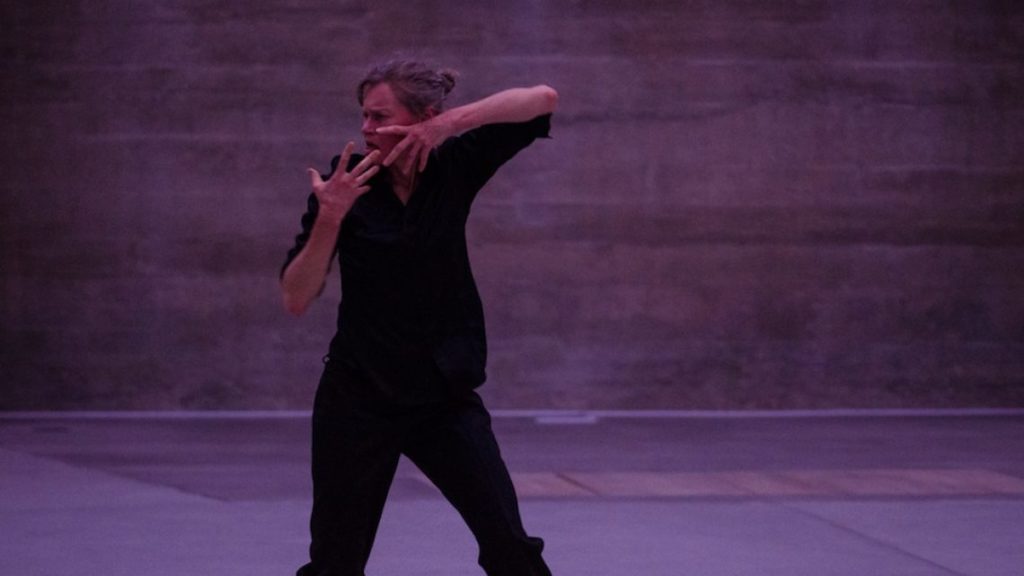
Rosalind Crisp, a world-renown dancer and choreographer, is at Chapter Arts Centre preparing for her performance Unwrapping Danse. She is originally from Australia, where she is active in raising awareness on the environmental catastrophe of the deforestation of the bushes. She divides her time between Australia and Europe, especially France where she has been awarded the highest recognition in the country as Chevalier de l’Ordre des Arts et Lettres. She is generous with her time and allows us to have a long discussion on her approach to dance.   

Crisp’s approach to dance is a radical awareness of one’s body and one’s movement. It requires rigorous and lengthy training to undo what the body has learned over the years. All our bodies learn movement, which becomes habitual and unchallenged. Some of us find themselves stuck with bad posture, shallow breathing, or stiff muscles. It takes training to undo the bad habits. For dancers, it is the dance training that becomes habitual and impedes development artistically but also personally. A culture of dancing as perfecting a technique means the dancer will never be good enough. It is a culture of lack.

Crisp explains,

“the training in dance is part of the education paradigm we know in schools where you’re constantly trying to get better, not quite good enough, even when you get really good. … Classical ballet which is where I started is really embedded in that culture of lack, you’re always in a relationship of lack. You never actually get there. This has huge impact on the identity of the dancer. It’s very hard to find your way in dance because it’s uncomfortable and people who dance feel insecure because they’re not good enough. … I think it was partly to do with dealing with that, that turned me away from set movements.” 

Crisp focuses on paying close attention to what the body does without us being conscious of it. She is interested in the dancers’ attention to their own bodies and their decision-making in how they choose the next movement. She began with herself, observing and challenging her movements and how she chose movements. She says,

“I trained myself to pay attention. The training is in the attention to where things are emerging in the body, what’s already emerging, especially in the beginning of movement,” she moves her arm as she says so. She says, “I’m more and more interested in what produces a movement than the movement itself.”

I suggest that it’s a bit like meditation. It’s a ‘mindful movement.’

“Paying attention,” Crisp says, “It’s not natural movement. It’s two things: it’s a lot of rigorous work of what compositional choices are available, how fast that moves, how much tension or tone is in that, how much space, which body parts are involved and which aren’t.”

Crisp wanted to shake off the history of dance training, which establishes patterns of movements in the body of dancers. 

She says,

“They start to do this movement and you know where it’s gonna go. It’s gonna go to there because the body remembers, like I know how to pick up a sandwich and eat it. … There’s a lot of alertness to the decision-making that is historical or embedded and unquestioned. There’s a constant kind of negotiation. Sometimes that needs softness and support because it’s a very strong, you said that before, mind…?”

“Mindful,” I say, “like in meditation. When you meditate you observe the thoughts in your mind and become aware of them and their patterns.” She tells me,

“it’s about degrees of awakeness to the potential for any part of the body anytime to initiate [movement].”

Then she says something beautiful. She says,

“I think the body is an orchestra not an instrument. Every bit has the capacity to being engaged and they all need to be on standby all the time.” Making the body an orchestra requires paying attention. It’s not letting go, but rigorous observation and training.”

She says,

“It’s not natural movement. It’s two things: it’s a lot of rigorous work of what compositional choices are available, how fast that moves, how much tension or tone is in that, how much space, which body parts are involved and which aren’t.”

She tells me that she tries to put her choreographic mind in the background so that she can pay attention to what’s emerging in the body. She says,

“There’s a sort of decolonising the choreography’s dominance telling the dancer what to do, my choreography. I try to reverse it.”

I suggest that it is a form of authenticity, an awareness of conditioning and the search for something of value. She is not having it. It’s all trickery, she says, but to me her effort to become deeply aware of the body and learned movement resonates with existentialist philosophy and Crisp herself is strikingly authentic. However, I’m conscious that authenticity in performance is associated with the semi-therapeutic and spiritual dramaturgy of Grotowski in theatre and the Authentic Movement in dance. Crisp’s dancing does not aim to be therapeutic or spiritual; rather it is in some way heuristic.

It all began with dancing, just dancing without following set movements. She says,

“dancing, not trying to remember steps but dancing and it was out of years and years of dancing in the studio on my own that I started to be able to notice times when I was having so much fun and it felt like it was like opening a whole world and a new kind of thing.”

Crisp’s approach to dancing is genuinely open. It is radical freedom.

(First published on Groundwork Pro)

The Soul of Dance – Reflecting on Dance with NDCW – by Eva Marloes

Dance is personal. It is your muscles, your injuries, your sweat, your discipline, and your imagination. Professional dance is not just technique, physical ability, and rhythmic sense; it is the dancer’s personality, which is in their bodies and in their minds. What emerges from talking to dancers and choreographers is the personal work of dance. Dancers do not simply replicate established movements for the audience, they bring their individuality to a piece in how their body moves and how they give an interpretation of their role, sometimes that includes creating their own movements.  

Contemporary dance is often an exploration of movement and physicality that begins with an awareness of one’s body. Dancers learn about their body, how their body is in space, the different places where the body can be, the learned and habitual moves, and how to become aware of how they move. Dance is born of physical and mental awareness. It rests on deep knowledge of one’s body in space and in movement, and making decisions on how to move. 

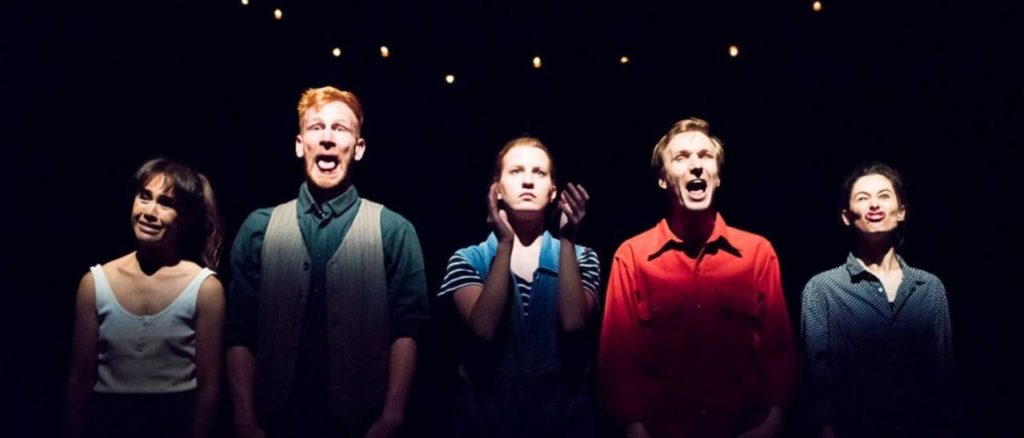
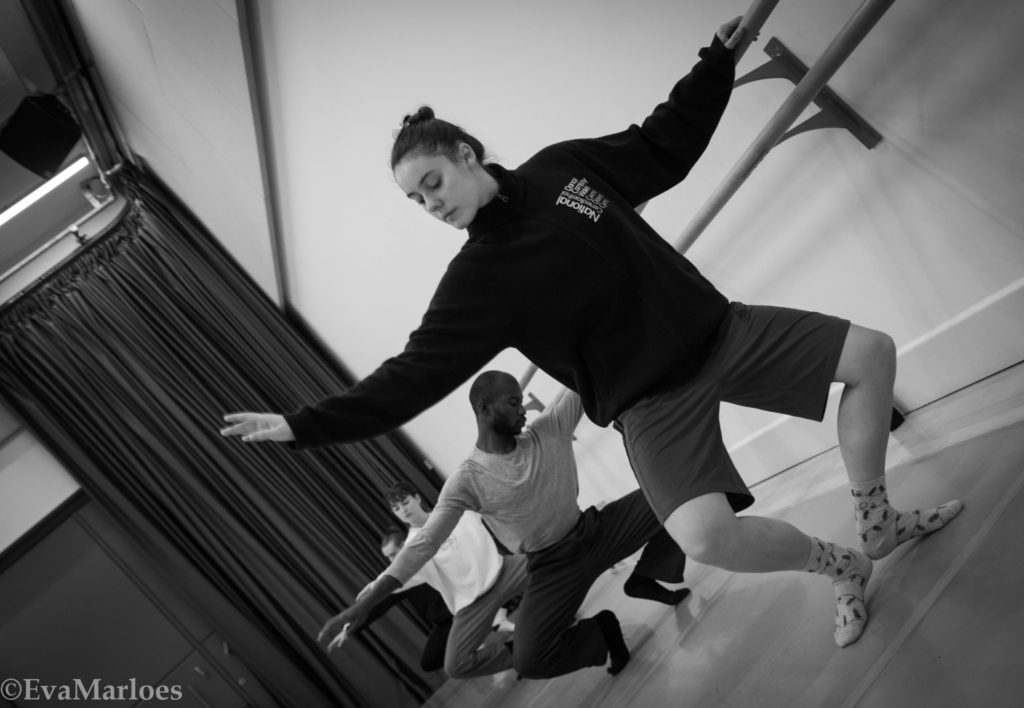
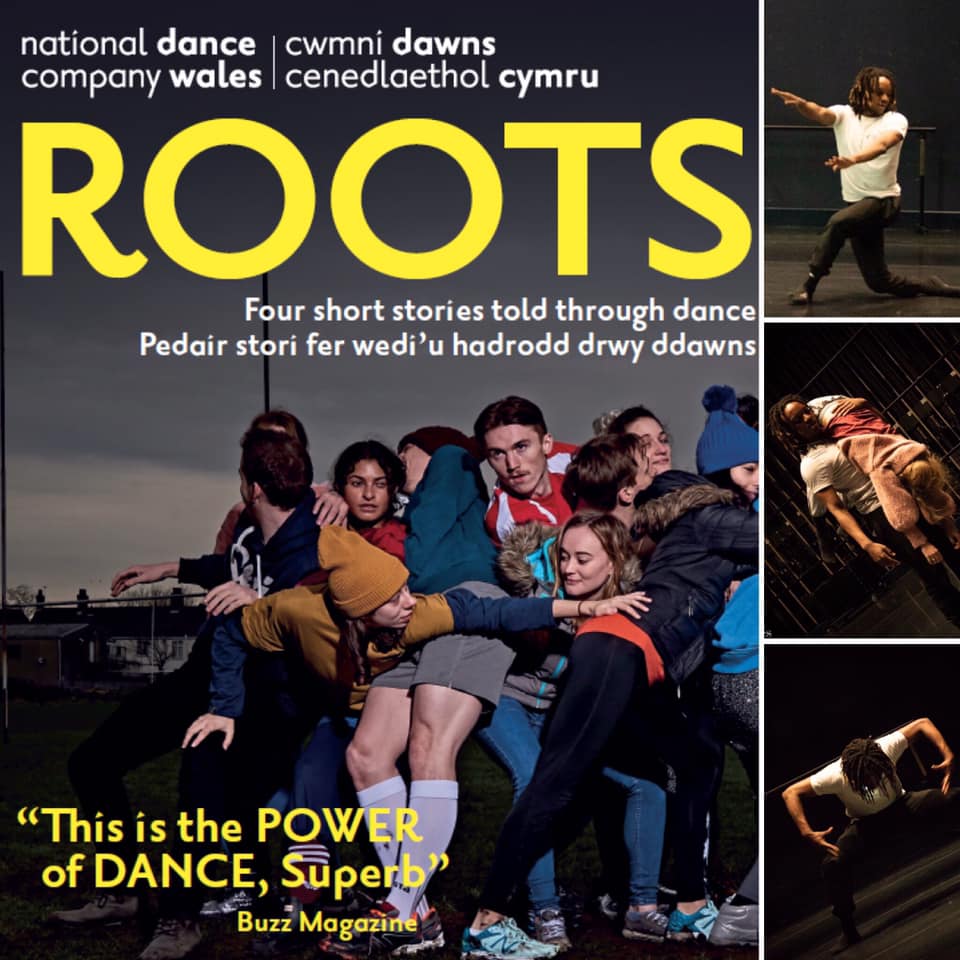
I watch dancers and see how different they are. They have different builds, different ways of moving, but, above all, different personalities that become prominent when they dance. Aisha Naamani, one of the dancers of the National Dance Company Wales (NDCW), tells me, ‘Everybody has a different quality in movement because everybody has a different way of processing information.’ NDCW dancers do a lot of ‘rep work,’ work of different choreographers coming for a short time for a production. That means dancers need to take on different outfits rather than develop their own work. However, for Roots, each piece relied on improvisation and collaboration between choreographers and dancers.  

Naamani, referring to Ed Myhill’s piece Why Are People Clapping?, part of Roots, tells me,

‘We had to create our own movement, we have to do that as naturally and thoughtfully but also not attached to it, not tied down to what you want to do. … You have your individuality doing what your body would do, but then Ed would come and see it and rearrange the puzzle somewhere. But you always keep that essence of your own individuality because that’s where you create it from.’  

The interplay between the individual dancer and the group is evident in the piece itself. During the rehearsals, Myhill tells the dancers that it’s about 

‘Appreciating individuals and what they bring to the circle. The rhythm is set up by your colleagues, your friends. They are there to support you, use it as a drive to express yourself.’ 

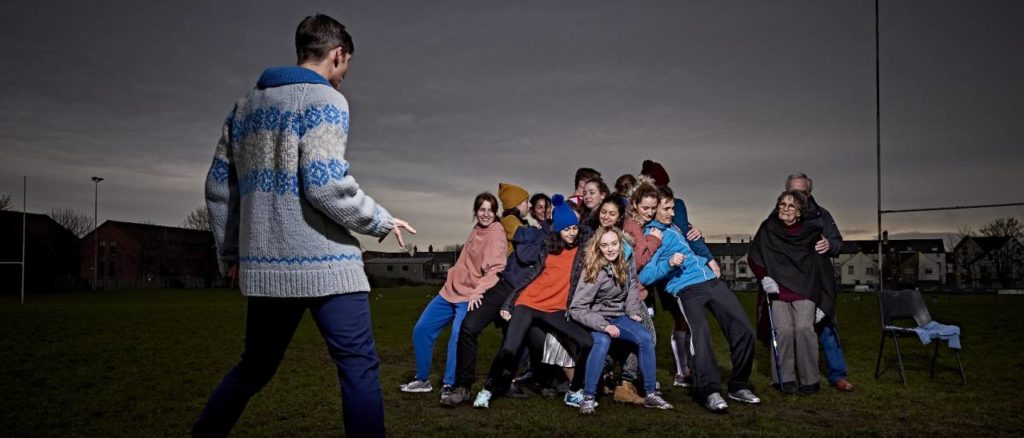
As the dancers become familiar with one another and how others move, they are able to support one another. Fearghus Ó Conchúir, the Artistic Director of NDCW, realised that the coming together as a team and mutual support in rugby are familiar to dancers. In his piece Rygbi, the way in which dancers relate to one another is most evident in improvisation. He tells me,

‘You don’t need to offer support if it’s all decided already. You just need to be in your place. Active support comes from not knowing what is going to happen and being ready for whatever it is and we built that kind of improvisation into the work. We continue to work with improvisation to keep the work alive.’ 

Ó Conchúir explains that he has questions in mind and gives structure to the piece, but that

‘The dancers are the ones who inhabit it and take an idea, for me the reason to collaborate is because I’m not someone who decides what the work is in my head in advance and then want to see it just played out in front of me. … I want to be surprised by the process, otherwise it’s not enriching. I don’t learn anything. The reason to be engaged in this artistic practice is to keep learning things.’ 

Yet, this work of improvisation rests on dancers offering something that comes from their own self, their own body, something that at times can be very personal, and is not always accepted. Naamani tells me that that can be hard,

‘Because you can offer something to a choreographer, it’s almost as if you put your heart out to them and you’re being really vulnerable, but it’s not a personal thing, it’s what is necessary at that time. That’s a really hard thing. It’s long hours, it’s busy, constant re-evaluating what you’re doing, constant thoughts. You have to be very strong so you get very strong but you also, you have to be vulnerable at the same time, it’s a hard balance.’   

Ó Conchúir is well aware of the personal gift that dancers give to a choreographer. He says,

‘Sometimes you’ll say ‘ok, no’, sometimes when someone offers a thing, you’ll ‘oh no, thank you for offering that, that is a possibility, but that’s made it clear to me that we need to stay over here or sometimes you’re like ‘oh, you’re right, let’s go off on that route’. Even when you’re not, because you can’t necessarily follow everything that’s offered, then that helps clarify what you’re choosing to do. For me that collaboration with the dancers is essential and then hopefully that makes it a more interesting and engaging process for them, because they’re helping the creation and give it life. For me that’s the most important thing, that the dancers are engaged. In the moment of performance is them, they’re performing it with the audience. What I’m trying to do is to help prepare everyone for that encounter.’ 

Dance entails being vulnerable and giving themselves to others. Those others are your colleagues, the choreographer, and the audience. Talented dancers and those who gain notoriety might be led astray by their ego, but the soul of dance lies in humility and devotion. 

NDCWales latest production Roots is currently touring. Further information and tickets can be purchased here.

Sweat Baby Sweat, Jan Martens – a comment by Eva Marloes

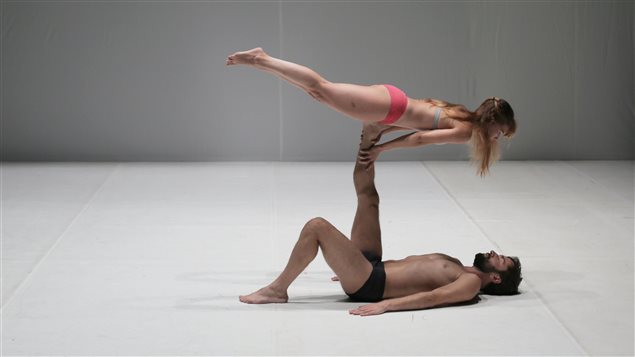
Jan Martens’ Sweat Baby Sweat is a minimalist, slow, and stretchy take on love relationships in dance form. At the beginning, the duo (Kimmy Ligtvoet and Steven Michel) become entangled, as in a yoga pose. The movement is minimal. They become one body turning on itself. It reminded me of Plato’s Symposium where Aristophanes describes androgynous humans with four legs, four arms, and one head made of two faces, which were then split by Zeus in two. Thus, when one finds one’s soulmate one feels whole. 

Sweat Baby Sweat is a little less wholesome. The couple splits and then begins again with the same initial movement of the first section. Martens says that he wanted the audience to think that they were going to see the same movements again and then be relieved from the change. The change is a long and protracted kiss, which I found uncomfortable. I am rarely comfortable with displays of intimacy on stage or on screen. Yet, the kiss being slow and continuous becomes just an extension of the movement. It is not sexy or tender. 

The continuous movement trails the ups and downs of relationships, the closeness and distance. At one point, the woman clings desperately while the man pushes her away. Not something the women to whom I have spoken appreciated. It could have been reversed or repeated with the man clinging, or could have featured two dancers of the same sex, so to avoid the stereotype of clinging women and independent men. The male dancer then seeks the female dancer, but instead of leading to tenderness and intimacy, it leads to lustful copulation. I raised my eyebrows. 

Sweat Baby Sweat is problematic and yet engrossing. It holds the attention of the public for over an hour. It brings the audience close to the couple rather than performing to them. It is an intense performance. During the post-show talk, a member of the audience described it as ‘electric focus’. Kimmy Ligtvoet and Steven Michel show an impressive physicality, which explains the longevity of the piece, now in its eighth year running. Sweat Baby Sweat does not play to the public; it draws the public in. It is compelling, but a new direction is needed.

(First published on Groundwork Pro: https://groundworkpro.com/sweat-baby-sweat-jan-martens/)

Review Roots, National Dance Company Wales by Eva Marloes

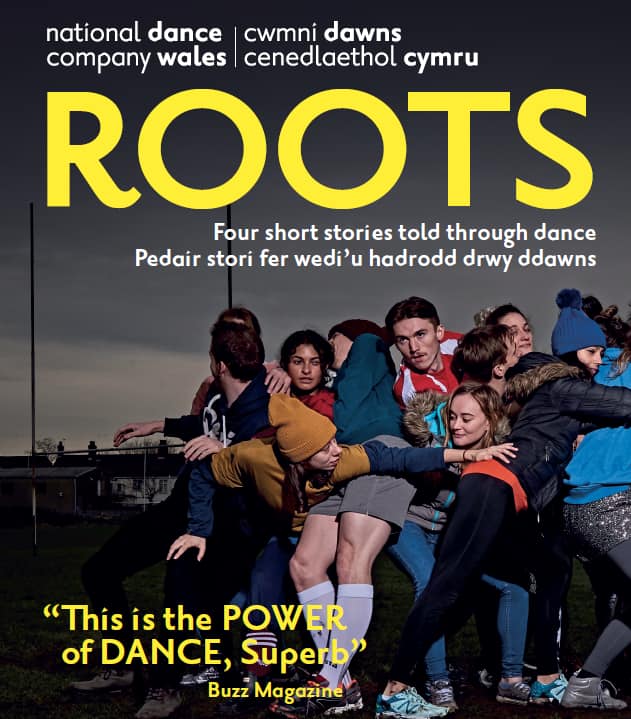
Roots is an engaging, diverse, and emotional production that marries Welshness with contemporary dance and gives life to art that is accessible without compromise on quality. Roots is the biannual production by the National Dance Company that brings dance to audiences around the world and around Wales. It makes its way into venues with little technical equipment and space, in towns and villages around Wales, to bring dance to new audiences. Roots succeeds equally in introducing new audiences to dance and in delighting dance enthusiasts. 

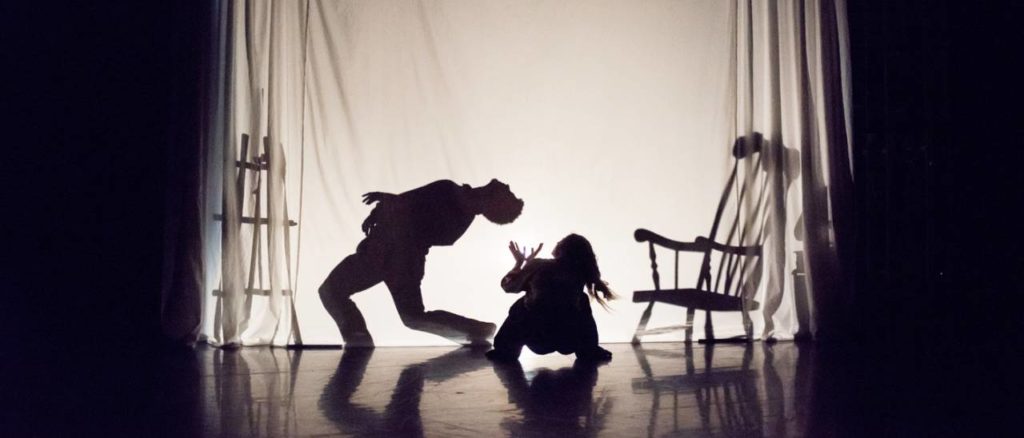
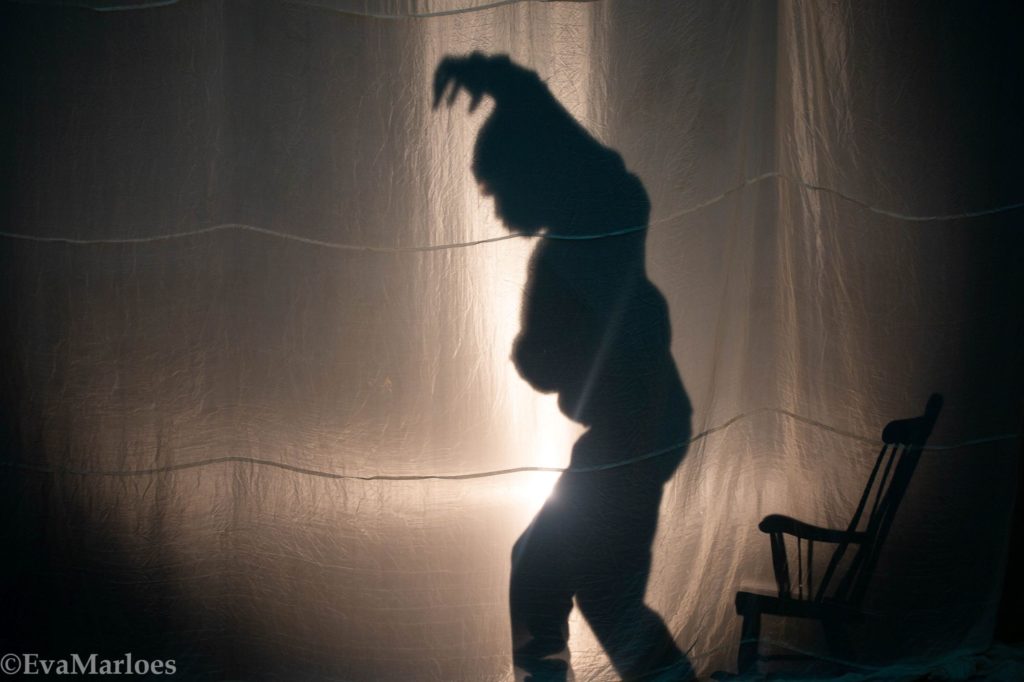
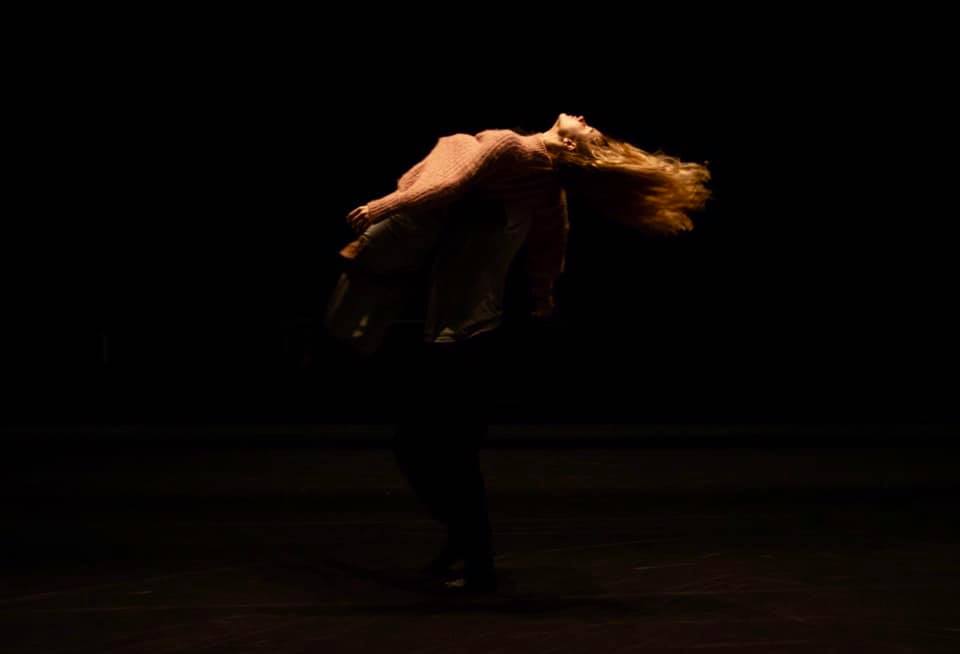
This year’s production features four very different pieces from four choreographers at different stages in their career and artistic maturity. Écrit, choreographed and performed by Nikita Goile is an emotional dance recounting a conflictual love relationship executed beautifully. Goile, a budding choreographer, combines an elaborate work of hands, inspired by Indian Bharata Natyam dance, with her lover’s silouette behind a curtain, and a more traditional duet form. It is effective in conveying the power imbalance between the two lovers, the hurt, and the closeness. The only weakness of the piece comes from its inspiration: the letters of Frida Kahlo to Diego Rivera. Although they both had other lovers, Kahlo suffered from Rivera’s numerous affairs. In Écrit, Goile’s graceful and gentle movements do not capture the intensity of Kahlo. Having suffered from polio, Kahlo had very weak legs, underwent many surgeries, and had miscarriages. Kahlo’s suffering body was the source of her art and Kahlo used her body to reinterpret her MexicanidadÉcrit is at its strongest when Kahlo is forgotten and Goile is herself. Goile conveys a nuanced fragility, which contrasts with the powerful gestures and movements of Moronfoluwa Odimayo as her dominating lover. It is effective and moving. 

The second piece, Why Are People Clapping? is also by a new choreographer, Ed Myhill. It is an entertaining and funny piece that conveys the joy of dancing to the rhythm of elaborate clapping. In contrasts with the intimate piece Écrit, Myhill’s Why Are People Clapping? plays to the audience and for the audience. It begins with a tennis match with no actual balls or rackets, conveyed by only a single clap and well-timed movement. It is all so well tuned that you can almost see the ball hit the racket. The piece includes dancers in a semicircle taking turns to do and enjoy a solo to Steve Reich’s clapping music, followed by claps that bring order and dictate action, a catwalk, and a run through as many facial expressions as possible. I would have liked the tennis players in 1970s headbands and wristbands for a replay of Borg v. McEnroe, but Clapping oozes fun anyway.  

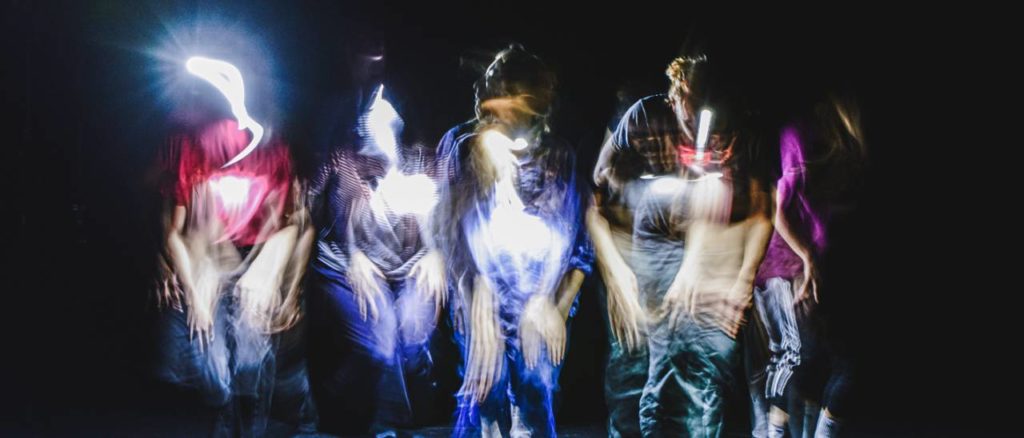
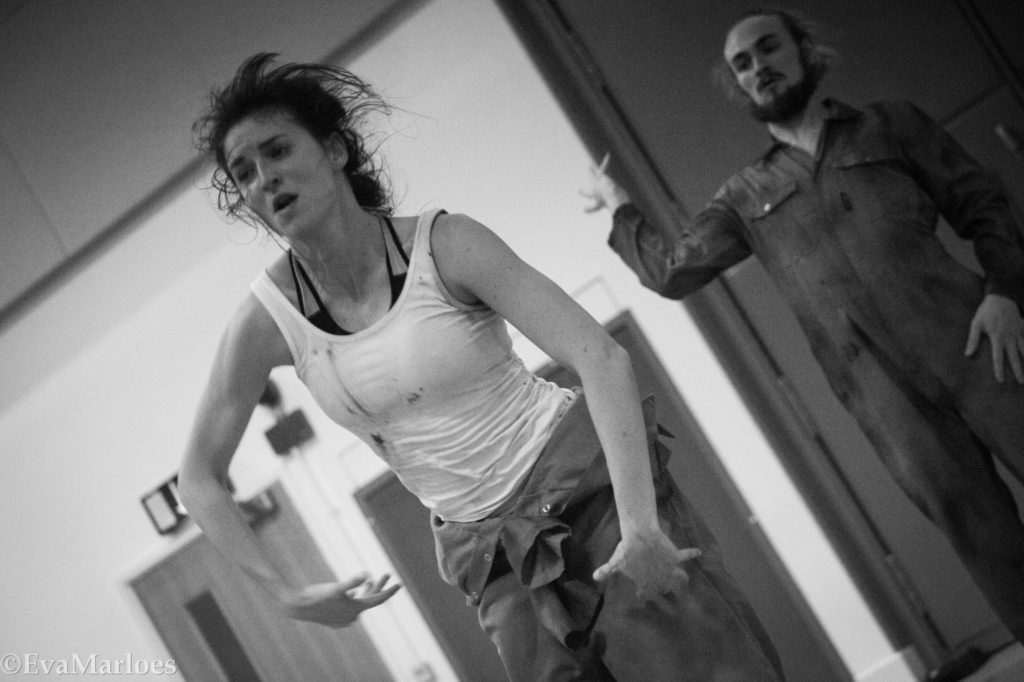
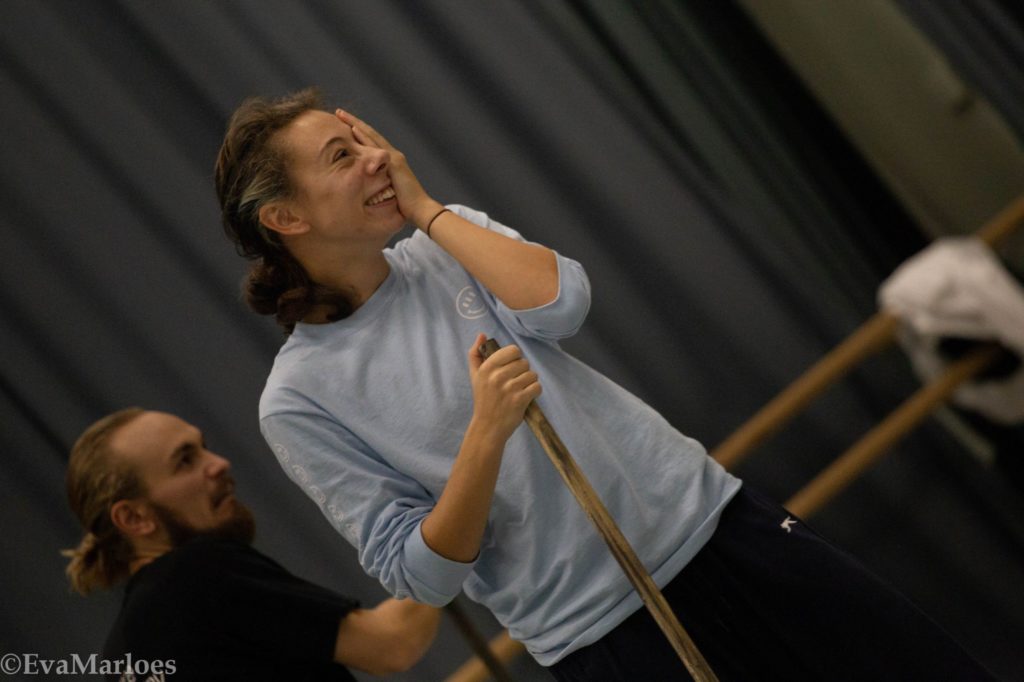
The third piece, Codi (rise up) is by emerging choreographer Anthony Matsena, who is finding his voice in a socially and politically aware dance infused with energy. Codi takes the audience underground, into the mines of the Welsh Valleys. There is a sense of suffocation, isolation, struggle, and helplessness. The small headtorches the dancers wear around their necks are used effectively to convey the darkness of suffering, of perishing, of being forgotten. Then, they rise up. They beat wooden rods to the ground and the energy rushes through the body. There is power in being together. Together, we can rise up. When I interviewed Matsena, he told me that once you recover, you still have the past hurt with you, like a ‘stain on the shirt.’ With soot on their clothes and faces, the dancers face the audience calling for attention. The past is not forgotten; it is there to give strength and purpose. 

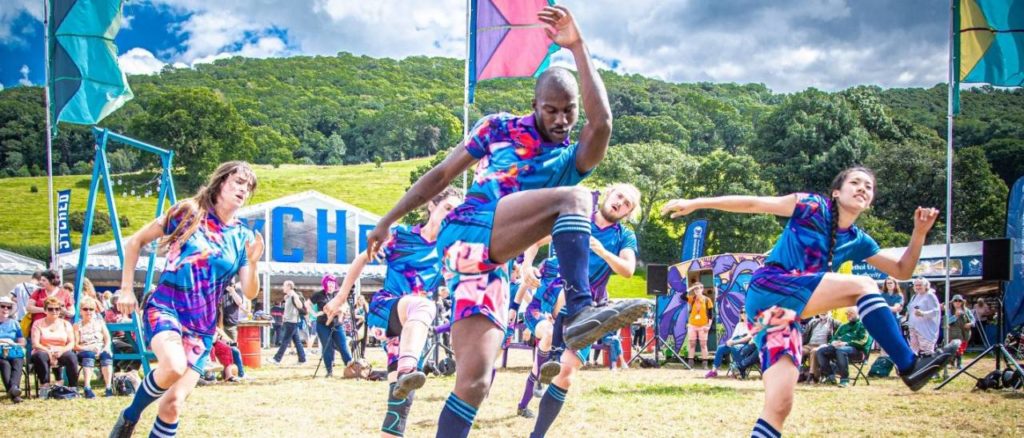
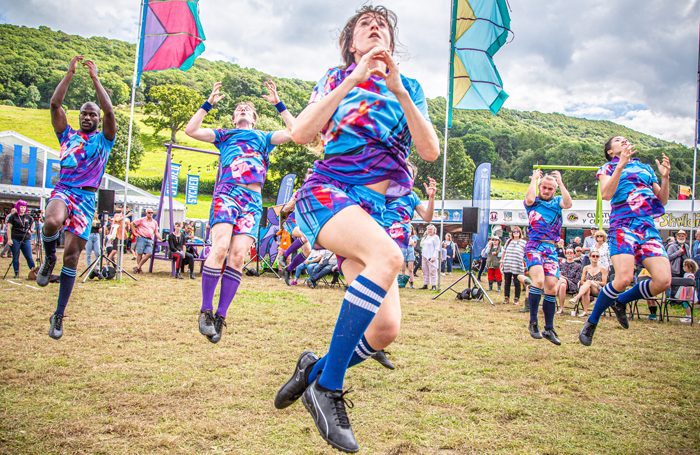
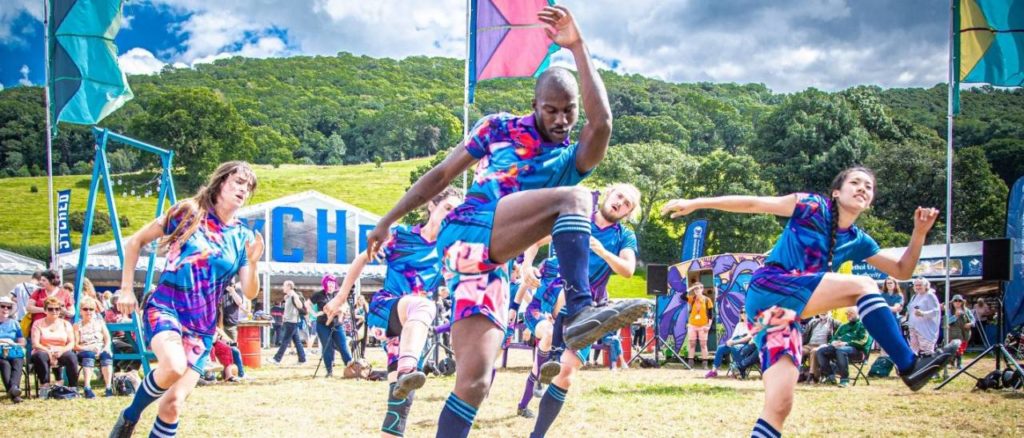
Roots concludes with the longer piece Rygbi. Annwyl i mi, by Fearghus Ó Conchúir, the Artistic Director of NDC Wales. Rygbi captures the passion and synergy of players and fans of the game, which ripple across the whole of society in Wales. It is the national game that takes over cities altering time, colouring the pavements with people in red shirts, and getting us stuck in traffic. Rygbi does not borrow movements from the game, it extracts the essence of rugby and gives it a new form. The piece alternates duets, ensembles, and solos to guide us through effort, injuries, fatigue, hopes, victories, and defeats. The dancers-players touch one another and in that touch is being part of a whole, something bigger than oneself, that is made of each one’s individuality. Dancers, like players, rely on one another, know what the other can do, is likely to do, the other’s weaknesses and strengths. Like players, they create together. Rygbi is elegant and strong. It is a painting and it is theatre. Ó Conchúir takes us onto the pitch with colour, movement, and music. He makes us breathe the tension of the competition, feel the strain of the muscles, and sense the elation of victory. Rygbi uses the language of dance expertly to tap into our emotions, thoughts, and ideals, and creates a moment of shared passion and commitment. 

Roots is currently on tour. More information can be found here.

To Speak of Wales in Dance by Eva Marloes

Back from its recent international tour, National Dance Company Wales (NDCW) is now bringing contemporary dance across Wales with this year’s production of Roots. Two of the pieces, Rygbi: Annwyl i mi by Feargus Ó Conchúir and Codi by Anthony Matsena (who grew up in Swansea) explicitly reference Welsh culture and society.

Anthony Matsena

Rygbi portrays the shared effort of rugby players on the pitch, in triumph and defeat, while Codi (meaning uplift) explores how mutual support can lift up communities that have been suffering from economic and social deprivation.

The Roots tour aims to be understandable to audiences across Wales; yet it is not an exercise in pleasing an audience with familiar themes and symbolism. It speaks of Wales in the language of dance from the richness of the diverse backgrounds and experiences of NDCWales choreographers and dancers.

Feargus Ó Conchúir 

NDCWales Artistic Director, Feargus Ó Conchúir, brought up in the Ring Gaeltacht in Ireland, heads dancers and choreographers from Wales, England, mainland Europe and Singapore. In the companies recent international tour, they represented Welsh contemporary dance in Japan during the Rugby World Cup.

During its Welsh tour, Roots gets to the heart of Wales geographically, emotionally, and culturally. With performances in Mold, Cardiff, Blackwood, Ystradgynlais, Narberth, Aberdyfi, Caernafon, and Pwllheli, NDCWales shows a commitment to bring dance to diverse audiences in sometimes very small venues and confronting technical challenges. 

Aisha Naamani

Aisha Naamani, a Welsh and Lebanese dancer with NDCWales, tells me how important Roots is for her, ‘it’s my favourite tour because you go to these small places and even if its not a large audience, it’s hard, but they go away with a brand new experience.’ Ó Conchúir’s piece Rygbi was first performed at the Eisteddfod. This is the first time NDCWales has done so. It has brought dance to a new audience. Aisha told me, ‘I’ve never performed in front of so many different people … We’ve had more of a turnout of men coming to watch the show and people genuinely stopped and watched … We spoke to many people about the piece itself.’

By taking contemporary dance out of the studio and bringing it outdoors and in small venues across Wales, NDCWales is at the forefront of making and sharing Welsh culture and identity. It challenges monolithic views of Wales and articulates a Welsh culture that is at once rural and urban, local and cosmopolitan, and, above all, enriched by diversity. Cultural identity is a conversation, always changing and always carried out by different people. Fearghus Ó Conchúir tells me, ‘national identity is something that is constantly being created and recreated; it’s not something that exists and you reflect or don’t reflect. So for me our role as the National Dance Company is to be part of the conversation that continues to define and redefine what national identity is.’

Like dance, an identity is fruit of collaboration, of individuals giving their own interpretation, and of the public being part of that conversation. So national identity is constructed by people who imagine and reimagine a place and a culture. For Ó Conchúir, ‘Welsh identity is defined by people who are born here and have left, people who are born here and stay, the ones who have just arrived, the ones who are passing through, we all make a place, even people who have never been here and we are thinking about Wales and are helping to imagine Welsh identity.’ 

The work of interpretation of Welsh culture by artists shows that there isn’t a single unchanging identity, to which one needs to be loyal. There is no homogeneous and authentic Welsh culture, but a range of identities within Wales and making Wales. Ó Conchúir tells me, ‘there are all kinds of people living in Pwllheli. … If I had assumed that where I grew up in Ireland, which was an Irish-speaking area, with a very strong traditional culture. If everyone assumed that that was the only thing that applied there, then I wouldn’t have found a route to where I am now.’ 

Ó Conchúir, who studied ancient Irish literature, tells me that, in the ancient Irish myths, people moved continuously between Ireland and Wales. They were ‘popping over, like we go over to Newport, they go over and consult A seer or something or they go and see a warrior and come back, it just, reminds me that mobility and exchange and mixing has always been happening.’ 

It is in the mixing where art happens. Contemporary dance incorporates movements from different sources, be they different dance styles, sport, martial arts, everyday movements, and gives it a shape to explore what it means to be human. Contemporary dance is a plurality of styles, languages of movements, and inspirations held together by a shared structure. The dance emerges from the synergy of disparate elements, from dancers expressing their individuality while also making space for others, and from pushing physical and symbolical boundaries. Contemporary dance holds difference and is made through difference. It is the perfect metaphor and embodiment for those aspiring to a pluralistic country. 

‘Playing Ballet and Dancing Contemporary’ – Discovering Contemporary Dance with National Dance Company Wales by Eva Marloes

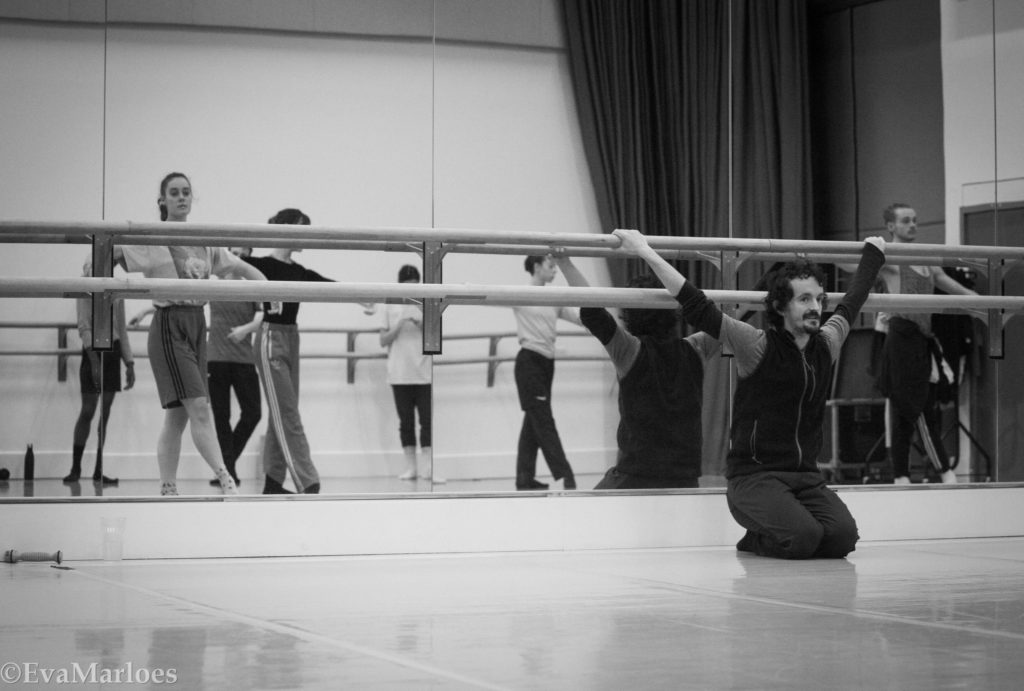
If you want to get an inkling of what contemporary dance is, you need to watch dancers not dancing. Ahead of a run, Rehearsal Director Pablo Sansalvador-Chambers asks dancers of National Dance Company Wales (NDCWales) to ‘space it,’ go through the movements to check where they are meant to be. The movements are only sketched. No need for focus. Tim Volleman, a dancer with NDCWales, scratches his newly grown beard and jokes making funny moves that are extraneous to the piece in front of Elena, another NDCWales dancer. They are not meant to dance, only to go through the moves. There is no acting, no presence, no intensity. Then the run begins. I watch and feel their muscles tensing up and contracting, their body stretching and twisting. That power, swiftness, energy I’ve come to recognise in contemporary pieces is back.

Contemporary dance has a strange quality to it. It doesn’t go for the graceful lightness of ballet, for clearly laid out patterns, for established and precise movements. It has a spontaneous quality, but it is not carefree; it is intense. ‘I think contemporary dance can get very serious,’ Aisha Naamani, one of the NDCWales dancers tells me. It is so serious that dancers need some comic relief at times, after a hard phrase or when they get things wrong. They do so by playing ballet. Ballet, that invisible ‘other,’ that parent who is always in the room and yet belongs to another space. It often creeps in as an aside, something that doesn’t belong and yet is part of one’s core identity. When it gets too tense, dancers ‘play ballerinas’ and release the tension.

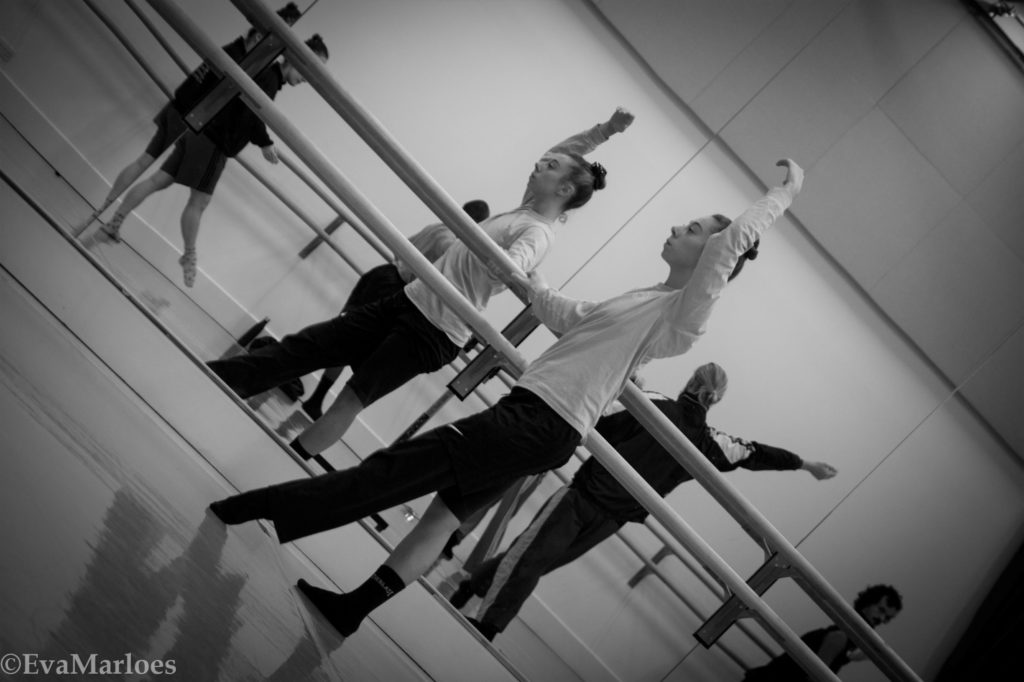
All dancers of NDCWales have had some training in ballet; yet as they begin the ballet class led by Pablo, they blush and feel awkward. ‘If you mess your pirouette, everybody sees it,’ says Nikita Goile, dancer and choreographer of the piece Écrit, part of the Roots production now touring Wales. They do indeed. Unlike most piece rehearsals, Pablo begins the ballet class by drawing back the curtains and revealing the mirror. The class begins with gentle movement to slow piano music. It is not classical music but pop music in a piano version. This time, the ‘escape’ from the intense focus required by the ballet class is found in extraneous movements that are not ballet. Some dancers release the tensions by doing some martial arts or street dance, and blushing. As the music gets faster, the movements get faster, as the music gets more recognisable, the dancers sing. Some move to the rhythm of the music as a preparatory preamble to get into the required ballet movement. 

Ballet is ‘healthy, nutritious,’ says Tim, ‘it is structured, it gives you a good base, a rule. To be able to break the rule, you need to know what the rule is.’ Contemporary dance takes the established rule, the customary view, the narrative structure and subverts them. It wants you to see with new eyes. As Aisha explains, an element of contemporary dance is to ‘try to think of ideas differently, or explore different ways around a common thought, whatever that might be. Someone once said to me contemporary dance is this big umbrella, movement that doesn’t necessarily have a story all the time, it’s more about an experience and your interpretation of it.’ 

Contemporary dance can be very conceptual, sometimes too conceptual and abstract. I have heard dancers often complain about it. The NDCWales production Roots seeks to be accessible and engaging.

The piece Rygbi Annwyl / Dear by NDCWales Artistic Director Fearghus Ó Conchúir, expresses the mutual reliance, joy, and disappointment of the national sport; Anthony Matsena’s Codi speaks of the community spirit of the Welsh valleys; Nikita Goile’s Écrit is about the flows of personal relationships; Ed Myhill’s Why Are People Clapping? captures the playfulness of sport and dance.

Common to all the pieces is an energetic quality of movement. Energy is often mentioned. Aisha tells me, ‘You can have the same angle of an arm but how you get the arm to that place is going to have a different energy.’ She pauses and then continues, ‘I think it comes down to quality and what kind of, to put it with an image, if someone moves their hand, they’re pushing water or something heavy that gives a different quality and energy than moving through air. Quality creates different energy in the room.’ 

‘There are problems with contemporary dance,’ Pablo says, ‘the public come out and don’t understand anything or they don’t know why it was like that.’ The danger of abstraction and obscure symbolism lurks behind contemporary dance creations; yet there is something mesmerising about contemporary dance. For Pablo it’s ‘the realness, the physicality without the illusion that it’s pretty or untouchable. Classical ballet has to be flawless and exquisite. Contemporary dance can be all that but it is more organic.’ Contemporary dance seems to draw out life from dancers. The effort, pain, and intense emotion of it are laid bare for all to see. It is raw and unreservedly human. 

(This article is based on
Eva Marloes’ interviews with Aisha Naamani and Pablo
Sansalvador-Chambers as well as the observation of NDCWales rehearsals of Roots)

Roots opens today at Theatr Clwyd in Mold.

Mold Theatr Clwyd Thursday 7 November 2019, 19:45 BOOK

Friday 8 November 2019, 19:45 BOOK

Cardiff Dance House Tuesday 12 November 2019, 19:30 BOOK

Wednesday 13 November 2019, 13:00 BOOK

Wednesday 13 November 2019, 19:30 BOOK

Thursday 14 November 2019, 19:30 BOOK

Blackwood Miners Institute Tuesday 19 November 2019, 19:30 BOOK

Ystradgynlais, The Welfare Thursday 21 November 2019, 19:30 BOOK

Narberth, The Queens Hall Friday 22 November 2019, 19:30 BOOK

Aberdyfi, Neuadd Dyfi Sunday 24 November 2019, 19:30 BOOK

Caernarfon, Galeri Tuesday 26 November 2019, 19:30 BOOK

Pwllheli, Neuadd Dwyfor Wednesday 27 November 2019, 19:30BOOK

Review Hedda Gabler, Sherman Theatre by Eva Marloes

I couldn’t take it any longer and I left at the interval. I know I should have stayed but I couldn’t. Hedda Gabler was awful. The reviews are all ecstatic, but I only saw incongruous old-fashioned theatre. There is nothing of Ibsen, there is nothing of bourgeois anxiety, and nothing of women’s suppressed individuality in Chelsea Walker’s production.

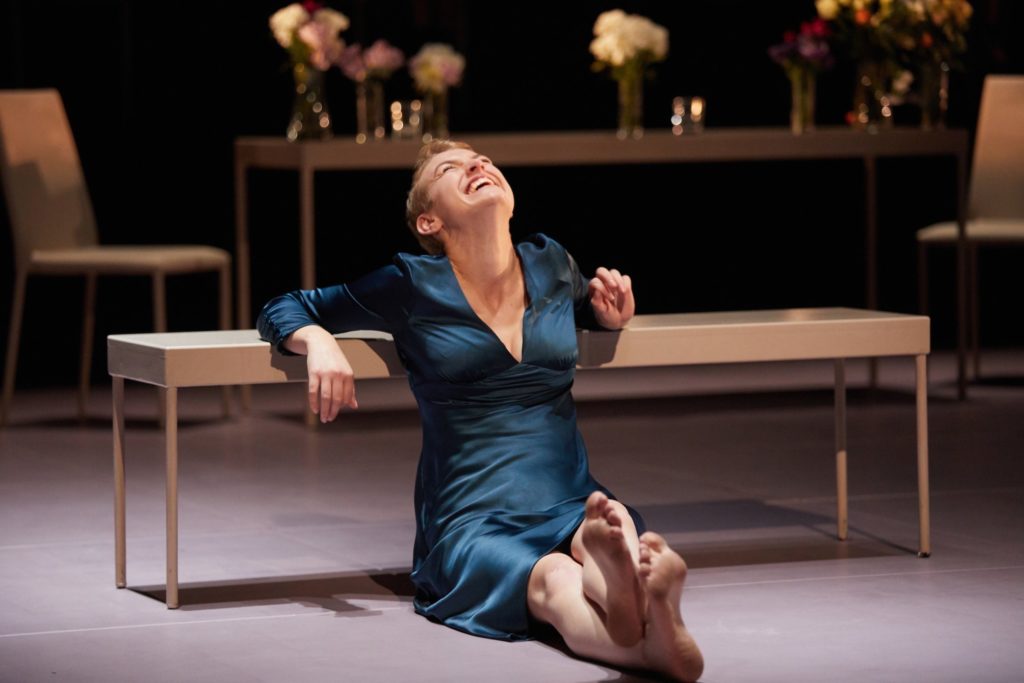
Hedda Gabler, played by Heledd Gwynn, is here turned into a hysterical woman. She wears a loose evening gown in the middle of the day, bare foot, with a pixie style hair-do, shouting and fidgeting. Ibsen’s Hedda is not mad.

Hedda Gabler scandalised Norwegian and European society not because she was outrageous, but because everybody could identify with her. What makes it a classic is not the reverence we have of authors from a bygone era, but Ibsen’s shattering of our illusions of success and fulfilment, to reveal how those very illusions crush our thirst for meaning, freedom, and beauty.

Hedda Gabler is not a feminist or a frustrated woman, her profound rejection of social trappings echoes with all of us, across genders, race, and even class, because we all live within the bounds of social norms and expectations, which stifle us. Ibsen pointed an unforgiving light on the troubles of the bourgeoisie at the end of the nineteenth century, when the bourgeois class was at once at its height and already experiencing decadence. One could be forgiven for thinking that this work sits awkwardly today, at a time of a severely diminished middle class, which cannot even aspire to be called ‘bourgeois’. It lacks the sophistication, the imagination, and the audacity of the nineteenth century bourgeoisie. Yet, today’s struggling middle class, like yesterday’s bourgeoisie, battles with economic forces it has unleashed and cannot control. We have been reduced to cogs in the machine, yet the ideology of the machine is to make us believe that we are all individuals and can shape our destiny, if we only wanted it. Failure is our fault. We don’t want it badly enough. So tripped into guilt, we feel but loss and futility.

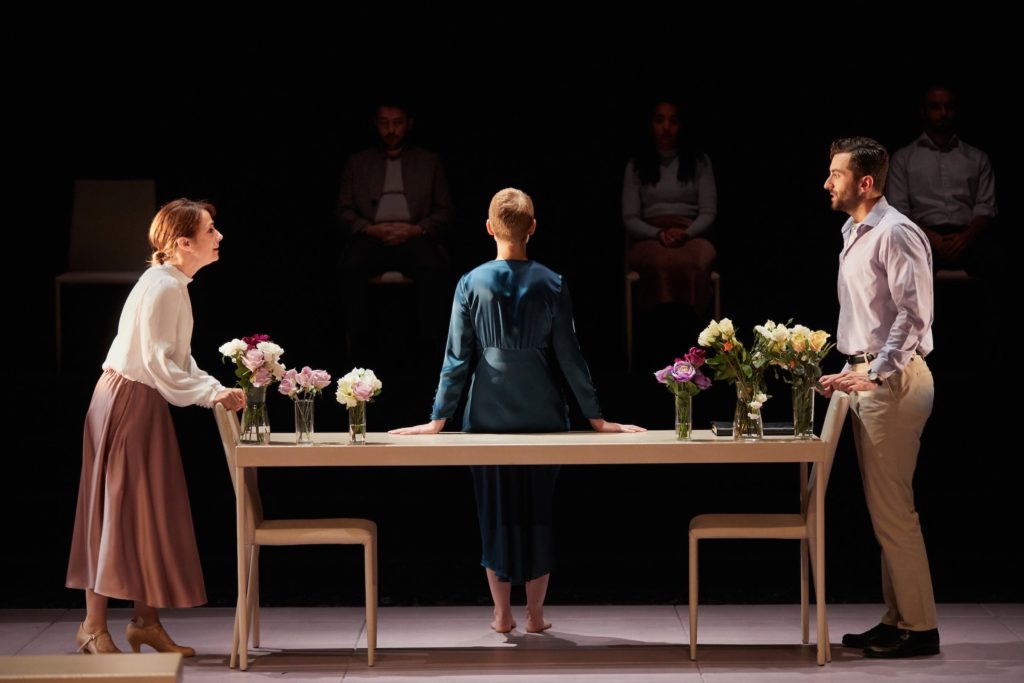
The Tesmans, Hedda and her husband George, are not doing badly. George, played humorously by Marc Antolin, is in line for a professorship and, unlike now when professors live in foodstamps, that would have meant financial security and social respectability. We don’t get a sense of that, thanks to a Ikea-inspired stage design, which consists of a white and minimal table, a bench, a chair, and a piano. The comments on Hedda’s liking for luxury fall flat and make one wonder whether anyone in the production read the script.

Hedda doesn’t like expensive furniture and clothes for its own sake, but because they signify beauty as much as acceptability. Hedda feels trapped by social conventions, but she cannot resist them. In this production, Hedda has pixie hair and walks bare foot in a loose silk gown, almost a nightie.Hedda Gabler is not a free woman, she is not a sixties’ swinging London carefree girl, a hippie or a sexy femme fatale. She is in prison. It is the prison of respectability, of appearance, of sense. She tells us over and over again that she is afraid of scandal, she is envious of Thea Elvsted, who leaves her husband in ‘broad daylight’ and can express herself by writing with Eilert Loevborg.

Turned into a 1960s rebel, Hedda’s firing a pistol and burning a manuscript are but whimsical pranks. There is no explosive fire in Hedda Gabler.

Dance Infused with Energy – Behind the scenes with Anthony Matsena by Eva Marloes

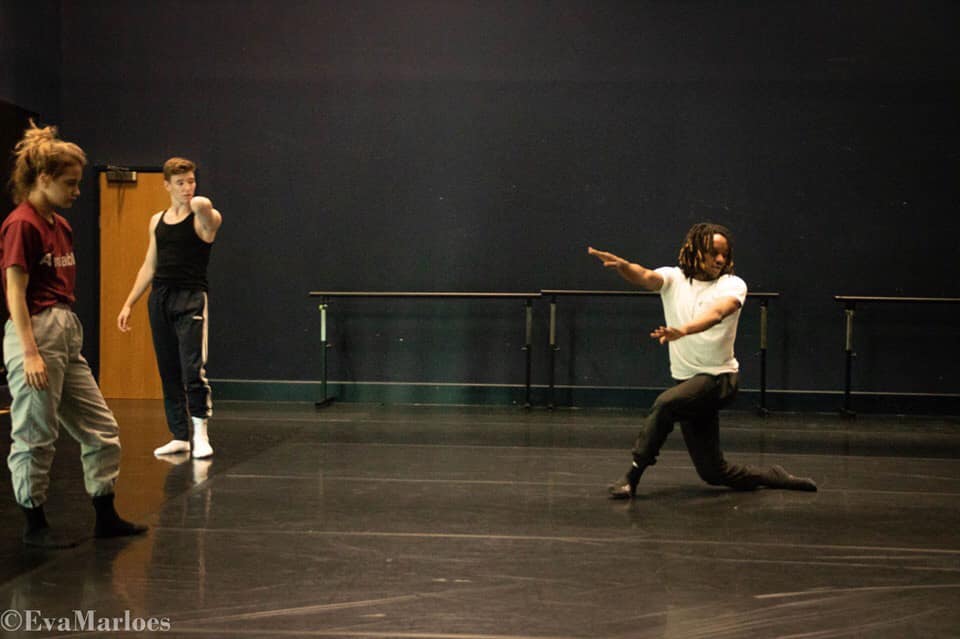
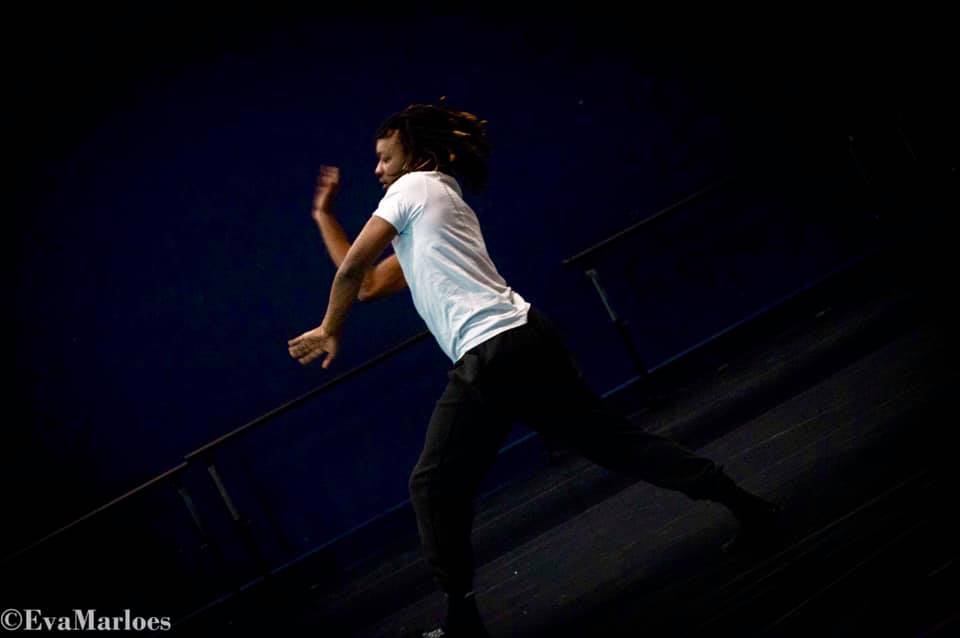
Contemporary dance is storytelling without narrative. It evokes emotions and thoughts through movement and rhythm. It is the body that speaks, over music, over story, over costumes. Something is said through movement. I watch dancer and choreographer Anthony Matsena trying ideas with Will Bridgland and Artemis Stamouli for his piece Codi, which is part of Roots, the autumn dance tour of National Dance Company Wales. He is going through only some small sections of the piece; yet, I get a sense of his energy-infused dancing style.

Born in Zimbabwe and raised in Swansea, Matsena has trained in street dance and contemporary dance first in his hometown Swansea and then London. He is now back in Wales to collaborate with the showcasing of Welsh dance talent with the National Dance Company Wales.  

Before the start, Matsena asks Will Bridgland and Artemis Stamouli how their body is, that precious instrument of expression, at once strong and fragile. During a movement, Matsena says: ‘your body is much heavier in this … don’t rush, take your time.’ It’s an exercise in stretching the body but always going with the body, not against it. This seem counter to some experimental contemporary dance that seeks to test the limits of the body in an attempt to break boundaries. Matsena’s dancing style has none of that. 

Matsena’s dance style is infused with energy. It is noticeable ever after watching him only briefly. The movement is fluid, broken up, tense, slow, and fast. He kicks with legs and pushes with his hands. In a duet with Stamouli, he picks her up, holds her, and turns her gently. It is a delicate and intense dance where every movement seems effortless and yet mindful. They are present in every move. 

Matsena began as a teenager with Hip Hop, Krumping, Street Dancing, and African Dancing. I ask him to what kind of movements he is drawn. He tells me he is drawn to ‘highly energetic movement, variations in velocity, speed, I’m drawn to phrases and movement that have high energy.’ 

I ask him from where he draws his movements. He tells me they come from ‘the curiosity of the different things the body can do,’ as well as a very eclectic training. He is fascinated by how other people move. In the first week with the dancers from National Dance Company Wales, Matsena worked on exploring their different ways of moving and approaching movement. He wanted ‘something that best shows their skills, their unique experience.’ ‘The hard thing is framing it,’ Matsena tells me, ‘it’s not about teaching them to dance but to find a frame that holds those skills.’

Dancers inform the piece and are engaged because the piece is partly theirs. Matsena did not want to impose how his body moves on them; rather he wanted to find a place where different styles can coexist and are distinguishable. Contemporary dancing rests on collaboration; yet it is also a deeply personal practice that strives for personal expression, for authenticity.  

‘If you’re being true to yourself, you will be authentic,’ Matsena tells me. ‘You need to use the tools that are true to you in order to transmit that idea. Then it will feel authentic. … Sometimes I don’t recognise what I’ve done but that’s because it’s new. If I set myself the task to find a new pathway, it won’t feel natural, it won’t feel authentic. … Krumping, Hip Hop, Street Dance, I know the foundations of these techniques, but if I try something new, it’s gonna feel not authentic until it’s authentic. When it sits in your body you feel it’s authentic.

Dancing in a way that pleases people, that will be liked, is not authentic. ‘Part of being a dancer is being conscious and aware, of what you are doing,’ Matsena says. Authentic dancing lies in using the dancer’s ‘unique way of viewing things to elevate them to extraordinary things, simple things.’ Simple things, like a tree, are transformed in a dance piece through the perspective of the artist and thus shift people’s perspective. A new dimension is added to everyday objects or actions.  

I ask Matsena what the unique feature of dance is within the arts. He tells me that in theatre words can be limiting because they define, dance is ambiguous and each person can come away with a different insight. Yet, dance, for Matsena, should be accessible. People should be able to relate to the meaning behind a dance piece. Dance bridges, when words fail us, it’s got this magical thing that gives this physical empathetic transmission between the audience and the performer, the things that we recognise but cannot articulate.  

Matsena is drawn to stories and pieces that can convey what it means to be human, particular and univesal. For Codi, Matsena sought to combine elements of African dance, street dance, and the sense of community of the Welsh valleys. Codi is about finding solidarity in community.  

The best thing to do this was to do something that is closely related to Welsh communities. ‘I was looking at the Mining industry. … Once collapsed, you want to find your way out to the surface. … I wanted to make people aware of the support system around them, opening people’s eyes to everything that is around them. It is not about everything is all right. When you recover you still have the stain on the shirt from before. … If we’re trying to crawl up, how do we do that? We shape it in a way that people can find each other.’

At home, in Wales, Matsena feels free and able to create art. ‘There’s this crazy energy and freedom I get when I’m home. I make better work when I’m here. There’s a lid that is lifted when I’m home.’ With Codi, he taps in the sense of community and place that is at once particular to Wales but also universal.  

Codi forms part of the National Dance Company Wales autumn Roots tour, further information can be found below.

Mold Theatr Clwyd Thursday 7 November 2019, 19:45 BOOK

Friday 8 November 2019, 19:45 BOOK

Cardiff Dance HouseTuesday 12 November 2019, 19:30 BOOK

Wednesday 13 November 2019, 13:00 BOOK

Wednesday 13 November 2019, 19:30 BOOK

Thursday 14 November 2019, 19:30 BOOK

Blackwood Miners Institute Tuesday 19 November 2019, 19:30 BOOK

Ystradgynlais The WelfareThursday 21 November 2019, 19:30 BOOK

Narberth The Queens Hall Friday 22 November 2019, 19:30 BOOK

Aberdyfi Neuadd Dyfi Sunday 24 November 2019, 19:30 01654767251

Caernarfon Galeri Tuesday 26 November 2019, 19:30 BOOK

Pwllheli Neuadd Dwyfor Wednesday 27 November 2019, 19:30BOOK

Review Macbeth, Watermill Ensemble by eva marloes

 out of 5 stars (3 / 5)

The Watermill Ensemble’s Macbeth is a rock ‘n roll and sexy production that finds favour with its public. Under the direction of Paul Hart, Shakespeare’s plays are given a cinematic flair and engaging performances. 

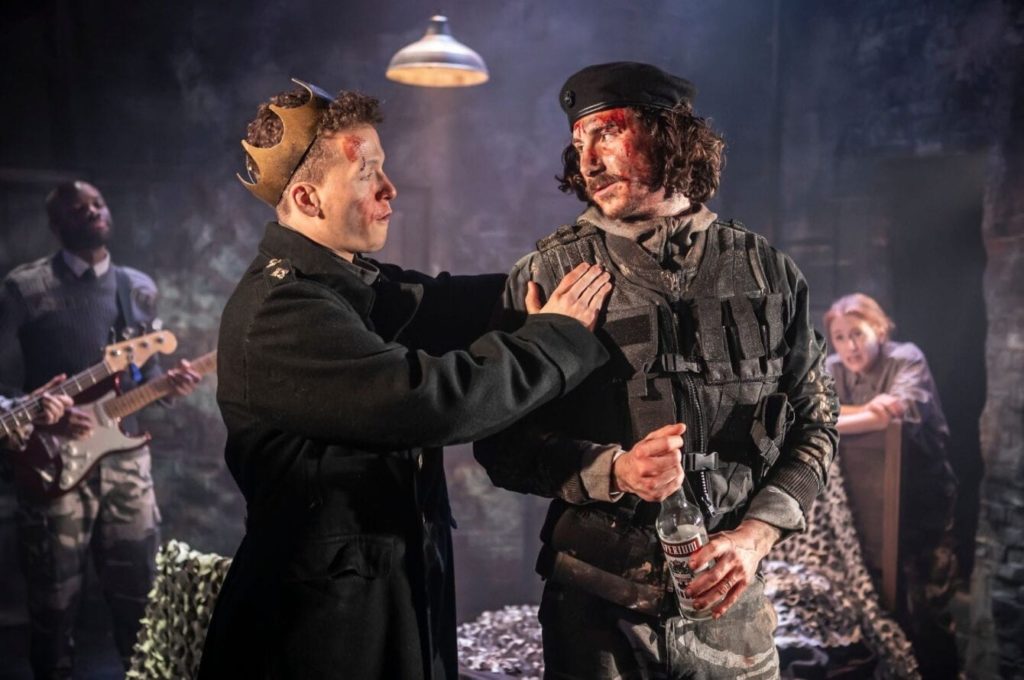
Macbeth, played competently by Billy Postlethwaite, enters the scene in combat uniform and blood on his face. The military setting gives a sense of comradery, aggression, and manliness. This makes more convincing Hart’s casting according to character rather than gender.  

The production moves away from the military world to plunge Macbeth into the criminal underworld. Macbeth’s castle is a seedy hotel. The neon sign ‘hotel’ leaves out the letters O and T to spell H—EL. In the style of a mafia boss, Macbeth hands out money from a bag to professional killers to get Banquo murdered. Accordingly, Lady Macbeth is the femme fatale of a mafia boss. Reminiscent of Michelle Pfeiffer in Scarface without her grace, Lady Macbeth dons a red jumpsuit dress. The witches are in overly stretched mini dresses that conjures a brothel rather than ghosts. 

The jazzy music juxtaposed to the murder of Banquo is effective and striking. Music is protagonist in Hart’s productions. It creates the scene and provides commentary on the action. Sadly, not all the cast have the powerful voices of Billy Postlethwaite and Emma Barclay, here playing Lady Macduff. The Rolling Stones’ Paint It Black lacks the necessary grit. 

Postlethwaite is a rough and tough army man. He has an animalesque energy. He is intense and captivating, but the tone of the production lacks subtlety making the soliloquies of Macbeth and Lady Macbeth a parenthesis in a Hollywood thriller. They are lustful, not sensual. They are all speaking verse comfortably but the excessive agitation puts the focus on action rather than atmosphere and meaning. 

Like Hart’s A Midsummer Night’s Dream, Macbeth gets stripped of Shakespeare. There is no tension between Macbeth’s murderous ambition and his guilt. Macbeth is blood-soaked from beginning to end. There is no discernible change or conflict, only a crescendo of paranoia. Emma McDonald is convincing as Lady Macbeth, but the supposedly sexy lingerie turns the tragedy into farce. Alas, for all its sound and fury, Hart’s Macbeth signifies nothing.