

All posts by Eva Marloes

Review Gretel and Hansel by Eva Marloes

 out of 5 stars (3.5 / 5)

With Gretel and HanselOz Perkins retells the famous Grimms’ tale centreing it on Gretel’s ability to survive in a hostile world and overcome the temptation of evil. One should not be fooled by the title and the focus on Gretel and believe that it is a feminist rendering of the tale. The film hasn’t got an ounce of feminism or women’s empowerment. On the contrary, it is infused with the traditional misogynistic tropes of mad women and witches as women who kill children, including their own. It is not a misogynistic film either, thanks to a pervasive ambiguity, a clever weaving together of the stories of its protagonists, and subtle acting. 

Faced with poverty and starvation, the mother of Gretel and Hansel turns mad and kicks them out. There begins Gretel’s journey of growing up and taking responsibility for herself and her little brother. She acts as a mother towards Hansel, protecting him from danger until Hansel’s hunger leads them inside the house of the witch. Gretel is at first wary of the hospitality of the witch. She becomes seduced by the witch’s knowledge and power. The witch teaches her magic, but it is a dark magic that requires sacrifice. The witch tells Gretel that she sacrificed her own children and asks Gretel to sacrifice Hansel to gain power. 

Historical scholarship has shown that women victims of witch hunts were often those who did not conform to patriarchal norms and fulfil their roles as dutiful wives and daughters. Louise Jackson’s research on the Suffolk witch trials of 1645 shows that these were unmarried women, widows who lived alone, women suffering from depression, women who were not as submissive as they were meant to be.  

The type of crimes of which the women were accused mirrored in reverse the tasks imposed by their social role of mothers and wives. As mother and wives, they were meant to feed, nurture, heal, and give birth. Thus, they were accused of poisoning, infanticide, harming, and of death. The witch is the opposite of the good wife and mother. It was not religious zealotry what motivated the witch-hunt, rather the systematic controlling of women. The pressure was so high that women convinced themselves that they were indeed witches and confessed to being a witch. 

The mythical figure of the witch is constructed in opposition to the good wife and mother. She is dangerous and evil because she is not under the control of male authority. In the 1890s, as the figure of the New Woman begins to emerge in fiction and art (think Gustav Klimt), the witch and the female vampire are presented as strong in their sexuality, though largely still for the gaze of men. One of the central features of how women have been portrayed, especially in horror stories, is their dangerous power, which comes from their body, its ability to seduce, to give life, and thus destine us to death. Life is the beginning of death.  

The film balances well the allure of the dark power of the witch with Gretel’s attempt at being responsible for life. It is, however, full of allusions and short of clear intent. The cinematography (by Galo Olivares) is slick without indulging in the aestheticism so prevalent in today’s cinema. Sophia Lillis, as Gretel is excellent, though it is Alice Krige, as the haggard-witch, who steals the show. The slow pace makes the film suggestive and subtle for most part. Alas, in the final act the writing (by Rob Hayes) turns artificial and wants to make a point quickly. It assumes a moralistic tone and falls for a simplistic triumph of good over evil. It’s as if the male authors couldn’t help but restoring order.  
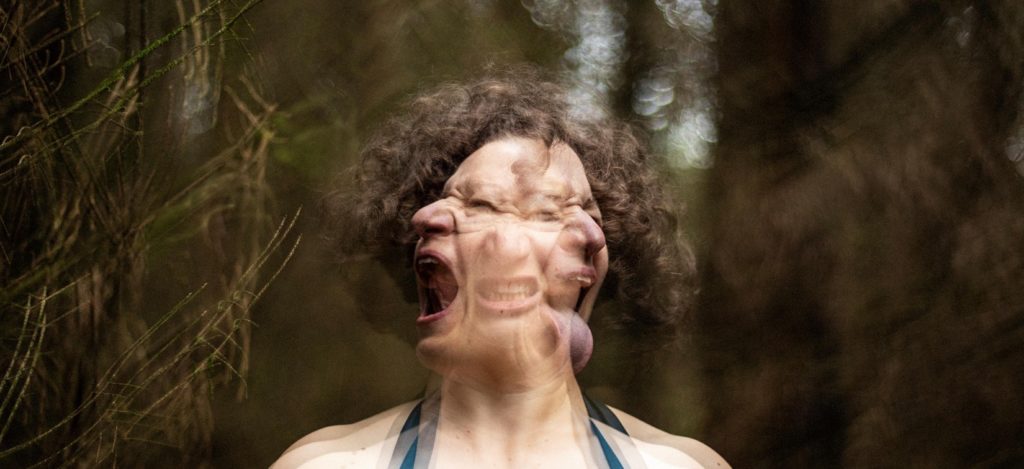
Connecting With Our Body with Zosia Jo – interview by Eva Marloes

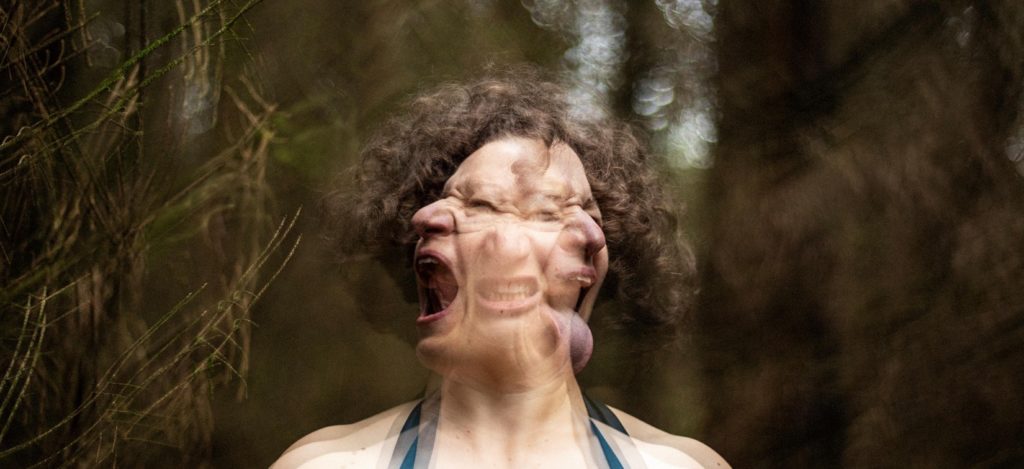
The disconnect with our bodies is making us sick. We communicate through disembodied social media and are strangers to one another. As the Coronavirus spreads across Europe, it might sound strange to advocate for a stronger connection with our body and nature, and yet it is through connection that we get to know what our body can do, its vulnerabilities, and how to make it resilient. The exhibition and performance ‘Fabulous Animal’ by dancer and performance artist Zosia Jo is thus unwittingly topical. It is an invitation to rediscover our body without judgment and to find strength by tapping into our animal side.

I have never had a rosy picture of nature. Nature can be terrifying and ruthless. Nature doesn’t ‘need’ us; rather we need nature. We are of nature. Zosia Jo’s invitation to have a more grounded relationship with our body and those of others emphasises strength born of acceptance rather than control. It is a much needed lesson in these times of uncertainty, anxiety, and disconnect.

Some might find it all too abstract, but there’s nothing abstract about the body. The coronavirus spreading illness and panic brings home how we fool ourselves into believing that we are above nature and detached from it. We want to dominate nature even to the point of extinction. We want control over the body. Men, in particular, want to control women’s bodies. They do so through rape and harassment, through restrictive legislation on reproductive health, and through the labels applied to women for what they wear, how they look, and how they move. Zosia Jo wants to ‘shake off the patriarchy’. Yet, her message is for everyone. Women bear the brunt of this ideology of dominance and control, but men are oppressed by this too. The attempt to eliminate vulnerability, repress emotions, and control the body is what makes us weak.

The work of Zosia Jo
invites us to stop, watch, and listen to our body. There is an
aliveness in the photos and videos of Zosia Jo seeing and
experiencing her body as if she has woken up from a long sleep. She
plays with her flesh and muscles, with her hair, teeth, and skin. She
touches the body of a tree from inside in a sensuous and playful way.
She climbs a tree like a monkey. She does not conquer nature, but
connects with it.

As a dancer, Zosia
Jo tells me that she was always aware of how important the line of
the body and the look of the body were. She tells me,

“I got thrust into this world where it was all about ultimately how I looked, even though it’s more complicated than that. I got swept into trying to be thin, trying to be in a certain way. My journey back to performing and dance became a very personal one, one that was about finding myself, empowering myself to feel good about my own body and to dance again. To perform was a big part of that.”

She studied somatic
dance, which stresses listening to one’s body to appreciate how
movement emerges. She has run workshops for people to experience
their bodies without judgment. She has worked extensively with women
in Cairo, who rarely get the opportunity to be in a safe and creative
space away from the ever-present male gaze. Women are under constant
pressure to look pleasing to men. Zosia Jo sought to ‘shake off’
that judgment. She tells me,

“It’s the curiosity about the body, feeling and touching with no judgement, I might be touching the part of body I least like but I have to discover it as if I had no attachment to what that is.”

Zosia Jo listens to
her body and only her body. She seems to forget the audience and the
camera or, more poignantly, she doesn’t care. Released from the
pressure to conform to expectations, be they expectations of beauty,
grace, agility, she can breathe freely. Her technique is like
breathing, a continuous expanding and pulsating. It’s paying
attention to one’s body and only one’s body.

“I wanted to make something that was ugly … let go of this instinct of making something beautiful and just be utterly unrefined. The goal was to be so ugly that is beautiful.”

Yet, she is a
performer relying on external validation and enjoying the
relationship with the audience. I ask her what she does to
communicate how she feels to the public. She tells me,

“Somatic dance can be a bit trippy … I might feel great but I look disempowered, how do I match my own experience with what I’m trying to say to the audience and not look like shrinking and hiding in public space? That is the question.”

It is the connection
with animals that makes that communication possible, she asked
herself,

“Which animal enabled me to be in the world in such a way that it’s clear I’m taking space or that I’m being empowered? At the same time a feeling good, that is not fake, that is not impersonating a kind of traditionally male sense of what power is or what power looks like, but that I am feeling good.”

Zosia Jo performs
the instinctive and earthy
character of an animal but juxtaposes with the ‘fabulous’
of queer culture.

“Fabulous … I think of queer culture, dressing up, taking ownership of one’s sexuality. … I like the contrasts between queer culture, glamour, sequins, sparkles, sexuality and shiny expressionism, and animal, which is something earthy and grounded. I loved the seemingly paradox.”

This is what makes
it a fun performance. Performance can in itself be liberating. I ask
her where she finds the internal validation for this work. She tells
me,

“When you listen to physical reality, you can ground yourself and feel grateful just for being present and alive. When you feel what the body can do and get excited about what it can do instead of what it can’t do or instead of what is wrong with it that’s very validating without having to be impressive in any way… It’s not ‘heroic’ movement … moving to the beat, it’s something so human. Everyone can do it.”

Everyone can do it.
Everyone can rediscover their body, “wobble all the fat” and have
fun with it without fear of judgment, without the need to control it.
The empowerment is not in dominating and controlling; the empowerment
is in the connection.

Watch the videos of Zosia Jo here.

Fabulous Animal Live Performance – A Review by Eva Marloes

 out of 5 stars (4 / 5)

Fabulous Animal is a composite artistic project, which includes
photos and videos of professional dancer Zosia Jo and of workshops’
participants and Zosia Jo’s live performance at Cardiff Made. It is
an exploration of the body in its fleshy and animalesque dimension.
The performance begins with Zosia Jo feeling her body, her teeth, her
arms, licking her arm, comparing the hair in her armpits with the
hair on her head. She stretches her muscles and shakes her body. She
dresses and undresses.

The performance
starts with playfulness and warmth. Zosia Jo is friendly and puts us
at ease. Zosia Jo has a beautiful physicality and control over her
body. Every move looks natural, with no tension, and easy. As her
body moves slowly and softly, it becomes seductive. It is seductive
in the literal sense of the word, in bringing us closer. She embodies
an eroticism without a mask.

In the very small
space of Cardiff Made, Zosia Jo projects a sense of wider nature. She
moves like the waves of the sea, like the movement of our lungs as we
breath. What is striking of the performance is her ability to give a
sense of being in nature and part of nature. Zosia Jo is successful
in stripping us of our everyday masks and let us see that underneath
our clothes we are animals. In nature, the spectators would have been
able to sense more their own body and their relationship with rocks,
sands, trees, or water.

The texts beside the photos give a thoroughly research context linking this exploration of the body and nature to feminism. However, it is too abstract for the performance, while it is probably more powerful in the contexts of the workshops Zosia Jo did in Egypt. The exploration of the body outside of societal constructs of beauty, strength, and skill can resonate with men as well as women. In a disembodied society, we can all benefit from experiencing our bodies differently. At the performance, we remain spectators; yet as we watch Zosia Jo, we can imagine her as an animal. Like a butterfly she spreads her wings and she is nature. She is a fabulous animal.

You can watch the video online at the following address: https://www.zosiajo.com/

Carmen – A Review by Eva Marloes

 out of 5 stars (4 / 5)

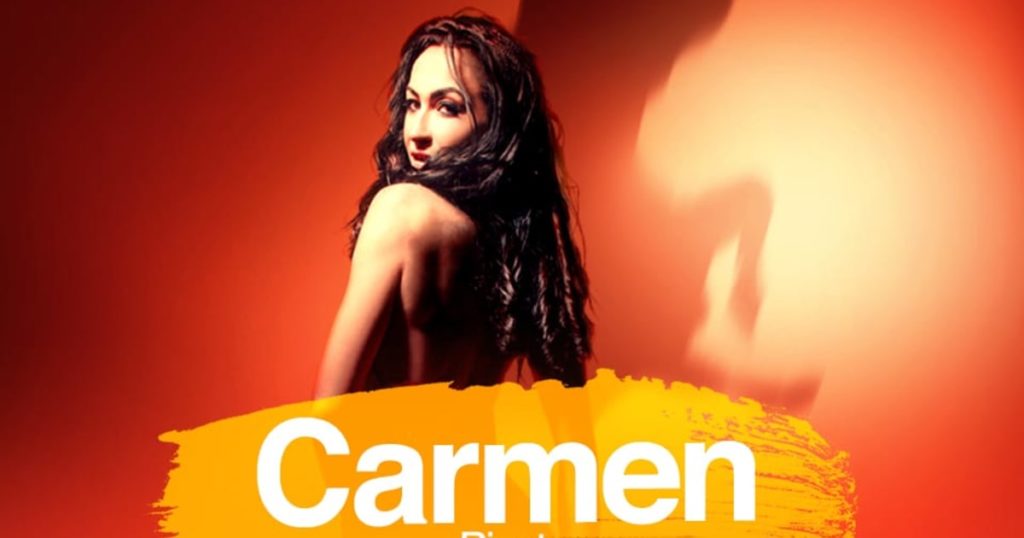
The latest WNO’s production of Carmen is engaging and well executed though still a little too traditional. The excellent cast, choir, and orchestra make this Carmen spirited, colourful, and vibrant. Julia Mintzer as Carmen is pure energy and grit. This is a great improvement from last year’s production, which lacked tension and teeth. Mintzer has stage presence and a voice to match it. She is a credible Carmen who never falls into stereotype. She’s sensual and defiant. She defies her murderer but also fate. Carmen is a woman who does not want to be confined to a role, not even the role of outsider. It is her stubborn individuality that leads her to her death. She does not flee nor does she accept to be under the authority of a man.  She is not a victim.

Elin Pritchard as Micaëla is superb. She has a beautiful tonality and conveys Micaela’s pure love and compassion with dignity. Mintzer and Pritchard complement each other beautifully in their acting and their singing. Peter Auty is an impressive Don José. Giorgio Caoduro seems at ease performing Escamillo and much more convincing than he was in Les Veprês Siciliennes. All the members of the cast give strong performances. The choir is, as ever, powerful. The children, in particular, are formidable. The dance is captivating and well integrated in the scenes.  

I remain unpersuaded by the setting in Brazil’s favelas and the grey brutalist scenario; yet the much improved acting and movement on stage help make this more relevant. The intent is to stress class as well as gender, but it feels too traditionalist and conventional. I would have preferred the production to be bolder. In recent years, there have been women protesting against femicide and rape in Latin America, Europe, and India. They have often used theatre and song to do so. There have been women protests against draconian abortion laws in the US, where women have donned the red cape and white hat from The Handmaiden’s Tale. Yet there is no anger in Jo Davies’ WNO production. It could be objected that opera is for a traditionalist and bourgeois elite, but I sat surrounded by many young women in their early twenties. Carmen can speak to those women. There should be not fear of being over the top. Being over the top is what Carmen is all about.  

Les Vêpres Siciliennes – A review by Eva Marloes

 out of 5 stars (2.5 / 5)

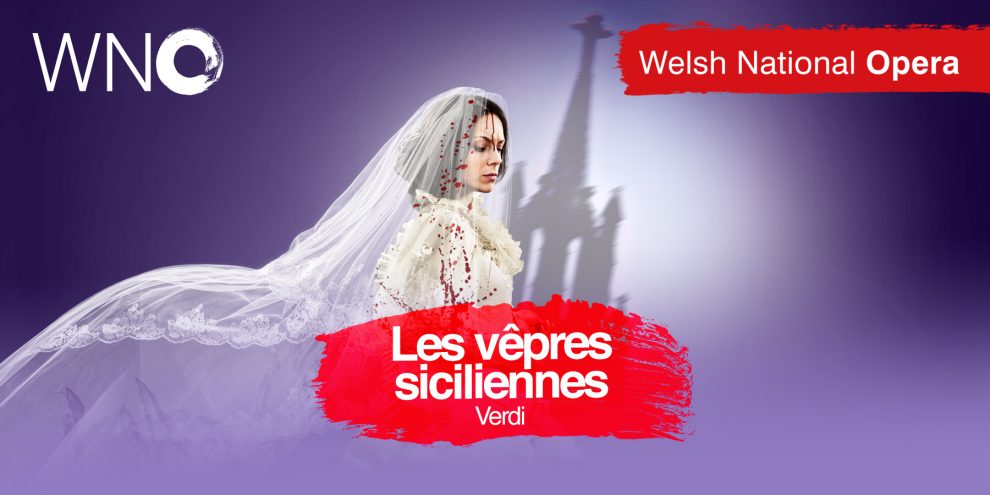
The WNO’s powerful choir and masterful conductor Carlo Rizzi excel in this disappointing production of Verdi’s Les Vêpres Siciliennes. A challenging opera, Les Vêpres, is let down by voices lacking the sufficient power required by Verdi’s music and an ill-judged set design. In contrast, the short but effective dances, choreographed by Caroline Finn of the National Dance Company Wales, add an extra dimension to the unfolding of the story. 

The cast overall lacks voices that can match and rise above Verdi’s score, with the exception of Jung Soo Yun, who interprets Henri and has sufficient presence throughout the opera. The soprano Anush Hovhannisyan, interpreting La Duchesse Hélène, underperforms in the first part of the opera. She lacks coloratura, but her more spinto voice excels in the second part. The WNO have a strong Verdi repertoire. The choir is as strong as ever and so is the orchestra, conducted by Carlo Rizzi. The production is let down by the self-indulgent aestheticism of the set design by Raimund Bauer that falls for misogynistic forms. 

Les Vêpres Siciliennes refers to the massacre in 1282 by Sicilians of the Angioine lords who had taken possession of Sicily from the Spanish Aragonese. Sicilians rise up in response to the rape of ‘their’ women. One need not be an anthropologist to know that women and their bodies have always been taken as the symbolic and spatial boundaries of the nation. Rape continues to be a weapon of war because of its symbolism. Women are owned by men. The enemy takes possession of land and power through rape. This includes the raping of men who are, in this instance, feminised.  

In this production, the rape is conveyed by parading a dinner table displaying lavish food and naked women. This is followed by a woman with red marks on her naked back strapped sensuously to red strings. It is disturbing that in this day and age, one should remind directors that the glamorisation of violence against women is misogynistic. It is the same aesthetic indulgence seen in the film Nocturnal Animals by Tom Ford. Directors should stop making women into beautiful objects and beautiful victims. In contrast, the dance telling the story of the rape of Henri’s mother and his birth is powerful and tasteful. It is choreographed with subtlety and a touch of humour. 

In Verdi’s opera, Sicilians rising up to the foreign conquerors is more than a nod to the Italian Risorgimento but also to the popular sentiment against despotic landowners. Yet the nationalistic references to dying for one’s country feel uncomfortable today, at a time of nationalistic nostalgia. The libretto cannot be changed but the set consisting of a series of black frames and an over indulgence in silhouettes makes for an oppressive atmosphere. The aestheticism of this production fails to grapple with the issues and to support the interpretation on stage. 

Review The Marriage of Figaro, WNO by Eva Marloes

 out of 5 stars (5 / 5)

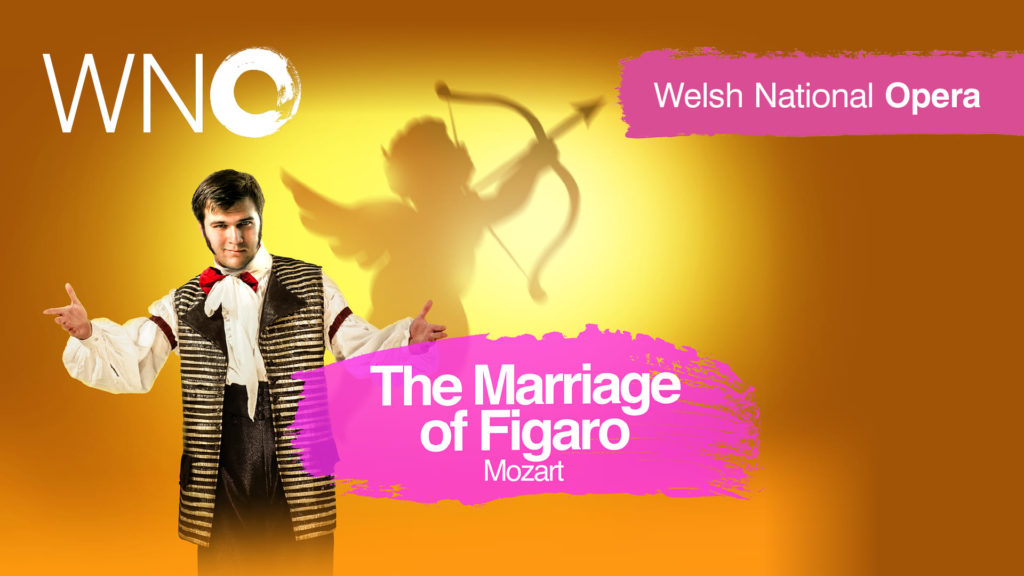
Mozart’s beautiful arias are performed with dexterity and spirit by an excellent cast who is able to convey the levity, depth, and social criticism of The Marriage of Figaro. The strong performances are supported by the formidable WNO’s choir and orchestra conducted with brio by Carlo Rizzi.  

The choice of scenario and early 18th century costumes indulge the fancies of the audience for a delightful farce where love is a game. We laugh at the jokes and smile at the subterfuge. That sense of play and adventure that pervades the opera might fool the audience into thinking that the Marriage is theatre that has little to do with reality; yet the apparent lightness allows a radical critique of class and gender.  

Based on Beaumarchais’ La Folle Journée (1784), Lorenzo Da Ponte penned a revolutionary libretto, which shines a light on the lives of ordinary people. It is servants who are the protagonists of the opera. We get into their bedrooms, literally, and hear their perspective on their social status. Figaro is about to get married to Susanna and the two ponder their situation in life as servants. At any moment Figaro can be called and sent away by his master, the Count d’ Almaviva, while Susanna is subject to sexual harassment from the Count.  

The choir of servants sing to the Count in gratitude for giving up his ‘droit de seigneur’, his right over his servants to spend the nuptial night with the bride. Although there is no evidence of such a practice, the reference emphasises the lack of rights servants had vis-a-vis their lords.  It is sadly poignant today, not only in the aftermath of the #metoo movement, but also at a time when labour, including professional labour, is exploited and rights have been eroded by moving to increasingly precarious work. 

In the opera, the women are conscious of their weak social status and use marriage to gain independence. They play with the men’s sexual desire pretending to be unfaithful. Susanna exposes Figaro’s lack of trust, the Countess makes the Count reckon with his unfaithfulness, while the peasant girl Barbarina blackmails the Count to marry Cherubino and thus improve her social status.  

The twists and turns are not merely for comic effect, they make the characters face themselves, their weaknesses, desires, and values. The Countess, interpreted by the superb Anita Watson, is afflicted by her husband’s philandering. By making her husband face up to his unfaithfulness, the Countess makes him realise that there is no happiness in chasing women. The Count finds redemption in being forgiven by the Countess. 

In this well-performed production, Soraya Mafi (Susanna), Anita Watson (Countess), Leah-Marian Jones (Marcellina), Anna Harvey (Cherubino), and David Ireland (Figaro) ensure a perfect balance of merriment and depth.  

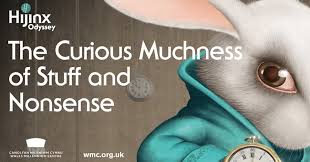
The Curious Muchness of Stuff and Nonsense – A Review by Eva Marloes

 out of 5 stars (3.5 / 5)

“It’s Alice with a ‘y’,” (Alys) says the protagonist of The Curious Muchness of Stuff and Nonsense to a puzzled Caterpillar and an equally puzzled audience. It’s Welsh. The ‘welshified’ Alice in Wonderland, written by Hefin Robinson, is a funny and song-filled piece for the pleasure of children. 

Odyssey, Hijinx Community Theatre Group, manages to delight its audience, and not just the children in the audience, in their Christmas production. It begins with Alys glued to her phone and being reminded, together with the audience, to switch it off. It’s time for her birthday party. Curious Muchness is very much a party with a large cast of disabled and non-disabled performers from Odyssey and Woodlands High School parading and singing on stage. The piece seeks to tap into contemporary life: the White Rabbit looks for a ‘clever watch’ (smart watch), the Caterpillar is a celebrity singer, a lost Alys gets told to check Googlemaps to find her way home, and three former Queen’s servants demand their jobs back.  

Curious Muchness is at its best when it plays with Cardiff’s weather and the Welsh language. It is unpretentious light fun for a very young audience. It is the perfect production for the ‘jolly season’. It is Alice in Wonderland with no darkness. The lack of darkness takes away the suspense and the emotional arch. It also poses the question of what is appropriate for children. Should fear really have no place in children’s entertainment? The fantastical theatre (and film) of today is too often an escape into an unthreatening and joyful world. Curious Muchness is no exception. As a child, my favourite scene of Disney’s Snow White was the transformation of the beautiful Queen into a terrifying witch. The darkness of folk stories is not just to scare, but to let us travel safely into the unknown. Dark stories are a journey into our unconscious, filled with fears, dangers, and dreams, made safe by knowing that it is only our imagination, a shared dream, that is always resolved at the end by going back to our conscious state. We go back with a deeper sense of who we are.  

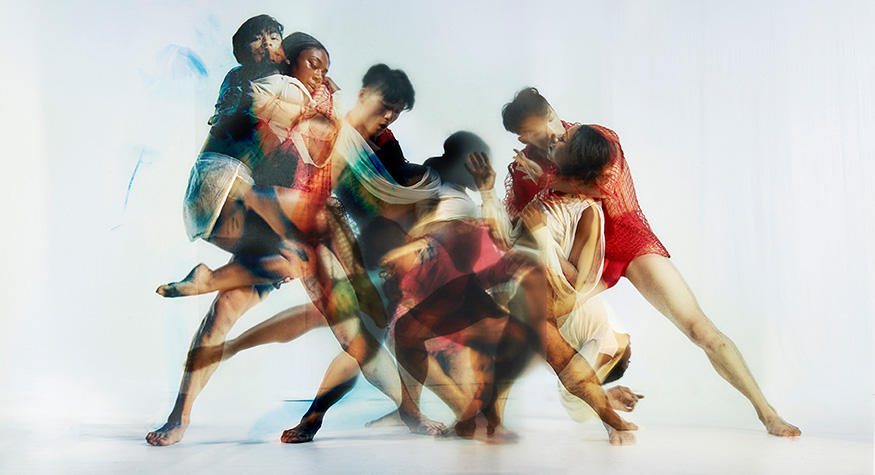
Rambert2 – a review by eva marloes

Rambert2 is a spectacular and charged performance with dancers of incredible physicality,
elasticity, and vigour. I believe they earned the standing ovation; less so the choreographers.
Rambert2 is made of three pieces, of which Sin, choreographed by Damien Jalet and Sidi
Larbi Cherkaoui, is the most striking and beautiful. Sin is sandwiched between a
disappointing and dated piece with a scifi flavour and an explosive but crowded and uneven
piece at the end.

The first piece opens with dancers in space-like suit playing an impossible game of words.
The theatrical side is quickly ditched and left unresolved to move to fun and rhythm. It lacks
a journey, cohesiveness, and beauty. The final piece brims with colour and movement. It
shows off the dancers’ agility, strength, and smoothness. They also show skill and
coordination in working a rather limited stage. Sin is simply mesmerising. It is a gripping
duet capturing the conflictual nature of desire, the life force of eroticism, and annihilation. It
is beautiful and beautifully executed.

Rambert2 is a bonfire of energy with uneven pieces. Its main weakness lies in being too
concerned with effect. It is ‘stagy’ with an expert use of music, lights, and showing off talent.
It wants to entertain the audience and overall it succeeds. Yet, it does so by relinquishing the
poetry that is present in Sin and at the beginning of the final piece.

Rambert2 was part of Cardiff Dance Festival, performed at Royal Welsh College of Music and Drama

(First Published on Groundwork Pro and Cardiff Dance Festival)

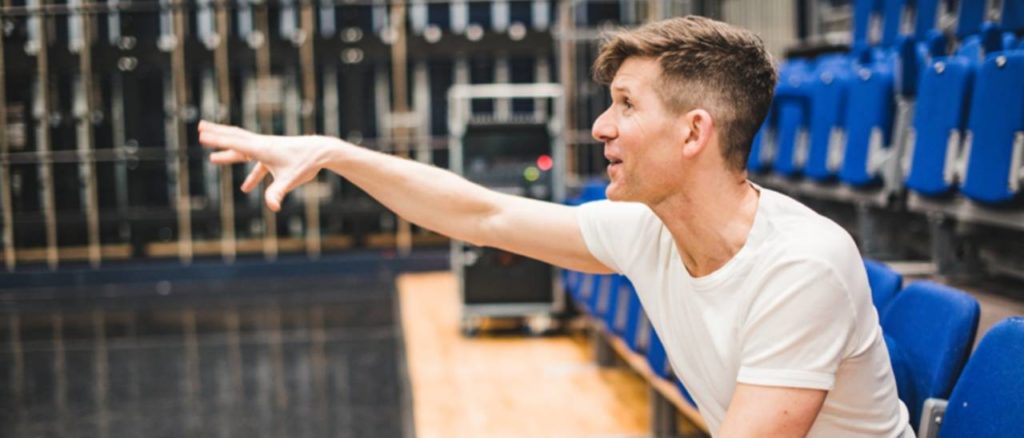
The Gift Of Dance – A Comment On Fearghus Ó Conchúir’s Workshop by Eva Marloes

The highlight of the Dance Festival, for me, has been the workshop offered by Fearghus Ó Conchùir, Artistic Director of the National Dance Company Wales (NDCW). It was not only an opportunity for those like me, without dance training, to participate, but also a personal gift from an experienced and professional dancer to whoever wanted to be part of it. The workshop was open to all, with no financial or skills barrier, and it was led by Fearghus with an open attitude, making no impositions.

We began with some basic ballet moves. My lack of dance training meant that movements were like foreign words which I stumbled to pronounce. The repetition at the beginning helped me fix the plies that, judging by my aching legs, I used throughout the day.

After the initial ‘structured’ session, Fearghus told us that we would do ‘contact improv’ in couples and in group, an announcement which was met by a terrified expression on my face. Being used to intellectual work alone, having to focus on the body and make sense of it with others is daunting. In the dancing space, I can only express myself through my body. There is nowhere to hide.

I have done some ‘contact work’ before. This time, we began as couples where one touched the other’s body gently, while the other became attentive to their own body and then responded to the touch. A simple touch, an attentiveness to one’s body, and a response to touch formed the essential elements of our dance for the day. I quickly found myself in duets and in group in synergy with others without effort, so much that asked to improvise alone, I complain that I lost my partner.

The togetherness that Fearghus wanted us to explore requires listening to one another’s bodies and being in dialogue with one another. It is not achieved by putting aside differences, rather by working with them. Perhaps the most interesting exercise was one of imitation. We were all asked to dance a solo for one (very long) minute while observed by the rest of the group, who in turn had to replicate something of our movement.

Like impressionists, we tried to imitate, but soon became interpreters with our own bodies. We tried to extract the essence of a person’s movements and recreate it, but this process of analysis and reproduction soon became one of interpretation. Other people’s movements sat differently in our bodies. It was a beautiful exercise in discovering the other as well as oneself.

Outside competitions and professional performances, dance is a gift of one’s way of expressing oneself through movement. It makes one vulnerable. It makes one risk judgment and rejection; yet all giving is thus. A soulful gift is the giving of oneself with no expectation of reciprocity.

Tir Cyfreddin/Shared Ground Workshop was part of Cardiff Dance Festival.

(This article was first published on Groundwork Pro Blog)

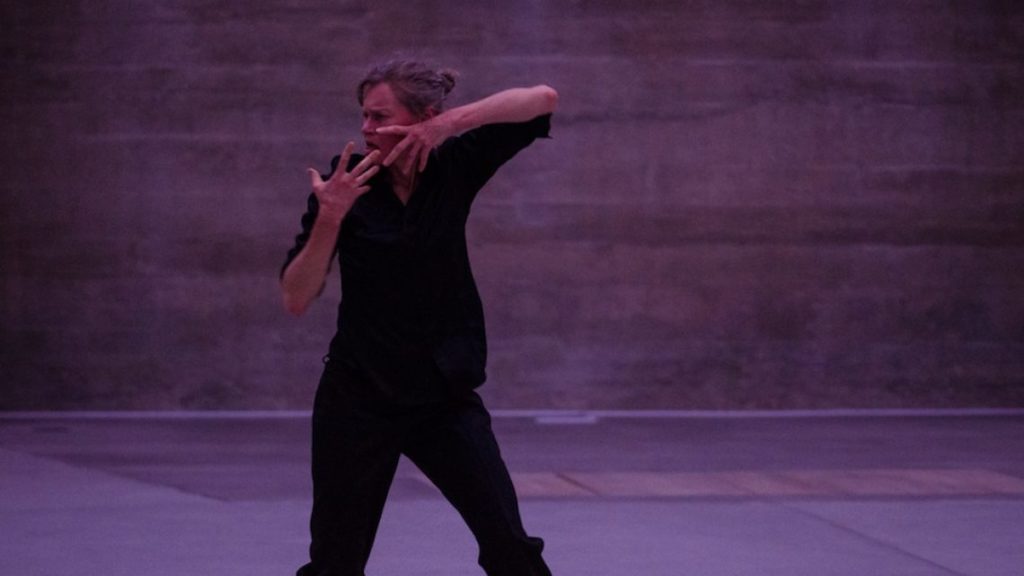
Review Rosalind Crisp’s Unwrapping d_a_n_s_E – by Eva Marloes

It is danse, not dance, because it was in France where Rosalind Crisp realised what she needed to do next. She needed to challenge all the moves and positions that controlled her body after years of ballet and dance training. The one-woman performance begins with a video of Crisp. She moves incessantly. She is a puppet rebelling against her puppeteer. There is an energy inside in search of escape into a movement. That elusive movement is constrained by habits and training. It’s like watching someone running in different directions looking for a way out of a labyrinth.

By the side of the screen Crisp begins to move. A light is shone upon her. There is no music, no sounds, only her breath. Her constant focused movement is gripping. You can’t stop watching her. She begins to talk to the audience. “Sorry I can’t speak Welsh. I’m stuck with English, French, and dance,” she says, “The problem with dance is that,” she whispers, “people don’t understand it.” 

What at first might have felt a terribly serious performance turns into a warm and humorous connection with the audience. Crisp tells us about dance and we respond laughing, smiling, and watching her every move. Her self-irony makes her work true and accessible. There is not an ounce of pretension.

Crisp rocks. Literally. She dances to rock music and then tells us that she stopped doing that because it makes you thirsty and there’s lack of water in Australia. Crisp is striking for her earnestness and deep levity. She is deep, just not serious. She is also poetic in how she describes movements wanting to elope with dancers and the dancer being seduced by the promise of being carried away. She ends with a video of herself on a mound of earth and dead vegetation to be witness to the devastation of the bushes in Australia due to deforestation. Her body cries the loss of life. 

La grande dame of dance, France awarded her the title of Chevalier de l’Ordre des Arts et des Lettres (Dame of the Arts), is funny with no histrionics, gripping with no artifice, and weird, beautifully so.