
All posts by Barbara Hughes-Moore

The Comedy About A Bank Robbery, New Theatre Cardiff by Barbara Hughes-Moore

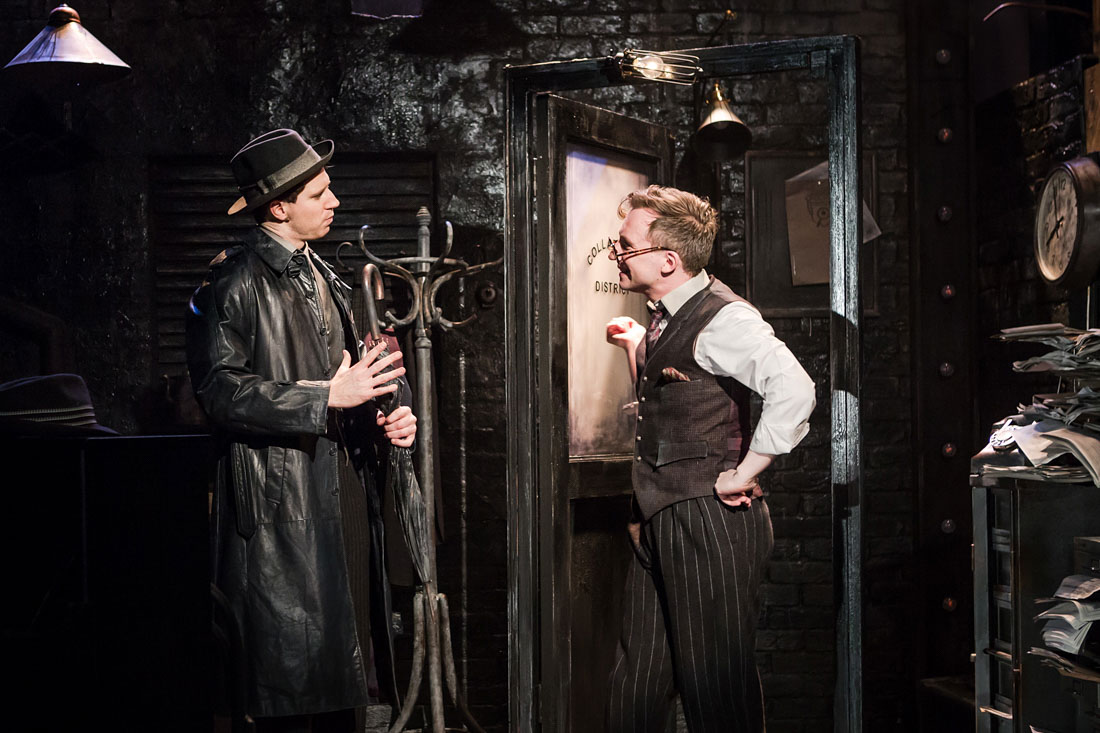
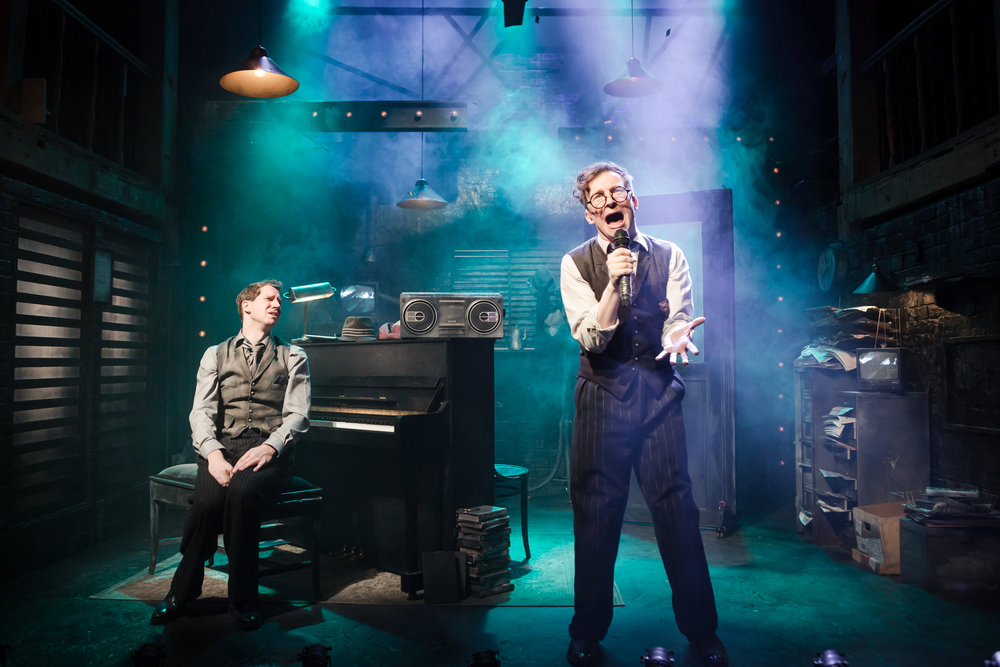
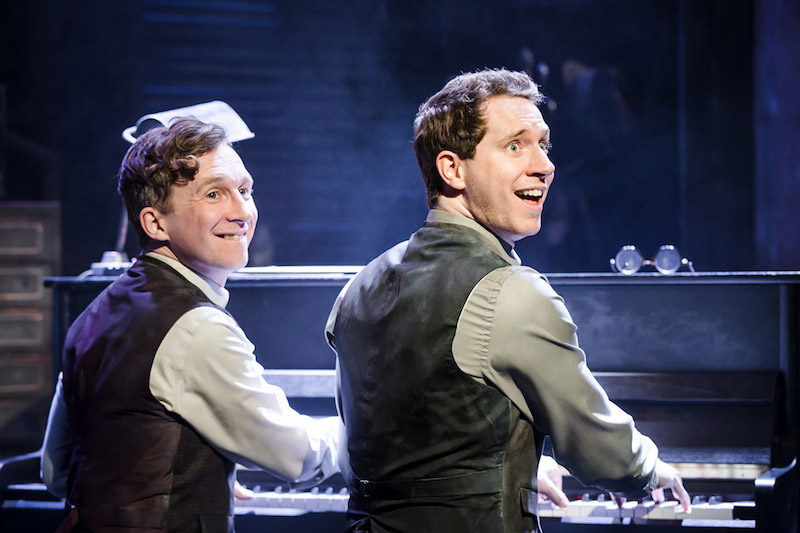
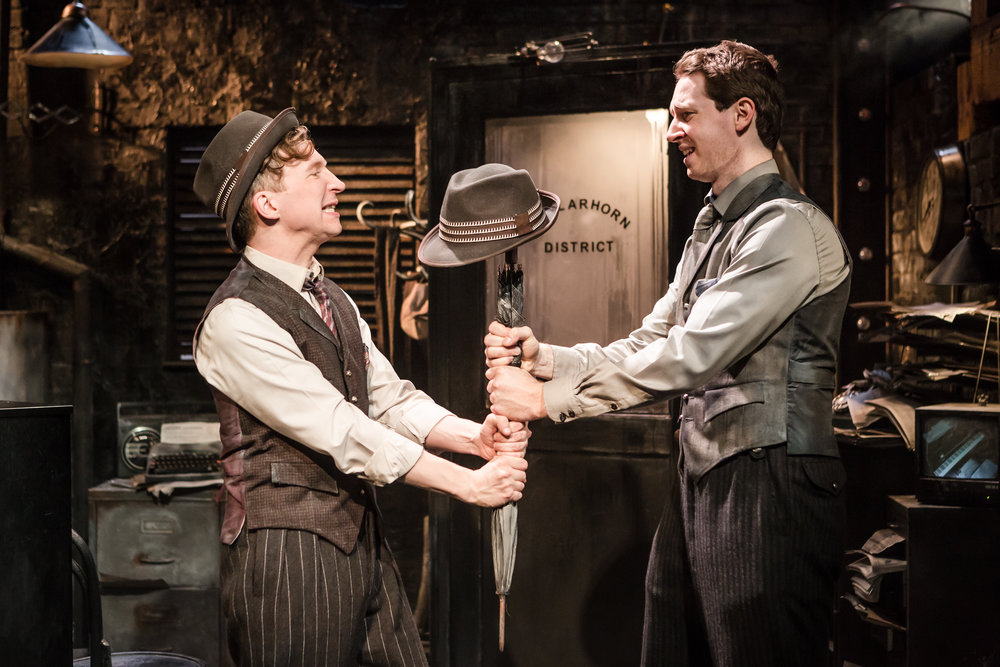
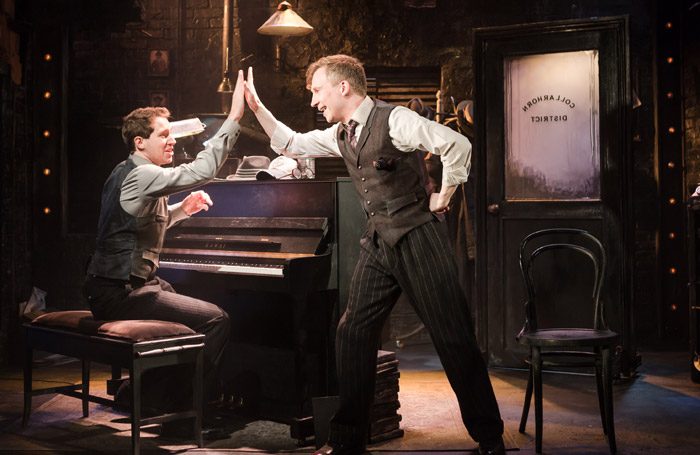
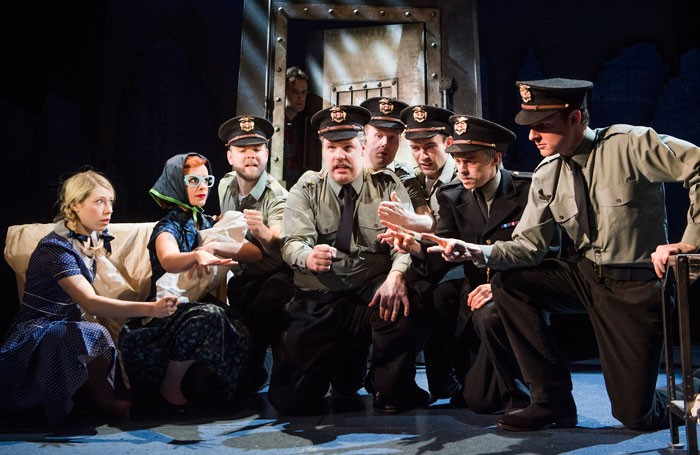
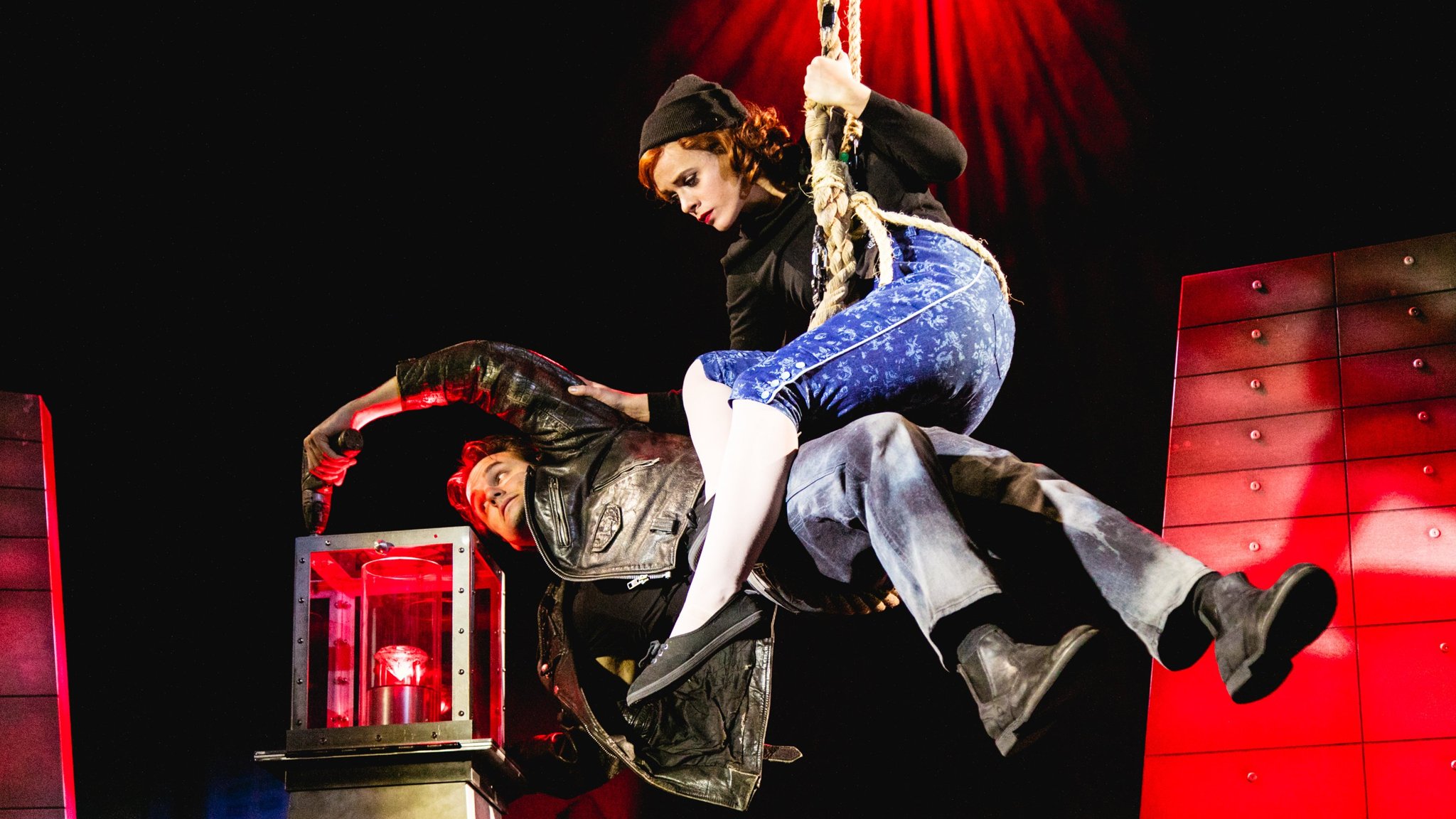
The multi award-winning Mischief Theatre company, of The Play that Goes Wrong fame, returns to Cardiff with their new Olivier Award-nominated show: The Comedy About a Bank Robbery. Branded as Ocean’s Eleven meets the Marx Brothers, it follows the zany antics of a motley crew of would-be crooks as they attempt to steal a priceless diamond from the city bank.

Written by, but not starring, Mischief makers Henry Lewis, Jonathan Sayer and Henry Shields (who were last seen at the New Theatre as a Disney hero, a sadistic narrator, and an anthropomorphic Sylvester Stallone-voiced lasagne respectively), Bank Robbery is yet another winning production in Mischief Theatre’s highly-renowned repertoire.

The cast are brilliant across the board, from Liam Jeavons’ mercurial mastermind Mitch Ruscitti (channelling Nicolas Cage via Peter Serafinowicz), to Damian Lynch as the suavely slippery bank manager Robin Freeboys, and Julia Frith as his creatively cunning daughter Caprice. However, a few performers stood out among the excellent ensemble: David Coomber as the enthusiastic prison guard-turned-amateurish-crook Neil Cooper, Seán Carey as lovable con artist Sam Monaghan who becomes increasingly (and grudgingly) embroiled in the progressively perplexing con, and George Hannigan who is credited as ‘everyone else’, and impressively performs a fight scene as three different characters.

There are some absolute standout scenes here: the prison escape  (no spoilers, it’s right at the start) is hilarious and endlessly inventive, on the level of Wes Anderson’s Fantastic Mr Fox. They manage to draw lots of laughs from the way in which the actors portray windscreen wipers, and there’s a really entertaining car chase using laundry hampers (yes, really). And if you do go (which I recommend you do), just look out for a flock of seagulls who might just be the jewel in the crown of this show.

This being a scripted show, I hold it to a higher standard than the completely-improvised Mischief Movie Night – and, as such, not everything lands. Jon Trenchard plays Warren Slax, the bank’s (Paul) Reubens-esque pariah, and is often used as the show’s whipping boy, to the point where it oversteps into upsetting territory – culminating in the scene where Freeboys hits him repeatedly with a book, a cane and a desk. The Freeboys/ three boys confusion wears out long before they give up the ghost; and some scenes, storylines and character interactions feel a little forced or on-the-nose (even for a farce). But the enthusiasm and talent of the cast more than make up for any missteps.

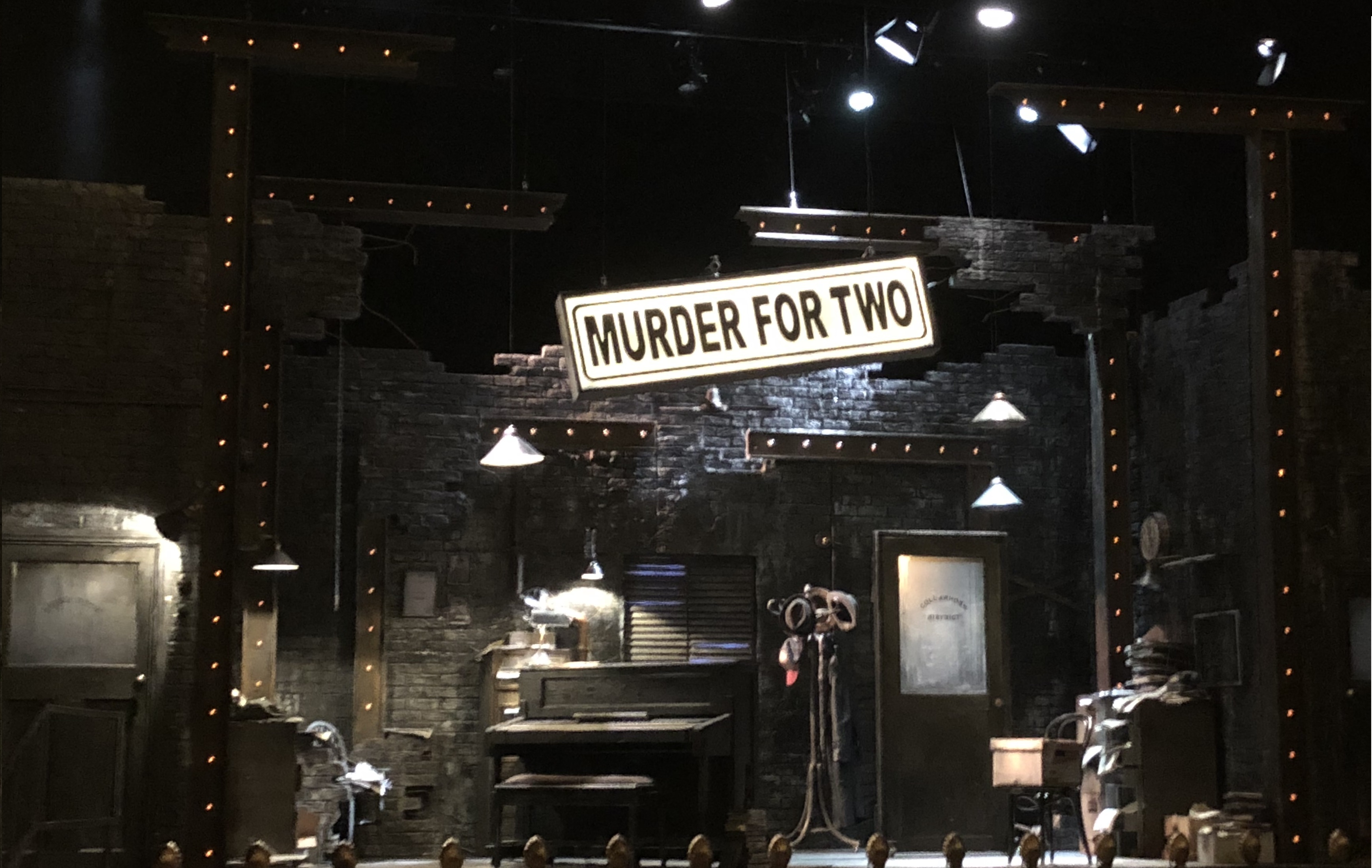
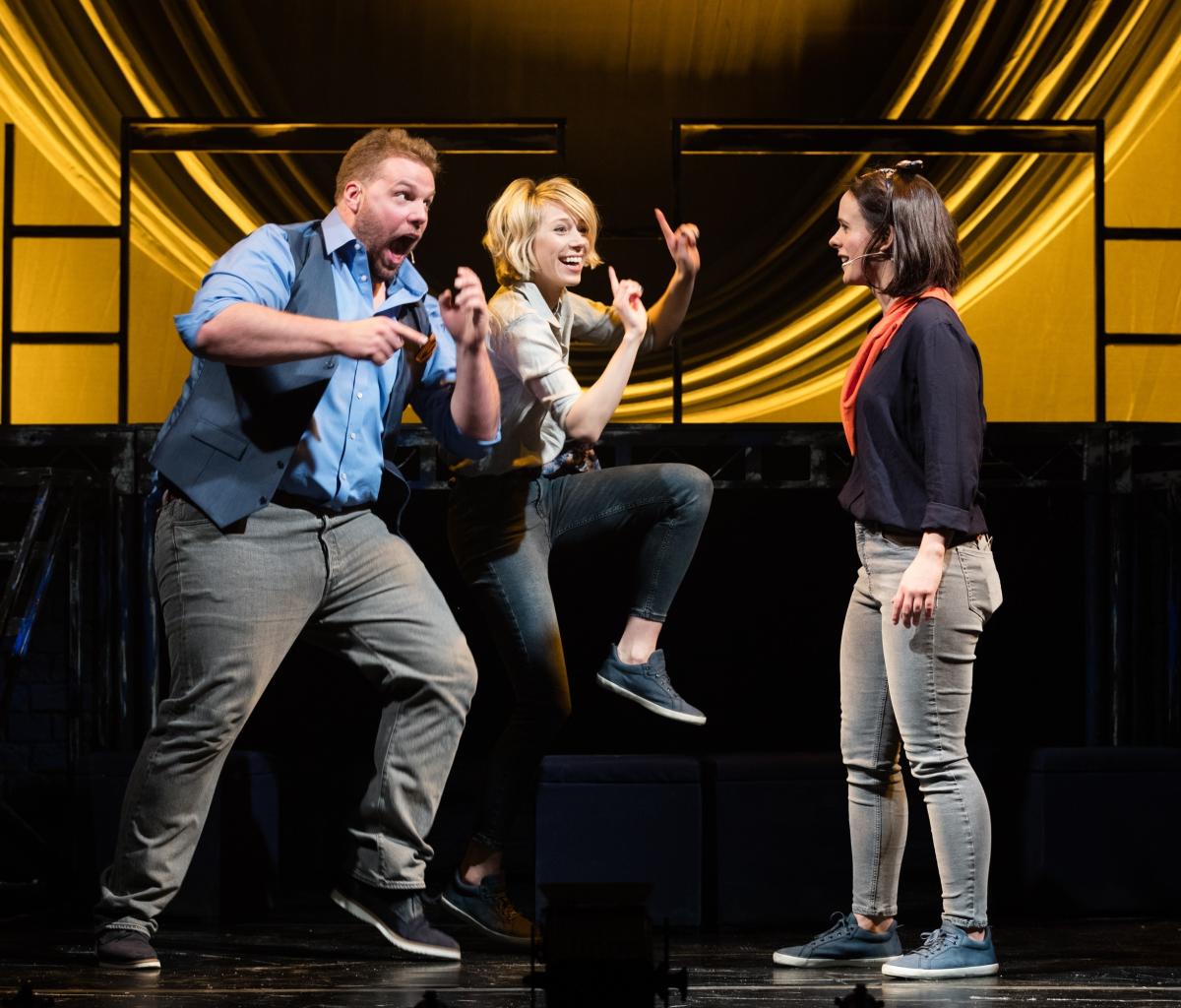
Even if the show wasn’t great (it is), it would be worth seeing for the innovative production design alone. David Farley’s set design is incredible, starting out with a silhouetted skyline of New York at night that effortlessly folds out into a whole slew of different settings as the play goes on. The set design works hand in hand with David Howe’s sublime lighting design, which at one point transforms a bare stage into an utterly entrancing underwater environment. And there’s an incredibly effective bit of staging where they make the back wall look like the office floor from a birds eye view, and simply has to be seen to be believed. This is the kind of magic you can only get at the theatre, and worth the price of admission alone.

Performing at the New Theatre through to 13th October, The Comedy About A Bank Robbery is an absolutely unmissable night of splendidly silly fun!

Party at the Park Cardiff, 28th August 2018 by Barbara Hughes-Moore

I was lucky enough to attend Party at the Park last week, a fantastic festival which featured a superb line-up of beloved stars of the 1970s and 80s at Bute Park, Cardiff. With more fantastic musical acts than Depot 2018, and none of Burning Lantern‘s Queue-Gate drama, Party at the Park 2018 is the best festival I’ve had the pleasure of attending.

Now to the acts themselves: Big Mac’s Wholly Soul Band started off the musical line-up with a brassy bang, getting the party started with energetic renditions of Living in America, Get On Up and Proud Mary.

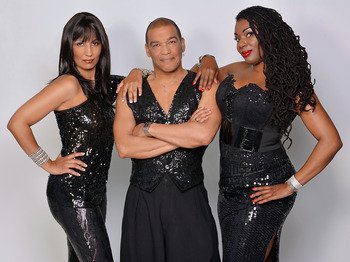
Next, we were treated to a vibrant set by Odyssey, a group responsible for some of those best floor-filling dance hits in living memory; of that dynamic discography, we were blessed with electric renditions of Native New Yorker, Inside Out, Don’t Tell Me Tell Her, and perhaps the most iconic of an exemplary back catalogue: Going Back to My Roots.

Next up was T’Pau (aka Carol Decker), who came on to perform such hits as her joyfully synthy bop Heart and Soul, the Frankenstein-inspired power ballad China in Your Hand, and melancholic new song Run. Carol Decker’s powerful, effortless voice has never sounded better, and she had such a wonderful, natural rapport with the audience and her fantastic backing singer/ tambourinist.

Special guest Tony Hadley, of Spandau Ballet fame, performed a brilliant set that incorporated some of his greatest hits with some lively new material, backed by a tremendously talented band. As with Carol Decker, Hadley’s stadium-sized pipes have never sounded better, belting out new hits like the James Bond-esque Take Back Everything and the nostalgia-infused Tonight Belongs to Us. But there was little that could match the nostalgic heights of Gold and True, two of Spandau’s finest songs, and the near-spiritual sound of the crowd belting out every lyrical inflection, as one.

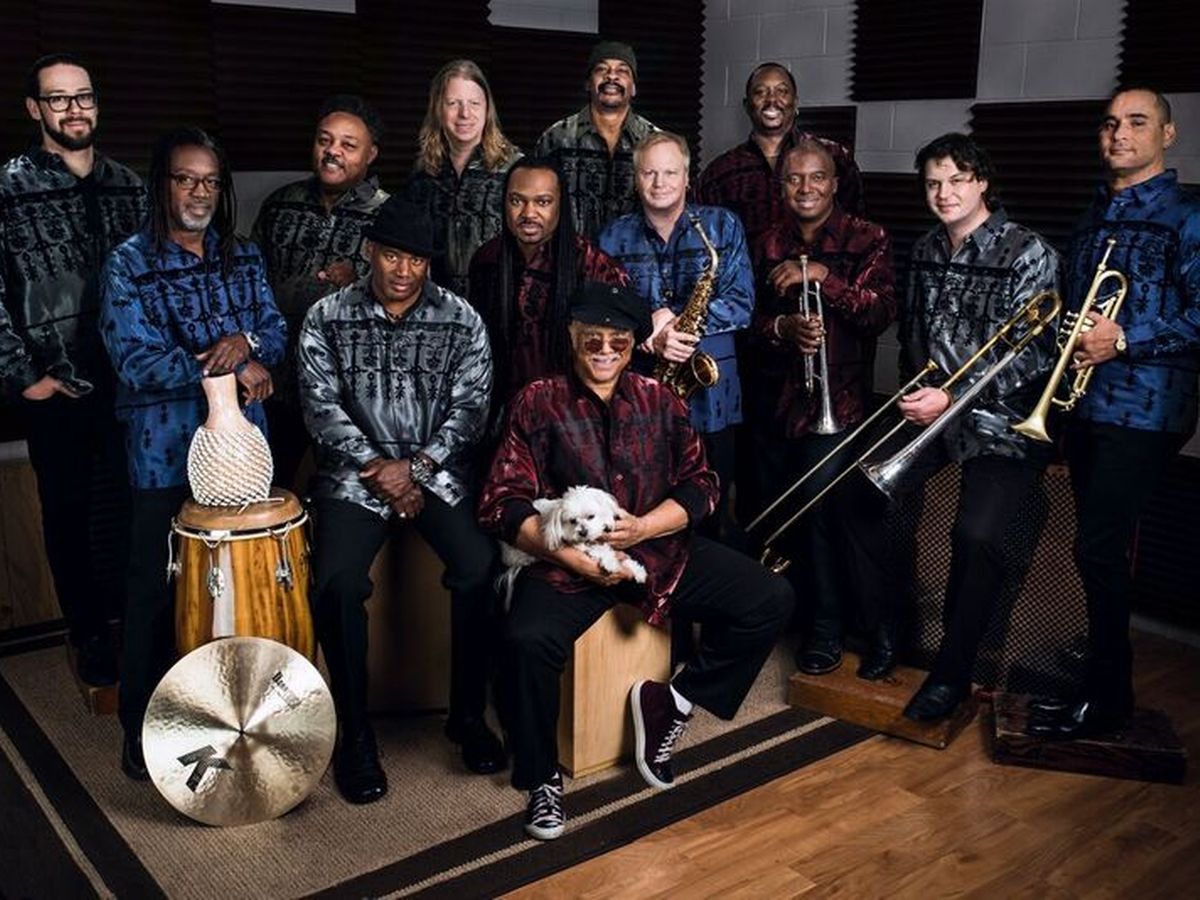
The festival closed with headliners Al McKay’s Earth Wind & Fire Experience, reuniting the band’s past members to honour the legacy of Maurice White, the group’s co-founder and co-frontman who sadly passed away in 2016. The band who brought us Boogie Wonderland, Shining StarSeptember and more brought down the house – the quality of the live music was stunning, with every singer, dancer and musician at the very top of their game.

On a non-musical note: there were at least four bars situated onsite, and a number of street food stalls that kept the queues relatively small and fast-moving. They even had a fun fair and a VIP area; and, in addition to the tent that housed the main stage, there were two other disco tents playing piped music. These were all good additions, but they often drowned out the music from the main stage unless you were right near the front.

Party at the Park 2018 in Cardiff was a roaring success – from the sheer number of high quality acts on the billing, to the ready availability of food and drink of all sorts on offer, and the beautiful location of Bute Park – roll on next year’s festival!

At Last: The Etta James Story at St David’s Hall, Cardiff by Barbara Hughes-Moore

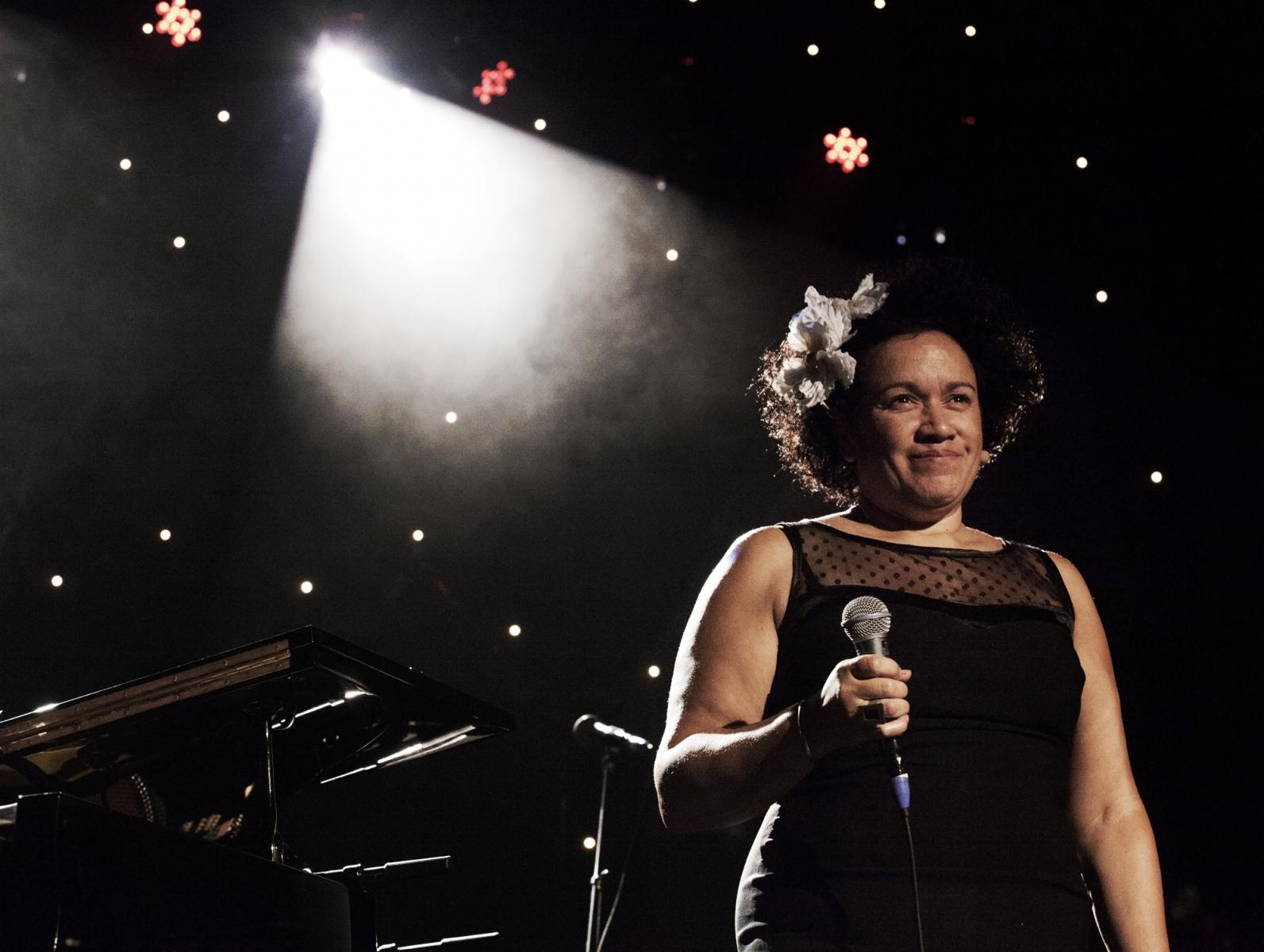
Starring Vika Bull and the Essential R&B Band, this smash-hit Australian production tells the story of soul icon Etta James’ remarkable life and career through the incredible songs that have rightfully earned her six Grammys, a star on the Hollywood Walk of Fame, and a place in history and our hearts.

This is the finest tribute to a musical legend I’ve seen since This is Elvis at the New Theatre; whereas that show dramatized it’s titular star’s two major comeback concerts in the style of a biopic, At Last: The Etta James Story punctuates an excellent narration of the singer’s tumultuous life with gems from her extraordinary musical repertoire – and it works beautifully.

Vika Bull’s effortless, extraordinary voice and charismatic performance achieves the almost unthinkable and does James justice. Along with her sumptuous vocals and charismatic narration, Bull possess that same raw gift of storytelling through song that set Etta apart, which is put to glorious effect in dazzling versions of I’d Rather Go Blind, All I Could Do Was Cry, and an absolutely staggering rendition of James Brown’s It’s a Man’s World. The titular At Last, arguably the most iconic song of Etta’s spectacular career, was so powerfully performed that the audience rose to their feet before the song was even finished.

Bull is supported by an amazing band, and her rapport with every musician was such a wonderful aspect of this production. The love for music was palpable between this talented bunch, and their enjoyment of performing Etta’s songs was palpable. Musical director John McAll, musical director on piano, Chris Bekker on bass guitar, Anton Delecca on saxophone – not to mention a joyous John Watson on drums, and Dion Hirini gloriously shredding that electric guitar like the lovechild of Jimi Hendrix and Mark Knopfler. Ben Gillespie on trombone also duetted with Vika Bull on a fabulous version of Wallflower (Roll with Me, Henry), and Tibor Gyapjas on trumpet also fantastically co-narrates the show with Bull as a truly dynamic master(s) of ceremonies double act.

There are too many excellent renditions to recount here, but I’m gonna give it the ol’ college try. Bull and the band perform sultry, soulful versions of I Just Want to Make Love to You, Spoonful, and Tell Mama, while Something’s Got a Hold On Me, Tough Lover and In the Basement made me want to get up and jive. And yet they approach the more sorrowful, soulful ballads with the same skill and passion, ascending to the heart-breaking heights of Sugar on the Floor, Would it Make Any Difference to You and Fool That I Am. And, if that wasn’t enough, the show closes with an emotionally epic encore performance of the Eagles’ Take it to the Limit, a song which Etta felt best described her tumultuous life.

At Last: The Etta James Story treats its eponymous icon’s songs and life story with respect, care and love – and I can only hope they return to the UK for a third time next year. Meanwhile, the show is touring around the UK through October, and if you can make it to one of these performances – whether you’re an Etta obsessive or an Etta amateur – I promise you won’t regr-etta it.

Fame: The Musical at New Theatre, Cardiff by Barbara Hughes-Moore

‘You want fame? Well fame costs and right here is where you start paying – in sweat!’

This is the warning that Principal Sherman (Mica Paris) gives the audience, and the future class of ’84, as the curtain opens on NYC’s School of Performing Arts. Students flock here, hoping it holds the key to one day seeing their name in lights. But these hopefuls, like the musical they inhabit, have a lot to live up to, and not all of them make it to the top.

I somehow missed the boat on the entirety of the Fame franchise, knowing only the excellent title song, the iconic street dance scene, and a vaguely sketched synopsis. This UK tour is a restaging of the 1988 musical, developed by David De Silva, story by Jose Fernandez and original music/ lyrics by  Steve Margoshes and Jacques Levy, which incorporates elements of both the movie and the series that came before it.

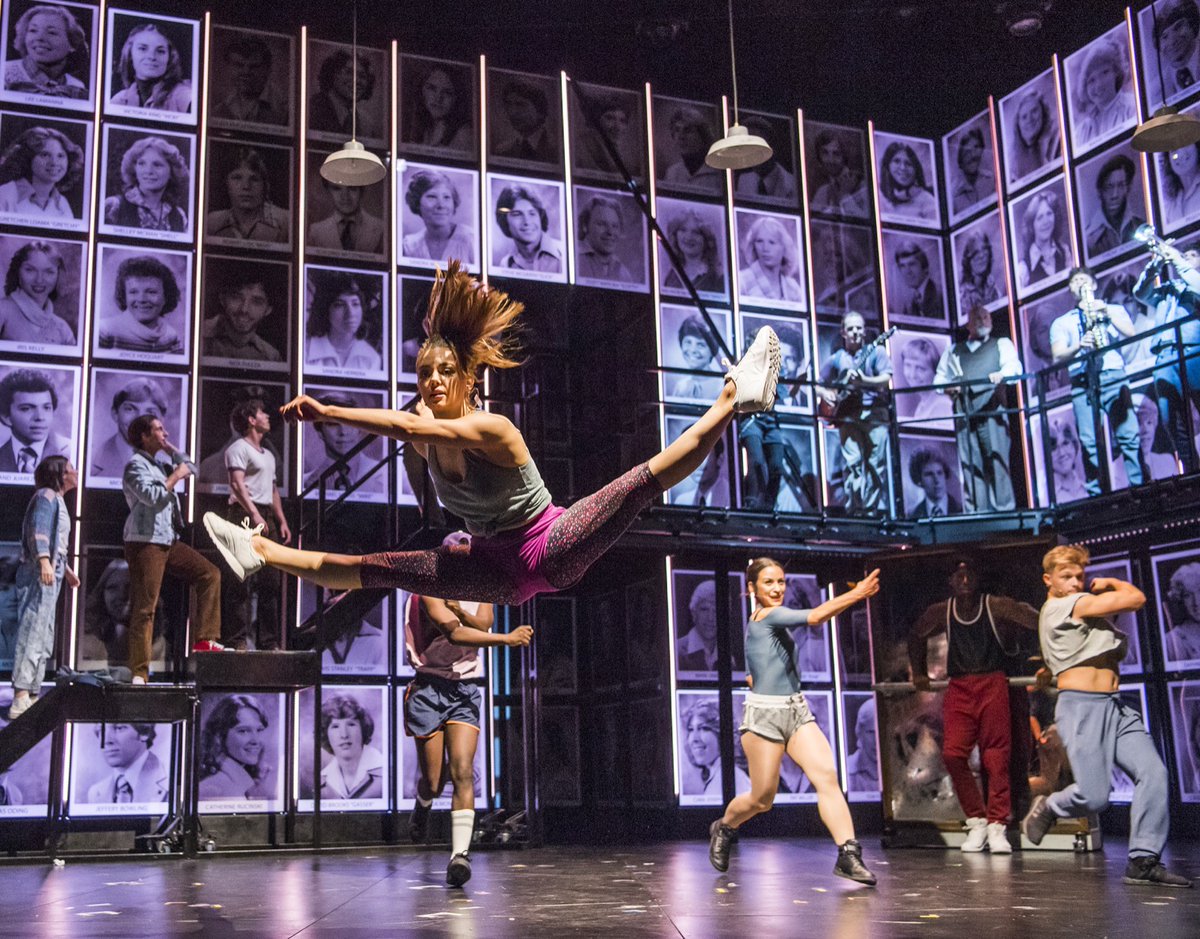
We’re first greeted with a wonderfully evocative image: a bird’s-eye view of a taxi driving down a skyscraper-lined street, the sounds of traffic transporting us to a balmy summer in 80s NYC. The production design is never quite as effective after that; for most of the action, the stage is illuminated by yearbook photos of the cast, perhaps implying that this is the closest some of the characters will get to seeing their names in lights.

Although the actors work incredibly hard throughout, the characters sadly aren’t much to hold up the two and a half hour runtime, neatly slotting into the archetypes we’ve seen time and again. We have the talented but overconfident hopeful (Stephanie Rojas’ Carmen), the insecure progeny of a prodigy (Simon Anthony’s Schlomo), the hipsterish wannabe playwright (Keith Jack’s Nick) and the shy girl with an unrequited crush (Molly McGuire’s Serena). And despite the talent on display, some of the cast members are about as convincing as high schoolers as Steve ‘how do you do, fellow kids?’ Buscemi was in 30 Rock.

Jamal Kane Crawford’s Tyrone has the most compelling story by far, as a young African-American man trying to make it in the white-dominated world of professional dancing. Getting by on his natural talent and charm, Tyrone focuses on the performance side of PA over the academic in an attempt to avoid anyone finding out about his dyslexia. One of the few powerful scenes in the production involves Tyrone opening up about this to Principal Sherman, and Crawford shines in the role, especially with his fellow dancer and love interest Iris (a lovely turn by Jorgie Porter).

However, the most egregious mistake this production makes is the music. Despite an excellent finale featuring the titular iconic tune, the rest of the setlist is an exercise in mediocrity. At one point, Schlomo criticises Carmen for lyrical blandness, which, frankly, was a bit rich coming from a show featuring possibly the most clichéd songs I’ve ever heard. And the ballad they write together, ‘Bring on Tomorrow’, heralded in-show as a future hit, has the emotional richness of a ringtone.

The songs here are as generic as the American (Generican?) accents on display. The ballads in particular are pretty dire (and I really didn’t need multiple reprises of ‘Let’s Play a Love Scene’, ‘I Want to Make Magic’ or ‘In L.A.’), but not quite as bad as the nightmarishly on-the-nose ode to Meryl Streep, creatively titled ‘Think of Meryl Streep’. There’s nothing that reaches the tuneful heights of ‘Hi-Fidelity’, the melancholy magnificence of ‘Beautiful Dreamer’, or the delightfully disco-ish ‘I Can Do Anything Better Than You Can’ from the beloved series. It’s a shame to squander such uninspiring songs on a clearly talented cast who deserve better, especially Mica Paris, who is burdened with a thankless role and the most clumsily literal number of the show in ‘These Are My Children’.

For a show which proclaims the value of innovation over duplication, it sure does bask in banality. And yet it kinda messes up the bit we were all waiting for. ‘There’ll be no dancing on cars here’, Miss Sherman states, as if leaving out the most iconic scene from the film was some kind of subversive, revolutionary act. Not having the cast dance on cars at the end was a sin of the same magnitude as The Importance of Being Earnest daring to omit ‘a handbaaag?!’ We came here to see the street dance scene, Fame – and, car-less through it was, it still eclipsed every other number with its timeless intensity.

In the end, the musical suffers greatly in comparison to its predecessors, possessing none of their charm or quality despite the best efforts of a great ensemble cast. It has neither the gritty realism of the original movie, or the frenetic joy of the tv series, and sits somewhere between the two as the awkward, sleazily comedic middle child of the Fame family. Plus, it manages to be even less progressive than its forbears, particularly in its treatment (or is that wilful omission?) of LGBT characters. If you are a die-hard Fame fan, particularly of the musical itself, I’m sure you’ll enjoy this latest production. But, for me, it hasn’t got what it takes.

Review Mischief Movie Night, New Theatre Cardiff by Barbara Hughes Moore

Starring the original cast and creators of the critically-acclaimed The Play That Goes Wrong, Mischief Movie Night is yet another improvisational show, which this time involves improvising an entire movie onstage and off the cuff.

The central conceit of the show is that we, the audience, control the performance – it’s our suggestions for genres, titles and locations that dictate what goes on onstage, and the ensemble cast must employ their considerable talents to realise the barrage of random demands yelled at them from the stalls in the moment.

I have to admit that I was rather sceptical and a little scared as I sat down to watch my very first long-form improv stage show. You see, the fear of audience participation has haunted me ever since my first traumatic pantomime experience at age 5. And yet, five minutes in to Mischief Movie Night, I was merrily shouting out genres along with the rest of the raucous audience!

The true joy of the improv show is that every performance is unique – you will quite literally never see it’s like again, because each one depends on the whim and the wants of its particular audience on a particular night. So I can’t comment on the quality of plot or characters, because they are ever-changing – but to give you a little taste of what Mischief Movie Night may entail, last night’s performance ended up being a Disney film set in Pontpandy, which featured chainsaw juggling, police propaganda and an anthropomorphic lasagne who talked like Sylvester Stallone. You know, your standard Disney fare.

It’s no wonder that Mischief Theatre has become so nationally and internationally beloved – the ensemble cast is superb across the board, catering to every silly request and daft diversion that’s demanded of them. Dave Hearn, Henry Shields, Ellie Morris and Charlie Russell were particular standouts, and Harry Kershaw was responsible for one of the show’s most hilarious running gags about not getting above your station. Jonathan Sayer gamely leads proceedings as a Gruff Rhys Jones-esque master of ceremonies in whose vast library is contained, so he says, every film ever made. Sayer guides us through the night’s entertainment, wryly commenting on the increasingly chaotic proceedings and making progressively silly demands of the cast who enthusiastically attempt to comply.

Often, these things don’t go off with the precision of a studio picture – and that’s why they are so much fun to watch. Much like Starkid – purveyors of peppy parodies about everything from Harry Potter to Pangea – the joy of Mischief Movie Night is seeing the performers tackle big ideas equipped not with fancy sets and special effects, but with skill and imagination only.  In many ways, the show possesses the same frenetic, joyful energy, cineliterate references and talented ensemble cast as Horrible Histories, a compliment I wouldn’t give lightly. And even with the random onslaught of events onstage, the team manage to bring things to a surprisingly coherent climax, in which twists are revealed and happy endings are tied up in a neat (if slightly battered) bow.

Mischief Movie Night is yet another feather in Mischief Theatre’s increasingly crowded and critically-acclaimed cap. The same creative team will be bringing The Comedy About a Bank Robbery to the New Theatre on its UK tour in the autumn, and I can’t wait to see what they come up with next! Until that rolls around, do yourself a favour and see Mischief Movie Night – what could go wrong?

Barbara Hughes-Moore

Sherlock Holmes: The Final Curtain, New Theatre Cardiff

We grow up with our heroes, and they grow with us; when we are young, they seem like giants, gods – incomparable, unbeatable, undefeated. But legends fade and heroes grow old. They even die, sometimes. In The Final Curtain (a new play presented by Theatre Royal Bath Productions and Kenny Wax), even the great Sherlock Holmes is fading; slower, frailer, more frayed at the edges, as he faces the phantoms of mystery and mortality – and its one of the best theatre experiences I’ve ever had.

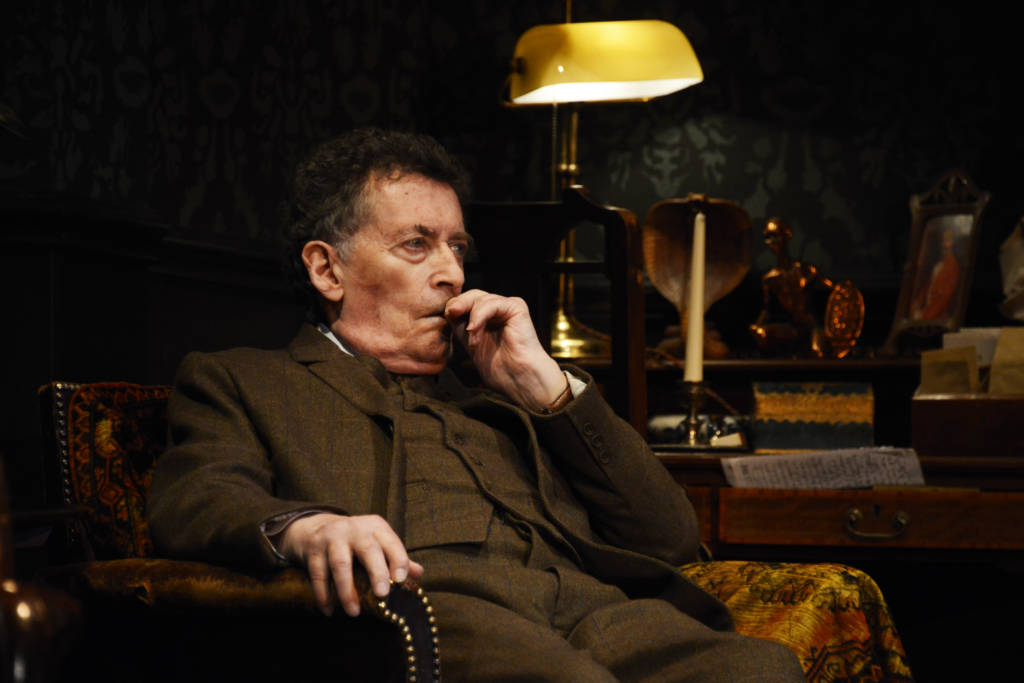
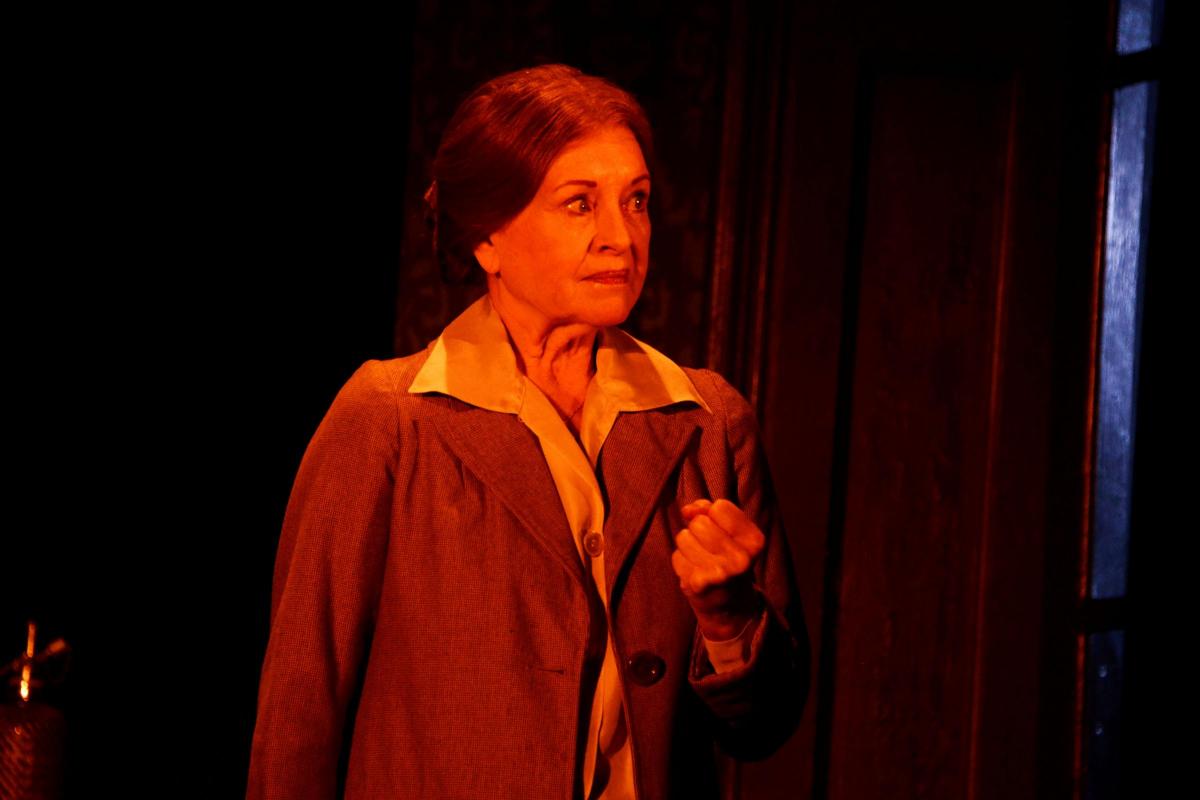
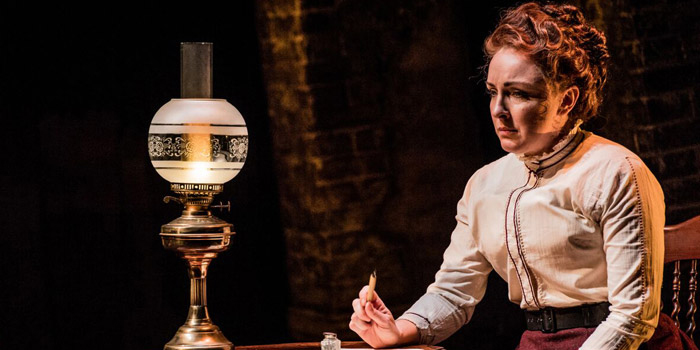
Companionably estranged from his partner in crime/ life, Dr John Watson, a retired Sherlock Holmes (Robert Powell) is living out his twilight years on the South coast of England, with bees to keep, and rheumatism and paranoia to keep at bay. His adventure-less existence is thrown into disarray when a figure from his past re-emerges: Mary Watson (Liza Goddard), the estranged wife of his dear Doctor, who claims to have seen visions of her long-dead son James in 221B Baker Street, and wants Sherlock out of retirement and on the case.

The story is beautifully, intricately crafted by writer Simon Reade; the language is elegant and artful, and Reade captures the heart, soul and style of these iconic characters whilst also holding the audience in delicious suspense right to the very last second. The title, The Final Curtain, evokes another literary sleuth’s final investigation – namely, Curtain: Poirot’s Last Case, by Agatha Christie. Both Poirot and Holmes’ final cases are filled with melancholy meditations on their lives and careers, and whether they were right to sacrifice their own potential happiness for the good of Queen and Country. After all, their deeds are history, and their godliness is tarnished by the undeniable proof of their mortality.

Because Holmes isn’t as young and spritely as he used to be; he suffers from rheumatism, so much so that, with a heavy heart, he cannot play his beloved Stradivarius. and this is shown in stark relief by one of the most subtly heart-breaking exchanges of the play. With his iconic self-assured straightforwardness, Holmes informs the Lestrade-like policeman at a crime scene that he is familiar with 140 different types of tobacco; to which the officer replies, ‘Didn’t it use to be 220?’ In one interaction, Holmes is heartbreakingly marked out as being barely half the man he used to be.

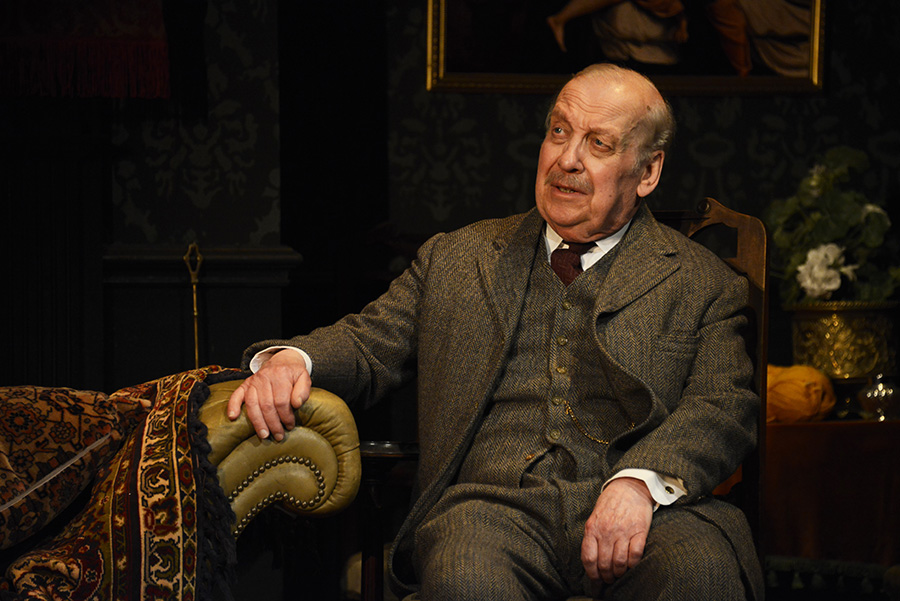
The same cannot be said of the sensational Robert Powell, who, after a long and celebrated career, is at the very pinnacle of his acting prowess. His Holmes isn’t a performance as much as it is a complete inhabitation of the character, so natural that you really feel he has lived a whole life in Sherlock’s shoes. From the first moment he appears, in which he mischievously introduces himself as Sherlock Smith, Powell commands the stage with effortless elegance and a strength of purpose that grounds the character even as Holmes fears he is somewhat losing his touch. His interactions with Roy Sampson’s superb, sophisticated Mycroft were particularly touching; they inhabit the classic characters so fully, so intricately, that I quite forgot I was watching a play and felt as though I truly was observing an actual conversation between two real brothers.

As a lifelong fan of Doyle’s detective duo, I am always very particular about how Dr Watson is portrayed; the danger is that he has the potential to fall somewhere on the extreme ends of the scale, being alternately portrayed either as a priggish grump (like Ian Hart in BBC’s 2002 version of The Hound of the Baskervilles) or as a bumbling idiot (like Nigel Bruce in Basil Rathbone’s series of Holmes movies in the 1930s/40s). Happily, then, that Timothy Knightley portrays a wonderfully avuncular, earnest and sweet take on the character that is true to the spirit of Dr Watson, whilst amusingly emphasising his pulpy over-dramatization of his and Holmes’ cases. Seeing Holmes and Watson side by side, in the flesh, was a real treat, and their interactions – and it’s adorable that, even after all this time, Watson is still falling for Holmes’s disguises.

Although Holmes and Watson only infrequently share the stage, their relationships forms a huge part of the tale – as ever it should. No explicit reason is given for the duo’s relative estrangement, though it’s heavily implied that the cracks began to form when Watson got married and started his own family. Although Watson contributes little cerebral value to their investigations that Holmes does not already possess – other than his medical training and military experience – Watson’s primary role is as Holmes’ chronicler and humaniser. And, more than that, Watson is the beating human heart to Holmes’ more clinical mind.

Though there is a Watson who can match Sherlock beat for beat in terms of intellect and eloquence: Mary, wonderfully played by Liza Goddard, who is definitely not a member of the Sherlock Holmes fan club. Goddard, famous for more comedic roles, thrives in the complex, dramatic character of Mary Watson, who isn’t afraid to confront Holmes with his demons and his duty. Mary points out that the only mystery Holmes couldn’t solve was marriage; and although Watson perceived himself as primarily a ‘whetstone for Holmes’ mind’, Mary observes that Holmes’ relationship with Watson – ‘my Watson’, as he refers to him at one point – was more a marriage than hers ever was. The full extent of their affection – fraternal, romantic, spiritual – is left for us to decide.

Deftly and dynamically directed by David Grindley, the drama zips along at a deceptively breakneck pace, and I was genuinely shocked when the curtain fell to signal the end of act 1. As important as the impassioned speeches and melancholy monologues are, Grindley isn’t afraid to let the quiet moments linger – one of the most tense, characterful and gripping parts of the play is the scene in which Powell’s Holmes calmly and methodically puts on a dressing gown and adjusts the chairs in his room. Really. It’s but a microcosm of this production’s talents across the board.

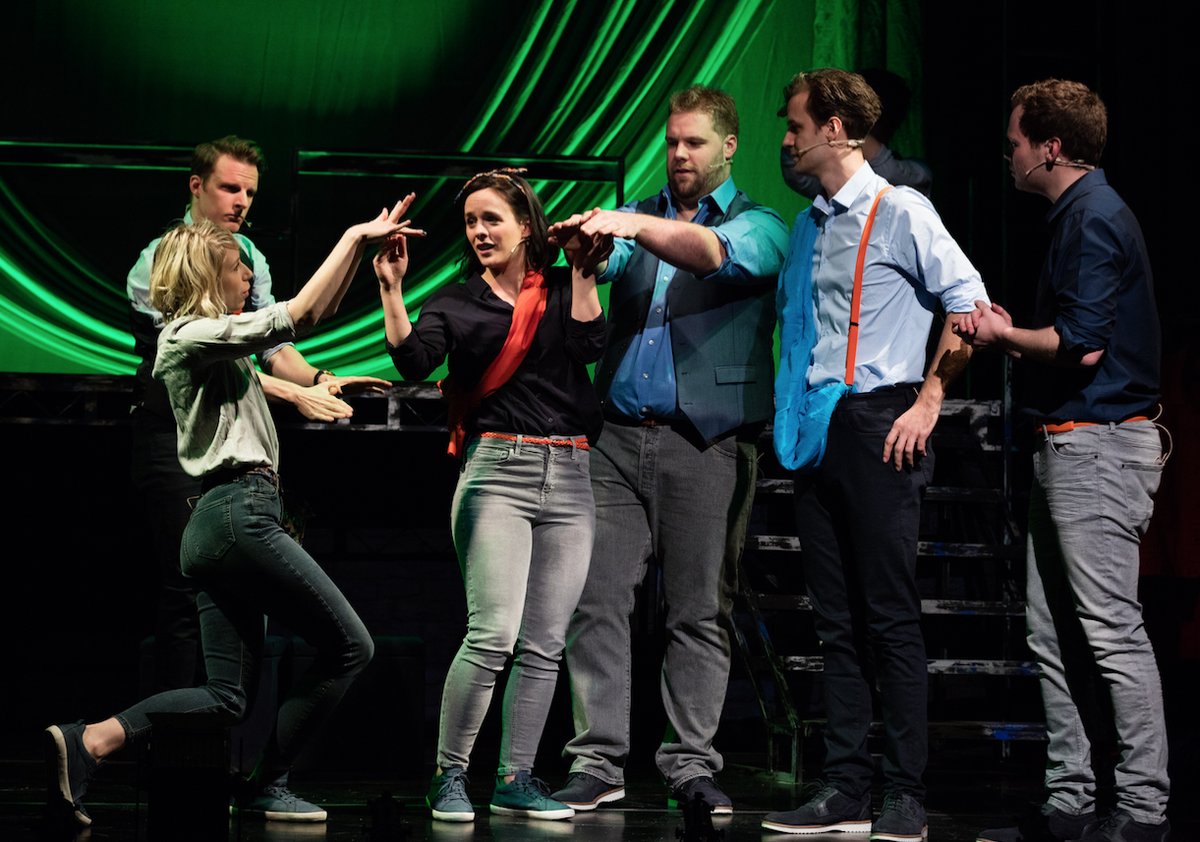
The splendid set was cannily designed by Jonathan Fensom to make the titular curtain central to the story both metaphorically and literally, swathed as it is in dark green drapes and featuring just enough props to suggest such diverse locations as a 1920s BBC recording studio, a lush London park, and Holmes’ private beach. Jason Taylor’s excellent lighting and Gregory Clarke’s evocative sound design really brought the sets to life, making forests and oceans out of the minimalist scenery. Between each scene, the curtains would be drawn across the stage, revealing new locations with the effortless artistry of a magic trick. The first reveal of 221B’s Baker Street’s elegantly ramshackle bachelor pad was, for a Holmes fan, just like stepping into Willy Wonka’s Chocolate Factory, and seeing it brought to life on the stage in such a way was profoundly emotional – even more so when Holmes and Watson were reunited in their purgatorial paradise.

The play grapples with heavy themes of legacy, responsibility, and the changing times – how it feels to grow old, when one has lived such a life as Holmes has, and where one fits into the ever-evolving landscape of modern life. 221B Baker Street has been irrevocably changed by the time Holmes finally returns to it, filled with a messy juxtaposition of past (represented by the Renaissance-era paintings Mary hangs on the wall) and the future (represented by the electronic doorbell Miss Hudson recently had installed). A disguised Holmes even poses the question ‘Who needs a god when you have a gadget?’, vocalising our present-day fears about the increasing indispensability of technology in our daily lives. Holmes and Watson are pre-analogue relics in an analogue age, obstinately clinging to the past, mistrustful of the new technologies and mindsets. But, it’s the bringing together of the old and the new that solves the mystery and brings closure. And yet, in a chilling final scene, the play refuses to fully give us that closure we crave; the final mystery, the lingering questions, are ours to ponder as the titular curtains falls for the final time.

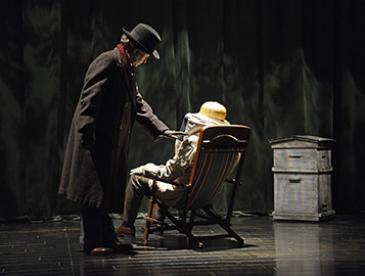
And for all you horror fans out there, there are some seriously Gothic undertones that lend an entertainingly unearthly quality to proceedings. The world’s only consulting detective is called onto examine his own demons as well as investigating the possibility that some supernatural shenanigans are afoot. The name of Professor James Moriarty surfaces more than once, a spectre of Sherlock’s greatest adversary, and There’s also a fair bit of doubling, one of the most effective uses of which comes quite early on and which was so well done it really has to be seen in person. Mary Watson visits Holmes’ seaside abode to see him lounging in a sun chair near his bee hives – only to realise it’s not Holmes at all, but a waxwork duplicate. As the scene goes on, the double sits in the chair between Holmes and Mary, eerily present and unmoving. Does it represent Holmes now, stagnating and useless in his retired life? Or perhaps it represents the other Watson, the one Holmes has distanced himself from, but who remains a stalwart presence in Holmes’ mind? Or does it represent James, the Watsons’ dearly departed son, for whose death his parents are locked in a frozen state of perpetual grief? Again, the play entrusts these questions to its audience, for them alone to judge and decide.

The play likewise leaves the question of heroism up to us: does the intent or the action make you heroic? The short term successes, or the long term lessons? Holmes has always been an enigmatic, complex hero, and his incarnation here is no different. Now, more than ever, he is a hero for our times: the kind who, despite personal trauma and sorrow, keeps fighting the good fight against wickedness, and to hell with the odds.

Thrilling, enthralling and insightful, Sherlock Holmes: The Final Curtain is theatre as it should be. If you’re a Holmes fan, you’ll be enraptured by this new play; if you’re not, you’ll be swept along by the remarkably talented cast and crew the dynamic, haunting mystery at its heart.

Depot in the Castle 2018 by Barbara Hughes-Moore

Depot, self-branded as Cardiff’s most exciting original venue, certainly earns their creativity kudos (and then some) with a whole host of events from street food socials to pop-up secrets speakeasys and, since 2017, an annual music festival at Cardiff Castle. After having reviewed the wonderful line-up, but woeful organisation, of my first festival experience (last year’s Burning Lantern Fayre), I was looking forward to seeing how Depot in the Castle (DITC) fared with their sophomore festival – and I’m happy to report that it was a roaring success!

I was incredibly impressed by just how well the event was organised. A plethora of food stalls purveying everything from posh crepes to pizzas – it was dazzling to the eyes and ears, and also the tastebuds. Unlike Burning Lantern – where I only managed to procure a Danish pastry approximately seven hours in – the availability of food on offer here was astounding. After much deliberation, I plumped for curry and chips at That Fish Guy’s stall – I was served immediately, and can only commend their efficiency of service and high quality of food. The only queues in sight were, understandably, lining up to the bar (though with the amount of staff on hand, they were fast-moving and efficient), and at the ice-cream van. Il Gelataio’s artisan ice-cream was a highlight of the day, and the best gelato I’ve ever tasted – the 30 minute queue was in part due to their status as the only ice-cream vendors of the day, and in future I’d suggest they have at least two such stalls to reduce the wait-time.

The free water was also a huge plus – I wrongly assumed that it was available over the counter, so I initially had to shell out £2.50 for bottled water (though I’m not sure why they weren’t allowed to give out lids, leaving me carrying around a precariously un-lidded bottle all day). However, once I found the free water station, it was a life-saver – especially on such a gloriously sunny day – and an idea from which Burning Lantern would have benefited.

Depot also continues my personal trend of finding the penultimate performers to be the best acts of the festival. For Burning Lantern 2017, that was Jack Savoretti; for Depot in the Castle 2018, that honour goes to The Fratellis. Their debut album Costello Music was one of the first albums I ever bought, and hearing it again – live – was a full-on nostalgia trip. Sung by football fans and angsty teens alike, their iconic song Chelsea Dagger has mass appeal in the nifty universality of its one-word chorus – and the raucous refrains of ‘do do do, do do do, do do do do do do do’ (repeat ad infinitum) understandably had the crowd in raptures. Their set was the standout of the night, and every song was a winner – from the pretty little ditty Whistle for the Choir, to the bawdy belting of Henrietta, and the scat-like sound of Flathead’s gleeful gibberish chorus that could just as well be a modern update of The Beatles’ Ob-La-Di Ob-La-Da.

Sister Sledge closed the night with an absolutely sensational, stylish set, bringing the house down with iconic tunes like Lost in Music, Thinking of You and He’s the Greatest Dancer (during the latter, they even brought up two people from the crowd to dance on stage, which was a lovely touch). And it was a special treat to see these legends closing out the festival with the incomparable We Are Family.  I have to also shout out their amazing band, who filled the festival with the most amazing music. Their joy in performing was matched only by the joy of the audience.

It was a real privilege to be able to see The Fratellis and Sister Sledge performing live in Cardiff, and a real coup for Depot to have secured them for the festival. However, I must say that they were the only musical acts worth seeing at the event. Hackney Colliery Band, while highly skilled musicians, didn’t fit the tone of the festival for me. And the only other music was pumped, pre-recorded, out of the speakers. Fleetmac Wood’s remixes only lessened the original songs; and Horsemeat Disco had a great playlist, but it didn’t come close to the quality, excitement or atmosphere of live music. Say what you will about Burning Lantern (and, believe me, I have), at least they had live music across the board throughout the entire event, on both the main stage and a separate acoustic stage. Holding the festival in St Fagans also provided Burning Lantern with a bigger, more picturesque location – though setting DITC 2018 in Cardiff Castle was a real treat. Unlike Burning Lantern, DITC’s site was accessible and well-signposted, and it was most helpful of them to release a setlist and site map prior to the event that made navigating the festival easy and enjoyable.

Depot in the Castle 2018 was a huge success, from the wonderful central location to the excellent organisation, delicious food with minimal queueing, and the two stellar headliners. However, the scarcity of live music was a disappointment, and I can only hope that the overall quality of the festival will entice more artists to perform live at Depot in the Castle 2019.

Review Turn of the Screw, New Theatre Cardiff by Barbara Hughes-Moore

Directed by Daniel Buckroyd, this new stage version of Henry James’ Turn of the Screw is a chilling tale of intrigue that keeps you guessing (and shuddering) long after the curtain falls. It follows the story of a young Governess in Victorian England who agrees to look after the niece and nephew of a charming but distant man. At first her new post seems idyllic, but it isn’t long before she discovers that the house is haunted – by secrets and spirits alike.

As I haven’t read the original novella, I can’t speak to the quality of translation from page to stage, but I can say how excellently the play, adapted by Tim Luscombe, was written – the interactions between characters gently but gradually simmering to boiling point, interspersed with the sporadic but scary appearances of disturbing apparitions. After having been underwhelmed by promised but undelivered scares in The Ghost’s Touch, it was refreshing to see a play which actually frightened the living daylights out of me. I generally have a very low threshold for jumpscares and the like (all of which is to say, I jump at the sight of my own shadow) but Turn of the Screw’s frights are earned and eerie, the creeping dread winding a turn at a time until the tension breaks with a bang (or a scream, as the occasion calls for). The opening moments set the scene perfectly – a rocking horse starts moving, seemingly all by itself, its creepy creaking the only sound in a fear-silenced auditorium. Its an image that Susan Hill skilfully incorporated into The Woman in Black, and in both mediums is just about the creepiest thing I’ve ever seen.

As the Governess, Carli Norris capably carries the show as our besieged heroine who finds herself wading through a mystical mire. She portrays a grounded, realistic, complex character who finds herself in a seemingly insurmountable situation. As the supporting characters – flesh and phantasm alike – grow stranger and stranger with each passing scene, Norris keeps the action from descending into caricature whilst also straying into strangeness when the plot demands. You’re completely invested in her character, even – or perhaps especially – as the unexplained oddities begin to pile up around her.

Annabel Smith has the tricky task of playing two polar opposite personalities, characters who could hardly be less alike. The transformation between the two isn’t always smooth, but Smith plays both characters with enthusiasm and verve. Smith’s Mrs Conray is the listener of the tale, demanding the Governess’ confession from a far-flung future; as such, Smith stands silent and still and sombre, a spectral figure who is almost as creepy as the ghosts which besiege the Governess – and the audience – throughout the play. The other character she portrays – well, you’ll just have to see the play to find out for yourself.

Michael Hanratty, credited only as The Man, plays a number of different characters, which between them represent a variety of different forms of masculinity. He plays the charming but apathetic uncle, the unusual nephew, as well as a good few ghosts. Norris and Hanratty are asked the most in terms of conveying complexity of character – in Hanratty’s case, conveying multiple complex characters – and create a fascinating dynamic between the Governess and the myriad male characters she meets through the course of the story. There are a lot of weird, unsettling, and possibly unnatural relationships that the cast craft throughout the drama, which the cast admirably strive (and often succeed) to lend credence to. And Maggie McCarthy channels Jane Eyre’s Grace Poole as Mrs Grose, a canny housekeeper who looks after the house and guards its secrets.

Having concluded that two was too few in terms of cast in The Ghost’s Touch, the four-strong cast here feels like the perfect number for a smaller show – some of the actors take on double or triple roles, others are on stage almost constantly. Given its Gothic nature, the play toys with the idea of doubling, duality, and the juxtaposition between the true self and the self one projects to the world. There are shades of light, darkness and grey in every character, particularly in the Governess herself, whose true character is left for you to decide even once the curtain falls. Of course, there are ghosts a go-go, as one would expect, but their inclusion is intellectual as well as insidious. Perhaps they are revenants of the past; perhaps they are figments of the imagination; perhaps they are a little of both. The action is adequately ambiguous to allow for any conclusion you come to.


The excellent acting across the board is enhanced by a truly spectacular set, wonderfully designed by Sara Perks – in psychoanalytical terms, I often read the location of a story as an external manifestation of the characters’ internal minds. Here, the off-kilter, slanted set evokes the odd, off-centre antics of its inhabitants; just looking at it makes you feel uneasy. Visually and thematically, it called to mind the warped altar during the climactic wedding scene in Tim Burton’s Beetlejuice, framing the characters in a twisted, unheimlich way. Matt Leventhall’s lighting and John Chambers’ music and sound effects also do a great deal to enhance the eerie quality of the play; the way the light plays on the sheet-covered furniture gives them a ghostly quality; and the windows lent themselves to some spine-chilling silhouettes at the denouement of the play. In addition, there is a fissure running through the boards, which lights up in fiendish orange at certain key points in the play, which not only heralds the arrival of a diabolical presence, but also looks like the gateway to some hellish dimension.

Scary and scintillating, Turn of the Screw proves itself to be just as gripping to modern audiences as it was to those of Henry James’ heyday. If you like your theatre to be thrilling, and you don’t mind sleeping with the lights on, this is a must-see.

Barbara Hughes Moore

Review Son of a Preacher Man, New Theatre Cardiff by Barbara Hughes-Moore

There’s something about the musical as a concept, as an art form, as a melodic thrill ride through convoluted plot and high emotion, that hits me where I live. I have an infamously high tolerance for even the most tentative and trite examples of the form. In the case of Son of Preacher Man, however, my tolerance – and my patience – started to wear thin as the story grew more and more bizarre with every poorly-placed number.

Its first offence of many is that it is a jukebox musical, which are notoriously more miss than hit. This is because the very nature of the jukebox musical – think Mamma Mia! – requires the songs to be wrenched, kicking and screaming, into some semblance of a cohesive narrative. Unfortunately, cohesion is not this production’s strong suit. Neither is narrative. So how, you may ask, does a show get a Dusty Springfield jukebox musical so wrong?

Directed and choreographed by Strictly’s Craig Revel-Horwood, the show starts back in the swinging ‘60s. Apparently the place to be back then was a thriving record shop in Soho, London, run by a guy known only as the Preacher Man. The Preacher Man, as his name suggests, was a semi-spiritual figure, someone who could solve any problem as easily as recommending the perfect EP. Flash forward to the modern day, and we see three troubled people with personal or familial connections to the Preacher Man’s shop who travel to that mythic place for a sense of closure, and solutions to their problems. They strike up an unlikely inter-generational friendship, and subsequently meet the son of the Preacher Man (see what they did there?) who regretfully informs them that his father has passed away; in his absence, the record shop has been – gasp – converted into a chain coffee shop. With the Preacher Man gone, the three strangers turn to his son to solve their divergent dilemmas.

The show’s major failing is a deeply fundamental one: despite being sung well across the board, the songs don’t add anything to the narrative, and vice versa.  The songs should be there to express the depth and nuance of our characters’ emotions, thoughts, and the story as a whole. But the narrative gives the songs no meaning; in fact, the music is often trivialised and hollowed out by their purposeless placement.  A jukebox musical already has to work hard to retrospectively craft a believable narrative around a discography that shoehorns in as many hits per minute as possible. But Son of a Preacher Man’s clumsy inclusion of Dusty’s timeless classics is particularly obvious in its desire to shove in as many Springfield’s songs as possible, narrative relevance be damned – and the show suffers for it.

Take for example Alice Barlow’s Kat, one of our main trio, who holds the dubious honour of possessing the least interesting, and perhaps most unsympathetic, storyline of the lot. Kat falls madly in love with the picture of a random guy on the internet she’s never met and who, incidentally, swiped left on her profile. It’s safe to say, then, he’s just not that into her – but Kat feels she is one Dusty Springfield serenade away from eternally winning his heart. She dreams of seducing the Tinder Guy (other dating apps are available), which we learn through her well-sung rendition of ‘I Only Want to Be with You’, never mind the lyrics of the song require the singer to have actually met the objection of their affections. The song’s inclusion in the show is rendered meaningless, because it does not resonate with Kat’s situation, giving the show a roughshod, random quality. One of the few exceptions to the otherwise purposeless song placement is a moving  rendition of ‘A House is not a Home’, through which the characters reminisce about the loss in their lives. It showcases the full force of the ensemble at its best; unfortunate, then, that most of the time, the nonsensical, strange and awkward plotting often diminished the power of the songs and the performances of them.

From the nonsensical to the uncomfortable: Michelle Gayle, the strongest singer of the ensemble, is saddled with the unfortunate task of portraying a widowed teacher who is passionately in love with one of her pupils. ‘He’s legal, I swear!’ Gayle’s Alison proclaims to the audience, as if that would make us feel less icky about a teacher/ student love affair (spoiler: it doesn’t). Though the relationship has progressed no further than a few longing glances from across a classroom (ew), it is so profoundly uncomfortable to watch unfold that I found myself cringing at every moment of this astoundingly misjudged storyline. It’s to Gayle’s credit that she manages to make the character realistic and sympathetic, but the problematic plot ultimately proves too much to overcome.

It all works out in the end, of course, because there’s a convenient – and age appropriate – love interest just waiting in the wings for lovesick Alison, a twist I guessed approximately ten minutes into the show. I mean, *someone* has to sing the titular song to the son of a Preacher Man, so by all rights it should be sung by Alison, his endgame love interest. It was RIGHT THERE. Only it’s not. The song is in fact led by Kat of all people, whose surprise inheritance restores the Preacher Man’s record shop back to its vintage glory. The fact that Kat sings a song about a sexual awakening to her sort of adopted father figure makes for yet another uncomfortable viewing experience, and I was even more glad when the rest of the ensemble joined in on the chorus.

Michael Howe’s Paul has the best storyline of the three leads by far, and it was wonderful to see an LGBTQ+ love story take centre stage in a mainstream musical such as this. During his youth, Paul fell in love with young man he met at the Preacher Man’s record shop. The relationship lasted a summer before they went their separate ways, and now Paul wants to rekindle the romance they started all those decades ago. In a hauntingly beautiful scene, Paul sings ‘I Close My Eyes and Count to Ten’ as his younger self and his past love dance together. And because I’ve got to get me doubles research in wherever I can, it was a lovely touch to have the older Paul mirror some of the movements of his younger self during the dance as he relives the memory.

Nigel Richards’ put-upon Preacher Man proxy is the most consistently entertaining of the bunch; as Simon, he channels Lee Evans as a harried, hapless everyman who bears the burden of being a ‘60s saint’s scion. Simon’s kooky coffee-shop staff are an odd mix of coffee baristas and metaphysical Muses, if you can believe it. for these ladies, Coyote Ugly isn’t just a movie: it’s a state of mind.

The rest of the ensemble perform with admirable stamina and style, though at times they exaggerate to near-parodic levels. Revel-Horwood’s choreography is enjoyable but rarely inventive – except for the aforementioned spectacular dance between Paul and his past love – and some sequences felt entirely inconsequential or arbitrary. The way in which Kat, aided by the Coyote Ugly baristas, stages her seduction of the Tinder Guy is awkward to the point of embarrassing – and, had the genders been reversed, probably would have resulted in a lawsuit.

The set, designed by Morgan Large, effectively evokes a pop-up book, the walls opening up to a surprisingly adaptable set that smoothly switches between the decades as needed. The live music was wonderful, and the intermittent appearance of musicians (who also doubled as cast members in the show) onstage with the other actors was a really lovely, inventive touch.

Son of a Preacher Man is a strange, shaky and not entirely successful show. Occasionally, it soars; but mostly, its ramshackle, roughshod approach to narrativizing Dusty’s discography reveals how deeply its flaws run. The enthusiastic ensemble alone makes it an enjoyable night out at the theatre, and sang with passion and aplomb, but the production’s problems proved to be insurmountable. Dusty’s damn-near indestructible songs are really put through the ringer in this wildly miscalculated and uncomfortably odd example of a jukebox musical that I wouldn’t care to put another quarter in.

Review Tremor, Sherman Theatre by Barbara Hughes-Moore

Brad Birch’s new play Tremor follows Tom and Sophie, former lovers and trauma survivors, as they reconnect years after the cataclysmic event which split them apart. We watch as the titular tremor of trauma continues to flay and fragment Sophie and Tom’s fractured, dormant relationship, as well as their own psyches, during a straight-through, seventy-minute emotional roller-coaster ride that expertly manipulates our understanding of events, and with whom our sympathies lie.

Being the only two actors onstage, Lisa Diveney and Paul Rattray have the unenviable task of navigating the muddy waters of their supremely complex characters as well as engaging the audience without the use of props, detailed sets, or other actors. Happy, then, that they are more than up to the task. You feel these characters know each other, but how? When? Why did they separate? These questions are all addressed by the end, but our interest in finding the answers is down to the script, and the actors’ skilful interpretation of it.

The audience’s perception of the characters, and their perception of each other, shift constantly throughout the engaging seventy-minute runtime. Lisa’s unexpected arrival at Tom’s new home is the re-opening of a wound, but the exact nature of the laceration is only revealed towards the climax. The meatier role of Tom has the tendency to tip into hyperbole, though Rattray does well not to lapse into megalomania, portraying a very believable kind of badness that permeates the realms of the personal and the political.

Diveney’s performance is perhaps the stronger of the two, partly because she represents the far more reasonable standpoint, and partly because she weaves intrigue and nuance more subtly; mesmerising throughout in a subtly tricky role, Diveney proves herself a captivating stage presence, and certainly one to watch in the future.

Tremor is essentially a power play between two highly unreliable narrators. Its genre shifts from post-break up meet-cute to an acute discussion of trauma, to a legal case dissected long after the fact, to a full-on horror story. But there’s no Freddy Kruegers or Jason Voorhees on the stage; rather, what we are confronted with is a very human brand of evil, the kind by which we are surrounded on all sides in our increasingly fraught political climate. The mystery and intrigue drive most of the early action in particular, and David Mercatali deftly directs the actors into weaving a murky tale of interpersonal strife that carries the play from the tentative awkwardness of a long-separated couple reconnecting, right through to the dark denouement.

The stage, designed by Hayley Grindle, is the barest of settings; a circular plinth which resembles the moon, the earth, the cyclical nature of trauma which plagues the two major, and only, characters who physically appear in the play. There are three props, two of which will be discussed a little later, but they do little to distract from the otherwise spartan stage. The third prop is a painting; a colourful, scrambled scrawl that makes one increasingly anxious the longer one gazes into its tangled depths. The chaos on canvas effectively externalises the tangled web of trauma both within and between our two characters. The sparseness of set is evidently a purposeful choice; no props means no distracting from the drama unfolding between the characters. It also lends the story a metaphysical, almost fantastical quality. As such, the lighting and sound, by Ace McCarron and Sam Jones respectively, has to work overtime to underline and enhance the dialogue-driven dramatic shifts, which both do to subtle, sinister success.

I was privileged to once again be a speaker on the post-show panel, led by Timothy Howe, Sherman’s Communities and Engagement Coordinator, along my co-panellists Matthew Holmquist (Tremor’s Assistant Director) and Dr Alena Drieschova (Lecturer in International Relations, Cardiff School of Law and Politics). The discussion was as intriguing and engaging as always, with some fantastic insight from panellists and audience members alike. One of the audience members spoke about her experiences as a visibly Muslim woman living in the UK, and found the discriminatory realities of her own life being reflected in the events of the play. Despite its expressed focus on the relationship between two traumatised characters, the play’s socio-political dimensions,  channelled and expressed through its protagonists, certainly appears to be its most successful innovation.

As well as portraying examples of post-traumatic stress and interpersonal drama, it is impossible not to read Tom and Sophie as manifestations of two distinct socio-political archetypes. Tom could be read as representing toxic masculinity incarnate; a man who twists his trauma in order to express his latent bigotry. Conversely, Sophie could be read as representing the more liberal left, specifically the kind of person who would have participated in the various global marches against the rising conservatism of recent years. Her entire raison d’être during the latter acts of the play is to act as witness, advocate and legal defender for the voiceless defendant. Sophie rightly points out how the defendant, a Muslim man, was  a victim of institutional racism – but despite this, we still have two white people discussing the case, whilst denying the Muslim character the same opportunity; indirectly refusing him a voice, an opportunity, and a stage on which to defend himself.

And now for a little discussion on duality from your friendly neighbourhood Doubles researcher. Sophie and Tom could be read as fragmented parts of a singular person, separated into the ego and the id, with Tom as the Hyde to Sophie’s Jekyll. Tom can be read as the primal self, the monstrous extreme, who manifests and reflects humanity’s dark side, the kind you find writ large in tabloid newspapers and certain presidential twitter feeds. Sophie, on the other hand, is the rational self, who calls out Tom for his racist views and actions, and who tries to use her privilege to fight for those who aren’t born with such a societal luxury. As such, the play just scratches at the surface of interrogating the shifting landscape of identity, both personal and national, through the characters of Sophie and Tom, although the narrow scope and reduced cast meant that we lost out on a wealth of diverse perspectives on such a broad, knotty topic. And from a Law and Literature perspective, the play gives laypeople the stage, both literally and figuratively, to discuss and dissect legal issues through the medium of literature, foregrounding emotion and empathy over technical legal analysis.

I did promise I’d get to the other two props; the props in question, such as they are (the actors only directly interact with them once), comprise a pair of duelling dinosaurs, children’s toys that face each other confrontationally, poised to strike at any moment. At first, I assumed they represented the children that Sophie and Tom may have lost in the crash, but we later learn that this is not the case. Their trauma stems from their own physical and emotional pain, rather than from the loss of a loved one. And so, over the course of the play, those two seemingly innocuous prehistoric playthings lost their innocent façade and seemed to become more confrontational and more monstrous with each passing moment. Their transformation is certainly reflected in the shifting personas of their human counterparts, certainly in terms of opposing moral viewpoints, though only one character emerges as a true monster.

As the post-show panel came to a close, one thought struck me as I left the room: there can be no justice, only closure. With such a complex legal, personal case, how can it truly be said that justice is done? People died, a man was punished; but he did not receive a fair trial, lies indicted him, and the prosecution expertly manipulated societal prejudice that made him a scapegoat. Though Sophie wants closure for herself and the other victims of the crash (including the man responsible for it), what she truly wants from Tom is a confession, an admission of his guilt in prolonging their trauma and perpetrating prejudice. She gets it, in a way; but Tom transfigures it into a rallying cry for racists. Sophie’s answer to his offer remains a mystery, the abrupt cut to black denying us the closure of her response. But for all of us gathered there in the audience, Tom’s cruel climactic call was unanimously, and cathartically, rejected. Emotionally intriguing and utterly gripping, Tremor wades through the dichotomous mire between a person’s true self and the mask they wear to conceal it.