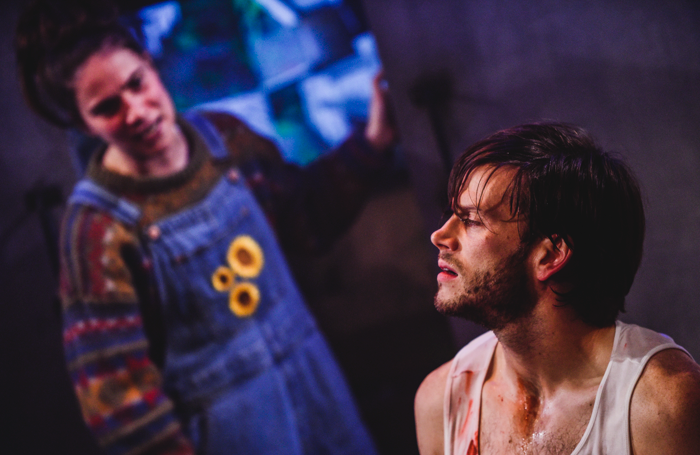
The first piece Ecrit presented by National Dance Company Wales as part of the Roots tour was based on a Mexican relationship. What I took from this was that even though the man was the one who was restricted in prison it seemed to me as though he was getting his freedom through the woman that he loved and he was living his life through her.
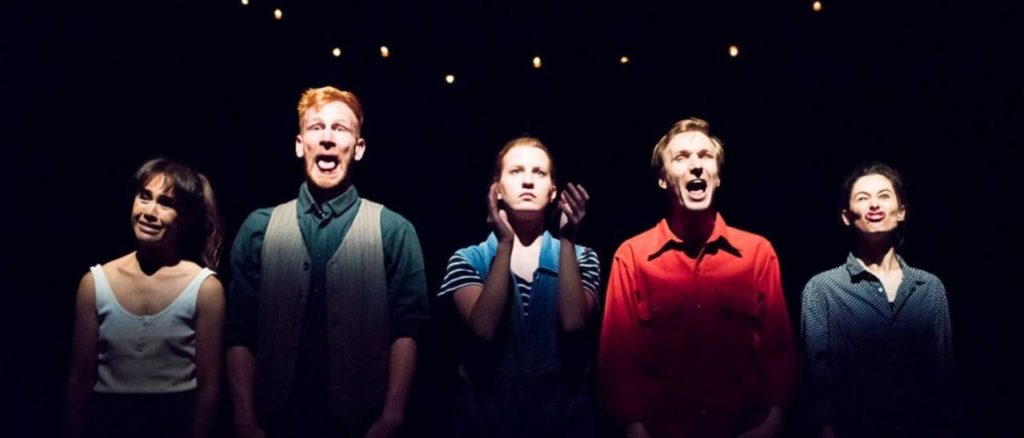
The second piece was called Why Are People Clapping and the interpretation I got out of this was that there was always one person who was in control and whenever that person clapped the rest would follow and whenever someone almost didn’t listen then they would then become the one in control. Overall I feel this was an OK performance and I feel that it could have been more clear as to what it was that was going on.
Codi was the name of the third piece and it was about the welsh miners. The interpretation I took from this was that it was about the struggles the miners would face. I also took the deep groans of the backing music as the horses pulling the carts of coal from deep within the mountains and I also thought it was about the explosion.
The last piece was called Rygbi and the interpretation I got from this was that it was about the love that the Welsh have for Rugby. Personally I liked how they used actual rugby movements and routines to show emotions.
Roots, presented at Theatre Clwyd, was an excellent dance performance. With four pieces: Ecrit, Why Are People Clapping?!, Codi, and Rygbi: Annwyl/Dear (in celebration of the Rugby World Cup in Japan). The production kept you on your feet, never once knowing what was to be expected. Even the opening of the show was well presented by choreographer Fearghus Ó Conchúir who gave off a wonderful vibe that made you squeal in excitement, waiting for the show to begin. Even in the breaks of the scenes, the audience were given time to chat with each other of what they think the show was about, what they liked and any other questions to put towards the cast, crew, and company.
Where there were 4 performances I will say the
1st: Ecrit, and the 3rd:Codi, were my favourite; the 1st act seemed to be based
off Frieda and her lover Diego, with strong movements and flexible arm
movements, the two dancers had put together such a good job that I would put
that as number one. Everything about it, the chemistry between the actors, the
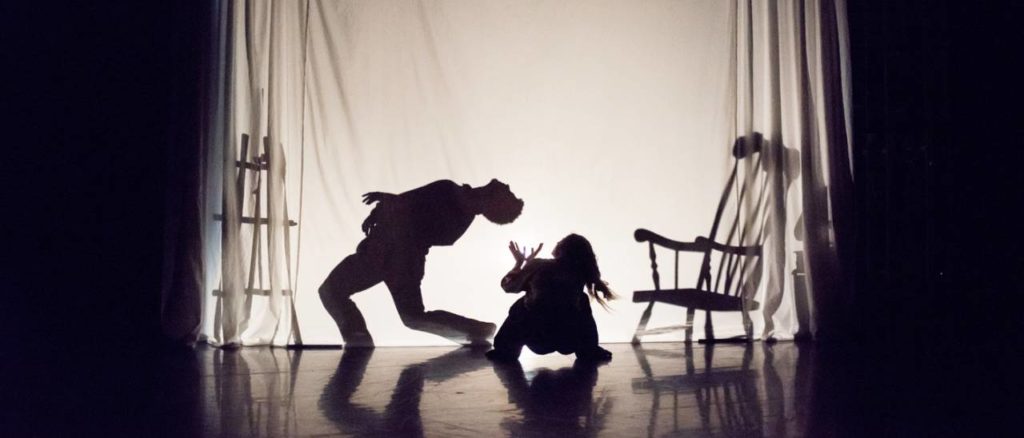
music, the lighting, and especially their clever way of having one large sheet
center left of the stage, and then there would be a light casting through and
the esteem dancer: Moronfoluwa Odimaya, would dance behind and create this
magnificent silhouette. What I loved the most about this piece was not that it
was swift, intricate, and elegant, but how the dancers were so in sync and even
when there was a sheet between them, it would look as if they were standing
right next to each other.
Although Ecrit was my favourite, everyone gave it their all. However there were a few routines such as Codi, where the fog machine did give off an eerie looming effect on the stage and with the lights attached to the dancers; sometimes all you could see were the lights and not so much of the dance that I would rather be focusing on. Rygbi, was very well presented, it was wonderful to see a large group work so well in carrying out the performance, I felt at times it become a little repetitive, Where the other dances were shorter, they got their point across, and I feel that is mostly because given a certain amount time for presenting, you have all lots of ideas that you would want to put across which makes it even more interesting and making you wish you see more.
Overall, I have such high respect for this amazing company and its dancers. Being a student from Coleg Cambria, we create few devised pieces, either because we don’t have enough experience with dance in general, or that you have “writer’s block”, and watching this performance really gave a better approach as to high I can interpret some of the moves I had seen that evening into one of my own pieces.
What an inspiring, fun and lively night, I would recommend Roots 100%. I would love to give this production a 4 star rating, and would definitely bring my family and friends to watch this again and again.
Choreographers/Directors: Fearghus O Conchuir, Anothony Matsena, Ed Myhill, Nikita Goalia
Dancers: Ed Myhill, Nikita Goalia, Aisha Naamani, Moronfoluwa Odimaya, Elena Sgarbi, Tim Volleman, Marla King, and Ellie Marsh.
I recently had the privilege of going to see ‘Roots’ by National Dance Company Wales, at Theatr Clwyd. This performance included four different dance pieces which consisted of ‘Ecrit’ ‘Why Are People Clapping ?’ ‘Codi’ and ‘Rugby: Annwyl/Dear’. These dances were performed by a small but strong ensemble cast that made the dances look really interesting. In between the dances, the audience got the opportunity to share their opinions/views on what they watched, which I think made the audience look deeper into the story behind each dance.
The first dance presented to the audience was
‘Ecrit’. This was a duet that was performed with one person behind a screen so
this created a shadow-like figure. This was visually interesting for the
audience and I made me think about the different things that it could
represent. This helped to show the status of the two characters at different
points in the dance. There were also sections in the dance that were performed
without music. This made me realise that dance is just as effective without
music as it is with music.
Another dance we saw was ‘Why Are People
Clapping ?’. This one stood out to me the most because I found it fascinating
how the dancers were creating the rhythm themselves and they all managed to
stay in time. Although the rhythm didn’t change, the speed of the dance did and
I found it clever how everything still managed to fit together perfectly.
The third dance ‘Codi’ had more of a
theatrical vibe to it. As the dance progressed, the acting element became very
clear. This made the audience connect with the characters emotions and got them
hooked on the journey that they go through.
The last dance piece that was performed was ‘Rugby: Annwyl/Dear’. This included very strong ensemble work. I loved how energetic this piece was and how well the sport of Rugby was shown through a form of dance eg. lifts, running around, supporting each other. Although the dance was performed really well, I think that at times some of the movement was repetitive which sometimes made the story hard to follow.
Overall, I enjoyed hearing people’s views on each dance as they were sometimes different to what I thought so it made me think about the dance from a different perspective. Also, in the dance ‘Ecrit’, there was a section in the dance where one of the dancers sang a few lines of a song. I think this worked effectively as it made the audience realise that dancers also have other talents and this could be incorporated into a dance to put a twist on it. Finally I enjoyed how the acting through the dance pieces was over exaggerated as this helped the audience to understand what was going on throughout the dances. I think the show could have been better if some of the dancers shared their own views on the dances as it would have been interesting to hear if any of the storylines of the dances changed throughout the rehearsal process.
In conclusion, I would rate this five stars as I think that the audience interaction was incredibly unique and each individual dance was performed with a lot of emotions and with strong movements.
The performance Roots is made up of four
short dances (Rygbi, Ecrit, Why Are People Clapping?, Codi). All four of these
pieces are from Wales. I personally got different ideas about each of the
dances as they progressed. I found that I often changed my mind of what I
thought the pieces were about.
The first piece we watched was Ecrit. Throughout this dance my ideas developed. I got the impression that it represented some kind of forbidden relationship because of the battle between the man’s shadow and the girl on stage. However, I also got the impression that it represented communication between a soldier and his girlfriend/ wife. As the piece progressed I found myself leaning towards the latter option. I feel that it was beautifully executed and I think having the male as a shadow to show they weren’t together was really effective. I found it really interesting how everyone had different opinions on the piece when we talked after the piece, however I feel that they all seemed to relate to one another.
The next piece was Why Are People Clapping? This piece was my favourite! In this piece I found it really interesting how they incorporated so many different elements into it. They used many familiar things such as clapping, tennis and head shoulders, knees and toes. It was also weird because clapping can be used in polar opposite situations, it can be used as support or in anger as a sort of come on kind of thing, or in a patronising way. I loved how the claps really controlled the whole of the dance and also switched the mood of the piece. I really like how it started and ended with the tennis match, which led me to believe that all these different parts in the middle were what was going on in peoples head as they watched the tennis, although I may have misinterpreted this.
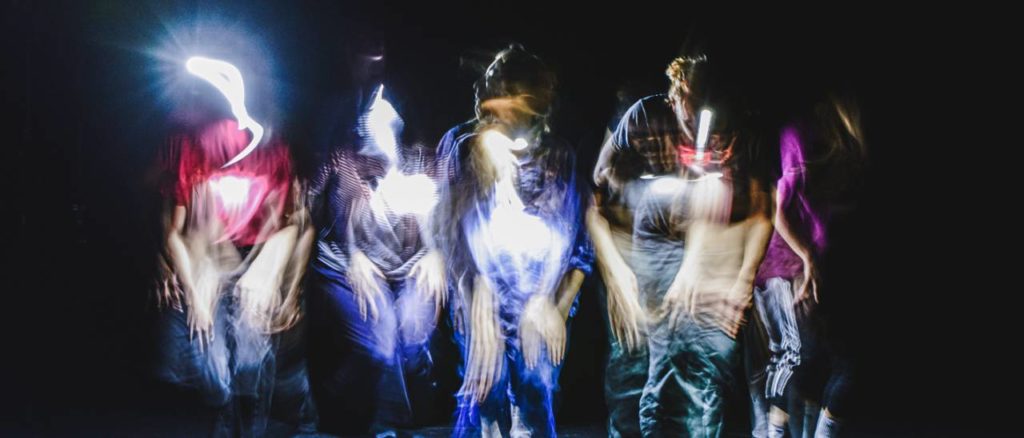
The third dance was Codi. Throughout this
dance I got the strong impression that it was based on miners. The use of
headlights (which were worn on their necks) really helped to portray this scene
for me. This piece was full of emotion and it was something that really
represented what miners would go through. I think it was executed amazingly and
I love the use of the sticks. Now whilst I did love the use of lights on their
necks I found that at some points it also held them back in a way because it
meant there were many movements we lost because it was too dark. Although I did
love this piece.
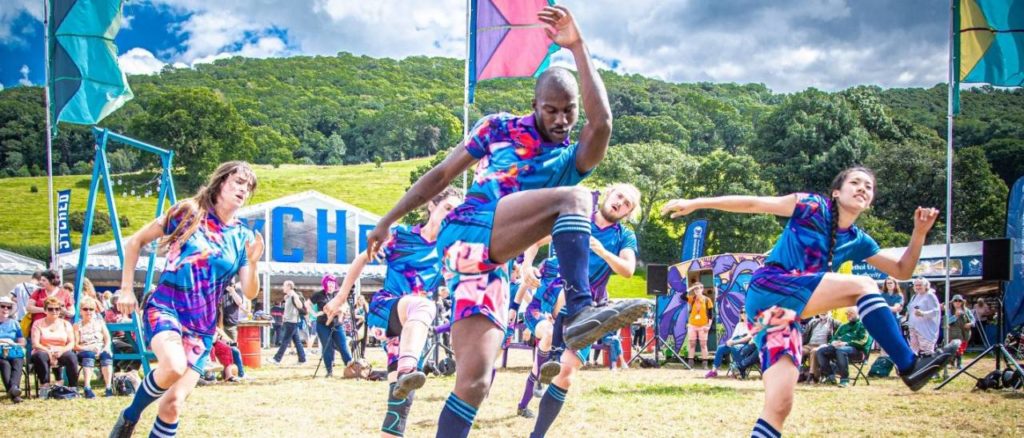
Lastly Rygbi, which is pretty much explained in the title of it is based on rugby. I thought this piece was beautifully choreographed, it was amazing to watch popular rugby moves slowed down and turned into a beautiful dance that represents teamwork and helping each other out when they’re down. It had a really soft look to it even though it was mimicking a really hard and rough sport which I thought was really effective. I loved how the dancers all seemed to rely on each other throughout the piece which really added to the togetherness and community feel of rugby. I also read up on it and found out that it was actually made with some input from rugby players and fans, which I think really adds to the authenticity of the piece. The only criticism I have for this piece is I think it went on slightly too long. This piece lasted around twenty five minutes, and I felt that some of the movement were repeated throughout which meant we lost the rawness of the piece. I personally feel that this piece would have been a lot more effective and made more of an impact if it was slightly shorter.
Overall I really enjoyed the show! I loved how it was laid out and how interactive it was. I loved the discussion in between each piece, I feel that this really brought the audience together and it was lovely to hear other people’s interpretations of each piece. Overall I would give the show four stars!
Choreographers – Nikita Goile, Ed Myhill, Anthony Matsena, Feargus O Conchuir
Dancers – Nikita Goile, Ed myhill, Aisha Naamani, Moronfoluwa Odimayo, Elena Sgarbi, Tim Volleman, Marla King, Ellie Marsh
This touring programme of new pieces of contemporary dance creates something of a buzz – a buzz provoked by the NDCW’s Artistic Director, Fergus Ó Conchúir coming forward to encourage audience members to talk to someone near them who they don’t know about their reactions to the work.
The approach will
work for those who, like me, are a bit mystified by dance and perhaps also for
those who have come on their own. It
might not appeal so much to purists because it generates a bit of atmospheric
untidiness: conversations start up and
have to be quietened down. Still, given
that the whole programme is not very long, there is time for all of this.
As for the main
event itself – the performances and the choreography – I should repeat that I am relatively ignorant
as far as dance goes. I am not dance
phobic but if I go to see a show it is usually a play or a concert, possibly an
opera, very occasionally a ballet – almost never contemporary dance. Unfortunately for development officers, we
are all creatures of habit. This is a
shame because, ‘knowing what we like’, we don’t venture far from our comfort
zones to take in new experiences. I had a complimentary ticket from Theatr Clwyd
and a free evening and I’m glad I was able to see Roots.
The programme contains four pieces. Ecrit is choreographed by Nikita Goile and features two dancers. Both Why Are People Clapping? by Ed Myhill and Codi by Anthony Matsena featured four or five, and Rygbi by Fergus O’Conchuir himself featured seven – or was it eight? The imprecision in my counting is not just middle-aged muddle: it’s a reflection of the impact of all the dynamic and fluid body movements out in front. You lose track of numbers because of the intensity of what is going on.
Ecrit is about a man and a woman and the
balance of power in heterosexual relationships. Rygbi is about rugby, prompting thoughts of what it would be like
if economics and logistics permitted a full team of at least thirteen dancers.
However, I’m not
sure that what the pieces are said to be about, or what the choreographers and
the dancers themselves intend to do, matters much. The performances take you some distance
beyond the start point. The titles and
notes really only serve as spring boards, or launching points for your
reactions. (You don’t think about rugby,
for example, in the same way as you might watching a performance of Hull
Truck’s Up and Under). The show’s overall title, Roots, is not hugely satisfactory
because it reminds you of the eminently forgettable best-seller/blockbuster
movie/TV series phenomenon. But it’s
there to let you know that what you going to see is largely about Wales, having
been made in Wales by people who work there, or who are Welsh themselves.
Knowing that the
start point for Ecrit was a letter to
Diego Riviera by Frida Kahlo made me search for references to them and their
painting, to murals and to Mexico – but only briefly. Dance tends to liberate you from your
thinking through the movements – in this case by the movement of the woman’s
hands, which dance together, forming shapes expressive of both passion and
suffering. The piece depends on a
dramatic use of a screen and shadow play to convey the essential distance and
separation in a relationship. The male
dancer is concealed from view – as he is from his lover – and appears at first
only in silhouette, the back lighting permitting him to grow massively in
stature, like a nightmare monster and then shrink.
Why Are People Clapping? asks a question for which of course there is no real, single answer, other than ‘just for fun’ – although the loud, sustained and rhythmically very accurate clapping throughout must be hard work for the performers. It provides a percussive sound wall which the dancers move against, either together or in solo movements. It’s very reminiscent of flamenco, except that here there is no singing and no shouting and, as with much of the programme, the musical accompaniment is not very noticeable.
Codi is apparently about ‘the strength
of the Welsh communities who come together to tackle isolation and depression
during troubled times’ but if you hadn’t read the programme notes you could be
excused from thinking it was about coal mining.
This is because the main impact of the piece is achieved through the
ingenious use of single bright lights worn around the neck by the dancers,
instead of on helmets. They shine out
through a smoky atmosphere at you and their beams strike out in all
directions. The dancers are also dressed
in overalls which don’t restrict them but which do suggest they are miners.
Rygbi was very
well done – NDCW performed it for the World Cup in Japan – but I found it the
least interesting of the four pieces. This could be because it came on last and by
that time, despite the conversations and the detailed introduction, I had had
enough contemporary dance for one evening.
I wanted there to be more humour in it – rugby being fairly ridiculous – and even some ugliness – rugby is also often
quite unpleasant. (It’s not a beautiful game!) I was unsure about what the dancers were
wearing – brightly coloured ensembles, tops and shorts and long socks which
were definitely not team strips. What
happened drew a lot on typical rugby moves but I was unsure, I suppose, of what
the piece was saying and it wasn’t a comfortable uncertainty.
That said, this
was a good evening’s entertainment, giving me plenty to think about and lots to
remember. It may also encourage me to
see contemporary dance more often. I
think, in the end, it’s a pity that, for a number of reasons, dance occupies a
separate niche in theatre and that it has to be enjoyed in isolation. Dance was originally central to drama and
even today it can be effectively introduced in plays. A weakness of much modern drama is its lack
of physicality, with actors relying on their delivery of text and not
understanding the importance of suggestive body language and sinuous physical
expression. What shows like Roots demonstrate is how evocative and
expressive pure movement can be on its own, when it is performed by talented
and disciplined dancers in companies like NDCW.
Long may they continue to tour.
Hela (The Hunt) tells the story of a young woman (Erin’s) hunt for her missing little boy; her hunt for truth and justice and revenge and empowerment and the restitution or rescue of a Welsh culture which has been destroyed by a totalitarian, digital and male English culture. The setting of tiny abattoir on a remote farm is very well-realised by designer Delyth Evans and Set Builder Will Goad – it feels solid and real, including its digital screens and use of technology – the modern and the ancient are convincingly blended in the tiny space of ‘The Other Room’ and that is a genuine achievement.
The play attempts to meld an array of battles
into one: the Welsh culture represented by a young, rural woman with poetic
sensibilities and an overwhelming sense of loss is pitted against the English
culture represented by Hugh, a privileged abuser, who has himself been abused
and been robbed of his own Welsh-ness by abuse (the real representative of the
crushing English culture being The Circle – the dystopian algorithm which
dominates life and justice); there is a gender battle; a battle for language; a
battle between the small, human farmer and the megalithic, abusive system; a
battle over victimhood…and on it goes.
Mari Izzard’s dystopian, bilingual piece is a
challenge for performers and audiences alike.
The bi-lingualism is not part of the challenge – this is handled deftly
and purposefully utilised – it feels central to the storm of ideas that whip
through this short two-hander. Any fears
that this might be grant-driven lip-service to the language were quickly
dispelled.
The real challenge for the performers is in
realising the intensity which this bizarre and dreadful scenario demands, The direction is not at issue here. The space is well worked; the intensity is
built and relaxed appropriately and the relationship between the two figures
does build quite convincingly, given the material. The huge challenge centres around the
character and performance of he character of Erin. We are informed repeatedly in the early
moments of the play that she looks very young; she is referred to by Hugh as a
‘child’ and she intends him, initially, to believe that she is also a prisoner
of ‘The Circle’. Lowri Izzard has the
unenviable task of delivering this mannered, fake naivety sufficiently to take
us in, but at the same time, to give us doubts about who or what she really
is. Physically, she looks right for this
– there is a kind of teenage appearance in the early sections realised through
movement and expression but it is distracting, unconvincing at times and
irritating. We were meant to be
unconvinced by it but even that wasn’t quite convincing.
Later in the piece, when we begin to see who she
really is, Lowri Izzard delivers a strong and moving performance. When her character wants to torture Hugh, but
can’t do more than punch and tickle him, her humanity despite her dreadful
situation and what has been done to her, is moving and evident. It is only when he gets free and attacks her
that she is able to commit the emasculation which is the play’s natural
denouement.
Gwydion Rhys as Hugh, has much less of a
challenge. I wouldn’t have fancied the
role – it looked a very physically uncomfortable one, and the character, though
given something of a sympathetic back-story seems a bit thin. He is too sympathetic a figure for too long
and when his crimes are revealed they seem plot and issues driven and
unconvincing in terms of the character.
He delivers a strong realisation of the role though, undoubtedly,
particularly in his delivery of the movements between English and Welsh.
In retrospect, this is a thought-provoking play,
but one which tried to explore too many issues, albeit hugely important ones,
in a very short piece. The later stages
of the play are the strongest. Despite
looking very good, the early stages of the play, once the strong opening is
over, feel contrived and don’t always hold the interest. We sit outside the action rather than feeling
riveted and drawn in. As the play
builds, and Lowri Izzard’s performance is allowed greater rein by the writing,
this does draw us in to a powerful and well-played conclusion.
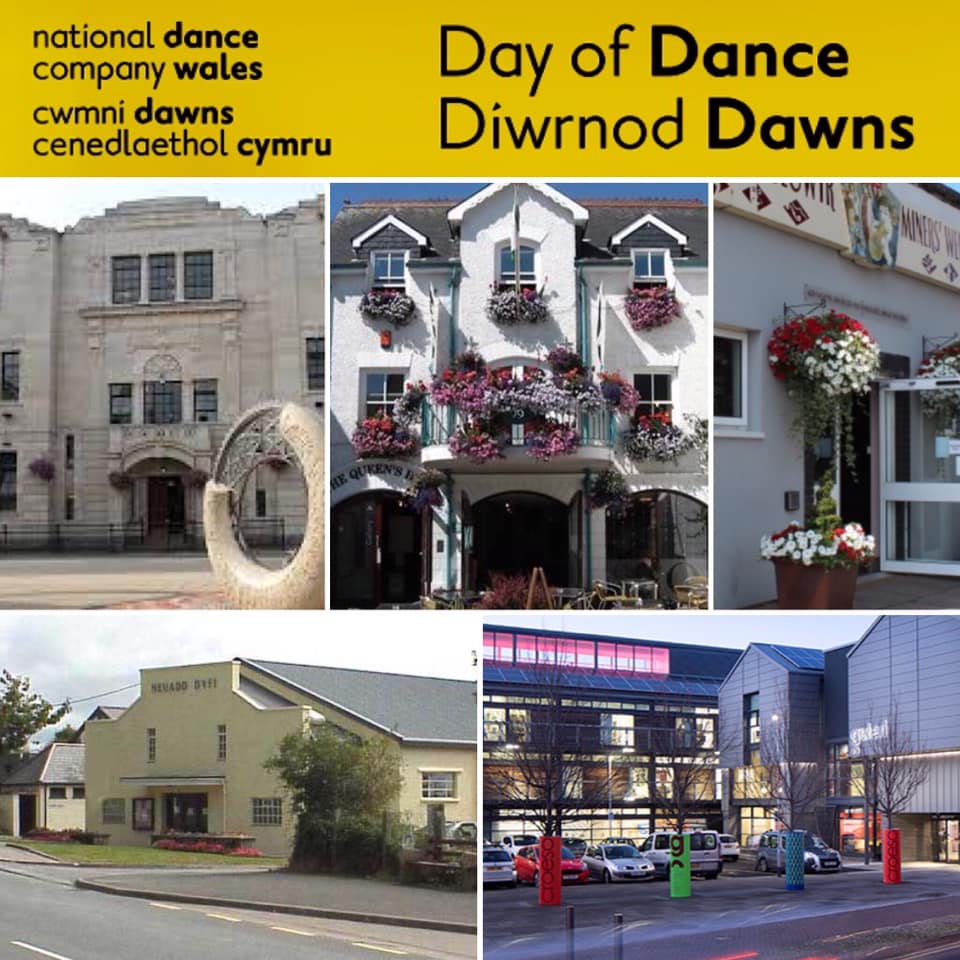
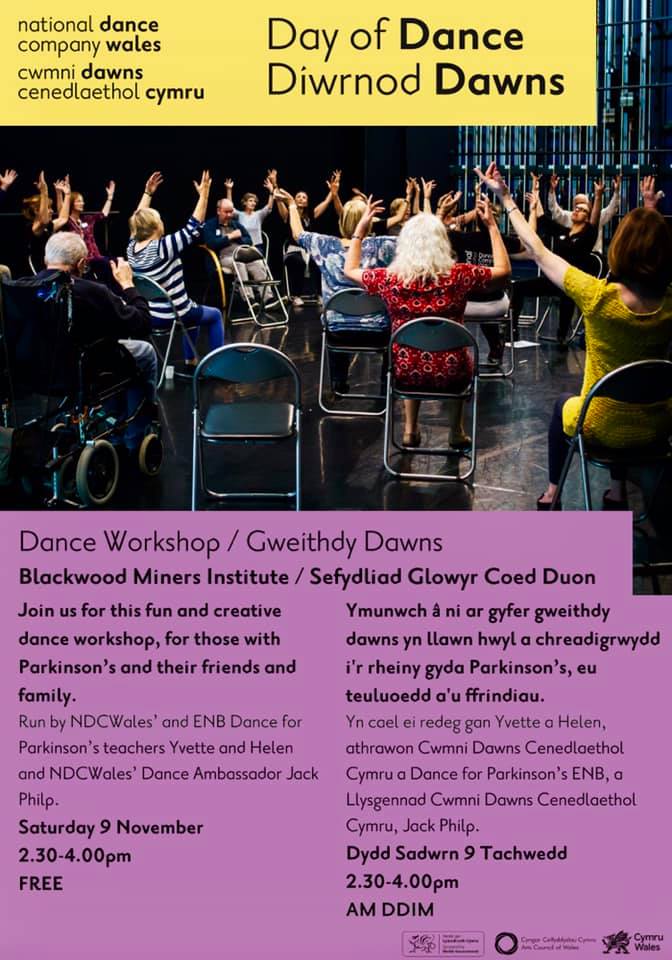
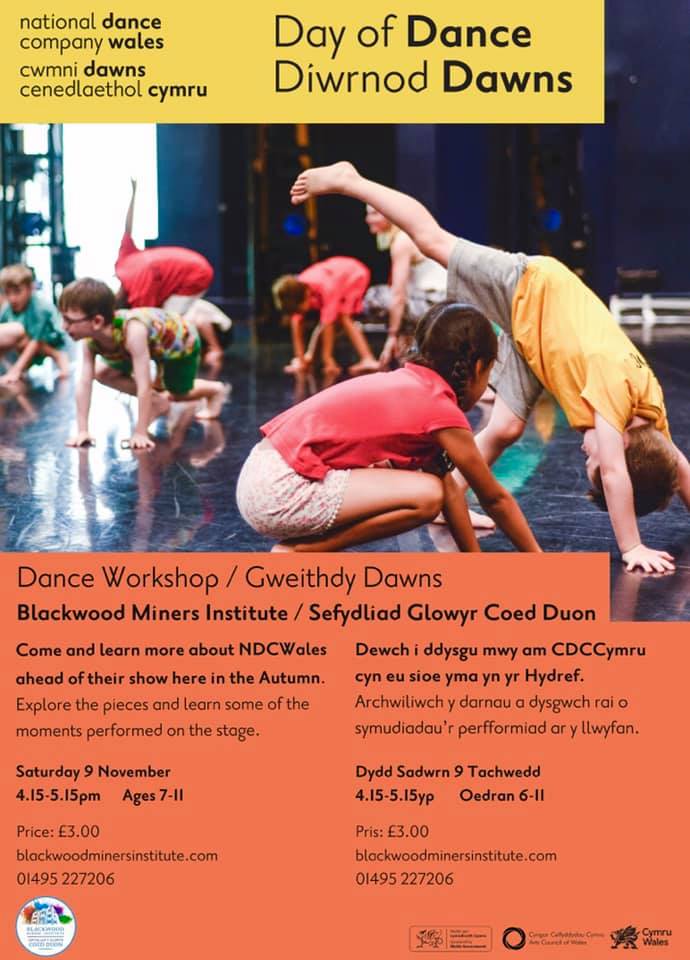
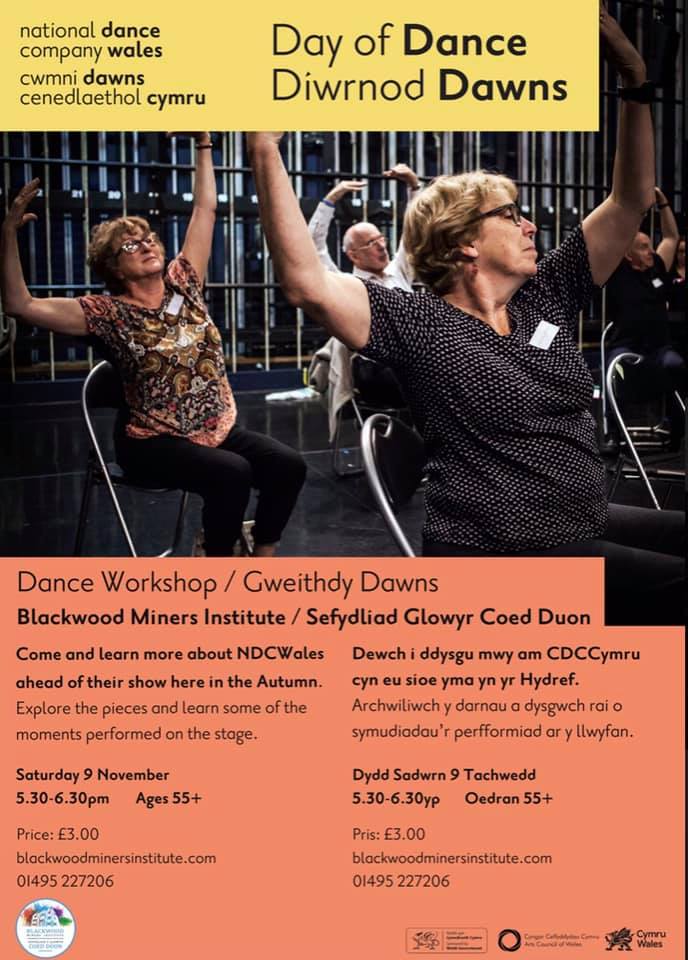
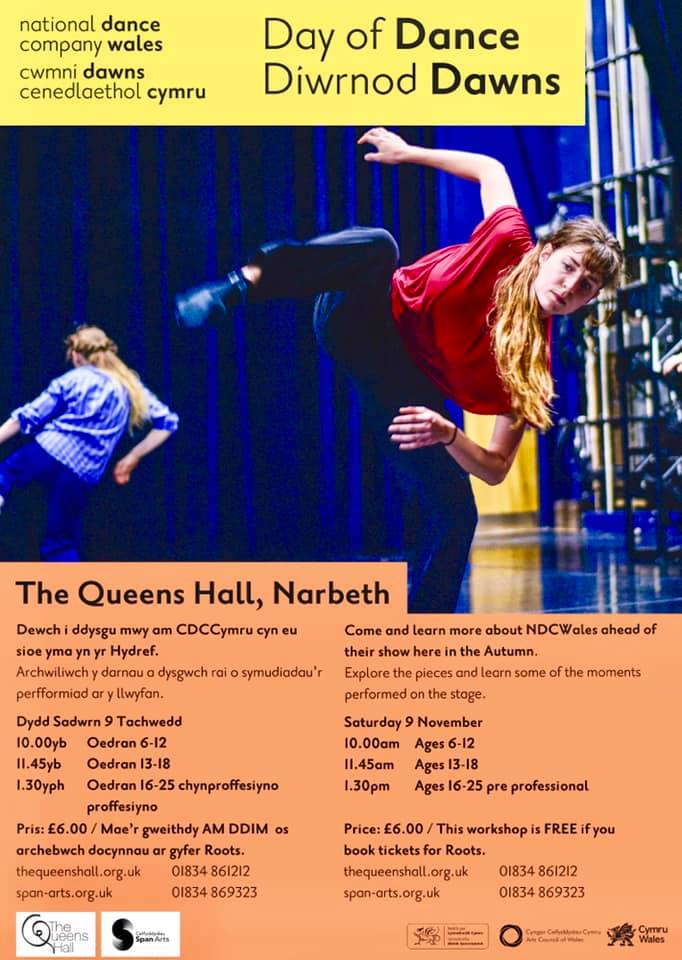
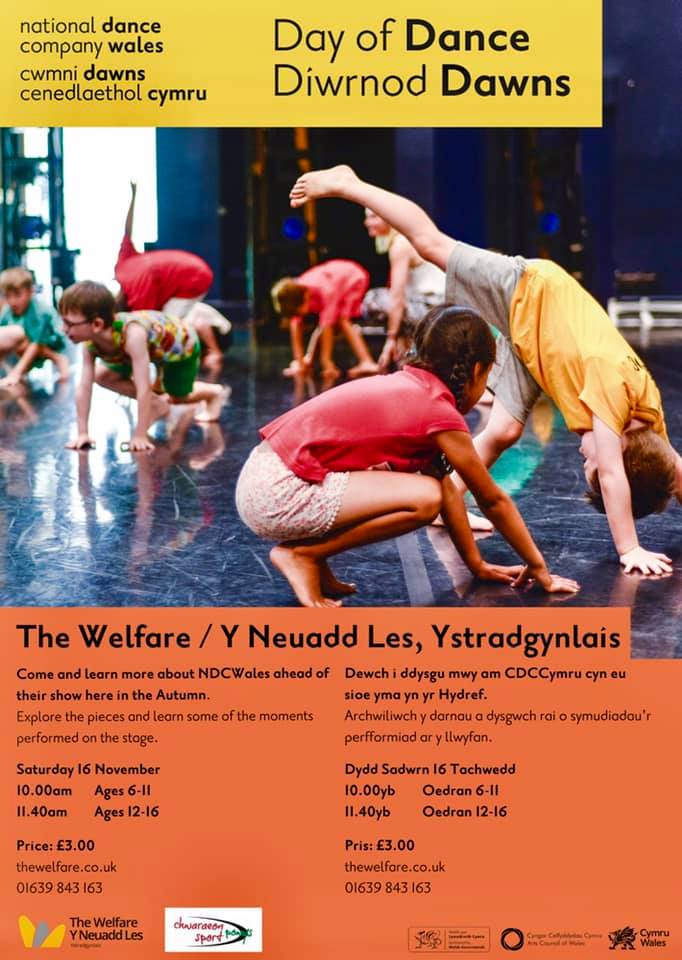
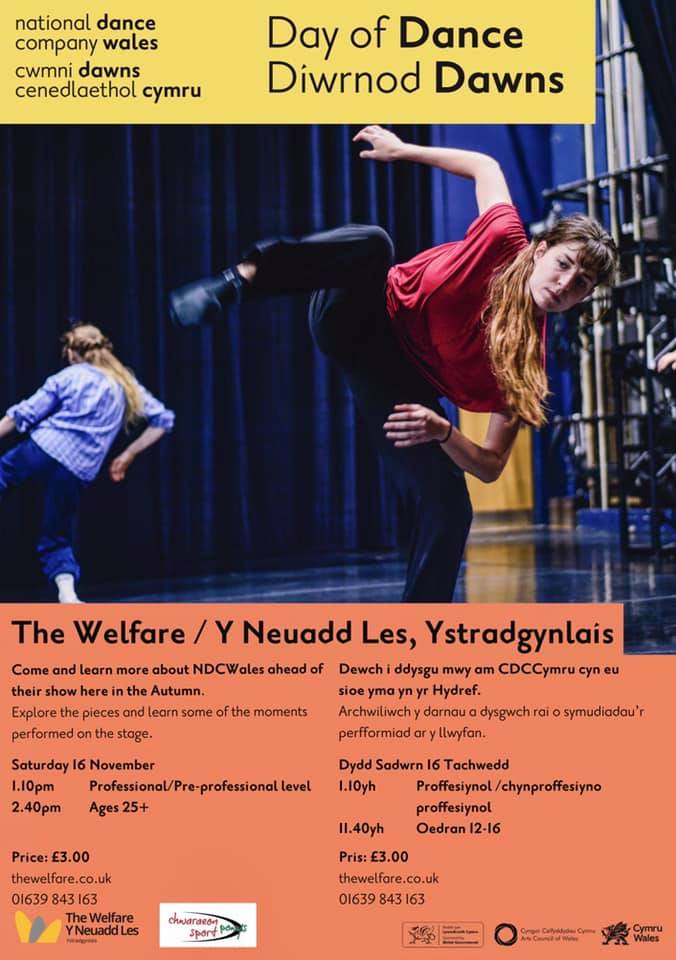
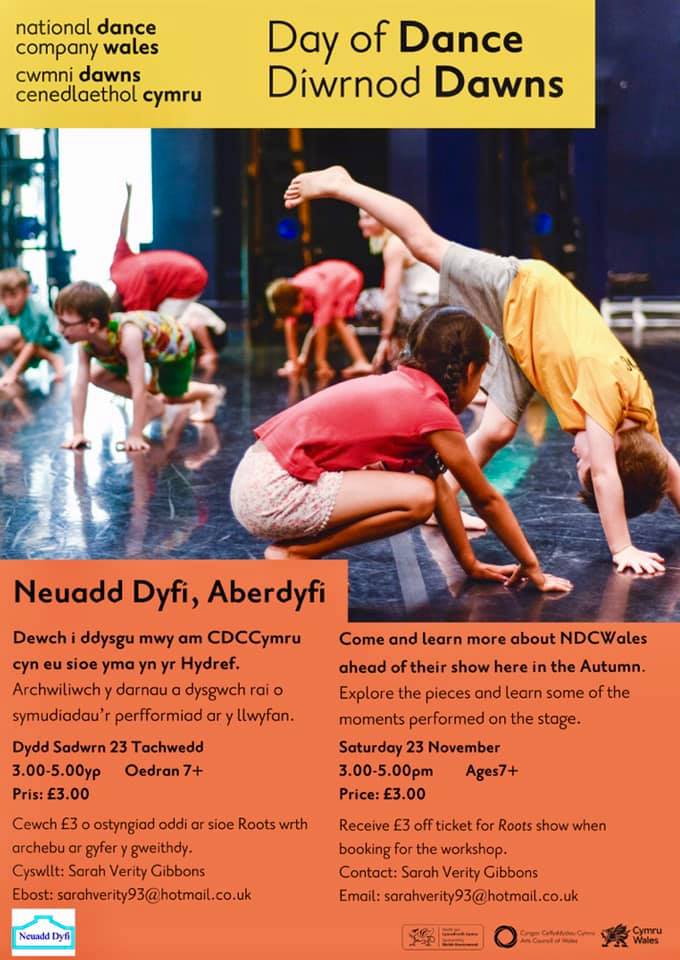
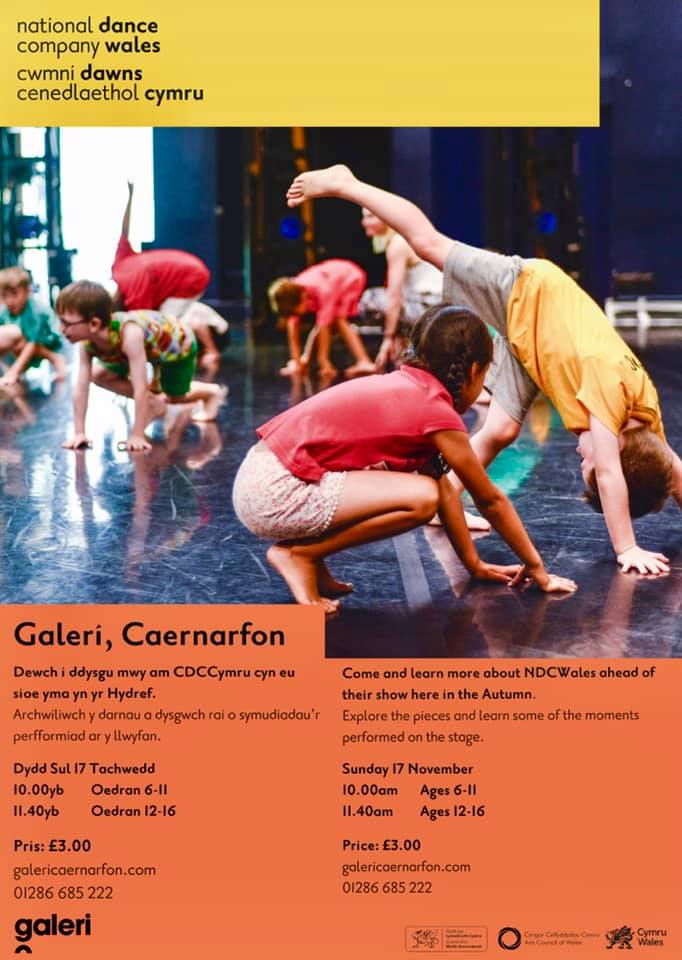
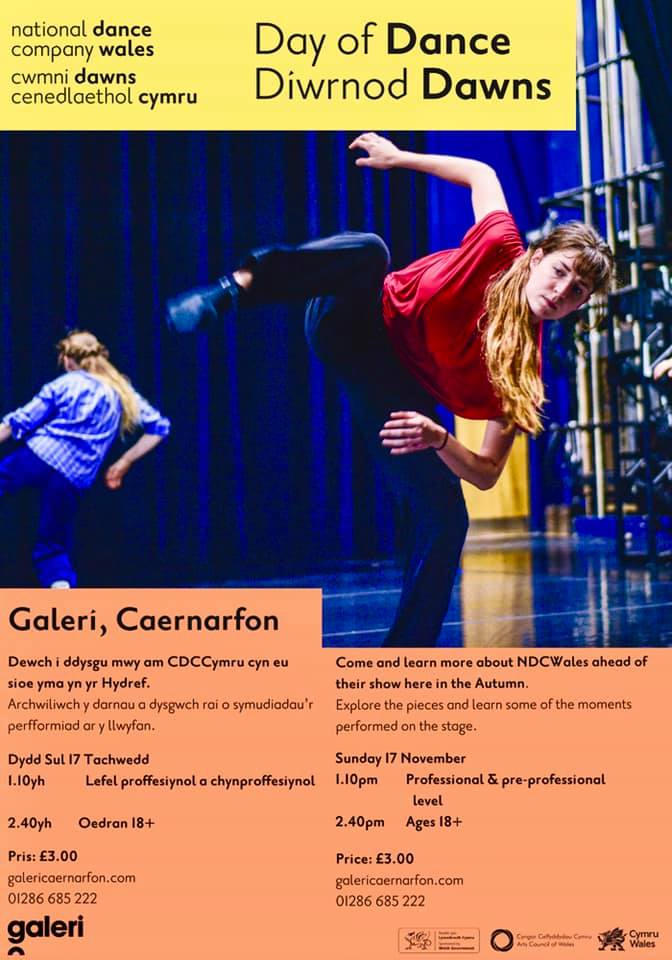
National Dance Company Wales are running Days of Dance at a range of venues in Wales this autumn. The day will consist of a range of workshops for a variety of ages. The workshops will be linked to the NDCWales Roots autumn tour which visit the same venues later this year.
Roots features four short pieces of dance from Wales, each different from the one before it.
Roots is a guided tour through contemporary dance. NDCWales take some of our favourite pieces and pair them with a discussion to help you get to the heart of the stories, and learn behind-the-scenes secrets.
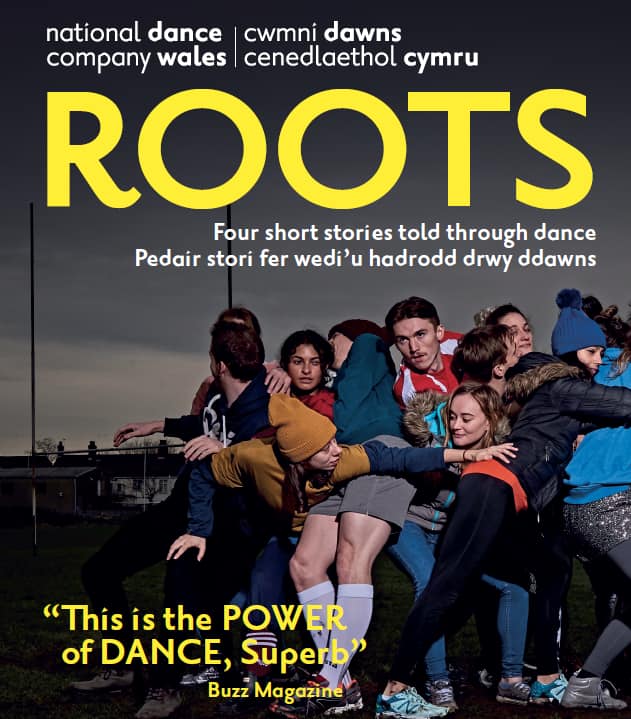
Rygbi: Annwyl / Dear by our Artistic Director Fearghus Ó Conchúir celebrates rugby in Wales and highlights the hopes, glory and passion of rallying together on and off the pitch. Rygbi was created with input from rugby fans and players across Wales so that the dance really echoes the sport.
Écrit by Nikita Goile was inspired by a letter from iconic artist Frida Kahlo to her partner Diego. The clever duet is performed by a female dancer and a giant silhouette of her lover. It’s a beautiful power struggle that reflects the ups and downs of passionate relationships.
Why Are People Clapping!? by Ed Myhill is set to composer Steve Reich’s Clapping Music and uses rhythm as a driving force. The dancers use lively movement and clapping to create a soundtrack for the fun and dynamic dance.
Codi by Anthony Matsena who grew up in Swansea and is about Welsh people who come together to tackle isolation and depression during troubled times. It’s an energetic and uplifting dance about the strength of communities.
There is more information on the Day Of Dance workshops and how to book below.
https://youtu.be/9cIrNvd89AQ
Blackwood Miners Institute
Get your chance to dance with National Dance Company Wales at Blackwood, Miners Institute this autumn!
NDCWales is organising a FREE Afternoon of Dance at Blackwood, Miners Institute on Saturday the 9th November 2019. Take part in a FREE dance workshop. Participants will get the opportunity to learn dance elements of the forthcoming Roots tour, coming to Blackwood, Miners Institute on the 19th November. A range of other FREE activity will also be taking place throughout the day. Perfect for complete beginners as well as those with dance experience.
The below workshops are FREE if you book tickets for Roots at Blackwood, Miners Institute on Tuesday 19 November 2019 7:30pm To book a Roots ticket and FREE workshop place please book in person, or contact the Box Office on 01495 227206.
Please note workshop places are strictly limited.
Workshop Times
14.30 – 16.00 Dance for people with Parkinson’s, their friends and families
16.15 – 17.15 7-11 Years
17.30 – 18.30 Age 55+
The Queens Hall, Narberth.
If you book a ticket for ROOTS, by NDCWales at The Queens Hall Narberth on the 22 November you are eligible to a FREE place on a Day of Dance Workshop being run by National Dance Company Wales on 9 Nov 7:30 pm at The Queens Hall, Narberth. Tickets need to be purchased via the Box Office – please call 01834 869323.
Workshop Times
10.-11.30 am 6-12 years
11.45-1.00 pm 13-18 years
1.30-3pm 16-25 years
The Welfare, Ystradgynlais
The Day of Dance takes place on Saturday the 16th November, this is your chance to explore the pieces and learn some of the moments explored on stage. Freedom Leisure will also be in attendance running some free sports activities throughout the day. Contact 01639 843 163 to book.
Workshop Times
10-11.30 6-11 Years
11.40-1.00 12-16 Years
1.10-2.30 Professional/Pre Professional
2.40-3pm 25+
Neuadd Dyfi, Aberdyfi
The Day of Dance at Neuadd Dyfi,Aberdyfi will take place on Saturday the 23rd November from 3-5pm. The Day will be supported by Sarah Verity School of Dance. Tickets are £3.00 and this gives you £3.00 off the price of a ticket to Roots by NDCWales at Neuadd Dyfi on Sunday 24th November at 7.30 pm. the To book a place email sarahverity93@hotmail.co.uk.
Galeri, Caernarfon
The NDCWales Day of Dance at Galeri Caernarfon takes place on Sun 17 Nov. Tickets are £3.00 and this gives you £3.00 off the price of a ticket to Roots by NDCWales at Galeri, Caernafon on Tuesday the 26th November at 7.30 pm. To book workshop tickets contact Galeri Box Office on 01286 685 222 Or at the links below.
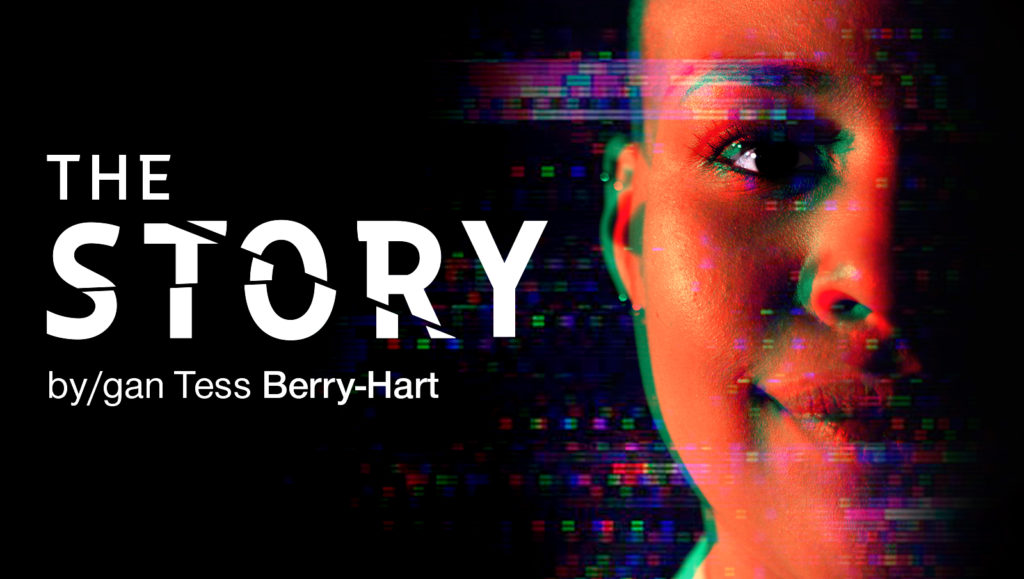
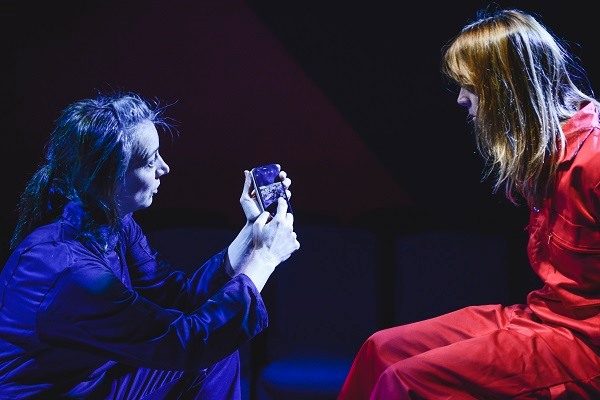
‘The Story’ by Tess Berry-Hart, directed by David Mercatali, presents as rather old-fashioned agit-prop theatre, here deployed as a perfectly legitimate form for holding our feet to the fire over the very unpleasant realities we so often choose to ignore around migration, detention centres, and the horrors of suspicion and injustice acted upon the dispossessed from wherever part of our poor and war-torn planet they make come.
As a theatre-going audience we are self-selectedly approaching the piece with a kind of generic left-wing sympathism, and this makes us a player in this drama. We need our eyes opened as one of the two character’s does. We need to see what Berry-Hart has come to see.
In a
formula with which I was initially dissatisfied, the two actors present
socio-political ideas through figures who are representative cyphers rather
characters in any real, three-dimensional sense. One represents ‘our’ values as caring,
middle-class, educated and informed liberals;
the other represents all aspects of the oppressive state.
This is
not promising. This seems like nineteen
seventies’ student theatre. But it is
not. It does become much more.
The piece
is well presented and nimbly directed.
Mercatali is determined that nothing here will lag. We are tumbled into darkness and action and,
once in, we are fully immersed until the final line, the final beat. He manages the time lapses very skilfully, as
he does the suggested violence and threat.
This is almost always sure-footed and lapses are rare.
There are one or two clunky moments that obtrude stylistically, but generally the pace and intensity is right and skilfully delivered.
It is in
the playing that we are most impressed though, particularly by the excellent
Siwan Morris Hughes: there is an intensity and commitment which, in this tiny
performance space, makes us feel voyeurs and brings awkwardness and discomfort – precisely what Berry-Hart most wants. Hannah McPake avoids all the major traps set
for an actor with multiple playing: she
ensures that changes from figure to figure are slight modulations of manner and
little vocal nuances. She is always convincing
– despite the writing at times, which provides her with half-drawn and
unconvincing figures, quite intentionally – none of these people is real and we
are never given the option of believing that they are. McPake’s playing then is technical, of
necessity, whilst Morris-Hughes’ is fully immersive, deeply committed and very,
very skilled.
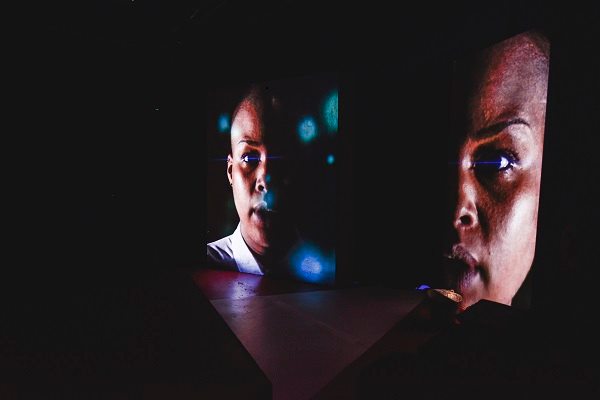
The digital element to the piece is well-conceived and realised and enhances the work. The score is appropriate, though I felt that perhaps an opportunity was missed – I would have loved this to have been further developed and a more significant feature.
Although
I initially felt detachment and disappointment in the piece, as the patterns of
language developed, a poetry of oppression emerged, overlapping and building in
intensity and rhythm and drew me in. Ideas became more complex and more satisfying. Some of the writing at the heart and height
of the play is of a very high quality and Berry-Hart finds a poetry which does
some justice to the huge issues with which she attempts to deal.
The ‘turn’ and ‘reveal’ doesn’t surprise us, but is built towards effectively and is
dramatically pretty convincing – Morris-Hughes’ performance helps bring this
off with its intensity and unflinching commitment.
The piece
is leavened occasionally by moments of irony and humour, but it needed
more. The horror and misery needed
lifting at points and it is an extremely difficult thing to do – nonetheless,
it needed doing. For me the play would have benefitted with the greater layering of perspective
that this could have brought to what was too often a sledgehammer intensity in
the writing.
So, I’m glad I finally got to see this work. Its retro’ agit-prop form contains and perhaps belies a complex, poetic work that is troubling and nuanced.
A triumphant return to Welsh theatre for Rhys Ifans as Ed Thomas’ semi-autobiographical play On Bear Ridge opens at the Sherman Theatre, Cardiff.
(4 / 5)
All images credit Mark Douet
National Theatre Wales’ collaboration with
Royal Court Artistic Director Vicky Featherstone and renowned Welsh writer Ed
Thomas (Hinterland) summoned a
well-earned standing ovation last night at the Sherman Theatre. Prompted by its
flawless cast and beautifully poetic script, the audience rose to its feet to
applaud this intriguing new play.
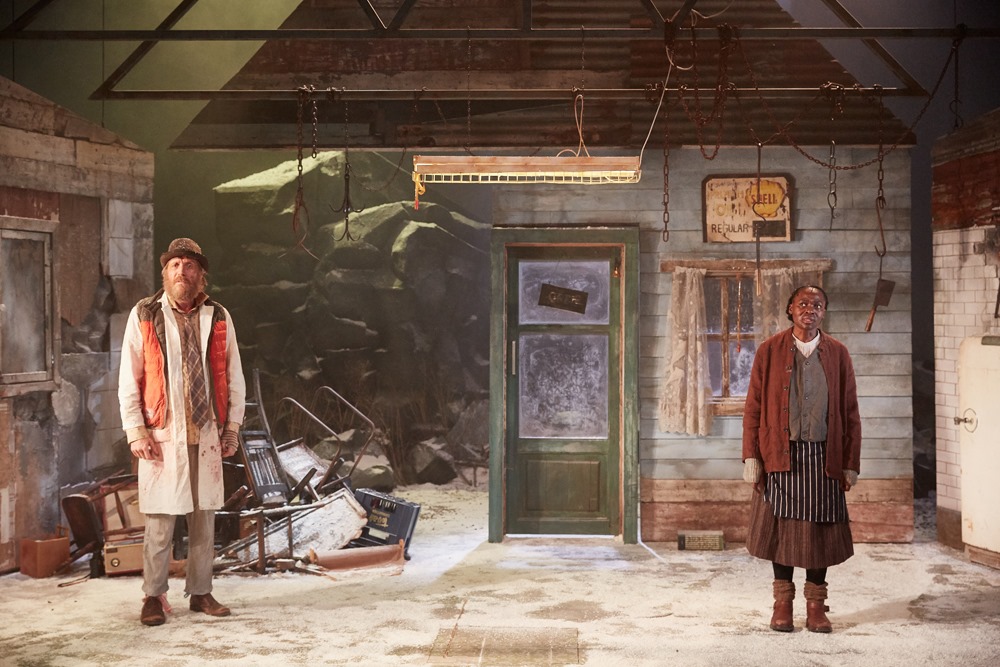
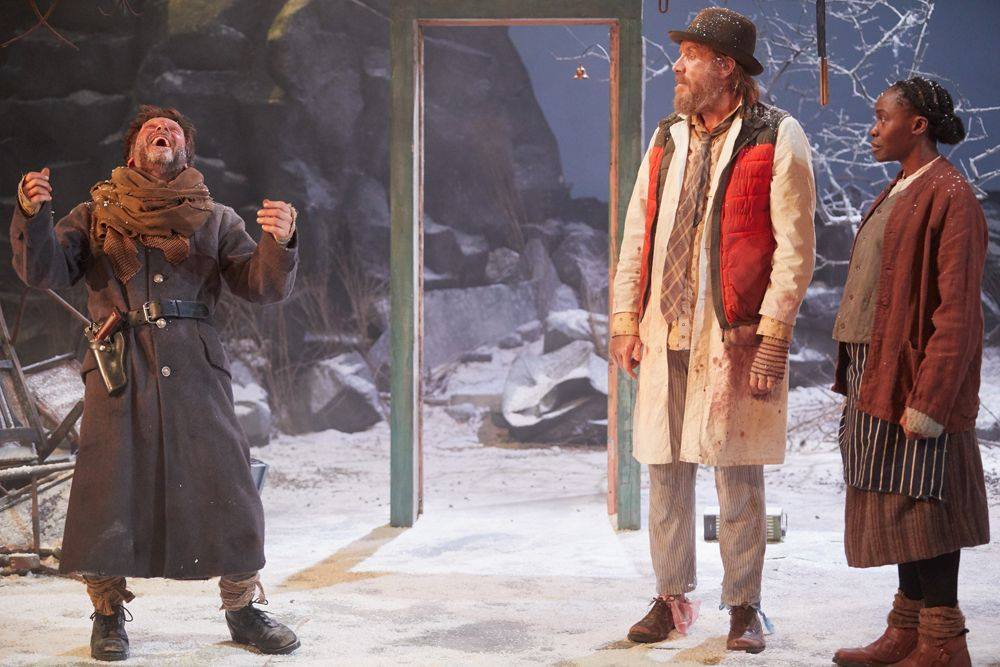
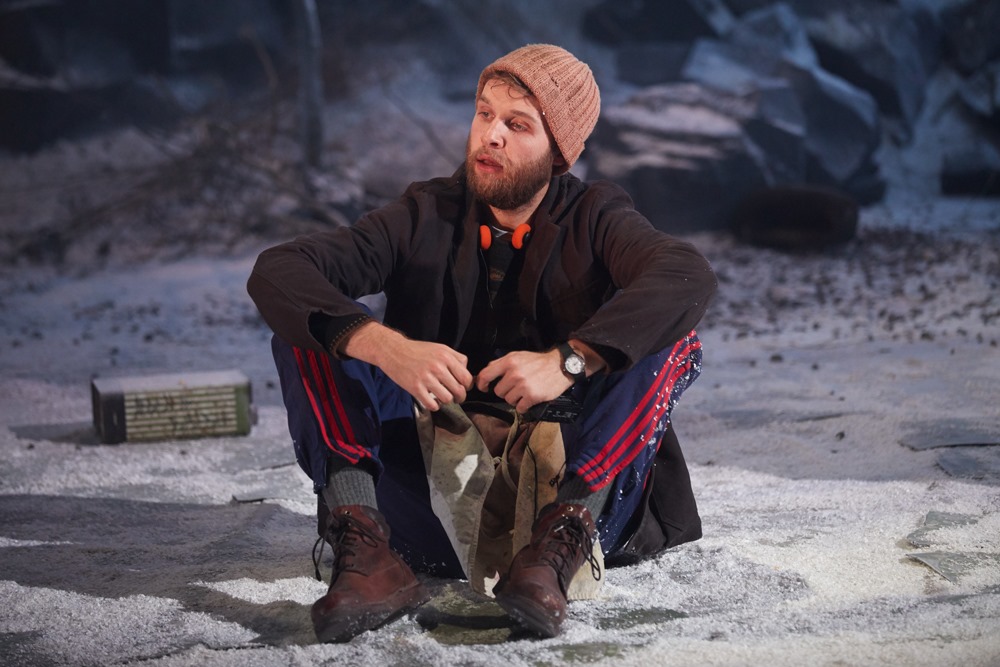
Set in the forgotten village of Bear Ridge, our characters John Daniel (Rhys Ifans) and Noni (Raki Ayola) own an unfrequented butcher shop where the food is scarce, the whiskey has run dry and a harsh snowdrift has barred them from the rest of civilisation. Joined only by their slaughter man (Sion Daniel Young), the pair dance to songs from long ago and tell stories unearthed from their fading memories. They are very much alone, until they are joined by a strange figure lost in the snow (Jason Hughes).
The play feels like a Beckettian meditation on the importance of our memories, how remembering our past and our heritage can offer up some comfort in a recklessly fast-paced world. As put by John Daniels, ‘If my memories go, how can I still be John Daniels?’ The same goes for the community of Bear Ridge that has been stripped from existence through some sort of catastrophic event, their memory of the once thriving community is the only comfort that keeps John Daniel and Noni alive.
Ed Thomas’ lyrical text reaches epic heights. He immerses
the audience in the play’s vivid imagery, all the while skilfully meandering
between gut-wrenching dialogue and quick-witted humour. Rhys Ifans as John
Daniel demonstrates impeccable comedic timing as he punctures through the heavier
parts of the play with wit and verve. Every word the characters speak are imbued
with a sense of importance and each line is delivered with care and tact by the
play’s brilliant cast.
Thomas and Featherstone join force in co-directing the play.
Their direction is slick and all aspects of the performance are visually
arresting. A mention must go to the impeccable lighting design by Elliot Griggs
(An Octoroon, Pomona, Fleabag) and set
design by Cai Dyfan (Violence and Son, Hinterland). The isolation of the
characters is made clear through a coming together of the lighting and set
design as Bear Ridge is made to feel like a desolate floating otherworld, plonked
in the middle of the Sherman Theatre for its audience to observe. What results
is a sense of admiration for the tenaciousness of our characters to keep going,
even through the most solitary of hardships.
On Bear Ridge plays at the Sherman Theatre from now until 5th October and the Royal Court from 24th October until the 23rd November.
Hi Katherine, great to meet you,
can you give our readers some background information on yourself please?
I’m a writer that works mainly in theatre and I’ve done a bit of film and TV and radio.
I love words and people and questioning things so I think being a writer is probably where I always would have ended up. I’m not from a theatre/arts background at all, I left school before A levels like all my friends. I was more or less always working from leaving school. Me and my friend worked for her Dad on the markets and street trading for a while and I was a waitress for different places. I did a stint on the breakfast shift in the Angel Hotel, Cardiff and also a few years in the Masonic hall for the Masons. When I didn’t have work I signed on and I was put on a YTS scheme that was for kids that had left school like me without qualifications. I happened to be sent to the Sherman Theatre , Cardiff and it changed everything for me.
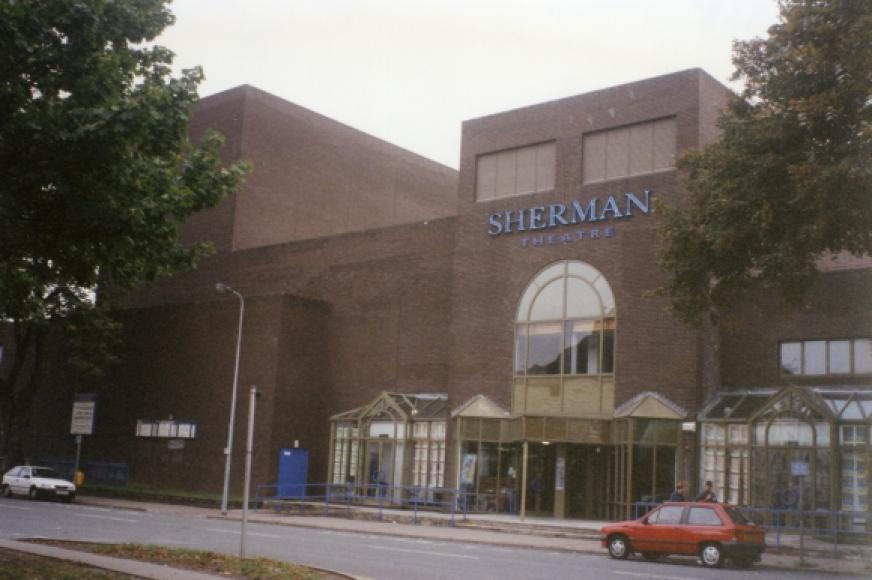
The exterior of the Sherman Theatre, Cardiff in the 1980’s
I was in the finance and admin dept but loved being around the shows. Phil Clark who was Artistic Director at that time (Phil is the Director of a play I wrote ‘Peggy’s Song’ by National Theatre Wales which is about to go on tour) encouraged us all to go and see whatever was on. It was the late eighties, the time of Willy Russell and John Godber, perfect plays for someone like me who never went to theatre. I just loved it!
I worked at the Sherman for six years, I was always hanging around the production office and started volunteering to do stuff on the shows. So I chaperoned a bit and shadowed stage management and helped out on the Sherman Youth Theatre that sort of thing. When I was twenty-four I applied to Welsh College to do the Stage Management course, I didn’t have any qualifications so I really was surprised when I got on. I stage managed for a bit and then when I had kids I started writing. I had a very tough few years personally in my twenties and early thirties and it really changed the way I looked at life. I decided not to waste any more time, I wanted to be a writer and so that’s what I did.
I’ve never done any kind of
writing course but I think just being around performance for all of those years
gave me a sense of how to write for theatre. I believe that anyone can write a
play, that’s what I love about script writing, I wish more people from
backgrounds like mine would give it a go, it’s been a real joy for me to be
able to do something that I love.
This chat is specifically
about music and the role it has played in your personal and
professional life. Firstly to start off what are you currently listening
to?
At the moment I’m listening to James Brown and Aretha Franklin. I have to choose some songs for Peggy’s Song All the music used in Peggy’s Song is by artists who have died. Ghosts that stay with us.
When I write I more often than not have music attached to the play, which the director may or may not choose to use. Before it Rains was The Super Furry Animals, Bird was Curtis Mayfield, Thick as Thieves was Nina Simone and Lose Yourself was The Commodores. Sometimes when the show has finished it takes a while before you can go back to those songs because you are transported back to the play.
Before It Rains, Bird, Thick as Thieves, Lose Yourself.
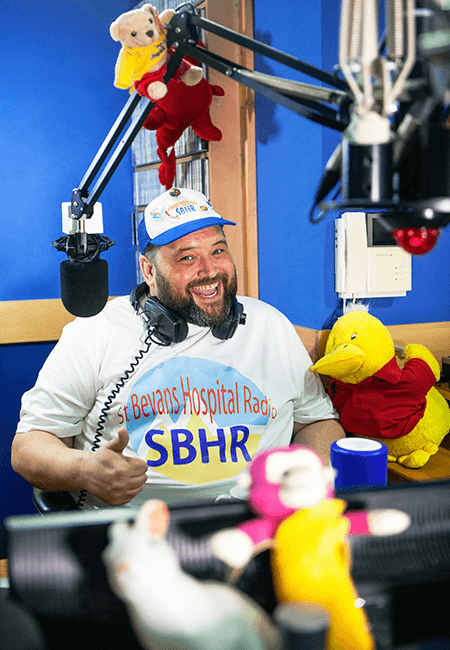
Peggy’s Song has lots of music in it because the main character Danny played by Christian Patterson is a hospital DJ.
Christian Patterson in the role of Danny, Peggy’s Song by National Theatre Wales
We are interviewing a
range of people about their own musical inspiration, can you list 5
records/albums which have a personal resonance to you and why?
Five is
so difficult but I think it’s going to come down to memories for me.
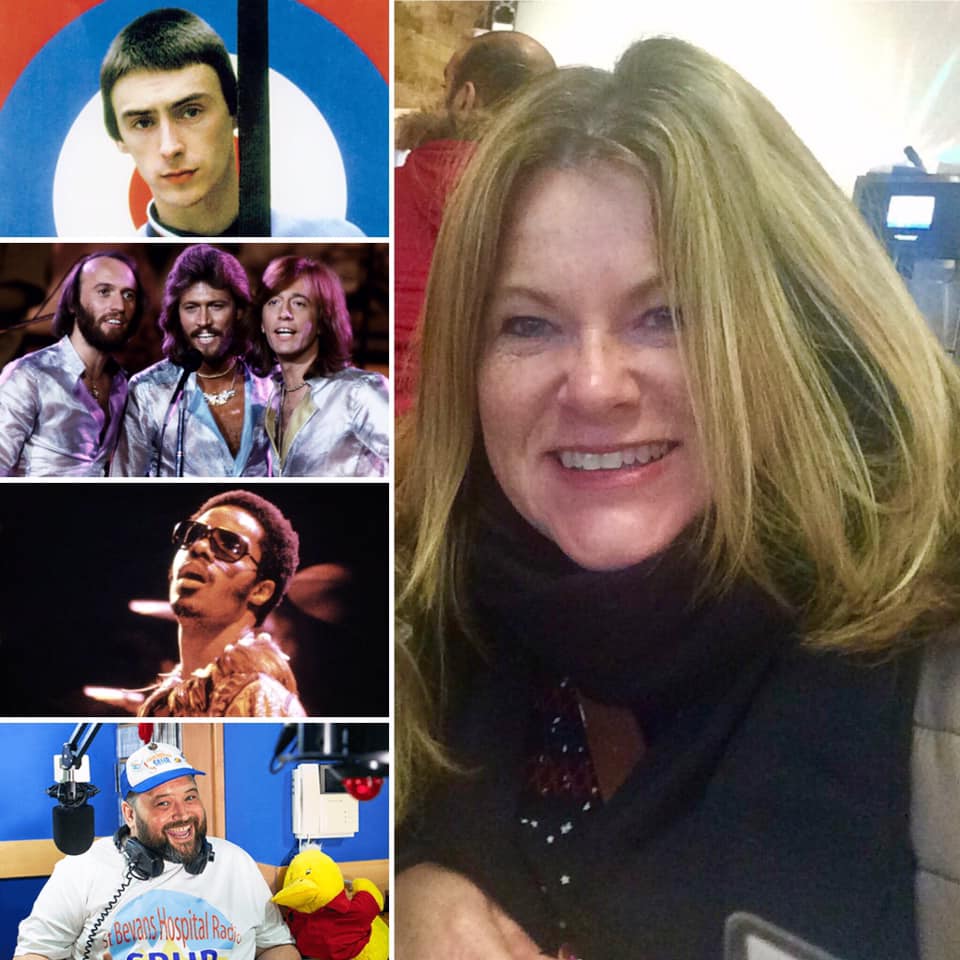
Songs in the Key of Life – Stevie Wonder
It’s a masterpiece. Everything about it, the production, the lyrics, the groove, the voice.
I could have chosen a few of his
albums because his work from the early seventies is genius, he’s up there with
the Beatles for me but this is the
album.
I don’t talk a lot about losing my sons but an interesting thing happened and this album leads me to that. In the period around and a few years after they died I really wasn’t able to listen to a lot of music. I think probably because you’re too raw and music gets into you. You put a hard shell around you, I think so you’re able to function and music was too manipulating. This was one of the only albums I listened to during that time. I remember playing it in the car a lot when my daughter was little, driving her around to different clubs and singing ‘Knocks Me off my Feet’ to her. It always makes me think of the kids being little and precious times with them and Guy. It’s a sunny day, windows open, album. Love and happiness.
https://youtu.be/RbSZeijqLTc
2. Saturday Night Fever – The Motion Picture Soundtrack
Just because it takes me back to my childhood. Family parties, Christmases’, Discos, A Benidorm holiday in 1979, my Dad, my Uncle, my sister, my cousins. We’re a family that likes to have a good time. You could rent us for a disco or a wedding to fill your dance floor to this album.
I love Disco. Donna Summer, Earth Wind and Fire, Chic, Chaka Khan, Odyssey. I have most of our disco albums from the seventies that I still play. I also love the Bee Gees but ‘If I Can’t Have You’, Yvonne Elliman is the song for me from this album, her voice is so full of full of heartbreak and drama.
3. Setting Sons – The Jam
The Jam and Paul Weller could have taken three of the five albums for me. I love Dig the New Breed, Sound Effects and Wild Wood but I keep coming back to Setting Sons.
I used ‘Thick as Thieves’ as a title for a play; it’s one of my favourite songs. Paul Weller is a master lyricist. We really felt he was speaking for us as teenagers. I think there’s a wave of working class kids who are now in their forties and fifties that hold Paul Weller in the highest regard, it’s like a club we all belong to. This album takes me back to my early teens, there was a mini mod revival. All the boys were wearing stay press trousers and Harringtons and Fred Perrys and Y cardies. Our youth club did a Thursday night disco and it was all The Jam or The Specials, The Selector or The Beat. Me and my friends Cath, Sheenagh and Lisa would go to the Northern Soul disco in the Transport Club in Grangetown on a Saturday. My love for Motown and Soul comes from that time and it’s the music I still listen to the most.
4. I Never Loved a Man the Way I Love You – Aretha Franklin
I mean. If I wanted to lose myself this is where I’d go. Perfection. ‘Do Right Woman, Do Right Man’ is the song for me from this one. Such a sassy song. She’s not asking him to do right by her, she’s telling him. I love it.
5. An Eighties Hits Compilation
I can’t decide the final one so I’m going for an eighties compilation record that has New Order, Depeche Mode, Human League, Yazoo, The Police, Wham, Michael Jackson, Prince, David Bowie, The Style Council, George Michael, Paul Young, Frankie Goes to Hollywood, Madonna, Bananarama, Scritti Polliti, The Cure, Aztec Camera, Tears for Fears, Spandau Ballet, REM, Luther Vandross, Curiosity Killed the Cat, Cyndi Lauper, Crowded House, Talking Heads, Tracey Chapman, Anita Baker and many, many more.
I wanted an eighties album. It was going to be Prince, Purple Rain or George Michael, Faith but then there’s Human League Dare and and and – so I’ve gone for a compilation. A big one with loads of songs on. Full of memories.
https://youtu.be/9LX9urfbp-A
Just to put you on the spot could
you choose one track from the five listed above and tell us why you have
chosen this?
It has to be ‘Knocks Me Off My Feet’ Stevie Wonder. My kids and Guy are Love and happiness for me and that’s also what this song is.
Many thanks for your time
Tickets for the tour of Peggy’s Song produced by National Theatre Wales are available to book below.
Riverfront Newport – 25 September, 7.45pm BOOK NOW
Pontardawe Arts Centre – 26 September, 7.30pm & 27 September, 1pm & 7.30pm BOOK NOW
Theatr Brycheiniog, Brecon – 1 October, 7.30pm BOOK NOW
Grand Pavilion, Porthcawl – 2 October, 7.30pm BOOK NOW
Theatr Hafren, Newtown – 3 October, 7.45pm BOOK NOW
Taliesin Arts Centre, Swansea – 4 October, 7.30pm BOOK NOW
Theatr Richard Burton, Royal Welsh College of Music & Drama, Cardiff – 5 October, 7.30pm BOOK NOW
Borough Theatre, Abergavenny – 7 October, 7.30pm BOOK NOW
Blackwood Miners Institute – 8 October, 7.30pm BOOK NOW
Torch Theatre, Milford Haven – 9 October, 7.30pm BOOK NOW
Creating opportunities for a diverse range of people to experience and respond to sport, arts, culture and live events. / Lleisiau amrywiol o Gymru yn ymateb i'r celfyddydau a digwyddiadau byw

 (4 / 5)
 (5 / 5)