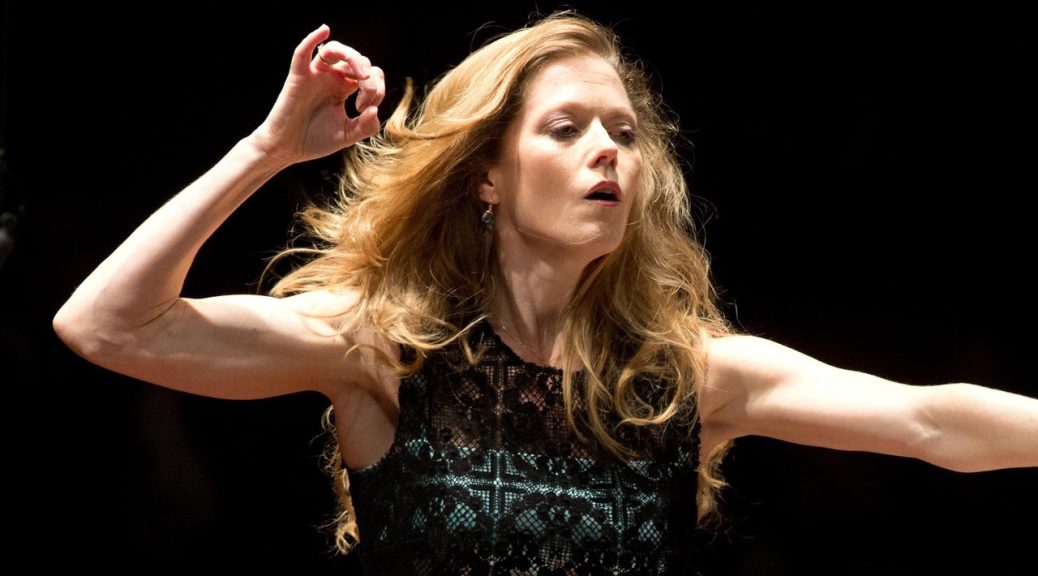
Whilst the Bristol Beacon might not be open as of yet, the London Symphony Orchestra is getting some time in the nearby Bath at their Forum. This Art Deco wonder was the perfect space for their event with singer/conductor Barbara Hannigan in a concert of Messiaen and Mahler.
In Messiaen ‘L’ascension’ we get glimpses of heaven, the brass woodwind and strings getting solos for the most part just for them. Early Messiaen is full of such promise. Stravinsky is there as an influence and you can hear the original voice soon to be blasted out, very French.
The agonising last movement remains a highlight, the strings on their own plain. My plus one said there was no reference points for him, thus proving how out their Messiaen really is, even in his early days. Dense chords and the soon to be vital birdsong features and his Catholic faith is superimposed into all of his canon. Truly impressive.
Mahler’s 4th Symphony might not be my favourite of his, yet the LSO offered a really stellar offering. I don’t quite know about Hannigan’s conducting, a singer by trade she at times appears stiff and unanimated. She appears to be doing a bang up job with the orchestra as the symphony was a triumph, the jingle bells, Austrian angst and saddened irony was everywhere here.
An hour in length, this meaty work sits between even larger Mahler symphonies and I feel this one sometimes gets over looked. Hannigan couldn’t offer us her USP for the night, where she both sings and conducts simultaneously, due to illness. Though a shame, the ‘child in heaven’ solo for the finale was taken by Greek wonder Aphrodite Patoulidou wrapping up with the touching, joyful thrill that mirrors Mahler’s own grief. I was rightfully won over by this Mahler.
This show had a highly regarded reputation and an amazing preconception, so I had high expectations going into it.
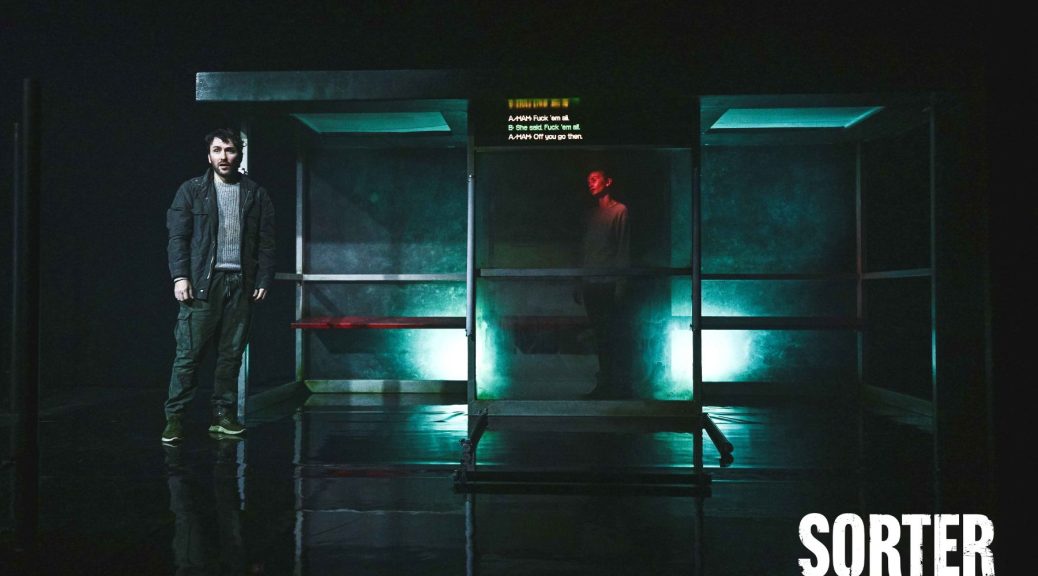
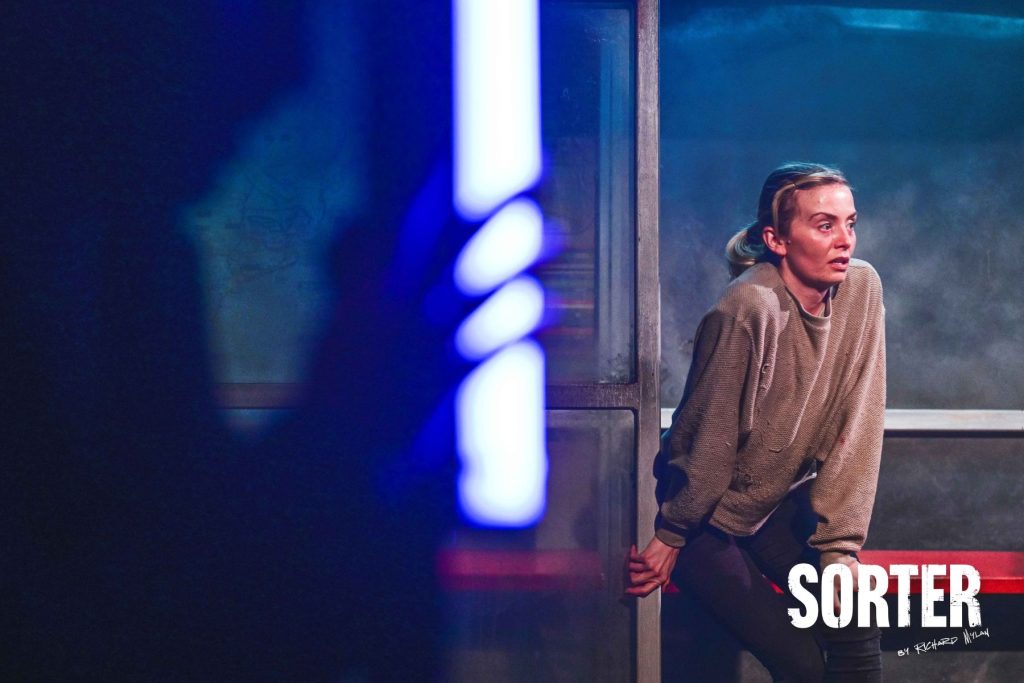
Let me set the scene. When you enter the sold-out performance space, it’s with excitement and anticipation in the air. There are smells, and alternative pop music being played. A bus stop is in the middle of the stage, with about nine black poles dotted around it, and an electronic screen in the middle of the bus stop displaying places in Swansea and times. The screen showed drug terms and definitions before the play started, such as “chasing,” “methadone,” “tick,” “weighing and bagging,” “chasing the dragon,” and “sorter” (which I hadn’t realized until now was a drug term; it means using a drug as payment for work instead of money). This was cleverly used for setting the scene, and these were the terms the performers used in the piece. If you remembered what some of these terms meant, you could understand it when they used them in the piece. The electronic screen was also used to show captions during the performance, as Friday night’s show was one of the captioned performances.
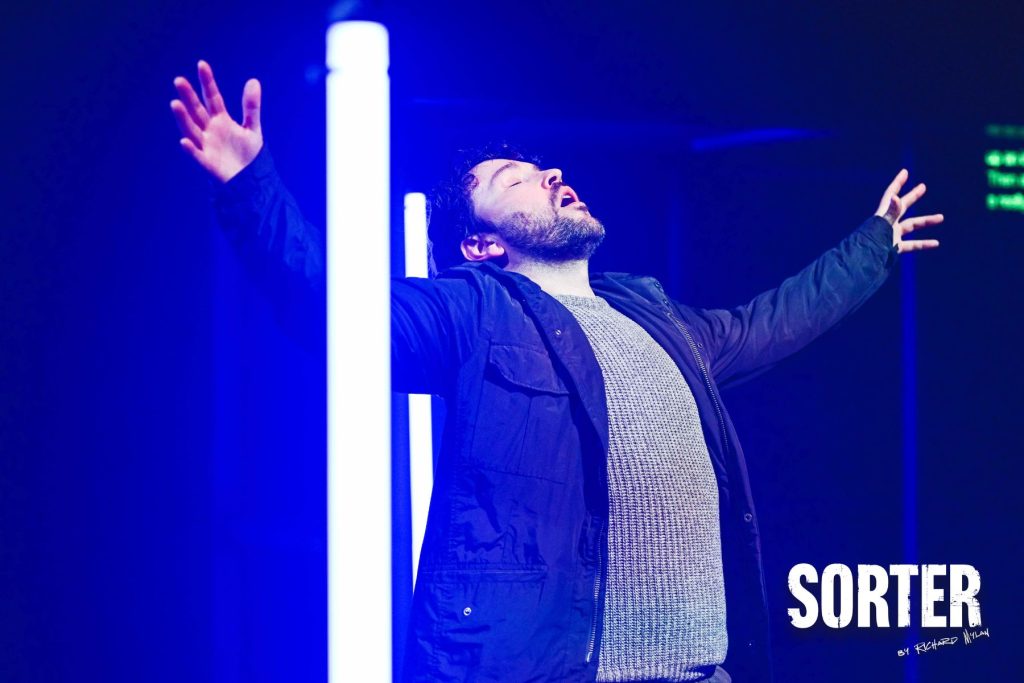
There was an orange light from the left corner, a purple light from the right, and a blue and a green from respective sides of the bus stop before the performance started. The performers used colour so cleverly during the piece, and they had multiple magnetic lights that they would take at different points and put them on the poles to set the scene for what they were describing, as the set was minimalistic. For example, for one scene when Richard Mylan is describing “memory 3,” with a guy named Ernie and a gas fire that he, when he was younger, was getting warmth from, they took a light to that pole, and the light was a warm orangey glow like a fire, to help emphasise the scene for the audience. There were also lights behind the bus stop. An excellent example of the riveting nature of the piece is the use of seagull noises in the background, such as when Sophie Melville’s character gets a view of Mumbles. At another point, there was an electric spark and a heartbeat that kept getting faster. There are many ways in which they use lighting and sound cleverly to envelop the audience into the story.
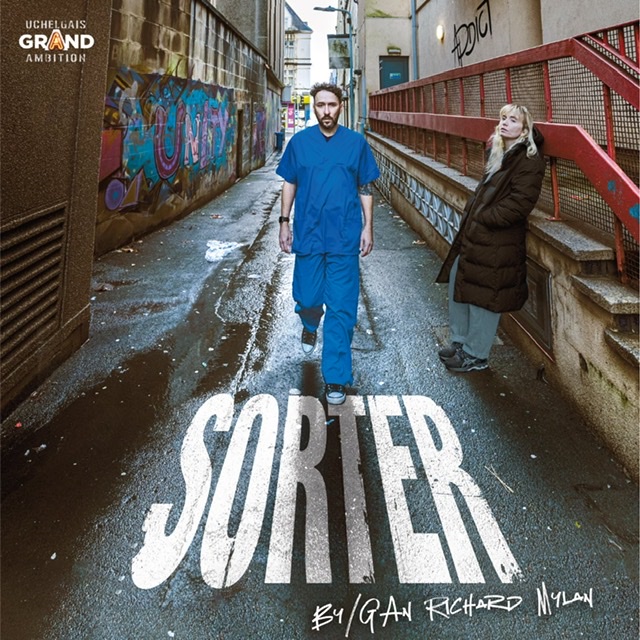
It is very fast paced, as Richard Mylan will tell his story, and then Sophie Melville will continue with hers, and it goes back and forth throughout, so you have to try and remember what happened in each story. “Sorter” was about a nurse who got addicted to morphine, and he was a high-functioning drug addict, which is based on Richard Mylan’s (writer and actor) life. Sophie Melville played a character who was addicted to drugs, and her boyfriend was also her drug dealer. “Sorter” was an astonishing and impressive piece. It was immersive, with moments of laughter amidst the darkness, and you really felt sympathy for the characters.
It made you think retrospectively about how harshly you judge homeless people or people addicted to drugs, when many factors go into becoming addicted to something. As Sophie Melville’s character says in the piece, “they are almost impossible to get off” [paraphrased], and a lot of factors go into becoming homeless. Who are we to judge these people when they don’t get the help they need? It was eye-opening and shocking but a must-see. You had to see it in the Grand Arts Wing because you had to be in thrust and a small stage to feel close to the characters, feel sympathy for them, and understand them. Also, there were lots of references to places in Swansea, one being when Jess, Sophie Melville’s character, climbs up on the ladder behind the bus stop and talks about how “people like her don’t deserve to have such a breath-taking view of the Mumbles and Swansea, living in Mayhill” [paraphrased].
Richard Mylan and Sophie Melville are exceptional and tell the story so well that you wish you hadn’t missed it.
It’s amazing to see some fine musicians get to Cardiff, so many don’t. Going around St David’s Hall I was stunned some people were not going in for the warm up act, saying they are just here for Vega. This opening act being Sam Lee, I declared those who didn’t come in for him as fools. I recall Sam from his immaculate set at the Queen Elizabeth Hall back in 2019, his love of all things folk and nature remains the eternal muse. Whilst that fine late night concert would offer up a live stream of nightingales setting down for the night, this warm up was a treat of folksy ballads, Sam’s buttery voice doing laps around the melodies of these sweet, old song from the British Isles. His sweet persona is infectious and his encouragement of a singalong needs little energy in the Welsh capital. A joy to see and hear him again.
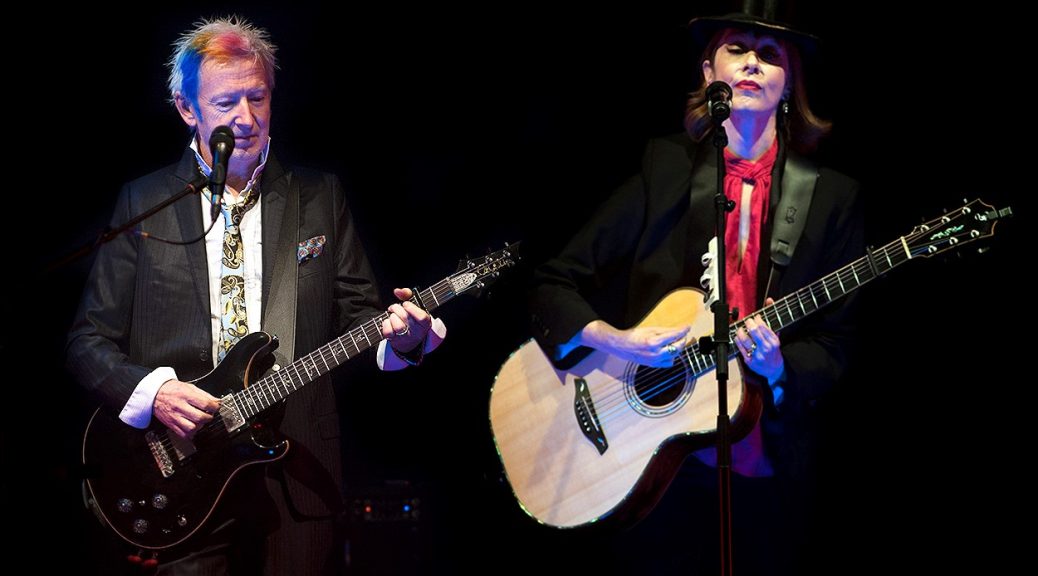
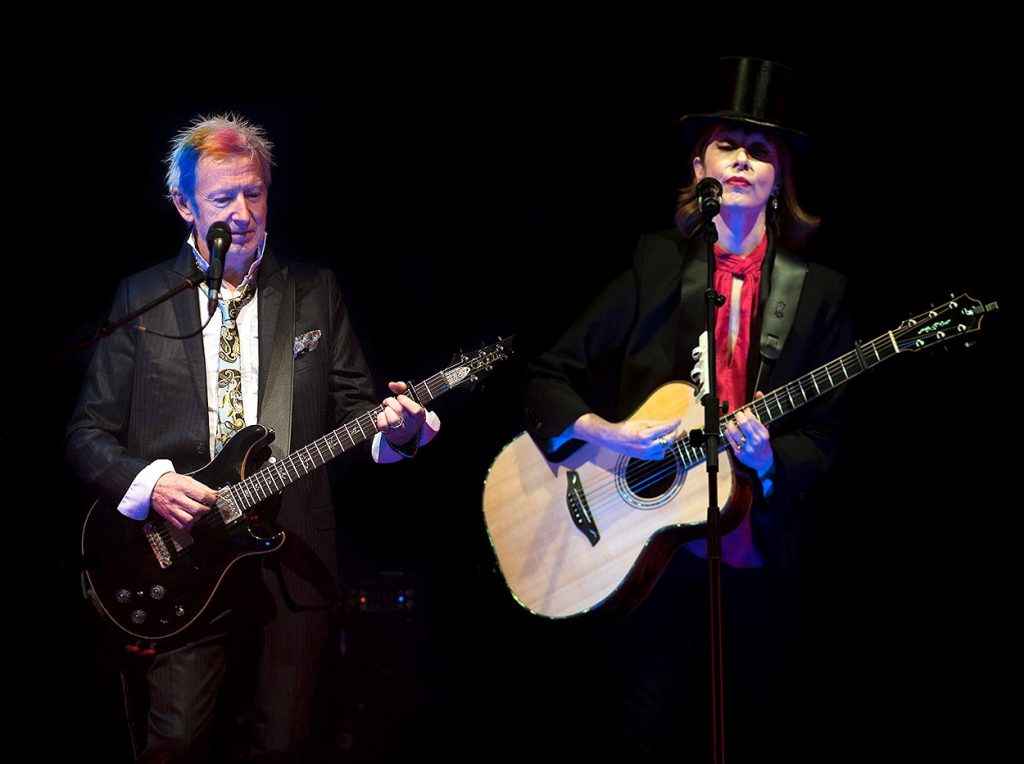
Suzanne Vega is know for a few famous songs, though there are other jewels to be mined. Though perhaps most famous for ‘Tom’s Diner’ (one of our giddy encores for the evening), a strident song about a very precise instance in her life. I’m so glad she sang ‘Luca, an incredible touching, full on 90s song about a little boy who is abused by his family. It tugs the heart and still though remains funky. Ever the poet, Vega declare her love for Leonard Cohen and other influences, the song writing capability a fine thing to hear.
Gerry Leonard joined Vega as backing bassist, the sole accompanist on stage and one of immense talent and of subtle impact. The lack of synths and drums made this large, St David’s Hall concert feel rather intimate. It is Vega’s homely nature, her warming appeal and conversational voice that just makes all of us feel calm and contented. Finding ways to describe her voice, it seems there is a uniqueness and familiarity. Perhaps best known for ‘Marlene On The Wall’, an almost country ballad and pop delight with a soft and wide chorus that most should hopefully recognise.
Vega delighted us with attempts to speak Welsh, with some livid fans shouting at her how to say things correctly. Her returning to Welsh later on almost put me in a coughing fit, her humour is quite dry yet open. Stories of past lovers, who then (of course) become songs are treasures, words from her mum and some quips from legend Lou Reed all pepper the evening, though I wouldn’t quite say the evening could be billed as both songs and stories, the former the bulk of the show, as itself.
No one quite does it like her.
Suzanne Vega continues on tour around Europe and the United States
Another centre to the Royal Academy in London would see a huge show with a massive scope spanning centuries for the art of Spain. There was a lot to get in here and I dare say I think a good three hours (consider a break in between) would be advised to drink in its entirety.
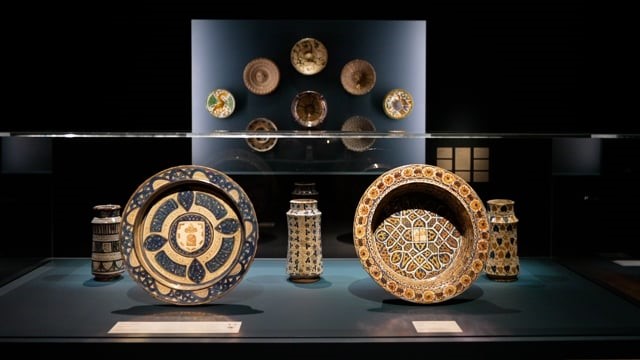
We start with the Bronze Age and Roman finds from Spain, though there a only a few items on display. A headless statue of Diana, goddess of hunting and the moon is one curiosity, the other an astounding pair of trullae, large silver spoons two thousand year olds and in phenomenal condition. Later rooms would feature the influence of Islam and the Moors, textiles becoming mainstream with intricate detailing and fine craftsmanship. Larger and larger bolts would also prove popular with wonky animals and more elaborate patterns, though this gradually grew overdone.
A dog door knocker possibly from Galicia excited one of my friends from the area on Messenger, I also noted that the map of Spain upon entry, only listed some cites and regions and not others. What did, wow were the coloured busts of saints, both the fine artistry of Juan de Juni and Pedro de Mena whited gleamed in their light and candid ecstasy. Even more amazing remained the Polychrome wooden busts of Christ and the Virgin Mary by Andrea de Mena and what remained a highlight of the whole epic show. Mary even had eyelashes…I remained floored by these two creations.
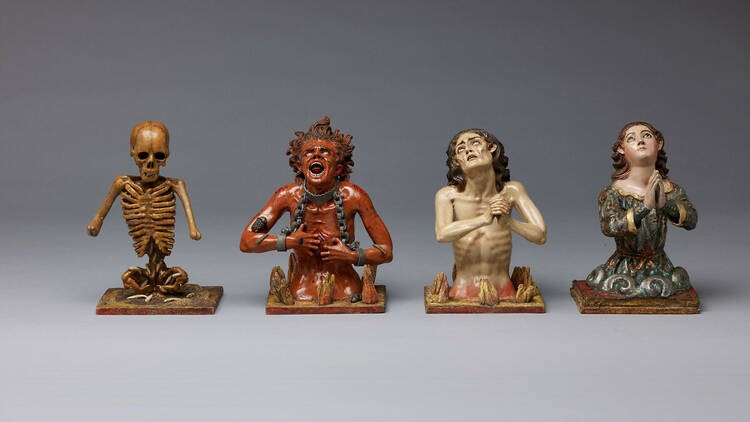
Work from their empire in the Americas would see a dazzling aqua lion water kettle, vivid plates and a statue of an angel so dramatic it somehow appeared Asian in design. The smaller things in the show would prove the triumph with ‘The Four Fates of Man: Death, Soul in Hell, Soul in Purgatory, Soul in Heaven’, attributed to Manuel Chili (called Caspicara). You can just feel the shame and guilt these little half bodied figures would install in people back then, their death metal appearance is still vivid all these years later. Some classic, conventional Goya portraits are also a delight, though I did crave some of his more twisted, unsettling works.
Many pieces do obviously feature religious subjects, more specifically Catholicism and we can see this grip loosen as the empire dies down, after looking at some famous maps of the Americas and Europe. Velazquez still has a pull over an audience all these years later, his portraits command the space. ‘El Costeño (The Young Man from the Coast)’ by José Agustin Arrieta sees a young man of colour who was possibly a slave, holding an abundance of tropical fruits, a decent painting loaded with more than you think.
The work of Joaquín Sorolla moved with it’s watery impressionistic beach scapes, really lovely just to look at. Contrasting this in the same space was Ignacio Zuloaga disturbed with ‘The Penitents’, dark and moody, blood everywhere. The show ends with a sketch of one of Sorolla’s murals ‘Vision of Spain’…but the question remains…where is the art that came out of Spain since these painters? We are talking over a century of work which has been completely ignored for perhaps a safe choice of not going into Modernism and other movements. What about Picasso? Dalí? Joan Miró? This remains a shame as it could have crowned the exhibit with a final flourish.
I’m usually in London for theatre and concerts. Yet, there was an unmissable chance at the Southbank Centre to see Bernie Sanders live. The man who ran for U. S. President twice and remains the longest running serving independent representative in congressional history has a reputation like no over.
There was a very brief window to meet him at a reception beforehand. I may have had the privilege of being the only person at the event to get a copy signed of his new book: ‘It’s OK To Be Angry About Capitalism’, a review will soon follow. I shook his hand, as ever an honour and he had to shoot of to the main event after a little speech just for us as guests, his wife, some family and even Jeremy Corbyn in attendance. In his talk, he dazzled us with home truths about the deep troubles in his own country and on these shores. This post mortem asked us “Where do we want to go in the future?”. Strong words, indeed.
To say I’m a fan of Bernie is a huge understatement. I found even my host in London had a lot to say about the man, all highly critical and disparaging. His ideas, though old in some respects now, have only ever made people get the chance in life, the right to healthcare and as Americans love to say…“the pursuit of happiness”. I think he knows himself the baton has been passed on in these views and ideas, yet Bernie who is now 81 is still full of gusto.
The galvanising political spectrum we’ve all been lost in the past few years has only emboldened enemies of Bernie and his philosophy. Taxes are always the word in his mouth, I think most people can agree the Musks, Zuckerbergs and Bezoss should lift their wallets more often. He also spoke highly of the NHS and in a rather touching moment glowed about our Nye Bevan. The NHS may have its flaws, but we should be thankful for it in the end. He even encouraged younger people to consider getting into politics, something which is happening more now.
Interviewed by writer and academic Emma Dabiri, the evening strolled along nicely with a laid back feel. Bernie even wanted to stand for the first part of the interview since he was as he said, used to doing it that way. There was so much to take in during this discussion, oligarchs, Ukraine, wages, social media and more all popped up. I love Bernie’s frank, no nonsense approach to these topics. He happily gets to the root of these problems and the reasons for them, it’s very refreshing from some one who has been in politics for so long. We simply need more people just like him. It has to happen.
I really do wonder how the world will be after the pandemic, energy and bills crisis, strikes, the ugly return of sexism, homophobia, racism and transphobia, amongst many other fears. I feel Bernie who delighted this Festival Hall audience and live stream viewers the strength to keep going in both life, work, beliefs and everything in between.
I left London with worries, yet thankfully a lot of hope about the future.
Thank you, Bernie.
Watch the stream for free till 2 March 2023.
It’s OK To Be Angry About Capitalism, published by Crown Publishing Group/Penguin Random House out now in all good book shops and to order online.
Just over a year ago, I attended The Da Vinci Codeat Theatr Clwyd. Although I enjoyed this production, I felt that the book simply didn’t translate well to the stage, mainly due to the amount of detail included in the plot which there just wasn’t time to delve into in two hours. However, the same certainly cannot be said of The Shawshank Redemption.
Based on Stephen King’s 1982 novella Rita Hayworth and the Shawshank Redemption, this production examines topics from injustice to friendship and most notably, hope, in a place where the word ‘hope’ seems impossible: Shawshank Maximum Security Penitentiary. The 1994 movie starred Tim Robbins and Morgan Freeman and was nominated for seven Academy Awards. Among the movie’s fans were stand-up comedians Dave Johns and Owen O’Neill who realised the potential for Shawshank as a theatre production. The Gaiety Theatre in Dublin, where this current tour will end, agreed, and an adaptation of the original novella was first produced there in 2009. It then transferred to London and the adaptation was rewritten and put on in Edinburgh in 2013, with its adapters co-starring alongside Omid Djalili as Red.
For those not familiar with The Shawshank Redemption– it tells the story of Andy Dufresne who, despite claiming to be innocent, is given a double life sentence for the brutal murder of his wife and her lover. Incarcerated at the notorious Shawshank facility, Andy strikes up an unlikely friendship with the prison ‘fixer’, Red, and as their relationship strengthens, things seem to be looking up. However, when Warden Stammas decides to exploit Andy’s talents for accountancy, a desperate plan is hatched.
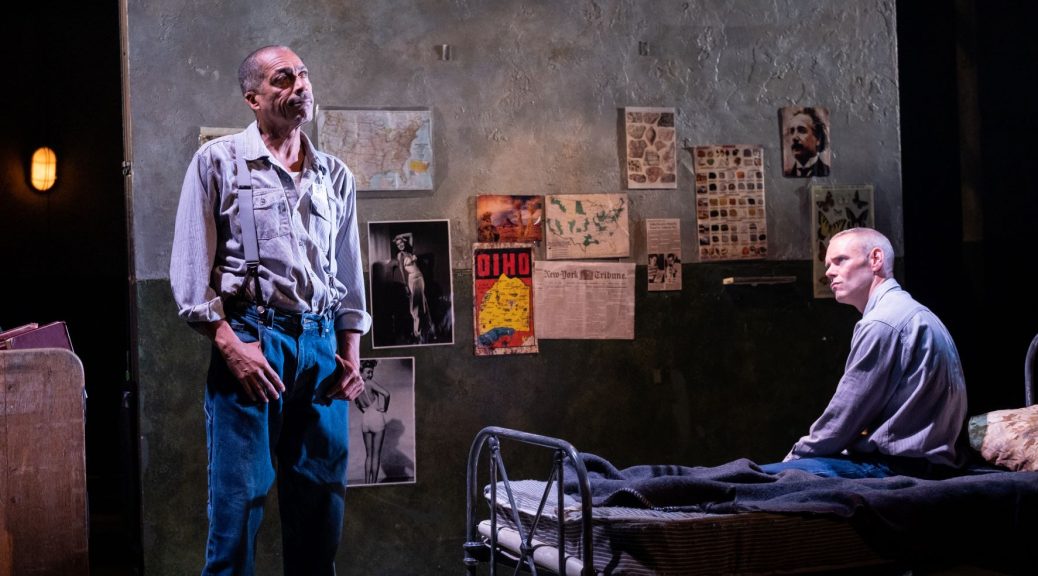
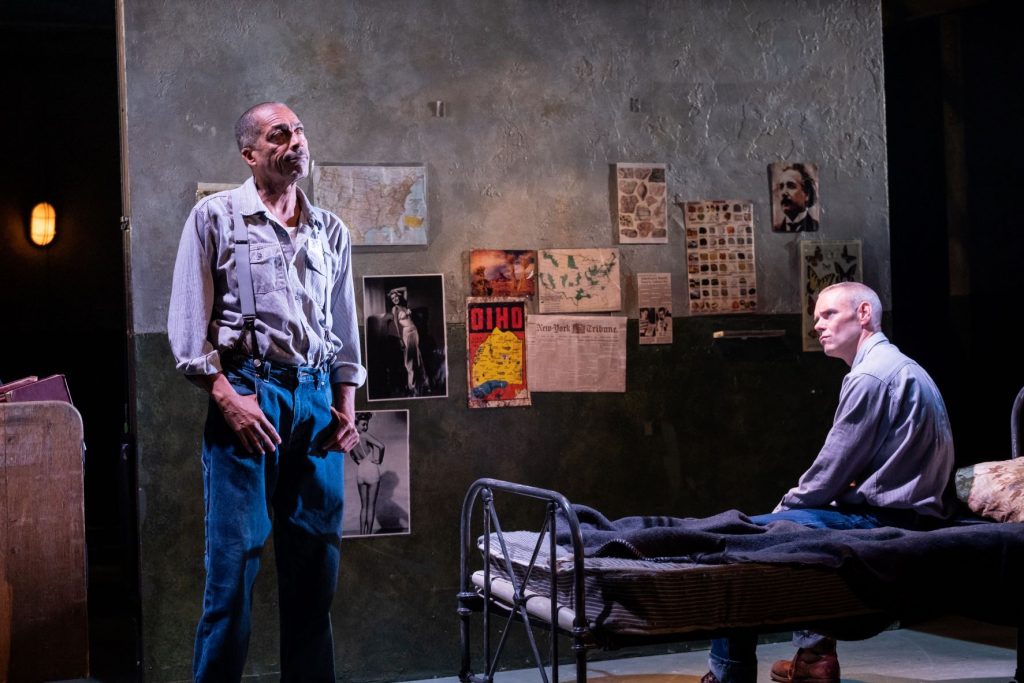
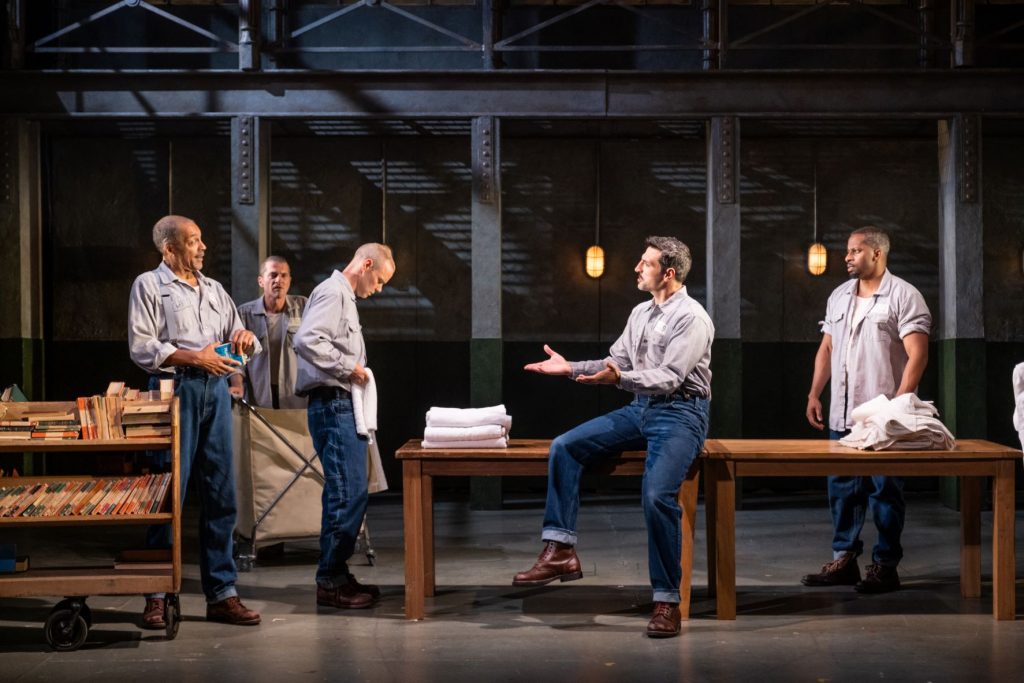
As the play begins, we are transported to the penitentiary. The set is simple but extremely effective with the prison walls surrounding the stage on both sides and upstage, allowing for a feeling of claustrophobia throughout. The main bulk of the set remains, but as the story unfolds, each scene is set within the walls: a postered wall and a bed for Andy’s cell, a desk, chair and wireless for the warden’s office, a long mess table and chairs for meal times. The transition between scenes is flawless, with the actors completing all set and prop movement seamlessly. Most scene transitions are also marked with a prison siren or alarm to signal a new location or place in time. The fluidity of the piece is extremely impressive, the action narrated by the character Red, portrayed perfectly by Ben Onwukwe. Red speaks directly to the audience, often regarding sensitive prison topics such as gambling, rape, corruption and so on, and he draws us in, allowing us to empathise not only with him, but with other inmates at Shawshank so we better understand life within the walls- we are allowed on a journey with each character over the course of the ‘twenty years’ we spend with them. And it’s not without a great sense of humour and plenty of comedic elements. Also noteworthy is
Red’s final monologue which he delivers as he completes a full costume change, reflective of his character’s change from despair to hope. A ‘changed’ man?
Joe Absolom’s Andy is the perfect mix of kind, compassionate, determined, if not a little arrogant in his own self-sufficient way. Absolom provides the character with just enough ‘crazy’ to have you questioning his every move. Consequently, even those familiar with the story begin to question the outcome! Credit must go to the lighting team- providing an appropriate atmosphere throughout. From the spotlights on the new ‘fresh’ inmates at the very beginning, to the effect provided for Andy’s fluttering butterfly at the end. Lighting is also used effectively to depict the men watching a Rita Hayworth movie, giving the impression that a projector is being used, as well as for scene transitions and instances of violence which are cleverly choreographed alongside appropriate light and dark moments.
Dave Johns and Owen O’Neill were certainly spot-on in believing that The Shawshank Redemption could work well in the medium of theatre. The prison setting makes for a fast paced, adjustable, well thought out production, which shifts from scene to scene effortlessly. With the addition of successful sound, lighting, costume and a fantastic cast, this is a must-see production.
The Shawshank Redemption continues its UK Tour on March 6th at the Belgrade Theatre in Coventry and finishes on May 13th at the Gaiety Theatre, Dublin. Head to the website to book your tickets:
It was a full throttle concert with the London Philharmonic Orchestra, with Thomas Adès in both conducting and compositional duties. It would prove to be a bookish evening of Shakespeare and Dante, the latter in my opinion needs to become more of a resource in this country.
Finnish composer Sibelius wrote incidental music for Shakespeare’s The Tempest and it proved to be quite daring. It pushed boundaries and had a lot of spark, the composer’s talent’s heard in all his music. The joyous, rompy moments are met with more serious mystical bouts, the orchestra in their element here. Following on was the UK premier of Adès’ own The Tempest Symphony taken from this opera of high regard, now in the repertoire, last seen in Milan in the winter. I’ll confess I’m more intrigued by the opera, as a whole when I get to hear it sometime. It’s more of a suite like the Sibelius really. It had some dynamic flair and thrill, though it leaned on a heavy amount of neo-classicism, which is fine in equal measure but still.
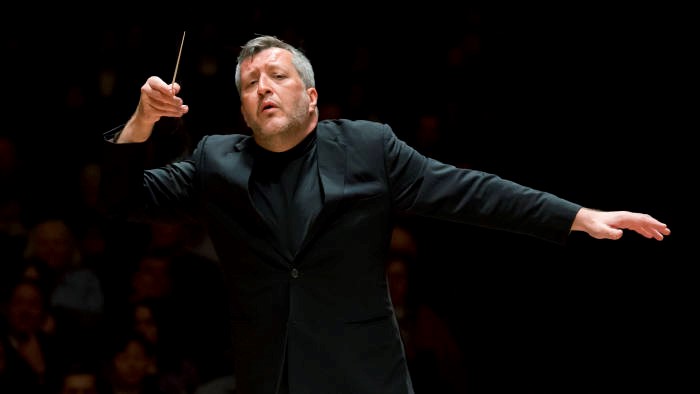
Adès conducts quite aggressively, his rugby build and now fashioning a silver fox look, he could be terrifying on the podium. He has moments of maestro fury, with the result from the players less dramatically offered. Though he does know his music so I do expect a bit of bravado. He swoops around the players, making all too sure the little intricate moments are delivered well. Starting with Dante, his Inferno Suite (being a newer work) might have been the real highlight of the night. Vividly detaining those who suffer in the layers of hell: The Selfish, The Popes, The Hypocrites and more the orchestra explodes into a sort of monster form. The massive tonal shift into a more circus like phase left the audience in applause, assuming it was the end. It wasn’t. The final blow was the evocative Satan in the lake of ice, where the composer wants us to feel sorry for him. The quivering strings and other treasures wrapped up what should remain one of Adès’ more recent classics.
We had not left the damming clutch of Dante just yet, as we had Tchaikovsky’s Francesca da Rimini. This ‘Fantasy after Dante’ is a lesser known work. This music the Russian composer proved to be a sensation. Francesca is being punished for her adultery and she is forever faced in darkness as her body is swept around by storms…one can’t deny Dante his originality in his cruelty. Having wanted to write and opera and failing, the composer’s brother Modest suggestive an orchestral work and what stands out most is the innovation. The late romantic trappings are here (as ever) though Tchaikovsky seemed to latch onto to doomed figures in literature, his own marriage a complete disaster by any means.
I think it’s time to hear Adès’ Tempest proper now and of course more great music of his.
In what should be my last trip to London for a while, started off with a wonderful concert at the Barbican. The London Symphony Orchestra on a chilly Sunday night, offered up Schubert in his work for stage and also the church, alongside a curious concerto.
Schubert’s music for the play Rosamunde, Fürstin von Zypern by Helmina von Chézy flopped massively upon first outing in 1823. Though the play itself is lost, the fabulous score by Schubert remains, having been found again in the mid 19th century. Even with the recycled Overture and the Entr’acte to both Act 1 and 3, the music never feels choppy, their is a wonderful symphonic quality, a breezy melodic charm as well. These pieces proves Schubert talent in writing for the stage, his reputation more known naturally in the concert hall. Even the final few bars with the string quartet had a touching, discordant quality to it. The whole encounter was a true delight and one of the more interesting Schubert that I wasn’t aware of. It simply remains a delight.
2018 saw the centenary birthday of German composer Bernd Alois Zimmerman. Though the big celebration that year was that of Leonard Bernstein, Zimmerman is proving to be a composer of worth, one well worth searching out. His Oboe Concerto is a strange, brief affair. Soloist Olivier Stankiewicz stood out as a highlight of the evening, the instrument transforming all sorts of phases and extremities. He even had to disconnect the main part of the oboe before the last movement, the demand of the piece proven in moments like this. There was a mirror shattering orchestration, the oboe cries and shrieks and the feature of piano, harp, celesta and wood percussion also nice touches. It never ceased in it’s formidable inventing nature, it’s unwavering goal for expression and new pastures. More Zimmerman is inevitable.
Back to Schubert, his 5th Mass got together the formidable forces of the Symphony Chorus as well as the four soloists: Lucy Crowe, Adèle Charvet, Cyrille Dubois. This three quarter hour mass is a fair piece, it has some stellar moments for the Horus and soloists, who both equally shine in equal measure. Conductor Francois-Xavier Roth skipped and bounced all evening, his love of the music never faltered, his masterful calibrations for the players and singers helped make this a beautiful concert. Whilst I found the Mass of less interest than the rest of the programme, it did prove a fine feature and a sacred work which should have more public ears upon it.
To think I almost didn’t come and see this glorious concert.
Ever the one to try something new, The Music Box looked like a fascinating attempt to honour the work of the band Genesis. This is a new one for me, I was sat amidst die hard fans and veterans of the era. It proved to be an exciting prospect that I was down for.
The evening started with a slump. I doubt anyone sat in this audience wanted to watch a 20 minute documentary about the stage effects of Genesis’ live shows, though it did give a glimpse of some of the Polaroid snaps not used in the live show. It did feel quite cheeky to pop this little doc on and then have an interval, only for the main two hour show to end at an eye watering late 11pm. Ditch the video stuff, get drinks in before the show and stick to a prompt 8pm start and you’re laughing.
Overlooking this discrepancy, the main event was a bizarre, thumping thing to behold. The story of Rael, a young lad living in New York City and the strange adventures he finds himself lost in remains pretty abstract. I wouldn’t say there was a clear through line in the story, more so a chance to embrace sexual liberation, consumerism, nature amongst other big topics. A lot of the chosen imagery proves it as a period piece, with some questionably misogynistic material. Though a lot of the chosen video works sees broad strokes of Dalí, Hollywood film posters, lithographs, collages and saves of other sights.
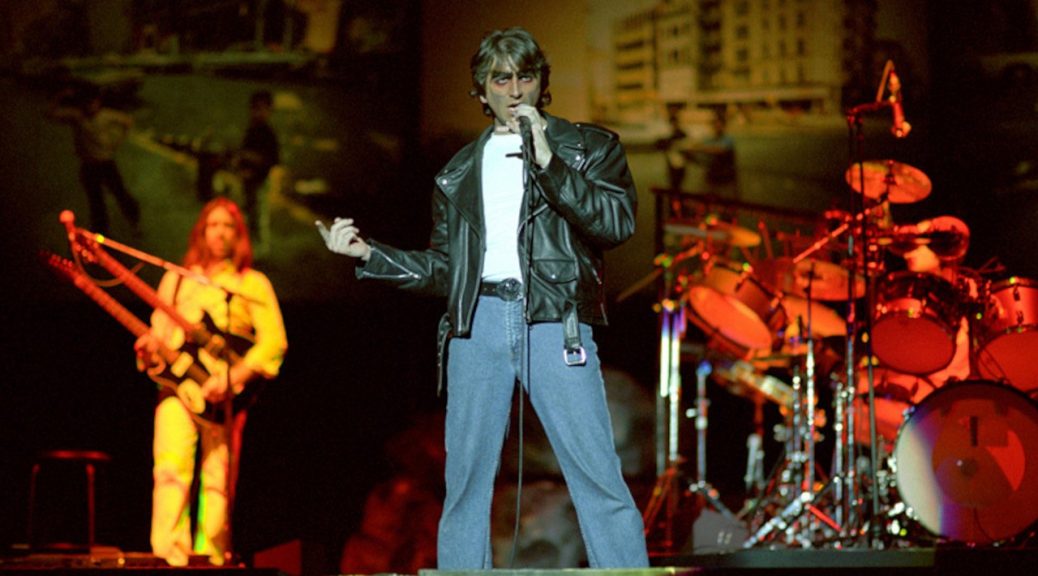
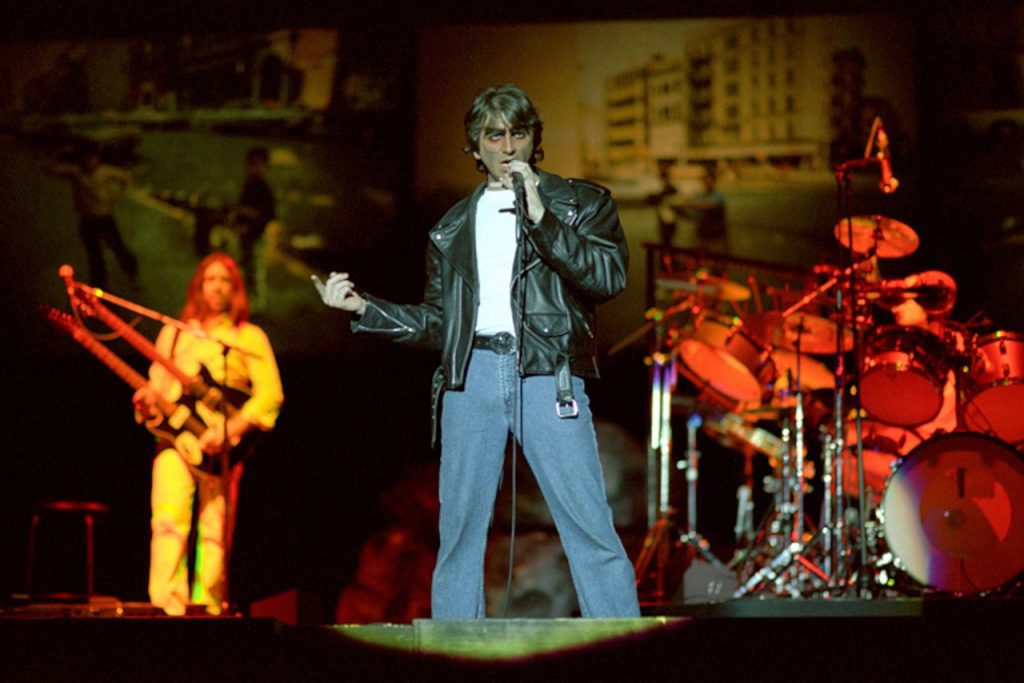
Musically, it’s quite appealing though I personally wouldn’t say any song stood out enough to be a classic. The title track was funky and so much of the album blazes with mind-bending stylings its hard not to like. The Musical Box seem to transgress the idea of the tribute band and deliver something so genuinely authentic you’d think they were the real deal, Peter Gabriel and Phil Collins from the band have expressed their love. Denis Gagné as the vocalist, gets to keep up a lot of energy and the vast variety of the vocals. He excels taking on what was Gabriel’s part in the original album and show. The band as well deliver some feats of pure thumping rock and a choice section of other genres. They never waver.
Many surreal moments abound. Denis as the Slipperman see’s him birthed through a suggestive tube, his costume to showcase deformity and disgust. A strange song to say the least, though the multi costume changes offers the original clothes from the classic show. He also gets moments out of Trash Humpets and hammer horror in masks and dress, these moments giving off glam rock vibes.
Even with the late end and often lack of a conventional story, the show was a success. Though I think I should leave it to the fans of the album to really savour it. More chances to see The Musical Box are a must though!
A return to Cardiff saw little time for respite. I’ve also made the discovery that more cafes are starting to become more hostile to those with laptops, limiting the time you can have on yours and asking you to move if you are taking up a table for 4 people (fair enough for the latter). As a journalist in need of such spaces, this could easily be a whole article, though it was a bit of a ropey start back to the Welsh capital.
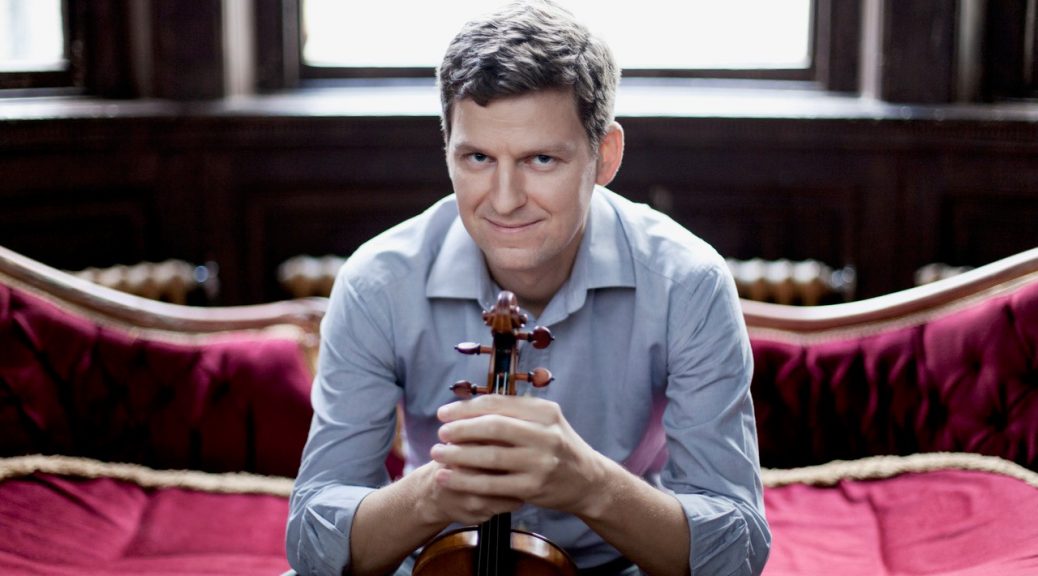
With this in mind, I ventured back to what will hopefully remain the main venue in Cardiff for classical music. BBC NOW making a Sunday afternoon slot with German and French programme of concerto and choral works. Canadian James Ehnes faced Brahms’ Violin Concerto with a strident force and grace. It’s not one of my favourites, though the pain and concentration upon his face when not playing was of note. I find the final movement gives the piece a lot more of worth, the German command the music has is not always exciting nor stimulating. It does little for me, though Ehnes brought out a lot of the majestic qualities the concerto has, again the last part being a final flourish of string playing with panache.
The Chorus got a brief little solo with Olivier Messiaen’s ‘O sacrum convivium’. They shone here, this hushed five minutes one of the composer’s smaller works though still with a big impact. Messiaen’s mind blowing music stands decades and here is a calm, gentle little number in F sharp major. As a full blown Catholic, Messiaen was asked to write this setting from the words of allegedly St Thomas Aquinas and this fine little work premiered in 1938. Playing with chromatic harmonies, the glowing nature of each bar is some of Messiaen’s most accessible work, the rest being long, dense and explosive. Fine stuff, conductor Ludovic Morlot excelling in both orchestra and choral features throughout, generous to both parties.
Now for the crowd pleaser. Fauré’s Requiem remains Classic FM fodder, your nan’s favourite choral work (I did pick some for my own nan’s funeral to be fair) and featuring in the odd film and advert. It’s a type of the French style of music we know and love, but it remains the mawkish nature of most of it. The perfume and prettiness which goes against it did give the chorus some fine moments, Rhian Lois in the sublime Pie Jesu felt more like a mezzo at times, bass-baritone Neal Davies always decent in his mournful declarations here. Organist Gregory Drott getting some marvellous ethereal moments of harmony with the chorus, yet not featured enough. You can love it and you can hate it. It depends on this critics mood, I’d say.
Creating opportunities for a diverse range of people to experience and respond to sport, arts, culture and live events. / Lleisiau amrywiol o Gymru yn ymateb i'r celfyddydau a digwyddiadau byw

 (4 / 5)
 (5 / 5)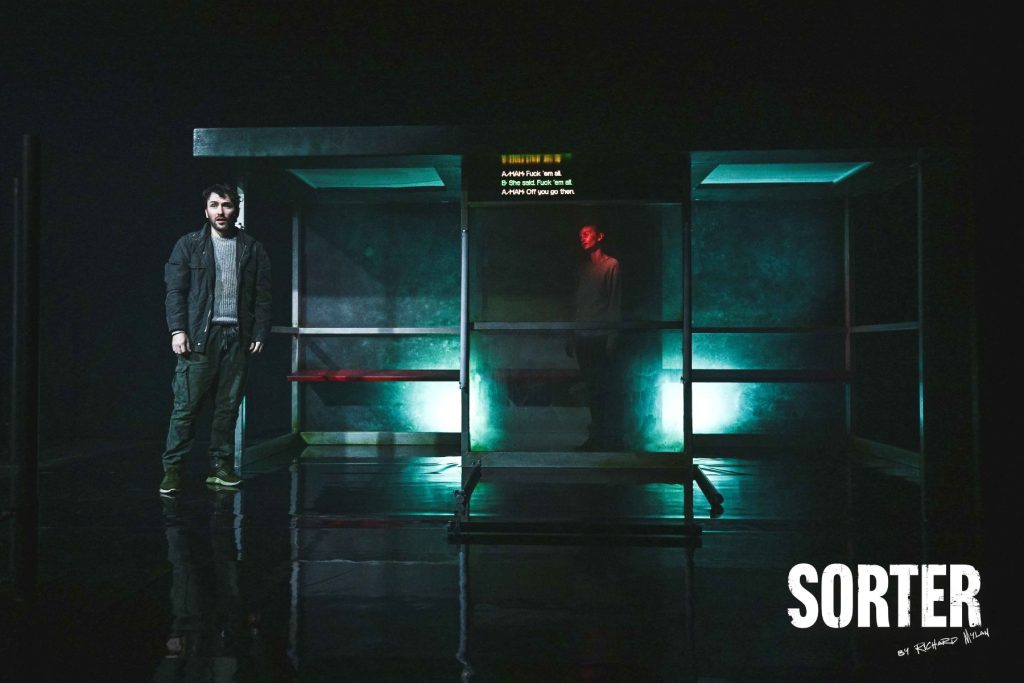
 (3 / 5)