
All posts by admin

Review, ENO, The Barber of Seville, London Coliseum by James Ellis

Photo credit: Clive Barda

 out of 5 stars (4 / 5)

A strike action from the chorus and orchestra of English National Opera would halt my plans to see their amazing Handmaid’s Tale once more. I’m all for their fist raising and standing their ground. They have been through a wringer for some time and it is simply not fair.

In a revival of the marvelous Jonathan Miller, sharply done now thanks to Peter Relton, this classic, faithful Barber is a delight. It’s touching to see the company who have only ever given their all do a piece like this, which is one of the opera world’s most cherished jewels. Rossini takes the famous Figaro story and turns it into a marvelous encounter. The arias are fun, the humor still holds up and the story still grabs.

Conductor Roderick Cox makes the orchestra glisten. The bouncy nature and telling melodies are all brought out on display here. Count Almaviva is Innocent Masuku having fun and is vocally grounded, his past with ENO noteworthy. Charles Rice is a fine Figaro, not the best I’ve ever heard but he looks the part and his comic timing is race car swift as expected. Anna Devin as Rosina, the wealthy heiress is perfect and her arias are a treat of the evening. Her costumes from Tanya McCallin are finely crafted and could easily be seen in a Seville of the era. Curiously I expected to see a few fans in the show, or at least one on Rosina. Perhaps too expensive?

Simon Bailey is in turbo mode as Doctor Bartolo, Rosina’s guardian and foil to the Count in stopping him from courting the young lady. Some great inflections and slapstick made the role great and his voice is balletic for his absurdly quick aria. Don Basilio from Alastair Miles gives off something of the Child Catcher, with a ridiculously large hat to boot. His own aria, arguably the best out of the whole opera, is also a thrill and his presence added to the wit, especially when mucking around with Bailey. Berta, the maid, is from Lesley Garrtett. Though mostly in one half decent aria, Lesley lost some of the tune during the high bits. A minor blip in an otherwise fabulous offering. The hair raising end of act one was worth the trip alone…go and support ENO!!

The Barber of Seville runs at London Coliseum till 29th February 2024

Review, Connor Fogel, Tabernacle, Cardiff by James Ellis

It is a rare thing where I review a friend’s work. Though some opportunities shouldn’t be ignored. Connor Fogel is proving his chops as a music director, pianist and all round dandy. I remained quite touched by his playing on the piano. The choice of programme cleverly demonstrated his talents, Connor has also covered more experimental plains.

Connor knows my thoughts on Chopin, though his Boléro was rather charming. The novelty of Spain lingers, the composers eloquence always on show. Debussy’s Ballade was a special choice, I found the exotic mingling with France to be beguiling. Connor fluttering and depth in the chromatic plain made it sound a breeze, as if a trifle. Quite splendid.

A selection of Rachmaninoff miniatures: two of the Études-Tableaux, Barcarolle and one of the Preludes followed. You may not need massive hands when playing Rachmaninoff, but it certainly would help (the Russian composer had famously large hands). Connor finds many great things in these pieces: the post-Romantic sensibilities, daring tonal leaps all over the keys and maintaining the joy and a heady passion in the pages. Connor has reminded me of the greatness of Rachmaninoff, which I may have dismissed in the past. Though seeing him play the work he adores is proof of this.

The last billing was Liszt and his Andante finale und Marsch aus der Oper König Alfred von Joachim Raff. A lesser known charmer from the eccentric Hungarian composer, Liszt found his secretary and composer Joachim Raff wrote wonderful operas, which got little notoriety. Liszt cheeky and highly attractive work commands more attention, as with his other famous opera transcriptions. The stirring bel canto opening leads into the bouncy march, filled with glissandi, a new ideas at the era. Hats off to Connor for finding these curious rarities that remained a crowd pleaser.

A decent encore of King & I, was a testament to Connor’s stage musical work, the other half to his career in music. I’m glad I went to support a friend, one with oodles of talent.

Connor performs the same recital at Bristol Cathedral on Tue 16th April 2024. 

Review, Lucy Railton & Joseph Houston, Patterns in a Chromatic Field, Kings Place, London by James Ellis

 out of 5 stars (3 / 5)

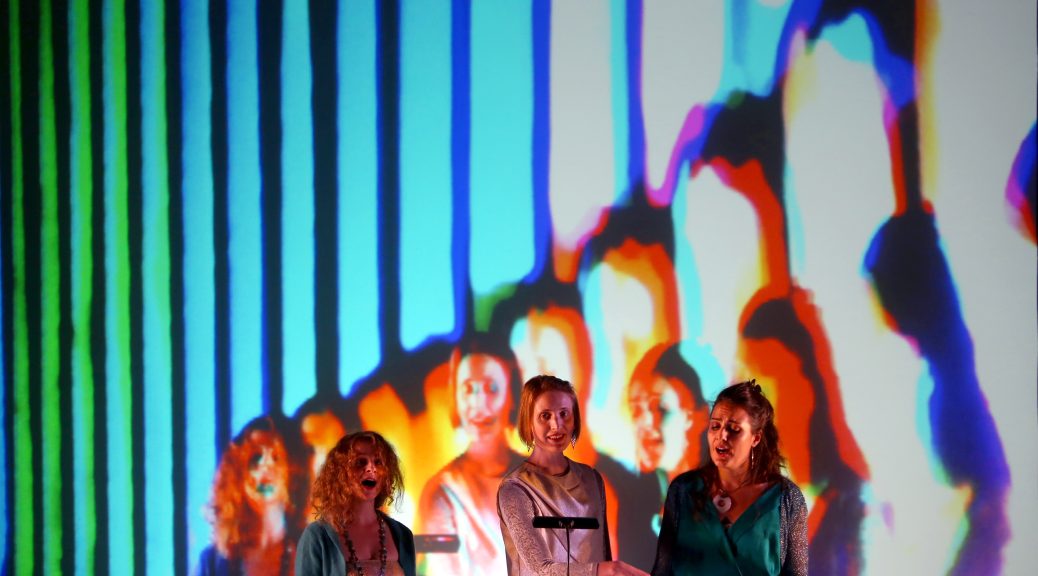
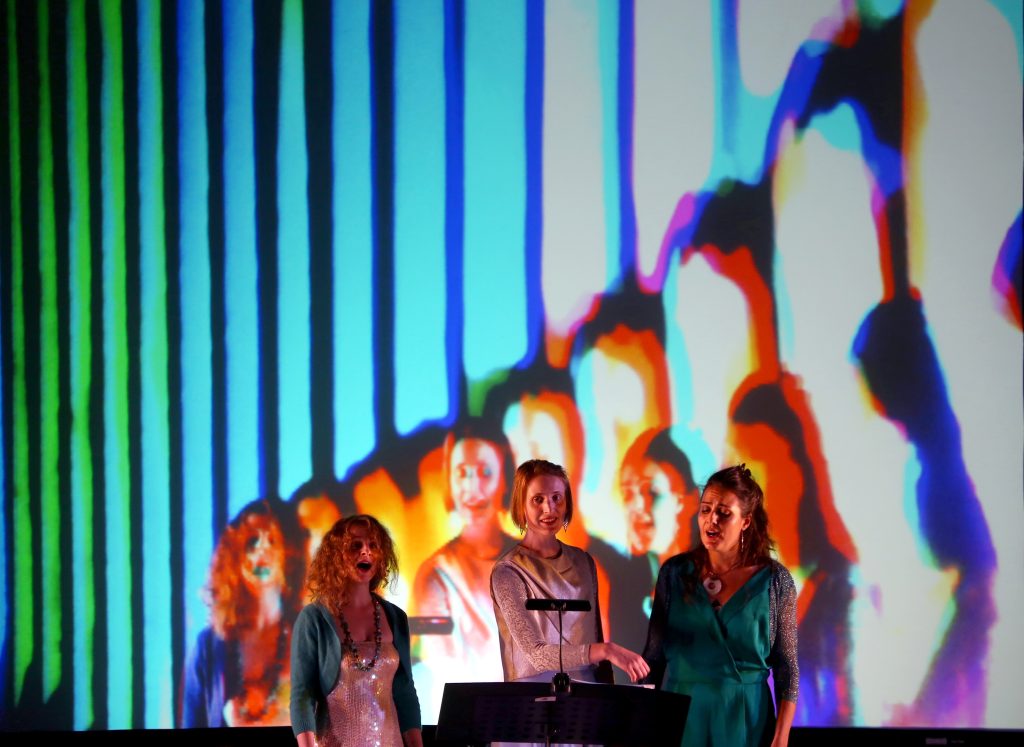
A return to Venue 1 of Kings Place prior to lockdown is a thrill. In hearing one of Morton Feldman’s larger pieces, requires a lot of concentration. Its the sparseness which is easy to recall, some would declare it as creepy, squeeky door horror. Not so…

In this 80 minute work for cello and piano, Patterns in a Chromatic Field unfolds and has a lot of allure. The cello here does not weep, it moans, sighs and squeeks. The piano adds another depth, not quite accompliment, more the second sphere to this cocktail. Feldman’s sombre and sober visions makes for a wonderful aura in the concert space. The momentum gradually increases, the cello plays with a more free and expressive direction. So easy to get lost in a work like this.

The strange plateaus hoover around and leave as if a ghost. I found it become almost touching, the ending alone with the silence had a huge impact. It’s very easy to hear Webern and Messiaen’s Quartet for the End of Time. Lucy Railton had such stamina throughout. All the odd, little techniques shone, each phases a new journey. Joseph Houston had fantastic moments on the keys. Total softness and brooding lower register come to mind. It took about two thirds in to fall into the piece for me, I still found it demanding. The audience around me were geared up with coffee or beer. A young girl chattered only a little during and a phone or two went off. They didn’t disrupt the atmosphere, as the music is so thick. Me being so tried only complimented the theme.

Review: Yoko Ono: Music of the Mind, Tate Modern, London by James Ellis

 out of 5 stars (3 / 5)

It’s staggering the amount of hate Yoko Ono gets. Wrongfully blamed for breaking up The Beatles, after getting with John Lennon, she and her art has been mocked, judged and dismissed. In the biggest UK show to date, The Tate sets the record straight.

As we arrive before entering the space, we can leave notes on wish trees, one of many Japanese inspired ideas in her art. A video of her eye permeating the threshold to entry, we hear her on the phone and read tiny messages from personally. There is a vivid video of a match being struck, her work on fire may hark back to her escape from fire bombs of the Tokyo of her childhood. An escape to the countryside and the sky bring an influence is also essential.

We as the audience can take part in her work: doss around in a black bag, hammer a nail to a block of wood, walk over the canvas itself. The taking part is fun, though I think the chance for more than one person at a time would be encouraged. Her time in Japan, London and New York sees her ideas form and thrive, there is plenty of poetry and jokes. Collabs with John Cage and his partner David Tudor are also excellent. Getting a chance to hear this was a highlight. The video of bottoms is also telling and nicely filmed.

You can sit and watch the infamous Sit in Bed Piece with Lennon, creating your own art as you do. Listen to her music back catalogue, take a piece of jigsaw from a helmet for peace. Yoko asks us to create the art in our own minds, as we are given many prompts to do so. The idea of peace has been so important to her for years and now her messages are more important than ever. We got to draw in a room with a refuge boat. I showed off my Giotto circle. Children felt like they could muck in, which was lovely. A girl amused me saying she was scared when I was engulfed by the bag. It’s almost a burqa, the imagery is very similar.

I’m down to come back and muck about more, though I doubt the naysayers will be moved.

Yoko Ono: Music of the Mind runs at the Tate Modern till 1st September 2024

Review, Andrew Brownell & Benjamin Frith, Wigmore Hall, London by James Ellis

 out of 5 stars (4 / 5)

There’s something about two pianos that’s just so exciting. Andrew Brownell and Benjamin Frith at Wigmore gave a sweet coffee concert to swipe away the Sunday blues. Wagner’s Overture to Tannhäuser, in the arrangement by Léon Roques flourishes. Famously open and not as engulfing as late Wagner, the overture is packed with a perfect main melody, towering scales and an overflowing sense of drama. Both pianists captured the essence of this early Wagner opera and it was a fine concert opener. I love the kinetic energy between them. I want to hear them do Satie, Messiaen.

Saint-Saëns followed in a surprisingly dull twist with his Variations on the trio section of the Menuetto from Beethoven’s Piano Sonata Op 31. No. 3. I was left so unmoved by this, it’s amazing how trite the French composer can be. Others after affirmed their dislike. The melody seems to be moved around neither cleverness, nor genius. I will listen again to try and find something of worth. Its a longshot…

Gershwin’s An American in Paris ended with a more jumpy thrill. The great musical is shrunk into these 20 odd minutes, the eternal melodies of the composer always there. The mania of Paris is depicted vividly, the sensational ballet sequence also getting its due here. Andrew and Benjamin looked like they had fun, Gershwin’s scatter bolts of notes are always fun. You should really let rip in this jazz work and they both did. Great stuff!

Review Disney’s Aladdin – Wales Millennium Centre by Kate Richards

A Feast for the Senses!

 out of 5 stars (5 / 5)

As soon as I saw that Aladdin was the big Christmas production at the Wales Millennium Centre this year I wanted to go, and after seeing the trailer I had really high expectations (which is often dangerous) but I am delighted to say that it surpassed my high expectations in every way!

From the second the curtain goes up; this epic production is a (wonderful) assault on your senses!  I was expecting colour, a few good special effects, an atmospheric set and some high-energy singing and dancing but WOW!  It’s genuinely hard to know where to start – it truly was Disney brought to life!

I can’t even imagine how many trucks it must take to transport all the set, props and costumes for this production, even the cast member with the smallest part must have at least 8 costume changes, each one, brighter, more colourful and sparkly than the last!  My 12-year-old self-re-emerged and was mesmerised by the set and the costumes, and I’ve no doubt that every little girl in the theatre was jealous of the perfect Princess Jasmine (the enchanting Desmonda Cathabel) resplendent, in turquoise and crystal!  Then, just as you thought she couldn’t get anymore ‘Disney princess-like’, she emerges in a pale pink wedding dress that shimmers with every movement. Every ‘girlie girl’s’ dream!

But don’t let that put you off boys – Aladdin is the perfect story for a family show because there really is something for everyone and this production capitalises on that brilliantly!  The high-energy and humour brought to their roles by Gavin Adams (Aladdin) and his band of buddies (Nelson Bettencourt, Adam Taylor and Nay-Nay) would definitely appeal to many of the young boys in the audience, not to mention the shiny silver sword fights, the soldiers and the ‘baddies’ – Jafar (played by Adam Strong) and his hilarious side-kick Iago (Angelo Paragoso).  Tap dance sections complete with top hats and canes take you back to the classic days of musical theatre and cabaret, and iconic songs from the original animated film are reproduced with feeling and precision.

So, what about our Genie?  Fans of the live action Disney film will know that Will Smith is a hard act to follow in this role but let me assure you that Yeukayi Ushe does a spectacular job! He definitely has the stage presence to pull off this role with his energy, nuanced comedy and just the right amount of ‘camp’! I don’t ‘have a friend like him’ – but I definitely want one!

For me, it was the set, the effects and the costumes that put this production above other musicals I’ve seen.  I’d heard people saying before the show, how good the flying carpet scene was – and it really was – not a wire or a safety harness in sight (and believe me we were looking), but I wasn’t prepared for the cave scene!  It was exactly as wonderous and glistening as a cave full of treasure would be in any child’s imagination, and that’s why this production doesn’t disappoint – it feels like it has been plucked straight out of a child’s imagination.  No expense has been spared in the costumes, the set and the props, so add that to the talented cast, the fabulous tunes and the special effects and you have a recipe for pure Christmas magic!  My guest told me that she ‘didn’t know where to look’ for much of the production as there was so much going on and so much to see and I have to agree; it’s one of the only musicals I’ve ever walked out of and though ‘I’d like to see that again’!

A wonderful start to my Christmas, a delight for the whole family, I can’t recommend this magical production highly enough.

Aladdin is playing at the Wales Millennium Centre until 14th January.  For more information and to book, please click here: https://www.wmc.org.uk/en/whats-on/2023/disneys-aladdin

Review Barbie by Ayo Adeyinka

Barbie 2023: A Kenundrum of Gender, Capitalism, and Coming-of-Age Revelations

‘Barbie,’ at its core, delves into the intricate dynamics of gender identity and societal expectations, particularly through its’ central characters- Barbie and Ken. The film grapples with the notion that masculinity, unlike femininity, is often defined in negation, a constant proving of oneself to society, other men, and women. The plot beautifully weaves a narrative where Ken’s struggle to cover up his perceived lack and Barbie’s journey toward self-realization serve as metaphors for broader societal challenges.

The film subtly addresses feminist ideals but, as anticipated by many, falls prey to the constraints of capitalistic demands that inevitably come along with working with a prominent piece of commercial property owned by a major corporation. This particular sentiment was a concern expressed by both director Greta Gerwig, known for critically lauded films like ‘Ladybird’ (2017) and ‘Little Women’ (2019), and actress/producer Margot Robbie who said “we had to be upfront… we wanted to honour the brand but not shy away from the problematic parts…otherwise, its not a movie we’re interested in making.” While ‘Barbie’ attempts to gesture towards feminist concepts, the film’s need for broad appeal arguably dilutes its potential impact, as it can’t seem to fully articulate a version of feminism that is truly threatening to both patriarchy and capitalism.

Despite this, part of the film’s success is its ability to provide the audience with a sufficient understanding of feminism’s multifaceted nature without being overly theoretical or heavy handed. Therefore, it may be beneficial that ‘Barbie’ isn’t some indie movie assuming a pretentious pseudo-philosophical stance, but is itself a piece of commercial property that critiques ideology from within. Nonetheless, Gerwig maintains her indie sensibility, enabling the film to transcend being merely pro-Mattel propaganda and succeeding as an aesthetic work.

On an especially positive note, framing ‘Barbie’ as a coming-of-age story injects fresh life into the narrative. Barbie’s journey from stereotypical representations to self-realization mirrors a rite of passage into womanhood. Ken, too, grapples with identity initially tied to shallow ideals, reflecting the challenges boys face in defining their path to manhood in a world where embodying healthy forms of masculinity seems increasingly difficult. Amidst this exploration, Barbie attempts to seek answers from Mattel, only to discover that corporations can’t provide the meaningful answers she seeks (shocker)—a revelation that feels particularly pertinent for modern viewers.

Another notable aspect of the film is Jacqueline Durran’s phenomenal costume design; the characters’ style transformation reflecting their internal growth. Initially, Barbie is always dressing for an event, a task. And Ken dresses in relation to Barbie. If it’s Malibu barbie, he’s Malibu Ken. But as the movie progresses, Ken sees ways of dressing in the real world that accord with him and the version of himself, he aspires to be (even if this version isn’t truly his ultimate ideal- it seldom is when you’re growing up). Meanwhile, Barbie’s outfits become less tied to a specific function and more human, signifying a move towards self-acceptance, detached from stereotypical representations.

Through Ryan Gosling’s superb performance, Ken emerges as a compelling character, sympathetic and comical even at his worst. The film’s representation of patriarchy is potent, emphasizing the absence of a governmental structure in the Ken world as a commentary on the intangible yet pervasive nature of patriarchal ideals as well as ideas’ ability to structure social reality. In its reflection of societal norms, ‘Barbie’ raises questions about the pursuit of equality, mirroring real-world scenarios where women may be represented up to a point, yet it still feels as though true equality remains elusive. The ending, mirroring the unresolved state of societal issues, prompts contemplation on the gap between ideals and reality. Barbie’s evolution into a true subject, marked by her possession of a reproductive organ, is a poignant symbol of liberation. The film cleverly subverts the objectification of Barbie by presenting her reproductive organ not as a fetishized ideal but as a brute marker of her newfound subjectivity.

Arguably, ‘Barbie’s’ greatest triumph has little to do with the film itself and everything to do with its marketing campaign, which effectively convinced various different groups that the movie was targeted at them — from adult women to young girls. However, after watching the trailer, it seems odd to me that any parent would conclude the film was explicitly targeting children, although Kubrick’s ‘2001: A Space Odyssey’ is famously every 9-year-old girl’s favourite film.

Moreover, the cultural phenomenon that was ‘Barbenheimer,’ pertaining to the simultaneous release of ‘Barbie’ and Christopher Nolan’s ‘Oppenheimer,’ achieved high levels of monocultural saturation at a time where cultural fragmentation has never been higher. This instance of counterprogramming played on the bizarre contrast between the fantastical, comedic, light-hearted nature of ‘Barbie,’ and Oppenheimer as an intense, biographical thriller, to great success. Barbie’s marketing, like the film itself, leaned heavily into traditionally feminine aesthetics, and its success points to the dearth of movies specifically targeted at female audiences- a lack which Oppenheimer’s contrasting marketing only accentuates. Cinema has long favoured male-centric narratives, and in turn, has underestimated the commercial viability of stories centring on women. It’s not merely about creating films with prominent female characters but crafting narratives that depart from stereotypes and offer nuanced views of the women depicted (arguably a failure of Oppenheimer, but that’s a topic for a different review).  

In conclusion, ‘Barbie,’ while not without its flaws, successfully engages with complex gender dynamics and societal expectations. Its narrative depth, coupled with nuanced character development and striking visuals, provides a thought-provoking and thoroughly enjoyable experience.

Review, The Turn of the Screw, Ustinov Studio, Bath by James Ellis 

 out of 5 stars (4 / 5)

Photo credit: Ellie Kurtz

It would be another train strike preventing me from getting to Bath for the press night of The Turn of the Screw. I’ve been thinking about their take on Machinal I saw on Halloween and through it all, I love coming back. In Benjamin Britten’s chamber opera, the Ustinov Stuido has it’s only second opera performed in it, after last year’s Dido and Aeneas.

It is staggering just how much of Britten’s operas are the abuse and lust of older men upon a younger male. Be it his masterpiece Peter Grimes, Billy Budd or Death in Venice (the latter we will see with Welsh National Opera in the spring), he latches on to these stories as if but an obsession. The composer’s own personal desires aside, he did have the genius to pick work so charged with depth and drama. This Henry James story was a suggestion of librettist Myfanwy Piper, who’s eloquent and piercing prose is a tremendous part of the opera. A  borrowed line for the opera from W. B. Yeats seems to sum it all perfectly: “The ceremony of innocence is drowned”.

The Governess is assigned to be the main care giver for two orphans, in the country estate of Bly in east England. She meets Mrs. Grose with Miles and Flora, and settles in. Things are not what they seem as a sinister figure lurks the halls: Peter Quint. This man has abused young Miles and the prevoius governess Miss Jessel, who also appears in ghost form. Can the new Governess protect herself and the children away from this awful presence?

This stripped back arrangement sees two pianos, a celeste and a lone flute. I’d have loved to have heard the full ensemble, though the weight of the score lived in the duo pianos. Fascinating to listen to, I marvelled at the sour nursery rhymes, English folk like charms  the feverish moments of anxiety, along with the aurora of the other realm. Directed by Isabelle Kettle, I think even more could have been done to add to the atmosphere, two worlds collide in a fight to claim the innocents as their own. A long transparent shower curtain appears to be the veil between both worlds, designer Charlotte Hennery should be praised for her accurate costume design. Some props are present, the children use the pianos as another fun device in their house. Even a dead crow (quite possibly a raven) is used in one scene. All very unnerving…

Photo credit: Ellie Kurtz

Xavier Hetherington is both the Prologue speaker (this could be the children’s father or even Henry James) and Quint. I don’t think enough was done to make him a seriously intimidating figure’, with a grip of power. In voice, Xavier had some beguiling moments, like the children we are won over by his light song. Sarah Gilford owned her role as the Governess. Her gradual decent into despair over losing the children to supernatural forces is traumatic and depressing. Really ringing in voice, never an easy role to tackle. I was quite smitten. Emma Bell as Mrs. Grose give heaps of back story over the awful goings on. I dont think I’ve ever heard her in poor form, in the War Requiem nor Wagner. Her sublime moments of harmony with Sarah was worth the journey alone.

Two fairly challenging roles are for Miles and Flora, here from Arlo Murray and Catherine Mulroy. They channelled the roles well, acting not perfect, though I wouldn’t expect it from such young ages. Arlo’s take on ‘Malo…Malo’ as he learns his Latin was another highlight. Catherine’s glee and darker side are all here, her voice also pleasing. Miss Jessel is Elin Pritchard, a brief character, though with fairly sad moments. Elin offered up stirring sympathy and a clarity in her voice.

Double pianos from Aleksandra Myselk and Henry Websdale were amazing to watch. All the harsher moments, the trills and eerie lines all shone. The celeste also from Myselk came in for colour and sharpness. Flautist Carys Gittins had little to do, though wowed in the second act with weird registers and attacks.

The Turn of the Screw runs at the Ustinov Studio till 23 Dec 2023

Review Sleeping Beauty, Theatr Clwyd by Donna Williams

Celia Cruwys-Finnigan as Muddles, Phylip Harries as Nurse Nellie and Dan Bottomley as King Dom in Sleeping Beauty at Theatr Clwyd. Picture by Andrew AB Photography

 out of 5 stars (4 / 5)

Theatr Clwyd is currently undergoing lots of exciting changes including the refurbishment of the Anthony Hopkins theatre in which their annual rock ‘n’ roll panto usually takes place. Therefore, this year sees its transition to the Big Top. Seating over 900 audience members on three sides of the stage, this circus style performance arena is certainly a break from the norm. And maybe it’s the change from what has always worked that left this year’s production missing a little je ne sais quoi. Although magical in other ways; the in-the-round style of theatre, the magnificent costumes (just when you think Phylip Harries’ dame can’t get anymore whacky!) and a rip-roaring rendition of the Twelve Days of Christmas complete with oversized props and plenty of audience participation- the production just gets a bit lost on this huge stage. The small cast are constantly present, unless darting off for a quick costume change, and they frequently come out of character and point fun at the fact that it takes them a long time to get from one side of the stage to the other!

On entering the auditorium, we are greeted with an open stage: giant web-like dreamcatchers hang from each side and a huge, sparkly spider (Olwen, voiced by Sian Gibson) hovers in the corner. As the show begins, she speaks, and it seems that she will be the narrator throughout. However, Olwen the spider is then only alluded to on a couple of occasions. Nevertheless, the concept of spiders and webs seems to be present throughout, Dame Nurse Nellie even fashioning an impressive costume of silky spider webs in the finale and yet there is no ‘through’ story regarding spiders and no version of the classic tale that I can remember, involving a spider. This concept just doesn’t seem to come into fruition.

Chris Patterson’s writing offers the usual ‘oh no he isn’t’, ‘oh, yes, he is’ type interactions as well as plenty of boos, hisses and an audience soaking! The most memorable gag, well deserving of a mention, happens when Nurse Nellie chooses her favourite male ‘victim’ from the audience, sits him down on a cinema chair with a box of popcorn and reminisces about their first date- using film titles as (rather naughty) puns! A lot of the jokes this year push the boundaries between child friendly and adult humour which works well (phew!). However, it feels that there is a lot of unnecessary toilet humour this time around. I’ve been known to enjoy a good old ‘fart’ gag now and again but more than a couple and they start to lose their droll. Always refreshing is the use of the Welsh language, heard plentifully throughout the production as the plot is brought to Mold Castle with mentions of Rhyl, Abergele and other local areas and landmarks, allowing the audience to feel more engaged with the action.

This production includes a stellar cast with fantastic vocals, super talented musicianship and a varied repertoire of songs including Destiny’s Child’s Bootylicious sung wonderfully by the three fairies(with cleverly altered lyrics- ‘I don’t think you’re ready for this fairy!), a beautiful rendition of Coldplay’s Fix You accompanied by the audience swaying their phone lights in the air and Ben Locke’s accomplished version of Kate Bush’s Babooshka (in fact, Kate Bush features again later on- thank you Stranger Things!).

It’s difficult to single out any cast member as all are truly fantastic in their own right. However, standouts for me are returning cast member Dan Bottomley as King Dom who brings just the right about of comedy and sentiment to Beauty’s father, and Alice McKenna as Fang who is often a standout for me each year and whose vocals truly raise the roof. Special mention, as always, must go to Phylip Harries’- in his 20th year in panto at Theatr Clwyd he certainly doesn’t disappoint- it’s difficult to imagine this Christmas tradition without him!

Despite the move to the Big Top, Theatr Clwyd’s rock ‘n’ roll panto still packs a punch and I’m always in awe of its triple threat performances and unique take on the classic fairytale. Oh yes, I am!

Theatr Clwyd, Mold

December 8th, 2023- January 6th, 2024

Writer: Chris Patterson

Directors: Francesca Goodridge and Daniel Lloyd

Assistant Director: Juliette Manon

Casting Director: Kay Magson CDG

Set and Costume Design: Adrian Gee

Musical Director: Tayo Akinbode

Choreographer: Annie-Lunnette Deakin-Foster

Lighting Designer: Johanna Town

Sound Designer: Matthew Williams

Fight Director: Kaitlin Howard

Company Stage Manager: Cassey Driver

Deputy Stage Manager: Edward Salt

Assistant Stage Manager: Emma Hardwick

Technical Assistant Stage Manager: Jay Kemble

Cast includes: Dan Bottomley, Celia Cruwys-Finnigan, Theo Diedrick, Phylip Harries, Emma Kinney, Ai Kumar, Caitlin Lavagna, Ben Locke, Alice McKenna, Georgina White

Review, Angela Gheorghiu Operatic Gala, London Philharmonic Orchestra, Royal Festival Hall, London by James Ellis

Photo credit: LPO

 out of 5 stars (3 / 5)

The LPO gave a fairly resplendent rendition of Tchaikovsky’s 1st Symphony. Dubbed the ‘Winter Daydreams’, the promise of an exceptional career in music is here. It’s easy to say it’s lovely, yet I found most of the work remained attractive. Not as bold as later work, the nickname easily evokes the imagery fitting for this festive concert. Maestro Gergely Madaras had shape and form, the heftier moments never feeling like a chore. Musically it remains rooted in it’s era of late romance. Typical, if still mostly charming.

In what was orignall billed as a night with Reneé Fleming, she had to bow out. We were given the absolute diva from Romania, Angela Gheorghiu, one of the opera world’s biggest stars. Finally a chance to hear her live! Things started off very ropey with Caro mio ben by Giordani, this being a Italian heavy set. She sang a select few arias, half of the second half must go to the players and Madaras for their wonderful Prokofiev Troika, Polonaise from Eugene Onegin and Polovtsian Dances. Though there were some major issues with her voice, her classic Puccini arias (Madama Butterfly and La bohème) had style, if a little rough around the edges.

Perhaps the most lovely was her take on L’altra notte in fondo al mare from Mefistofele. Boito’s superb aria was the middle of the choices and I think had the most resonance. She seemed to rise above previous issues in the set and excel here. Gheorghiu’s may be past her prime and I truly hate having to say that, yet what I did love was her big presence. Her laughter and lavish costumes wont be forgotten. It was quite camp really. I expected Ru Paul in the front row.

A highly memorable encounter, perhaps not for all the right reasons.