
All posts by admin

Review, Angela Gheorghiu Operatic Gala, London Philharmonic Orchestra, Royal Festival Hall, London by James Ellis

Photo credit: LPO

 out of 5 stars (3 / 5)

The LPO gave a fairly resplendent rendition of Tchaikovsky’s 1st Symphony. Dubbed the ‘Winter Daydreams’, the promise of an exceptional career in music is here. It’s easy to say it’s lovely, yet I found most of the work remained attractive. Not as bold as later work, the nickname easily evokes the imagery fitting for this festive concert. Maestro Gergely Madaras had shape and form, the heftier moments never feeling like a chore. Musically it remains rooted in it’s era of late romance. Typical, if still mostly charming.


In what was orignall billed as a night with Reneé Fleming, she had to bow out. We were given the absolute diva from Romania, Angela Gheorghiu, one of the opera world’s biggest stars. Finally a chance to hear her live! Things started off very ropey with Caro mio ben by Giordani, this being a Italian heavy set. She sang a select few arias, half of the second half must go to the players and Madaras for their wonderful Prokofiev Troika, Polonaise from Eugene Onegin and Polovtsian Dances. Though there were some major issues with her voice, her classic Puccini arias (Madama Butterfly and La bohème) had style, if a little rough around the edges.

Perhaps the most lovely was her take on L’altra notte in fondo al mare from Mefistofele. Boito’s superb aria was the middle of the choices and I think had the most resonance. She seemed to rise above previous issues in the set and excel here. Gheorghiu’s may be past her prime and I truly hate having to say that, yet what I did love was her big presence. Her laughter and lavish costumes wont be forgotten. It was quite camp really. I expected Ru Paul in the front row.

A highly memorable encounter, perhaps not for all the right reasons. 


Review, Cosmic Pulses, GBSR Duo & Sound Intermedia, Kings Place, London by James Ellis 

 out of 5 stars (3 / 5)

Klavierstück XV SYNTHI-FOU for multiple electronic keyboards and eight-channel electronic music
STRAHLEN for vibraphone and ten-channel electronic music
COSMIC PULSES eight-channel electronic music

What was most likely my last night in London this year was spent at Kings Space. I’ve yet to get back in Space One, this evening was in their stuido space. GBST Duo and Sound Intermedia offered up delights from the real odd ball: Karlheinz Stockhausen.

Wales’s own Siwan Rhys began with the fast approaching anticipation of Klavierstück XV SYNTHI-FOU. I loved her jump suit and massive flares, very serious till the end, even with a keytar too. The galaxy of chords and mutations from the keyboards were perplexing and wonderful. The work sort of gathered up all other sounds and had the limelight with its serious demands. I’d revel at the score no doubt. It was the wild and unending scope that I’ll savour. Siwan’s pulling off the fingers of her gloves, counting this down with added musical notes was somehow amazing.

Then along came George Barton with Strahlen. This vibraphone heavy piece has the tender middle ground which might have faired more fitting as the starter. The strands of notes relentlessly patter about, a miniature theremin also proved smooth glissandi. I wanted to nod off during this point, the piece worked but had its own demands. A little too long as well, I found joy in Geroge’s golden jacket was a treat.

After the break, it was up to Ian Dearden as sound designer, who had done a fab job all night, unleashed upon the audience Cosmic Pulses. We sat in near darkness, our live duo nowhere to be seen, as we focused on this electronic piece. It was constantly modulating, loud yet not extremely harsh. I heard an electrical storm, speech, a flock of birds and even Mr Blobby all within its acoustic. Perhaps this could have even been picked as the opener? It felt two parts ludicrous, one part transcendent. 

Review Santa’s Wish, Cardiff Christmas Festival by Katie Berrisford.

Santa’s Wish- A Wonderful Adventure for the Family

When I see a show, I always try to pick my favourite audience member. Someone who is completely engaged with the show, believes everything they are seeing and having the best time. At Santa’s Wish at the Spigeltent there were a lot of audience members to choose from who fit this bill! My winner was a tutu wearing, headbanging small folk who got a high five from Santa- I can only imagine the challenge her parents had of taking her out of the wonderful venue!

Indeed, the reactions from the audience were a beautiful example of what happens when an engaging, entertaining and festive show ticks the right boxes. The beautiful setting allowed a lovely intimacy between actors and audience, something often impossible in Cardiff’s much bigger venues.

The impressive ensemble show saw 5 talented performers getting to show off their skills and clearly have fun on stage. Alex Roberts’ cheeky humour and ability to draw the audience in grabbed everyone’s attention right from the start. Briana Paine’s impressive vocals carried the story of being kind to each other- along with some impressive moves. Often when an acrobat is part of a play they can seem tacked on or a one trick pony, but this was not the case with Briana Paine– instead they were an integral part of every scene, with some extra aerial magic sprinkle through. Dyfrig Morris’ dulcet tones and gravitas created a very believable Santa, and Millie Davies shone as Snowflake the Elf- in an outfit I was definitely jealous of.

The whole production was a highly polished affair, tricky in an unusual space and with the amount of props needed coming from different directions- despite a slight malfunction with the magical jam jar, but this was smoothly recovered by the cast. You don’t go to family shows for the plot, and this was the show’s weaker area, but there were plenty of messages to take away to consider for the meaning of Christmas.

Santa’s Wish is on until December 24th and is a treat for all ages. Tickets range from £15-£29.50 which is quite an investment for a family, but sadly this is in line with most prices across the city for a festive treat. Go along to enjoy some original music, impressive acrobatics and the chance to receive a high five from Santa!

Review, Patricia Kopatchinskaja & Friends: Pierrot Lunaire, Purcell Room, London by James Ellis

Photo credit: Euishin Kim / Det Norske Kammerorkester

 out of 5 stars (4 / 5)

Another piece I’m finally getting the chance to hear live. Patricia Kopatchinskaja is a multi-talented singer and violinist who both held the reins and let loose in a furious hour of weird music making.

Whilst I’d think most in the audience wanted to near Pierrot Lunaire by Arnold Schoenberg, we are treated to huge journeys with CPE Bach, Berio, Milhaud and more experiments. Personally, I like the piece to be played on their own and not during Lunaire. I was loving it all though, Patricia dressed as if the sad clown of Italian opera. Her Dada like happenings also added well to the broth. Her singing was furious and unwavering, more sing-talk as the composer intended. Her little improvisations on violin, were quirky, her comic timing also a thing of beauty. The stage is covered in newspapers, hanging coat tails, abstract paintings, and a metallic kettle.

Lunaire is a truly absurd piece. Even for early Schoenberg, the outrageous expression of each song bursts out, so many elements make it overwhelming. The verse by Albert Giraud paints surreal visions and appalling digressions. The band of musicians, with white make up (though more subtle on them then Patricia), also bought manic passions and a commanding presence. I imagine this is a nightmare to play and sing. I cannot begin to grasp it…

I love the extra elements of making this more accessible, also extra important today. Though I do wonder if this is the right piece for the job. The crazy, angular form of Lunaire and the floating, blasting words make it heavy load for most ears. Having said that, this was a fun hour which I will recall most fondly. 

Review, Marina Abramović: The House with the Ocean View, Royal Academy of Art, London by James Ellis 

Photo credit: Royal Academy of Arts, London/David Parry

 out of 5 stars (5 / 5)
Marina Abramović has now been in London for some months. This performance artist who brought the form to the mainstream, has been collaborating with some of the city’s big institutions: English National Opera, Southbank Centre and more. Her fascinating exhibition at the Royal Academy of Art has gotten loads of attendees. It was her birthday a not long ago and even one of her photos at Phillips Auctions sold for over £58,000. There is much going on…

From 2002 comes The House with the Ocean View a durational piece where Marina lived in the gallery for 12 full days. Only allowed water, no food or talking or writing, people flocked to her as if for guidance. Let’s not forget this was in the aftermath of 9/11. After loving the show in London there were three chances to catch this piece, with three separate artists, all of which taught under the Abramović method. Firstly, it was Elke Luyten and now it was the time of Kira O’Reilly..

I wanted to spend as much time in the space as possible. I arrived around 10:30ish briskly past the masses in the exhibition to make my way to the end of the gallery. The space for The House, had one man who appeared to be meditating, I sat near him upon the wooden benches, with huge crystals both sides. Security kept up their demand of no photos. Kira, who appeared to be sleeping on her wooden bed, with a crystal slab as a pillow, similar to what he could try earlier in the exhibit. It was a quiet air within the space. For one unforgettable moment, Kira turned her head very slowly and gazed upon myself and the other gentlemen. This was the start of her last day in the gallery.

Gradually she rose, filled up a glass of water from her personal tap to the brim and carefully walked around the space so there would be no spillage. This almost Zen feel to the room was incredibly calming, just what I needed. Kira would often gently scan the room and share moments with the visitors. Through it all, it was her smile I’ll remember most fondly. It was a lovely sharing moment. She played with her hair, the wooden comb one of a few generous offerings. She moved about, altering the tempo of a metronome, one of the lone sounds in the space. My worry was its clacks would haunt me, yet this marker of time felt right and sombre in the space. Humour and horror would also be present thanks to the amazing ladders going up to the house which featured knives as its steps.

During I was in need of lunch, after going around the full show trying out all the hands-on crystal formations. Prior to leaving I saw Kira had placed her table and chair in at an angle in the space, as if hung from the air. We see all this, even in her platform rooms above us. Curiously the one thing absent from Mariana’s instructions for the piece is the telescope which featured in the original duration. I feel it would have added little and was perhaps cut with good intentions.

After being at the Southbank Centre I vowed I would make it just to see the end of Kira’s final half hour in the space. Wading through Xmas shoppers, I made it thanks to the gracious staff at the RA. I was let in, the room now stuffed with people. I sat and within minutes, who would turn up but Marina herself. I was metres away. She got up toward Kira still in her performance state standing and smiling. Marina, overcome, began to cry and then let it all out. It was incredibly touching. I wanted to comfort her. The idea of someone else trying this demanding piece would touch Marina and others. The security said they were closing, and we all gave Kira huge applause for such a feat. It was great to see her again at the end, she looked at me as if to say, ‘You’re back!’

An incredibly invasive film crew disrupted the good vibes, mucking about between artist and Marina. I found it didn’t matter.

Amanda Coogan performs The House with the Ocean at the Royal Academy of Art from 6 to the 17 December 2023.

The full Marina Abramović exhibition continues at the Royal Academy of Art till 1 Jan 2024. 

Review, Imogen Cooper, Queen Elizabeth Hall, London by James Ellis

Photo credit: Sim Canetty-Clarke

 out of 5 stars (3 / 5)

For an evening, Imogen Cooper brought a fascinating programme to the Southbank. Her serious, yet resounding presence rings out. Starting with Bartók’s 14 Bagatelles, Cooper demonstrated the bizarre nature of the selection. They are sarcastic and iconic, touches of Satie and Chopin linger. The odd finger work against the keys is also noteworthy, as the momentum goes. A short adventure with Liszt and his Bagatelle without tonality went straight on to Beethoven’s 15 Variations and Fugue on an original theme. Here things dragged a bit, the concert going into a slow show. Cooper makes Beethoven shine, and her effortless form is what really stands out.

The second half would prove much more interesting. Two Bach Chorale-preludes were a treat, brief and had a synergy with composer and pianist. Curious for the lights to dim as we hear John Dowland’s In darkness let me dwell, a recording for voice and lute from Anne Sofie von Otter and Jakob Lindberg. Why this? As lovely as this departure was, it was justification for the next work: Darkness visible by Thomas Adès. I recall the wonderful performance Robin Green gave of his at last year’s Vale of Glamorgan Festival. It’s key smacking and trills aside trills, still keep aspects of the Dowland. It’s still very pretty, even my plus one couldn’t believe her luck. It is a fascinating miniature. It never fails.

Another Beethoven, this time the Sonata in A flat ended thing, much more alluring than before. The drama of the whole piece was the bouts of anxiety, romance beyond romance and furious rebellions. Cooper became impassioned at the end, her hair rocking out. Aside from this vision, she appeared very calm and collected for the whole night. An encore of Bartók was given. With the genuine tiredness seen upon her face, we left it at that.

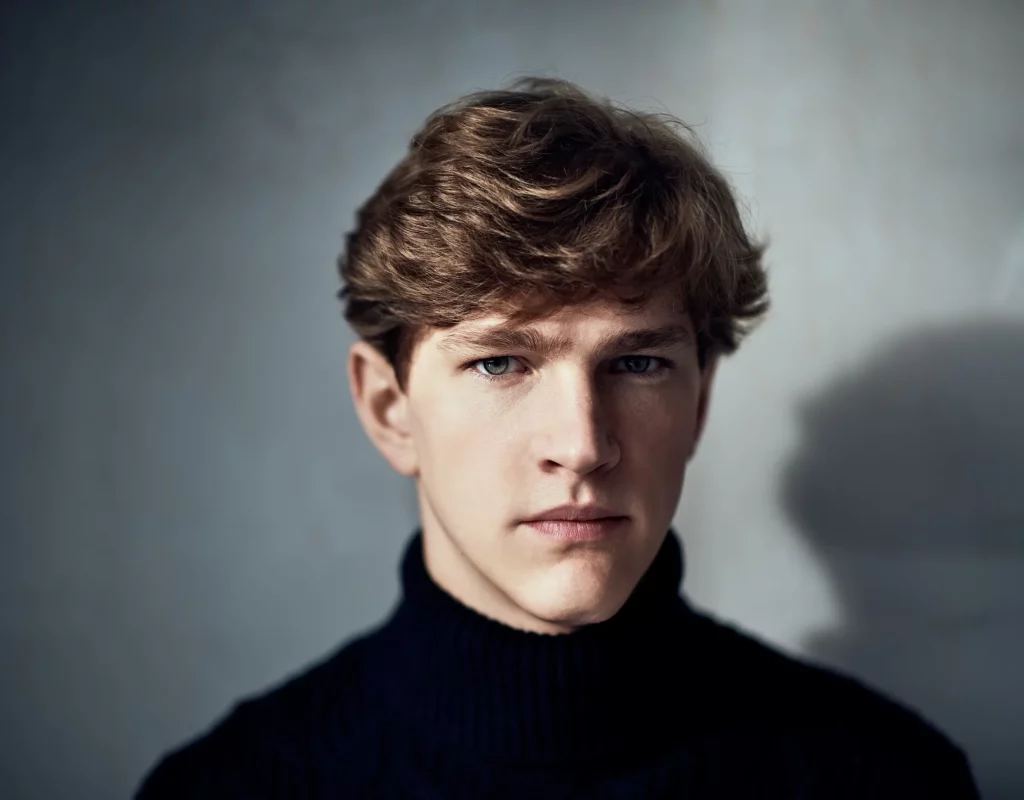
Review, Pavel Kolesnikov, Wigmore Hall, London by James Ellis

 Photo credit: Da Ping Luo, via Park Avenue Armory

 out of 5 stars (4 / 5)

Wigmore Hall would be packed for the Russian pianist Pavel Kolesnikov, as the bitter chill of London winter called round. I recall his time doing a dance version if Bach’s Goldberg Variations at Sadler’s Wells. I’m intrigued with him.

He is complex to watch when playing. This programme is also hand picked by him and it can’t shake away an eccentric air. Starting with Górecki’s late work: For Anna, the deceptively simple tissue of the piece could omly ever be this stunning Polish composer. The right hands leads the end of the lines with a two-note pattern, swaying softly then a more harsh terrain raids. It’s a piece which demands more listens. More on that later.

Pavel played with grace and fortitude. The following Beethoven Sonataa No. 17, is dubbed ‘Tempest’ and its easy to see why. The control he has over these piece is highly compelling, his Beethoven seemed to whip up a great frenzy and also time for retrospection. His white shirt and jacked gave a light sight in the hall, the lights dimmed and a lot of dark colours abound. La colombe or The Dove from Messiaen led after this, a buttery little prelude mimicking the flutter of the birds wings as apposed to the later bird song the composer would faithfully notate. Performed with a loving sweet and impressionistic scope.

Mozart’s Piano Sonata in A fittingly followed (this was Messiaen favourite composer). The marvellous hopscotch nature of the cheeky piece, Pavel brought insight and charm. He can’t help himself. Often mouthing along with the music, more mime and not Glenn Gould. Naturally, the famous Turkish March ended the sonata in rousing form leading to a well needed break for him, after over an hour of playing.

The Górecki piece was an apparition that did not want to leave the space, Pavel making the choice to have it played twice is daring. It was even more dark and sombre second time round, I think the audience listend even more attentively. The wrap up was Schubert’s Piano Sonata in A minor. Moments of joy are messhed with terror in this off kilter composition. Pavel reaching even newer heights. His seroius style crossed with fun music making. Schubert’s often emotional weight was ever present, some rousing, searching psychology made Pavel perform beautfully.

This arrangement of a piano programme is odd. He might have just gotten away with it. 

Review Willard White & Eugene Asti Wigmore Hall, London by James Ellis

Photo credit: David Levene

 out of 5 stars (4 / 5)

It was smiling all round with Sir William White at Wigmore Hall. Joined by the full-bodied force of Eugene Asti as accompanist, things went down very smoothly.

Sir Willard recounted, with the first song when he was in school and the promise of a young singer. Noticed by a teacher with a good ear, him singing Schubert’s and Silvia would catch anyone off guard, his wonderous bass-baritone voice is so satisfying. Roger Quilter and his Come Away Death followed keeping with a sombre tone. More thrills with Samuel Barber with a stellar Sure on this Shining Night and Promiscuity. The latter was so much of Charles Ives, brief, funny, weird and more. Some Vaughan Williams and his Songs of Travel highlights also stood out. The English air shining through, folk like charms ever present.

The Old American Songs from Aaron Copland, saw a selection of thrills. The Dodger sees a busker touting for cash, Simple Gifts (a Copland favourite) never fails in its loveliness. The infectious melody had weight, Copland recycling it for Appalachian Spring, one of his ballets. Being told the next song was “silly”, I bought me a cat is also a laugh and Willard never one to listen to nonsense, was glad to see we enjoyed this nursery-rhyme like ditty. Bernstein’s rare outing of his early musical Peter Pan saw two songs: Who am I? and My House. I’ve given less love to these songs in the past, though Willard’s ringing, warm voice makes them worthwhile.

Choices from South Pacific and Carousel continued the musical theatre theme. Some Enchanted Evening stood out for its beefy delivery and pleasing melodic structure. The festive side of things came with a selection of spirituals Deep River in an arrangement by Carl Davis as one fine example. Proud Jamaican and Brit, Willard must have sung these innumerable times, I saw teary eyes in one of them. They took away some of the stuffy nature of the concert hall and brought much cheer. An encore of Have Yourself a Merry Little Christmas has now official brought me into the holiday season. I best get shopping…

Review, Shoulder to Shoulder, Swansea City Opera, Lisvane Memorial Hall by James Ellis

Photo credit: Guy Harrop

 out of 5 stars (3 / 5)

On their last leg of their Welsh tour, Swansea City Opera have made a personal and sweet show about the older men in our country. Inspired by the Mens Shed craze, which started in Australia and now is world-wide, it has seen men in the community overcome barriers and have a go at wood work. Though the craft element is the pulling force to join, many friendships have been made and its looks like men are opening up about their traumas and hangups.

This collaboration with the opera company saw a piece inspired by these stories, of men coming out of their shell after grief and turmoil. It’s a slight story one which, might not have needed an intermission. Brendan Wheatley as director and librettist, also gave a pre-show talk breaking down his role and the opera itself. He likes puns and rhyming, aside many Welsh tics and mannerisms. Lenny Sayers score was accessible for those new to opera, holding up as a spritely, pseudo Jazzy and Blues fair. A surprise and a delight to see a vibraphone and a saxophone in with the musicians. The former I imagine eventful when touring around Wales. A Gnome aria held up as an absurd highlight, only ever a good time. The inclusion of both the Llysfaen Singers choral bouts and the Lisvane Mens Shed for bouts of wooden chorus slamming felt right, proving the true community side of things.

We follow times spent with Ioan, Dai, Rhys and Charlie. Gwen, daughter of Rhys, drags him along to the shed to get him out of the house and to find a vocation. Popping along, he is warmly welcomed and comes out of his shell. The rest of the opera is the other three guys at the shed and what they have gone through, their reasons to join. This did feel like one big advert for the sheds, though if it does get extra members I can only see that as a positive.

The quartet of male singers: Robyn Lyn Evans, Dyfed Wyn Evans, Aled Hall and Wyn Pencarreg have tuned the show after said tour and previous stagings. Their humour, light and hearty singing is the bulk of the show, their histories of anguish and pain bubbling up. BBC Cardiff Singer finalist Jessica Robinson was a fine Gwen, she address the audience through speech and sung with a firm clarity.

I’ll applaud the show for giving opera to those who never thought they would go and also for its support for a mightily important endeavour. You know…I might just pop over to my own shed after all.

Review, Dream Scenario by James Ellis

 out of 5 stars (4 / 5)

Dir: Kristoffer Borgil. Certificate 15, 102 mins

I’ve always loved to hear what other people’s dreams are. Most might retreat from the idea, yet you can learn a lot from their weird symbolism. But…what if. Imagine this. One man keeps appearing in a lot of people’s dream? You’re gobsmacked.

In keeping with Nicholas Cage’s delightful and whacky recent film choices, Dream Scenario harks back to his more subtle days. He plays Prof. Paul Matthews an expect on ant behaviour. Out of the blue, he begins to appear in dreams of the people around him, family, friends, even his students. What starts off as local celebrity and good natured fun, quickly turns sinister, as the dreams see him enage in acts of violence and sexual abuse. He is swiftly cancelled and the scraps of fame are eaten up, as everything falls apart around him. 

Cage is perfect here. He takes on the serious pedagogue extremely well, not arrogant, more awkward and set in his ways. It is a royal offering. His wife, Janet is a angular Julianne Nicholson,  who does passive aggressiveness masterfully, many moments stood out. Child actors as their children’s fair well: Molly and Sophie from Dylan Gelula and Lily Bird perform the delight, then digest over the whole experience. Michael Cera who is back on top form as Trent, typical word salad spewing, new-age PR sort. Even Cosuin Greg from Succession, Nicholas Braun gets a cameo as Brian Berg, smug inventor of a dream device not to dissimilar from an idea seen in Futurama.

It was fun, you go along with the journey like Cage. The inevitability of the story could only end in cancel culture, as things often do today. Some stylised editing is of note, aggressive flashes and jumps are seen throughout. The dream sequences themselves are noteworthy, for their vividness and surrealness. There is something to say about how things are today. There is even more to say about representation and ownership, amongst other meaty themes. It ended in an odd way, though not to its detriment. We don’t quite know just how Paul got out of this pickle and the final scene is a play on his wifes quirky sexual fantasy.

See it and go dream some more…