
[USR=4]
A study of historical events surrounding the Tudor reign, particularly Henry VIII and his wives, rarely focuses on the inevitable human story surrounding monarchs and hierarchies. A Man for all Seasons strips away the pomp and circumstance of the kingly court and focuses instead on the fallout for individuals who dared to disagree with this ‘monstrous baby,’ as playwright Bolt describes the Mighty Harry in the introduction to his play.
This is emphasised to perfection by the inclusion of ‘The Common Man’ who narrates the story and provides the connection between King and his people. The commentary adds humour and humanises the narrative to great effect. The Brechtian approach to this character is very well executed with him pulling a chest of clothes and transforming from More’s servant, Matthew, to boatman, to jailer and even, eventually to executioner.
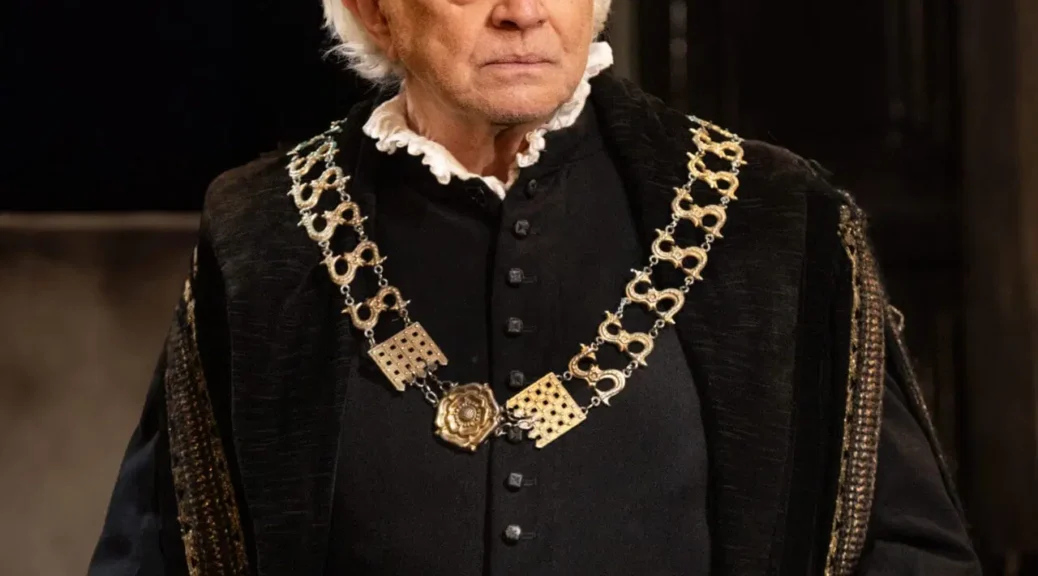
Set and costume are beautifully period. The set is dynamic and shifts with ease to create the key areas of the action. The dark panelling and flickering fireplace immediately conjure the essence of the 1500s. The design honestly looks like something of out a painting and provides the perfect backdrop without being distracting.
The cast are really exceptional. Martin Shaw revisits the role he first took on in 2006 delivers a truly exceptional performance, full of nuance and gravitas; a beautifully human interpretation of a man grappling with his own conscience in light of a choice from the King that he simply cannot agree with. His relationship with both family and friends, and friends turned enemies is wonderful and entirely believable.
It is, without exception, a wonderful cast, but special mention to Paul Kemp’s truly endearing Common Man, Sam Phillips as the truly menacing Thomas Cromwell and Orlando James as the ‘monstrous baby’ himself, Henry VIII. Orlando particularly, gets very little stage time but is the epitome of stealing the scene with the time he is given.
One small issue is that some of the lines do get missed, which is a shame as this is a piece which is truly reliant on its words, those spoken and unspoken. This does, however, lend to an intimate feeling to the performance, with the audience leaning forward to ensure not a single word is unheard. This is a masterclass of performance from all involved from an historical piece which is still entirely relevant today, its very human story resonating even 500 years later.