
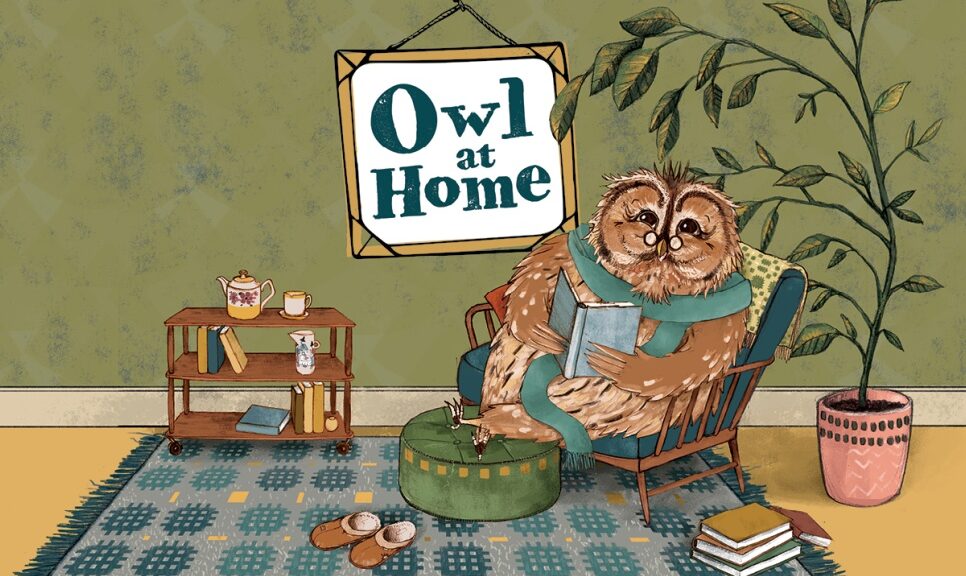
As someone who spends much of my time thinking about stories: How we tell them, who gets to access them, what makes them unique and why they matter.
I often leave the theatre asking myself one question: How did this make me feel? With Owl at Home, the answer was simple. I felt held.
Theatr Iolo has long understood that theatre for young audiences should never talk down to them. Instead, Owl at Home invites us into a gentle, imaginative world where stillness becomes a strength and curiosity is something to celebrate. Based on Arnold Lobel’s much-loved stories, the production reminds us that the smallest moments can often carry the greatest emotional weight.
From the moment the performance begins, George Williams fills the stage with warmth, humour and boundless curiosity. His Owl is thoughtful, eccentric, playful and quietly vulnerable. He finds joy in the everyday, creating adventures from ordinary objects and conversations from silence. It is a performance built on trust; by trusting children to understand emotion without needing everything explained, and trusting adults to reconnect with the child that still exists within them.
Williams’ experience in clowning shines through every movement. His physical comedy is beautifully judged, allowing the humour to emerge naturally from Owl’s curiosity rather than from exaggerated performance. He throws himself around the stage with incredible commitment, making every stumble, leap and playful interaction feel effortless. Every inch of the performance space is explored, and every prop has purpose. Nothing feels decorative or unnecessary; each object becomes another opportunity for storytelling, surprise or laughter. It is a masterclass in making a seemingly simple set feel limitless.
What resonated most with me was the production’s commitment to visual storytelling. As an audio describer and storyteller, I spend a great deal of time considering how stories can exist beyond spoken language. Owl at Home demonstrates this beautifully. Movement, rhythm, music and expression become languages in their own right, proving that powerful storytelling is as much about what we see and feel as what we hear.
Music gently threads the production together, adding warmth without ever overwhelming the story. Since leaving the theatre, I have caught myself repeatedly singing Cosy, one of the show’s original songs. It is deceptively simple, wonderfully memorable and perfectly captures the feeling of Owl’s world. To me, that says something about the quality of the writing and composition. The best theatre doesn’t always leave you quoting dialogue; sometimes it leaves you humming a tune that quietly follows you home.
The production also reminded me why I continue to advocate for accessible, inclusive arts experiences. Accessibility isn’t simply about removing barriers; it’s about creating opportunities for everyone to feel welcomed into a story. Before the performance had even begun, this commitment was already evident. A resource table outside the auditorium offered audiences access to song lyrics, a stage layout and background information about the production. These thoughtful additions allowed people to familiarise themselves with Owl’s world in advance and demonstrated that accessibility had been considered as part of the creative experience rather than added afterwards. As someone working in accessibility, these details mattered, and they reflected the care that ran throughout the production.
There is a tenderness running through the entire performance. Owl spends time alone, yet the story never frames solitude as something to fear. Instead, it becomes a place where imagination flourishes. At a time when so many of us feel pressure to move faster and do more, Owl at Home gently reminds us that there is beauty in slowing down, noticing our surroundings and finding comfort in our own company.
Watching the audience was one of the evening’s greatest pleasures. Children laughed freely, leaned forward with anticipation and became completely absorbed in Owl’s adventures. Adults smiled just as often, perhaps recognising something of themselves in Owl’s quiet rituals and gentle optimism. It is rare to witness a production that speaks so honestly across generations without compromising either audience, but Theatr Iolo achieves exactly that.
The production plays 15 – 30 August 2026 Edinburgh Fringe, find out more here
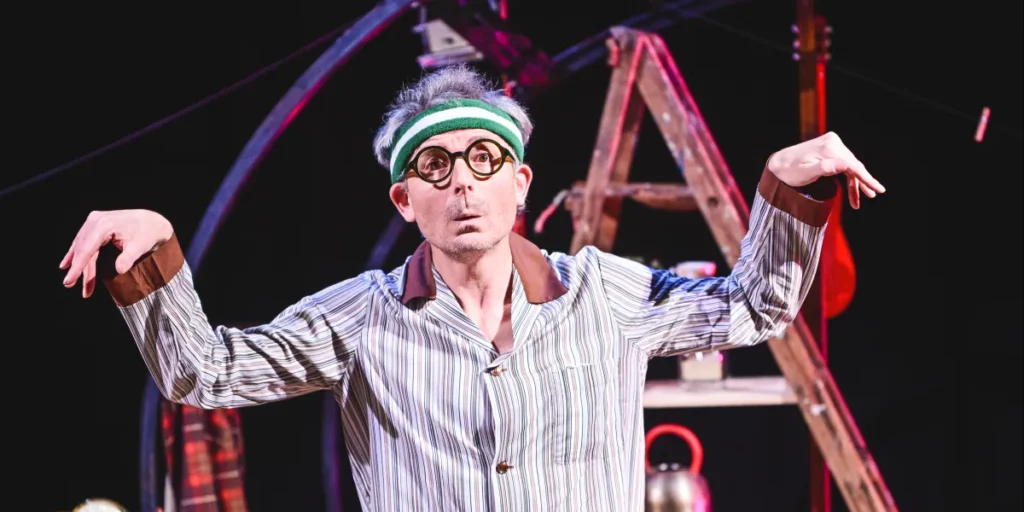
Image Kirsten McTernan