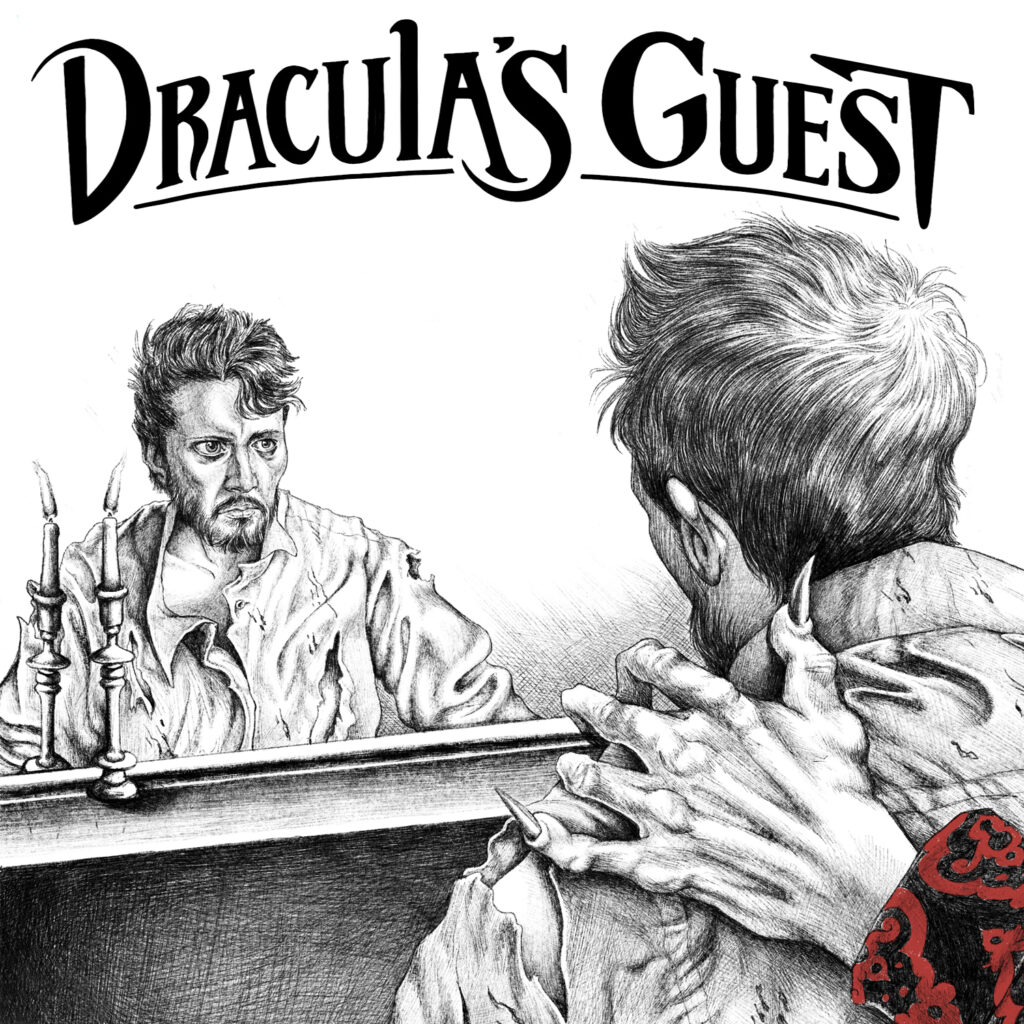
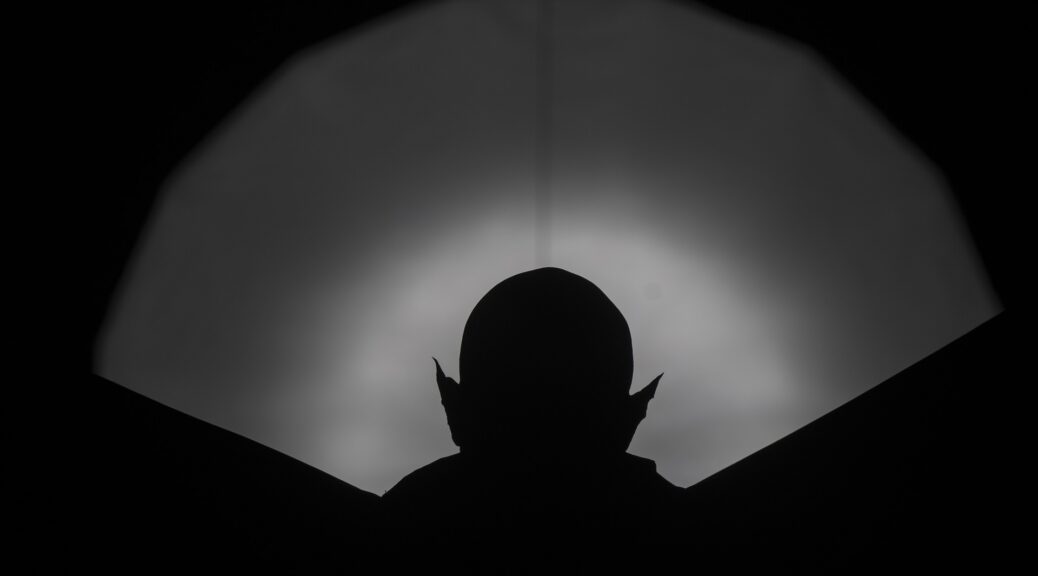
Dracula’s Guest, which performs at Newport’s Riverfront Theatre this Friday (2nd October), promises to be a bold new take on Bram Stoker blood-curdling Count. In the original novel, we meet the character of Renfield in an asylum, eating insects and raving about his ‘Master’ (Dracula), who has promised him eternal life. But in Dracula’s Guest, we get the chance to meet him as the man he once was – indeed, at his fateful first meeting with Dracula himself. Get the Chance’s Barbara Hughes-Moore sat down with James Hyland, who directed, produced, adapted, and stars in the play, to talk about re-envisionioning this most (in)famous of vampires.
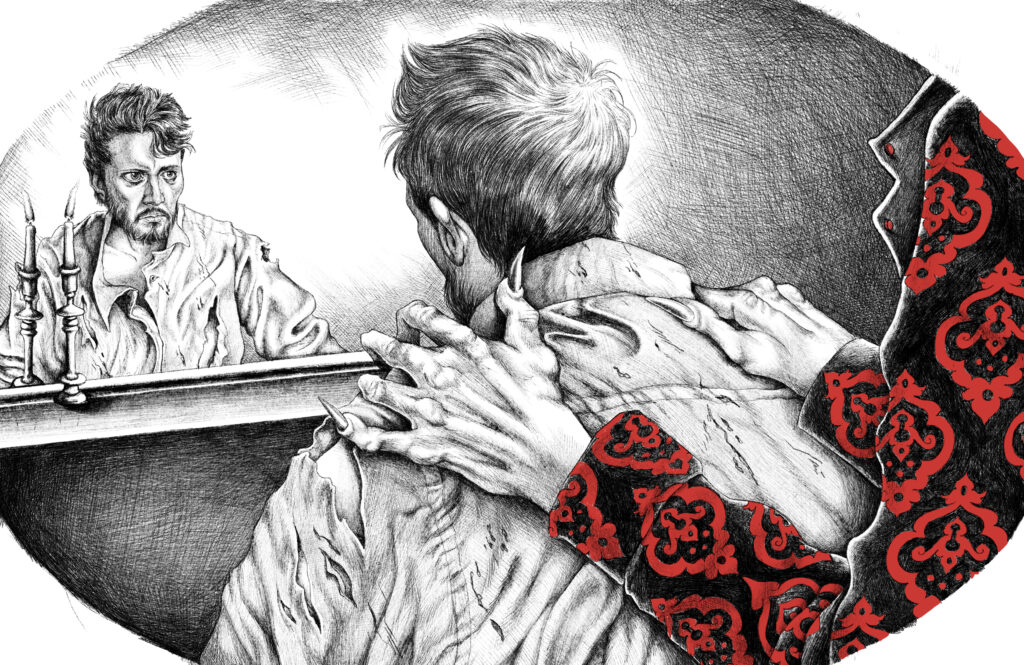
Dracula is one of the most adapted characters in literature. What is your favourite version of the character, and why? What impact did it have on your depiction of the Count?
I think one’s first introduction to the Count often has the most impact. For me, it was Christopher Lee’s portrayal in Jimmy Sangster’s film adaptation for Hammer, directed by the legendary Terence Fisher. Christopher Lee, of course, was an incredibly versatile actor; he could play anything, really, and his extraordinary performance as Dracula has certainly stood the test of time. I adore his command of the screen without saying a single word; beautifully economical and sharply focused. There are many other impactful examples, including that of fellow South Londoner Gary Oldman, whose exquisite portrayal in James V. Hart’s adaptation for the screen, directed by the great Francis Ford Coppola, was one of the very first to grapple with Dracula’s lost humanity. Oldman brought incredible gravitas to the role as well as a delicious rawness.
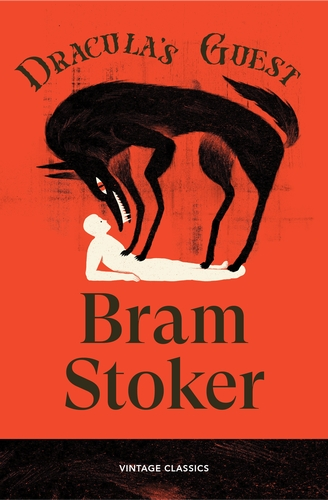
The short story ‘Dracula’s Guest’ is often regarded as a deleted scene from the novel. What aspects of the original did you want to retain for this play?
I used only the title of the short story, as it perfectly encapsulates the themes of my adaptation. While based primarily on Bram Stoker’s novel, my interpretation also draws from his other works.
What other works of Gothic or horror fiction were you influenced by in crafting the play?
I adore anything related to Dracula or vampires, so my love for the Horror genre with regards to those characters has always been an artistic influence–ever since childhood really. To be honest, it wasn’t my plan to create an adaptation as I was hard at work researching a war story at the time, and I felt that Bram Stoker’s novel had already been successfully explored to “the nth degree”. I believed I had nothing new to add to the long list of stage and film adaptations–until a singular question popped into my head during the pandemic which absolutely thrilled me: “What if…?” That question gave rise to a flurry of notes that continued for the better part of a year. The research was an absolute joy because I was taking another deep dive into one of my favourite genres, having previously adapted Strange Case of Dr Jekyll and Mr Hyde for the stage which, incidentally, is also still on tour in the UK.
What is especially compelling about the central relationship between Dracula and Renfield?
I remain particularly interested in what brought Renfield to his degraded status as portrayed in the novel, specifically regarding his prior interactions with Dracula. As this had not been previously explored on stage, giving both characters a voice here presented a unique opportunity to write about unfamiliar aspects of their personalities and experiences.
What role does the audience play: are we innocent spectators, or are we complicit in Dracula’s mind games?
That would be telling. No spoilers here.
The Gothic is a genre which is deeply connected to the senses: to memory, psychology, and feeling. When the curtain falls, what do you want the audience to feel?
I rarely talk about what I want the audience to “feel” prior to seeing the play because theatre often operates in a realm beyond words and as a process of discovery. That’s a conversation I’m more likely to have after an audience has watched the performance as I’m always interested in the uniqueness of each person’s response. There are, of course, a multitude of moments that have been carefully constructed to elicit specific responses from the audience in order to accentuate the various themes of the play and its overall objective as a piece of drama. Above all, though, I wanted to create something that was very human, albeit with dark, fantastical leanings.
Nina Auerbach once wrote that ‘every age embraces the vampire it needs’. Why, in 2026, do we still need Dracula – and how does your version reflect the age we inhabit now?
As with all of my plays, I have sought to create a drama that mirrors the human experience and reflects many aspects of our nature, both good and evil. Thus, I have attempted to make the piece as relevant as possible to our most recent collective experiences, but through the prism of the twisted and the grotesque–as Horror is often the perfect genre for the exploration of the unspoken. What those experiences are, I shall let you discover.
Dracula’s Guest is performed at The Riverfront, Newport, on Friday 2nd October. More information on the show and how to book tickets here.