
Category Archives: Theatre

REVIEW Radical Reinventions – The Love Thief & Tilting at Windmills, Sherman Theatre by Barbara Hughes-Moore


The Sherman Theatre is well and truly Back in Play! The festival, which has everything from stand up to monologues to young writers showcases (all done in short form to allow you to safely see as much or as little on offer as you like), is headlined by ‘Radical Reinventions’, four short plays which put a new spin on a classic work of literature. (Hamlet is a F&£$boi and The Messenger, which both reinvent works by Shakespeare, premiered earlier this week).

The Sherman always has a knack for getting at the sinew and bones of a story, and this series is no exception. Performed in a socially distanced and visually striking cabaret setting (imagine that the Phantom of the Opera designed a circus tent and you’re halfway there), The Love Thief and Tilting at Windmills are two joyously irreverent and transcendent plays which argue that, while love may seem futile and dreams impossible, the adventure makes them worth the risk.

Rahim El Habachi

The Love Thief is written and performed by Rahim El Habachi and directed by Nerida Bradley, and is based on Aeschylus’ Prometheus Bound. Dressed in flames, Prometheus steals love instead of fire and gives it to humanity so they can love whomever they love regardless of gender. El Habachi, an actor and belly dancer, commands the stage from the second he appears – sensual, ethereal and lyrical, he relays his story like the Emcee via Elvira, all mischief and mysticism. The play gives a god’s eye view of modern Britain, its imperial ghosts and their ungodly scions who make it their life’s work to make life difficult for anyone they deem to be ‘different’. It also highlights the personal toll of activism, and how important it is to fight the tide of hatred and bigotry even when it threatens to consume you.

Mared Jarman

Tilting at Windmills is written and directed by Hannah McPake and performed by Mared Jarman, and is based on Miguel de Cervantes’ The Ingenious Gentleman Don Quixote of La Mancha. Jarman is chaotic, heroic and mesmeric, gallantly sprinting around like Lancelot on a sugar rush. Using basic props and a whole lot of chutzpah (not to mention a rollicking Knights of Cydonia needle drop), Don Quixote and Sancho Plant-za attempt to squeeze a near-one-thousand-page book into a breathless (and hilariously meta-textual) thirty minutes. Cervantes makes an appearance as a Zardoz-like disembodied voice that boasts of his own greatness – opening up interesting avenues of the dialogue between authors and those adapting and performing their work, and how radically reinventing a text is what keeps it fresh, alive and relevant.

Ultimately, Prometheus has to decide whether hope is worth all the pain and the not knowing whether things will ever get better, and Quixote/Mared has to decide whether to stay in the fantasy or live in the real world. And yet, neither choice is a binary between staying or going, fantasy or reality. There will always be pain, and uncertainty – but there will always be hope, fun, and magic, hidden between the margins.


The Sherman is most definitely Back in Play and back to stay!

Back in Play season at the Sherman Theatre: 8 – 30 October

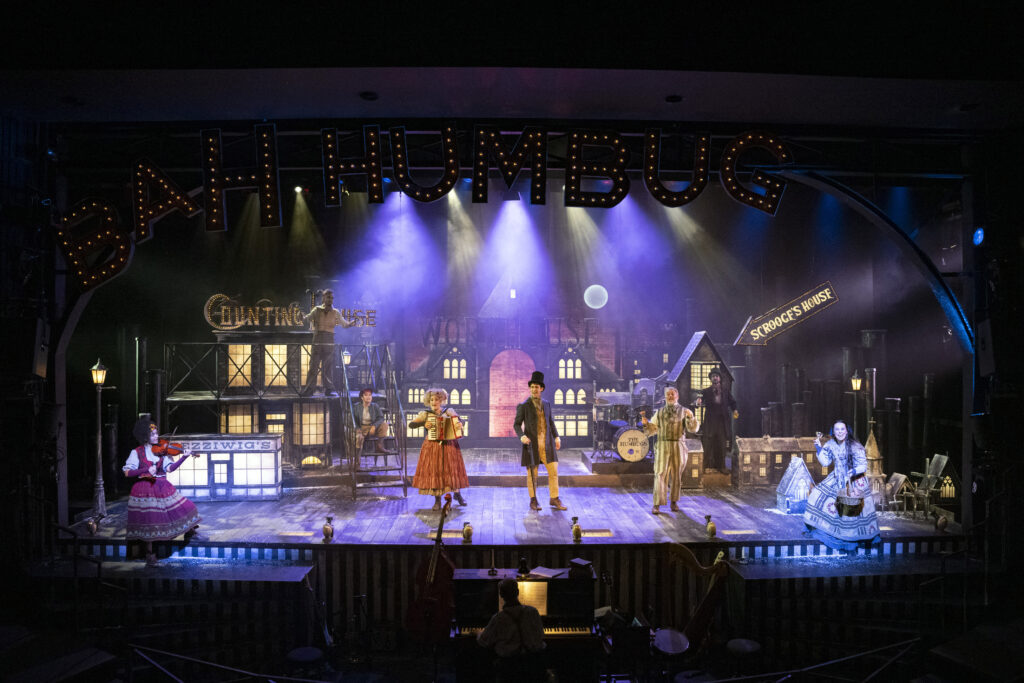
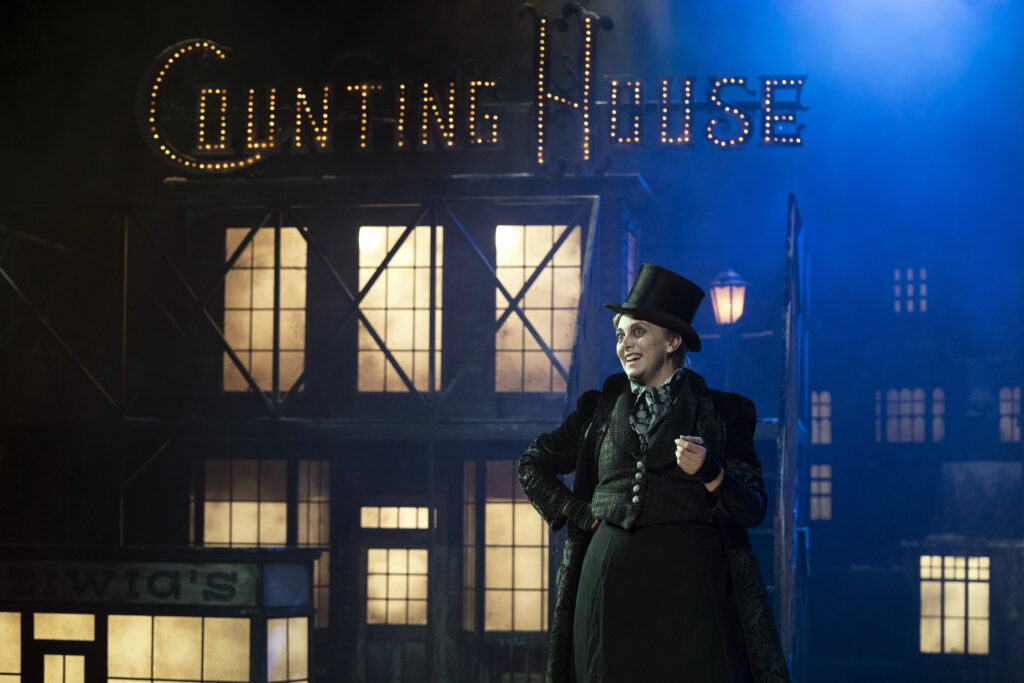
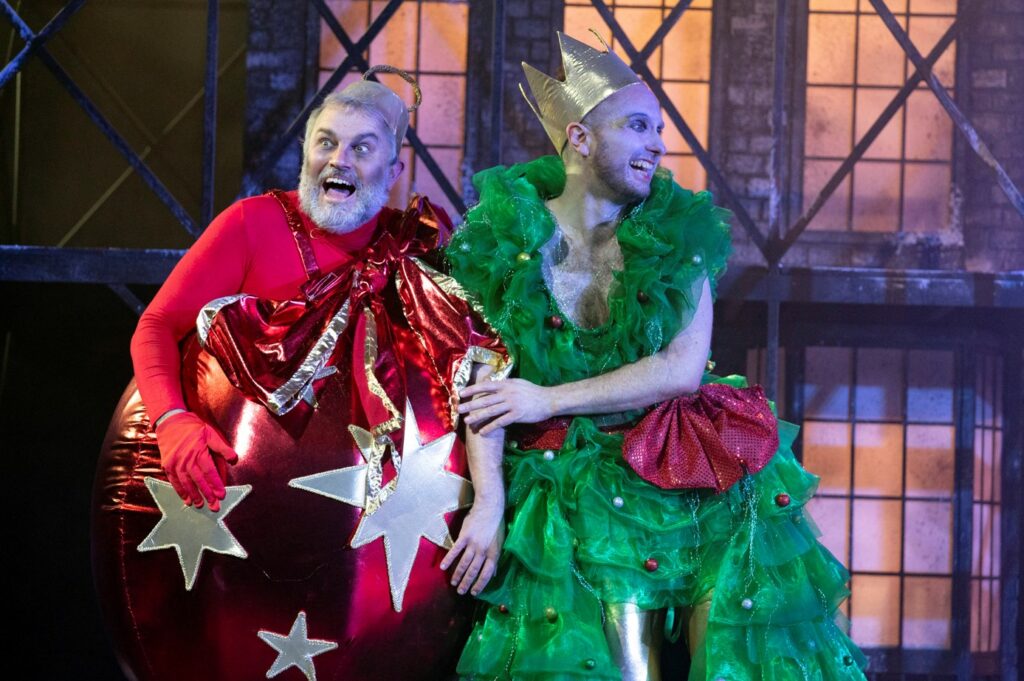
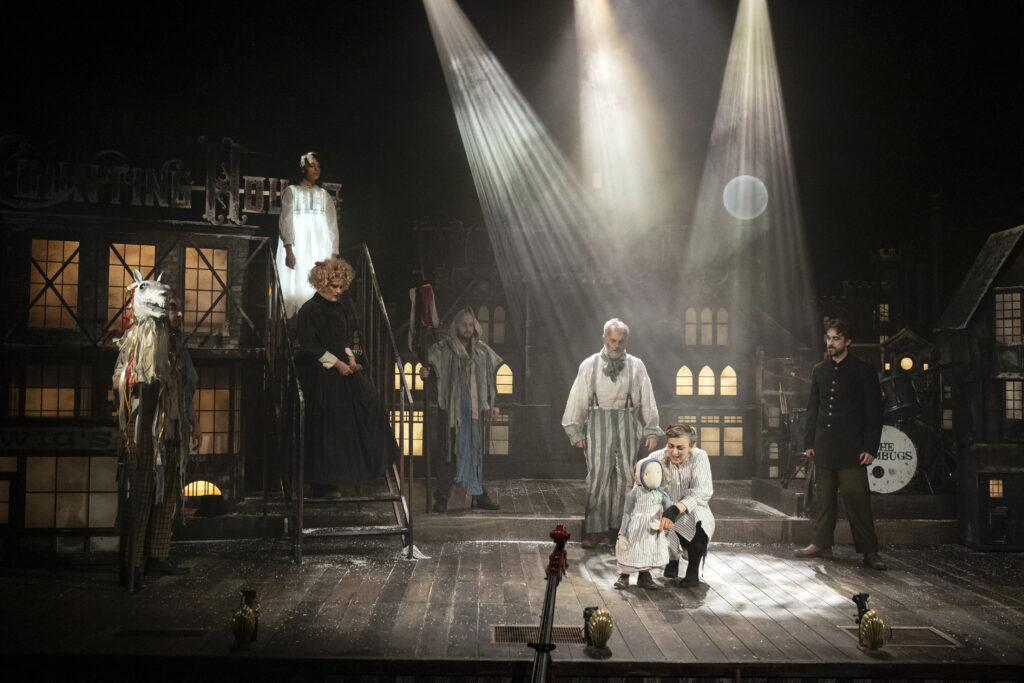
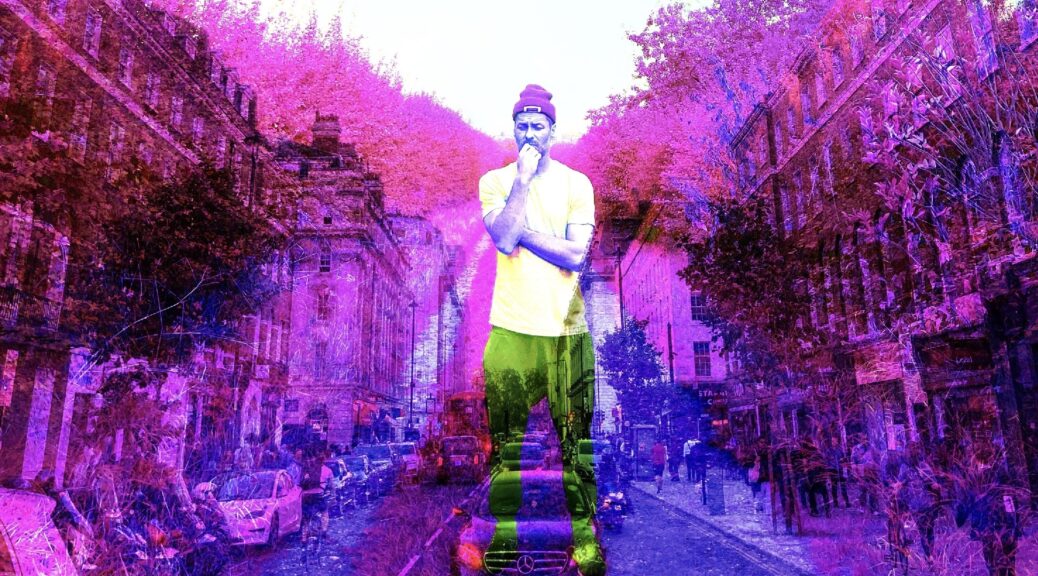
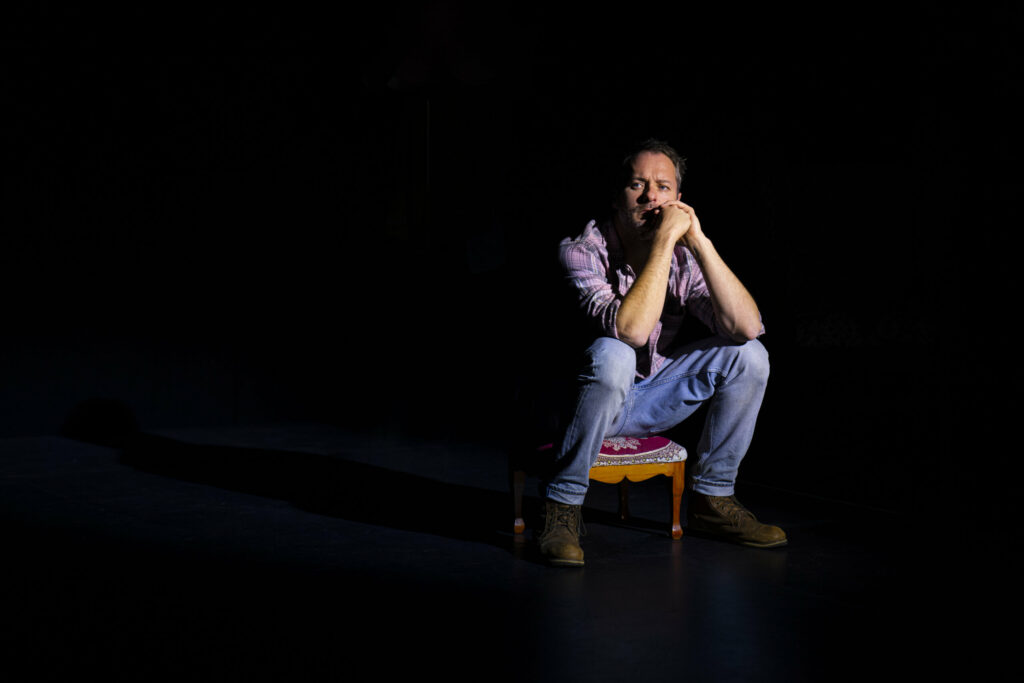
Top, left to right: Seiriol Davies, Mared Jarman; Bottom, left to right: Lowri Jenkins, Rahim El Habachi
Barbara

Review by
Barbara Hughes-Moore

Get the Chance supports volunteer critics like Barbara to access a world of cultural provision. We receive no ongoing, external funding. If you can support our work please donate here thanks.

REVIEW Company of Sirens: Hitchcock Redux, Chapter by Barbara Hughes-Moore

Company of Sirens make a dynamic return to Chapter with Hitchcock Redux, two short plays that explore the elusive power of real (and reel) memories. Written and directed by Chris Durnall and funded by Arts Council of Wales/National Lottery, Hitchcock Redux dramatises and meditates on two traumatic events in Durnall’s life and the Hitchcock films with which are intertwined.

In the first play, Twelve Cabins Twelve Vacancies, Durnall recounts the time when, while watching the first television broadcast of Hitchcock’s Psycho in 1968, he learned that his father had died. The two are forever connected in his consciousness, and memories of both are shaped and distorted by each other. The second play, Souvenirs of a Killing, explores the tragic abduction and murder of a friend in 1973, the trauma of which is embodied and underscored by the film Vertigo. Both plays are performed by Durnall and Angharad Matthews (who also designed the set and costumes), and feature original music composed and performed live by Eren.

Twelve Cabins premiered onstage in 2019, and was performed along with Souvenirs online in March of this year. The lyrical writing and pensive performances resonated even through the screen – but onstage they are brought to vivid, visceral life. The sense of place, space and movement is powerful: Durnall moves as though monumentalised in grief, shifting between joyous reminiscence and solemn contemplation; Matthews moves ethereally, as light dances on the surface of rippling water; and the immersive music, composed and performed live by Eren, moves between original compositions and evocations of Hermann that cage the characters in a spiralling static state.

The women in Psycho and Vertigo are portrayed with more empathy in those films (and in these plays) than Hitchcock showed the actresses portraying them. Women encased in amber, both celluloid and corporeal, are objectified through movies and memories, their losses mourned through the membrane of grief and fiction. Durnall speaks not for them, but through them, their voices reanimated but recounted, living only through scribbled words on cigarette boxes (a subtly gorgeous image).

The set is plaintively sparse, evoking the ways in which the backgrounds of memories are often shadowed, blurred, or absent altogether; sometimes a face, a dress, a glance, is all we remember. Examining a memory can tarnish it, like buffing a broken mirror – it just makes the cracks cut deeper. In a piece for the Wales Art Review, Durnall argues that the (fictional) films and the (real life) losses ‘have become so inextricably linked with those moments that they have become artistic metaphors for the events themselves’. Whether watching scenes play out on a television set, or re-enacting Hitchcock’s dialogue, Psycho and Vertigo become a prism through which grief is reflected and refracted, and provide a kind of closure which is not always found in life.

The search for closure is a sentence which Hitchcock Redux leaves incomplete – purposefully so, because closure is by nature perpetually unfinished. But it also leaves you with the drive not only to explore your own connections between art and grief and memory, but the tools you’ll need along the way. Striking, pensive and poignant, it does not ask you to take the first step – it merely opens the door.

Hitchcock Redux is playing at Chapter through 16 October

Review The Boy with Two Hearts, Wales Millenium Centre By Anna Arrieta

“The Boy with Two Hearts” is a beautifully artistic piece of theatre which tells an authentic and heartbreaking story, of inequality, struggle, and hope.

The set design immediately drew me in to the world of the Amiri family, a family of five living in Afghanistan under Taliban rule. First to step out on stage and introduce us to this story is the beautiful solo voice of Afghan singer Elaha Soroor. Soroor’s gentle tone and almost-hypnotising lyrics seem to carry the story along, she acts as an angel of death alongside the family. It is poignant that her voice and presence is consistent throughout our journey even though the Amiri’s are facing turmoil and pressure at every turn. 

Words and language seemed to be a big theme running throughout the design of the piece. The switch in language between Farsi and English, along with the projections of captions onto the raised level of staging behind our actors, was a highlight of the production for me. I particularly loved the use of descriptors as images, an extremely inventive yet inclusive approach to experiencing the storytelling in front of us. The use of lighting and sound was exceptional as a whole, it paired well with the elements of physical theatre that the actors explored in several poignant moments of their journey. A perfect example of this was the hospital sequence, Hussein’s character is receiving cardioversion to the heart which is portrayed through physical acts of slow motion, sound, and a strong pulse of lighting. We can feel the beat of the scene and are on tenterhooks waiting for the outcome, much like the other characters in the story. Key thematic words were made to stand out in the light, given their moment to make impact and resonate with us, and then left lingering in our minds for hours if not days after the play was over. 

The sense of location and travel was strong, there was a good use of levels and crawl space to represent the small compartments inside lorries, cars, and boats throughout the Amiri family’s travels to the UK. The way the actors multi-rolled was stylistic and effective, I felt it really showed the range of the talented cast and added a sense of uncertainty and tension to the voyage- the audience were immersed in their journey, as if we were experiencing it with them.

The story as a whole was written well, it was fast paced and I liked the introduction of new characters along the way- it really reminded us as an audience of the other people who were in similar circumstances but still going on completely different journeys. There was great chemistry between the actors on stage. They allowed enough space for the audience to sit in those intimate moments and take a breather from the action, before dispersing into their individual roles of narrating the storyline and taking us along with them. This method of storytelling was perfectly executed and represented the themes of family, love and hope through those dark and traumatic times.

“The Boy with Two Hearts” is a must-watch for every audience, it’s a dynamic insight into the inequalities and cruel structures of our world, where a resilient family must fight for their right to freedom, safety, and a place to call home. This would be an incredible educational experience for a younger audience, not only because of the important and enlightening content, but also for drama students looking to widen their knowledge around the art of impactful performance. This production perfectly encapsulates the wonderful and interesting elements that exist in theatrical storytelling.

REVIEW Groan Ups UK Tour, New Theatre by Barbara Hughes-Moore

Direct from the West End, the award-winning Mischief Theatre crew is back in Cardiff with a raucous new comedy. Groan Ups follows five characters through the trials and tribulations of primary school, high school, and the inevitable reunion years later when these supposed grownups dig up old rivalries, flirtations, and secrets thought long left on the playground.

Written by Mischief stalwarts Henry Lewis, Jonathan Sayer and Henry Shields, and directed by Kirsty Patrick Ward, Groan Ups is further proof the energy and creativity of Mischief Theatre is unmatched. Eschewing improv for dramedy, the ensemble has crafted a gleefully anarchic and surprisingly sweet show buoyed by an incredibly game cast. There’s Lauren Samuels as conscientious Katie, Dharmesh Patel as naughty Spencer, and Daniel Abbott as sweet, shy Archie, who becomes Spencer’s ride or die after an I, Spartacus moment with a dead hamster. Completing the quintet is nerdy Simon (Matt Cavendish) who obsessively and unrequitedly adores popular posh girl Moon (Yolanda Ovide).

We follow this famous five through three key stages in their lives: when they’re chaotic and demanding at age 6, angsty and hormonal at age 14, and regressive and regretful at age 30. The cast excellently evoke these different ages: Dharmesh Patel nails the faux-casual bravado of the teenage boy while Lauren Samuels plays a pitch perfect precocious toddler always running for teacher when the others misbehave. The ensemble’s effective characterization is buoyed by Fly Davis’ incredible and transportive sets which perfectly conjure the classrooms of your memories, cleverly using scale and exaggerated sizing to capture the feeling of towering over the chairs which once towered over you.

The first half might seem a little much at times, but it’s all brought round so beautifully in the second, with every seemingly-throwaway joke and character beat returned to with added meaning and bigger laughs. The second half also features Jamie Birkett as Chemise, an aspiring actress who Simon hires to play his girlfriend, who damn near stole the show with a single ‘aye’ and our hearts with everything that came after. Killian Macardle also draws laughs as a stern teacher in the first half and an overconfident alum in the second.

It might not quite reach the dizzying heights or the razor-sharp precision of The Play that Goes Wrong – but it doesn’t need to. And it ends on a genuinely meaningful note: the problem is not that we look into the past but that we do so with rose tinted glasses. Memories tend to dull the blade of experience, and Groan Ups captures all the pining, the teasing, and the worrying you’ve tried to forget; all the horror and the beauty of growing up and then realising you never really did. Nostalgia is a trick, because it fools you into believing your best days are behind you – but they are ahead, if you manage to maintain that sense of play and wonder.

Groan Ups concludes that we might not ever truly grow up – but we can grow, if we can keep that youthful sense of hope, fun and possibility. Good comedy is the hardest art form; great comedy is almost impossible. But Mischief have worked their magic once again.

Groan Ups is playing at the New Theatre Cardiff through Saturday 16th October.

Review by
Barbara Hughes-Moore

Barbara

Get the Chance supports volunteer critics like Barbara to access a world of cultural provision. We receive no ongoing, external funding. If you can support our work please donate here thanks.
Review The Boy With Two Hearts, Wales Millennium Centre by Gary Pearce

Wales Millennium Centre, Cardiff. Itself an imposing building and host to much brilliant theatre and this was no exception as it hosted the first Welsh refugee story to be brought to the stage. The Boy With Two Hearts, is a play based on the book of the same name by local author Hamed Amiri and adapted for stage by Phil Porter.

The scene is set, it is Afghanistan in the year 2000. The Taliban are rapidly taking over the country and imposing intolerable laws, people speak out but sadly to their detriment as Hamed and his family soon discover.

Their lives change overnight and soon begins a race against time to leave their homeland…a race for survival. The play tells the story of how Hamed and his family embarked on their perilous journey to safety, the hardships and the dangers they encountered enroute, the people who were there to take from them what little they had and the humanity shown by others. It portrayed a family bound by love, by commitment to each other and by the courage and determination to succeed.

As the story unfolds we learn about each individual member of the family, their hopes, their desires, their dreams. It gives a realisation that people are the same the world over, all striving for the same things, the right to live a life without fear, without hardship and most importantly of all a life of freedom. During the play we also learn a lot about one of the brothers life-threatening condition and the treatment he so desperately needs.

The acting was incredible, within minutes you were convinced that this was the family themselves and they weren’t actors playing the parts. The set was grimly atmospheric, the addition of the displayed dialogue was genius and the live vocals created a haunting backdrop. The story played on your every emotion, it was heartfelt, thought provoking, humorous, happy, sad…and real. I can say with all honesty that this play not only made me happy and sad in equal measure but left me thinking, it made me realise how little I know about the plight of others and how little I can do to help

Review The Boy With Two Hearts, Wales Millennium Centre by Tracey Robinson

The Boy With Two Hearts written by Hamed Amiri, adapted for the stage by Phil Porter. Wales Millennium Centres’ first homegrown production since reopening and the first Welsh refugee story brought to the stage.

This true story moved me to tears, it was one of the most inspirational plays I’ve ever seen. This story could be happening today, with the recent events which has led to the fall of Kabul.

The play was performed by Hassam/Son (Shamail Ali) Hamed/Son (Farshid Rokey) Hussein/son (Ahmed Sakhi) Fariba/Mum (Gehane Strehler) Mohammed/Dad (Dana Haqjoo) and singer Elaha Soroor

In 2000, Hamed Amiri’s family have to leave their home and their life in Herat, Afghanistan. They need protection from the Taliban, who have issued a warrant to execute the mother, Fariba Amiri, for speaking out against the Taliban, demanding freedom for women’s rights. They also need medical help for the oldest son, Hussein, who has a rare, life-threatening heart condition.

Their journey leaving their home, learning to live with nothing, having to spend a long time on the road, never being safe, worrying every day whether they will ever make it to the UK, their “safe haven”, and having to put their lives into the hands of smugglers again and again is heart-breaking, one of many families who have left their lives behind to find safety in Europe and continue to do so.

Clothes hang from rafters above the stage in WMC and a disarray of suitcases and clothing are strewn around the edge of the stage. Creative stage captions set the scene and draw you in to the families fight and struggle but it’s not just about the hardship, it’s about fear, love, family, determination, courage and hope – these are the emotions that ignite a fire inside of you whilst you’re drawn into their powerful story.

The play is split between two emotional, nerve-racking journeys. The first shows the families cold and desperate journey through Moscow and then onto Europe, travelling by hiding in car boots, lowering themselves into the back of a lorry to hide from police and almost suffocating crammed inside a shipping container, without food or drink, however, these are only a small part of the family’s history. Their journey depicts how much they rely on the kindness of strangers, but we also see how so much cruelty while travelling to the UK leaves Hamed mistrustful of others.

The second path they take is through Hassam, Hamed and Hussein’s determination to succeed, once they settle in Cardiff, it also takes us on Hussein’s journey with the healthcare system for the treatment he so desperately needs. The wonderful vocals of Afghan singer Elaha Soroor, drifts on and off the stage throughout the play, observing the family’s’ heartache alongside the audience but also lending her haunting vocals, like death, to accompany the beat of Hussein’s heart, his fight for life and his struggle to breathe. Despite having been through the toughest times one can imagine, Hussein Amiri’s hope and positivity shines so bright and seems to have no ends.

The actors are so skilled at pulling you into every situation they encounter, drawing you into their love for one another and the pain they endure. This story is a moving and absorbing memoir, it is a very emotional love letter to the NHS. It oozes hope, courage and a love for life, it tells the story of how many lives a person can touch in just a short time and deserves to be shown to a very, very wide audience.

Review The Boy With Two Hearts, Wales Millennium Centre By Rhys Payne.

 out of 5 stars (5 / 5)

Personally, it takes a lot for me to be stunned into silence generally especially by a piece of theatre. There is nothing I love more, when within a theatre, than a pre, interval or post-show chat and meeting new people sat around me. My Aunty (who I attend the majority of the shows with) has in fact made a name for herself within the Millennium for chatting to everyone she encounters (usually with me trailing behind) during any break in the show so you can get some sense of how powerful this Wales Millennium Centre commissioned the production of “The Boy with Two Hearts” must have been for every person to be stood applauding at the end of the show (with the majority shedding a tear or two) and for there to be complete and utter silence for a good few minutes during both the interval and end of the show!

Usually, with plays/musicals, the bars and communal spaces in the Centre are filled with a buzz during the interval/at the end of the show, but this time there was a hush where people seemed to be tentatively whispering rather than the loud chatting that usually occurs. This was an emotional night for me before the show even started. The moment that I place my hands on the iconic doors the Wales Millennium Centre, after not being allowed in for almost two years, I was instantly filled with immense happiness as before the lockdowns I would be there two or three times a week but that was quickly stopped with the coronavirus restrictions were announced! Have a big theatre such as the Millennium producing new pieces of theatre truly marks not only the easing of restrictions but also the return of live theatre. However, this emotional revelation did not help or hinder the production I was there to see as I personally believe that I could be before in a field and still have the same emotional impact it possessed!

For the opening moments of this show, it was clear that it is a passion project based on a personal experience. The story is based on its writer Hamad’s own personal experience of fleeing Afghanistan and finding a new home in Cardiff. Throughout the show, we have moments of education regarding religious practises, honest/real portrayals of the journey and moments of comedy which all combine to show an authentic story of finding a refugee. This is something about writing from personal experience that makes storytelling even more powerful! We often hear stories of refugees and their journeys on the news, radio, television etc but we naturally put up a distance between us and ‘those’ people. For this show to show (as it is based on a true story from Cardiff) that it’s not an issue for different people or places, but instead is happening on our doorsteps it truly brings the message home. The issue of seeking refugees does not just apply to faraway lands but affects our friends, neighbours etc.

The show follows the Amari family who are forced to leave Afghanistan after the matriarch of the family (played by the incredibly talented Géhane Strehler) delivers a very controversial speech about the treatment of women in Taliban run countries. (If they had not amped up the emotion enough, before entering the theatre we were made aware that the Amari family who the story is based on where sat in the audience and the writer who is also apart of the same family supposedly watches every single performance.) This speech is controversial for two reasons, firstly it is against the law for women to deliver speeches in Afghanistan but also it is her essentially standing up to the Taliban government. What is very clever about the performance of the speech is that the actual audience are referred to as the audience of the speech (with direct eye contact, Gestures etc) with Géhane seeming to passionately deliver every single word of the speech to a point where I believe that even she felt moved by its words. This idea of carefully and cleverly breaking the fourth wall happens numerous times throughout the show with rotating narrators, being ‘brought in’ as fourth-year medical students and being visitors to a market. The inclusion of the audience only helps the impact of the show as the viewers feel as if they are also in the centre of the story! The rest of the play documents their dangerous and extremely difficult journey to the UK with all the high points and low points being shown.

I thought that the set designed by Hayley Grindle, used for this production featured some of the most ingenious set designs I have seen in a long time. The show opening with phenomenal Eloha Soroor, who performed the majority of the atmospheric music throughout in Farsi with subtitles being showed across a multi-storey structure on the stage. Eloha’s character within the play also acts as an sort of angel of death who is there for the majority of the close calls throughout the show. All of her appearances in the show are purposeful and her attention is always on the characters that she could be collecting soon. I think that all of the actors in this show (including Shamail Ali, Dana Haqjoo, Farshid Rokey and Ahmad Sakhi) all deserve incredible praise for bringing this story to life in a very accessible and real way! Also, the performers swap roles throughout the show which often means completely different accents, demeanours and physicality with all performances being very believable!  Being able to switch literally in front of the audience’s eyes and then to be able to easily follow the story and characters takes a lot of skill/talent so every performer deserves the highest of praise. The levels also had screens that would demonstrate the change of location, weather etc with carefully selected animated images. One particular moment stands out for me where the set is transformed into a defibrillator and the screen displayed the word shock after loading up with blue light which I thought was a very clever way to show what was going on. These panels and screen also move which comes in handy during points in the show were the character were crammed into the back of cars , lorry’s etc which looked absolutely amazing and the choreography of getting into these spaces being amazing to watch.

Another misconception that this show addresses is the idea that refugees simply jump on a boat to sail to the UK and simply leave because they just want to live somewhere else. It is so much more than just sailing away to find a new home and any person who takes this treacherous journey to possible receive a better life for themselves or their children deserve at the bare minimum your respect!  The show is also an almost love letter to the NHS as one of the main motivators for the Amari family coming to the UK is due to our incredible health service.

Overall this is an extremely poignant and powerful play that keeps you on the edge of your seat throughout! It highlights the dangerous journey that many refugees which clearly surprises many people who watch it. I have never seen a piece of theatre move as many people at once like “The Boy with Two Hearts” did and I personally believe that everyone needs to see this show at some point. It should be shown to school learners above key stage 5 and the entire adult population as everyone will learn something and be moved by its emotional power! This is absolutely a 5 out of 5 show!

You can find out more about the production and book tickets here

Review, Miss Margarida’s Way, 5Go Theatre Company, Drayton Arms Theatre, By Hannah Goslin

 out of 5 stars (3 / 5)

In this small upstairs theatre, we are taken back to childhood and enter the classroom of Miss Margarida.

Based on the original play by Brazilian playwright Roberto Athayde in 1971, the play sees us degraded, bullied, bombarded by two Miss Margarida’s who, are not by any stretch of the imagination, model teachers. There is a sense of oppression, and this is what Athayde had meant for: a satire on the dictatorship in his country, formulating this insistence from an early age in society.

5Go have decided to split the character of Miss Margarida, mirroring one another but in some moments showing some kind of alter-ego; not much different from each other but often one is highly sexually charged, the other much the disciplinarian. There is a lonely school boy on stage – often positioned in previous version within the audience, he takes a small but central role in Miss Margarida’s affections and spite. However, having him on stage but the Miss Margaridas mostly addressing us felt a little disconnected and would have helped the fourth wall break if he sat with us or not be there at all, as majority of the insults were thrown our way, but not his.

Unaware of this play before entering, I did wonder what I would encounter. When 2 hours of insults, of repetition on sexual education, on religion could sound tedious, it was very easy to watch and often provided comical moments, mostly at the audacity and sheer gumption of Miss Margarida and her opinions and views; I imagine, exactly how Athayde intended the play. It flowed smoothly, picking up and becoming hyperreal in moments, making this timeless and appropriate for any era, not just in Brazil in the 1970’s. We feel very under-fire, very spotlighted, sometimes quite literally with lights shined upon us, often something felt with oppression. But it did take some time to change tact, which is perhaps a criticism more of Athayde’s writing than it is of this production.

Miss Margardia’s Way by 5GO is well constructed, delivered well but there are moments of disconnect between audience interaction and the characters as well as taking quite a lot of time to pick up momentum in the narrative.

Leslie Herman Jones interviews Justin Teddy Cliffe

3 Nights Only! The TIGERFACE SHOW. (AGES 14+ SHOW LENGTH 70 MINS.) The Riverfront, Newport. Thursday 21, Friday 22 & Saturday 23 October 2021 at 7.15pm Tickets – £12, concessions – £9

The TigerFace Show is a funny and irreverent comedy performance about our expectations of adulthood, asking us to re-evaluate what it is we really want to be when we grow up whilst demanding we find some child-like happiness in adulthood.

Performed as a mad and frantic hour of physical comedy, TigerFace attempts to re-create the last ever episode of his old kids tv serial The TigerFace Show.

The performance quickly unfurls into a semi-autobiographical, audience responsive, ragged-scream-party-piece, that’s one part misery, two parts joyful.

All audience members will receive FREE Piña Colada!*

*There will be no Piña Colada. This show will explore themes around childhood, alcohol and mental health.

For more information on this production and to book go here

Review Anfamol, Theatr Genedlaethol Cymru by Anna Arrieta.

Bethan Ellis Owen- Photograph taken by Kirsten McTernan

“Anfamol” is a fast paced and shocking insight into the life of a single mother living through the COVID-19 Pandemic

This was my first experience of live theatre in two years, and a new one- as I used the Sibrwd App to access the translation of this Welsh performance. Overall, I found the app fantastic, easy to use, and not at all off-putting, especially considering the style of the piece and the one-way monologue that was being delivered. Utilising the voice of Bethan Ellis Owen could only have made it better.

The play went through stages and had a clear sense of mission. Ani is a lawyer, she is also a single woman- yet she longs for a child. We get the feeling that even though she is a successful woman and has achieved a lot, there is still a gap in her life. After getting pregnant via a sperm bank, Ani starts to experience the struggles of motherhood. When it is time for her to return back to work, Ani is relieved, only to find out that the COVID-19 pandemic has hit and she must stay at home with her son. Rhiannon Boyle must be applauded for the bravery in her writing as well as her skill to bring together the chaos of a story like this one into a well-paced timeline of moments, which we can follow and observe.

https://youtu.be/ODT4MDfxtJ4

The character of Ani was well-thought out- she was brutally honest and raw, which made the audience latch on to her every word from the beginning of the story. Bethan Ellis Owen portrayed the character with authenticity, and presented an energy which engaged the audience at every stage.

Bethan Ellis Owen- Photograph taken by Kirsten McTernan

The set design by Amy Jane Cook was simplistic and allowed Bethan Ellis Owen to establish the fourth wall. The audience were observing her story from above which I felt was in keeping with the themes of the play: Ani’s loneliness throughout the story, as well as her constant longing for approval from outsiders- e.g her parents, her family members, her nct group, and, of course, the audience. Though her monologue was veracious and really funny at times, there were moment’s where we saw Ani doubting herself in her speech, questioning her morals and some of her beliefs around feminism, which was a clear indicator of the outside pressures pushed onto her. As a woman she is experiencing the blurred lines between what she really thinks and feels, and what she is told she should think and feel. This doubt continues throughout the play and as Ani starts to lose her identity, we recognise that in her, her monologue becomes more chaotic, more disturbed, less positive and vibrant, and she is no longer the Ani we once knew.

Ani’s story is dark and “Anfamol” did a brilliant job of raising awareness of the struggles that many mothers would have gone through during the pandemic. So much so, that I was expecting the play to end on a commentary of the political and social issues of today. However in this case, Ani was lucky to be able to access the right support which gave her a positive new start in life. It is clear that Ani was in a much more privileged position than some women would be. Boyle’s purpose may not have been to slander the system, however she did an amazing job of raising awareness and showing women that they can get the support they need- and that’s ok too.

You can find out more about the production and book tickets here