

Catch me Daddy is a powerful, arresting film that blurs itself against conventions of the genre.
From producer Jim Mooney, who hosted a brief Q and A at the Chapter screening of the film, director Daniel Wolf, one half of the Wolfe brothers writing team with Matthew Wolfe, the infancy of the creating company – EMU films, both helps and hinders the film.
EMU films having previously only produced shorts lead that to one advantage – the casting of unknown’s for the film seems like an organic decision that would have come more easily from this than otherwise – but the original vision of the film was toned and trimmed, with beauty, but ultimately, according to Mooney, without the messages of the original idea.
The surprisingly unrelenting beauty of the film, amidst its harsh tone, is one of its strengths – the cinematography, a very subdued element in most ‘Brit grit’ films, or used with gritty quality, is here a major focus – giving cold beauty in harsh scenes, enhancing the choice to move the film along in real-time – in a world that is our’s, but from another side of the looking-glass; clinical blues greys and bright amber of fire giving way to a rich night.
This cinematography helps with the other unrelenting element of the film as it progresses – it’s bleakness is by no means soothed by it, but the contrast is a compelling one, when mixed with the brilliant sound design, turning the hazy noises of the every day into an oppressive soundtrack.
The lead character, Lailia, is compelling, but it’s hard to whether she is underwritten – most of the strength of character comes from the stares and expressions of debut actress Sameena Ahmed, the sense that, even in a world that takes away her autonomy, she still holds some ironic power by simply being the centre of this chaos.
Her English boyfriend, Aaron, and the thugs around her are well acted, but again, their character seems to fall down the wayside for the sheer look and scope of the film, which, given the strength of its lead, doesn’t particularly hinder the film.
One thing that could, however, is the lack of translation of motivation to the screen – whilst the ambiguity of the final shot is brilliant, the ambiguity of some characters leaves the plot muddled.
Whilst across the board Sameena has been praised, one element that has not fared so well with audiences is the portrayal of Asian men, many calling them ‘stereotypical thugs’ but given the genre of the film, its raw quality, and the motivations of white thug Barry, within context, you can see why they wouldn’t be completely developed.
But, away from context, this is a tired, problematic stereotype – one must ask themselves why this image is such a pervasive one, and why films with sympathetic Asian men are even harder to find than those of already under-represented women.
http://www.theguardian.com/film/video/2015/jan/22/catch-me-daddy-exclusive-trailer-video
All posts by Lois Arcari
Interview 3 Crate Theatre Company by Lois Arcari

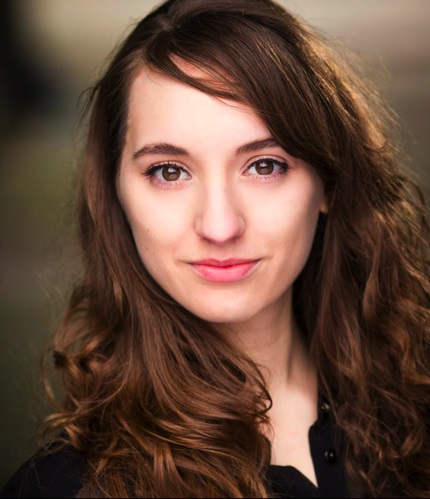
After reviewing 3 Crate’s intriguing adaptation of Henna Night, I was given the opportunity to interview the cast and director here’s how it went, with info on the characters, script, and general process of creating a unique experience for theatre goers.
1. Chapter arts centre overall is surprisingly sprawling, but its theatre can be best described as cosy; how do you feel playing in such an intimate theatre affected the performance?
Emma (who plays Ros): The theatre space at Chapter Arts Centre is lovely to perform on. It means that, as an actor, you can really feel the audience with you. We had previously done the piece in a much larger performance space with the audience further away, and I felt that for such a personal and naturalistic piece, this kind of setting is far better. The play is set in Judith’s ‘eggbox’ sized bed sit, so it was important for us to allow that claustrophobic feel come through. There really is no escape for Ros in such a small space, and it was lovely to have the theatre space add to that.
2. There aren’t that many female led projects in general, and nowhere near enough female friendships – do you feel this is something unique to Henna night, or since the late 90’s, when it came out and won awards, has it trickled into other plays?
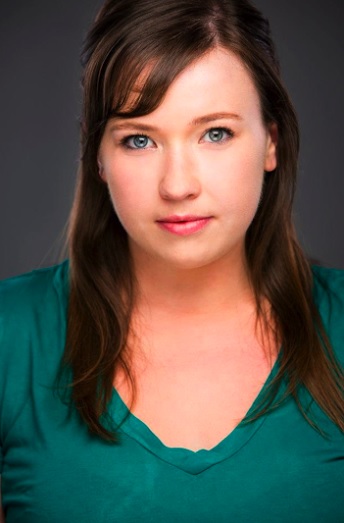
Hannah (Judith): The biggest pull for me wanting to perform ‘Henna Night’ was the bold decision Amy Rosenthal took, in writing two strong, real modern woman and not caricatures – we’ve all been a Judith and/or Ros. I think since the 90’s and most definitely in more recent times, the whole debate about female characters, gender-casting , female driven plays has been growing and I certainly have found it affecting new writing, which as a female, I am really excited about. I do believe it has started in trickle in but not just into plays but other areas such as film and tv.
3. What were the challenges of the play’s direction – it’s a very natural and simplistically directed play; so what were the subtleties that you feel enhanced it?

Peter (director) : For me the character work was the key. We did extensive character work on Judith and Ros, so even though it was simplistic, both characters were interesting in themselves. My aim in the direction was to enable to actors to give pure, natural performances so the audience could relate to and empathise with them. We wanted the audience to go on an emotional journey in the piece, but we also wanted to remain true to the play, which is very simple and natural in form. In making the characters as natural as possible I aimed to counter some of the comedy moments, so that the audience could experience the depth of the characters and the performance wouldn’t become a farce.
I aimed to make the set communicate as much In the piece as the characters. We were inspired by Tracey Emin’s ‘My Bed’, as – like Emin – Judith has effectively remained on her futon bed for weeks as she wallows in the pain of Jack leaving. The litter scattering the floor added a tactile, unstable element that the actors had to navigate during the performance. There was a lot on the floor, and if the actors touched, knocked over or kicked any of it I had given the direction that they had to react and deal with it. In my work I use organic blocking, so I allow the movement of the actors onstage to be found in the moment or through improvisations in rehearsal. This, combined with the ever changing set, made for a performance that has changed every night.
4. If the story was, like it so easily could have been the boyfriend’s, with Ros and Judith’s growing understanding as just a subplot, how do you think the play would change?
Emma: The play would change dramatically! My fear is that, if Jack was introduced as the lead character, Ros and Judith would be reduced to character types rather than three dimensional characters. Unfortunately, it is very rare as an actress to be offered a character who is in the play in her own right and not just ‘the girl friend’, ‘the mother’, ‘the mistress’, etc. In ‘Henna Night’ we are able to see the characters as people in their own right. If Jack was introduced to the plot, I doubt we would’ve have been given the opportunity to see Ros’s manipulative side as well as her sensitive caring nature. In the play we get to see Ros triumphantly mocking Judith as well as her desperately trying to lighten the mood and make friends. There are very few plays in which as an actress in their 20s you get to do that. So thanks Amy Rosenthal for writing ‘Henna Night’!
5. The play starts off very dark, but slowly tails off the dark premise and into something very warm; do you think the tonal balance fit the characters, or did you think about putting nuggets of black comedy in the lighter parts, and vice versa?
Peter: I wanted to create a piece that fluctuated between darker and lighter moments. By remaining true to each moment, both the comedy moments and the darker points, the audience were able to experience the humour and invest in the darker moment.
Hannah: Amy’s (Rosenthal) script is fantastic and I do feel the tonal balance she created through the script does fit the characters. When I first read the script, the way in which Judith uses her nuggets of comedy and one-liners in both the darker parts and the lighter parts was really interesting and discovering ways to play the lines was a delight.
6.Finally, when the characters first walk on, they’re centrepieces of the comedy rather than completely likable – Ros seems a little superior, and Judith the easy to mock brash character – how conscious were you of turning their characters around, so the audience would sympathize with them more, in a subtle and organic way?
To be honest, the script did it for us. In rehearsal, Peter really encouraged us to trust the script and invest in each moment fully. Through all the extensive character work we had done in rehearsals we knew the character were multi-faceted people. I had found through the improvisations and visualisations that she could be kind and caring, but also manipulative and snide. She used humour to try to dissipate some of the tension and awkwardness of the situation, but also at times used it to mock and berate. Ros is paranoid that Jack will leave her for Judith, especially if she is pregnant with his child, but on the side she is truly trying to convince herself that she deserves happiness and that she, and not Judith, is the right woman for Jack. The play allowed the audience to see different sides of Ros throughout and, hopefully, to sympathise with, but also dislike her at different times. Many of us have been Ros at one time, and many have been Judith as well. Through the play we wanted to try to show both sides of the story. IT’s been great having audience members approach both myself and Hannah after the show and say ‘I hated you at first, but then I thought – that’s just how I felt when X left me’ or ‘I know exactly how Ros feels! I always wanted to say that to X’s ex-girlfriend’.
For more info on the company check out
3crate.wordpress.com
Review The Taming of the Shrew, Everyman Open Air Theatre Festival by Lois Arcari
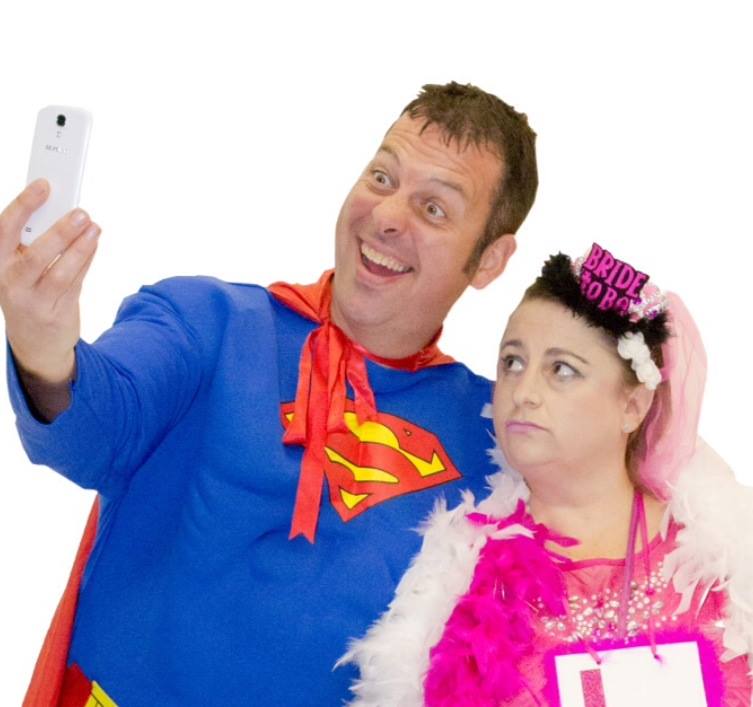
As the sun beat upon Cardiff, a cool breeze following; it really didn’t prove too hard to imagine that we were in the lazy Italy of Shakespeare’s time.
What was amazing about this Italy we were transported to, however, was that despite its age, the actors connected it to the audience; laughter heard flowing through Shakespearean double entendres and the rouge’s Elizabethan renditions of pop songs, a la karaoke, alike.
All the actors were brilliantly cast; James Pritchard as Petruchio had a rouge’s charm, even through his viler moments, and Kate was dramatically acted by Sarah Bawler in moments that flashed with anger Bawler excelled in giving her character comedic sympathy.
Also of note were the rouges; Serena Lewis and Bridie Smith, Alys Pearce as Bianca, making her interesting rather than the easy option of a piece of cardboard, and Petruchio’s much abused servant, Grumio, bringing some great comedic moments as played by Chris Williams.
Thematically, this is one of Shakespeare’s with uneven footing, modern values leaving rather disgusted residual energy, despite the gusto of all the actors in the production; but criticising the man himself would be a little beside the point when so many other have both critiqued and praised it wonderfully, with the best links here and here:
http://waitingforputney.wordpress.com/2014/01/20/liberation-through-submission-sexism-in-the-taming-of-the-shrew/
http://www.theguardian.com/stage/2012/jan/17/taming-of-the-shrew-rsc,
With an increasingly popular view that Shakespeare was trying to push the boundaries of his time, by pushing comedy to its limits and seeing if his audience would laugh; the themes of the play and their dual interpretations, in relation to our and its own time are interesting food for thought.
It is however, somewhat a moot point, as although each member of the cast was excellent, especially in making Shakespeare’s dialogue more understandable; it fails to take any real subversions or bold choices; the stag do at the start and Italian karaoke fun, but the creativity seems spent on the enthralling comedy, rather than trying to find very much meaning.
As it is, however, it’s a play at times bombastic and always well-acted, that benefits enormously from its outdoors setting, and made a real connection with its modern audience.
Review Henna Night, 3 Crate Productions by Lois Arcari

Hannah Lloyd and Emma Macnab, given the unenviable task of carrying the show on their shoulders, rose to the challenge; with both actresses very good at portraying the flaws and strengths of two very different women, and showing annoyance blossoming into understanding; perfectly asking questions about the nature of female hostility and empathy alike, tipping from understated to heavy handed in the writing a little jarringly.
The themes themselves, however, are generally under-represented, and it was good to see them as the whole basis of a play, when they are themes that so many writers don’t acknowledge as important or interesting.
The set design was well tailored to the play, believable; but also a physical representation of the divide between the two, with all its scattered mess.
The writing was its biggest strength and downfall, as although it was often witty and cutting, some of the dialogue seemed the sort of dialogue too sweeping not to be reserved for fiction, and seeing how much of a negative influence their boyfriend had become, rather, than just hearing how good he was supposed to be, made you wonder why he was attractive to either woman in the first place.
It also felt like it was over far too soon because of the constricting time frame, but that may, again, be a symbol of how cut off the two were, even with their friendship.
Overall, a generally sharp comedy that had some important themes, even when the dialogue sometimes carried them a little too heavily in places, had some wry jokes and talented actresses, and felt, like it should have, as a snapshot easily lifted from reality.
Review Sweeney Todd Everyman Theatre by Young Critic Lois Arcari
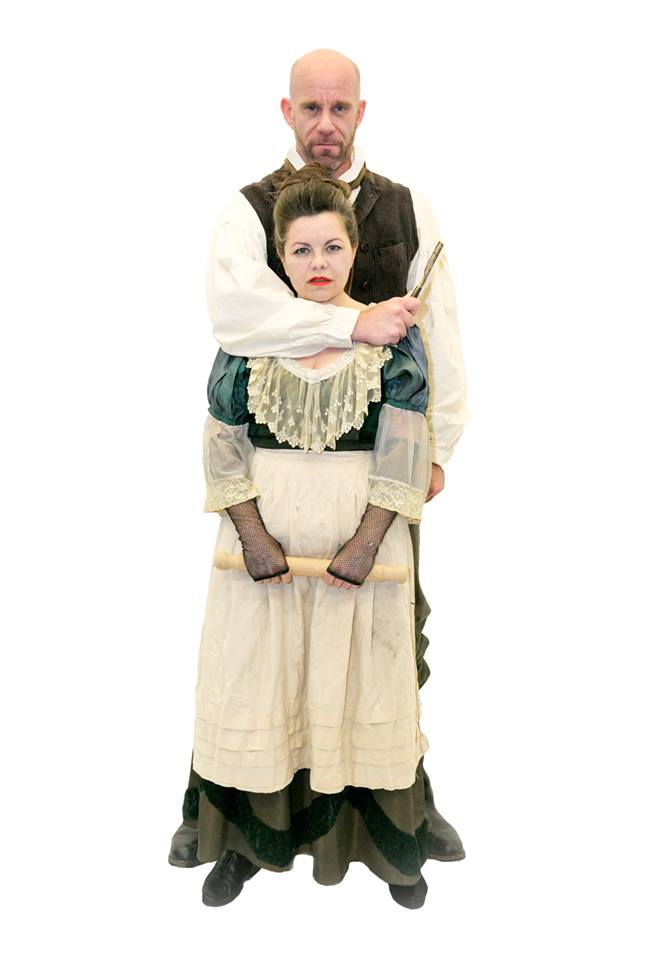
Everyman theatre’s production of Sweeney Todd was just the type of treat Mrs Lovett’s pies were, with their dark ingredients. As the scene was set, drizzle adding to the atmosphere of Victorian gloom, I couldn’t imagine what I was in store for.
David Stephens as Sweeney was magnificent, getting into the obsession and rage of the character with a captivating voice, whilst still playing the dark humour well too, even adding in one or two Jack Sparrow slips as with Depp in the film version; every moment with our principal character on stage a treat.
Other great performances come from Joan Hoctor as Mrs Lovett, balancing all aspects of her character well, with a singing voice that adding her accent without it ever overtaking the songs, which can happen in some performances, providing most of the laughs for the audience, even as the second half of a dark duo. Sondhiem was a genius for making someone who is, on paper loathsome so sympathetic, even with her eviller revelations, and Hoctor showcased that well.
Other characters played notably were Olivia Hopper’s Joanna, managing to play her descent into madness on top of what would otherwise be a stock romantic character and the beggar woman played by Sarah Chew, both entertaining and disturbing as the more traditional mad woman whose songs drive the action of the second act.
Pirelli was a scene stealer, and when the audience see his fate we can’t wait to see Sweeney’s gruesome plan unfold, and the beadle was a classic pantomime style villain that was fun to see prowl around.
The ensemble cats were also brilliant, their harmony for the Ballad of Sweeney Todd powerful and pitch perfect, and the costumes were, as the Victorian theme demands, absolutely gorgeous.
The show had very few slip ups, all forgiveable – while the judge’s actor, Clive Riches got under the disgusting skin of the character, his part of his duet brought the other half of the performance, from Sweeney himself down a tad, though he was fine when he sang solo.The role of Anthony’s played by Joe Wiltshire Smith performed well, but didn’t make me think his character was any more than the traditional romantic, conversely for such a well-worn character type probably the most insane of all the madmen and women of the show.
A final misstep was the bookending of modern characters looking into the story, though perhaps it was meant to symbolise how intriguing the character is despite the age of the setting and folk story, but it really only took the audience’s mind off a world the cast had done so well to establish.
All in all, it was an exciting, atmospheric performance abuzz with energy; eyes glued firmly on the main stars performances, lavishly acted and staged, a brilliant performance of a dazzlingly ominous iconic show.
Preview Everyman open air festival by Young Critic Lois Arcari
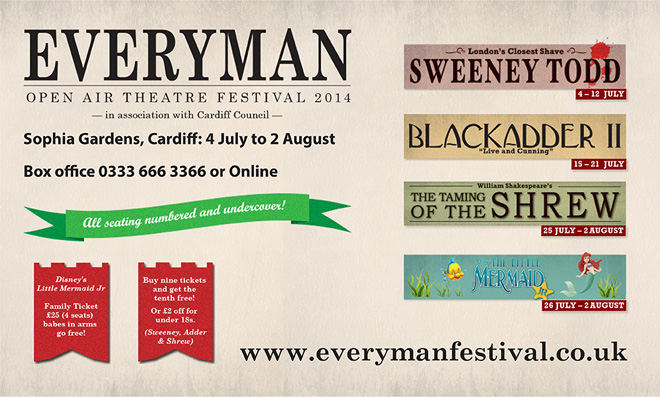
The sun, as it often chooses not to, is shining over Wales, with people country-wide crossing their fingers for a summer just as extraordinary as this unusual event.
Perhaps that could be found with the return of the Everyman open air festival in Sophia Gardens, the biggest of its kind in Wales, hoping to entertain thousands with their four productions; the opening one being the iconic Sondheim musical Sweeney-Todd from 4-12th of July promising to disgust and delight in equal measure, as the macabre descends into the summer heat.
The next show in the season is a showing of three Blackadder II episodes, promising cunning afoot from Rowan Atkinson and Tony Robinson’s classic characters, and lots of laughter from the captive audience from the 15-21ST of July.
The turn of the shrew will play from the 25th of July to 2nd of August, showing one of ultimate playwright Shakespeare’s most famous and well-loved romantic comedies.
Family fun will swim onto the scene with a performance of little mermaid Jr from the 26th of July to the 2nd of August, with the beloved characters and unforgettable musical numbers sure to shoal in the crowds, and have both children and adult’s toes tapping.
The productions will all be numbered and undercover, so even if our weather goes with the age old tradition of the summer downpour, it won’t put a damper on the performance and atmosphere.
The tickets for all are £12-£16 with the exception of The Little mermaid junior, which can be purchased at £7 a standard ticket or £25 for a family ticket.
Whether it’s a long, lazy summer, or you’re looking for the perfect live entertainment in amongst routine, the Everyman festival is sure not to just bring entertainment, but experience, and one that looks to be engaging and inspiring.
If you’d like more information, you can contact the Everyman festival through their twitter or Facebook pages, their own website at www.everymanfestival.co.uk or call the box office at 0333 6663366.