

All posts by Kevin Johnson

DUMPY BISCUIT – A Review by Kevin Johnson,Plaza Theatre.

⭐️⭐️⭐️⭐️⭐️

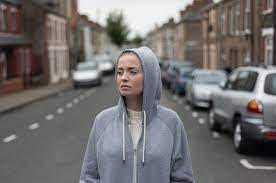
Skylar has returned home to Port Talbot, disillusioned with life in London. Staying with her friend Meg, and meeting up with their other mates Jess & Courtney, all four try to deal with work, love, and life, while hiding behind a mix of drink, drugs and dancing. Meanwhile secrets are gradually revealed, old grudges resurface, and friendships are tested…

This play explodes with an intense energy, and a rhythm of language that is totally alien to me, yet is Port Talbot through and through. I’ve seen a lot of plays that were good, some even great, but not all had that special quality I’ve always looked for, the ‘wow factor’, and this play has it in spades. Written by Holly Carpenter, who also plays Skylar, the latest in our local production line of artists.

We’re famous for making steel here, but what’s not so well known is that we also make art. Burton, Hopkins, Sheen, and many more, we punch well above our weight, and although it might be early, I think we have another talent on our hands. As an actor Holly brings out the vulnerability of Skylar from behind her tough shell, a star turn, but her writing is just as impressive, and she is smart enough to give her fellow actors plenty of stage time.

The cast fully embody their characters, Meg, the calm eye in the middle of the hurricane, yet subtly knowing, especially about Skylar’s return. Jess, the career girl, manager of a travel agency yet with a wild side. Courtney, the ‘quiet’ girl with a secret of her own that might just change everything. And of course Skylar, the ‘hurricane’ itself, an equal mix of fury and doubt.

I found little in common with these four characters, but the fear of being a wage slave, a human hamster on the treadmill, rang a bell with me, as did the healing power of friendship.

For me the highlight was one character explaining their confusion over their sexuality through the medium of types of pie, which was funny, but also incredibly moving.

Jalisa Phoenix-Roberts gives Meg a hidden heart of gold, but with the strength to force Skylar to look at her true self.

Georgia Warlow shows Jess as someone with an anger born of desperation, yet remains a true friend.

Anna-Sophia Tutton portrays Courtney with a sweetness, but also with a subtle yearning.

The set is innovative and clever, a graffiti covered wall with hidden doors, cupboards and even a pull out bench. Director Samantha Alice Jones keeps the pace well, knowing when to ease the reins.

Although marketed as a comedy, and it is a very funny play, it’s also got hidden depths and important matters to discuss. Holly Carpenter has a lot of potential, I look forward to seeing what she comes up with next.

I don’t want to call it a love letter to Port Talbot but there’s no doubt it captures something of the hope that the town feeds on and the strength of the community within.

And if this is anything to go by, I think I’ve seen a future star.

Dumpy Biscuit is at the Plaza Port Talbot until June 29th.
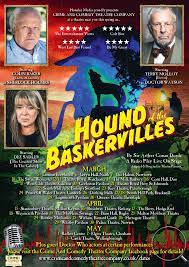
THE HOUND OF THE BASKERVILLES, THE CRIMES AND COMEDY COMPANY, GWYN HALL, NEATH – A REVIEW BY KEVIN JOHNSON


 out of 5 stars (4 / 5)


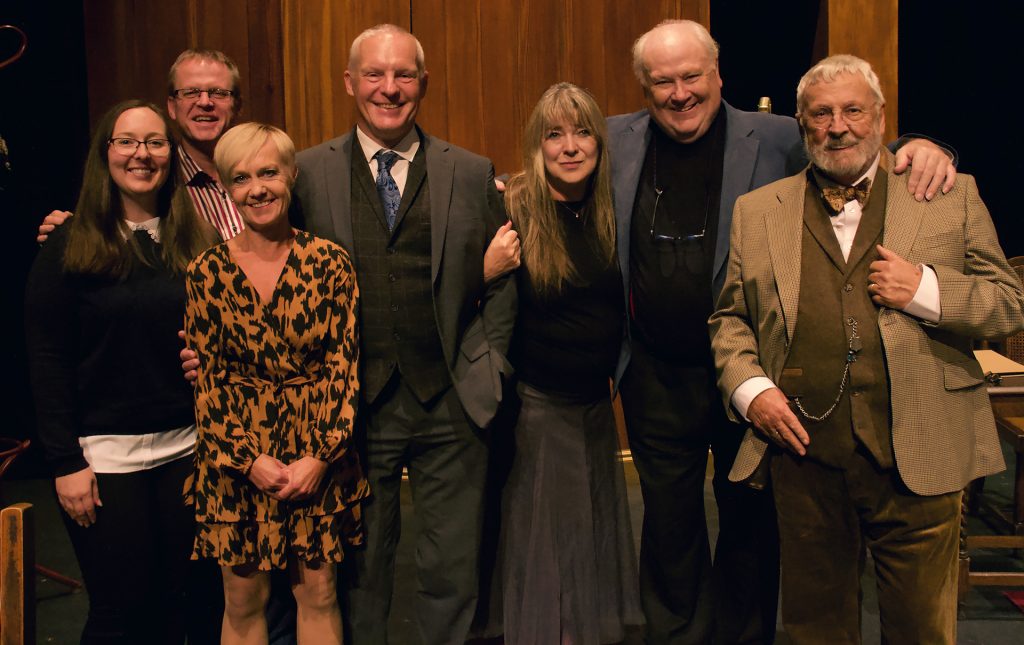
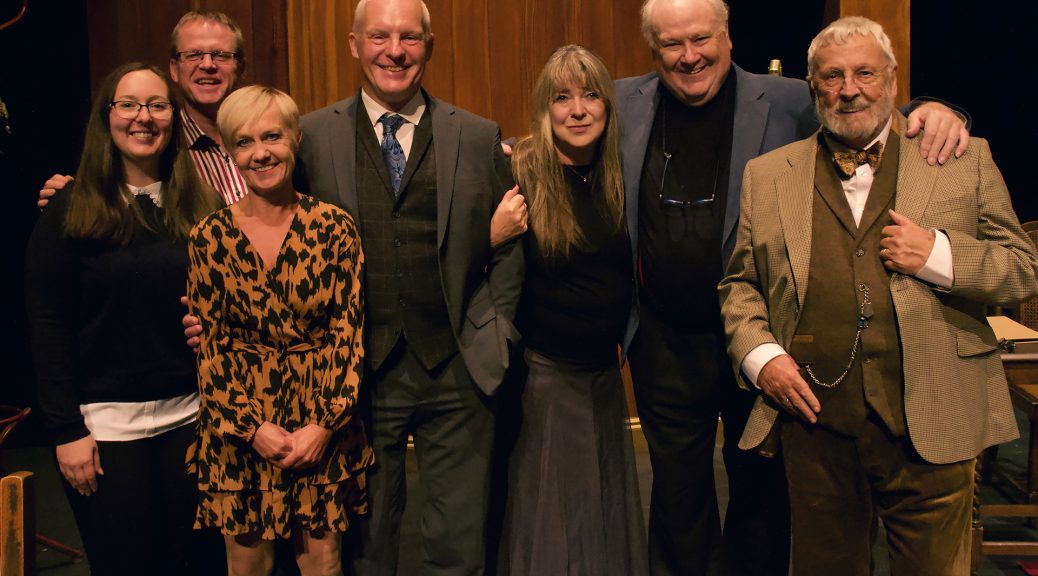
A production by the Crime and Comedy Theatre Company created on the 120th anniversary of the story, this is presented as a radio-play live on stage. Starring Colin Baker, Terry Molloy and Dee Sadler, it’s been adapted and directed by Martin Parsons.

One of the most famous cases faced by Sherlock Holmes, it’s actually based on Conan Doyle’s third novel, and sees the detective consulted by Dr Mortimer on behalf of her friend Sir Charles Baskerville, who has just inherited the title after the strange, untimely death of his father. She reveals the dark, centuries old curse on the family and asks for Holmes help to prevent the new heir suffering the same fate as the last.


Maybe it’s the concept, the classic story or even the way the actors and director convey the story, but there is something so warm and old fashioned about this production. A merging of a theatrical play and a radio mystery broadcast, it works as both. In fact, I enjoyed closing my eyes and listening to the sound effects of the countryside, the birds, the animals and even the weather. It gives a much richer atmosphere to the play and adds an extra dimension to the story. Such sounds are not immediately apparent with your eyes open, it really evokes the eeriness of the moor, and brings the story to life. In fact, for people who have loved ones who are blind or partially-sighted, this is an excellent opportunity to see things from their perspective, to share a performance you can both enjoy equally. My late mother lost her sight in old age, I think she would have loved this show.

There’s a vein of humour running through it to relieve the tension, some tongue in cheek, and plenty of in-jokes and references to other stories for Holmes fans, including one of the most famous and chilling lines from the stories: “Mr Holmes, they were the footprints of a gigantic hound.”
The cast of seven are excellent, and a special mention must go to Martin Parsons for the adaptation. Although a Holmes fan I’ve never really cared for this story, but it’s made me reassess my opinion. Go see it, enjoy it, maybe even close your eyes, but remember, whatever you do, don’t try to cross the moor at night….

You can find out more about this production here

Review Baba Joon, Grand Theatre Swansea by Kevin Johnson

19/10/23

 out of 5 stars (4 / 5)

“When I first heard someone from Swansea speak, I thought they were singing to me.” That’s a great tagline for a play, when you see it you really want to know more. 

Based on her own life, this was written by Lisa Zahra during lockdown, a time many of us spent reflecting on our lives. Born to a Welsh mother and an Iranian father, the Baba Joon (Dear Father) of the title. She grew up in Swansea and found it difficult to relate to her father’s heritage, despite the love she held for him, maybe because she was swamped by British culture. 

Her father arrived in the 1970’s and at first he was enamoured by his new country, thinking it “the greatest country in the world”, but he gradually became disillusioned, by Britain, by his success, and perhaps he also felt the Iranian version of ‘hiraeth’. Lisa was torn, always trying to be a good daughter while fitting in with the local community, at one point even using makeup to appear whiter than she was. It is difficult to be a child of two worlds when both compete for your love, and in a culture where even dancing can be a rebellion, it’s hard to know the right steps. 

There is poetry here, in the words and the rhythm of the languages, English, Welsh and Farsi. An influence of Dylan Thomas is unsurprising, and Zahra uses it to point out similarities between the Welsh and Iranian cultures, both famous for their poets, and she doesn’t stop there: Family, dance, music, even food, are all used evocatively. It’s been said that ‘food is memories’, because it brings back remembrance of such things as our childhoods.

The staging is like a 1990’s disco, with dry-ice fog, and an old portable TV set that is cleverly used to show switches between scenes in Iran and Wales. Zahra does not just focus on national differences, but also gender ones. Growing up in Wales she experienced racism, sexism and the double standards that come with being a daughter, and in Iran she found it the same, compounded by her being even more of a foreigner as she couldn’t speak the language fluently.

Voiceovers and music are used throughout, which I thought a flaw as I found it off putting sometimes. For me it broke the contact between actress and audience, which is so important in a show like this, and which she establishes so well. This minor quibble aside, I was enthralled by her semi-secret world, growing up in a Swansea where there were always eyes on her, British and Iranian, ready to criticise her every move. No wonder she felt relief at moving to Cardiff to study, finding the simple freedom of getting lost in a crowd. The scenes in the airport in Iran serve to highlight this.

I found the ending of the play annoying at first because there is no real end per se, no conclusion, and then I realised that this is by design. Life is messy, there are rarely easy solutions and not all questions are answered. We never find out why her father left his family, or why he left Britain, but perhaps that’s because she doesn’t know either.

I’ve always thought that good theatre should make you think, make you feel, or both. Lisa Zahra more than accomplishes that here. I was left with so many questions afterwards, and not just the clichéd ones, such as ‘who am I? Why am I here?’, but more difficult ones such as ‘where do I belong?’, or in the case of this play: ‘who are you, Baba?’  Thanks to Izzy Rabey’s excellent direction, the play moves at a good pace, and it sometimes feels like so much is coming at you in a short time, but then life itself is like that. In the end, it seemed to me to be about accepting who you are and being happy with it, and to Hell with anyone who says different. I don’t know about Iran, but that describes Swansea, Wales and I think Lisa herself in a nut-shell

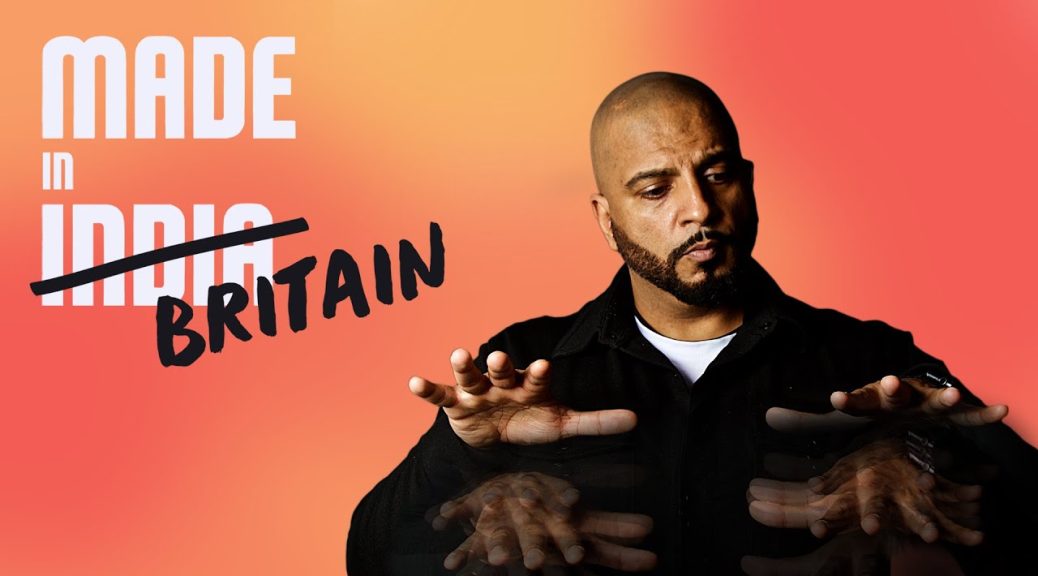
Review Made In (India) Britain, Rinkoo Barpaga by Kevin Johnson

 out of 5 stars (4 / 5)

“I was born brown, deaf and outside a prison…thanks Dad!” So begins this one-man show about a British-Indian, or Indian-Briton, or perhaps there’s even a third option.

Rinkoo Barpaga is a Sikh, born in Birmingham to parents from India, who’s been trying to find his ‘people’ all his life. Growing up during the Thatcher years, he experienced unemployment, prejudice and racism, all while observing the many ‘cultures’ he encountered. Learning sign language at a much older age than others left him feeling even more of an outsider, his first word, ‘dog’, was learnt from a friend in a car on the way to a special school. 

Bouncing between Birmingham, Newcastle & London, making friends while enduring double prejudice because he was deaf and brown, from hearing and (white) deaf alike, always wanting more than anything to understand and be understood. A career in entertainment was never his intention, falling into it by accident after becoming a translator for TV. Trying stand-up comedy both here and in America, he grew more accomplished, and started creating stage shows based on his life and travels. This being the latest result.

One of the most intriguing aspects of this play is that, unlike most others, instead of an interpreter for the deaf here we have an interpreter for the hearing. He becomes a sort of narrator in a way, speaking Rinkoo’s words in a voiceover to the acting, which gives us a fascinating insight into his world. Occasionally it misfires, the voice not always being synchronised to the signing, leading to the emotional impact being somewhat diluted. On the whole though, it adds a fresh new dimension to things.

In turns sad, joyous and painful, but always funny, Rinkoo passionately conveys the anger, fear and sheer frustration of his life due to his inability to communicate. The  irony is that it seems to be here on the stage that he communicates the best, offering us an insight into his world, a world I was almost completely unaware of. Both an entertaining and enlightening experience then, and one I truly enjoyed.

Theatre, A Lifetime of Great Memories by Kevin Johnson.

We recently published a new article on the return to physical Theatre performnces. In response to this article Get the Chance critic Kevin Johnson shares Theatre means to him.

Theatre was never part of my life growing up, only books, television, music & cinema, and the nearest one was ten miles away. Then one day I read in a newspaper that Ben Kingsley, who’d just won the Oscar for Gandhi,  was going to do a one-man show in London. For some reason I decided that I wanted to see that. A trip to London back then wasn’t simple, tickets had to be booked either by post or over the phone, months in advance in the days before the internet, and it meant an overnight stay, but luckily I had family there, so at least I didn’t need a hotel. I couldn’t have picked a more intimidating venue for my first play: The Theatre Royal Haymarket is the third oldest in London, built in 1720, and unlike most theatres in the capital which are huddled together in busy streets, it stands alone on a major thoroughfare, giving it plenty of space to be appreciated. This was due to a massive renewal scheme in 1820 sanctioned by the Prince Regent and overseen by architect John Nash. The buildings on either side are painted white, and although not part of the theatre itself they make it look much bigger than it is, while six giant Greco-Roman columns hold up a portico above the door like a temple. Inside it is even more intimidating, with murals on the walls and ceiling, and the main colour throughout is gold.

The Haymarket is on the upper scale of London theatres, both in its appearance, capacity  and in the quality of plays and actors performing there, and this permeates most aspects of the venue. During the interval, for example, as well as drinks from the bar, staff roam around with trays offering small bottles of wine and champagne, and the programmes for the plays are the classiest I have ever seen: the covers are a shiny black with the names picked out in – what else – but gold. 

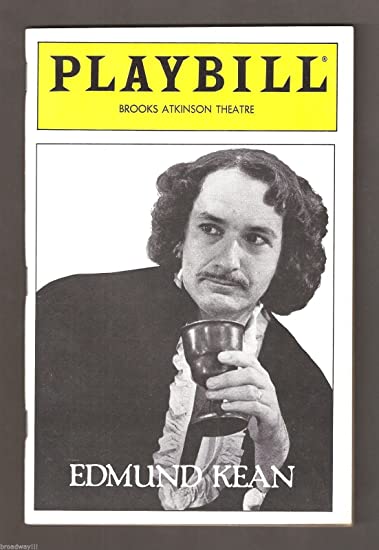
The play was based on the real 19th century actor Edmund Kean, who had also appeared at the Haymarket in his heyday. He was an actor of great renown, both for his talent and also his scandalous lifestyle. The poet Coleridge said that watching Kean act was like “reading Shakespeare by flashes of lightning”, for me, watching Ben Kingsley act was similarly mesmerising. I had always liked comedy, and there was plenty in this play, but what I had never experienced before was the sheer weight of silence, the heaviness of pause that a great actor can bring to a performance.

It wasn’t just me, the whole audience was enthralled, and you really could have heard a pin drop. That was the moment I became fascinated by the theatre, and I still am. It has brought me so many incredible memories over the years.

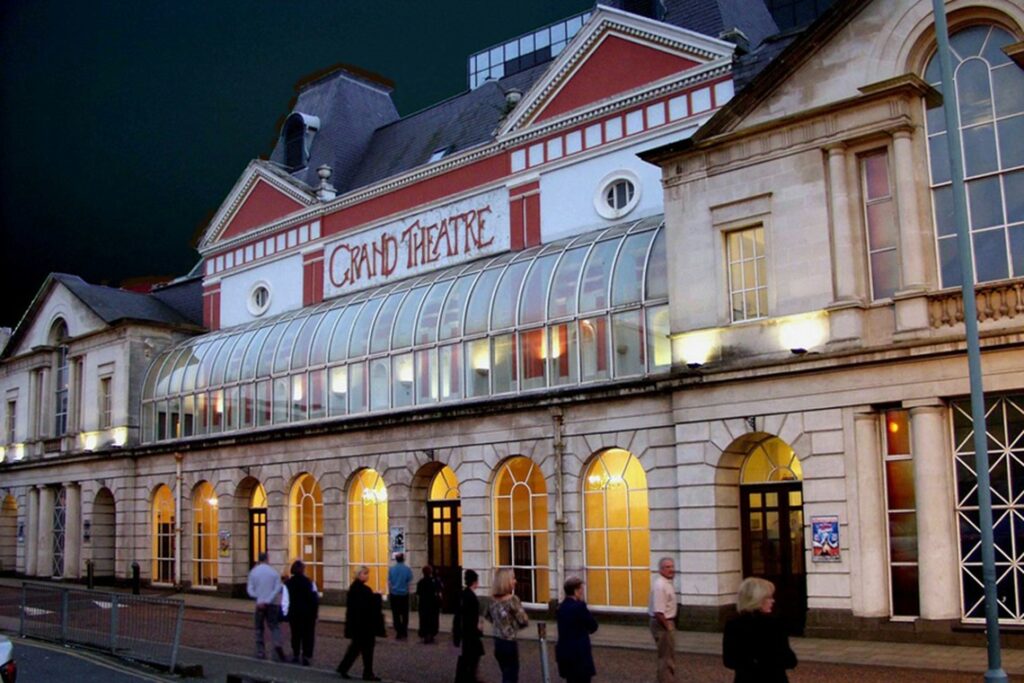
I was soon a regular at my nearest theatre, the Grand in Swansea, which actually has a bigger capacity than the Haymarket. The ‘Royal’ in its name I later found out meant that the theatre had received a licence from the reigning monarch to perform serious drama, whilst others could only perform lighter plays, comedies and variety.

The Grand has a pedigree too, founded in 1897, and I’ve seen many amazing moments there: Timothy West in Death of a Salesmen holding a whole audience in the palm of his hand. Other great memories include Anthony Hopkins in Pravda at the National Theatre doing an entire play with his voice in a much deeper, gravelly tone than I would have thought possible. His two Oscars notwithstanding, he is one of the finest actors I have ever seen. The National Theatre of Scotland touring with Black Watch at the Barbican, a play about the Scottish Regiment in Iraq, with songs, routines, even a mime, seemed to have everything but the kitchen sink yet was phenomenal, and one of the best live shows I’ve ever seen. Billy Piper in Yerma at the Young Vic, giving one of the greatest portrayals of human pain and the desire to be a mother ever seen onstage: Sophie Melville at the Sherman in Cardiff in Gary Owens’ Iphigenia In Splott, a searing one-woman monologue which put her in direct competition with Billy Piper for the Evening Standard Award.

But ironically the best play I’ve ever seen occurred much closer to home than any of the others, in fact I was even a member of the cast: that was The Passion in Port Talbot. Performed over three days in Easter 2011, it was a passion play with a cast of nearly a thousand locals, a small band of professional actors, and Michael Sheen in the lead. It had an audience of nearly 20,000 in total, plus many more watching online, and was described by the Guardian as ‘one of the outstanding theatrical events not only of this year, but of the decade’. Sheen co-directed it with Bill Mitchell of Cornish company Wildworks, and they did an award-winning job. Written by Welsh poet Owen Sheers, it was simultaneously filmed as ‘The Gospel of Us’.

So if you haven’t already, give theatre a try, you may be as pleasantly surprised as I was and it could lead to a lifetime of great memories.

Get the Chance supports the public to access a world of cultural provision. We receive no ongoing, external funding. If you can support our work please donate here. All and any contributions are greatly received, thank you.

Kevin Johnson


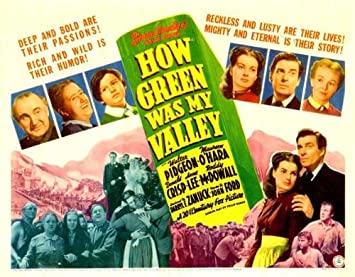
Review How Green Was My Valley By Kevin Johnson

⭐️ ⭐️ ⭐️⭐️

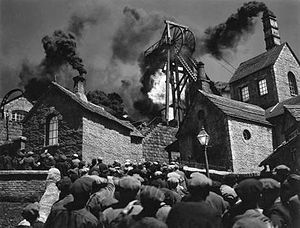
Sir Anthony Hopkins was the latest of many Oscar winners with a Welsh connection, one in particular is often overlooked. The greatest film ever made is considered to be Citizen Kane, but it lost out on Best Picture in 1941 to a story about a family of Welsh coal miners. 

https://youtu.be/SWthT6_MTHk

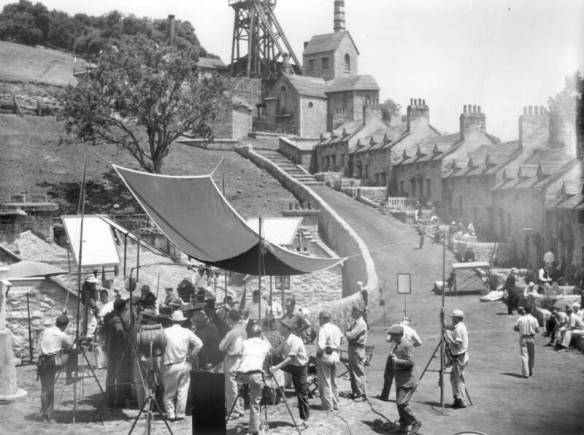
How Green Was My Valley is about the Morgan family, and set between 1890-1914. It tells of the lives of Gwilym, his wife Beth, and their seven children living in a coal mining village in the Rhondda. Derided for its inaccuracies, mining families of the time could barely recognise their own lives. The novel was also far from authentic as the writer, Richard Llewellyn, was the son of Welsh parents who ran a pub in London. Born and raised there, he had an English accent, and never set foot in Wales until he was an adult. Most of the background came from listening to stories told by others, and written while on army service in India. The rights were bought by Fox for $300,000 and adapted by American screenwriter Philip Dunne, who had no idea about Wales. It wasn’t even filmed there: The original intent was to make it on location, in colour, and as a four hour epic like Gone With The Wind, but the outbreak of World War Two ended that. Instead an entire village was built in Malibu Creek State Park, taking 150 builders six months and costing $110,000, with the hill painted black to look like coal slag.

Studio executives also watered down the politics of the story, uneasy with its pro-union and socialist message. Gwilym Morgan is seen as being an independent leader, opposed to unions. Most of his sons disagree, and it is this issue that eventually leads to the decline of both the Morgan family and the valley itself.

The biggest criticism of the film is the poor Welsh accents by the actors, as there was only one Welsh person in the entire cast. Rhys Williams from Clydach plays Dai Bando, the miner who teaches Huw how to box. The rest are Irish, Scottish, English and even Canadian. One of the better accents comes from Mr Parry the chapel deacon, played by Arthur Shields. The brother of Barry Fitzgerald who plays Cyfartha, he fought in the Easter Rebellion in 1916 and was imprisoned afterwards in a camp in Frongoch, Wales. Oddly enough John Loder (Ianto Morgan) was a British officer and fought on the other side.

Despite the criticism it should be remembered that the film won 5 Oscars, and brought Wales to the attention of the world. It also managed to create a genuine feeling of Welshness by using traditional songs & hymns, such as Men of Harlech, Cwm Rhondda and Calon Lan, employing most of the Welsh singers in California. For me it has the one thing that Citizen Kane lacked, heart.

There is one scene in particular that captures the poetry, sadness and humour that are endemic to Wales: a disaster brings everyone to the mine, including Dai Bando, his constant companion Cyfartha, and Mr Gruffydd, the preacher who was about to leave the valley. With men still trapped, he appeals for volunteers to rescue them:

Mr. Gruffydd: “Who is for Gwilym Morgan and the others?”

Dai Bando: “I, for one. He is the blood of my heart. Come Cyfartha.”

Cyfartha: “Tis a coward I am. But I will hold your coat.”

The film left its mark on several of the cast and crew: Anna Lee (Bronwyn) became pregnant halfway through filming, Maureen O’Hara later named her daughter Bronwyn, Donald Crisp & Beth Allgood (Mr & Mrs Morgan) were nominated for Best Supporting Oscars, with Crisp winning, and John Ford won his third Best Director Oscar. The film also won cinematography and for Art Direction, due mainly to the village set. Although many believe Citizen Kane to have been robbed, I think that at a time when the world was going to war, a film about a family struggling to stay together through tragedy was the right choice.

“Men like my father cannot die. They are with me still – real in memory as they were in flesh, loving and beloved forever. How green was my Valley then.”

Review Justified (2010- 6 series ) by Kevin Johnson

The Get the Chance team share some of their favourite binge-watch series they have been enjoying during Lockdown. First up Kevin Johnson with Justified.

⭐️ ⭐️ ⭐️⭐️

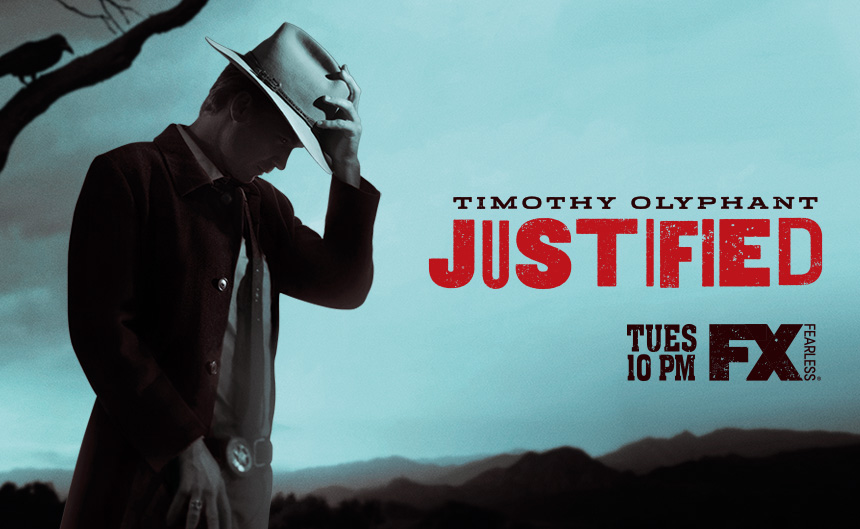
Deputy US Marshal Raylan Givens shoots a hitman while both are sitting in a Miami rooftop bar, the latest of many such incidents. Although the shooting is considered ‘justified’ by the authorities, as a punishment he is reassigned to his home state of Kentucky, a move he considers a demotion. There he’s forced to face his past, including his ex-wife Winona (for whom he still has feelings), his estranged criminal father Arlo (for whom he doesn’t), and his old friend, and crime family kingpin, Boyd Crowder (for whom?).

While ostensibly a crime show, Justified is also a modern take on the western, as well as a psychological drama. The characters are rarely either completely good or bad, with relatives and friends on both sides of the law. They’re living in a state that is poor, jobs are scarce but drugs aren’t, and corruption is rife. To show how morally confused things are, in one story Loretta, a teenage girl, outwits a sexual predator, who is an enforcer for the crime family that also employ her & her father to grow cannabis for them.

An excellent cast is well-served by superb writing that not only conveys believable characters, but has a rich vein of laconic wit running through it. At one point Raylan, after warning a criminal about trying to kill him, punches him to the floor, drops a bullet on his chest, and remarks “next one’s coming faster”. To a snitch too scared of another criminal to talk, he says “You think you’re scared of him? You got no idea what you can expect from me.”

Nor is he the only one to be given good dialogue. About to be shot by a member of the Bennett clan over a family feud, he’s told ominously “this bullet’s been on its way for 20 years.”.

https://youtu.be/AbiMQeWBHCw

While Raylan is terse, Boyd Crowder is all Southern charm, whether he’s trying to relate to someone or about to shoot a rival criminal. There’s a bond between the two from when they worked in the mines:”we dug coal and drank beer together”, as Raylan puts it. He joined the Marshals and Boyd enlisted in the army and served in Iraq, both trying to get away. Both failed.

Despite being the ‘hero’, Raylan is actually a tragic figure, often his own worst enemy. His boss Art, a father-figure to him, driven to exasperation by his actions says at one point “you’re a great lawman but a lousy Marshal”. Brooks, a black female Marshal, also tells him that he wouldn’t get away with such behaviour if he weren’t white, male, and handsome, which given that this was said in 2013 was a little ahead of its time.

There are also many layers to the storyline, and events often take place without Raylan’s participation or knowledge. One of the best scenes is in a diner where his Aunt Helen is meeting with Mags, the head of the Bennett family. What seems like a simple chat over a coffee is actually a parlay between the matriarchs of two warring families, both trying to negotiate a peace treaty before there is more bloodshed. It’s subtle, but almost Shakespearean in its execution.

Each series also features a new antagonist, as well as recurring characters, and it helps to keep the show fresh. The scope also varies from Kentucky to Florida to California, as well as Mexico, which feature memorable figures who may or may not turn up again.

Despite it being a great series overall, I was disappointed that the characters of Tim Gutterson, a former army Ranger, & Rachel Brooks, a black female Marshal, colleagues of Raylan’s, are not really developed over six series, despite both being fascinating. But with so many others in the cast, that’s understandable.

The show was based on an Elmore Leonard novel, who got the idea for it after meeting a young man at a book convention in Amarillo, Texas. When finding out that the man’s name was Raylan, Leonard asked him, “How would you like to be the star of my next book?”.

One more thing, Raylan always wears a white hat. Whether this is a tongue-in-cheek reference to him being the hero, I don’t know. As he says himself when asked about it: “I tried it on and it fit”.

If you’re looking for a good drama with plenty of action, but also one with a lot more depth than your average shoot-em-up, this is the show for you.

Review Lovecraft (Not the Sex Shop in Cardiff), Carys Eleri by Kevin Johnson

⭐️⭐️⭐️⭐️

Written and performed by Carys Eleri (‘Love Goddess’ in English) this one-woman show is like a cross between Fleabag, Eminem and Bonnie Tyler, exploring the science of love in a way that is earthy, informative and Welsh. It’s also very, very funny.

At heart it’s a monologue about the dangers of loneliness, which now has its own page on the NHS website, asking questions like do we have to have lovers we don’t love to fill that void or can friends suffice? Carys takes us through both the science behind why and how we fall in love, and also her own love life, revealing that our brain chemistry has a lot to answer for.

She intersperses the dialogue with unforgettable songs and a pretty good voice, ranging from rap to disco to heavy metal, and it’ll be a long time before I forget ‘Magic Taxi’ or ‘Tit Montage’, her ballad on a drunken lesbian threesome that probably didn’t actually happen.

There is also some audience participation about Tinder, and where we are all offered cocaine, only to discover that for logistical reasons it’s been replaced with chocolate instead. (Although it was very nice chocolate).

Lovecraft is a delightfully bawdy, funny and enlightening show that keeps you laughing throughout. The only thing I could find fault with is that the narrative is a bit all over the place at times, but that’s a minor detail.

Cerys hugged every member of the audience before the show started, and it was so much fun that after it ended, I really wanted to hug her back in gratitude!

Review Peggys Song, National Theatre Wales by Kevin Johnson

⭐️ ⭐️ ⭐️⭐️

Danny Walkman, a radio DJ at St Bevans Hospital, loves music so much he can’t conceive of someone not having a favourite track, then after one of his shows he meets Peggy, an elderly patient with no time for music or Danny either. Can he solve her cryptic clues and find out which one is Peggy’s song?

Written by Katherine Chandler as part of National Theatre Wales NHS at 70 festival in 2018, this play is insightful, funny, sad and downright charming. It explores with compassion the relationship between a caring but careless Danny, still in mourning for his father, and the tough, hard-bitten Peggy, who only cares for custard creams. Other characters are given more than just a simple sketching, so that they surround the piece, creating more depth.

Phil Clark’s direction broadens the production out from Danny’s mixing desk and chair, helping the audience visualise hospital wards, houses, even a memorial garden.

But at the heart of this monologue is Christian Patterson, who ties it all together and brings it to life, giving each character their own voice. His Danny is saved from being a stereotypical DJ, all form and no substance, by the suggestion of layers behind the cheery persona. This is a man on the edge of a breakdown, trying to come to terms with his father’s death, the possible senility of his father’s friend who works in the hospital, Peggy’s illness and his own precarious future.

At just over an hour, this play doesn’t outstay its welcome, but it packs more into its short running time than a lot of full-length ones. Peggy’s Song is more than worth an hour of your time, and as well as the warm humour, you may well come away with a few things to think about. I know I did, and I’ll treasure for a long time the sight of Christian Patterson dancing with a Bugs Bunny doll.

The production is currently on tour and can be seen at the venues below.

Blackwood Miners Institute – 8 October, 7.30pm BOOK NOW

Torch Theatre, Milford Haven – 9 October, 7.30pm BOOK NOW

Ffwrnes, Llanelli – 10 October, 7.30pm BOOK NOW

Lyric, Carmarthen – 11 October, 7.30pm BOOK NOW

Review Yesterday by Kevin Johnson

⭐️⭐️⭐️⭐️

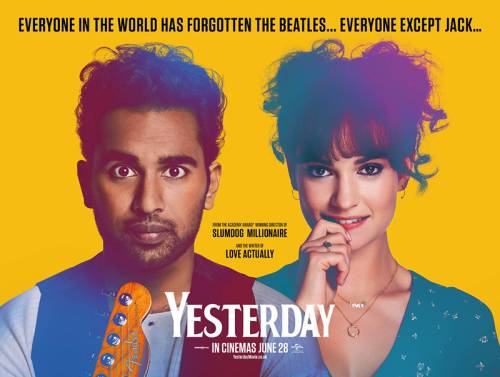
The latest film Directed by Danny Boyle and written by Richard Curtis is an interesting and very amusing ‘what if?’ idea about everyone in the world forgetting about the songs written by The Beatles, apart from one man.

That man is Jack Malik, aspiring musician, who’s tried to make it big for over ten years and failed. Now the key to success is in his hands, the ‘poison chalice’ of fame and money is offered to him, but is he ready to pay the price for it when the price is his integrity, his self-respect and his true love?

Of course he is! 

https://youtu.be/HY0GBmOxyYY

What follows is a funny, charming and well-made film, which makes some good points about how art becomes ‘product’, and how success changes people. There’s also some touching moments that avoid overt sentimentality (just), while still being very moving. Including one scene towards the end that’ll make you misty-eyed, but more on that I cannot say. You’ll know it when you see it.

There’s also a nice running joke about other things that have disappeared along with Lennon & McCartney’s music, and a decent cameo from Ed Sheeran. You can’t say fairer than that.

Boyle shows a visual flair, enhancing a script that is polished Curtis, giving it a more universal feel than the usual middle-class London scene, and it’s all the better for it. But it does have flaws.

Hamesh Patel is endearing as Jack, even though his motivation seems muddled at times. While Lily James as his longtime friend/love interest doesn’t really have a lot to do. And her surprise visit to Jack in Liverpool is so confusing to him (and us) that it makes you sympathetic as to why Jack never realised her true feelings.

There’s a good supporting cast, such as Sanjeev Baskhar as Jack’s dad, but Kate McKinnon is wasted as the stereotypical greedy agent, whose sole aim seems to be to buy up all of Malibu. I’ve yet to see her in a role that does justice to her talent.

The ending is also a little odd, and a good cameo from Sarah Lancashire hints at an interesting plot line that is never developed.

However, despite promising more than it delivers, there’s plenty to enjoy here. The film has an innovative idea at its heart, and the real star of the show is the music of the Beatles. Seen in one go, so to speak, you realise just how wonderful the songs are. Who can blame Jack when he decides to ‘re-discover’ them?