All posts by Guy O'Donnell

Hi I am Guy the project coordinator for Get The Chance. I am a trained secondary teacher of Art and Design and have taught at all Key Stages in England and Wales. I am also an experienced theatre designer and have designed for many of the theatre companies in Wales.

An Interview with Kyle Lima


The director of Get the Chance Guy O’Donnell recently met with actor Kyle Lima. They discussed his training, his new production Heat and Soul which will be performed at Wales Millennium Centre this November and his thoughts on the arts in Wales.
Hi Kyle great to meet you, can you give our readers some background information on yourself please?
Hi I was born and raised in Cardiff and grew up in Splott. I went to Baden Powell Primary school and Willows High School. I then went on to study drama on a foundation course for a year then a two year BTEC course at Coleg Glan Hafren in Performing Arts. I then went on to study at The Royal Welsh College of Music and Drama, graduating in 2009. I’ve been fortunate enough to have worked with the Artistic Director of the Bristol Old Vic and the visionary mind behind the world renowned production of ‘War Horse’, Tom Morris, in his BOV world tour production of A Midsummer Nights Dream in which I played the young lover Demetrius.

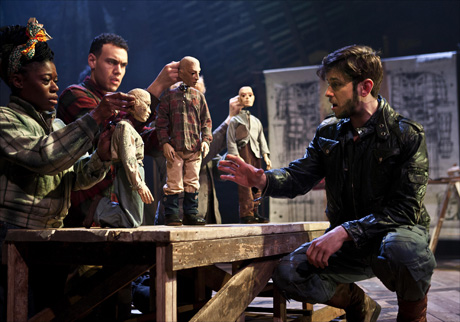
A Midsummer Nights Dream, Bristol Old Vic Theatre 

Most recently I have worked with the artistic director of the Shakespeare’s Globe, Emma Rice, in her production of The Little Match Girl in The Sam Wanamaker Theatre at the Globe,
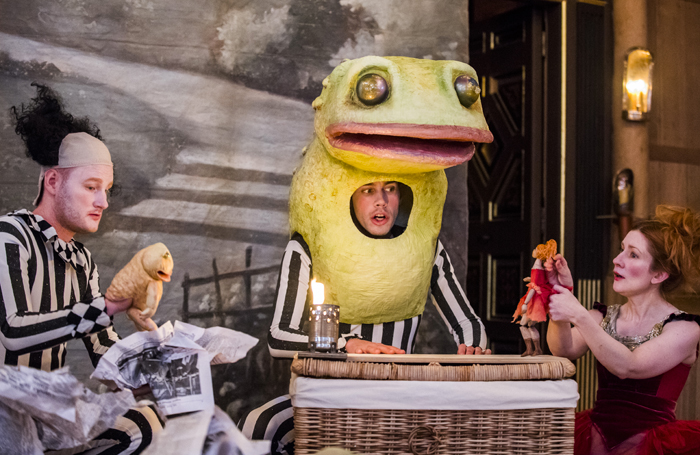
The Little Match Girl, Shakespeare’s Globe Theatre.

As well as Emma’s ‘Kneehigh’ production of ‘Tristan & Ysult’ in which I played the scheming right hand man of the king, Frocin.
Last year I was in Charlotte Churches ‘The Last Mermaid’ as part of the Wales Millennium Centre’s first Festival of Voice which was an incredible experience.
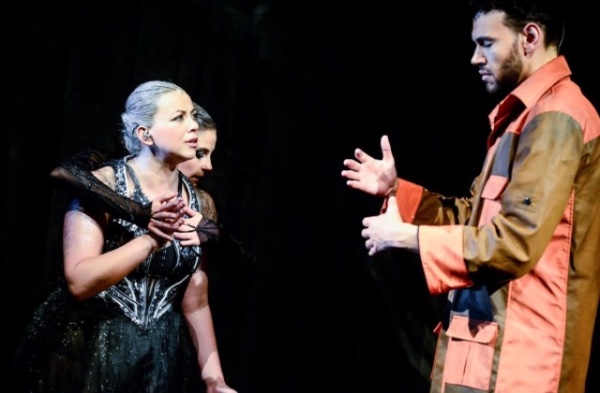
The Little Mermaid, Charlotte Church, Festival of Voice, WMC.

So what got you interested in acting and the arts?
I grew up loving films, TV and animation. I’d spent a lot of time drawing cartoons from the TV and eventually creating my own cartoon characters. I thought I was going to be an illustrator or work in animation but I as I got older I found drawing isolating and wanted to be more social. When I went to high school and discovered drama classes and found that I could make people laugh having absorbed so much performance ability from watching a lot of films and TV, I started to think that acting was something I potentially wanted to do. I had an extraordinary drama teacher at High School called Jo Bryant who was extremely encouraging and brought something out of me as well as every child she taught. At eleven or twelve years old In my first year of High School she told that I was going to be in the school play and that I basically didn’t have a choice. It was Little Shop of Horrors. It was a two week run. Jo told me she wanted me to play the crazy dentist one week and to be the voice of the alien planet, Audrey two, the next but even though I had performed in drama class to a small group of my classmates the idea of performing to the whole school terrified me so I asked if I could just play the alien plant because it meant I could play this brilliant character and sing amazing songs but all while standing behind a curtain speaking in to a microphone while some poor soul stood inside a giant foam plant puppet and moved it around to match the performance of my voice. That experience was wonderful! It was really was the start of my love of acting. I eventually did step on stage in further school productions as I got a older and grew in confidence. Jo Bryant was a ray of light and really opened the door to what I was capable of, not only as an actor but as a person. Jo passed away many years ago  due to illness but I think of her often. She was wonderful.
You have a new one man show called Heart and Soul at The Wales Millennium Centre on Nov 24th & 25th. Can you tell us more about this production?
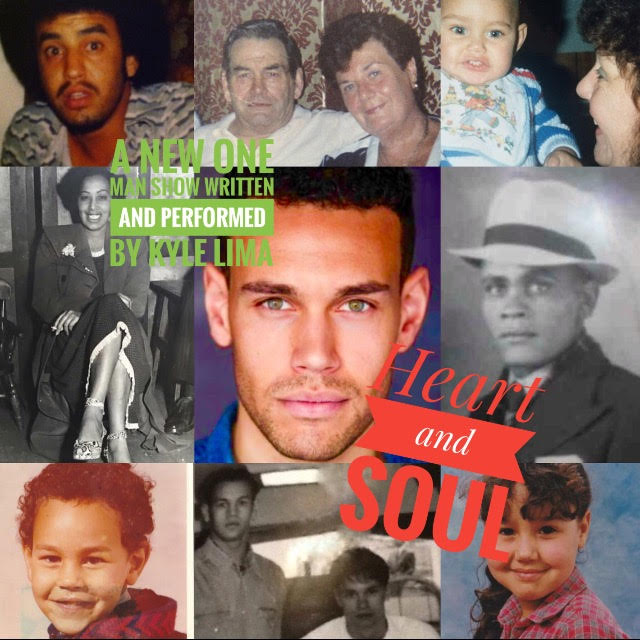
Heart and Soul is a one man show about the great ‘heart’ and spirit of the Welsh, combined with the influential ‘Soul’ music, as well as other genres of the music of black culture. The Wales Millennium Centre will be housing the production. Heart and Soul is a show that celebrates the unique multicultural communities of Cardiff, performed by myself portraying characters based on different generation of my family and the people of Cardiff. It will be a combination of historic and comedic stories inspired by different periods of my family and other members of the Cardiff communities lives, interwoven with live music and songs of each characters heyday sung by me while accompanied on piano by accomplished musician Chris Hyson . The songs vary from Vocal-Jazz, classic soul, 90’s RnB & Garage and perhaps a few other surprises too!

You can watch a video of the production below


Get the Chance works to support a diverse range of members of the public to access cultural provision Are you aware of any barriers to equality and diversity for either Welsh or Wales based artists/creatives?
I feel the only real barrier is ourselves. We can be our own worst enemy in terms of not doing what we want and pursuing our dreams and goals. I know I’ve stood in my own way many times over the years but If you want something bad enough you have to step out of your own way. If you want to do something you have to do it. Take it. We don’t all start off in life from an equal playing field, that is apparent, in many ways more so than ever and there are those out there who will want to keep it that way, but you have to do want you want and go for it anyway. In terms of barriers within the arts, more doors must be open for people of diverse multicultural working class backgrounds to enable them to ascend to positions of power with in the arts and industries in general. When there is a variety of people at the top levels of decision making the opportunities will trickle down and we will see more equality. If we invest in young people from working class and multi culture communities who show a passion for the arts and if we continue to mentor them throughout their lives, they could potentially be the next future artistic director of a theatre company and having the perspective of their background and life experience they will then continue to create opportunities for those like them as well as others.
Organisations such as The Wales Millennium Centre have worked with the diverse communities geographically close to their venue for a number of years. Do you feel local communities have a genuine connection to the venue and its artistic programme?

With the production of the Musical Tiger Bay as well as shows like my own which give examples of the multicultural history of Cardiff communities I hope the people of Cardiff will come and see these shows and feel a connection to the artistic creativity that is coming out of the Wales Millennium Centre.
If you were able to fund an area of the arts in Wales what would this be and why?
I would invest funding in to programs for children and young adults to experience the arts more. If I wasn’t lucky enough to have had a great drama teacher at High School who was so enthusiastic about theatre and who showed me that I was capable of performing, I wouldn’t be the man I am today.
What excites you about the arts in Wales? What was the last really great thing that you experienced that you would like to share with our readers?
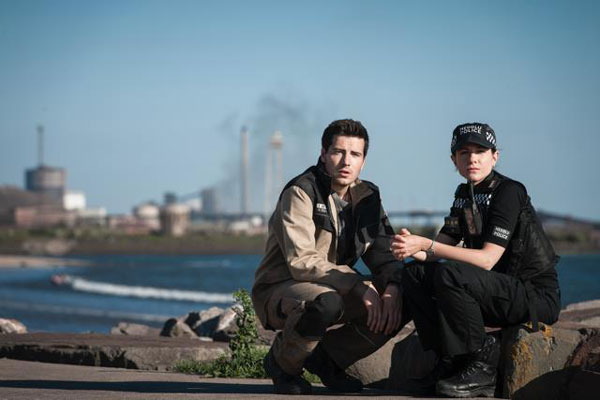
I know it’s not theatre but I watched the bilingual TV program Bang on S4C recently and was really impressed by the caliber of the writing, production value and performances as well as by the amounts of great young actors that were in it who had graduated from the Royal Welsh College of Music and Drama. Wales is in a  great place to nurture talent and I’m excited to see who will shine next. One actress in Bang was Alexandria Riley who I also saw along side Anita Reynolds and Seren Vickers in the Other Room’s production on Debbie Tucker Green’s play ‘Hang’, directed by Izzy Rabey.
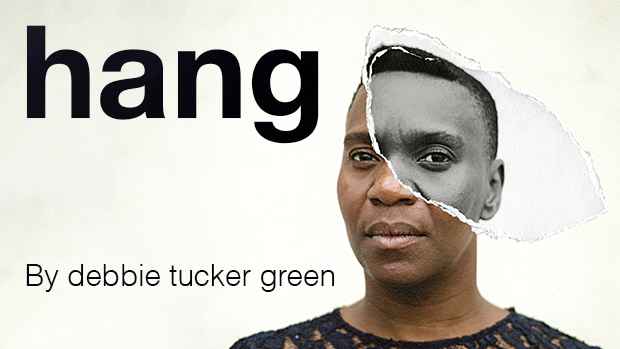
That was a great show with brilliant acting from all three actors. Rachel O’Riordan also directed Alexandria in the production of Gary Owen’s adaptation of The Cherry Orchard which was the last thing I saw. That had great performances in it also.

Thanks for your time Kyle
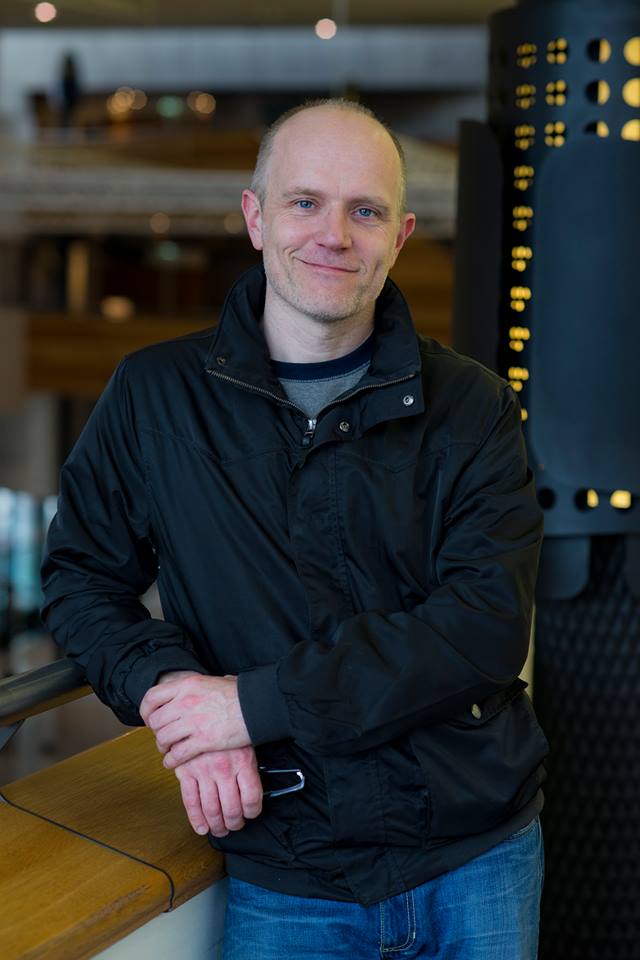
Guy O’Donnell
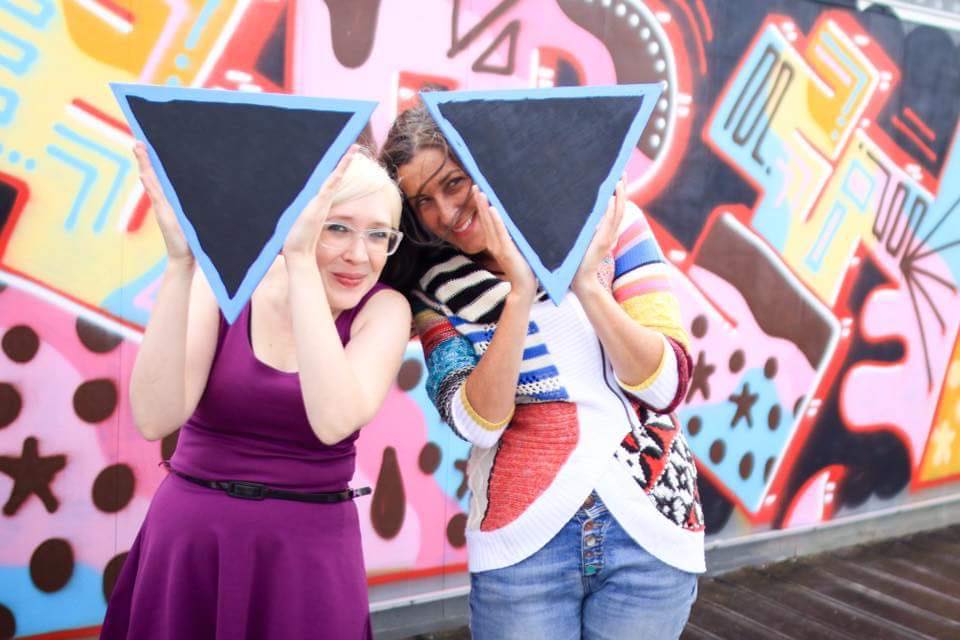
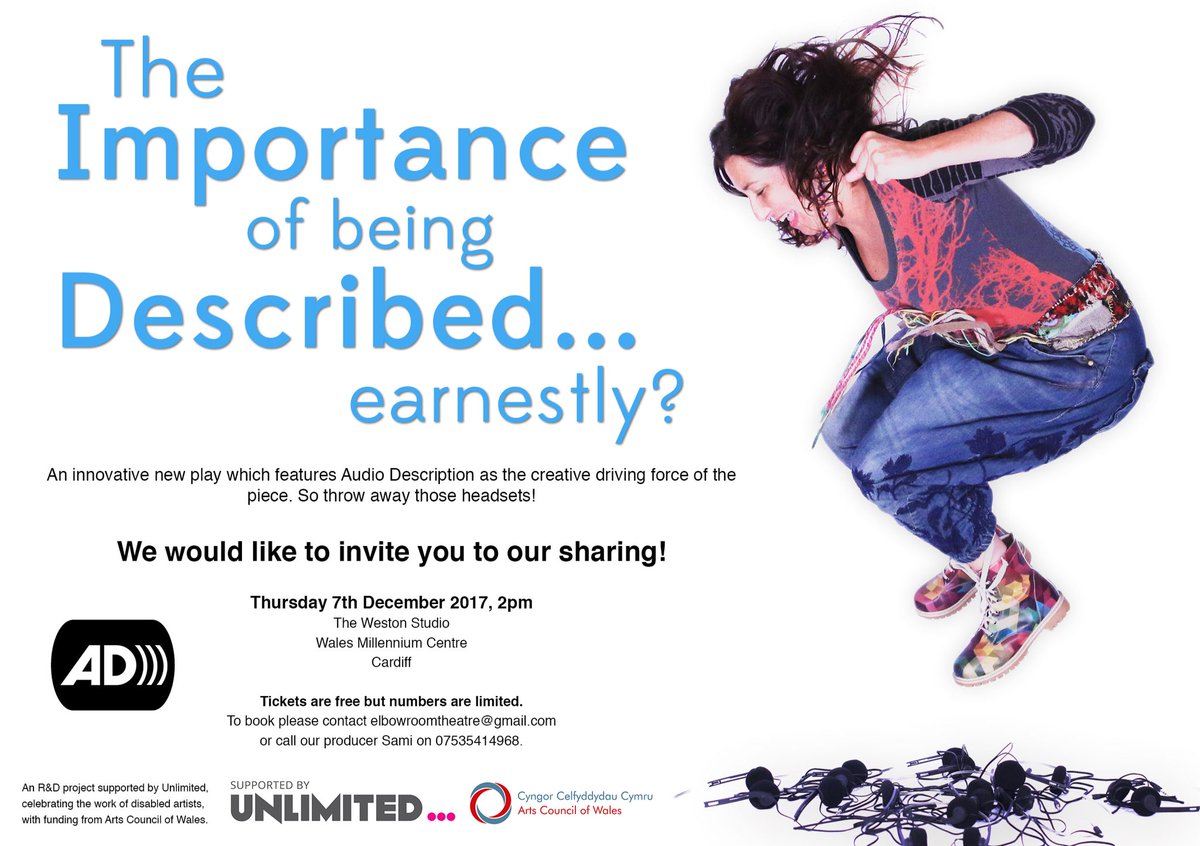
An interview with Chloë Clarke and Sami Thorpe from Elbow Room Theatre Company


This is a BSL introduction to the background of Elbow Room Theatre Company

Hi Chloe and Sami great to meet you both, can you give our readers some background information on yourself please?
Sami: Hi, I’m Sami, I work as a performer and also as a qualified British Sign Language/English Interpreter. I have a longstanding passion for inclusion and accessibility in the Arts ever since training at a unique degree course at the University of Reading; Theatre Arts, Education and Deaf Studies.
Chloë: I’ve been performing professionally as an actor/musician for about 8 years, nearly exclusively in integrated or inclusive theatre. I’m registered blind so access in the arts is something I consider vital, and since receiving an Unlimited commission to explore creative uses of audio description I’ve become an AD consultant working with a huge variety of artists and companies across the UK and internationally.

You are in the process of launching a new company called ‘Elbow Room Theatre Company’, an interesting title! Please tell us more.
Sami: Our aim is to create elbow room in the arts for marginalised groups of people. We’ll do this through a commitment to representation and equal access for performers and audiences. We produce new writing that explores creative access from the outset. ‘Elbow Room’ came to us when thinking about who has space and freedom in the arts and society, and who is fighting for it. We want to celebrate diversity and provide a platform for those, like us, who have to use their elbows occasionally. It’s important to continue discussions surrounding representation and diversity through the work we create and through collaborating with other companies, venues and the wider community.
You are both currently working on a new production called The Importance of Being Described… earnestly? We believe this new production presents a new form of Audio Description for audiences?
Chloë: That’s the plan! It came from my frustration at what I felt was a lack of creativity and the isolating, singular nature of ‘traditional’ audio description. We’re throwing away those headsets and devising a creative style of audio description that offers a choice of interpretation and enhances the show for everyone equally. It is delivered live by all characters – and the audience – in a way that adds to the humour and drives the action as well as providing what we like to call ‘access by stealth’.

We want to prove that access really is for everyone and will be hosting a sharing of our research and development on Thursday December 7th at 2pm, in the Weston Studio, Wales Millennium Centre. We’re inviting any interested parties to book tickets via our website: www.elbowroomtheatre.com. Tickets are free but numbers are limited so grab ‘em quick!
Get the Chance works to support a diverse range of members of the public to access cultural provision. Are you aware of any barriers to equality and diversity for either Welsh or Wales based artists?
Sami: I think there are definitely barriers, we can’t be naive in thinking that we are remotely near a time when we can tick a box to say that equality has been achieved, however that shouldn’t deter us in doing every little thing we can to highlight these barriers and to remove them. We are in it for the long game, we need to produce role models for young people and that means opening our doors wider in places where we train and educate people in the arts. We need to continue to have discussions around equality and diversity and implement new forms of inclusion. Talk AND do, that’s the way forward. Diversity is so broad, we must cater for individuals and not just label groups of people. We are all unique and that makes for an exciting, interesting and rich world. Chloë: I couldn’t agree more. Yeah. What she said.
You both work across the UK with a specific focus on work that supports access for performers and artists. How do you feel Wales compares in these areas to the rest of the UK?
Sami: I honestly think Wales is behind. Both England and Scotland host disability led theatre companies, I would love to see more theatre that integrates access come over to Wales. It’s not that we don’t have any integrated theatre here or an unwillingness to learn, in fact, I find generally there is an inclusive attitude, it’s just that we need MORE. More choice, more variety for more people, more of the time.
Chloë: Having worked a lot in Wales and England I’d say there is definitely disparity in the amount of access and disability representation between them. As Sami so succinctly put, attitudes here are by and large willing, but somehow things just aren’t getting done at the level they should be. I think this is hugely to do with the relative scarcity of diverse or inclusive companies and work produced here, as well as a lack of programming of good examples from further afield. So often the argument from venues and companies with regards to access is ‘we’d love to, BUT…’ – we need to work together to combat the barriers faced by these venues and companies. One possible solution is the creative integration of access from the start of a project instead of tacking it on at the end. We need to enthuse writers and directors, as well as venues, to consider access from the outset. This can break down barriers from both sides.
If you were able to fund an area of cultural activity in Wales what would this be and why?
Chloë: It would be in theatre and making theatre inclusive as a whole. We don’t just mean providing accessible performances, the entire experience needs to be welcoming, from booking tickets to getting to the theatre to interacting with venue staff. We need to be cultivating trust with diverse audiences in order to see them grow.
What excites you about the arts in Wales ? What was the last really great thing that you experienced that you would like to share with our readers?
Sami : We love being in Cardiff, being in a city where there’s so much choice of theatre and cultural activity. The richness and quality of the Arts here really excite us and we want to see it all shared with as many people as possible. The last thing I saw that I really loved was the NT Live cinema screening of Angels in America.It took me two weekends to watch it as its very long! It was absolutely beautiful Andrew Garfield was in it. I loved him as an actor he was absolutely gorgeous. He is now playing a disabled person in the film Breathe, I saw him being interviewed on the Andrew Marr show recently. He was using language such as “Able Bodied” and ” Wheel Chair Bound”. I think these opportunities should be given to disabled performers or at the very least have some awareness of the social model of disability and right those wrongs. You are sat there watching cringing, going you are a person that has spent hours researching this role, you must know about the social model of disability, use your power , use your place in the world to be like no this is the correct terminology to use, be a role model!

Thank you for your time, we look forward to your sharing at the Wales Millennium Centre. Thank you for coming to have a chat with us for Get the Chance this afternoon.
Many thanks for your time

An interview with Chris Durnall


The Director of Get the Chance, Guy O’Donnell recently got the chance to chat with director Chris Durnall. We discussed his career to date, his new project focusing on the BSL aspects within Tribes by Nina Raine and his thoughts on theatre in Wales.
Hi Chris great to meet you, can you give our readers some background information on yourself please?
 I’m Artistic Director of Company of Sirens and also produce work under the name Winterlight. Company of Sirens stage Welsh premiers of powerful contemporary plays. Productions include Anthony Neilson’s Stitching and The Censor, Philip Ridley’s Tender Napalm, Mercury Fur and Dark Vanilla Jungle, Manfred Karge’s Conquest of the South Pole and Jennifer Haley’s The Nether.

Chris in rehearsals for Jennifer Haley’s The Nether

Plus new plays by Welsh authors Ian Rowlands, Troyanne, and Sean Tyrone by Mark Ryan. Winterlight as our sister company specialise in new work that focuses on autism and disability issues. We have recently completed a trilogy of plays tracing the life of an autistic individual Matthews Passion 2013, Touch Blue Touch Yellow 2015 and Quiet Hands 2017.

Matthews Passion

I was Artistic Director of Theatr Ffynnon for eight years working with adults with physical and learning difficulties. I also teach acting, deliver one to one sessions and freelance as a director. I was previously a professional actor for eighteen years.
 So what got you interested in theatre and the arts?
Well once you get the call it’s difficult to consider doing anything else. I went to the theatre all the time when I was younger and devoured plays, often learning whole roles just for fun. When I went to drama college I was amazed by many student’s lack of interest or lack of curiosity. It was really disappointing. Having said that drama college was the happiest time of my life. I still love those people.  The arts for me are split between those who dabble with varying degrees of success and those that have to do this without an option. Time and circumstances pretty soon determine which camp you are in.
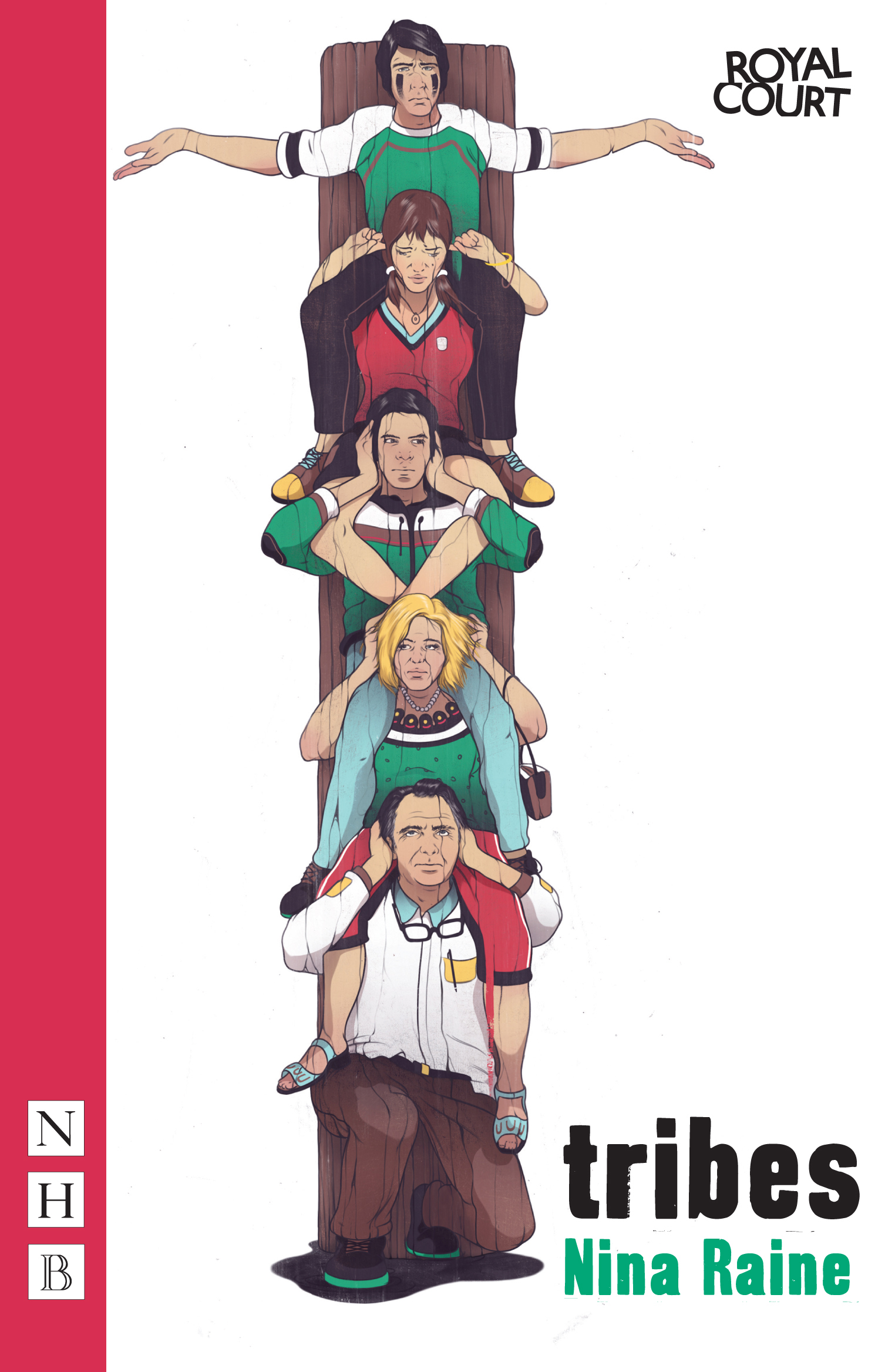
Company of Sirens with the support of the Arts Council of Wales will be exploring the signing aspects of performance focusing on its use within the play Tribes by Nina Raine during October/November 2017 with support from Disability Arts Wales. Why have you chosen this as your latest production?
 I wanted to explore the potential of non-verbal communication within performance. Non- verbal narrative. I believe drama lies between text and that words are often an avoidance technique to avoid and circumvent real communication.
The play Tribes fits the companies remit in terms of powerful new drama and also through the two deaf characters use of BSL within the play, helps support the other strand of my work which is about empowerment and the raising of awareness.

What personal knowledge do you have of theatre for deaf audiences?
 My work with Theatr Ffynnon was concerned with giving a voice to the disempowered. We delivered projects through the medium of film, theatre, animation, visual art, music and poetry in order to explore routes of communication appropriate to our members and participants. The purity of their work moved me deeply and taught me a lot. We never patronised our members and listened to what they had to say as creative people. If I can merge this approach with professional actors working with a contemporary text I will be happy. In the play Tribes the deaf protagonist’s family communicate through cliché and verbal aggression. They speak in platitudes based on insecurity and often a sense of failure. Billy and his partially deaf girlfriend Sylvia communicate directly through gesture, eye contact and body language. We recognise the adage “actions speak louder than words”
Get the Chance works to support a diverse range of members of the public to access cultural provision Are you aware of any barriers to equality and diversity for either Welsh or Wales based artists/creatives? 
 I worry that work may be compromised by having to fit into funding priorities. It’s a question of approach. There has been a surge of work and support encouraging equality and diversity and that has been wonderful. I do believe that within this framework there should be scope for “arts for arts sake” whereby funders say we like your work, we trust your intent, go and create. I feel those times may be gone forever due largely to our culture of accountability.
There are a range of organisations supporting Welsh and Wales based artists and creatives, I wonder if you feel the current support network and career opportunities feel ‘healthy’ to you?
 See above. Its great the doors are opening up but I do believe any art form moves forward through the taking of risks and a culture of experimentation. Diversity need not suffer but our artists need full creative freedom in order to create the extra – ordinary.
 If you were able to fund an area of the arts in Wales what would this be and why?
 Fund the risk takers and chance takers. Back the artists themselves and allow them the freedom to create
 What excites you about the arts in Wales? What was the last really great thing that you experienced that you would like to share with our readers? 
 The amount of young companies trying to work within a difficult culture gives me hope.

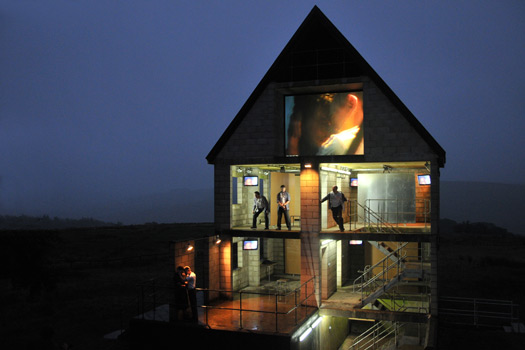
Pearson and Brooks, The Persians, National Theatre Wales.

The work of Pearson and Brooks (The Iliad and the Persians) for National Theatre Wales. Directors who try to break the mould like Mathilde Lopez. Goodcopbadcop’s experiments. Writers such as Ian Rowlands, Tim Rhys and Gary Owen are producing great work. A thriving experimental dance scene
Many thanks for your time Chris.
 

An Interview with Meredydd Barker


The Director of Get the Chance, Guy O’Donnell recently got the chance to chat with playwright Meredydd Barker. We discussed his career to date, ‘Nye and Jennie’ a new play he has written for Theatr na nÓg and his thoughts on theatre in Wales.
Hi Meredydd great to meet you, can you give our readers some background information on yourself please? 
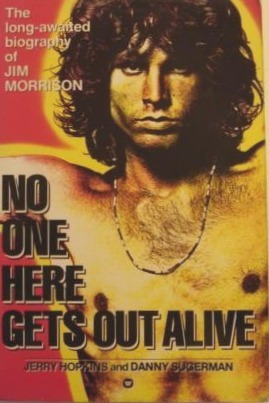
 I was brought up on the ultra rural north coast of Pembrokeshire; potato fields, big sky and sea. My father, Gordon, was an engineer from Buxton in Derbyshire who came down to St Davids to wire up a moulding factory. Being a field sports and sea fishing fanatic he stayed. It was heaven to him. My mother, Ruth Barker, was a Welsh singer-songwriter – she was quite well known in the seventies and eighties – so the idea of self-expression through the arts was a natural one. Such a rural upbringing meant the winter nights were about reading and drawing. I was an introspective kid anyway. Somehow I got into rock music, and around the age of fourteen I read the Jim Morrison biography, ‘No-One Here Gets Out Alive.’

I wanted to study what he read as a teenager – the beats, French symbolist poetry et al – and so became a voracious reader. I also wrote some dreadful poetry. My other great love was visual art. I didn’t want a lecturer telling me what to read on literature course so it seemed natural to go to art college, all the while writing ideas for stories and observations in my sketchbooks. I ended up getting a degree from St Martins College in London. I did some teaching there at the Centre for Languages – mostly English to Japanese fashion students – but I wasn’t creatively happy. It was around that time I met my wife who was working at The Everyman theatre in Liverpool. I followed her there and found myself going to the theatre maybe three times a week. One night, after seeing something particularly dire on stage, I decided that I should try writing a play. I felt I could do better than what I’d just seen. So I wrote The Rabbit which was picked up by Terry Hands at Theatr Clwyd. It wasn’t only my debut but the first play that I’d ever written, so to have it directed by him ranks as one of the very most incredible things to ever happen to me. And here I am.

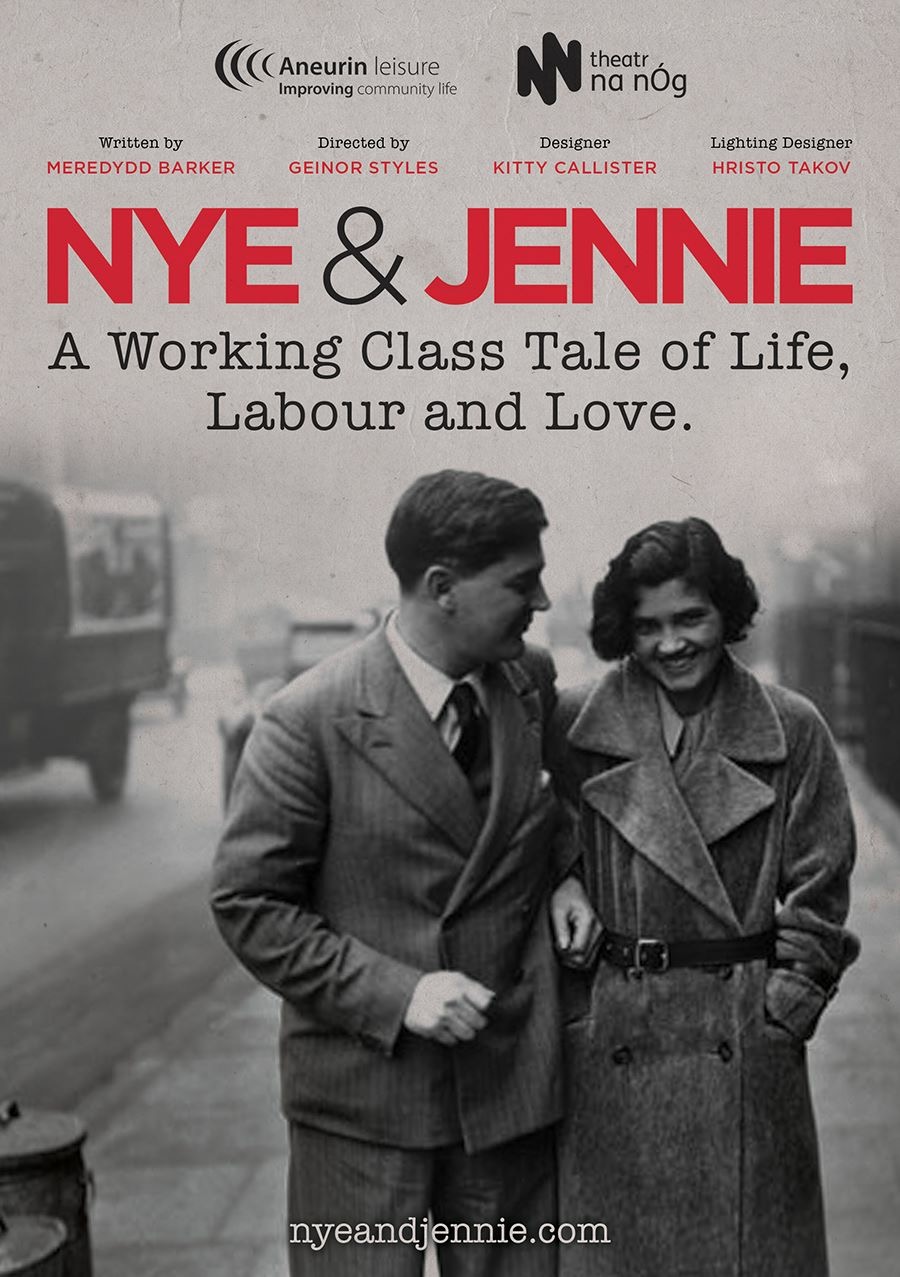
You are currently working on a new play called ‘Nye and Jennie’ for Theatr na nÓg. How did you come to be involved in this new production and can you tell us more about it?
 Geinor Styles, Artistic Director of Theatr na nÓg, had read Jennie Lee’s autobiography, ‘My Life with Nye.’ She was bowled over by the story of this woman: first ever minister for the arts, prime mover behind the creation of the Open University and so much more. But she was overshadowed, as anyone would be, by Nye Bevan, her husband. Geinor had a hunch that I’d be a good fit when it came to writing a play about them. I did some reading, took a very deep breath, and said yes. It’s a two hander and so I hope the play has an intimacy in and of itself as explores what it meant to be two people in love who also happened to be creating two political legends in a time of immense domestic and international upheaval.

The play is described as a ‘Working class tale of Life,Labour and Love’ With the recent production of We’re Still Here by National Theatre Wales portraying the lives of Neath Port Talbot Steel Workers and this new production examining the political background and personal inspiration of Aneurin Bevan and Jennie Lee do you feel that Welsh Theatre is presenting representative stories of its citizens on our stages?
Not as much as it thinks it does. If you want to get a sense of what sort of lives people are leading you need a sense of place. The psychogeography of a play is quite fragile and it demands a sensitive touch from directors which it quite often doesn’t receive. It doesn’t survive the director’s process or vision or whatever they might want to call it. There’s no point enlisting a local playwright if an outsider is going to butcher it to fulfil their own agenda, which can often be brimful with some quite inaccurate preconceptions about a place and its people. But if those inaccuracies are camouflaged by bright lights and pretty soundscapes with a couple of laughs and a tearful middle eight then what price being representative? The five-star review is what’s important, not the lessons that may be learned. But giving the audience what it wants isn’t the same as holding up a mirror.
You’re telling a story. It’s one of many stories. But you’re telling us that this is the story that needs telling. Is that because it contains an essential truth that’s not being expressed? Or is it because it fits the world view you arrived with and you know it fits it into your particular blunderbuss of theatrical tricks? There are truths in peoples lives – the way they talk, why they say what they say, the way they treat each other with such casual brutality, the way they love – that lie at the heart and the heart is a difficult thing to get to but it’s the playwright’s job to do that. Trust the playwrights. Even if it’s difficult, even if it’s something you don’t believe, go with them.
Saying something difficult is too often seen as synonymous with courting failure, especially if the production is on large scale. But there are communities in Wales that aren’t addressing their faultlines and if theatre can’t point that out then it doesn’t deserve to call itself art because art, if it’s about anything, is about saying the difficult thing.
There are times when an outsiders point of view is exactly what’s needed. But not as often as that sentiment is used by outsiders as an excuse to defend their misconceptions. But, as I say, those misconceptions can be hidden with the smoke and mirrors of theatre with the result that nobody learns anything. There are exceptions and I’m working with an exceptional exception in Geinor and Theatr na nÓg.
The production information describes Bevan and Lee as “Aneurin Bevan and Jennie Lee were comrades and flatmates who together fought and preached for socialism as they saw it; he the Tredegar firebrand on the Labour backbenches, she the miner’s daughter from Fife who became a Socialist MP before she was old enough to vote.” Get the Chance is partially inspired from a conversation between the comedian Billy Connolly and former Scottish trade union leader Jimmy Reid. At Reid’s funeral in 2010 Connolly stated;
 “I remember him saying that if you look at these housing estates and high-rise flats – look at all the windows. Behind every one of these windows is somebody who might be a horse-jumping champion, a formula one racing champion, a yachtsman of great degree, but he’ll never know because he’ll never step on a yacht or formula one car – he’ll never get the chance.
 Do you think opportunities still exist for young working class citizens from Tredegar or Fife to get the chance to actively engage in politics, the NHS or the arts today?
Two years ago I spent some time in Ebbw Vale working for the Shakespeare Schools Festival. I was able to see at first hand what the teachers in that area were like. Some were actually able to get some teaching done, but too many were just crisis managing. Provision for the arts in schools is dwindling so it’s difficult for pupils to get a good grounding in the craft. With the good grounding comes the ability to make an informed decision about whether it’s something you want to do with your life. But you need good examples to follow. Are any of the politicians around today worth emulating? There are some, but their philosophies are drowned out by the white noise most politicians mistake for public discourse. The NHS is being visibly driven into the ground in Wales so how can an adult recommend that a student devotes his or her future to something that’s being so devalued? In Fife good things are happening, but the ruling SNP is in a scrap with the Conservatives and Liberals over a new education programme which is stalling while they sort out their ideological differences. Who suffers? The pupil. Always the kids.
You are also Artistic Director of Narberth Youth Theatre. How did you come to be involved with this group?
 My wife and I formed Narberth Youth Theatre because there was a need for something less formal than what the schools were offering, a place where the members could be themselves while they learnt more about theatre. Teenagers came to us and asked us to do it. And I must say it gives me the opportunity to work on my practice as a theatre maker week in, week out. We have guest facilitiators to keep things fresh and a great sense of curiosity in the group. It’s all good.
Get the Chance works to support a diverse range of members of the public to access cultural provision Are you aware of any barriers to equality and diversity for either Welsh or Wales based artists or specifically writers?
 The greatest barrier is the geography of Wales itself. Just physically navigating it is hard. And theatre – like the mafia – is a face to face business. We all need to be able to go and see stuff, talk about it with the creatives, then get home. There won’t be any real consilience in Wales until that becomes easier. I scratch my head over the lack of matinees in Cardiff. In Liverpool the Everyman Playhouse has been experimenting with evening shows at 5-30 and audiences have responded positively to that. It means people from further away can get home or spend time in town and meet and talk and plan new alliances.
 There are a range of organisations supporting Welsh and Wales based writers, I wonder if you feel the current support network and career opportunities for playwrights living and working in Wales feel ‘healthy’ to you?
 If you’re a playwright, then you’ve made a tough choice in life. There’s only so much networks and organisations in Wales can do for a Welsh playwright. You really need to help yourself somehow. I’m forming my own company called The Holding Cell and I want see who I can attract to work with me and see if we can attract an audience because that’s what it’s all about. There are superb actors in Wales who aren’t even being seen for parts and I want to work with them, again in some cases. Let’s see what we can do for ourselves.
If you were able to fund an area of the arts in Wales what would this be and why?
Youth. It’s the law of initial conditions. Throw the ball high and hard – give it the best possible chance to travel far – then you’ll know it’ll go the distance. Invest in the beginning.
What excites you about the arts in Wales? What was the last really great thing that you experienced that you would like to share with our readers?
We’ve got astonishing actors here. That excites me more than anything else. It makes me want to write because I know that if I’m lucky enough to get into a room with Welsh actors I’m going to walk out with an enhanced piece of work. It’s happened every time. The last truly great thing that I saw was the Jean Michel Basquiat exhibition at The Barbican. In Wales, One Flew over the Cuckoo’s Nest at The Torch was ensemble work as good as I’ve ever seen.


An Interview with Eric Ngalle Charles


Hi Eric great to meet you, can you give our readers some background information on yourself please?
My name is Eric Ngalle Charles, I am a Cameroonian born Wales based writer poet and playwright.
So what got you interested in writing and the arts?
I wrote my first poem when I was about 8years old, I wanted to compliment my mother, for she was my father. However my mother did not understand my humour, she thought I was mocking her for the fact that many men went through her bed chambers. ‘’Dearest mother, you are beautiful like the snowflakes of Siberia, everybody knows where you are, no one dares’’ this earned me my first banishment from my village. I moved to my maternal grand father’s house where I started reading African newspapers posthumously. My maternal grandfather was a British Colonial governor and had the luxury of newspapers being delivered albeit three months late.

Your run a company called Black Entertainment Wales, an arts organisation that provides a platform for artists in the BME communities to showcase their work. Do you feel BME creatives in Wales are supported?
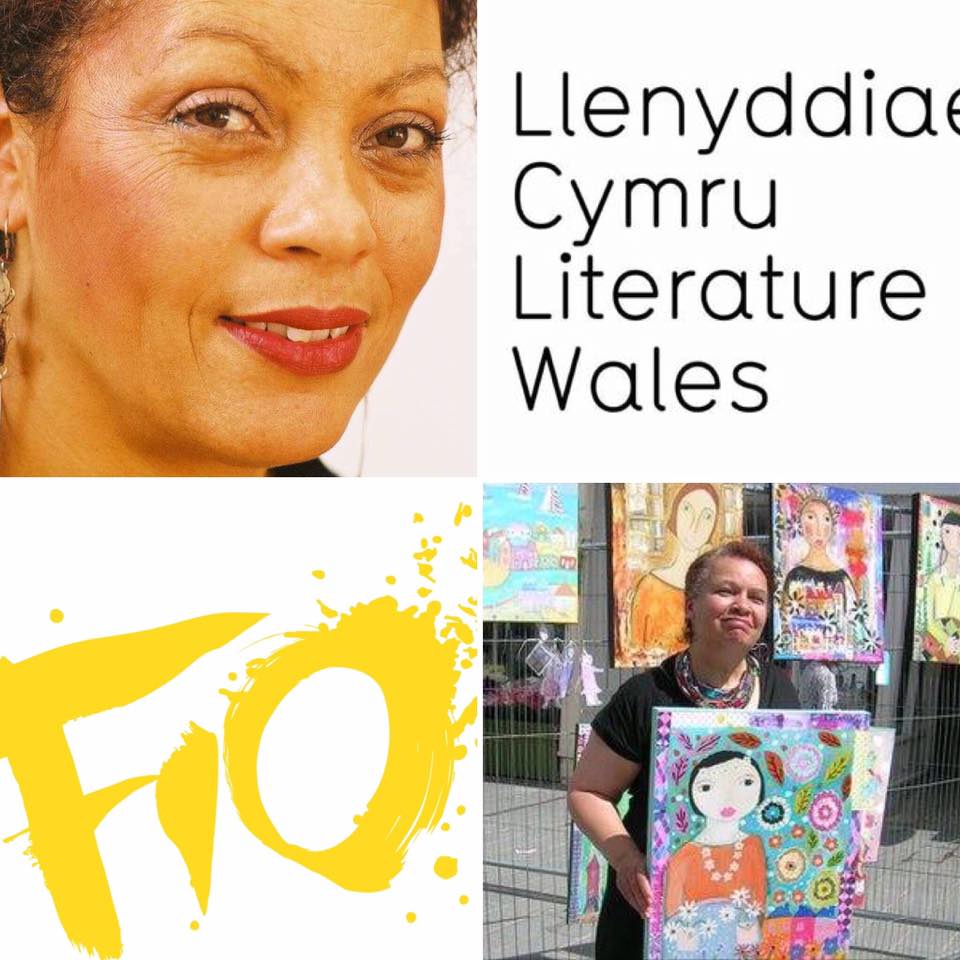
The bar for support for BME creatives is too high. Plus the very fact the Wales itself is a minority in the grand scheme of things means at times it doesn’t know sometimes how to deal with its BAME creatives. Organisations are making strides in the right direction, I am now on the board of directors for Literature Wales, We have FIO making strides, and we have support from other creatives like Charlotte Williams and Isabelle Adonis. There’s hope.

You are also a playwright how do you approach writing in this art form?
I guess I am fascinated by ‘’blindness’’ What can provoke someone or something to invoke blindness from the gods. I am not an ‘’OBWANJE CHILD’’ as described by Ben Okri in Famished Road, however I carry such marks, and I strongly believe that we must not cut off that link between the land of the dead and that of the living. I write to maintain the link. In most of my plays, I perform rituals, either through singing an ancient song that my ancestors used when communicating with the gods, or simply pouring liquor or water onto the ground and invoking the gods. During my last performance in Palas Print Caernarfon for the Literature festival in June with Ifor Ap Glyn the National Poet of Wales, I performed Molikilikili (stick insect, who insist on bringing down the great Iroko tree by pushing it to the ground, most people mistook its antics for press-ups) and I did an invocation using Welsh leaves and Welsh water. Yes, the gods are playwrights, they use us to poke fun and make merry.

Get the Chance works to support a diverse range of members of the public to access cultural provision Are you aware of any barriers to equality and diversity for either Welsh or Wales based artists/creatives?
The way information is dispersed, community centers, libraries are not stocking the right information, and institutions that have powers that control information on activities do not have foot soldiers. There is disconnect between creatives and those institutions that should support them.
There are a range of organisations supporting Welsh and Wales based artists and creatives, I wonder if you feel the current support network and career opportunities feel ‘healthy’ to you?
Two of such organisations have been helpful and healthy to me because I am very persistent, other people once you knock them they lose the ability to stand up. I believe in the power of my story, I know what I write and I am willing and learning to learn how to write.
If you were able to fund an area of the arts in Wales what would this be and why?
Public performance arts. We should encourage young and emerging talents to showcase their work and to get paid for doing so.
What excites you about the arts in Wales? What was the last really great thing that you experienced that you would like to share with our readers?
Event’s organizers such as the Hay Trust, Hay Festival are embracing diversity, for me I am currently talking with the National Trust to see if I could perform my plays around their various premises. I just came from Cameroon last month as part of a ‘’Bridge Building’’ initiative supported by Wales Arts International which will see Artists from Wales going to Cameroon and Vice versa. As a result of my first visit, I have been invited back to Cameroon by the authorities to perform at the South Cameroon Cultural Festival. Effectively I am passing the baton to the future generation.

An interview with Mathilde Lopéz, Artistic Director, August 012.

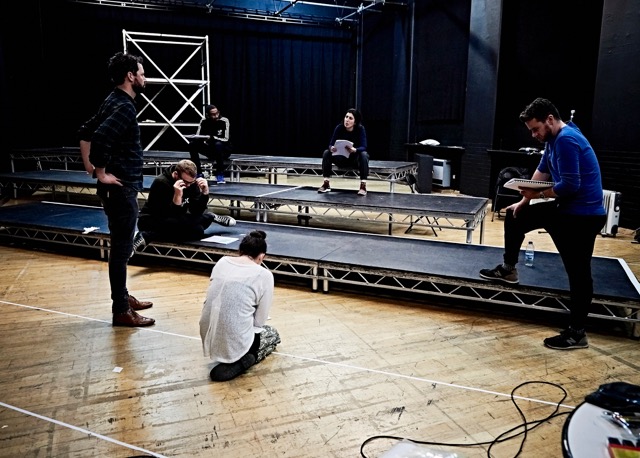
Mathilde with the Of Mice and Men Company. Photographic credit Studio Cano.

The Director of Get the Chance, Guy O’Donnell recently got the chance to chat to with Mathilde Lopéz, Artistic Director, August 012. We discussed her career to date, her new production Of Mice and Men at Chapter Arts Centre this October and her thoughts on theatre in Wales today.

Hi Mathilde great to meet you, can you give our readers some background information on yourself please?
Hi, I am a theatre director and the artistic director of August 012.  I was a founding member of National Theatre Wales, used to be Literary manager at Theatre Royal Stratford East and before directing, I worked as a scenographer. I trained at Central St Martins and Birkbeck College. I am French, I am of  Spanish origin and grew up in Morrocco and the West Indies.
 So what got you interested in theatre and the arts?
Drawing, painting and sculpting were first, then theatre happened. I don’t remember a particular moment so I either forgot or it was always there.

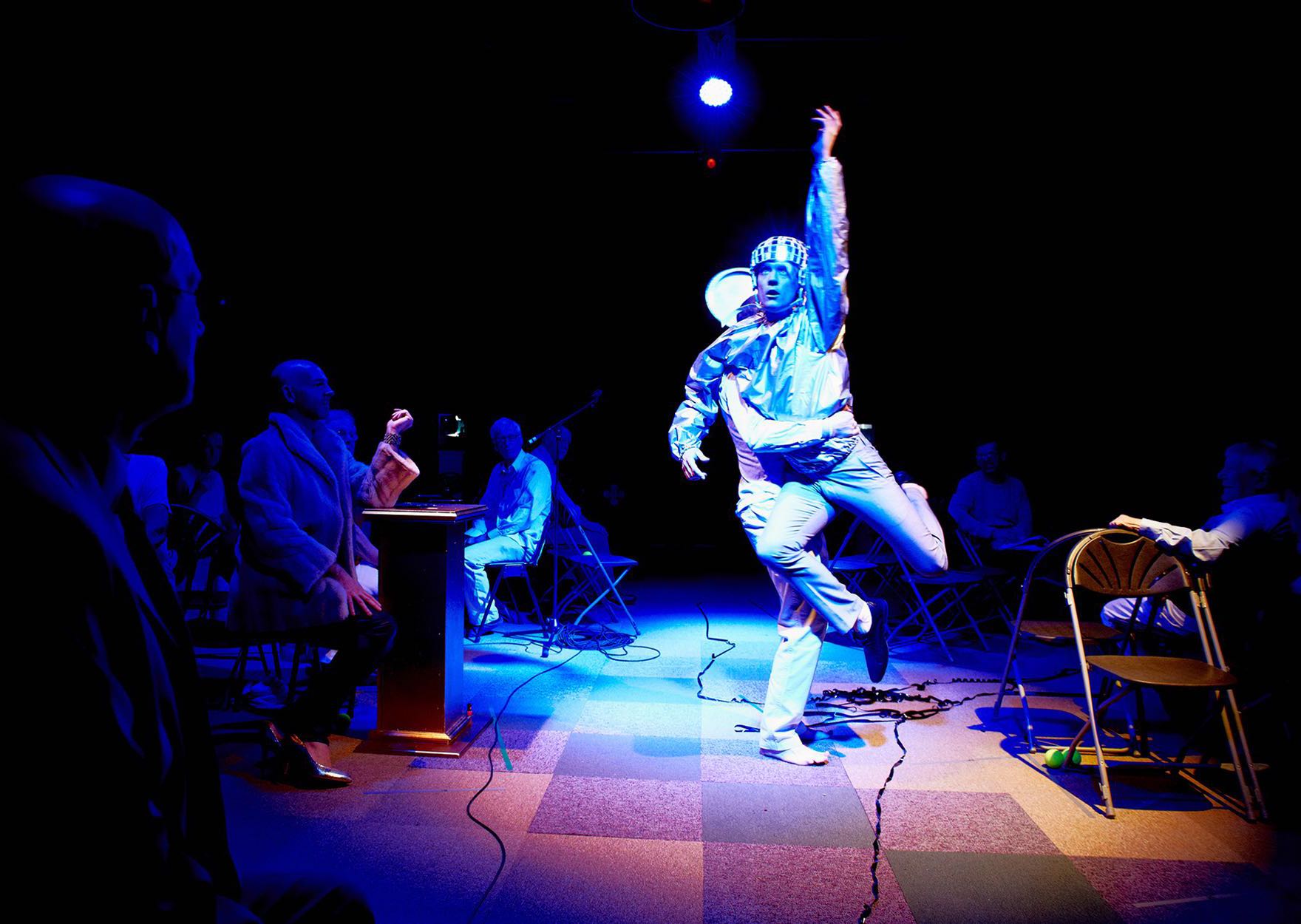
August 012 Yuri, Credit Studio Cano.

 Your company August 012 describes itself as “developed, shaped and questioned by the way we live here and now, and therefore profoundly and structurally relevant to the nation today.” Is it possible to explain how you approach this methodology when creating work for the stage?
I am interested in how we live today and where we make the work. Everything I do is profoundly anchored in our times, our current technical equipment, our politics and the space and people we make it with. I often work with new participants along with trained actors and set tangible challenges- either through space or casting- in the rehearsal room so that we all wrestle not only with the ideas of the play today, but its embodiment.

August 012 Caligula, Credit Studio Cano


 In October, August 012 is performing Of Mice and Men by John Steinbeck at Chapter Arts Centre. I wonder if you can discuss why you choose to direct this play?
I love Steinbeck. Particularly Tortilla Flat and Cannery Row. I read them in a loop for a couple of years when I was a teenager. In French and in Casablanca and it felt very close, I sometimes think that the combination of poverty with the sea and the sun-like Steinbeck Californian characters- must have had something to do with it. I also read Of Mice and Men which felt then and still feels now, like the essence of the United States of America in all its grandeur and catastrophe. Ultimately, I always wanted to do Steinbeck, and I might carry on, his novels are so generous and compassionate that they do help to breath.

Wil Young who will play the role of Lennie

The role of Lennie will be performed by Wil Young. Wil is a company member from Hijinx North Academy, one of 5 Academies in Wales that trains learning disabled and/or autistic adults to become professional actors. Hijinx have pioneered supporting the work of disabled and/or autistic actors on our stages, how did this new collaboration develop?
I’ve reread the novel trying to establish a contemporary view on Lennie’s character with Cardiff School of Psychology researchers. We concluded that Lennie would potentially be on the autism spectrum and it felt right to work with an actor who would understand and confront himself with these difficulties on a daily basis. We contacted Hijinx  for advice and they quickly became collaborators. They were thrilled by the idea of casting one of their actor in a main role and were very helpful and supportive.
Get the Chance works to support a diverse range of members of the public to access cultural provision Are you aware of any barriers to equality and diversity for either Welsh or Wales based artists/creatives? 
I am aware that you only realise that there are barriers when you are different yourself or know and share time with people who are. August 012 tries to minimise barriers in the way we make and produce theatre like many companies do –I see more and more theatre companies that invest in making work accessible-but I am sure we could all do more and are largely unaware. What has become apparent and is now crucial is that we keep organising regular opportunities for consultation with people with different disabilities, from varied age groups and from different social backgrounds. This is the only way to get things right.

Mathilde with the Of Mice and Men company,  credit Studio Cano.

There are a range of organisation supporting Welsh and Wales based theatre companies, I wonder if you feel the current support network and career opportunities feel ‘healthy’ to you?
There are not enough opportunities in theatre in Wales but I think it is steadily growing.
I wish more was done towards creating bridges with international festivals and networks in the European Union and elsewhere, most of the efforts in Wales are UK centric (or London and Edinburgh centric) and I believe artists and cultural organisations ought to reach out particularly in the current political climate.
If you were able to fund an area of the arts in Wales what would this be and why?
Fine Arts and Music. Because I think they inspire all the rest. Fine Arts definitely inspires me to create theatre. Always. I am not sure about the contrary.

Bedwyr Williams, Artes Mundi 2017

What excites you about the arts in Wales? What was the last really great thing that you experienced that you would like to share with our readers? 
Some companies and artists in Wales embrace their cultural difference and celebrate their particularity which goes well beyond language and I like that freedom. There’s a lot of freedom in theatre making here and cross arts form widely happened in Wales before it was even a term! So I enjoy the work that manages to connect this specific originality with the world, like Bedwyr Williams piece for Artes Mundi 2017 or in a different vein, the choir in WNO’s Khovanshchina.
 Many thanks for your time Mathilde.

An interview with actor Wil Young

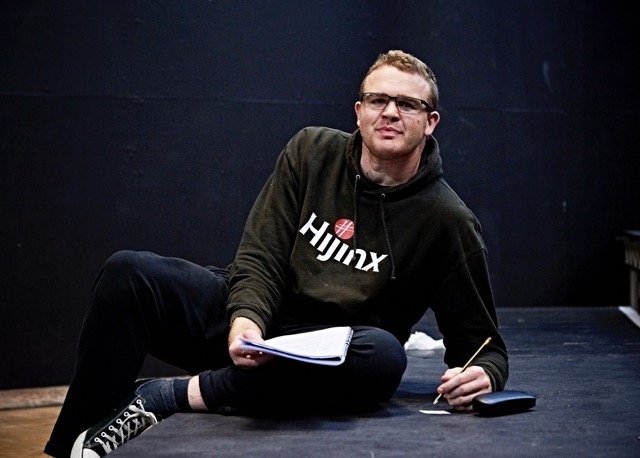
Wil in rehearsals for Of Mice and Men

The Director of Get the Chance, Guy O’Donnell recently got the chance to chat to actor Wil Young. We discussed his career to date, his work with Hijinx Theatre, his role in a new production Of Mice and Men produced by August 012 and his thoughts on theatre in Wales today.
Hi Wil great to meet you, can you give our readers some background information on yourself please?
“Hi my name is Wil Young. I am 26 years old. I am based in Holyhead, North Wales. I’m a professional actor with autism. Through Hijinx Academy I have received professional training in acting, singing, dancing and mask work. My professional experience includes ‘Soup’ for the Hijinx Unity Festival. I can travel independently. I can learn and memorise scripts. I particularly enjoy my comedy acting.”

A performance of ‘Soup’ for Hijinx Unity Theatre Festival.

So what got you interested in theatre and the arts?
I’ve worked with Tim Baker on two productions. I’ve been with Hijinx for 3 years. I’ve been acting, if you can call it that, pretty much since I can remember.

Wil in rehearsals for Of Mice and Men

You are a member of Hijinx North Academy, one of 5 Academies in Wales. What activities do you get involved with in the Academy?
I do drama on Monday & Tuesday. I’ve done Unity in Cardiff & Caernarfon. The performances included ‘Soup’ which is a silent piece and ‘The Market’

You are playing the role of Lennie in Of Mice and Men by John Steinbeck, produced by August 012 at Chapter Arts Centre during October. Can you tell us how you came to be involved in this production?
I actually heard through Hijinx that they were auditioning for the part of Lenny and I tried out.

Wil in rehearsals for Of Mice and Men

Lennie is a very famous fictional character, Of Mice and Men is a set reading text at many schools across the world. How are you going to approach your portrayal of this character?
He’s basically like a big kid, so I thought of playing him younger than I would normally.
If you were able to fund an area of the arts in Wales what would this be and why?
I would invest in the Ucheldre Centre in North Wales, because it would also bring money to the island and the arts.

What excites you about the arts in Wales? What was the last really great thing that you experienced that you would like to share with our readers? 
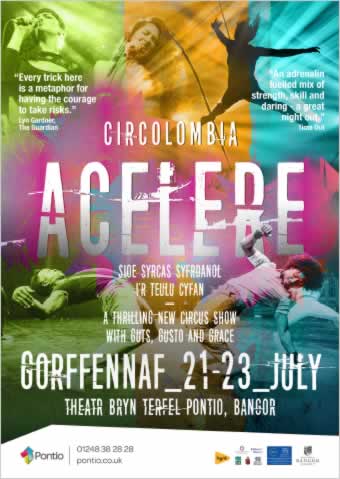
There’s plenty of choice in Wales in terms of theatre. I recently saw the first Columbian Circus to be shown in Pontio, Bangor, North Wales. This was called Acelere by Circolombia.
Thanks for your time Wil.

Review One Man, Two Guvnors, Black RAT Productions by Helen Joy


A slapsticky ribtickling romp through Mr Bean’s homage to the Italian original.
I love this theatre company. They make me laugh. Properly head back gasping for breath laugh. This multi talented bunch of actors and their production team are properly good.
I love the venue. I love the welcome. The busyness of the place. The swirly carpets and the polished wood and the atmosphere of years of local folk heading here for a night out. Marvellous.
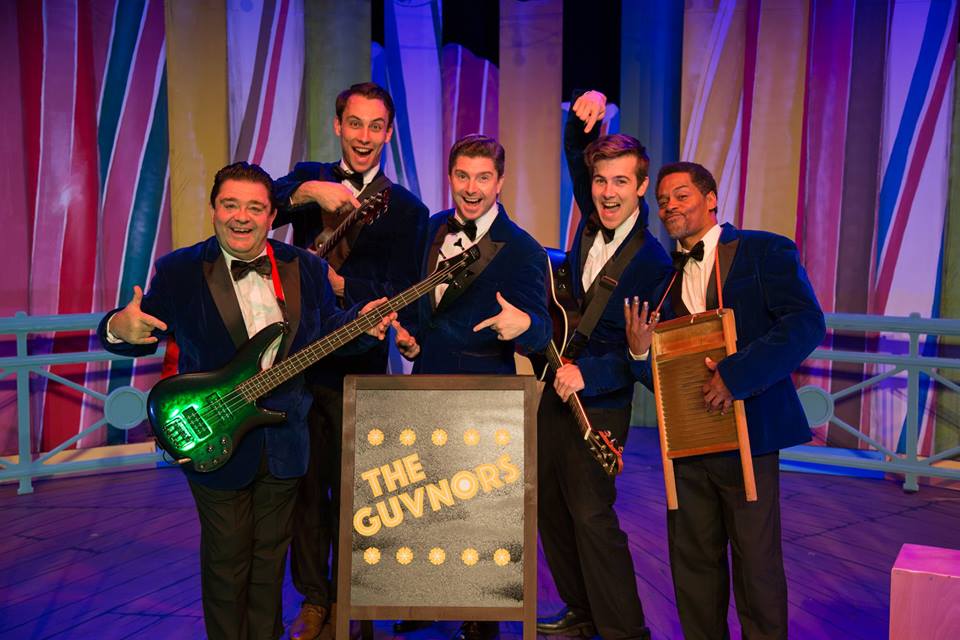
And marvellous to take a glass of wine into the theatre and settle into your seat whilst the cast play their way through a series of ‘60s songs, washboard ‘n’ all. A band which reforms for set changes – how delightful, how clever to keep us all singing and clapping along.
Never afraid to look you in the eye, to include you in the action, to keep you alive with the threat of putting you too on the stage, it’s bright and buzzing throughout.
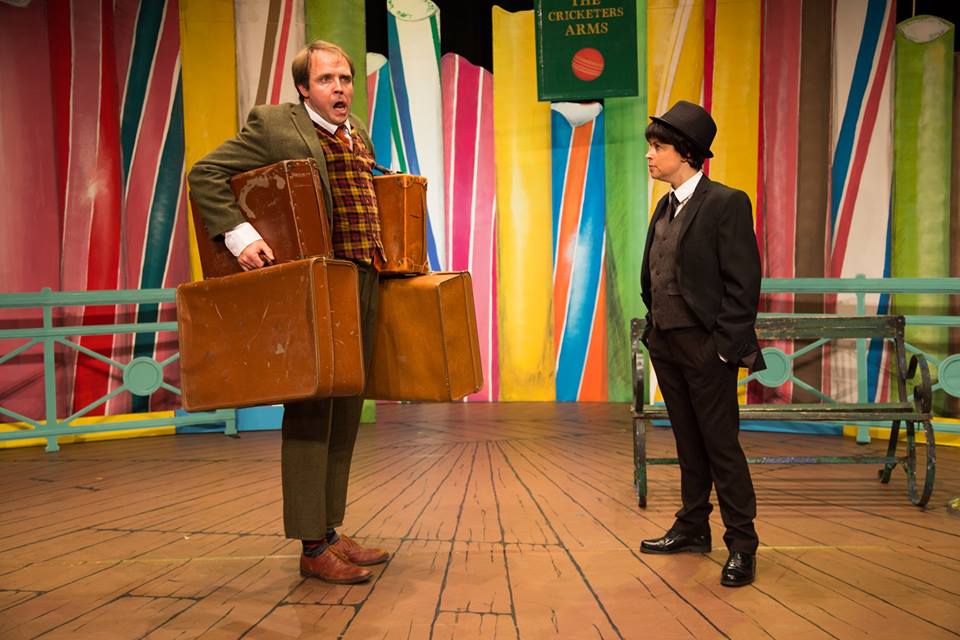
And the lead, Francis Henshall, is, quite frankly, fabulous! A tweedy oaf with a lust for food and a hunger for love, he draws us in, right in.
But he wouldn’t be half so good without his sidekicks.
Every character is perfectly overblown and overplayed. Exaggerated, exaggerating, they are funny and likeable and strangely believable. All very special in their own sweet Brighton rock kinda way.
Every seat is filled. Everyone is laughing. Everyone is having a very good time.
There is an energy to this production which drives through to the end.
Nothing unpredictable, nothing too challenging but what a wonderful slapsticking backslapping suitcase swapping utterly joyous night out!
Black Rat Productions is an extraordinarily talented company. There to be enjoyed.
 One Man, Two Guvnors is a play by Richard Bean, an English adaptation of Servant of Two Masters (Italian: Il servitore di due padroni), a 1743 Commedia dell’arte style comedy play by the Italian playwright Carlo Goldoni.
 Helen Joy for Get the Chance, 3rd Act Critics.
A Black RAT Productions, Blackwood Miners’ Institute and RCT Theatres co-production supported by Arts Council Wales

Cast

Gareth John Bale … FRANCIS HENSHALL
Lee Gilbert … HARRY DANGLE
Phylip Harries … CHARLIE CLENCH
Sarah-Jayne Hopkins … DOLLY
James Lawrence … STANLEY STUBBERS
Daniel Miles … ALAN DANGLE
Caryl Morgan … RACHEL CRABBE
Alice Strachan … PAULINE CLENCH
Chris Tummings … LLOYD BOATENG

Production Team

By Richard Bean
Based on The Servant of Two Masters by Carlo Goldoni
With songs by Grant Olding
Directed by Richard Tunley
Designed by Anna Marie Hainsworth
Production Manager / Lighting Design Robin Bainbridge
Stage Manager Claire Roberts
Musical Director Rob Thorne
 

Review We’re Still Here, National Theatre Wales by Kevin Johnson


Over a year ago Port Talbot steelworks were put up for sale by Indian owners Tata Steel, threatening not only thousands of jobs but the future of the town itself. What followed was a campaign to save the last part of heavy industry in South Wales by people from all walks of life.

Rachel Trezise

This story has now been turned into a play by Rachel Trezise, in collaboration with the National Theatre Wales and Common Wealth Theatre Company. Set in an old factory that was once part of the steelworks, this is promenade-style theatre, where you ‘wander through’ the play and it happens around you. There are seats if you need them, and good disabled access, but at around 80 minutes, the play is brief enough to endure, yet long enough to shock.

Sam Coombes (Lewis)

With a core cast of five including real-life steelworker Sam Coombes as Lewis, this is both spacious and intimate. The cavernous building is juxtaposed with the intimacy of the workers, who tell their stories, and confide their fears, amidst the jovial banter. Also roaming among the audience are actual retirees, who share true stories about the works, and the oft hidden cost.

Jason May (Rob), Siôn Tudor Owen (Mark) & Simon Nehan (Kevin)

In the interests of full-disclosure I should mention that I was born here, and as a local the steelworks have always been a big part of my life. As one of the actors says:’if you can smell sulphur in the air, somebody’s getting paid’. Both my parents worked there, so in a way it paid for my upbringing. Steel is in our blood here, and with so many accidents over the years, our blood is certainly in the steel.

Designer/Dylunydd Russell Henry, Choreographer/Coreograffydd Vicki Manderson, Directors/Cyfarwyddwyr Rhiannon White & Evie Manning

Co-directed by Common Wealths Evie Manning & Rhiannon White, music, song, comedy and monologues are used to create an enthralling and fascinating piece of theatre. Watching so many people coming to my ‘home’ to be entertained, gave me such a feeling of pride.

This threatened closure is the latest in a long line of body blows that have hit Port Talbot, brought home by the scene where the names of some of the 750 already made redundant are read out. A litany of damaged lives, counterpointed by the children the workers can’t see, ghosts from a lost future.

Sam Coombes (Lewis)

This isn’t sugar-coated either. At one point, in a gladiatorial arena of chairs shared by cast and audience alike, grievances are expressed with a violent passion. Characters turn on each other, unsure of the best course of action to take. One blames the union organiser, who then quietly reveals that his marriage has become a hidden casualty of the fight.
That’s a key element here: how long do you keep on fighting? When do you know when the cause is lost? What if all you have left is the struggle? The whole play roars a magnificent defiance at the world, but beneath that you can hear the scream of a wounded animal.

Ioan Hefin (Adrian) & Jason May (Rob)

If the steelworks closes it’ll be devastating to the town and its people, should that be allowed to happen? I’ll give the last word to Dic Penderyn, a local martyr hanged for rioting in the 1830’s, who’s last words on the scaffold are quoted in the play:
“O arglwdd dymma gamwedd, O Lord, what injustice.”
http://nationaltheatrewales.org/were-still-here

An interview with Emily Wilden creator of ‘Sunday Night Stories’


Hi Emily great to meet you, can you give our readers some background information on yourself please?
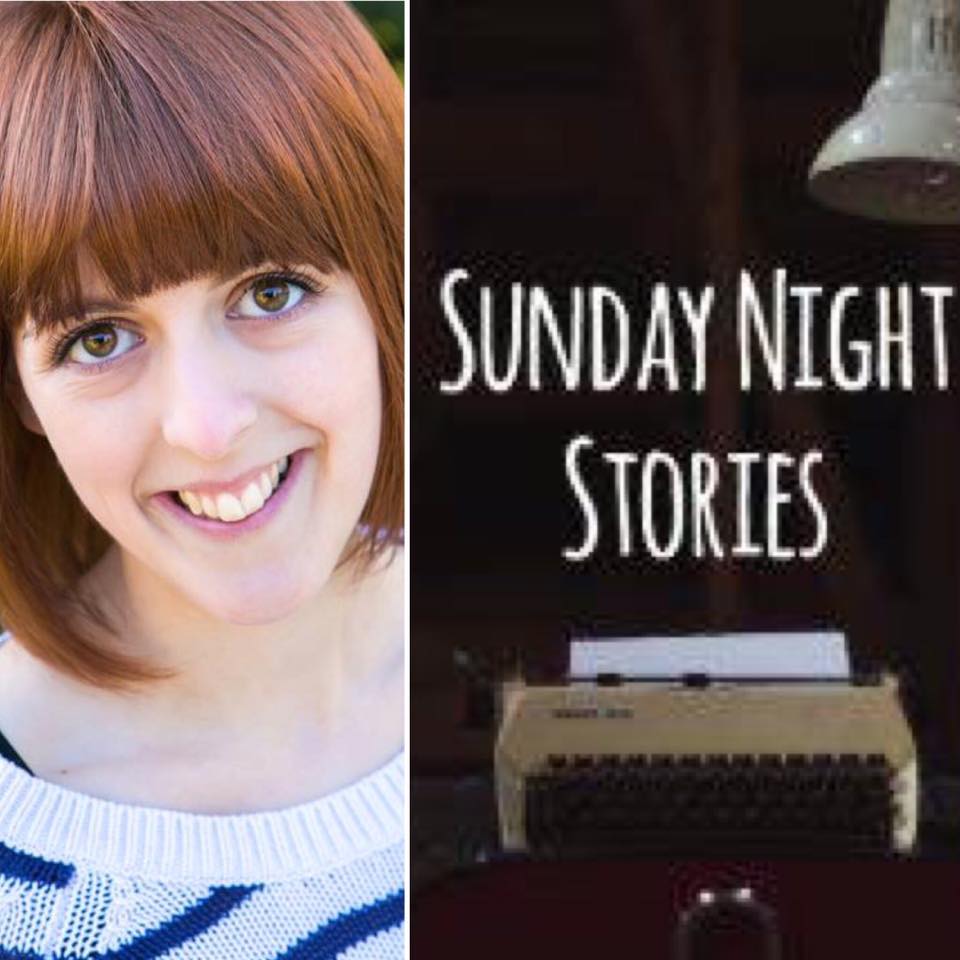
Hi, I’m an actor and voice artist originally from Carmarthenshire. I studied acting at the Italia Conti Academy of Performing Arts and it was after graduating that my interest in voice over and audio editing started to develop. I began to record and edit my own work using home recording facilities. I enjoy performing and workshopping pieces from new writers and I’ve also worked with theatre in education and run workshops for children.
So what got you interested in theatre and the arts?
I had an interest in performance from a young age, but it wasn’t until I joined the Swansea Grand Youth Theatre that my passion for Theatre and the Arts started to grow and I decided I want to pursue acting as a career. Joining a youth theatre was a great opportunity for me to meet new people outside of school. It really built my confidence and brought me out of my shell; it’s something I would encourage all young people to do even if they don’t have an interest in being a performer, as it helps with confidence, and communication.
‘Sunday Night Stories’ is a project you have developed yourself which features stories/plays/poems by talented new writers. It provides a platform for new writers to get their work heard. Can you tell us more about this initiative please?
I started Sunday Night Stories after taking part in a few different new writing projects in Cardiff. I have always enjoyed taking part in new writing events and as I am also a voice artist I thought it would be an interesting idea to combine the two.
New writing events are incredibly rewarding and helpful for the writer, actor and director but I thought by recording the pieces and turning it in to a podcast/having an audio recording, you are opening yourself up to a much wider audience. Also, by having an audio recording you are able to listen back and make edits and also use it to showcase your work.
I really wanted to create a useful platform for all writers, no matter what qualifications or experience they may have so they can gain feedback and the exposure they deserve.

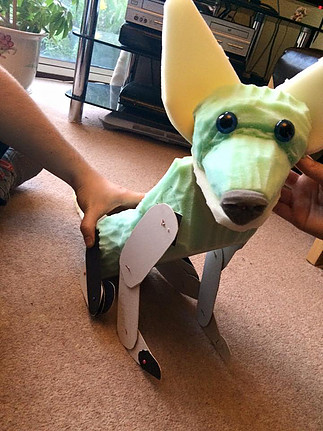
I’ve recently partnered up with writer Darius Nash for a Sunday Night Stories Special of Hamish and Bob, a radio play written by Darius about a young boy with autism and his dog. It’s going to be a challenging piece but we are really excited to develop and share it.

Hamish and Bob in development

Get the Chance works to support a diverse range of members of the public to access cultural provision Are you aware of any barriers to equality and diversity for either Welsh or Wales based artists/creatives?
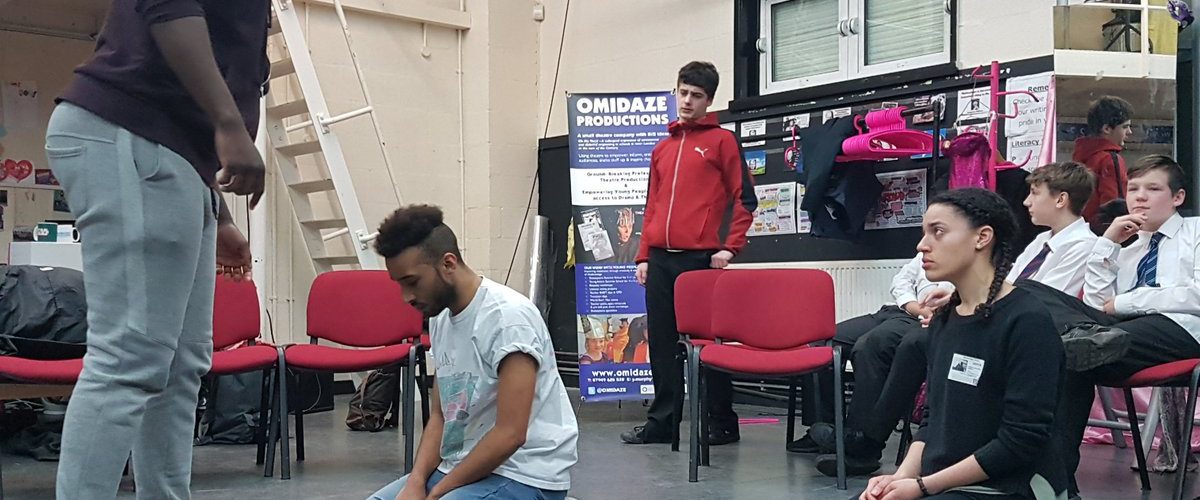
I was lucky enough to be a workshop facilitator for Omidaze Theatre Company’s recent production of Romeo & Juliet, running workshops on Shakespeare and politics for primary and secondary school children.

Schools workshops for Omidaze Theatre Company’s production of Romeo & Juliet.

This really highlighted for me how little opportunity there is for children to experience theatre and the arts, whether it’s the cost, content, or just a lack of interest. During the workshops the children were excited to be getting up on their feet, performing, playing and actively working through and understanding (quite complex) text. It helped them use their imagination and recognise that theatre is for everyone. I felt this was incredibly important and is something that needs to be developed and offered more to children, helping them to explore all aspects of theatre and the arts.
There are a range of organisations supporting Welsh and Wales based theatre companies, I wonder if you feel the current support network and career opportunities feel ‘healthy’ to you?
After working in London and now Cardiff, I have found that there is a great support system available in Wales and a sense of community with Welsh artists in general, as there are lots of opportunities to create and it’s improving all the time. It would be great to see more workshops available for all aspects of performance, and for there to be more casting opportunities in Wales for Welsh actors.

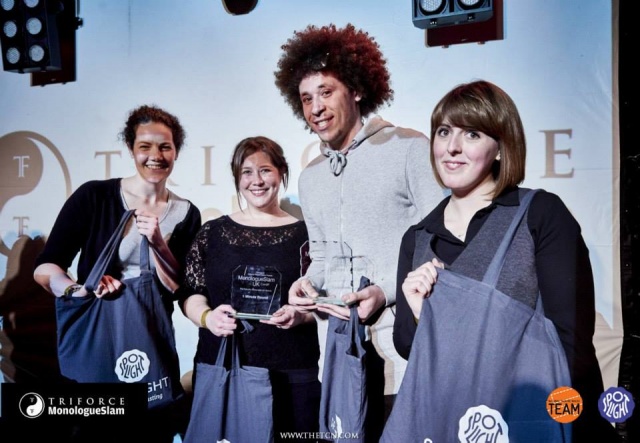
Monologue Slam UK 2015 supported by NTW Team

If you were able to fund an area of the arts in Wales what would this be and why?
As I previously mentioned I think it’s incredibly important to develop more opportunities for children to experience theatre, not only by going to see it but also through creating it themselves.
I also think it would be great to encourage more new writing projects in Wales, encouraging people who have the urge to write but maybe not the confidence to do so. There are so many great companies around at the moment producing work from new Welsh writers and I think it’s something we need to continue to encourage and develop.
What excites you about the arts in Wales? What was the last really great thing that you experienced that you would like to share with our readers?
What really excites me about the arts in Wales is how welcoming and accepting everyone is to new ideas. There is such a sense of community, and you truly feel like everyone is willing to share, offer advice and help each other along, which is what being an artist and performer is all about and is the main reason I started this project. It’s really great to have such a range of writers share their work with me and let me give a voice to their stories; it just highlights how important community is in theatre and the arts.
Thanks for your time Emily
Website – www.sundaynightstories.co.uk
Facebook – @sundaynightstories
Twitter – @sunnightstories