André Stitt has been one of those names in Cardiff circles, more specially artistic circles. Perhaps most infamous for a proposed kicking curry down a street in Bedford entitled ‘White Trash Curry Kick’, Stitt has made a name for himself not just with this idea. Heralding from Northern Ireland there has always been a political edge to his craft, aside from performance proper he has emerged as a painter also.
In his work The Institution, Chapter Arts Centre saw an installation which lasted a month back in 2005. This is roughly the time I would start going to Chapter, though my engagement with performance art was minimal back then, merely a child of sorts. Twenty years has passed since that fateful showing and in 2025 was a different offering in some regards. What we were presented with now was a durational work, in the studio space, materialising with collaboration with three other international artists. Stitt has made Wales his home now and work like this proved its potency.
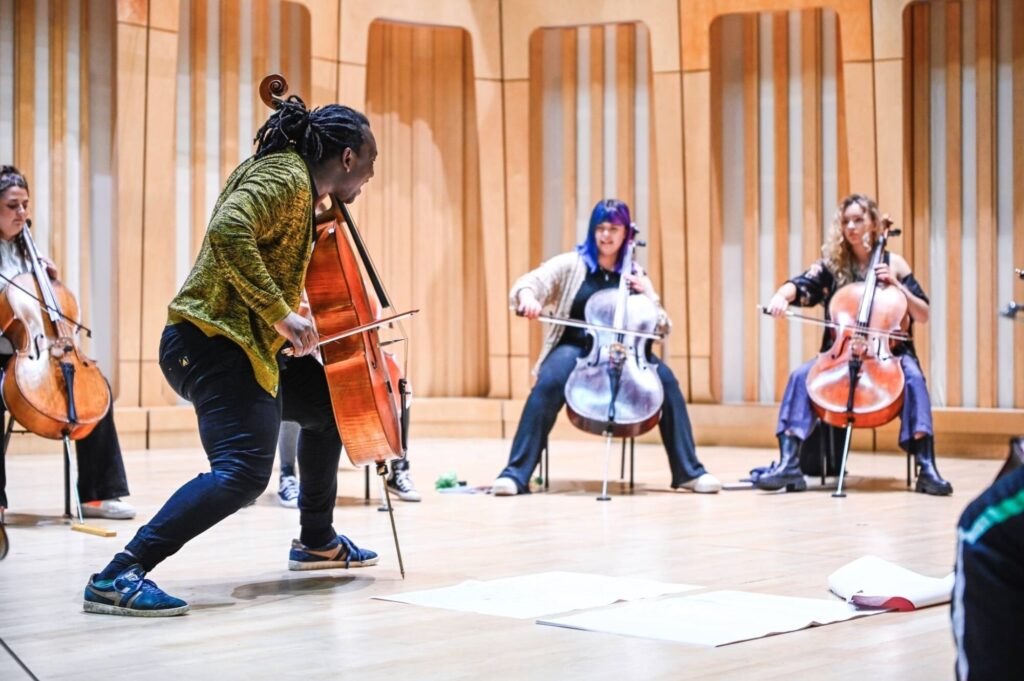
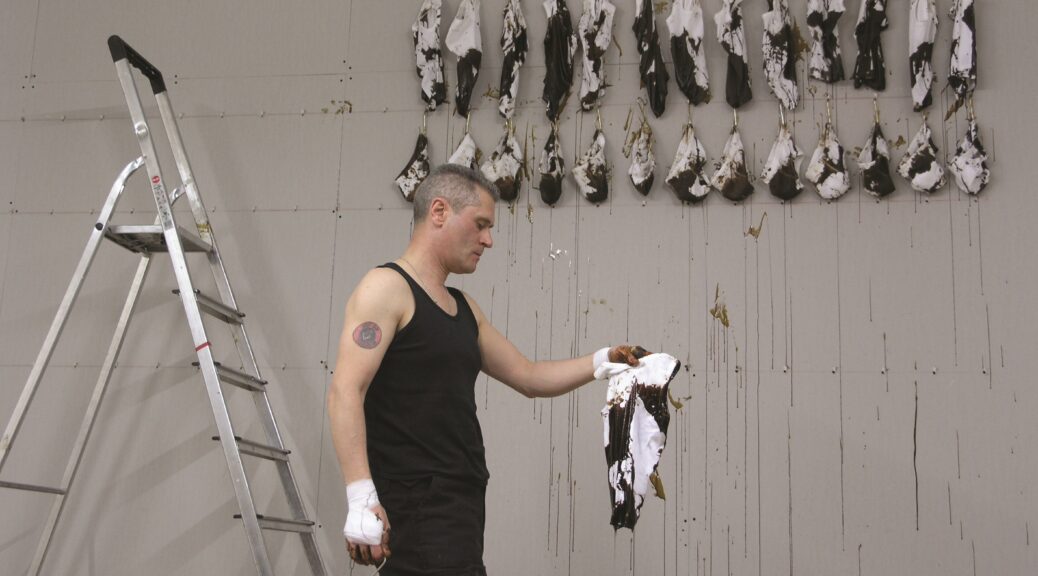
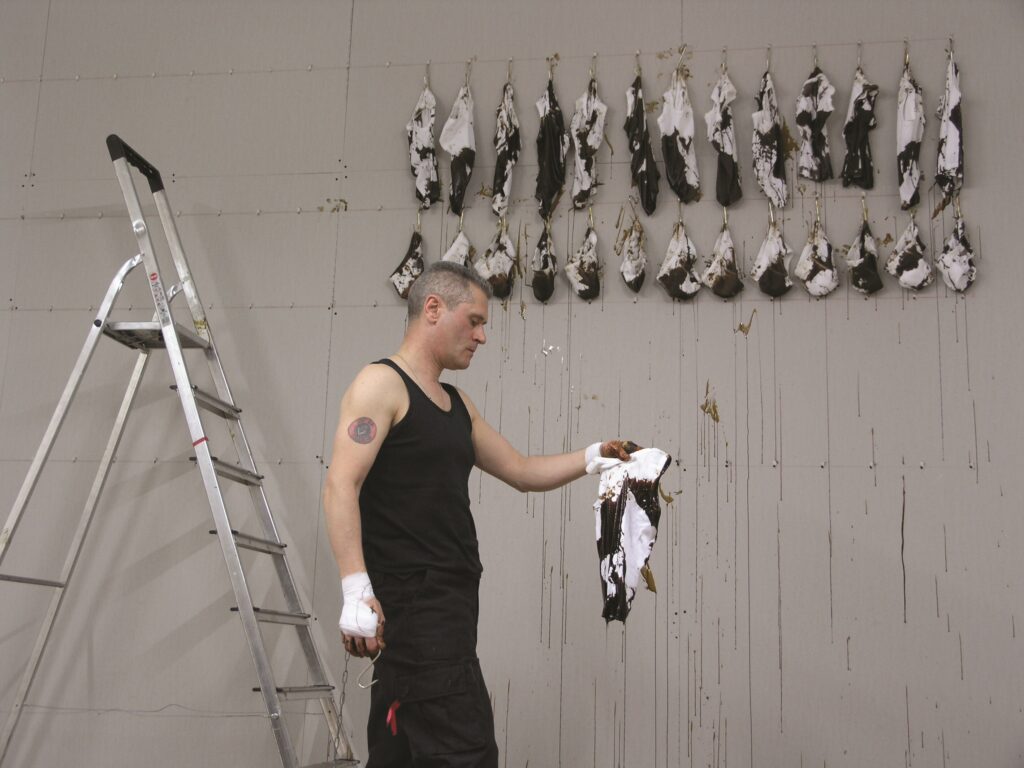
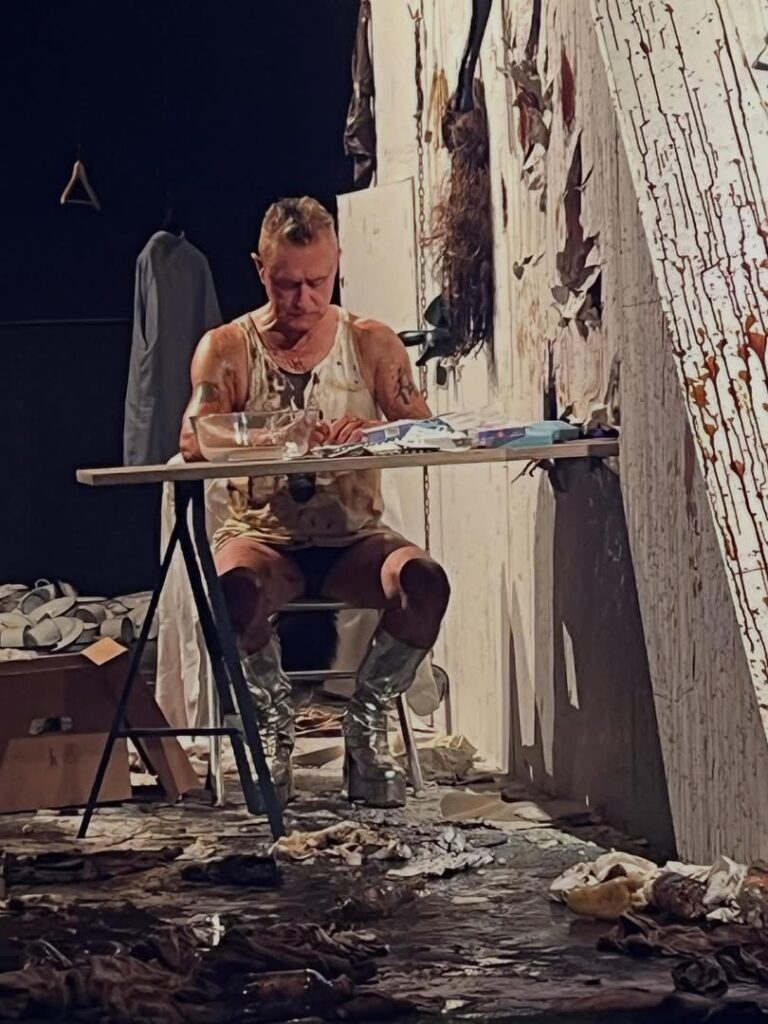
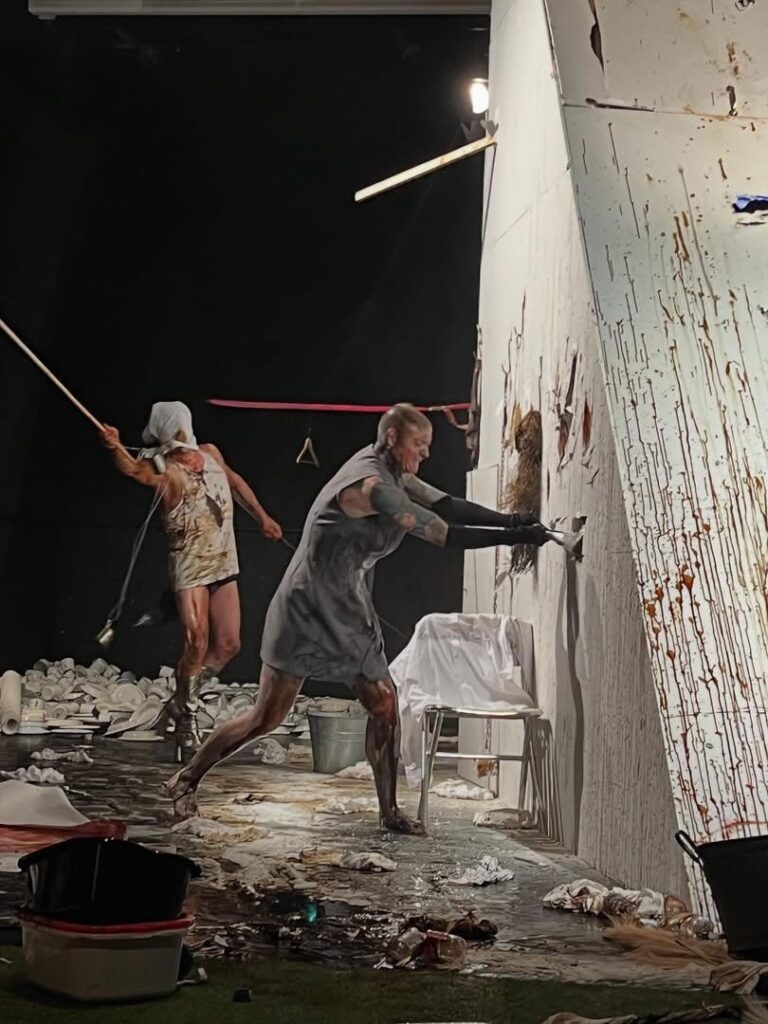
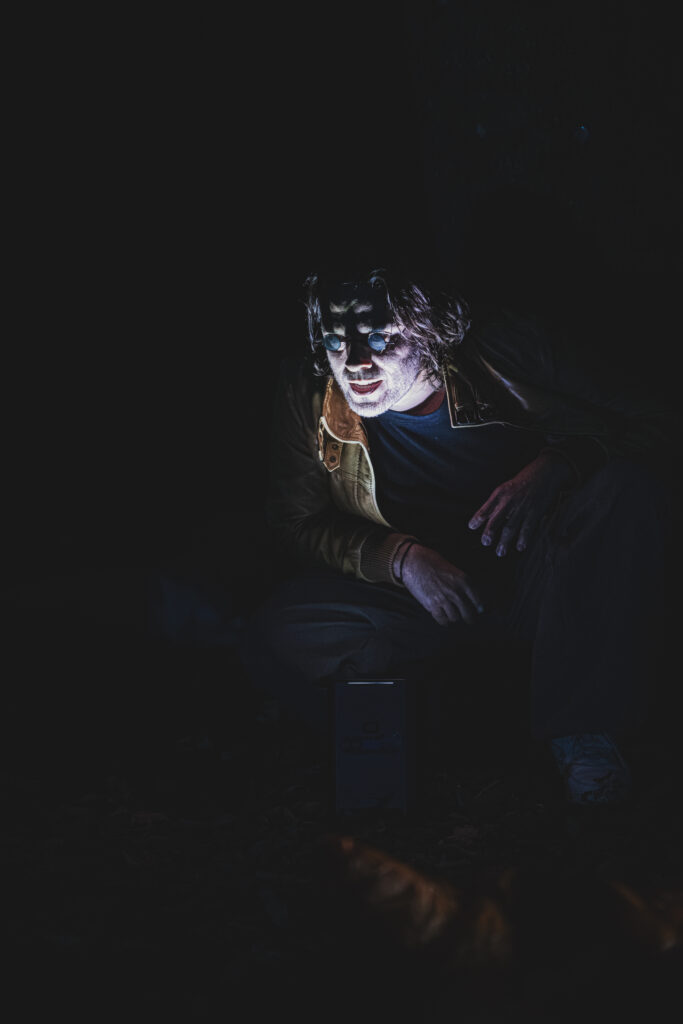
There is great deal to unpack with The Institution (Revisited). Who exactly are the people in our lives, the powers that be and our control over our own body, persona and mind? This melding of spirits, fellow artists Charlie Lockwood, Jamie McMurry and Sinéad O’Donnell all added greatly to this most peculiar and revelatory proceedings. Imagery which will stay in the mind for months, through essential well trodden performance art ideas of gunk, messy floors crammed with various powders, food stuff, props and set pieces. Stitt began with flinging into the a corner of the space items from the original run of The Institution, mugs and plates were the bulk of these mementos. He took a heap of child vests and underwear and mercifully dunked many of them into what would appear (and smell) to be drenched treacle.
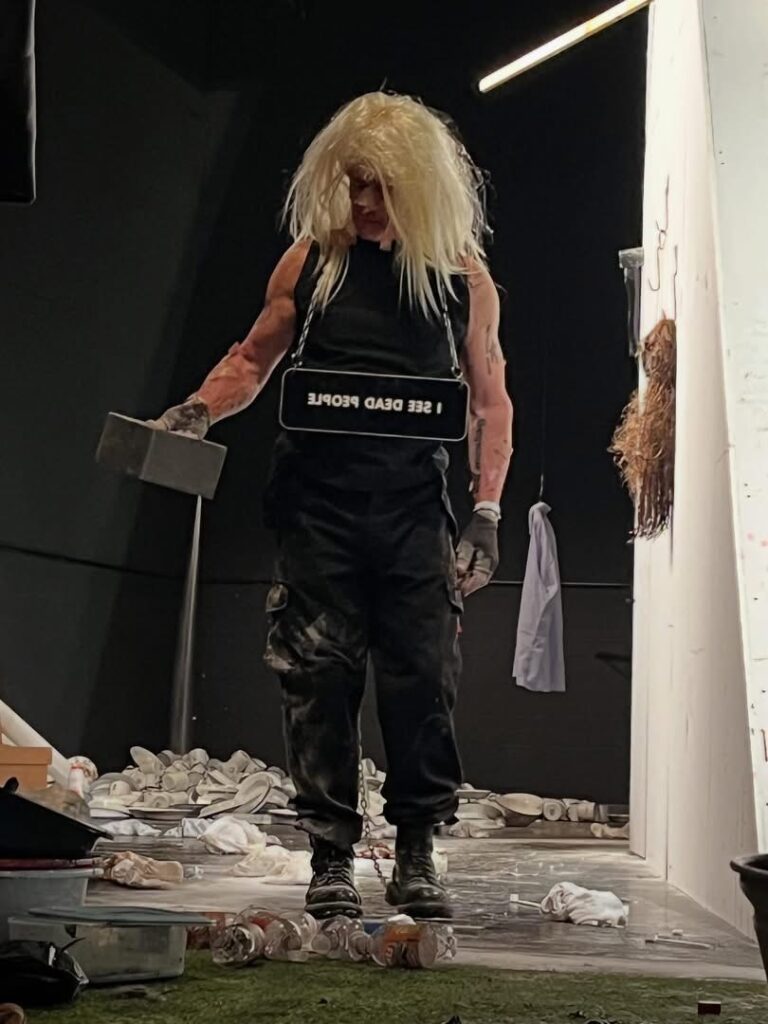
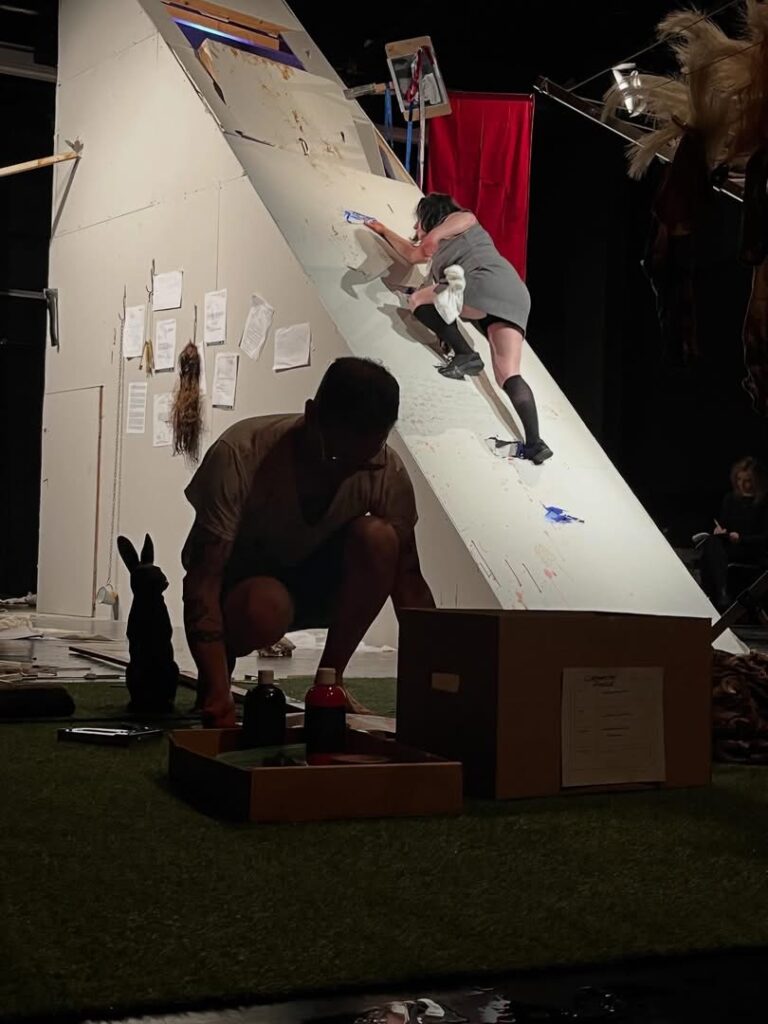
Images from André Stitt personal Facebook
A tower is haunting the space which becomes a freighter for the saturated child garments. Noted as well was Stitt’s break downs for this passage of the work, he said later this was for those who were no longer with us and that it was about love. Mirrored by this surprise speech at the end, was a scalpel used to cut his leg with the word ‘Love’, to commemorate those who had gone. Many moments were deeply disturbing and also very touching. Stitt as a sort of circus leader, gives the other artists chances to share their own ideas and endurances to dizzying effect.
Charlie Lockwood is familiar to South Wales audiences in performing circles. We see some typical ideas heard of in the craft, nudity, urination, rolling in dirt and more. Charlie’s presence changes several times over the hours, a social worker with a bed of tooth brushes, documentation slammed onto a wall, shaving head hair and burial mounds are created throughout. Charlie is the youngest of the set and exposes themselves to great venerability. It’s very touching.
Jamie McMurry is an American performance artist and is great to watch. His comic timing is also very sharp, his regurgitation of dye and water onto a clothes line is explosive and energetic. He becomes a sort of bureaucrat scribbling down names and pasting them to another wall. Sinéad O’Donnell was the first to emerge after Stitt’s first phases. Within the tower sculpture, she evoked Marina Abramović, a performance icon, appearing fulled nude and with strobes of red covering her body. She is blown with a fan and uses a large cardboard tubing to look out as if at sea. Searching is the theme and didn’t last long enough.
When the four met and comforted one another, there were moments of great sensation. You cannot sit through a five hour work (I stayed through, no breaks) and not be moved, mediated and trigged in equal measure. A bout of camp with Stitt in silver boots and a furry tail, as he blindly flared around the space picking up degree as he went. There was worries over if he would accidentally hit audiences members or other artists in this friction. Salt, aforementioned treacle, mashed potatoes, soil, toothpaste and medication are the catalogue of foods and they mostly go down on the floor for the most part. Spectators are advised to be careful moving around the space due to this, the splash zone was frequently altering throughout. Stitt finally fury with the bucket with treacle saw a wig drenched in the stuff and wallet getting splashed also.
Within these happenings lied a great amount of endurance and emotional feats. Out of all the work I’ve ever seen created in my home town this is one of the most impactful. You don’t quite see something like this often. Perhaps Stitt’s march around the tower with placards might be the most telling image, as Lockwood’s soundscapes from personal chosen imagery from each artist matched his and McMurry’s food steps to the greatest effect. That’s what will stay with me.
Blending circus acts with street music, modern dance, technology and theatre, Cirque Éloize bring their ID Reloaded show to Wales Millennium Centre as part of their UK-wide tour. The show mixes breakdancing, hip hop and other modern dance skills with well-established traditional yet contemporary circus skills such a juggling, trapeze, and trampolining, to mesmerising effect. The show opens with two street gangs scrapping with each other and, although this theme is continued to a certain extent, it appears to dissipate as the show continues, with the acrobatics being the focus rather than any over-riding storyline.
Providing the backdrop is a highly effective video back projection system, which takes the audience through dramatic monochrome cityscapes – interchange flyovers, moving seamlessly and deeper into office buildings, abandoned warehouses, and occasionally into an increasingly cosmic, esoteric world, flooded in more calming blue and purple hues. The lighting also deserves a mention, well selected coloured spotlights frequently matching the colours worn by the performers.
Centre stage, of course, are the nine highly skilled acrobatic performers. Undertaking gravity-defying skills which redefine the term “pole dancing”, leaping around on a bike as easily as on two legs, and balancing rather improbably on 45 degree-angled chairs – just a few of the remarkable feats on display. Personal favourites included the skipping set, at one point combining three ropes-within-ropes jumps, the trampolining and hula-hoop set and, judging by the applause of the audience, I was not alone. Thoughtfully interspersed between these high-octane sets were more contemplative modern dance-meets-acrobatics interludes, providing a welcome reset after much excitement.
The make-up of the audience was interesting. From primary school-aged children to a more mature (and I reluctantly include myself here) punter, it’s clear that this genre of music combined with show-stopping acrobatic performances has a wide-ranging appeal. A thoroughly enjoyable show.
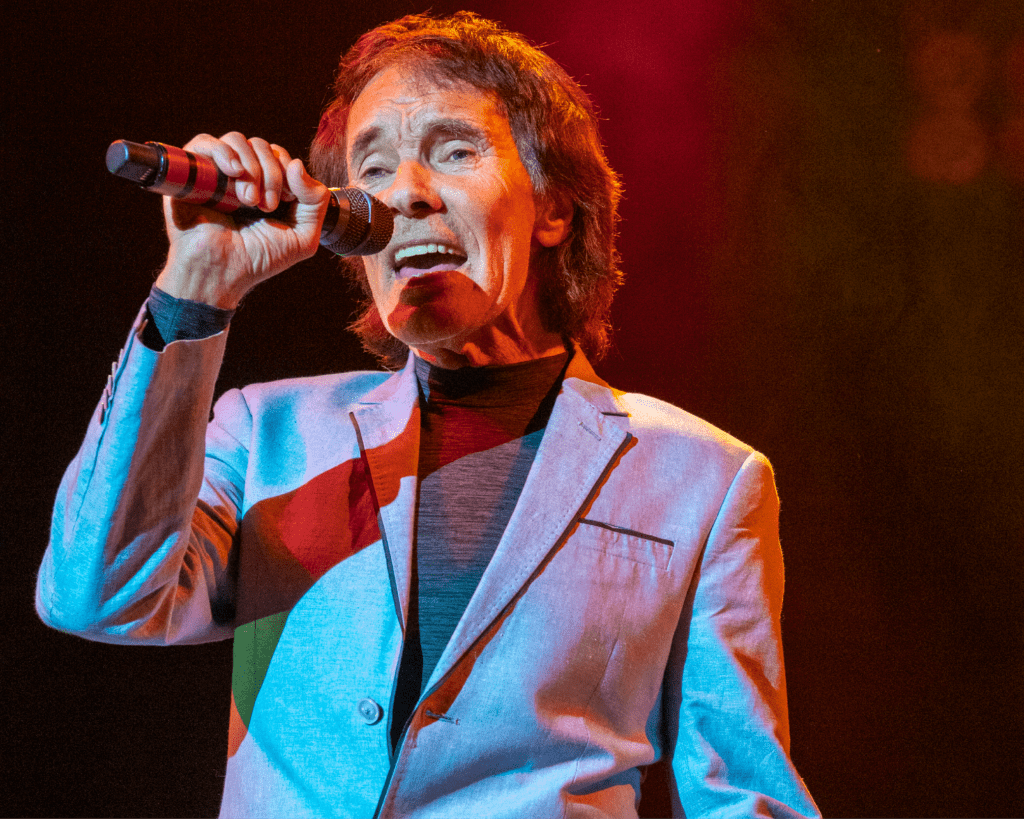
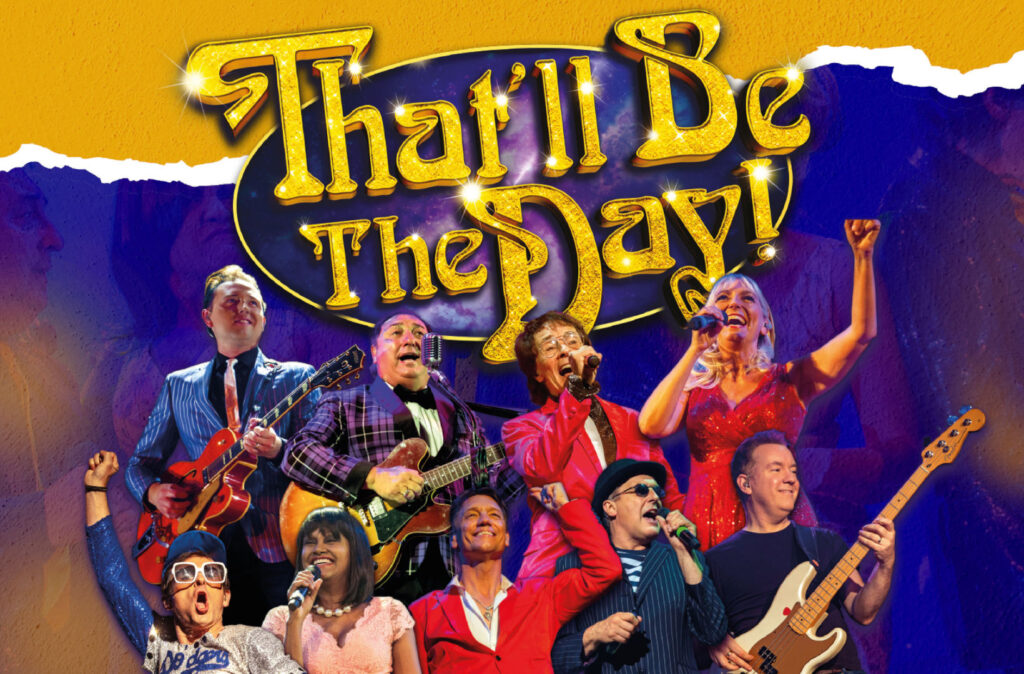
Get the Chance, member Samiya Houston recently spoke to – Trevor Payne, Creator of and Performer in That’ll Be The Day & That’ll Be Christmas
Hi Trevor, how did you first get into performing yourself?
Like lots of other guys my age at that time, once The Beatles have arrived, we formed a four-piece band. It was the thing to do, inspired by The Beatles.
Where did the idea for That’ll Be The Day come from?
We had changed the band over time into a variety act, featuring comedy, music, vocals and production. It was similar content but on a smaller scale than That’ll Be The Day, and on a cabaret circuit at the time.
What’s your favourite moment(s) in the show (to perform or otherwise)?
Favourite moment in the show is to hear the audience when they’re absolutely falling around laughing. It gives me great joy knowing that they are engrossed in the show.
You can check out the four star, Get the Chance review of That’ll be the Day at Venue Cymru, Llandudno by Richard Evans here
Major congrats for going for so long! Have there been any particular highlights over the past 40 years?
There have been many highlights. The five London Palladium performances have been a big highlight for us, and we are excited to return there in February.
But generally, we take great pride in making each show the best night out for our customers and that is highlight enough.
What’s been your favourite location to visit/perform at?
Several theatres come to mind, but of course, the London Palladium is still ranked as the most prestigious theatre in the world. We love coming back to it.
If you could perform with any of the artists featured in the show (in the flesh!), who would it be?
Mick Jagger.
And then you’re keeping the celebrations going with That’ll Be Christmas,in the spirit of the season, what’s your all-time favourite Christmas song?
My all-time favourite Christmas song is ‘The Most Wonderful Time of the Year.’
Do you have any Christmas traditions?
I like to spend Christmas at a different location every year. My favourite location from the last 6 years must be New York. Whilst I was there, I had the pleasure of watching The Rockettes.
You can find out more about That’ll Be Christmas and book tickets here
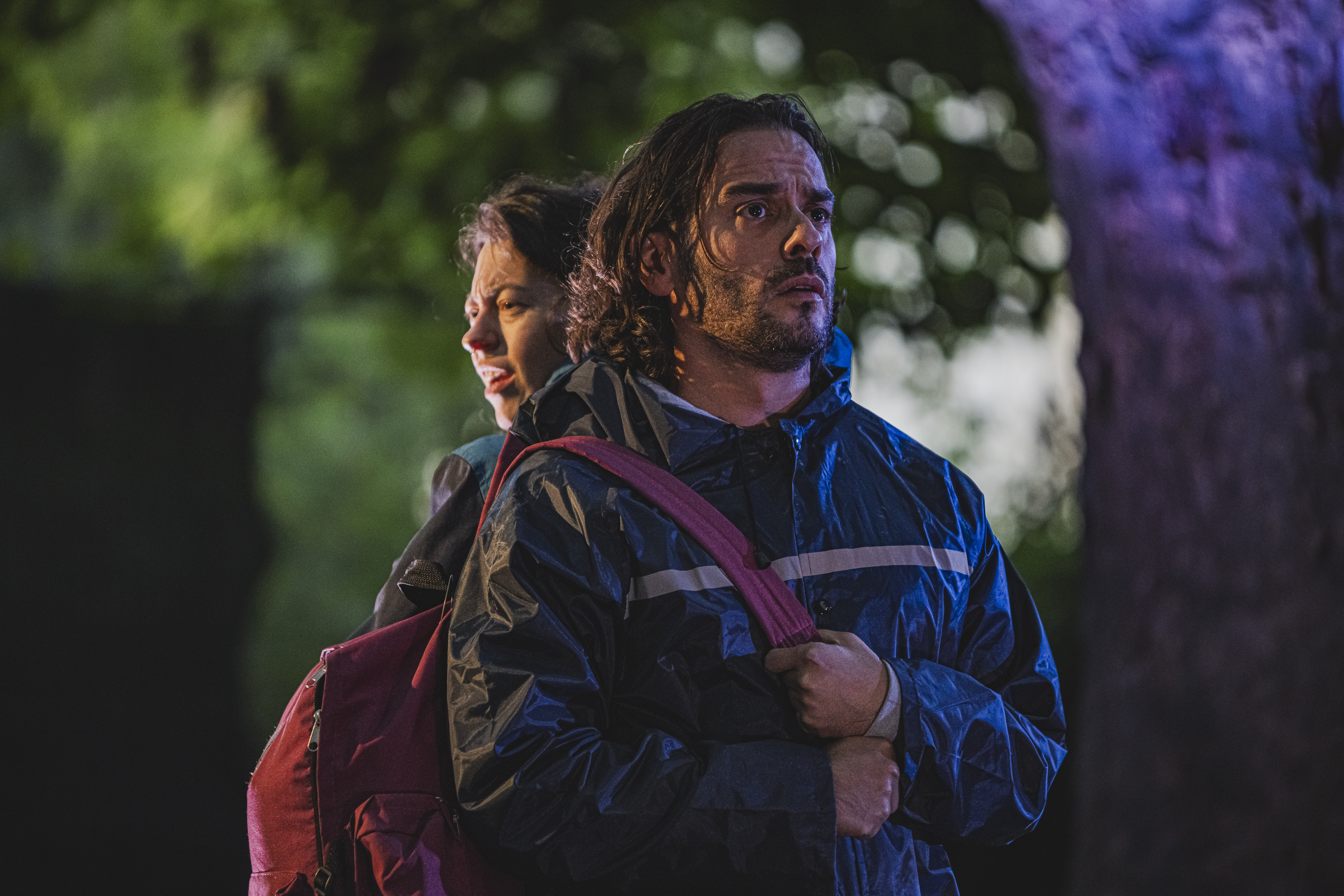
Despite being bombarded by borderline torrential rain and aggressive gusts of wind, The Other Room’s production of “An Orange In The Subway” certainly wasn’t dampened by the bad weather. With an outstanding leading performance from Mica Williams, the play raised important questions about homelessness and whether or not there truly is some other-wordly being watching out for us.
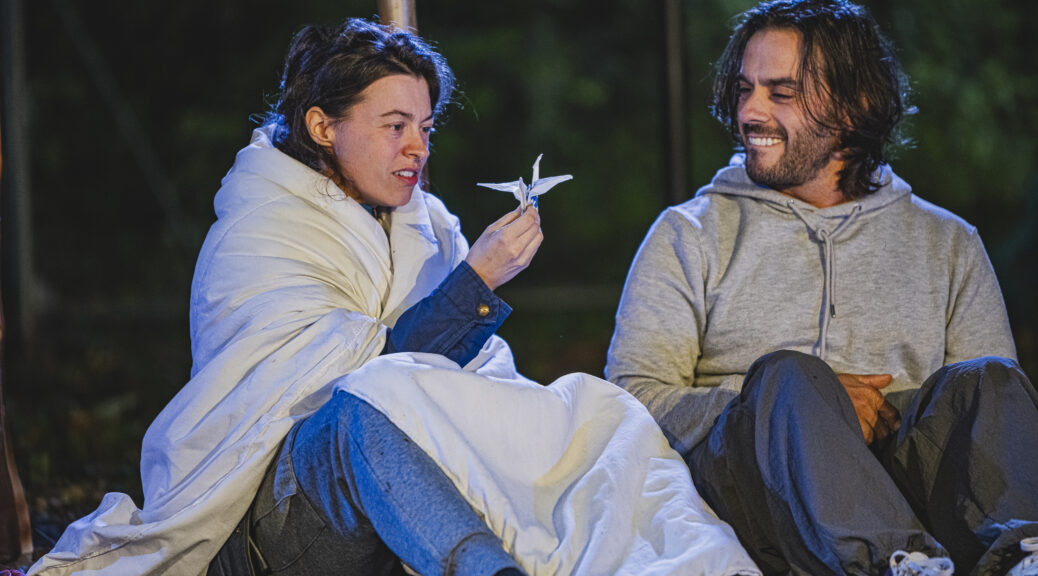
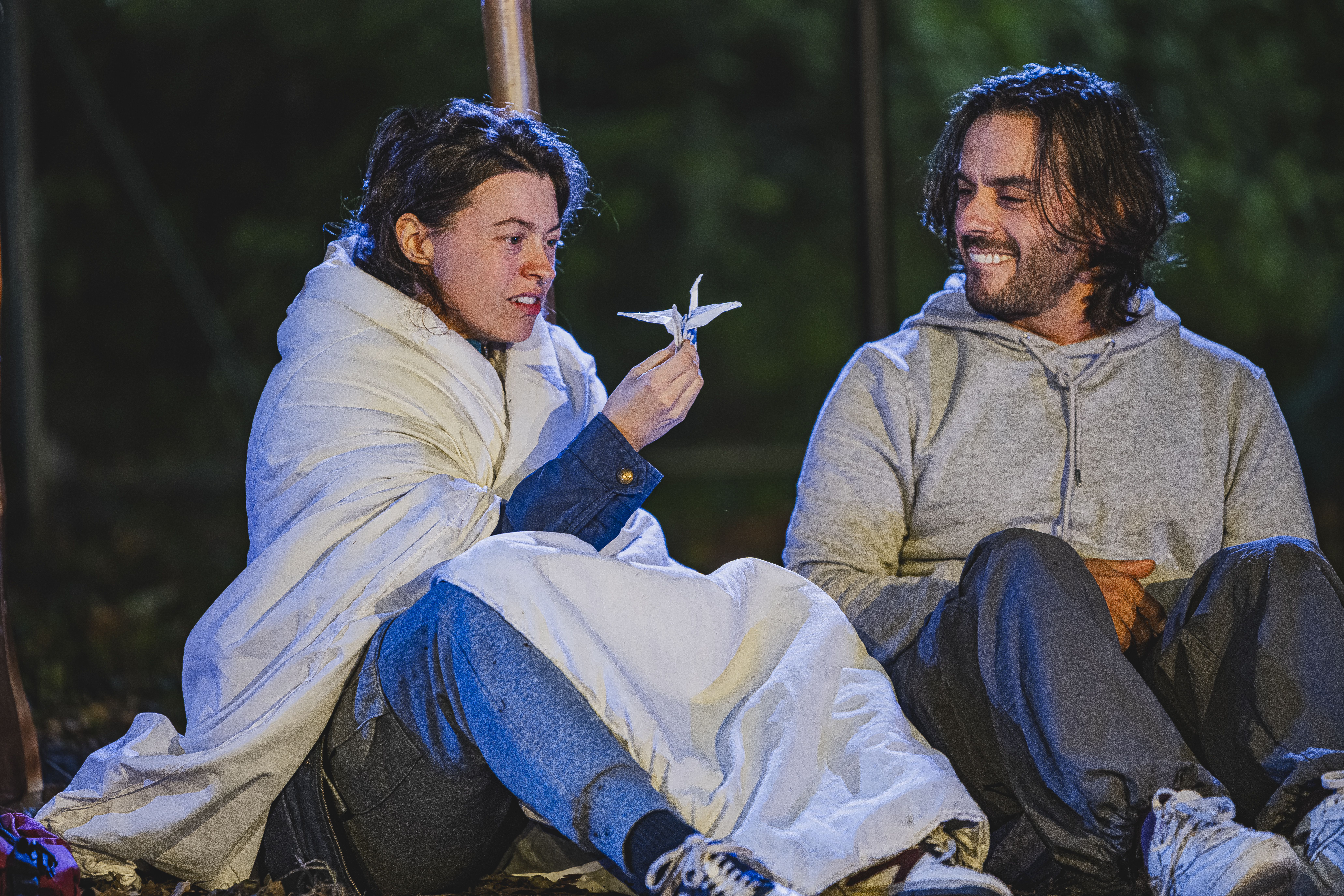
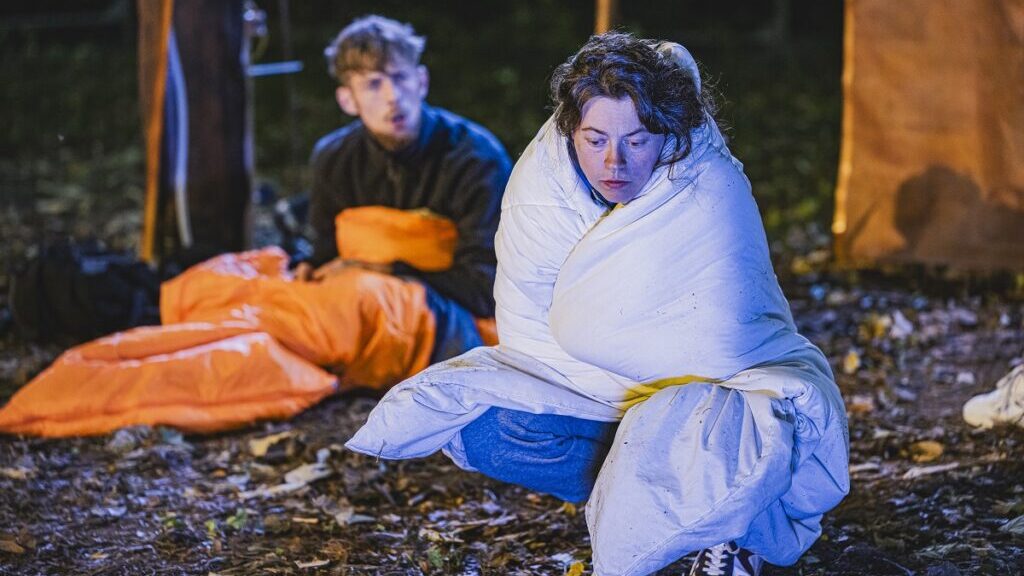
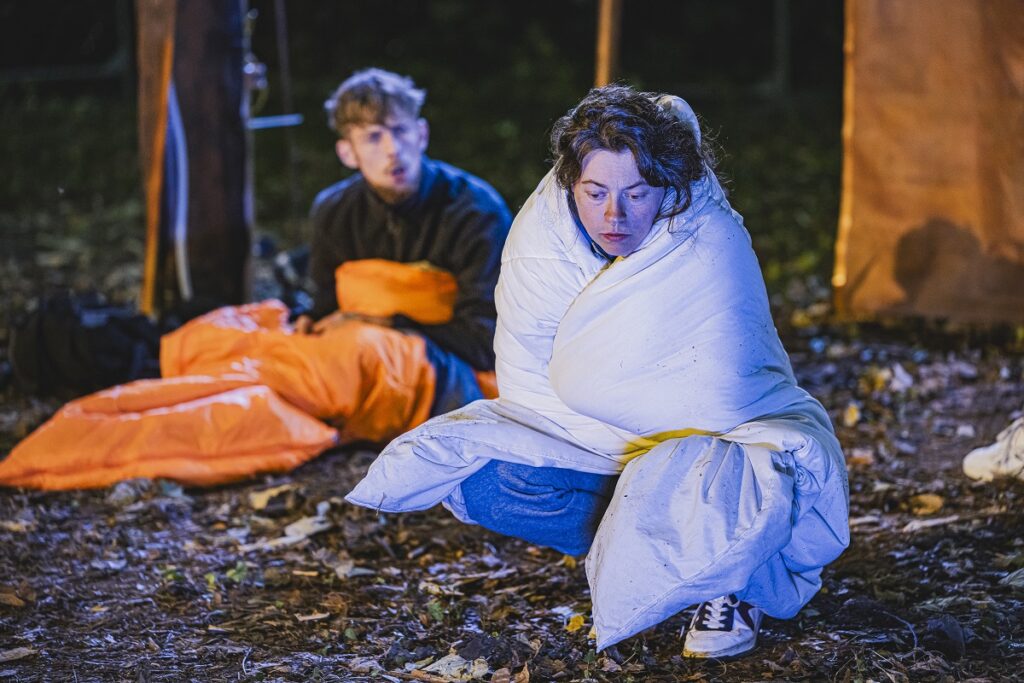
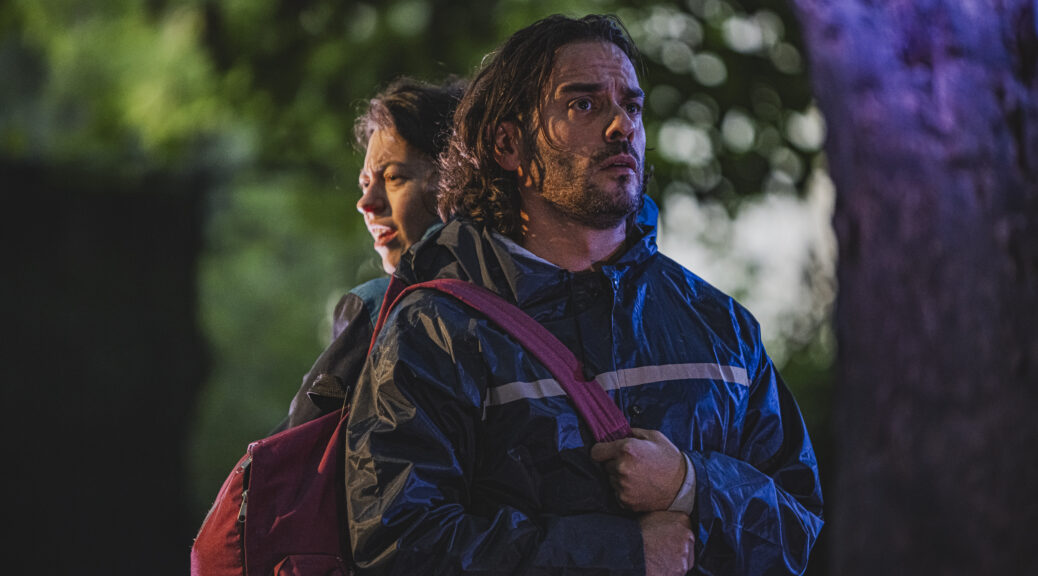
The play follows Cassie (Williams), a homeless young woman who is convinced she has a guardian angel- she keeps being left oranges in the subway. Accompanied by the incredibly talented Osian Lloyd and François Pandolfo, who had mastered multirole, the trio didn’t let the weather or the subject matter stop them from delivering a moving interpretation of the play and its characters. Williams’ talent for handling dark, gritty emotions really shined in this role- at some points you could forget that she wasn’t really Cassie and that her sharp defensiveness was merely acting. During her reunion with one of Lloyd’s characters, known only as The Banker, you could feel the desperation in her voice as she asked him all of the questions she was dying to know the answers to. With both the start and end of the performance featuring Cassie and The Banker, the small detail illustrated the never-ending cycle that is life on the streets. Additionally, Lloyd and Pandolfo’s distinction between their multitude of characters was commendable, with a particular highlight being Pandolfo’s portrayal of the all-too-realistic drunk girl.
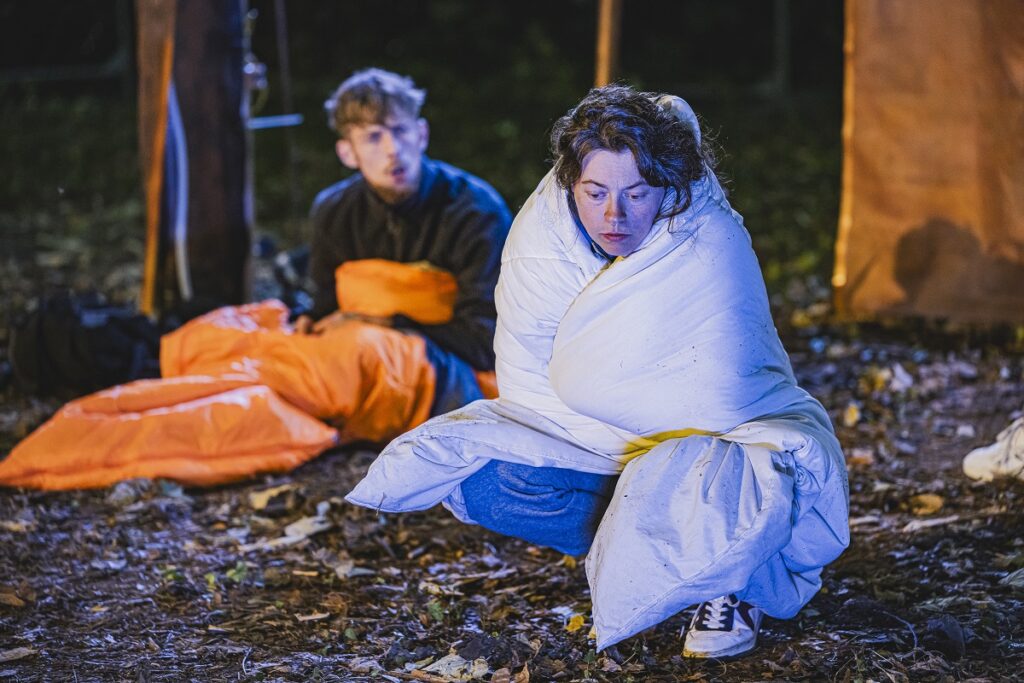
One of the most interesting characteristics of this production was the outdoor setting- Mackenzie Park’s trees arching overhead provided a serene, secluded backdrop for the play. Upon entry, we were given the option between sitting on tarp or cardboard- no matter what option you chose, you were only ever about two meters away from the actors and the show, which heightened the authenticity and conveyed the messages of the performance. As we were all on the same level as the stage, it was easy to immerse yourself in the show, with the actors even coming into the audience and breaking the fourth wall at some points.
If anything, the dismal weather conditions added to the drama of the performance. The inner English student in me wanted to point out the pathetic fallacy in the climate- during the most intense moments, the rain seemed to get heavier, the temperature seemed to drop by a few degrees, and the wind pelted my umbrella (which I was very grateful for). The lighting choices- made by lighting designer Katy Morison- further set the scene, with warm oranges flooding the performance space from below, and light blues occasionally tinting the scene.
Even though I ended up getting absolutely drenched, I left Cardiff that night with a million thoughts swirling around my head regarding the performance- all positive. It certainly wasn’t an experience I’m going to forget any time soon.
It is not often that a play invites you into the performance space itself, but An Orange in the Subway achieves exactly that. The production was staged in Cardiff at Mackenzie Park, where the wooded area was transformed into the stage. This performance unfolded on the same level as the audience, placing us directly alongside the characters and blurring the line between stage and reality. Additionally, the performance was both intimate and atmospheric, making us witnesses to Cassie’s story.
At the heart of the storyline is Cassie, portrayed with depth and spirit by Mica Williams. Cassie is a woman navigating through the harsh struggles of homelessness, caught between survival on the streets and wrestling with questions of spirituality and her guardian angel. Mica Williams brings out Cassie’s sharp-edged defensiveness to protect herself and her raw vulnerability grappling with fear, guilt, and the feeling of being forgotten, making the duality of her performance absorbing.
The production also made wonderful use of multi-rolling, with actors transforming fluidly into different characters, each new encounter standing for a reflection of society, some people judgmental, others kind, and all of them shaping Cassie’s understanding of how people view her place in society. The characters who passed through her life clarified the reality that homelessness is an embedded part of everyday life and that her struggle was a product of the same community that surrounded her. By the end of the performance, her reconciliation with her friend, The Banker, felt deeply earned, a moment of peace that closed the story of her journey.
What uplifted the performance further was its design; the use of the props in so many creative ways allowed the wooded space itself to become part of the storytelling. This included the lighting choices, created by Lighting Designer – Katy Morison, which used oranges and cool blues to shape the atmosphere; the gentle music, by Composer – Tic Ashfield, played a vital role in welcoming us into the space; and the sound effects, which deepened scenes, created atmosphere, and grounded the audience into a believable world.
At its core, An Orange in the Subway is about how people grasp onto signs of hope, even in the darkest circumstances, and trust that something spiritual might take place to carry them through those moments of misfortune and hardship. This matter was embedded through Cassie’s journey, from her desperate search to find her guardian angel, to her concluding moments of reconciliation and peace. This performance shines a light on the overlooked struggles of homelessness while highlighting resilience, forgiveness, and the human connections that carry humanity through life. Owen Thomas’s writing, the production team’s vision, Mica Williams, Osain Lloyd, and François Pandolfo created an experience that I believe was thought-provoking, moving, and one that I can proudly say that lingers after the final moment.
You can find out more about the production and book tickets here
A cold and windy night was the perfect setting for The Other Room’s newest co-production ‘An Orange in the Subway’. Performed outside in Mackenzie Park, in collaboration with The Wallich. The show really brought in all the senses as the audience sat on the ground, watching the actors as they deftly performed Owen Thomas’ story.
The performances were incredibly impressive. Mica Williams’ Cassie was our focus and hardly had a moment to breath in a very intense hour of performance. The desperation, confusion and loneliness of the character shone, and Williams’ physicality added to the creation of the world we joined. François Pandolfo’s multi-rolling, added layers to the story and the different characters he can create are always impressive. Ranging from the recognisable to the absurd, we glimpsed the breadth of those that form Cassie’s world of Cardiff- a particular highlight was the very drunk girl we could all recognise. Osian Lloyd’s performance was a stand out for me, I was so impressed with the nuance and differences between the characters portrayed. The Bankers’ opening lines immediately drew us in and the shifting between worlds and characters throughout kept you engaged and part of it.
This was hugely helped by the setting, and kudos needs to go to Katy Morison’s lighting and Tic Ashfields sound. Both made you aware what you were seeing was a performance, but heightened the action and created the world of angels as well as embracing the natural world and darker nights we are heading into.
Whilst there were so many positives, the show has made me question my expectations around art for arts sakes and the responsibilities of showing a topic such as homelessness. If the show wasn’t in collaboration with The Wallich, I would be tempted to find some of the characters as closer to stereotypes rather than full humanity. Owen Thomas’ verse was hard to immediately grasp, moving us from feeling the show was made from a point of truth.
The strongest moment of the play I felt was Cassie sharing with the statue of Nye Bev that she’d tried the support out there, but all the rules and curfews were too much. This was a great insight into the complex struggles that exist between the help that is out there and the people most in need, as well as the power of autonomy. I expected to see more about what help does exist and the next steps for the characters, but then that might have felt kitsch and shoved in, when for so many people there might not be a happy ending.
Leaving, I struggled to decide what the outcome of the piece was. Now, not all theatre needs a call to action or an objective I know, but especially when it was so based in rough sleeping not just in subject but in setting, I was expecting to leave and feel something. Some sort of next step or understanding of the struggles people face and an idea of what may help.
“Not just a deeply moving play, but a rare, connected experience of homelessness between the audience and the actors onstage.“
It started with my forgotten umbrella and ended with one of the most authentic and unique theatre experiences. Following the story of Cassie, a homeless girl lost and ruined, our emotions become escalated from watching this live performance of ‘An Orange in the Subway’ as we experience sitting on the ground on tarps and rain falling down for the ultimate homeless experience, immersing us with the incredible actors and witnessing their same struggles with them.
Owen Thomas’ writing will leave you wondering and in a rapt effect about how other people in this world are living, clinging to any hope and enthusiasm in what feels a dead-end life. The play will have you laughing the one second, and teary-eyed the other as we witness the harsh reality of being homeless.
Isolated and fearful, the main character of Cassie, played captivatingly by Mica Williams, is determined there is more to her life, someone or something out there looking out for her. And as we embark on her story, the incredible multi-rolling of both actors: François Pandolfo and Osian Lloyd, who has actual experience of being homeless, will expose the nerve wracking and heart-breaking encounters homeless people deal with every day.
In partnership with a Welsh homelessness charity The Wallich, Dan Jones’ perfect directing and the passionate acting brought to life the play and is giving homeless people the voice that is always subtly ignored when they plead on the side of the street.
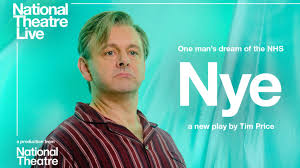
The noisy member for Ebbw Vale. The stuttering orator. The father of the National Health Service. Growing up as a Valleys girl I was always told that the NHS was created by a Welshman;, but I never truly knew the full story behind the man, Nye Bevan, whose vision for a better, fairer world, was the driving force behind creating the National Health Service. I first encountered Nye at the Wales Millennium Centre in its previous run in 2024. It’s safe to say that my visit to the revival version in 2025 still left me reeling with emotions; high with laughter one moment, face wet with tears the next.
In a time where the NHS is under much scrutiny; undervalued, understaffed, underfunded, Nye takes us back to its infancy, with the opening pages revealing Aneurin Bevan recovering from an operation in one of the very hospitals he built. The staging here is a thing of beauty, the set and ensemble create a budding National Health Service, the hustle and bustle of the ward’s essence captured perfectly. From there we enter Nye Bevan’s dream and his journey from a Miner’s son in Ebbw Vale, through school, endless tribunals and countless committees, to the Houses of Parliament and eventually to his role of Minister for Health (…and Housing) and his ‘vision’ come to life in the creation of the National Health Service.
Nye is, to my mind, a masterclass in writing. The scene in Tredegar Library is a particular favourite of mine, delivered with a deftness of touch but an undeniable Welsh Valleys flavour. Another is the ‘seam’ with Nye’s father, David; a poetic explanation of what it truly meant to be a ‘learned miner’ with the ‘one true blow’ counterbalanced perfectly with the undeniable voice of the Valleys Welshman. The writing throughout truly captures the lives, the spirits, the souls of the people of the coalmining town that Nye Bevan called home and the wider political world he came to inhabit. Tim Price’s pen brings the Valleys to life before my eyes and it is a Valleys that is achingly familiar to me.
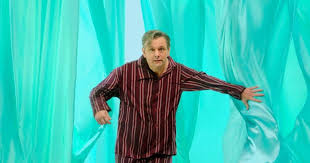
The set is striking and with a swipe of a hospital curtain we are transported throughout the world of Nye. Vicki Mortimer’s striking set with its various levels of green ward curtains move us effortlessly throughout the tableaus, and when they are fully removed, the stage is all the starker and bleaker for it. The emptiness of the stage with the single hospital bed at the end of Act One is stunning in its emptiness and simplicity, and shows the audience, with brutal honesty, that the end of a life is just a son holding his father in his arms and telling him not to fight anymore. The projection design by Jon Driscoll is one of my favourite parts of the production, in particular the scene where Nye first takes up the mantle of Minster for Health and crowds of people in need start walking towards him in desperation. It’s so simple but the execution is flawless. Lighting, sound and music are also excellent, designed by Paule Constable, Donato Wharton and Will Stuart respectively.
Director Rufus Norris is joined by the Revival’s Co-Director Francesca Goodridge, alongside Co-Choreographers, Steven Hoggett and Jess Williams. The way the cast and ensemble move and flow in this production is beautiful; humorous and heartbreaking. The flow and creation of tableaus in Nye, quite frankly, takes my breath away and is an absolute testament to the direction and choreography of the piece.
The cast of Nye is, without exception, phenomenal. There are very few changes from the production in 2024, and you can feel the trust and security that the actors feel in one another. The physicality as they swap and change from various ages in some cases, and roles in others, occurs without fault and without ever jarring the audience’s imagination, morphing from nurse to sister, doctors to politicians (and back again). I would be remiss, of course, not to mention, Michael Sheen in the titular role. He truly embodies Aneurin Bevan; never shying away from his flaws and human condition, with a healthy tot of charm thrown in. The physical wrench of his stutter is painful to watch, juxtaposed with his burgeoning confidence as he first meets Jennie Lee (played with great poise by Sharon Small). I never thought I would get to see Michael Sheen musical performance, full of vigour and swagger; and only a heartbreaking few moments later we see him clutching his dying father in his arms, in a moment which left the audience reeling. What a huge weight to fall on an actor’s shoulders to portray, not only a real person, but one so universally revered and admired, even idolised in his hometown. The respect, poise and gravitas that Michael Sheen brings to this role is nothing short of breathtaking.
Nye truly is a love letter to the National Health Service, in a time where it needs OUR care and attention after years of giving so much of that to us. The play is not so much a ‘call to arms’ as a reminder of all it took to get Nye’s vision to be realised and of the utter travesty it would be to lose that now. But Nye is more than a story of the realisation of the health service; it’s the journey of a man, his life, his triumphs, his flaws, and the people who touched his life along the way. Nye is an absolute triumph and a testament to every single person who has brought Aneurin Bevan back to our minds and our hearts.
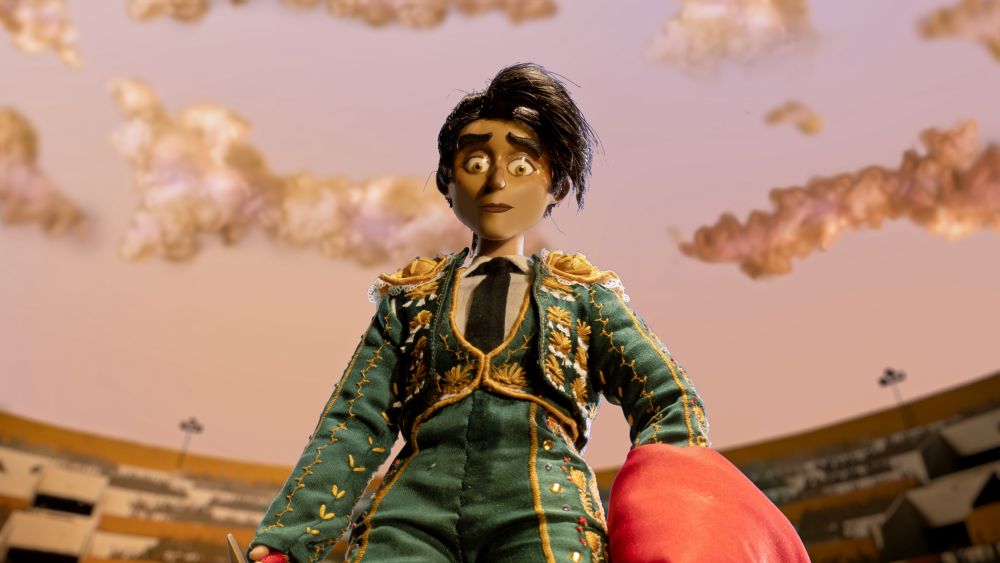
Out of all the strange and wondrous animated work under the Adult Swim banner comes rare jewels and underdogs. From Gonzalo Cordova comes Women Wearing Shoulder Pads, set in 1980s Ecuador. Hailing from Spain, business lady Marionete Negocios (voiced by Pepa Pallarés) is met with scorn and conspiracy as she plans to make guinea pigs pets as opposed to being on the menu. Within this culture clash (the animal in Spanish is called ‘cuy’) lies the main thread of the plot.
This is stop motion and their uncanny appearance is slightly jerky, though that is part of the charm. The only apparent surreal feature is the larger than life cow used as a replacement in bullfighting. Corruption was rife in this era and here is no different. Matador Coquita Buenasurete sleeps with Marionete and hands over breeding contacts. In the second episode, Coquita is in conflict with her new love and her work, the first big pull of the story. Hugely successful Chef Doña Quispe appears as the villain in her attempts to keep cow as a food stuff, blocking the plans to domesticate them. Marionete offers a duck as a piece offering to Doña and things fall apart pretty quickly. Further scheming seems to be afoot from all parties and should emerge as delicious in their execution.
I’d like to say I’m convinced by the whole premise, but at this stage I’m undecided. The hands of the characters in close up appear as real human live action clips, not as disturbing as you’d think. The stop motion figures are subtle and not the most eye catching. Some humour may be lost in translation and some crude jokes seen in past animation might not work well today. The setting of the its era is also convincing, as the name would suggest. The leading lady cast and Spanish/Latin American identity should find an audience away from the bonkers work often seen with Adult Swim. Yet, a mere ten minutes a piece, it leaves you wanting more from this subtle, curious offering.
Watch on Mondays live on Channel 4 & streaming after.
Communities Engagement Partner at Royal Welsh College of Music and Drama, Guy O’Donnell was one of the speakers at the annual Arts Marketing Association Conference, Amplify in Edinburgh in July.
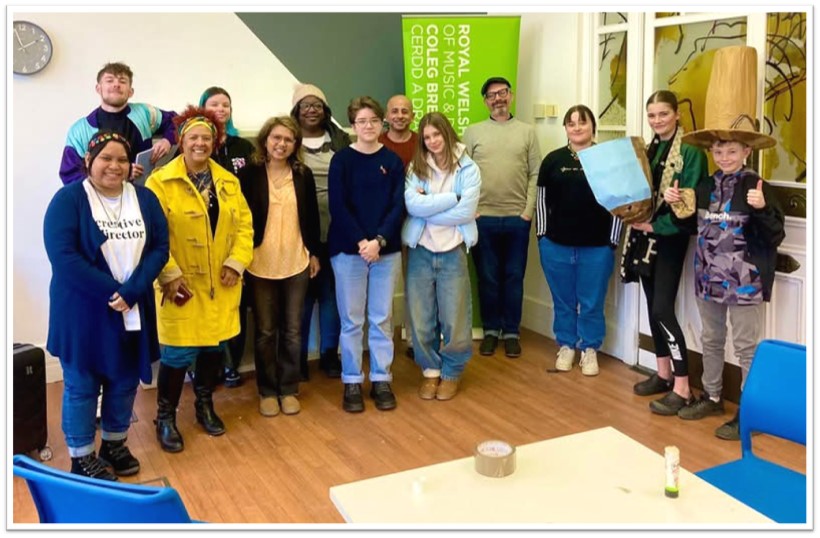
In the role of Communities Engagement Partner, Guy works on delivering a wide range of engagement activity, working across every aspect of the College with potential students, community groups, schools, colleges, audience members, partner organisations, decision makers and the wider public.
Guys presentation is shared below to give an overview of the work of the Department.
The Royal Welsh College of Music and Drama (RWCMD) is in a position to make a significant impact on the cultural accessibility and inclusion of people who may be facing barriers to engaging with live performances.
By actively supporting these audiences to work with their students, and share the creative outcomes on their stages and exhibitions, RWCMD has fostered a more inclusive, diverse, and collaborative environment that benefits both the participants and our students.
In this overview you can learn more about the work RWCMD has supported to develop;
Demonstratable techniques to increase the diversity of audiences
New ways to curate a cultural programme
Ways to work with volunteers to increase attendance and income
After many audience development initiatives, audiences are still mainly white, well-educated, middle-class, and middle-aged. This lack of diversity makes it difficult to demonstrate the value of publicly funded cultural activity. It also raises doubts about how creative and lively the arts sector is and its genuine connection to the broader general public.
In this article I will outline the work of the Communities Engagement Department at RWCMD, to co-create, empower, and support active audiences who face barriers, offering them opportunities to work directly with our students. Our goal is to not only enhance the cultural engagement of these communities but to provide them with a meaningful platform to share their creativity, exchange ideas, and contribute to the training of our students.
The Royal Welsh College of Music & Drama in Cardiff, attracts the best creative talent from across the globe. As Wales’s national conservatoire, we fire imagination and drive innovation, offering training to more than eight hundred actors, musicians, designers, technicians, and arts managers from more than forty countries.
The College’s events calendar encompasses over five hundred public performances every year including orchestral concerts, recitals, drama, opera, and musical theatre. The creative diversity of the College ensures a stimulating environment and broad experience for students of all disciplines.
RWCMD is a space for everyone, through proactive measures, we seek to address barriers, promote diversity in all its forms, and cultivate a culture of belonging where everyone, has the opportunity to reach their full potential.
The mission of college is to be a space for everyone; the role of the Communities Engagement Partner works to support a greater range of students and the public to be aware of college and our work. In order to deliver on this mission When I first came into the role in Sep 22, I spent time learning about our live performance programme and meet with lots of staff and students and members of the public to get their views. What came across most strongly was the potential of our live cultural offer to open up conversations about access to the arts and it is a natural strength as the national conservatoire of Wales.
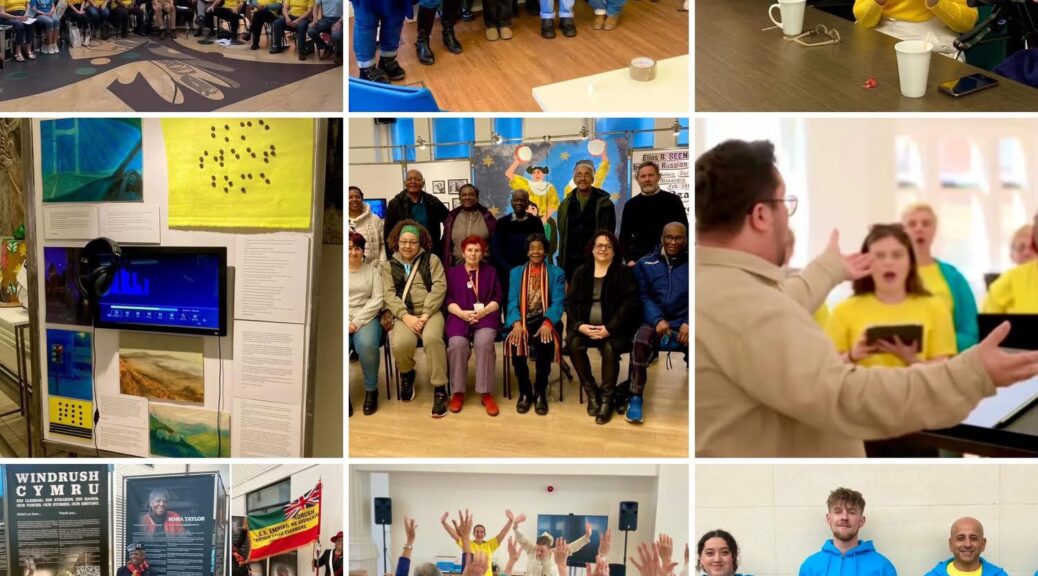
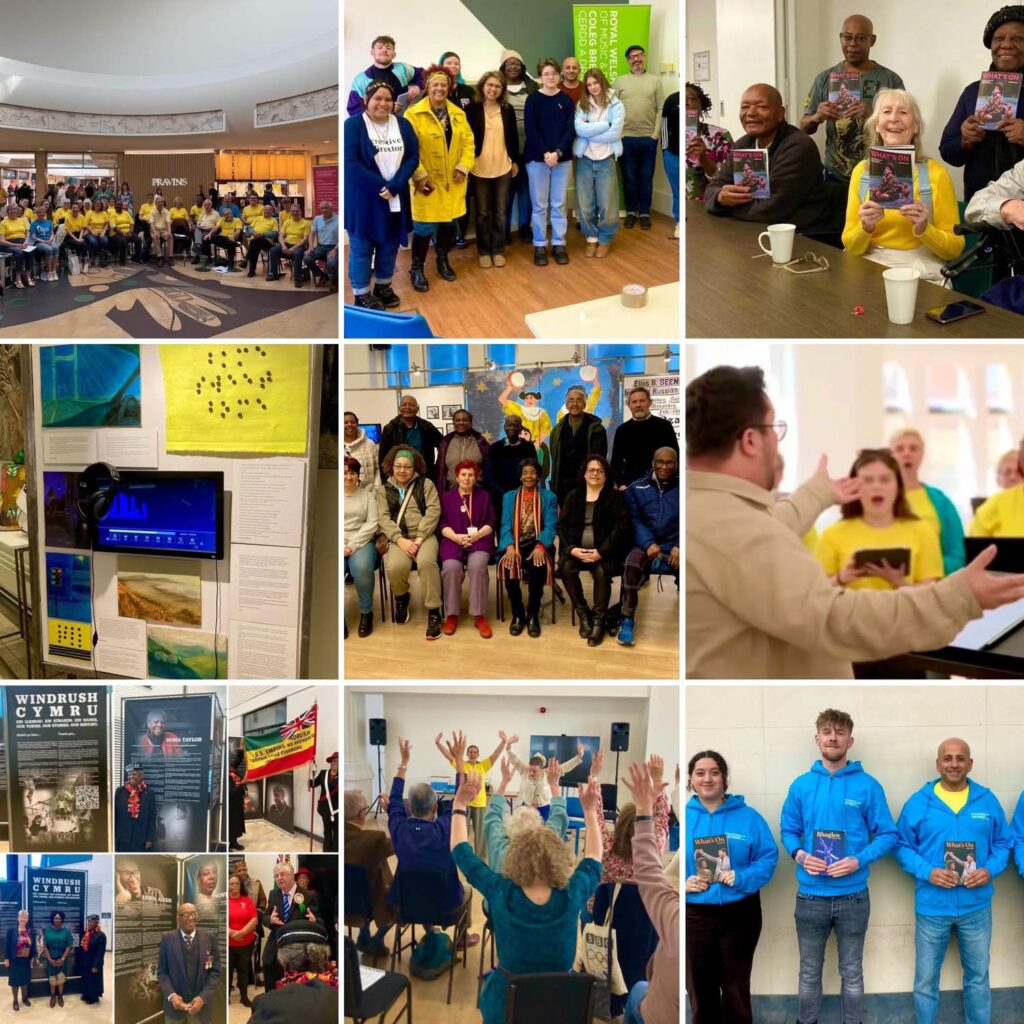
Using this information one of the first projects we developed was Calypso Jazz with The Windrush Cymru Elders
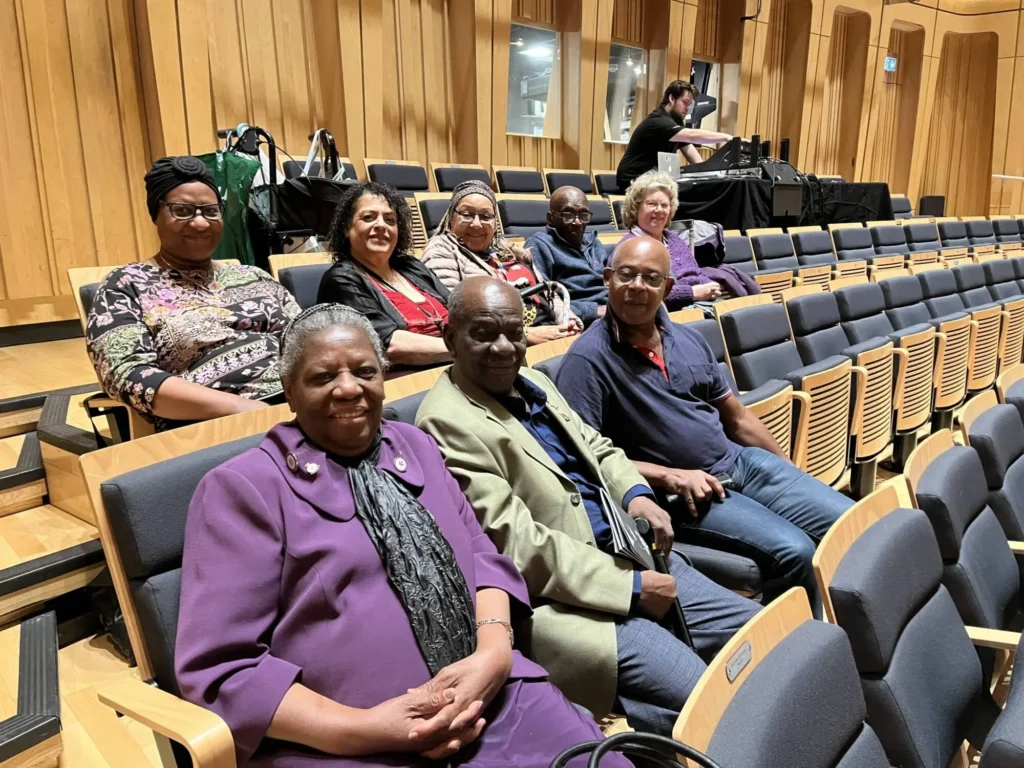
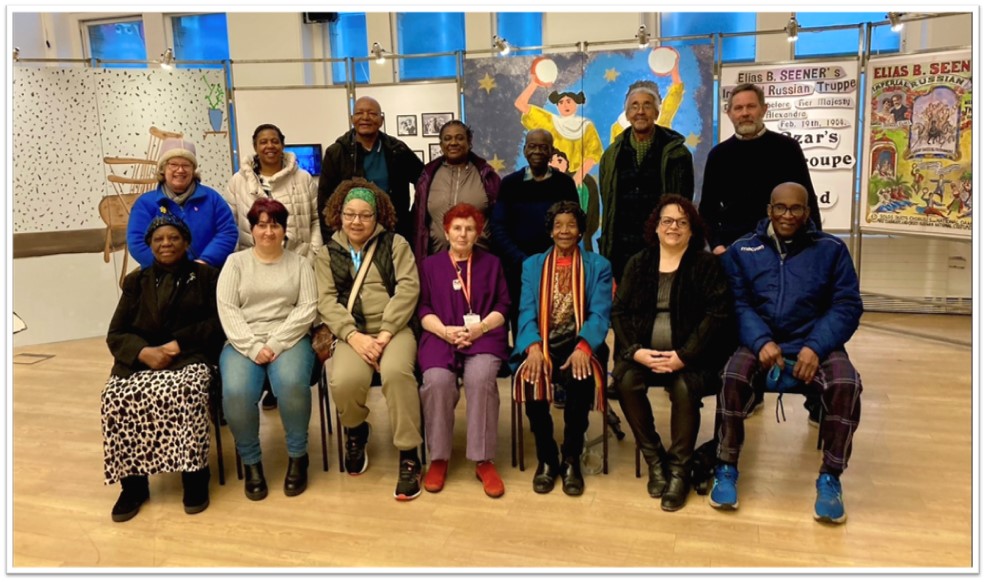
The Windrush Cymru Elders, led by Race Council Cymru, come from different areas across South Wales. They’re a proactive group of Elders who promote understanding of ethnic minority elders’ concerns and needs while celebrating key milestones and marking the contributions of people of African descent.
The group meets weekly, usually in the College, to enjoy each other’s company and take part in creative activities in and around Wales. The College and Race Council Cymru colleagues, provide support and meeting facilities for the group who use College as a community hub.
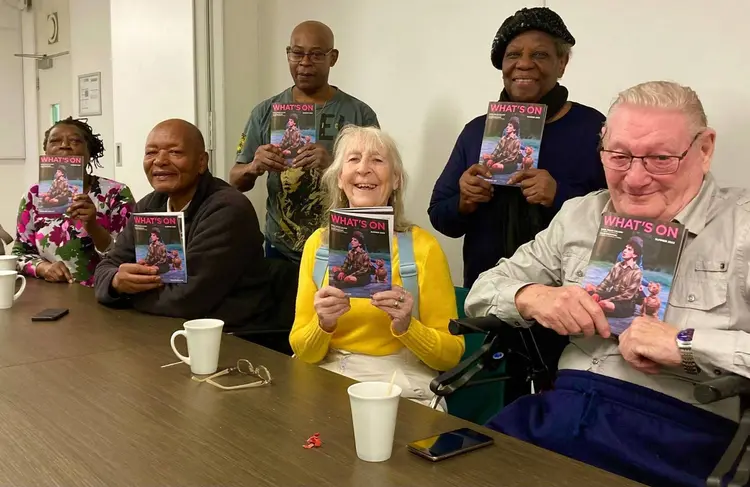
They collaborate with us on feedback and input to the What’s On performance programme. A range of colleagues and students from college have presented to the group to foster an understanding of the College’s work and develop links with The Windrush Community. Public performance is central to student learning, as is understanding a diverse range of audiences and their needs.
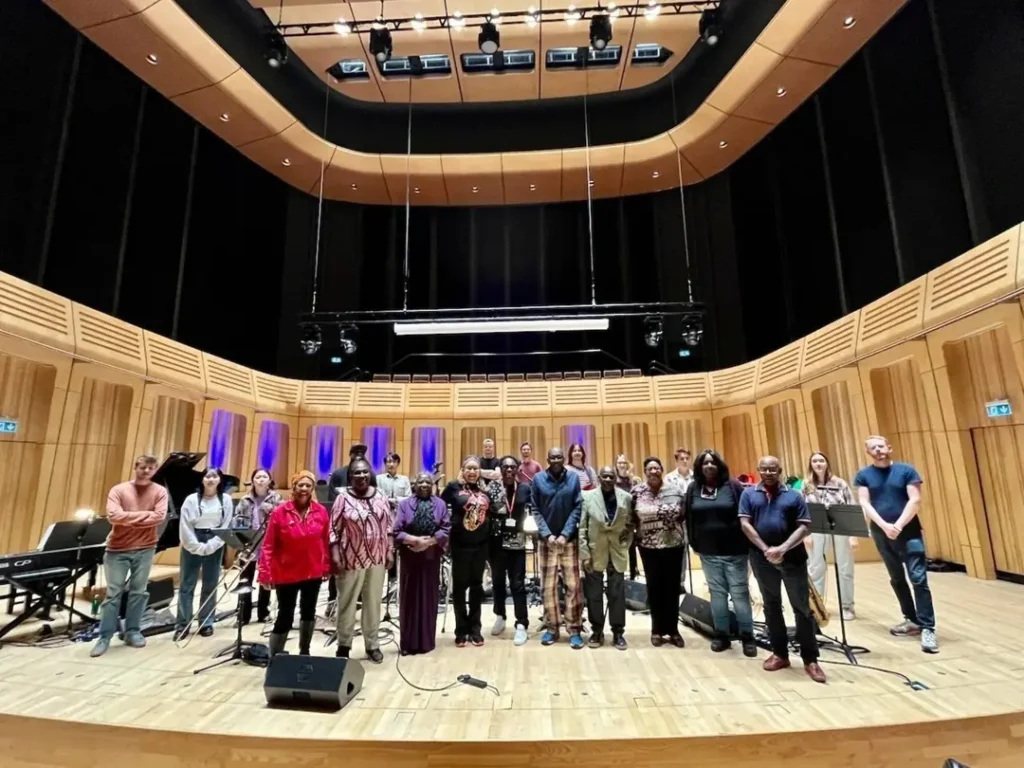
At the start of the new academic year, we have a large-scale concert led by jazz musician Dennis Rollins, supported by our students. Prior to the performance Dennis and staff, met members of The Windrush Elders to discuss their musical heritage, the conversations led to a co-created concert performance where our students and the Elders shared a stage, to a paying public, to celebrate Calypso Jazz.
The Elders have also been supported by college to join The Tempo Time Credit Network. Tempo Time Credits are an external UK wide organisation. They build local and national networks of organisations, bringing people together in their local communities to conduct valued and important voluntary work. Volunteers earn Tempo Time Credits as part of a reward and recognition scheme for the invaluable work they do within their communities. These Credits can be exchanged for a range of services and activities provided by their local and national Recognition Partners of which College is one.
The Elders earn two Tempo Time Credits volunteering their time as part of their weekly meetings, supporting their community. Most of the group have used their credits to see a college performance. As some of the Elders would find the physical cost of tickets a barrier, this collaboration benefits everyone involved.
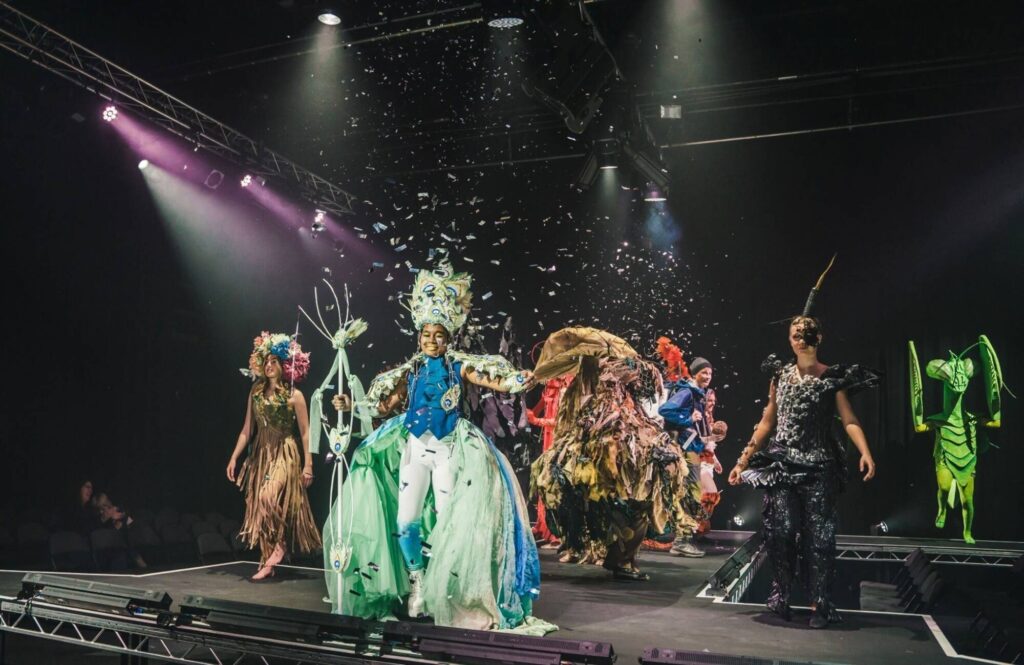
Using their Time Credits the Windrush Elders have seen opera, drama and classical music. They have also brought their grandchildren to see Wearable Art, the costume showcase created and performed by Design for Performance students. This introduces tomorrow’s talent from a range of communities to the College and inspires them for future career possibilities in the creative industries.
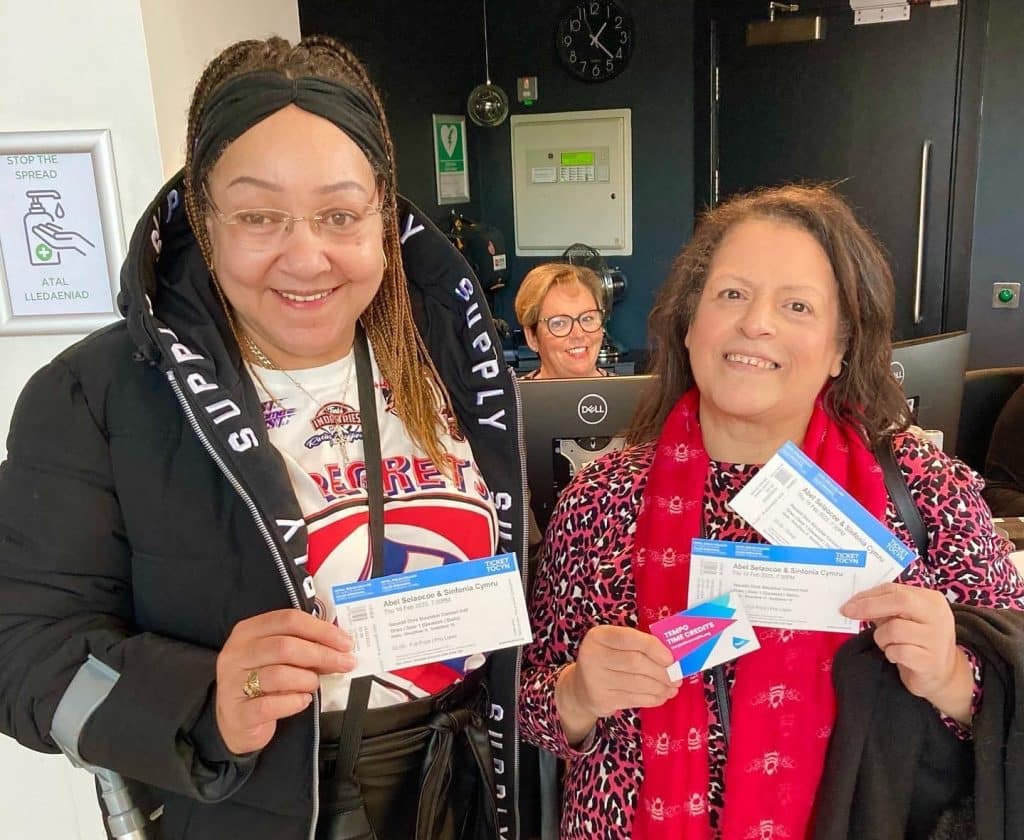
Karen and Linda two of the Elders have used their Tempo Time Credits to see performances by South African musician Abel Selaocoe
They said of their Time Credit membership
‘Since coming to college, we have had the wonderful ability to earn Tempo Time Credits through volunteering our time to support our group, The Windrush Elders. This has opened up the possibility to use credits as reward payments for different things such as theatre shows or going to leisure centres.
At College, we’ve seen Abel Selaocoe, the jazz cello player twice, last December as part of a quartet and then again as part of an orchestra of violinists & cello players. We thought both performances were astounding and loved every minute.
Being able to attend these performances and be included with Abel’s audience participation was so lovely. We actually felt we were transported to his home country of South Africa! We are looking forward to future performances at college.’
Our Tempo Time Credit spend at RWCMD has increased year on year from,
• Sep 22-July 23 = the annual spend was 87
• Sep 23- July 24 = the annual spend was 184
• Sep 24- July 25 = the annual spend was 230
At College, the average café/bar spend by audience members per individual production is £10-15. If two hundred people spend £12.50 over one year, that is an additional £2,500 over the year. This shows supporting Time Credit spend is a great way to support secondary spend with in most cases no additional outgoings.
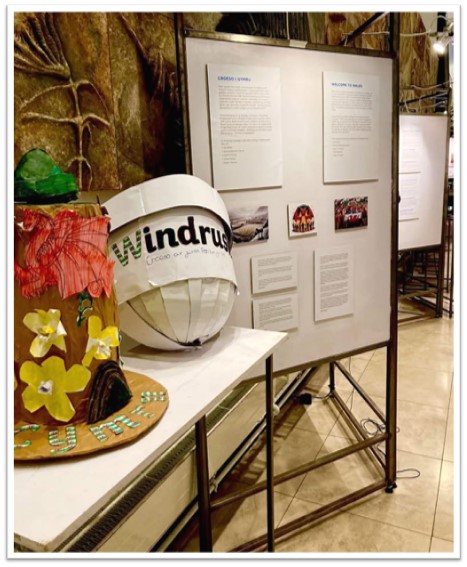
Audiences from groups including Blind communities. The Homeless community and The Windrush Elders were supported to access a college exhibition called Welcome to Wales. The exhibition from by International theatre designer and RWCMD International Chair in Drama, Pamela Howard OBE was a free installation at the Old Library, in The Hayes in the centre of Cardiff , the exhibition was a unique retelling of poignant journeys and the welcome, Wales gave to so many artists, performers and musicians, including Pamela’s own ancestors.
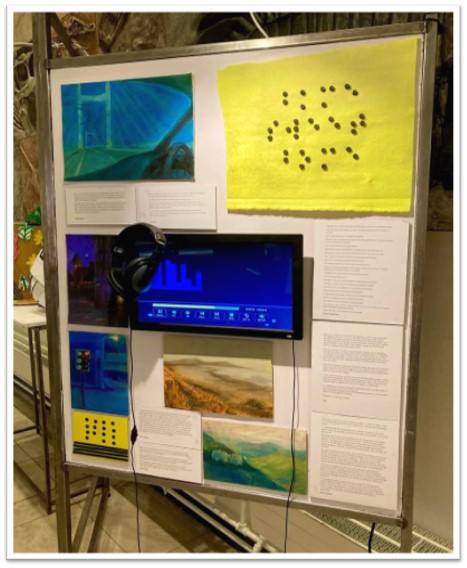
The community groups attending the exhibition were supported by a diverse range of creative professionals to create their own creative outcomes based on the initial exhibition. The resulting work was exhibited in college alongside the work of our Production Design students. Creative outcomes included creative writing, poetry, songs, visual art, braille art and sculptures. This work was subsequently used as a teaching aid for our students when learning about inclusive programming.
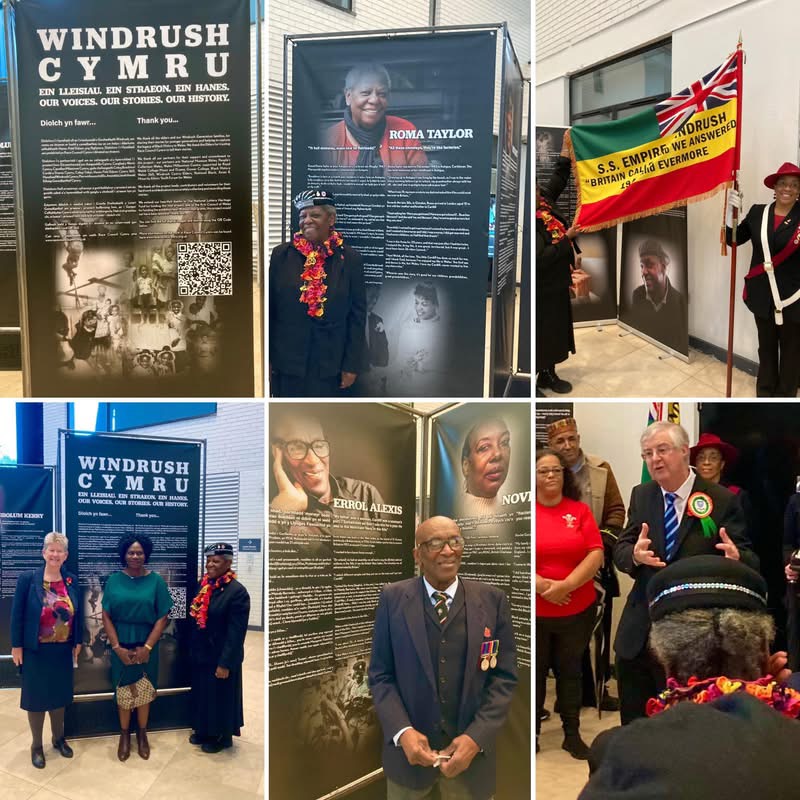
RWCMD hosted the ‘Windrush Cymru – Our Voices, Our Stories’- history exhibition at the College as part of its tour, which also included the Senedd and National Museum Wales.
The project and resulting exhibition directly responded to a call from Elders of the Windrush Generation who wanted to ensure that their generation’s legacy is captured and retained for posterity.
Three of the Elders have received training to act on behalf of College as Community Volunteers. Our Community Volunteers spend time advocating amongst their own networks about performances at college. They have supported new attenders who I or Colleges traditional marketing would have had difficulty reaching.
In the summer of 2025, two of our Community Volunteers independently supported ten of the Elders to attend a showing of the Grenfell installation by Steve McQueen at Chapter Arts Centre in Cardiff. This activity has shifted the traditional hierarchical process of accessing cultural provision, it democratises and empowers the communities we seek to reach. We aim to build on this work in the coming years.
To conclude as we are the College of Music and Drama, an illustration of community activity that brings together our students and members of the public who might be facing barriers in their lives centred around a celebration of musical activity.
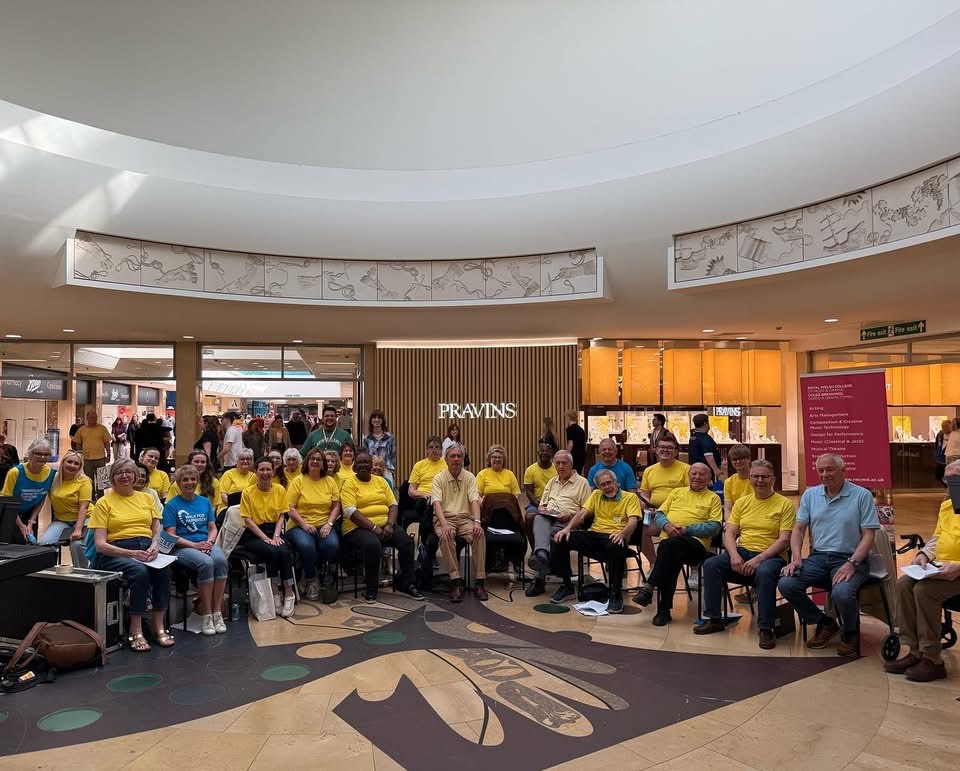
The Good Vibrations Chorus is a free signing group targeted at those living with Parkinson’s but open to all. Chorus members take part in vocal exercises, warmups and sing both familiar and new songs with the intention of strengthening the voice to counteract the softening of speech and the loss of muscle tone common in Parkinson’s.
Singing has been shown to reduce Parkinson’s symptoms like tremor, and issues with walking and posture. This is because it helps to relax muscles and release tension in the back and neck. Singing can also help to reduce anxiety and low mood by lowering stress hormones and increases the brain’s ‘feel-good’ chemical (endorphins).
The Windrush Elders are supported to attend the Chorus, we are aware of a lack of diversity in Arts and Health initiatives, the Elders collaborate with us to support members of their own networks to attend.
Our Repertoire is broad and diverse; it contains traditional Choral music but also musicians such as Bob Marley to support the College mission of being a space for everybody.
The Chorus members have shared the comments below in relation to their membership;
It’s great. It’s like a jewel, really, that’s shining brightly. We’ve got the right people in positions, such as Josh and Dora, the tutors. Along with the complimentary package that we have with the students fulfilling their ambitions and their requirements at the same time is wonderful. There’s different layers to all of this, so it’s great. And the backing of the College and Parkinson’s Cymru, it’s great as well.
‘Thursdays are great because that means it’s a choir day! Hurrah! It really is the highlight of my week and I always look forward to our sessions. I sing with two other choirs but what I love about the Good Vibrations Chorus is the relaxed atmosphere and it’s good to get to know other people who are living with Parkinson’s. The choir is friendly and welcoming and Josh, our musical director, balances the rehearsals perfectly between singing and having a lot of fun. We always have a laugh. It’s such a tonic! It’s so uplifting and from a well-being point of view that’s immeasurable. All that wrapped up in a great big ball of joy is such a positive thing.’
Creating opportunities for a diverse range of people to experience and respond to sport, arts, culture and live events. / Lleisiau amrywiol o Gymru yn ymateb i'r celfyddydau a digwyddiadau byw

 (5 / 5)






 (3 / 5)