All posts by admin

My Story, Connor Strange

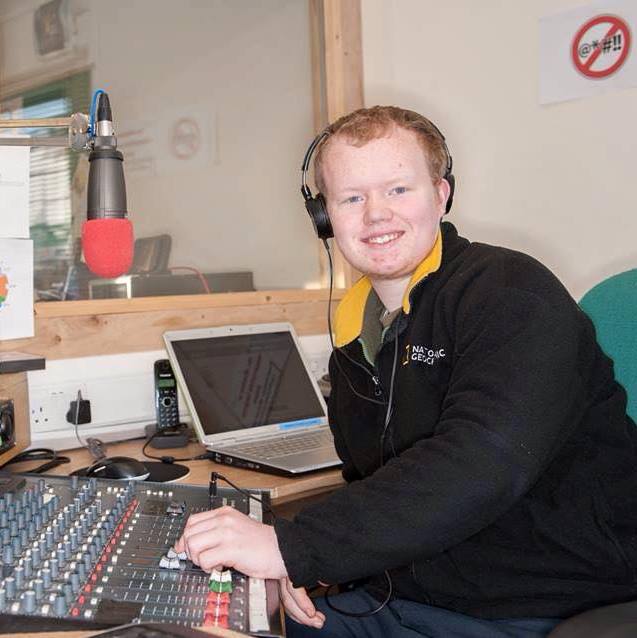
This post was written by Connor Strange. Connor is 24 years old from Ammanford in Carmarthenshire. He is originally from Wales but lived in England for about 4 years of his life, and is a former radio presenter from Eden FM Radio, a community radio station in Penrith, Cumbria. He now works in theatre & events as a freelance theatre technician & event crew.

He is also a champion & ambassador for the Time to Change Wales campaign. This has allowed him to gain new skills, meet new people and share his story of how stigma and discrimination has affected him in his life. 

In this blog post he discusses the experiences he has had in radio, theatre & events over the past few years, and his experiences during the current Covid-19 (Coronavirus) outbreak.

Today in this blog, I thought it would be a good idea to share my experiences of volunteering in radio & events, my experiences in technical theatre and other things I have been a part of.

To understand my journey, I need to give some background to my story. I left school – Ysgol Dyffryn Aman in Ammanford back in 2011, and attended Coleg Sir Gar in 2012 studying Creative i-Media (Interactive Multimedia) – sound & video editing, flash animation etc.

I then left Wales for work reasons and moved to England in July of 2013 shortly after leaving college. I lived with my grandparents for a few months while I tried to find a place of my own. Unfortunately, I could not find much work until I stumbled upon the Prince’s Trust programme.

So during 2014, I was on the Prince’s Trust programme based out of Newton Rigg College just outside of Penrith, and as part of this programme I was required to do a work placement with a local organisation. I decided that I wanted to do my work placement with Eden FM Radio, a local community radio station serving Penrith & the Eden Valley. At the time they were broadcasting online, but shortly after OFCOM granted the station an FM frequency and licence.

It seemed like the perfect fit to me and so I asked the station manager if I could do a placement at the station. To my delight, Eden FM approved my request. I got the chance to do a variety of task ranging from production of programs, research for the sport programme & co-presenting alongside other presenters.

At the end of my placement, I was offered the chance to produce & present my very own show. To this day, I still can’t remember what I called it but never mind. It was the very first time I had ever presented live on the radio and was a surreal experience at the least. At the end of the show, I was offered the opportunity to come back and volunteer for Eden FM. So obviously I agreed, and went on to produce a number of shows including specialist shows like the Noughties Show & hosted Drivetime.

I am extremely thankful to the team at Eden FM Radio for allowing me to volunteer at their station. They supported me in developing my skills in presenting, and producing shows of a high calibre, which still serves me well to this very day. I wish them the absolute best. The station has gone on to be a successful station serving their local community with music, traffic and travel information, informing the public about local events and so much more. They are a shining example of local community radio in the North West of England.

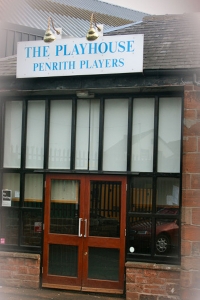
During my time living in Penrith, I also volunteered at Penrith Players. Penrith Playhouse is the only permanent, member run theatre in Penrith, and rely on volunteers to run the venue. I supported one of their productions, Blackadder Goes Forth, as a member of the Stage Crew moving set pieces & elements onto and off stage. This was my first experience of working backstage & supporting a production. It got me thinking about my future aspirations, what I wanted to do with my life, and I decided that I wanted to work in some part of the creative industries. I am thankful to Penrith Players for the experience, as it gave me a real insight into productions and the amount of work that is put into making a play a reality.
In 2017, I decided to move back to Wales and volunteered with a local theatre company to build up some experience in technical theatre. I built up experience in sound, lighting & stage management having worked on 2 successful productions as lighting desk operator and assistant stage manager. The experiences have served me well to help build up a portfolio of work.

Over the last couple of years, I have volunteered with Time to Change Wales. This is the first national campaign to end the stigma and discrimination faced by people with mental health problems. As someone who has mental health problems, and has faced stigma and discrimination, I felt that it was the right thing to speak out about my experiences.

As a result of volunteering I have had the opportunity to deliver anti-stigma talks at organisations and groups across South Wales, including at the Suicide and Self Harm Prevention Workshop organised by Public Health Wales in Swansea. In addition, I have spoken at Singleton Hospital, YMCA Swansea and Cardiff University. I have also spoken on a BBC Wales Live programme about my experiences of being bullied and discriminated against.

I have also taken the time to engage in interests that suit me. In 2019, I volunteered at Swansea Pride as a Parade Volunteer supporting the event. Also, I had the opportunity to volunteer at the Insomnia Gaming Festival in Birmingham, one of the biggest gaming events in the country, featuring major YouTubers such as Call Me Kevin, WillNe etc.

It was during Swansea Pride that I met Mark & Nia Jermin from Jermin Productions. I started talking to them about my interest in technical theatre & other aspects of the industry. I got in contact a couple of months later and asked if there were any openings on any upcoming productions. I thought that it would be a long shot, but my patience paid off. In November 2019, I was given the opportunity to work on Jermin Productions’ Cinderella South Wales Tour as a Follow Spot Operator & Swing Technician.

Basically to sum up, a Follow Spot Operator is someone that operates a light called a Follow Spot (used to follow key cast members on stage). A Swing Technician is someone that works across all areas of the production & supports the different areas e.g. stage management, set building, pyrotechnics etc.

Looking back to when I was going through school & college, I don’t think I would ever have had the confidence to have been part of such a major touring production. I am forever grateful to Jermin Productions for giving me that opportunity, which has led on to exciting projects, which at some point I will come around to working on. Unfortunately, due to the current Coronavirus outbreak those projects have had to be put on hold for the foreseeable future.

I wrote a blog post about my experiences of working on Cinderella for Jermin Productions which you can find here

Keeping myself motivated throughout the current Covid-19 outbreak has been a monumental task, something that I found exceedingly difficult. This crisis has definitely taken a toll on me personally, having lost 4 months’ worth of work in the blink of an eye, losing a friend to the virus and feeling exceedingly anxious about the current situation. But, despite the situation, I have been keeping myself busy. I am forever grateful to the work that key workers from every industry are doing to keep our nation running, especially through an unprecedented time in our country’s history. From NHS workers to carers, police officers to supermarket workers. The list goes on. Thank you to everyone. Theatres & technicians will come back, actors & actresses will rise up and act again, and everyone from every area of the arts & entertainment industry will come back to give amazing performances. Until the time comes when this virus goes, I will carry on keeping myself positive and busy.

To finish up, I am grateful once more to the following companies & organisations for their support and helping me to develop as a person:

  • Eden FM Radio – for giving me my first chance in radio. Special thanks to Lee Quinn, Martin Cowin, Ben France & Andy Neen. Also special thanks to Zoe Badder for all your help and letting me shadow you on your shows.
  • Penrith Players – for giving me my first voluntary opportunity in technical theatre
  • Get The Chance – for featuring my blogs. Special thanks to Guy for always believing in me.
  • Jermin Productions – for giving me my first paid opportunity on Cinderella, special thanks to:
    • Mark Jermin – Director
    • Nia Jermin – Director
    • Ollie Gordon-Rump – Lighting Supervisor
    • Mark Jones – Production Manager
    • Grace Bilsborough – Deputy Stage Manager
    • Luke Jones – my fellow partner in crime (Second Follow Spot Operator)
    • Every cast & crew member on the production, too many names to write down

I hope to work with Jermin Productions on their next production – Beauty and the Beast, hopefully coming this Winter 2020 conditions permitting.

Thank you for reading my blog and hope that it has given you an insight into my life & why I carry on volunteering.

I hope you all stay safe and well and remember to stay home during this crisis & protect our beloved National Health Service.

Connor
Review Normal People, BBC Three By Vic Mills

 out of 5 stars (4 / 5)

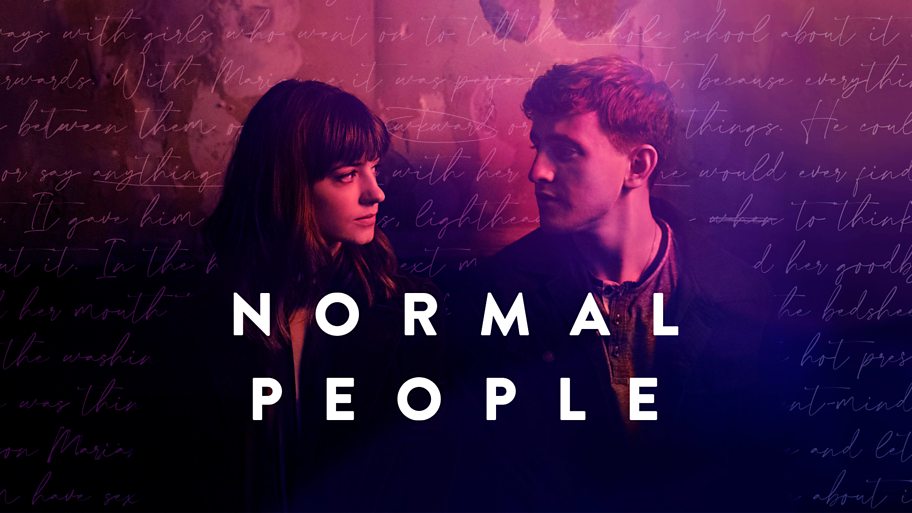
Normal People, written by Sally Rooney, Alice Birch and Mark O’Rowe and directed by Lenny Abrahamson and Hettie McDonald is based on the novel by Sally Rooney and stars Daisy Edgar-Jones and Paul Mescal.

I came to this with no knowledge of the book and for that I am grateful; some of the finest qualities of this drama are in the screenplay, direction and, above all, in the acting, and, whatever the qualities of the novel, this is a piece of art in its own right and should be judged as such.

The characters played by Edgar-Jones and Paul Mescal are Connell and Marianne.  The story begins with them in their last year of High School in County Sligo in the Republic of Ireland and follows them in twelve short episodes through the end of Sixth Form and on through their undergraduate years at Trinity, Dublin.

Psychologists and our own experience teaches us that what we go through at this time in our lives identifies us for ourselves – we always see ourselves, in some sense, as what we were then, as our life is at its most intense for us.  The music, the art, the sport and above all the relationships experienced at this time, we come to think of as ‘our time’, ‘our era’.

https://www.bbc.co.uk/sounds/play/p08b6f9p

It is this quality which drives not the narrative but the emotional landscape of this superb drama.  There is an unerring touch with the writing, editing and the resulting atmosphere of this piece which makes us feel intensely for Connell and Marianne as they stumble into and through their love.

There are a number of likeable and quite well-drawn characters in this piece; Connell’s mother, played beautifully and with real restraint by the gorgeous Sarah Greene is the most notable of the supporting cast – but support is all they ever really are.  You can draw each figure with a sentence as they never matter for themselves, only for the way in which they impact upon Marianne and Connell.  Marianne’s mother and brother clearly impact her life horribly, but it is the impact on her only which is allowed to interest us.  They cannot be allowed to take our eye off the ball by mattering in and of themselves.  The awful death of Connell’s school friend is a central trope which is explored in depth, but we don’t know the boy or care for him, we know Connell and watch him experience his grief.  Similarly, the ghastly boyfriend of Marianne’s is little more than a cipher to show us more of Marianne herself and of Connell.  There is great discipline in the screen writing which never allows us to shift our focus or interest away from our real subject.

The work is intensely claustrophobic; we are almost suffocated by the script and the camerawork; we feel voyeuristic and deeply uncomfortable at being present for such private moments, which are handled beautifully and with the surest of touches throughout.  There’s an awful lot of sex.  Thankfully, it is almost always between Connell and Marianne – Edgar-Jones and Mescal got to know one another very well, without a doubt.  In a world were sex for young people can become so commoditised and influenced by pornography, the simple, tender, naïve couplings of these two youngsters is quite lovely.

There are funny moments, deeply touching moments and an awful lot of dreadfully sad moments.  It was a fine decision to keep episodes so short – we could let ourselves breath after half an hour and feel some measure of relief that it was over, then long for the next episode to begin.

In watching Connell and Marianne we watch ourselves.  That, I think, is the most wonderful thing about this drama – the way in which it takes us to that time in our own lives.   The quality of the work delivers emotions which are raw in the extreme and our late teenage and early twenties lives come roaring back at us like the Sligo waves.

Film and television acting is, by necessity, a very technical thing; making something so convincing, so visceral, so raw and so real then is a huge achievement.  This is work of the very highest order and for those of us who shared Marianne and Connell’s journey, it will stay with us for some time.

Review 2067 Time and Time and Time, National Dance Company Wales by Becky Johnson.

This piece choreographed by Alexandra Waiestall uses a structured improvisation for its’ choreography and was a part of National Dance Company Wales’ Kin tour. Unfortunately, due to current circumstances, the tour was drawn to a sudden halt. Therefore, in response to this, NDC Wales performed this piece via live stream, for audiences to watch from the safety of their own homes.

Alexandra Waiestall

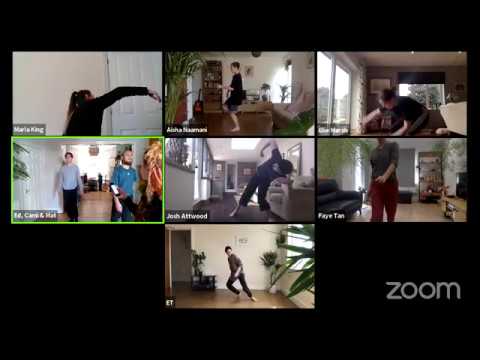
The screen was filled with seven boxes, each with one or a couple of dancers inside of them. With each of the ten dancers streaming from their homes, it allowed us as the audience to see into their worlds and connect with them as people and not solely performers.

It began with the speaking of a script, which in turn the dancers used as a set of instructions to aid the creation of their movement. These instructions provided context for the dancers’ making and provided clear connections within the movements between the dancers. Therefore, although they were each moving in their own isolation, they were connected as one. Even those who were performing in the same, shared space as others seemed separate and isolated from one and another. Occasionally, yes, they would enter each- others’ bubbles but it was not this direct communication that connected those in the shared space but again this more prominent connection through intention.

The point of focus flickers between the dancers themselves, their movements, and their views of their surroundings. We as an audience are with them, seeing what they see and engaging with the stimuli that is determining their movement. Each performer has their own understanding of the text given, with moments of pause and breath throughout. The dancers continue to move in and out of frame, reminding us that we are only seeing one perspective of each dancer, even though we are seeing seven different perspectives of the performance.

The introduction of the use of phones and torches brings a shift to the piece. We seem less focussed on the performers and more so the effects of this new dimension within the piece. They begin to interfere and although enhancing the performance, make me question the duality of how this relates to daily life. The dancers shift in their movement quality, and so does their intention and focus. Due to this we acknowledge a shift in our perception and question if we become the ones being filmed, or is it in fact that they are really filming each other? We change how we once saw the screen and question how we see through a lens as compared to before, and is this any different to how we previously watched the first part through our screens at home?

Such phrases stick with me from the text, such as, the “Electricity goes off”. The dancers would join in silence and stillness until the text spoke of it turning “on”, moving once again as the music returns. Another phrase being that of the reference to a “blue sky”. The dancers, although independently of thought, turned their attention to their external senses, prioritising their sight or the sensation of the light on their skin. Many showed us where they could see the outside, usually through a window and continued to move towards that reflection. This journey of visualisation showed us how each perspective of each performer although distinctly different was connected to each other and how their independent decision making often led to similar ideologies.

The score itself provides detail whilst still allowing space for thought and creativity. I would love to play with the score and test how my own methods for improvisation would be similar/ different to those for the company dancers. And how connected, I would feel to them through this one piece of text.

The piece seemed extremely relevant and pressing to our mutual experiences of lockdown. How can we continue to connect to one and another through technology but focus on how we can achieve this with real substance in a way that replaces human touch? Also, how do we see our surroundings, and do we take advantage of them by the misuse of technology in our daily lives?

Overall, it is wonderful that NDCWales shared this piece with us in an alternate format and it is even more wonderful that it was live and not just an online screening. It gave connectivity to an audience in a way in which a usual theatre setting cannot achieve and really provided a platform in which improvised work, that relies so heavily on inter-personal connections, can continue to grow.

Review Ripples, Sherman Theatre, RWCMD, National Theatre Wales by Samuel Longville

Theatre in lockdown: amidst this unsettling period for the arts, writer Tracy Harris and the Royal Welsh College of Music & Drama’s acting graduates bring original and pioneering theatre into our homes.

Picture the scene. It is 2018, two years prior to the pandemic. I am at a lively Gate Theatre in Notting Hill, having just watched a number of brilliantly talented RWCMD acting graduates perform a collection of new writing. Fast forward two years later and the setting is somewhat different. I am sat on my bed; dinner at the ready and eyes fixated on my laptop screen. I am watching eight of the 2020 acting graduates perform in the same new writing festival but this time the stage takes the form of their own homes. What clearly hasn’t changed under this unusual setting is RWCMD’s ability to produce some of the country’s best acting talent, as well as the Welsh conservatoire’s determination to produce new and innovative ways of storytelling.

Set on an online rehab course spanning ten weeks, Ripples sees eight strangers all suffering with some form of addiction confront the traumas of their past and recount these experiences to the group. Tracy Harris deals with the difficult topic of addiction with great sensitivity, giving way for sprinkles of humour as well as hope. Originally meant for the Sherman Theatre’s stage, the play’s adaptation for screen is innovative and wholly original. The weekly sessions take the form of a ‘Zoom’ meeting, and participants join from their respective rooms in the rehabilitation centre.

Without revealing too much, we see some wonderful creativity in the staging of the production. Matthew Holmquist’s sure direction not only allows the play to run smoothly, but the impeccable timing of individuals joining and exiting scenes (or their Zoom meeting) really plays into the ‘liveness’ of this event. Describing the performance as a ‘play-reading’ would serve to disparage the care put into creating this albeit virtual but very real narrative space. Holmquist’s clear direction, paired with tactful performances from his cast allows the audience to empathise with, and become wrapped-up in the characters’ stories. Ripples proves that it is possible to make high-quality theatre under these current constraints, with the immersive tech surprisingly running with ease, as though the play was in fact made for this digital setting. There is no doubt that Matthew Holmquist’s work with The Other Room, Cardiff, has made him the perfect fit for breathing lively and engaging narrative into such small, confined theatre spaces.

The creative team behind Ripples has produced a piece that sets a leading example to other theatres and theatre companies worldwide. They have proven that during these unprecedented times, Wales can still be a frontrunner in the world of new writing, standing shoulder to shoulder with its inspiring work in the ‘real world’.  

You can catch the RWCMD acting graduates on demand until 16 May at https://www.nationaltheatrewales.org/ntw_shows/ripples/

12 Plays in digital spaces:

National Theatre Wales and Sherman Theatre will work together with a range of independent companies and artists to produce play readings, showcasing the talent of playwrights, companies and creatives across Wales.

The partnership will enable Welsh directors, actors, and designers to be fully supported and funded to deliver the readings, while providing a platform to share homegrown work, alongside contemporary classic titles that may yet to have been performed here in Wales.

Find out more here: https://www.nationaltheatrewales.org/ntw-projects/network/#network_projects

Review Carmen, WNO by Becky Johnson

The perfect balance of accessibility and enchantment, Carmen
provides an in-between of West-end theatrics and operatic skill.

Carmen is one of the more renowned operas and this rendition
from the Welsh National Opera has been immensely popular, bringing it back for
their spring season. Unlike other opera’s I’ve seen, not all the text used was sung
but there was a split between spoken moments and song. This blend of
familiarity meant that Carmen provided an easily accessible route into opera,
especially for those that are already used to seeing musical productions. Carmen
bared various resemblances to musicals I’ve seen prior such as Miss Saigon;
this was both in setting and the dynamics throughout the show. Therefore, there
was more breath and pause from the mixture of song and text which meant that as
a whole, the opera felt much shorter to the audience watching (which I’m sure
we know from the Harry Potter films is extremely important).

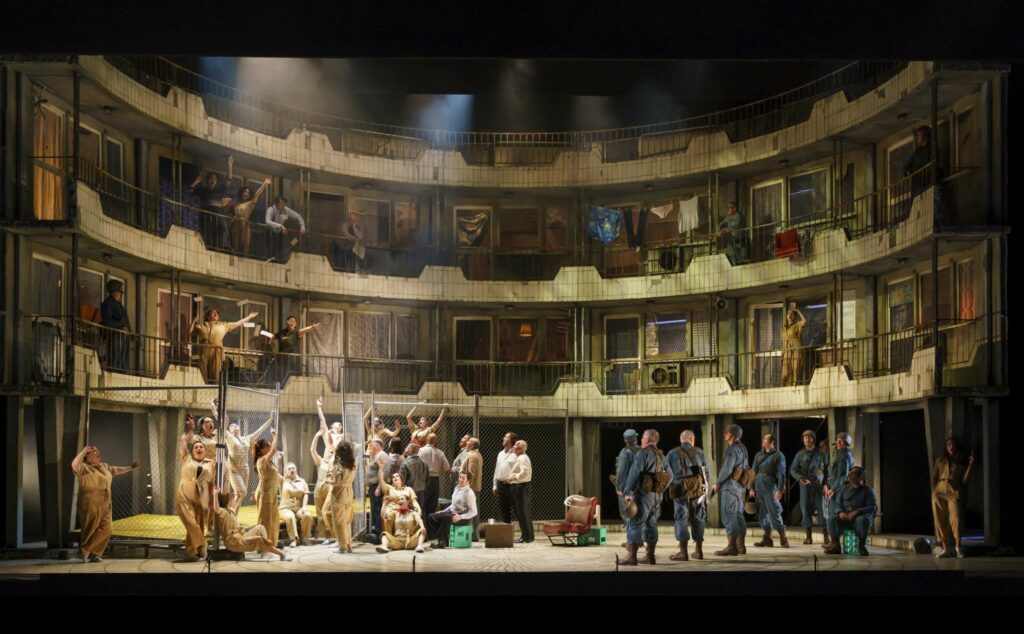
Throughout the whole of the piece, the ensemble were extremely
invested in their own roles and their individual plots within the piece. This
gave substance to the main storyline and the audience could easily follow that
throughout. The children were incredible, taking their roles with maturity and
giving true investment into their parts. My only criticism, being that you
could notice when they were waiting for prompts which is no fault of their own
but due to a lesser understanding and experience of improvising to fill the
time.

It was the moments in which the focus was on the ensemble
that stay with me from the performance. Examples being: The children, mocking
the guards in their barracks, bringing a whirlwind of my life and joy to the
stage, The women from the tobacco factory, with their relentless desire and allure,
The gun smuggling scene, hiding weapons within various props and what you saw
was completely different to that of the person sat next to you due to the
variety and depth of what was occurring on stage, And finally, the
light-hearted scene outside of the bullring, with street vendors and people
haggling for refreshments.

The use of sound coming from the stage during these moments
were wonderful. There were made by the ensemble to accompany the orchestra and
added a sense of true passion coming from the performers. When they stamped
stools, clapped and slapped their body parts, the full stage came alive
radiating towards the audience.

I found the main characters struggled with their realism,
especially within moments of intimacy. When Carmen kisses Jose, the kiss feels
distant as the characters aren’t close enough, I almost desired a real kiss to
fulfil those moments. It seems to be these moments between Jose and Carmen that
lacked their depth, another example being when Carmen hits Jose with a towel
but does it so softly that the anger doesn’t seep through in the way intended.
In opposition to this, Escamillo embodies his character wonderfully, portraying
himself in such a way that the audience dislikes his arrogance. However,
physically, when posing and using stronger gestures, he needed to be more over
the top and exaggerated to really stay true to his characters’ aurora.

There were moments of confusion throughout the piece for the
audience, especially in regards as to what was being sang by whom. The subtitles
didn’t repeat, even when a character did. Also, when two characters were
singing a call and response section, this failed due to them both singing both
parts combined with the lack of captions above. In order to fix the problems
within the call and response between characters, it could require something as
simple as just spatial re-alignment. By moving the characters to different
parts of the stage, the audience would be forced to look from character to
character and therefore, from one side to the other which would ensure the
audience understands the conversations being had.

To conclude, I think Carmen is the perfect gateway between a
musical and an opera. With song, dance and text, the audience is immersed
throughout the performance and is moved alongside the storyline with the
characters. However, I feel this rendition needed more work with the small
details, those that change a performance into excellence. By working on the
physicality of the main characters and fine tuning on key moments, the whole
storyline would become easier to follow to the audience.

Review St David’s Day Concert, Welsh National Orchestra, St Davids Hall, Cardiff by Becky Johnson

 out of 5 stars (5 / 5)

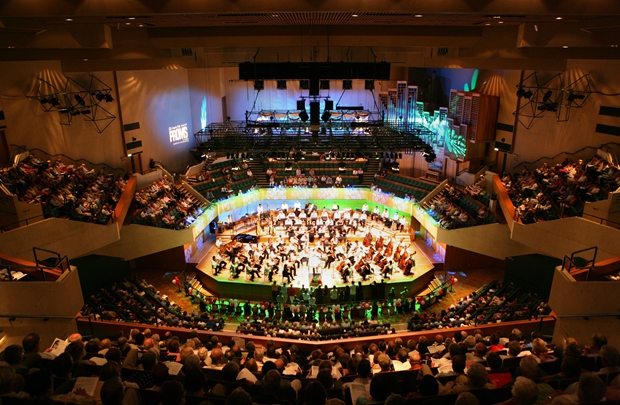
A magnificent experience from start to end; if you haven’t been to see a live orchestra, I cannot recommend the experience enough, especially a performance by the BBC National Orchestra.

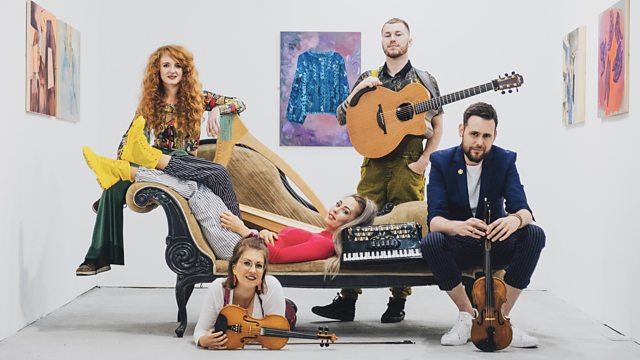
For the annual “Dydd Gwyl Dewi” by the BBC National Orchestra and chorus of Wales, a celebration of all things Welsh occurred. The event marks the start of a partnership with Orchestre Synphonique de Bretagne and was conducted by Musical Director Grant Llewellyn. This collaboration showcased performances from the National Youth Orchestra and the orchestra’s partnership with the Welsh folk band Calan.

Calan

The performance began with the string section and wow! The bows leaped and danced in bounds of rhythm and movement with each other. Mesmerised by the spiralling and winding of the violinists, the sound echoed both visually in front of us as well as audibly, surrounding our senses. It was only in the moments of rest in which the musicians once again became human. Otherwise, you were entranced by the bountiful immersion occurring on stage.

Whilst conducting Llewellyn, would dance (although often like a dad whilst making dinner in the kitchen) with the music taking over his physical being which would emit onto us, the audience. There were moments which were Matilda-esque, playing with the electricity between the different musicians.

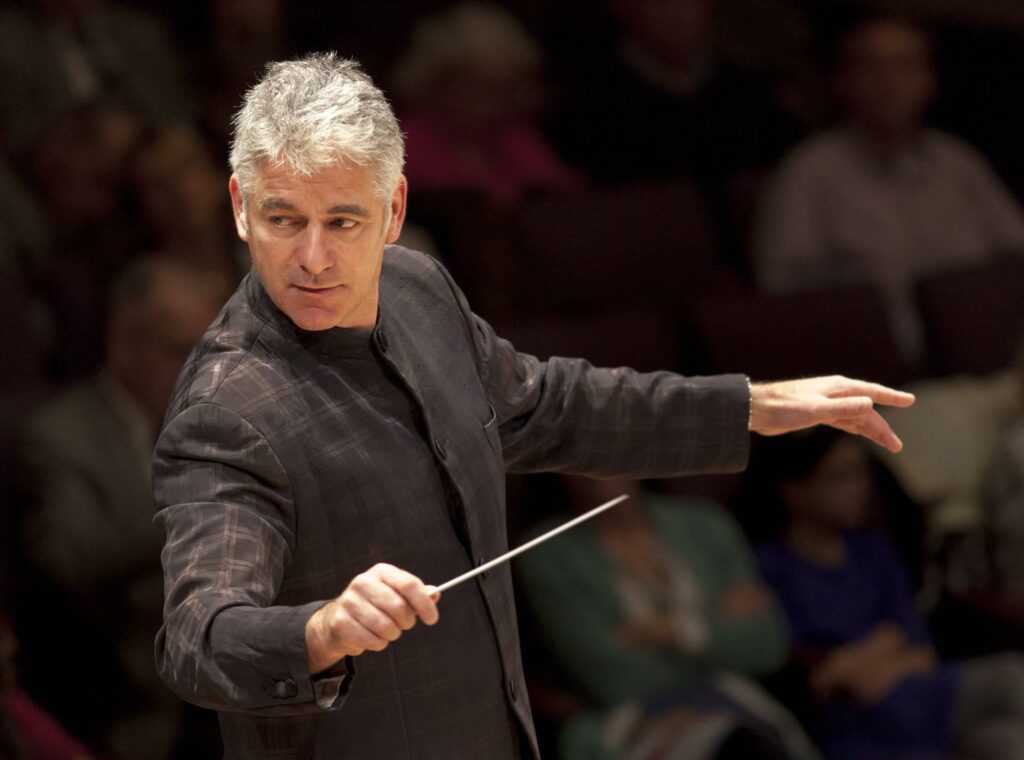
Musical Director Grant Llewellyn

Flickers of imagery from time to time would overwhelm my
thoughts, either that of memories of children playing in fields or of the roaming
hills I would often watch through a train window. I felt at peace.

Each piece within the performance held its own providing a
new stimulus for us to focus on. The second was more heavily percussioned. Again,
the musicians danced, but this time it was those playing the Glockenspiel that
lead the way, bouncing from note to note. My only questions being that once the
choir was introduced, does the orchestra take a backseat? As the audience, both
parts seemed equally powerful and important so I questioned whether one should
be a lesser superior component.

With the third piece, there was also this playing of power. The soloist, Angharad Lynddon, sombre in tone but beautifully delicate with accent, teased between the everchanging balance between the orchestra and herself. This teasing continued into the fourth piece, with a sense of non- competitive play in rolling waves of triumph.

Angharad Lynddon

The fifth, probably my favourite of the day, balanced the
old and the new in the most magical way. It balanced the factors of delicate
comedy with moments that were boisterous with power in such a way we were
enchanted by the relentless percussion.

This continuation of a modern fusion with the more classical
was profound in the second half of the show. There was an explosion of life
with odes to all elements of traditional welsh culture, with references from
Caws to clog dancing. However, I do feel with the introduction of Calan, both
the orchestra and choir became neglected. The percussion was replaced by the
rhythmic plucking of the guitarist and the focus was turned more towards the
band. I desired a more equal balance between the components, whether this could
have occurred spatially, with the band in the centre of the orchestra or if it
was something musical that needed to be altered. Although, it was incredible to
watch Llewellyn conduct both the orchestra and the band, with the relationship
between the three was clearly evident.

To conclude, the whole experience and atmosphere was a magnificent experience from start to end; if you haven’t been to see a live orchestra, I cannot recommend the experience enough, especially a performance by the BBC National Orchestra.

Review Blue Stockings, Storyhouse, Chester By Simon Kensdale

 I wasn’t exactly disappointed but I wasn’t
satisfied either – for several reasons. 
This puts me in a minority of one, as it seems both the play and this
production have been universally well-received:

A must see

a talented young cast

terrific energy as the fight goes on

so good all you want to do is roll out one
superlative after another

– and so on.  So, why dissatisfied?

Blue Stockings’ is issue-based.  The subject – the refusal of Cambridge
University to recognise women’s equal intelligence by awarding female students
degrees and allowing them to graduate – takes precedence over the
characterisation of the cast and any personal drama.  The general circumstance – that of an institution
pigheadedly refusing to accept women as men’s intellectual equals – is a given
and it replaces the normal dramatic tension set up in scenes where there is a rising
tension between the protagonists.  So,
does this subject provide suitable material for a play?  For one thing, we know the ending in advance,
so there is limited suspense.

The standard
approach to tackling issues is to show a sympathetic character – a hero or
heroine – as being involved in or effected by what is going on in society.  Thus in ‘Henry
IV’
, Prince Hal and Falstaff can play out their relationship against a
backdrop of what it means to be a king in waiting; in ‘The Crucible’, Proctor and Abigail’s story explores the immediate
meaning of national paranoia; Hedda Gabler’s passion has nowhere to go and her
behaviour when confronted by an unassailable patriarchy becomes both
fascinating and horrific.

None of the people
portrayed in ‘Blue Stockings’ are of
heroic stature.  They are not intended to
be.  By giving us a number of female and
male undergraduates and a number of men and women academics, Jessica Swayle
spreads the load, as it were.  But I
think she has done this too evenly.  She
avoids the problem sometimes caused by having a pre-eminent main character –
the feeling  that his/her problem is
unique – by her spread approach, but she leaves an attentive audience wondering
exactly where and on whom to place their attention.

Swayle’s large
pool of dramatis personae gives her an additional problem.  Those associated with Cambridge, whether
working or studying there, are not and never have been representative of wider
UK society.  We can’t shrug off our view
of them as elitist and privileged.  En
masse they put us on the defensive. ‘Why,’ we ask ourselves, ‘should we care tuppence
about these toffs?’

One answer is because
they are not all toffs.  Even in the
nineteenth century there would have been those at Cambridge who did not fit the
mould.  Swayle shows us this by having a
working-class female undergraduate, Maeve Sullivan, and a genuinely egalitarian
male lecturer, Thomas Banks.  (Banks’
career is derailed because he refuses to give up his Girton teaching when offered
a fellowship at Trinity.  I thought
though, because of a bit of injudicious staging in this production, he might
have got into trouble because of the proximity of his hand to a student bottom,
occurring when he pushes Tess around on a bicycle – but maybe I wasn’t meant to
notice this).

Swayle also sets
up an overarching tension by giving us two real historical characters:  Elizabeth Welsh, the mistress of Girton, and
Henry Maudsley, the famous psychiatrist. 
Mrs Welsh has been working patiently towards obtaining degrees for her
girl students; Maudsley has been diligently exploring hysteria and has a number
of theories about it.

The presentation
of Maudsley needs much more careful handling because he is shown as representative
of contemporary male thinking.  Swayle
gives him the space to present ideas which today appear as complete nonsense
but the way she does this is quasi-farcical. 
We are encouraged to find him ridiculous, to laugh uproariously at his
‘wandering womb’ theory, without being simultaneously obliged to place the idea
in its real context.  It was not funny
for the women of the time to be considered wholly at the mercy of their
misunderstood biology. 

Equally the
thinking that Maudlsey and others put into hysteria was well-intentioned,
insofar as it was part of the early attempts to understand why women were so
unhappy and why many of them succumbed to severe mental illness.  In other words, today Maudsley is both absurd
and understandable.  In fact he
made a huge contribution to the treatment of the insane, giving what Wikipedia
describes as an astonishing amount of his own money to ensure the completion of
the hospital that was named after him – and which is still providing mental
health services today.  If he was shown
on stage as a more rounded and complex character and not just as a blithering
idiot he would be both funnier and more interesting.

Apparently –
Wikipedia again – Elizabeth Welsh managed to rise from being a tutor at Girton
to become the first mistress to have any say in the college’s direct
management.  She did not, however, manage
to achieve what the play suggests was her great ambition – the awarding of
degrees to female undergraduates.  Cambridge
obstinately continued its male-centred approach until 1948.  It was the last British university to reach
this point, some seven hundred years after Bolgona, where a woman got a degree
in 1237.  A couple of women were teaching
at Spanish universities in the seventeenth century.  Ironically enough, the first woman to be given
a BA Cantab was the Queen Mother, and this was only an honorary award.  What does that say about respect for women
academics?

The problem as far
as the play and this production is concerned is how to flesh out Elizabeth
Welsh.  Again I think Swayle needed to
handle this more carefully. As it is there is just insufficient modulation in Welsh’s
behaviour.  One moment she is seen
talking quietly and intelligently to her out of order or worried students and
the next she is shouting at a member of her staff she disagrees with.  She comes across as more like a stressed out
secondary teacher than a thoughtful member of an intellectual community.  In the end she is transformed into a
monstrous harridan, booming at all and sundry. 
I was relieved when she was pushed over and the ranting came to an end.

Highly educated
people, whether female or male, don’t resort to shouting one another down in a
hurry, because they have been equipped with a wide variety of vocal and verbal
resources.  They deploy these resources so
as to be able to avoid direct confrontation – which they normally consider to
be both pointless and ridiculous. (It’s only when they get to the House of
Commons that they forget what they have been taught and start behaving badly.)  I don’t object to violent arguments on stage
but they require preparation: they are only effective when we have experienced
the build up behind them.  You can’t fast
forward.  Because Elizabeth Welsh is not
the primary focus of the play’s story, she appears in the way to have a very short
fuse.  Thus, her mood swings work against
the play’s main theme – that women are not driven exclusively by their
emotions.  Who, honestly, would want
someone like her in the common room?

I expected the plot
as it unravelled might centre on Maeve Sullivan and her struggles to integrate
with her peers whilst she laid the foundations for a professional career and her
escape from her family background. 
Instead, when her brother brings news of her mother’s death she is told
– by Elizabeth Welsh, no less – that she has to go home and look after her
siblings and accept her limited destiny. 
The glades of academe are not for such as she.  But, as we have not got to know her properly
before this happens, we don’t feel very sorry for her.  She is quickly forgotten – like the girl or
girls murdered at the beginning of a Scandi noir TV series.  Rather than serving as a dramatic
counterbalance to the other, upper middle class female undergraduates, she
remains – as described in the cast list – ‘a mystery’.  Why?

One of those other
female undergraduates who is given a bit more air space is Tess Moffat,
described as ‘a curious girl’.  This sounds as if it might be ironic – aren’t
all Cambridge undergraduates curious? – but she is not given very much more
room to manoeuver than Maeve. 

In an early scene,
we watch her pluck up the extraordinary courage required to confront Maudsley
in a lecture.  But here again, Swayle’s
touch is wrong. Maudsley rapidly loses his temper when Tess interrupts and
throws the uppity girl out of the lecture hall. 
In reality he would have resorted to irony, the favourite linguistic
device of the academic.  He would simply
have cut her down to size with a few well-chosen put-downs.  That’s all it takes in a tense public space
where a practiced sneer can reduce anyone a bit insecure to human jelly.  Any presentation of Cambridge life which
doesn’t show irony as almost the lingua franca is just unconvincing. 

Because she has
not been humiliated, Tess’s holds her head up high – until she falls for a
Trinity man – Ralph, a cad and a bounder. 
Ralph bowls her over with the trick that must have been old even in the
1890s, reading her a piece of Italian poetry. 
Being a romantic nineteenth century nineteen year old – rather than an
unsentimental modern miss who would collapse in fits of giggles  – Tess succumbs to Ralph’s less than obvious
charms.  We are not, therefore, surprised
when we find out he is going to propose to another.  In any case, university love affairs are not
often of more than passing interest. 
Does this sub-plot add anything to the main story?  Only insofar as Tess’ stormy love-life
disturbs her concentration, so she flunks her exams.   Female intellect being undermined by emotion.  Why not show Tess as bouncing back
easily?  Everyone gets dumped.  Most shrug it off.

There seems to be
a minor error in the unfolding of the love story.  Tess and her beau have a picnic on what is referred
to as a hill from which they can see Kings College Chapel.  I believe you can see the chapel from a
distance – or you could until modern buildings got in the way – but this is
because Cambridge is almost completely flat.

There was another
minor error, too, in the conversation flowing from the male
undergraduates.  One remarks that
‘employers all want firsts’. This is an anachronism.  Gentlemen did not go up to Cambridge in the
nineteenth century to please prospective employers.   They went up because it was expected that
they would complete their education.  It
was only the poor – like Maeve Sullivan (remember her?) who had to think of
getting jobs.  The gentlemen had ‘prospects’
that would not be affected by the class of degree they took.  They would be supported by Papa until friends
of the family set them up and opened the necessary doors.  I understand even today it can be a bit like
that for some of them…

All the male
students appear to be paid-up members of the Cambridge equivalent of the
Bullingdon Club, with the exception of one, Will, who for some reason is hiding
the fact that he has known Tess all his life. 
The aristocracy certainly behaved in the way shown but, yet again, it
would have been more interesting if there had been depth and variation in this
group of characters– if we had seen some of them worried about debt, others
obsessed with sport, even some concerned about their sexuality.  Having Will as a student at Kings rather than
Trinity hardly counts as variation.

A scene which had
potential and which went awry involved a confrontation between one of the
Trinity men, Lloyd, and one of the Girton students, Carolyn Addison, – ‘an early bohemian’ – in a shop.  Carolyn falls back, cowed into silence, when
Lloyd launches a tirade against her.  I
think he would have been rude rather than bombastic, sniggering cleverly in the
way that misogynists do when they don’t have a gallery to play to.  I’m also sure that Carolyn, smart and
demi-mondaine, would have had a killer riposte at the ready for when he refers
to female students as unnatural.  Young
post -adolescent men like Lloyd are terrified of women.  It doesn’t take much – a gesture, a movement
referring to real femininity – to reduce them to nothing.  Lloyd is not in any position of power over
Carolyn and she has nothing at all to lose from ridiculing him.  By having her turn away, as beaten down as
the female shopkeeper obliged to serve him, Swayle suggests that women were all
powerless.  This goes too far.  There is ample evidence in the literature of
the nineteenth century, from Trollope to George Eliot, showing women could hold
their own in social exchanges.  That’s
one reason why they did get degrees in the end. You can’t imagine a Jane Austen
character backing off like Carolyn – and they had to operate a century earlier.

In terms of
holding their own, one of the reasons why women were finally admitted to
Cambridge was that they began getting better marks than men in exams.  Not only were they acquiring knowledge but they
had the confidence and the skills necessary to use it and present new
ideas.  This is an important historical
and sociological point but – can it make for great theatre?

Swayle shows us the
Girton undergraduates coming out with snippets of knowledge about more or less
every conceivable subject.  They are bright,
well informed and well prepared for University Challenge.  We do not see, however, what this
intellectual attainment has cost them, so it is hard to connect with it.  We are informed by one – Celia, ‘a fragile hard-worker’ – in the course
of a conversation, that she has had a nervous breakdown.  This hardly seems important as shortly
afterwards she sails through her viva. 

I confess to being
puzzled by what seems to be another anachronism. In this viva, Celia refers to
Einstein, although relativity didn’t appear on the scientific scene publically
until 1915, about twenty years after the period in which ‘Blue Stockings’ is
set.  Time and space may be relative but
Celia would not have been able to travel through them, however brilliant she
was.

I think most of
the problems this production faced came from weaknesses within the play itself,
rather than the performers.  It’s hard to
fail with some plays but it’s not easy to deliver on a combination of cameos
and set-pieces.  Other than Polly Lister as
Mrs Welsh going over the top, nobody did anything wrong. The trouble was that
nobody did anything very right or memorable, either.  If there are no  characters with depth and complexity, actors
have to work very hard to ensure they can find individual ways of differentiating
themselves from one another.  Groups of
undergraduates are rarely exciting on stage and there was a lack of detail
here: both the young women and the young men appeared to be little more than
their normal selves, with a touch of acting applied.  Neve Kelman did manage to squeeze some
original life into Carolyn but none of the others were remarkable in any
way.  If the production is revived this
could be addressed.  Everything and
everyone was a little too safe and conventional.  Nobody went mad or was truly weird  – even though these are staple quantities of
Cambridge university life.

I gather that ‘Blue Stockings’ has entered the national
curriculum, where it is used for teaching purposes.  This seems to me reasonable, although I hope
it won’t displace any major works.  With
its large cast, there is scope for student productions and the ideas in the
play are of interest.  In many ways, the
play is more suitable for a young audience than for adults. It’s easy to see
how it would spark off writing projects and further reading. 

Whilst it left me
unsatisfied, ‘Blue Stockings’ did
prompt me to go away and look into the background – and to write an overlong
review.  I’m grateful for this, of
course, but plays are about a lot more than education.  I need to be distracted and fascinated,
disturbed and enthralled, when I go to the theatre.  I don’t want to have to do background study
work afterwards.  I may not normally have
the time. 

Jessica Swayle is
adapting ‘Blue Stockings’ for TV.  This is
probably where it belongs as material, not on the stage.  TV is a medium suited to docu-drama, because
it operates on its audience in a different way. 
Good camera work, for example, can make up for brief moments of
dialogue.  By and large, too, there seems
to be an insatiable escapist demand for period drama on TV, where there is more
room to explore a wide range of people on a superficial level. Production
companies love the challenge of recreating the nineteenth century and you can
include scenes that are impossible in a theatre.

One of the most
extraordinary events associated with the issue of women at Cambridge was the
huge riot that took place in 1897, when an effigy of woman cyclist was
suspended from the Cambridge University Press bookshop.  Showing this would make for a tremendous
start for a series and it might really open up the world of the play’s time.  The repressed violence that emerged in the
riot connects after all to what was to happen only seventeen years later in a
war where the sons and younger male relations of the Cambridge blue stockings
were ordered to don red-ribboned caps and walk across open ground towards
machine guns. 

In the year of that
riot, too, one Vladimir Ilyich Ulyanov, deemed only a minor threat, was
sentenced to three years exile and found himself in to a hut in Siberia.  Away from Cambridge, the times they really were
a-changin’.  For me, Swayle needed to tap
into the Zeitgeist of the period a lot more thoroughly.

Arts Online, A Guest Post by Megan Pritchard, Marketing Campaigns Manager at National Dance Company Wales

We are both saddened to see the vast array of cultural cancellations over the past day and proud to see so many companies putting the health of their staff, participants and audiences first. 

The arts are an important part of many of our lives, and we’re also excited to see so many isolation friendly options arising. We’ve started a list of online dance and yoga classes, digital only festivals and a huge array of dance, opera, theatre, museums and CPD activities you can do from home – including full NDCWales performances.  Please share this resource and let us know of other fab things we can add to it. 

______________________
Mae’r ddau ohonom yn drist iawn o weld yr ystod eang o ddigwyddiadau diwylliannol sydd wedi cael eu canslo ers ddoe ac yn falch o weld cymaint o gwmnïau yn rhoi iechyd eu staff, cyfranogwyr a chynulleidfaoedd yn gyntaf.
Mae’r celfyddydau yn rhan bwysig o fywydau sawl un ohonom, ac rydym hefyd yn teimlo’n gyffrous i weld cynifer o opsiynau y gellir eu gwneud wrth hunan-ynysu yn codi.Rydym wedi dechrau rhestr o ddosbarthiadau dawns ac ioga ar-lein, gwyliau digidol yn unig a llu o bethau yn seiliedig ar ddawns, opera, y theatr ac amgueddfeydd, a gweithgareddau y gallwch eu gwneud adref – gan gynnwys perfformiadau CDCCymru llawn.

Rhannwch yr adnodd hwn a rhowch wybod i ni am bethau gwych, eraill y gallwn eu hychwanegu ato.

***********
DANCE CLASSES 
Gaga is a unique dance training, Gaga Movement Language גאגא שפת תנועה NYC are currently offering 3 classes a day 7 days a week with a suggested donation.  https://www.gofundme.com/f/gaga-nyc-online-classeshttps://www.facebook.com/groups/mootmovementlab/

Moot – The Movement Lab are making their resources as available as possible and have great updates on other training online. 

Juliard School of Performing Arts are running ballet barre classes through instagram https://www.instagram.com/juilliardschool/

You can learn the famous Rosas Danst Rosas from Anne-Teresa De Keersmaecker here online, easily done at home with a kitchen chair  https://www.rosas.be/en/news/814-dance-in-times-of-isolation

The Dance Centre is offering fun online musical theatre inspired classes. https://www.facebook.com/1thedancecentre

Rebecca Lemme / Acts of Matter offers a free online Barre Class you can do without a proper Barre https://vimeo.com/398046579/cdfec48e01?fbclid=IwAR2AlsTXHcg7–4ulAhmvpNotiVJIMz3Z3v_PIYW6pKyT0bZ_JQFfJN0Cow

The Guardian has an article on tips for dancing at home.https://www.theguardian.com/lifeandstyle/2020/feb/22/fitness-tips-online-dance-tutorials?fbclid=IwAR2DKtULuSlfcB7TueCKqAbegoM4OYJFrRoCX5mwpwsWO_NILQsn6sHKXxI

YOGA CLASSES

Overwhelmingly our dancers suggest following Yoga With Adriene for youtube yoga https://www.youtube.com/user/yogawithadriene

Cat Meffan Yoga – another office fav, with a huge range of free classes on youtube. https://www.youtube.com/channel/UCVrWHW_xYpDnr3p3OR4KYGw

Our dancers also enjoy the Down Dog App which also has a ballet barre class option https://www.downdogapp.com/

Rosanna Emily Carless our Dance Ambassador is streaming free yoga classes daily on her facebook page.

AT HOME ARTS FESTIVALS IN RESPONSE TO COVID-19

These festivals aim to gather streamed content and classes in different ways – Social Distancing Streaming Concerts https://www.socialdistancingfestival.com 

The Social Distancing Festival https://creativedistance.org/ 

Creative Distance, The Theatre Cafehttps://www.facebook.com/thetheatrecafe/photos/a.1597256473856456/2552997778282316/?type=3&theater 

LIVE EVENTS STREAMED TO YOUR DEVICES 

NDCWales P.A.R.A.D.E.  including choreography by Caroline Finn, Marcos Morau and Lee Johnson, in collaboration with BBC National Orchestra of Wales, Rubicon Dance and Vertical Dance Kate Lawrence; filmed by The Space Arts. https://vimeo.com/248459479

Tundra by Marcos Morau https://vimeo.com/254300487

Reflections documentary and dance film from our Dance for Parkinson’s participants. https://vimeo.com/ndcwales/reflections

The Metropolitan OperaAre running nightly live streams, up at 7.30pm(EDT) each left up for 20 hours. http://metopera.org/

Rosie Kay’s 5
Soldiers https://youtu.be/2urN4ESejFo

Or Zosia Jo’s –
Fabulous Animal is available to stream for donation here https://www.zosiajo.com/fab-animal-film

Berliner PhilharmonikerUse the code BERLINPHIL by March 31 to get 30-day access to the orchestra’s stunning work https://www.digitalconcerthall.com/en/home

Marquee TVOffer plays, dance, opera and theatre all to stream on a Netflix like service, offering free 30 day trial at the momentmarquee.tv

Twitter Search #togetherathome to see bands streaming intimate concerts live from their homes.

 
The Guardian have posted their own list now too  https://www.theguardian.com/stage/2020/mar/17/hottest-front-room-seats-the-best-theatre-and-dance-to-watch-online?CMP=share_btn_fb

Filmed on StageHosts links to mostly paid streams of large Broadway shows and musicals http://www.filmedonstage.com/

You can watch the west end production of Wind in the Willows here https://www.willowsmusical.com/ 

Netflix and Amazon Prime VideoBoth have a small selection of stage shows to stream

Other Cultural Activity 

Free Museum tours from across the world https://www.travelandleisure.com/attractions/museums-galleries/museums-with-virtual-tours

Free colouring pages from museums http://www.openculture.com/2019/02/download-free-coloring-books-from-113-museums.html?fbclid=IwAR3wPlZLs00PCl-tilb9jXHKJPUSDa2oui1SHQC-iEsh40w7b_ZN5DIyglU

Free National Park tours https://www.thrillist.com/news/nation/google-earth-virtual-tours-of-us-national-parks

David Bowie is At the V&A MuseumAn augmented reality tour of the singer’s costumes, notebooks and life’s work. https://davidbowieisreal.com/

CPD FROM HOME 
ETC have made their online training courses free during this time: training for technicians Courses.etcconnect.com  The following performers offer one to one tuition, find them on facebook. 

Rubyyy Jones – Cabaret MCing Paul L Martin – mentoring for cabaret performers  John Celestus – one to one Flexibiliy and Strength, contortion, compare 
Skillshare International Offers photography, illustration, design with a 2 month free trial available https://www.skillshare.com/

Welsh for work with Learn Welsh Cardiff – Dysgu Cymraeg Caerdydd A 10 hour course free https://learnwelsh.cymru/work-welsh/work-welsh-courses/work-welsh-taster-courses/

Say Something in Welsh A podcast based language learning system with free and paid options including Welshhttps://www.saysomethingin.com/

Duolingo The number one free language app has a great Welsh course toohttps://www.duolingo.com/

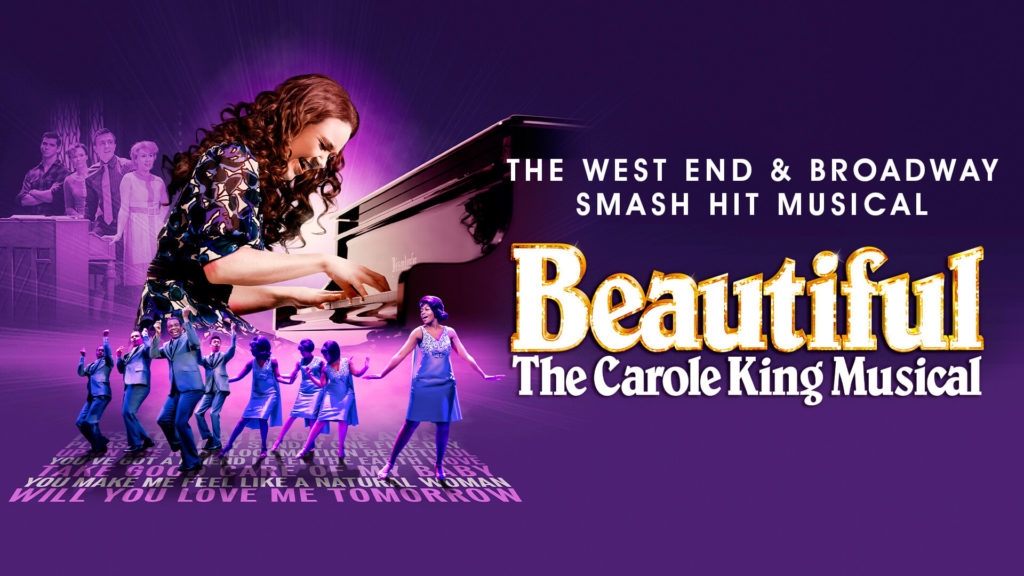
Review ‘Beautiful’ – the Carole King Musical at WMC by Vic Mills

Review of ‘Beautiful’ – the Carole King Musical
at WMC

 out of 5 stars (1 / 5)

It is hard to overstate the talent and
importance of Carole King as a songwriter. 
118 top fifty hits in the US gives some indication of the success she
has enjoyed, but doesn’t in itself demonstrate the quality of her writing or
its importance.  Her first hit, written
with Gerry Goffin as lyricist, when she was just sixteen, ‘Will You Still Love
Me Tomorrow’ is astonishing in its quality, particularly for one so young and
from such a non-musical background. 
Writing a string of hits for women and black artists, predominantly
though not exclusively, in the sixties and then the move to LA after finally
having enough of Goffin’s faithless behaviour, shows her incredible courage.  The weeks recording ‘Tapestry’ – one of the
most successful albums of all time – next door to Joni Mitchell recording
‘Blue’ and Jackson Browne recording ‘Late For The Sky’ have gone into modern
musical folklore with some justification. 
Carole King is essential and central in the rise of the
singer-songwriter.  She is an essential
and wonderful part of the story of women’s voices being heard and
celebrated.  She is a wonderful,
wonderful talent.

Given all this, a musical telling the story of
her early years, leading up to her legendary solo performance at Carnegie Hall,
should be a glorious and fascinating thing. 
‘Beautiful’ certainly is not that. 
What this is, unfortunately, is a cut and paste comic-book story homage
of the sort which might have been serialised in ‘Jackie’ in 1973.  A sequence of incredibly short and trivial
scenes, fly in or slide in, at bewildering pace, with cardboard cut out
characters of managers and mothers and friends, who speak in ghastly and
trivial cliches before being whirled away to be replaced with more cliches on
the breakdown of married life from a cardboard Carole and Gerry, who seem to
have stumbled onstage from a black and white episode of ‘Bewitched’ circa 1968.

The songs and the dances which attend them are adequately
delivered at very best.  These are
amazing and wonderfully memorable songs, loved by the audience, and, given the
budget of this kind of show and the talent pool available, should have been
superbly and innovatively choreographed, orchestrated and sung.  However, on an expensive but deeply
unimaginative set, some very, very ordinary dance and movement did nothing to
enhance the songs or bring the stage to life.

There was nothing wrong with Daisy Wood-Davis,
Adam Gillian or Laura Baldwin in the lead roles.  I quite liked Wood-Davis – she had an energy
and commitment which was pleasing and a decent voice.  But it is hard to imagine what anyone could
have done with a script like this.  When
you think of the issues Carole King’s story throws up around women, race, the
music industry, the sexual revolution, the inequalities marriage imposes etc –
this is a playwright’s goldmine, surely?

There was not a memorable line or genuinely
theatrical moment in the entire piece. 
When Carole decides to leave New York to set off for LA as a performer
as well as songwriter, she sits at her piano and tells her friends that she is
‘saying goodbye with a song’ and sings them, ‘You’ve Got A Friend’ as they
circle her at the piano and join in. 
There is a ghastly level of embarrassment to this smaltz.

Cards on the table, juke-box musicals are not
my favourite forms of entertainment and I wouldn’t dream of paying money to see
anything about Abba or Queen under any circumstances, but this is Carole King
and what an opportunity to tell explore her incredibly important story is
missed in this silly fluff-piece.

Vic Mills

Review Rygbi, Dance City, NDCWales by Valerie Speed.

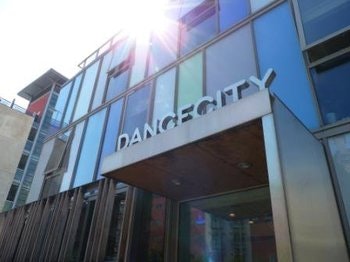
I had the pleasure of seeing KiN, performed by visiting dance company, National Dance Company Wales at Dance City, Newcastle upon Tyne, a couple of weeks ago. I really do love dance, and yet I don’t get many opportunities to see a performance. What I have seen has usually been reworked productions of well-known pieces. Think Swan Lake.

I was looking forward to seeing the work of a company that describes itself as a company which creates dance With and for all kinds of people in all kinds of places’. A young, vibrant repertory company, whose aim is to innovate, make accessible and include.

The
current production on tour is KiN. This brings together three very different
dance performances, Rygbi:Yma/Here, 2067:Timeand Time and Time and Lunatic.

Here
I offer you a review of Rygbi.

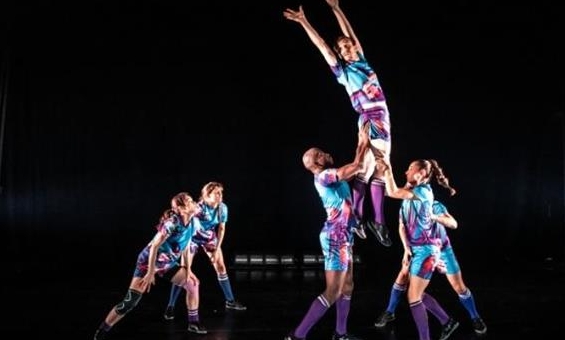
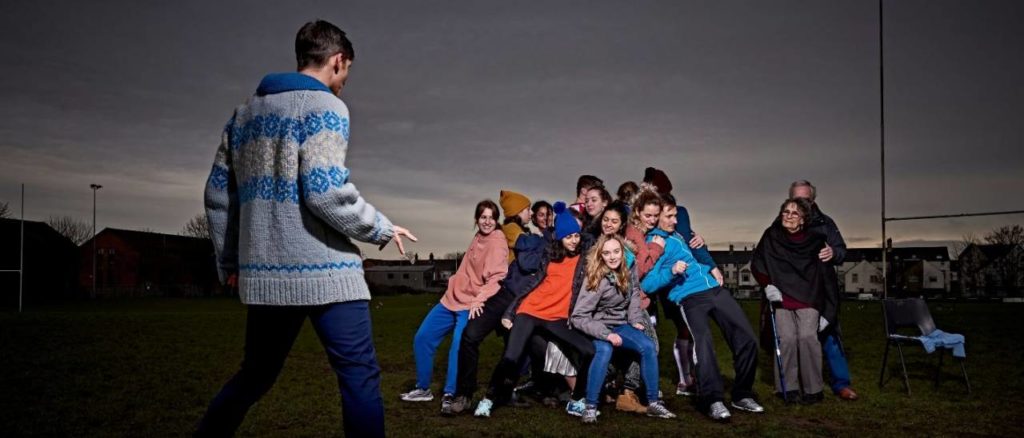
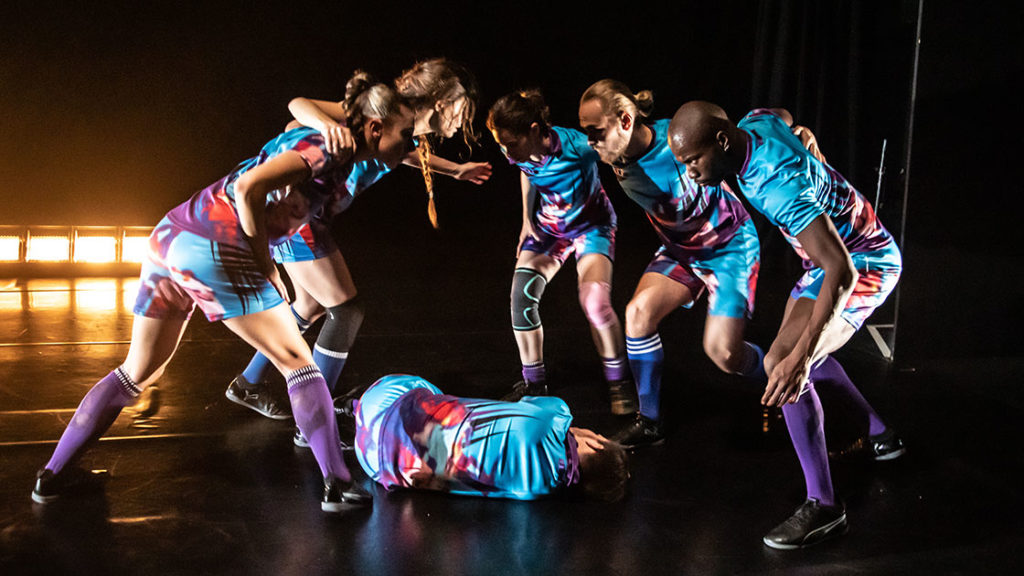
If a dance company is going to aim to be a company of the community then it makes sense it would devise a performance conjuring up Wales’ national sport. Choreographed by Fearghus O Conchuir along with the performers, music composed by Tic Ashfield, the intention of Rygbi, as we are told, is to express and celebrate the sense of ‘pride and passion’, ‘commitment and camaraderie’. This piece came together with the help of rugby players and fans.

The piece begins with an explosion of energy. From the very beginning there is a felt tension, an anticipation for the match ahead. As an audience we can’t help but be lifted by the fast-paced athleticism of the dancers moving together, representing the way in which a team does work in unison. Just as with a real rugby match though, the energy levels wax and wane, the action slows down or speeds up. There are times for composure and times for full on attack. The performance captures every nerve tingling moment.  Every high, every disappointment, every resurgence is danced with true conviction.

I
enjoy watching rugby, which is probably why I was so interested in seeing this
piece. Watching this performance feels like I am experiencing a match in its
entirety. A first kick, a scrum, a conversion. The desperation to succeed is
etched on each and every face of the dancers. All play their part extremely
well, connecting as they do to the audience and taking it on the journey of one
game.

The
music is never intrusive but serves to enhance the constant roller-coaster.

I
can’t fault the performance. I can only sit back in awe at how this is
simultaneously experienced as dance, theatre and sport. The choreography, as
well devised as it is, works that magic.

I
find myself thinking that what I am seeing cannot be defined, it crosses
boundaries and has a way of connecting with anyone.

National Dance Company Wales say they want to make ‘dance for all kinds of people’ and with this they delivered.