
All posts by admin

Review Apartment House, 30th Anniversary Concert, Wigmore Hall, London by James Ellis


 out of 5 stars (3 / 5)


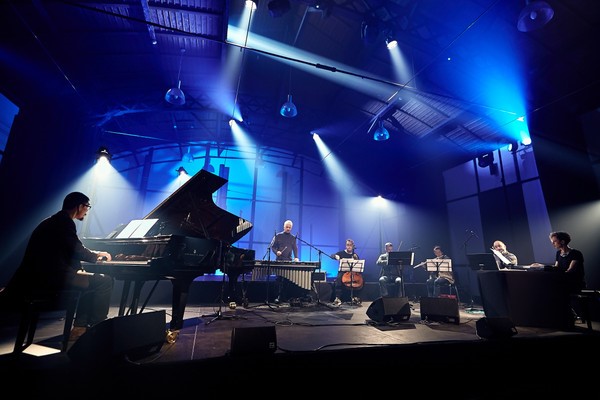
They’ve been on my bucket list for a while…Apartment House have had alluring concerts in what is now their 30th year. I was upset to miss a whole Saturday of three gigs filled with John Cage, what was a few years ago at Wigmore.

This celebration concert came as quite demanding in a Philip Glass heavy programme. The first half featured Glass’ Music in Similar Motion and Music in Contrary Motion. Whilst easy on the ear, the attention required to engage is considerable. People have thrown the word “minimalist” around, over what exactly it is and who is defined as such. This combination of synths, flutes and strings has an air of period piece about it now, both from 1969. The lapping of notes return and additions are made, only to return snap back to the starting bars. Unsurprisingly, the Contrary Motion work is much more interesting, as its unfolds with a sense of motion and decadence.

I was happy to attend thanks to Erik Satie and his Socrates. John Cage had a bad time trying to use one of his musical heroes in performances, so he found a way to write a double piano arrangement of Socrates. Through this, you do lose Plato’s vivid recollections of Socrates, the latter philosopher known for not writing down his teachings. I’ve had difficulties trying to acquire an English language version of the Sorate, but that’s another thing. In their own arrangement, via Cage, Apartment House still clasp onto the refined eloquence and unabashed serenity throughout its 30 odd minutes. The flutes and strings are still here, there have been after all few versions of this work starting with Satie’s himself. It’s very gentile, the keyboards are soft and lightly perfumed. The Death of Socrates is one of the best work Satie ever wrote, his late academic studies enhanced with highly eccentric method creation. Sweet and a dollop of emotion too boot.

Glass’ Music in Eight Parts has a curious back story: he sold some of the autograph manuscripts of the piece back in 1970s. One of which would turn up at a Christie’s auction in 2017. It sold for over $43,000. Glass actually bought it back for this figure and tonight’s European premiere is one of the versions from his original. Though no saxophones or voice, we get the alto flutes. This was undoubtedly the most difficult of the night. Less attractive in scope, its cycles never quite enthralling. Drops of more notes followed, the six part harmony would dictate our ears. These delightful keyboards from Mark Knoop (who I recall from a Queen Elizabeth Hall gig few years back), Eliza McCarthy and Kerry Yong, lead entirely. You get a feel of the range they can offer up in timbre, distortion and much more.

With no encore nor intro to the last Glass (which is a cool little story), this celebration felt a little flat. A wider choice of composers on the programme would have fared much better. 


Review Port Talbot Gotta Banksy, Sherman Theatre by Bethan England

 out of 5 stars (4.5 / 5)

Christmas 2018, Banksy gives a unique present to the town of Port Talbot; Seasons Greetings, an artwork painted onto the garage belonging to local, Ian Lewis. The image, poignant in its positioning, location and ability to stir up the emotions of the inhabitants of the town, literally takes centre stage in this new production from Theatr3. In the weeks following the gifting of the artwork, Theatr3 spoke to the people of the town about their thoughts and feelings on the piece and the wider implications of it being in the industrial landscape of Port Talbot.

Writer and Director, Paul Jenkins and writer, Tracy Harris, have taken over 150 hours of audio and created a piece which is truly reflective of the voices of the people of Port Talbot, because it is literally their voices and their words which have been fully integrated into the piece. The play feels like a conversation with the people of Port Talbot; the audience are truly involved in the piece because of the brilliance of the delivery and the truthfulness of the lines. I have not seen a play before which captures the Welsh voice so well; the naturalism of the speech, including the pauses, the ‘umms,’ lines punctuated by the inhalation of a cigarette with no concern to the listener, it’s all so true and reflective of the community it is representing, without being condescending or belittling.

Design, sound and video blend seamlessly here to create an audio and visual landscape of the steel town (Design by Cai Dyfan, Video by Andy Pike and Ethan Lloyd of Apel Studios, sound by Georgina Nobbs and additional composition by Dai Griffiths). I loved the ever present ‘towers’ complete with lights, changing colours and twinkling throughout, creating the industrial beauty of Port Talbot. The main visual of the ‘garage’ in the centre is used to great effect, first bearing the image of the ‘Port Talbot Banksy,’ but changing throughout to the local greasy spoon, the Marie Curie charity shop and even at one point bearing the mantra, ‘Cofiwch Dryweyn.’ Simple but effective was the ‘removal’ of the artpiece, the image slowly rising upwards as smoke billowed, sounds echoed around the theatre and Time To Say Goodbye resonated, as the residents stood silently by and watched their Banksy being taken away. 

With inspiration drawn from Brecht, the actors change roles in the blink of an eye. Two rails of costumes and props line stage right and stage left, and they leave stage as one character only to, almost immediately, appear as another. The physicality of every performer is brilliant, never leaving you in any doubt as to the transition to another role. Clearly hours of work have been put in here to faithfully recreate the voices of the people of Port Talbot, it is eerily accurate, even stammers and incorrectly chosen words are copied and presented here, with my personal favourite being ‘muriel’ instead of ‘mural. The cast are, without exception, phenomenal. Matthew Bulgo, Holly Carpenter, Ioan Hefin, Simon Nehan, Jalisa Phoenix-Roberts and Kerry Joy Stewart multi role throughout the play; ever changing accents, voices, physicality, social backgrounds and life experiences.

There is much comedy to the piece, moments where the audience are rolling with laughter, rapidly juxtaposed with being brought close to tears. Port Talbot Gotta Banksy pulls you through a whirlwind of emotions as ever changing and flighty as the emotions of the town itself. The human experience of the show is starkly set against the experiences and shared history of the whole town. Act One deals with the artwork, yes, but Act Two dives deeper into the wider issues enveloping Port Talbot; the precarious balance of wanting the furnaces to stay for employment contradicted by the lived experiences of the residents; the soot lining their windowsills, the clothes on the line turning orange, the 33 year old dying of asthma and COPD. As an audience member, you feel torn between the steel worker, who’s worked at the furnaces for his whole life, who cries ‘in front of his butties’ and the council worker who urges us that we should be looking to the future. The uncertainty for the future, the fear of change, a town scared that it’s being left unnoticed and uncared for, is palpable, it grips you and doesn’t let go.

With the recent support from the Government for Scunthorpe Steel, the timing of this production could not be better. The loss of so many jobs in Port Talbot whilst Labour steps in to help with potential nationalisation across the border must truly be a bitter pill to swallow for the residents of the Welsh town. The play that starts with an artwork but that goes so much further is one that you really need to see if you possibly can. It gives all sides and perspectives room to breathe and opens the debate further; allows an audience to see perspectives they may never have considered previously. Finally, the voices of the people recorded are truly heard; the actors remove their earpieces and the words they’ve replicated in the performance are spoken by the residents; the original recordings echo around the space and the voices of Port Talbot are given the ‘last word’ of the play.  

In the words of Derek Davies, whose poem features in the final scenes of the piece.   

‘Now the town has suffered dearly,

In that town that’s made from steel;

But you cannot take away their lives,

 it’s how the people feel.’

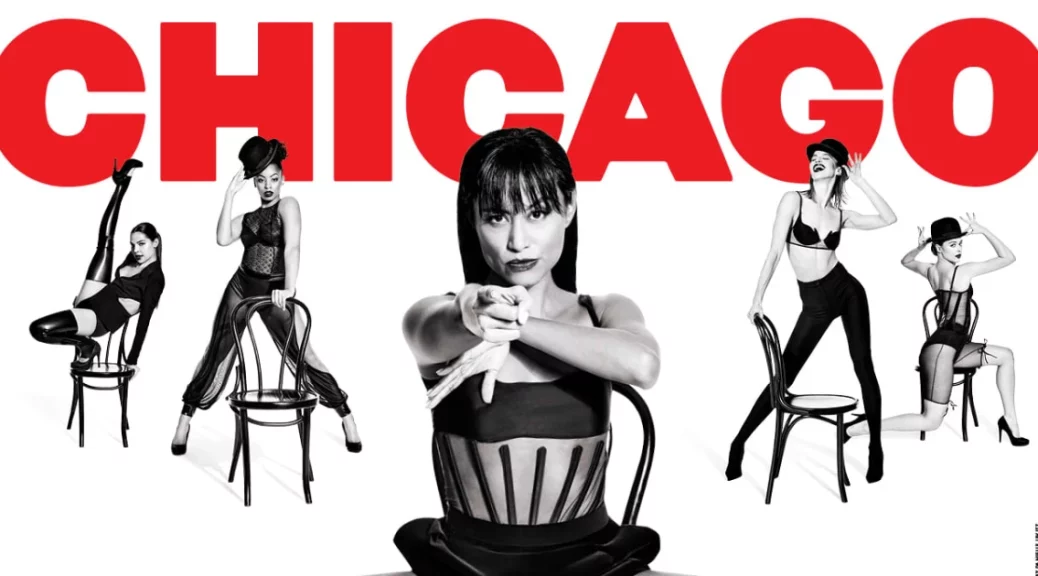
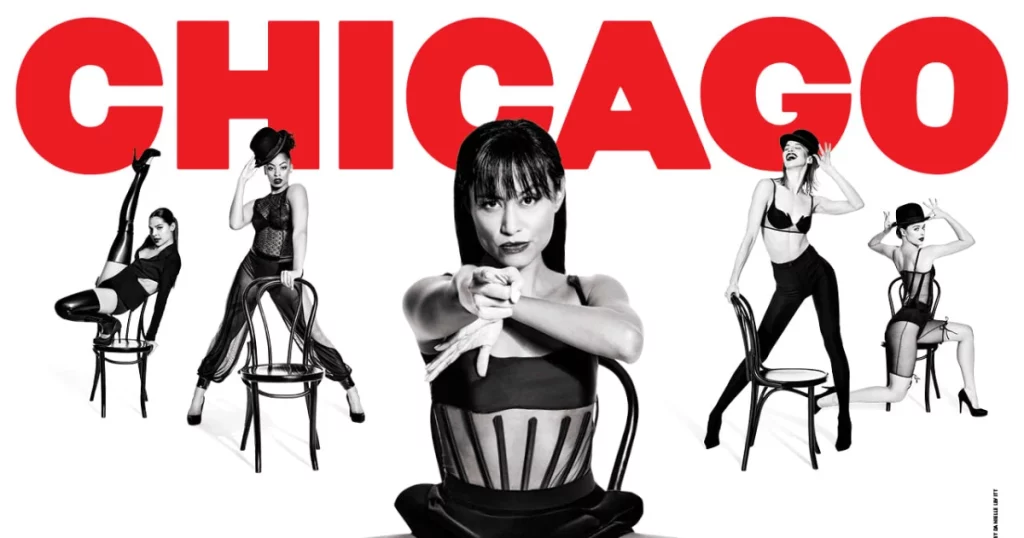
Review Chicago the Musical, Wales Millennium Centre, 6th May 2025

The Wales Millennium Centre is really getting the ‘Razzle Dazzle’ treatment with Chicago: The Musical storming onto the stage on its latest tour. Based on the 1926 play, of the same name, by Maurine Dallas Watkins, the musical is well known for its sexy, satirical take on the criminal justice system of 1920s America and the influencers of the day, the murderesses of Cook County Jail. The show opens with a single hat upon a chair and the mantra; “Murder, greed, corruption, exploitation, adultery and treachery…all those things we hold near and dear to our hearts.” This sets the stage for all that Chicago stands for and will deliver across the Fosse, Kander and Ebb penned musical.

Velma welcomes us to the show with ‘All That Jazz,’ interspersed with the action of Roxie murdering her lover, Fred Casely, as he attempts to break off the affair that has been going on right under the nose of her husband, Amos. The action quickly moves to the Cook County Jail where we meet Matron ‘Mama’ Morton and the inmates of the jail. They are the ‘celebrities’ of the day with each of them clamouring for press coverage and interviews and all of them desperate to work with smooth talking lawyer, Billy Flynn. The treacherous, fantastical events that unfold as the show progresses are complemented by some of the most well-known songs in musical theatre and the iconic, stylish dance moves that truly epitomise this as a Kander, Ebb and Fosse production.

Chicago always has a minimal set with chairs lining stage right and stage left for the performers to reside upon until they are called to the front of the stage. This iteration, however, includes the band front and centre with a huge band stand right in the middle of the stage, with steps and levels that the performers utilise to great effect, appearing and descending the stairs to the stage, even involving the conductor in the action. This change really brings the band into the centre of the action, and, after all, Chicago is all about the jazz at the centre of its story. The band become performers too; I particularly enjoyed the opening of Act II where they really stole the show during the entr’acte. The well-known music of the show really comes to life with this excellent band, musically directed by Neil Macdonald.

The dancing of the show is, of course, iconic and it is faithfully recreated here by choreographer Gary Chryst with direction recreated by Tânia Nardini. The ensemble is excellent; their synchronicity and execution of this classic choreography is flawless. They also multi-role and change roles mid scene seamlessly. The iconic sequences are recreated with poise and precision; the ‘puppetry’ in ‘We Both Reached for the Gun’ is particularly enjoyable as is the recreation of the original choreography by Bob Fosse in ‘Hot Honey Rag.’ ‘Cell Block Tango’ is also a standout moment in the show, brilliant vocals here perfectly complemented by fantastic choreography.

The production is cast well but I must particularly mention Brenda Edwards as Mama Morton. Her long-standing association with the role, (in fact the Mama Morton was her West End debut in 2006) is so evident. She is poise personified as she performs ‘When You’re Good to Mama;’ her vocals and confident portrayal here is a joy to watch, she truly owns the stage. I also particularly enjoyed Velma, played by Djalenga Scott. All three disciplines exceptionally executed, her opening of ‘All That Jazz’ truly shows off her abilities to the fullest. I loved the Velma and Mama duet, ‘Class,’ a quieter moment of the show in amongst all the madcap action, but there are some gorgeous harmonies here. Mister Cellophane himself, Amos Hart is brought to life before us by the talented Joshua Lloyd. He is hapless, yet loveable and ‘Mister Cellophane’ is performed to perfection. A special mention too to Jordan Lee Davies, as Mary Sunshine. His vocals in ‘A Little Bit of Good’ are insane, an impressive, assured performance and a fantastically funny reveal towards the end of the show!

Chicago is a sexy, stylish, fantastical, dark but often hilarious musical with just the right amount of drama mixed in with that well needed element of escapism. With a hugely talented cast and ensemble, songs that will have you tapping your feet and dance sequences that will make you want to jump up in the aisles and join in, it’s a fantastic night out that will high kick into your memory, sprinkle some ‘razzle dazzle’ and stay there for a long time.

Review, Carnival, Frantic Assembly x Aurora Orchestra, Queen Elizabeth Hall, London by James Ellis

 out of 5 stars (4 / 5)

It has been a pleasure seeing a select few of the performances at the Southbank Centre’s Multitudes festival. It’s a thrill to know it will be back in 2026, who knows what bold work will be created then?

This Carnival from Frantic Assembly and Auroa Orchestra was a truly fine send off. I see the kiddies got a ‘Family edit’ of the show in the afternoon. I honestly think they could have sat through this full one hour fifteen of the full event. They would have loved it. How simply marvellous is it to finally hear Saint-Saëns’ The Carnival of the Animals live. This beloved piece is well worth the hype. As Dr. Frompou, actor Christopher Akrill shows off hyper ringleader skills and his mime, in a role which thankfully did not grate. He controls the musicians in everyway, as is continued in the premiere which followed.

The players have great comic timing, some lifted into the air for dramatic effect. The chemistry was a joy to see. Voiceover for this work was Naomi Frederick, with droll broadcaster voice and the piffy script by Kate Wakeling also was humorous and tight. The many passages of the score are tributes to the animal kingdom, the French composer never published this in his lifetime. Snobbery, no doubt was a reason, yet it remains a treasure in his canon. Aquarium was notably evocative, L’éléphant is a rare double bass solo mocking a slow can-can. The finale is a standout partially for the building up lower string harmonies, Volière sees birds, Fossiles sees as such. The Swan a timeless classic and was wonderfully rendered. Mischievous director duo Jane Mitchell and Scott Graham must have had a blast with all involved.

I was one of the few critics who adored Welsh National Opera’s Peter Pan by Richard Ayres. The Cornish composer always has trickery afoot in his score and in Dr. Frompou’s Anatomical Study of an Orchestra proves this. The Dr. is fleshed out more in his tyranny, keeping the players locked up at night. All sorts of silliness shines through, flatulent deep brass, frightened wind players with quivering legs (no doubt notated into the score) and a flautist’s ever growing instruments. Ayers’ irony is perfect, there are conventions, yet the experimental moments are glorious. The sythns are set on a particularly vibrato rich, vocal setting, something I’ve only heard with him. The final funky trumpet solo was also note worthy, as the musicians all appear to finally be free. This didn’t really have much of an ending, but the journey was the pleasurable experience.

I’d honestly love to see this Carnival again. 

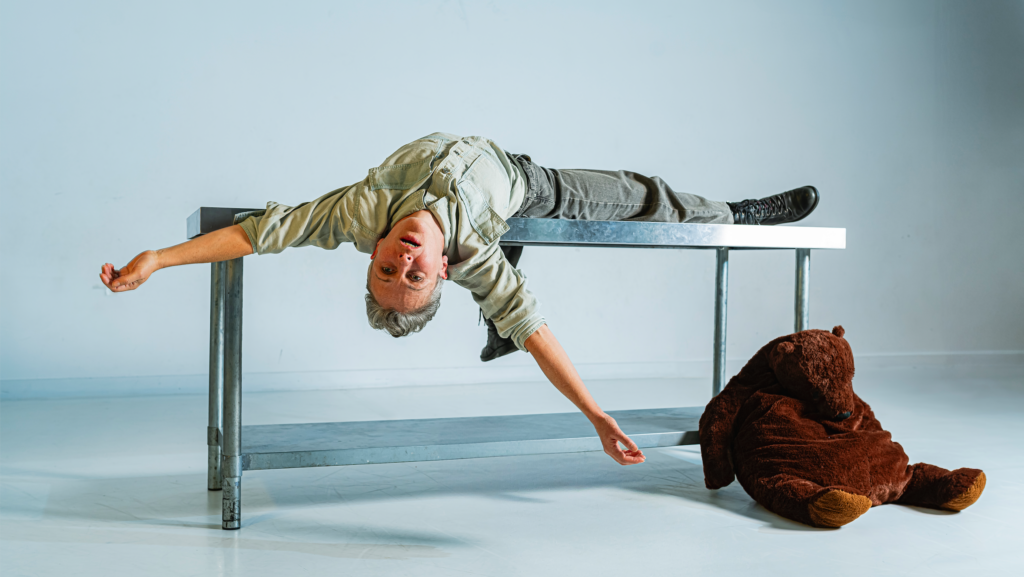
Review Deborah Light: Mover, Maker, Mother Autopsy of a Mother, A Bear and A Fridge, Chapter by Megan Pritchard.

 out of 5 stars (5 / 5)

Womanhood is often about endurance. About containing anger and carrying on anyway. This show embodies that, inhabits it. Blending monologue, performance art, dance and design Deborah moves through the space as through life; in a series of funny, touching and sometimes uncomfortable moments, with visceral physicality.

The hour and fifteen minute solo is punctuated with deeply personal details and is both emotionally and physically demanding on Deborah, who connects with the audience with delicate intimacy, even when trapped inside a fridge screaming in rage; we are screaming too.

This is autobiographical but relatable, you may be a woman or a mother yourself who feels what Deborah feels first hand, or you may recognise the women in your life in the portrayal. As an audience you are swept along in vignettes of movement, monologue, sound and stillness; each creating powerful moments to reflect within.

Deborah’s poetic and often punk performance is enhanced by beautiful yet simple set design and a newly composed soundtrack by Welsh artist Tic Ashfield.

Everything feels both stark and slick.

Audiences new to dance will be drawn into Deborah’s world, there’s moments of humor and beauty, and enough narrative to keep you fired up throughout.

Catch it on tour across South and Mid Wales over the next couple of weeks.

Review The Purcell School, Berio’s Folk Songs, Wigmore Hall, London by James Ellis

 out of 5 stars (5 / 5)

In what might be the finest hour of music making have seen in London for some time, I was caught off guard with The Purcell School. These musicians are filled with the spirit of music making that is oh so needed in these desperate times.

Robert Saxton had a premiere with his Le Tombeau de Ravel. The French composer was the mainstay of the day, his 150th birthday a major cause of celebration. Saxton’s way with orchestration is curious, the sinew of melody and harmony always dissolving. The players handled the course material well. Saxton had worked with the next composer: Luciano Berio. Having his own 100th birthday bash, the School did one of Berio’s finest creations, the Folk Songs. Eleven female singers took up these wonderful arrangements, some of which are Berio’s own invention, others well established folk standards from the United States, France and Armenia. Every works as a total triumph, delight after delights is heard and felt thorough the clever arrangement. Perhaps most potent is ‘A la Femminisca’, a Sicilian call to church with metal coil, tam-tam and tubular bells.

What had wow factor was on violin Juila Majewska, with Phoebe Papandrea on piano. Ravel here channels Spain and Hungary with Pièce en Forme de Habanera and the famous Tzigane. I felt like was watching stars in the making, Majewska was an utter sensation on the violin, a second nature next to brilliance. Papandrea also proves to have a considerate chemistry, you feel they are friends. The feverish vitality of these works prove why Ravel is interesting and of note. There are many congratulations to be had here. Promise beyond promise.

To wrap up more Ravel in a four hand version of of La valse. Arranged by Ian Farrington, the waltz becomes an absurdly whirling terror that only seems to crescendo. The players Luca Newman and Stephanie Qiao impressed, their modesty at first diminished through violent playing in this four handed thrill ride.

A genuine joy to see young musicians play on this scale. 

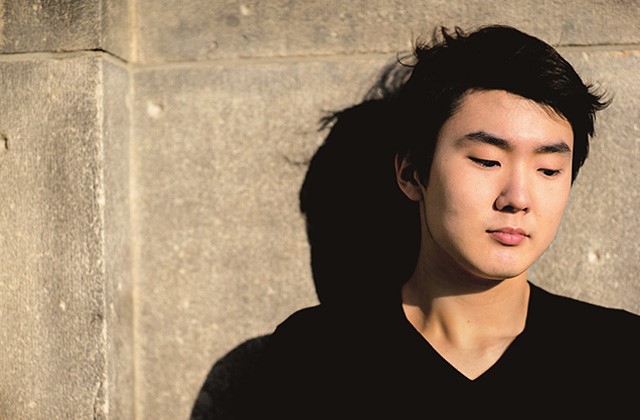
Review, Seong-Jin Cho review: A Ravel-athon, Barbican Centre, London by James Ellis

 out of 5 stars (4 / 5)

In Ravel’s 150th birthday years lies the opportunity to hear much more of his music. Those bored of Bolero and are driven mad by Mother Goose, may find solace in concerts like this. Seong-Jin Cho was the winner of the First Prize ten years ago at the Chopin International Competition. He has truly made a name for himself as was proven by this busy concert at the Barbican.

To have done in one night the entirely of Ravel’s lifetime of piano work is no mean feat. The first set showcased early work including the delightful Jeux d’eau and the instantly recognisable Pavane pour une infante défunte. The rest here prove less interesting, you fell he finest quite master things until he goes on in his career. Seong-Jin is stimulating to watch play, performing entirely from memory. The talent of this pianist should never be doubted. His furious attacks and fluid patters are the utmost poetry. I think I could hear him breathing and panting at times.

What really sold his was the second set of Miroirs and Gaspard de la nuit. Ravel is alive her with total impressionism, expressive and bold playing for Seong-Jin who makes worms meat of the score. Great to hear Ravel in more experimental modes, as some moments would evoke Messiaen perhaps even Ligeti latter music. Birds and boats are the imagery, seascapes and night time musings. Gaspard de la nuit is also a treat for its impassioned state, its touching sweetness too.

The last set looked the longest and felt like it. Valse nobles et sentimentales was the bulk, impressive for its major pallet of dance and conventions. Further preludes are slight and passable. Le tombeau de Couperin, which he later orchestrated is another joy, evocative and some of his most essentially happy music, even out of the WW1 context. Through it all it was Seong-Jin’s determination and utmost respect for the material that rang through. His talents are plentiful, his endurance a standout.  

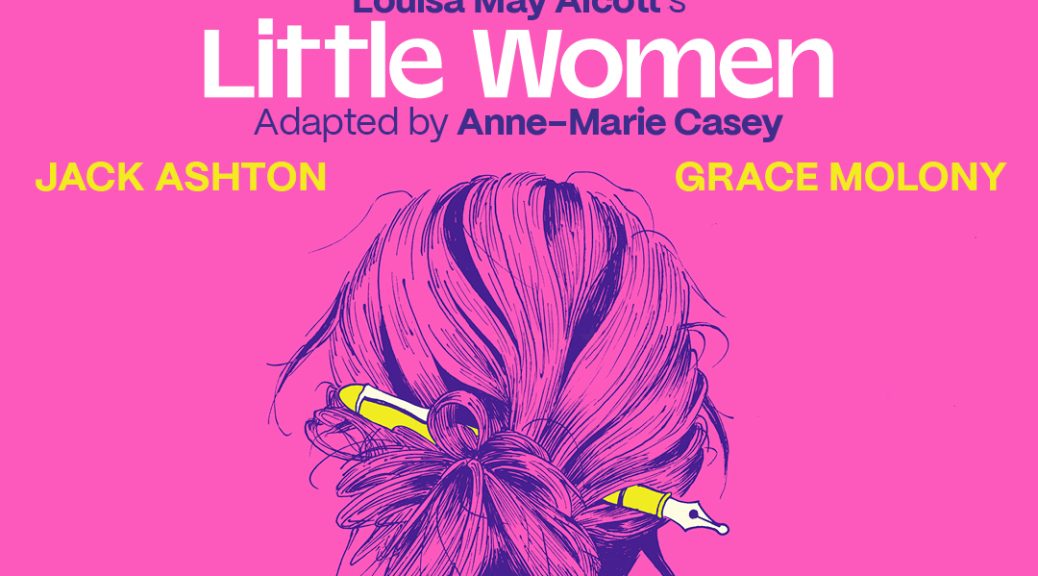
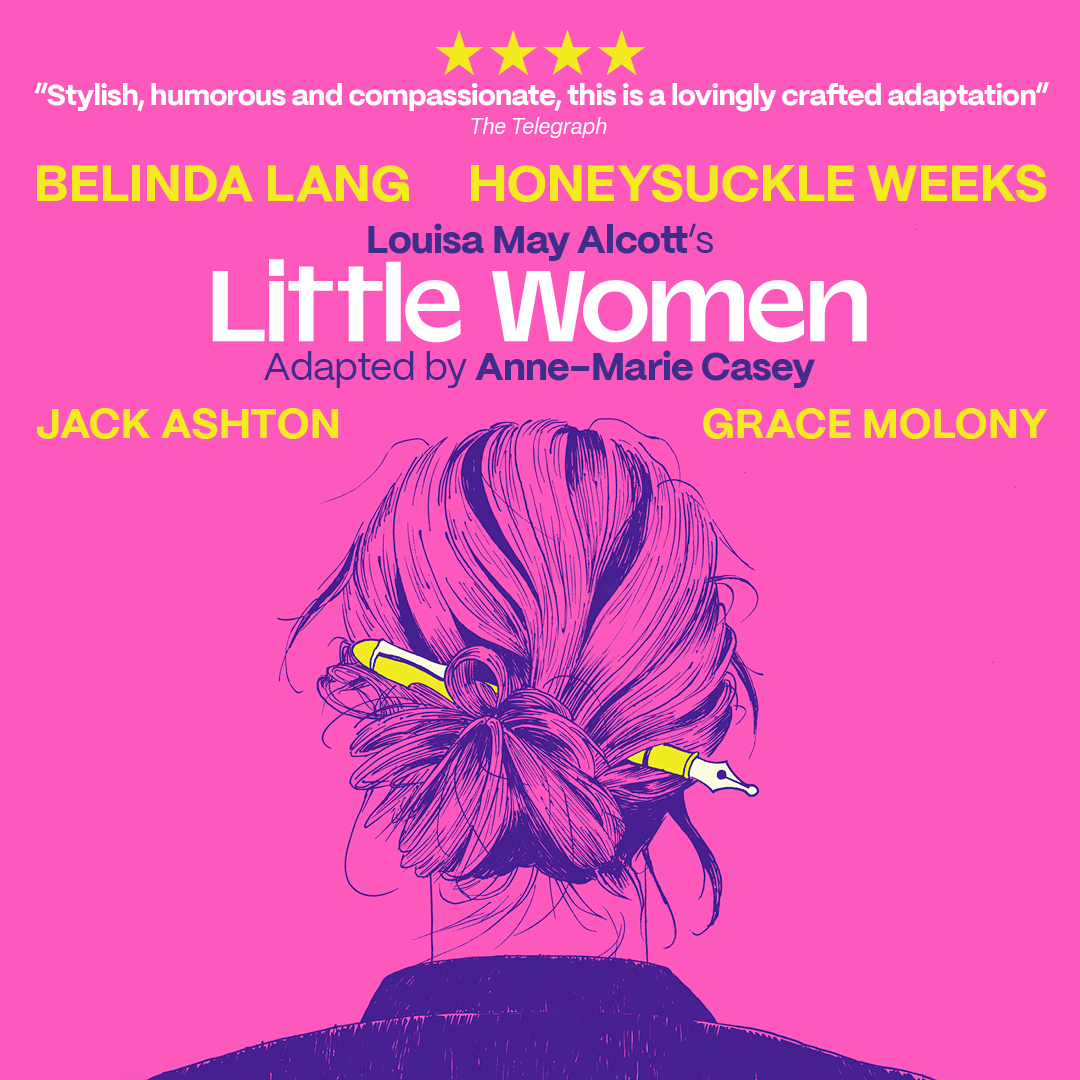
Review, Little Women, New Theatre, Cardiff by Bethan England

 out of 5 stars (4 / 5)

‘Little Women’ is loved across the world in its various iterations; from its original publication in 1868, it has been widely adored, with critical and commercial success. Based loosely on author Louisa May Alcott’s own life, we follow the lives of four sisters; young women forging their path from childhood to adulthood. Loud and rambunctious Jo, ladylike Meg, quiet yet ‘good’ Beth and the youngest, Amy, used to getting her own way. The play begins just after their Pa has left to serve as a Chaplain for the Union in the American Civil War, and each girl is dealing with it in her own unique way.

This version has been adapted by Anne-Marie Casey, screenwriter initially who has now turned her attention to stage adaptations, having also adapted Wuthering Heights for stage in 2014. I loved the pace and the humour of this script; it loses none of the original whilst breathing life into the plot and giving these characters a chance to come alive on stage. It is genuinely witty and funny and full of heart, a fact we can, obviously, primarily credit to the original novel, but also shines here on stage which is a credit to Casey. The piece has direction and movement direction from Loveday Ingram and Mike Ashcroft respectively, and I loved the innovative use of the space. The set changes very slightly throughout, but with the direction we always feel like we are in a new space, whether that’s skating across an ice-covered pond, dancing on a balcony at a ball or stealing that first kiss in the snow.

Lighting and design, by Ruari Murchison and Mike Robertson, complements the actors well. I loved the world of ‘Little Women.’ The set is a living room amongst the trees, so to speak, but we are never in any doubt as to where we are. The trees and stool double as the window that Laurie is constantly clambering through, the flats at the back of the stage mean we can see each girl in tableau as time passes and they go from girl to woman. Sometimes simplicity is best, and I loved the idea of nature permeating the house in which the girls lived. Jo’s writing desk being ever present is also a nice touch as if, it’s the desk itself, that is charting the lives of these women. Lighting is also simple but effective; especially stark during Amy’s fall through the ice. I loved the addition of contemporary hymns and Christmas songs to add colour to the piece and to the lives of Marmee and her girls. Matthew Bugg, Composer and Sound Designer, adds his own touch to the piece; the arrangements are beautiful and sang so well by the ensemble.

This is a very well-cast company. Led by Grace Molony as Jo, who perfectly balances Jo’s tomboyish tendencies with her uncompromising love for her family, her passion for life, writing and independence, and her softer, more loving side towards the end of the show. She is excellent, a perfect Jo and she achieves plenty of laughter in our matinee audience. Jade Kennedy as Meg is wonderful; the will she, won’t she romance she shares with Jack Ashton as John Brooke is very endearing. There is, again, a lovely balance of humour but also the more serious, mothering side of Meg. They are joined by Catherine Chalk as Beth; her nervous energy around strangers is truly palpable throughout act one, and her tragic ending is expertly handled by Chalk. The final ‘little woman’ is indeed the littlest; Imogen Elliot as Amy brings a childlike innocence and petulance in act one, which blossoms very effectively into a society woman in act two.

They are accompanied by Belinda Lang who is excellent as Aunt March. Her accent is perfect, and her deadpan lines are delivered with expertise. She is delightfully blunt and rude, a fantastic addition to the cast. Ellie Pawsey understudied as Marmee in this performance and her motherly light really shone in the role. Her strength in holding together her family was really evident yet she was able to balance this with the emotion of hearing about her injured husband and the pain of losing a daughter. Outnumbered, but no less talented are the men of the piece. Cillian Lenaghan as Laurie bounds across the stage, the perfect opposite to Meg, seemingly more grown up and mature than them all in act one and then discovering his petulance in act two. Cillian counterbalances Monoly’s Jo with ease and they have a lovely chemistry. Finally, Jack Ashton who spends act one as Meg’s love interest, John Brooke and act two as Jo’s love interest, Frederick Bhaer. Ashton delivers these two distinct characters with ease. It is easy to put aside our dramatic disbelief and invest in him as both characters. I really enjoyed his Frederick especially, with a great accent and a softness and hesitation to his admission of feelings for Jo. This is a faithful adaptation, which keeps close to the original but also has its own voice and identity. Its true success is in its accessibility; I have never read the book (but will do so now!) and was sat alongside two sisters who have seen every iteration on film and were read the novel every night by their mother as children. I love how we came in with very different expectations and knowledges of the story but all left having absolutely loved this version. The show is lovely; touching, poignant at times, full of heart and humour; perfectly chronicling the lives of these little girls into ‘Little Women

Review, Britten Sinfonia, Messiaen’s Et Exspecto Resurrectionem Mortuorum, St George’s Roman Catholic Cathedral, London by James Ellis

 out of 5 stars (4 / 5)

In the perfect setting for Messiaen, St George’s in Southwark proved a stunning evening for Britten Sinfonia. With no strings in sight, this wind ensemble would also feature brass and the famous percussion too.

Stravinsky’s Symphonies of Wind Instruments is often paired with Messiaen Et Exspecto. These delightful few minutes features shrill, bouncy moods followed by more sensual bars. The deep acoustic of the cathedral may not have faired well for this opener. The Choir of Merton College, Oxford followed in brief motets by Poulenc and Duruflé. These were the real deal, powerful stuff from these young singers. Poulenc’s Tristis est anima mea might have been the strongest, though all were truest declarations of faith.

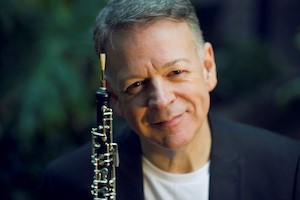
Stravinsky’s Mass may prove why he didnt write much choral writing. Moments had promise and an experimental edge, yet it doesn’t quite take off.  Passages of Orthodox singing and strange murmurings were note worthy, the wind players getting the expectedly angular writing. Benjamin Nicholas shared the baton with Nicholas Daniel both driven with the fire of this music. Daniel, best know as an oboist have a lush solo for Messiaen’s Vocalise-étude. This is lovely in its mawkishness, brief moments of flower scents and an unbroken style that could on be Messiaen. The Choir return only now at the entrance to the cathedral with the continuing French composer’s O Sacrum Convivium. The music levitates in real time, its just so warm these singers sung it flawlessly in their last feature of the night.

In Et Exspecto Resurrectionem Mortuorum, Messiaen conjured a terrifying memorial to the dead of both World Wars. A stunning array of tubular bells, tam-tams, cowbells all feature heavily and shine. The loudness is considerable, though I think the larger tam-tams could have had the crescendos a little more stretched out. Even in Messiaen’s whole canon there is nothing this earthy or alarming. The silences between each movement are baked into the score, another powerful feat. The finale sees temple gongs played ad nauseam, as all players blast and scream through the horror. It’s quite an unforgettable feat.

Nicholas Daniel, who is now leaving the Britten Sinfonia. We will dearly miss him. 

Review, Krapp’s Last Tape, Barbican Centre, London by James Ellis

Photo credit: Patricio Cassinoni

 out of 5 stars (4 / 5)

Samuel Beckett might just be my favourite playwright. Why? It’s his abstractions, the eerie usage of prose for a higher truth. His plays in French and German then translated into English, capturing profound depths that wouldn’t be seen if it was just in English first.

First seen in 1958 with actor Patrick Magee, Krapp’s Last Tape have seen much success and is often regarded as one of Beckett’s finer works. This isn’t my personal favourite, though thanks to a tight production it holds up as enlightening. The play is even going with Gary Oldman in York , so there are plenty of chances to see this odd tale.

Per annum, Krapp on his birthday records another tape. A post-mortem of the year he’s had. He listens to recordings from decades past and loses himself in then, only to dismiss them as ancient histories. Aged 69, he leaves his last tape, after eating a few bananas, popping out to the kitchen in a hurried scuttle to what sounds like the pouring of wine (quite possibly urination) a few times and constantly critiques the man he was, against the man he is now.

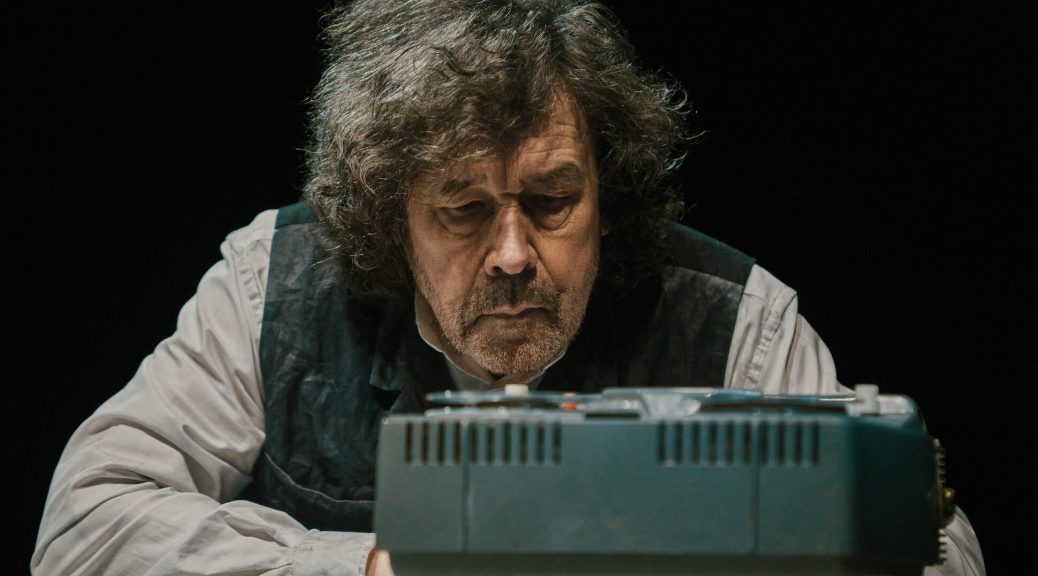
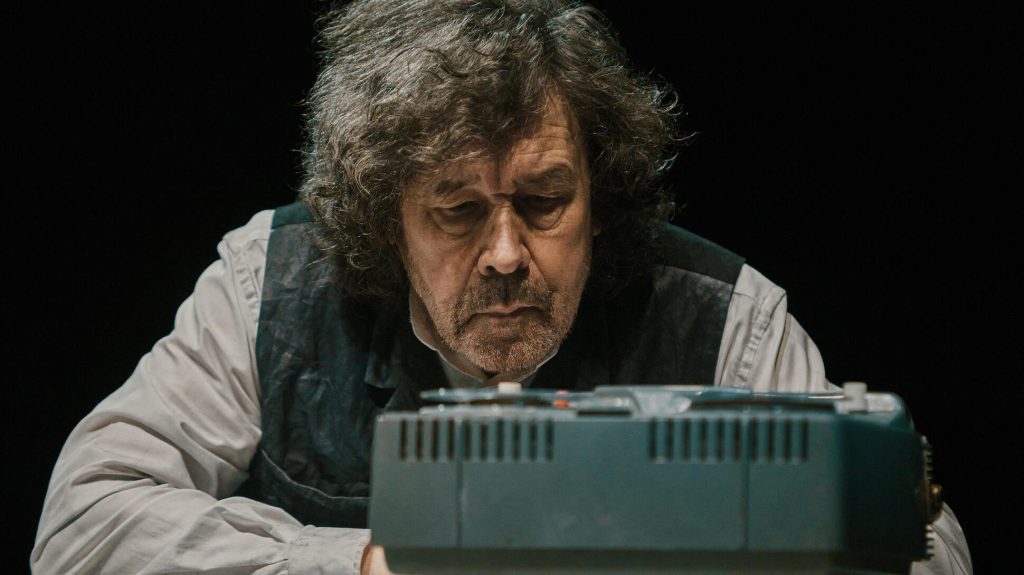
Stephen Rea is a true Beckett actor. He had the foresight to pre-recorded the relevant material a decade ago, just in case he ever did play Krapp. Luck would be on his side thanks to laser focused director Vicky Featherstone. Set designer Jamie Vartan has the most simplistic plan, yet all you really need is a sliding door, chair, table with extended draw and that’s your lot. Katie Davenport got the tattyness of old age and white boots that might just not match the outfit. Lighting by Paul Keogan is scary and alluring in all ways. Kevin Gleeson’s, sound design keeps the suggestion of a drone in utter pianissimo throughout, near Lynchian. Stephen Wright as audio director assisted Rea with the old recordings and did a valiant job. You can tell Rea is younger, though not by a huge amount. Imagine the 30 years old tapes…

There is much to unpack about archivism, longing, resentment, ageing, loneliness, sex and lust in this mere 55 minutes. Other artists have taken the tapes ideas and ran with it, musicians especially with opera and looping material are really nice ideas. It has made me wonder about how do we preserve items in needs of tender love and care, with the passage of time decaying most materials. Through it all…was this the purpose of recording something?

Its runs till 3rd May 2025