
 (3 / 5)
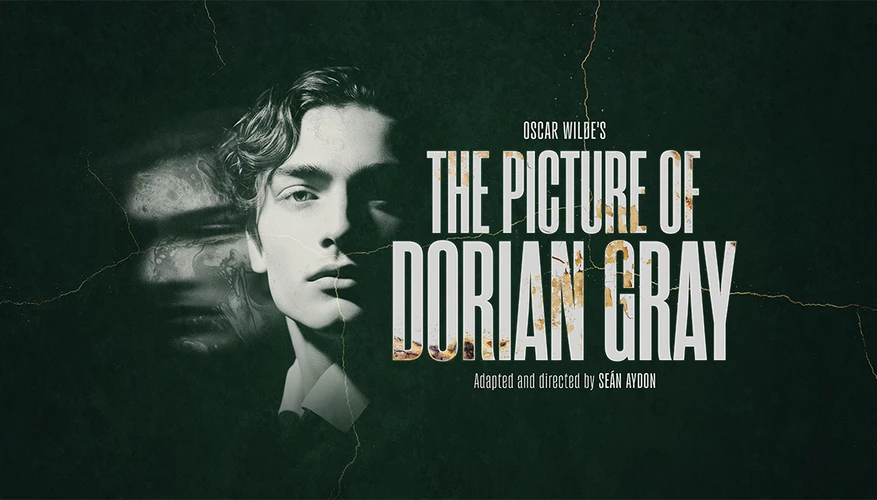
Oscar Wilde’s The Picture of Dorian Gray is a philosophical fiction and Gothic horror novel, first published in 1890. The only novel written by Wilde, it is widely regarded as a classic of both Gothic and English literature and has been adapted numerous times for the stage and screen. With its exploration of beauty, morality, vanity and the consequences of a life devoted to pleasure, it is a story that remains as relevant today as it was in Victorian England.
The story centres around the impossibly beautiful Dorian Gray, whose portrait is painted by artist Basil Hallward, a man captivated by his young subject. Through Basil, Dorian meets Lord Henry Wotton, an aristocrat whose hedonistic philosophy soon takes hold of him. Lord Henry believes that beauty and sensual pleasure are life’s greatest gifts, and Dorian becomes increasingly preoccupied with the thought that his own beauty will inevitably fade with age. In a moment of reckless desire, he wishes that the portrait would age in his place, allowing him to remain forever young. His wish is granted, and whilst Dorian continues to look as beautiful as ever, the portrait becomes a disturbing reflection of his increasingly immoral life.
There is no denying the appeal of Wilde’s writing, and much of the fun and wit of the original text shines through in this production. The dialogue is sharp, clever and frequently very funny, with the kind of observations about human nature that make Wilde’s work so enduring. This is particularly evident in the character of Lord Henry Wotton, played by Mark Hawkins, who delivers a truly standout performance. Full of energy, charisma and confidence, Hawkins lights up the stage every time he appears. His delivery captures the character’s mischievous charm and devilish wit, making him a real highlight of the evening.
Mark Oxtoby also deserves praise for his portrayal of Basil Hallward. There is a tenderness and gentleness to his performance that makes Basil a sympathetic character, particularly in contrast to Lord Henry’s more cynical outlook on life. The supporting cast are excellent too, contributing to a production that certainly has its moments.
Unfortunately, I wasn’t entirely convinced by Jack Crumlin as Dorian Gray himself. Given that the entire story hinges on Dorian’s extraordinary beauty and the effect it has on those around him, casting is particularly important. Much like the casting of Helen of Troy, the character needs to possess that almost mythical quality of beauty that makes the audience understand why others become so captivated by him. Whilst Crumlin gives a perfectly respectable performance, I felt that he lacked some of the charm and magnetism required to make Dorian truly convincing. This is no easy role to take on, of course, but I wanted to feel more of the character’s irresistible allure.
The set is simple but effective, featuring a large, dirty-looking mirrored backdrop that creates an appropriately unsettling atmosphere. The mirrors are particularly fitting for a story so concerned with vanity, self-image and the distinction between how we appear to the world and who we really are. However, I felt that the production missed an opportunity with the portrait itself. The lack of obvious effects meant that the transformation of Dorian’s portrait wasn’t particularly clear. For those unfamiliar with Wilde’s story, this could make it difficult to appreciate the significance of the painting and the disturbing changes taking place as Dorian’s life becomes increasingly corrupt.
In terms of the costume design, this production seemed uncertain about which period it wanted to inhabit, with some characters appearing firmly rooted in the Victorian era whilst others looked distinctly more modern. Sybil’s sister, for example, appeared rather contemporary, whilst the servants wore modern black clothing with black ties, in contrast to the period costumes worn by the rest of the cast.
This inconsistency was distracting and took away from the overall impact of the production. Wilde’s story is a Gothic classic, and I wanted to be drawn into its dark, decadent world. Instead, the mixture of styles left me a little confused about the period in which the action was supposed to be taking place. A production doesn’t necessarily have to be historically accurate, of course, but I felt it needed to commit to a clear visual concept.
Sound and projection were another issue, with some dialogue difficult to hear, particularly at the beginning of Act One. This was frustrating, especially when experiencing Wilde’s wonderfully crafted dialogue is such an important part of enjoying the play. Having since seen a review of the production at a different venue which mentioned the same problem, it seems that this wasn’t an issue with the venue itself.
There is, nevertheless, something fascinating about the central premise of The Picture of Dorian Gray. In an 1894 letter, Wilde wrote:
“Basil Hallward is what I think I am; Lord Henry, what the world thinks me; Dorian is what I would like to be – in other ages, perhaps.”
Perhaps this is the key to the story’s enduring appeal. We can all recognise something of ourselves in these three characters. We all look in the mirror and see our own self-portrait, but how closely does that image reflect the person we really are? Who are we, who do we want to be, and how would we live our lives if we believed there would never be any consequences?
These are the questions that make Wilde’s novel such a compelling piece of literature, and they are what should make any stage adaptation of it so thought-provoking. Whilst this production has much to enjoy and is truly a quality piece of theatre, I felt that some of its creative choices prevented it from fully capturing the dark, unsettling beauty of Wilde’s original.
The Picture of Dorian Gray continues its UK Tour on November 3rd at the Yvonne Arnaud Theatre, Guildford. Head to the website to book your tickets:
www.tiltedwigproductions.com/book-now
Cast:
Jack Crumlin as Dorian Gray
Mark Oxtoby as Basil Hallward
Mark Hawkins as Lord Henry Wotton
Lydia Whitehead as Sybil Vane & Hetty
Ayesha Griffiths as Catherine Vane & Dr Ellen Campbell
Lydea Perkins as Lady Victoria Wotton & Woman
Max Burnett as Romeo, Boy & Servant
Creatives: Adaptor & Director – Seán Aydon
Designer – Sarah Beaton
Lighting Designer – Peter Small
Sound Designer – Russell Ditchfield
Fight & Intimacy Coordinator – Kaitlin Howard
Costume Supervisor – Abigail Caywood
Stage Manager – Lydia Morgan
Company Stage Manager – Guy Dennys
Education Consultant – Sinead O’Callaghan
Press – Bright Media
Marketing – Rachel Veniard for Beth Nichols Marketing