
 (3 / 5)
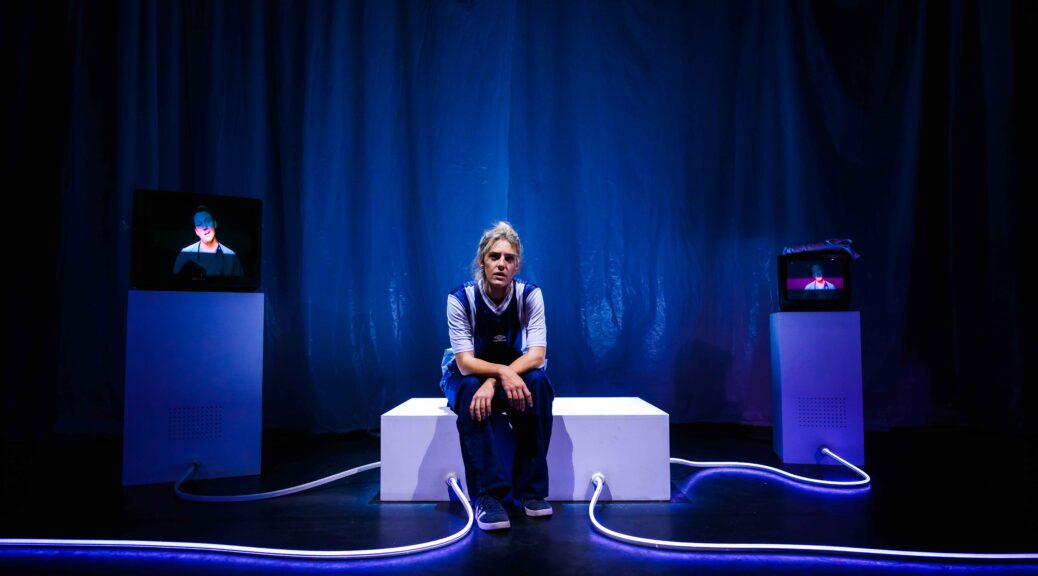
Confronted with different staging, a Dexter-style plastic back drop, old chunky TVs and lots of wires, we have entered Dear Annie, I Hate You – NOT a play about a severe dislike of Annie the musical, but about something much deeper.
Based on Sam Ipema’s true life, Dear Annie […] is the story of Ipema’s diagnosis of a brain aneurysm at 20. We live through her short life up to that moment, her family relationships and then post diagnosis and how she copes with this change. With the high potential of life and personality changing consequences should she have surgery, she begins to question what is more important, life or death, in many different guises.
The production does well to squeeze so much content into such a short space of time. We quickly and easily get a sense of Ipema, her life and her family, with interjections on the TV from her family to make it rounded. These screens are connected to tubes that light up and escape their connection, depending on the points being explored at the time. However, a lot of the narrative accompanying this becomes technical and scientific and, while very interesting and important to explaining her brain and how the impact of the aneurysm, sometimes it just lost me and I felt a little out of the loop of truly understanding.
Ipema is high energy, utilising the space and hopping from podium to podium and up the stairs, banishing the idea of any impediment the aneurysm should have. Unfortunately, sometimes her run up the stairs felt out of place and unnecessary, not really adding much to the story. The energy level continues high when Annie comes in; the physical embodiment of the aneurysm. It is said a lot that some like to put a name or visualise what they are coping with as a person or thing, and this is clearly how Ipema coped with this. Unfortunately, Annie is often the voice of reason, urging for truth, and through her high octane presence in the space being purposefully annoying, she often takes a higher road to Ipema, blurring the lines of good and bad.
The play ends up with Ipema thanking Annie and this feels a little confusing and misplaced. It doesn’t feel like there is a revelation that is needed, with a simply fine life pre-Annie, and it feels as if there was a need for an ending and a story moral that couldn’t quite be found. But, we are dealing with a true story and one critic shouldn’t be the judge of how one copes with something like this and what brings comfort.
Dear Annie, I Hate You is well executed in its production values and an enjoyable retelling of a true experience. However, the narrative and dramatic licences taken felt slightly out of place and unfulfilled.