Category Archives: Theatre

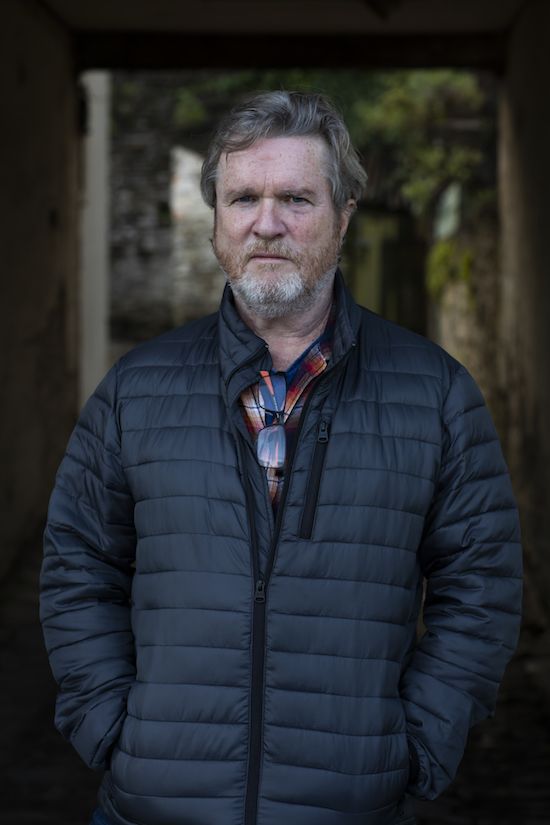
An interview with Playwright Andy Evans

Hi Andy great to meet you, can you give our readers some background information on yourself please?

I’m a Welsh playwright currently living in Lincolnshire and studying an MA in Theatre at the University of Lincoln. I was born in Cardiff and raised in Penarth, where my love of drama and theatre was nurtured. I left Wales to train as a teacher in 1988 and went on to work as a teacher of Criminal Law for 25 years, before redundancy made a switch necessary and I became a primary teacher, with responsibility for Literacy in the school. After six years I decided that the time had come to move on and to pursue my passion, so I left teaching and began running Breakwater Theatre Company full-time. I also wanted to look to improve my knowledge and understanding of theatre and chose to study for an MA in Theatre, in order to validate the years of work I had done to date.

During my time as a teacher, I began writing plays for a youth theatre I ran as a volunteer in Grimsby. My first play was published by a small publisher in Essex in 1999 and in 2001 my play Moonlight Marionettes was published in the USA by playscripts.com. I joined Hull Truck Theatre Company where I was commissioned to write a full-length play entitled, Taking a Bullet. I also got involved in Stories of the Streetz, with the National Theatre of Wales, the Sherman Writers’ Group and Dirty Protest, for whom I have written twice. I also worked with Middle Child in Hull and Slung Low in Leeds among others. All of which led me to establish my own company, Breakwater, which specialises in new writing for the stage and has worked in conjunction with New Perspectives, in developing scripts and writers nationally.

So, what got you interested in the arts?

I went to St Cyres Comprehensive in Penarth; a school where I feel the arts were championed, and we had some really dedicated drama and music teachers. My inspiration was drama teacher Joy Nubert, she was a passionate advocate for drama education and ran extra-curricular workshops and productions. I performed in West Side Story and Oh! What a Lovely War, as well as workshopping scripts by Pinter and Orton.

St Cyres School, Penarth

We also had an amazing music teacher called Anne Harris, who led the school Music Department with passion and vigour. I guess my passion for performing arts was born there. Their love of the arts was infectious and inspiring. The arts help an individual to learn about themselves and to discover what makes people tick, to encourage support and inspire That is something I still see as important and influenced my choice of University for my MA. The University of Lincoln is championing a campaign to say #WhyArtsMatter a hashtag I fully endorse.

Why and where do you write?

I write at home and tend to write in the corner of my living room, though not exclusively. I enjoy being surrounded by my books and videos, with easy access to the internet to help me gain inspiration if I start to dry up. I also have two Dalmatians, who hate being left home alone and enjoy cwtching up as I write. I tend to write extremely quickly, which is a habit born out of necessity back when I was teaching. I would never write during term time and would get the majority of my writing done during school holidays. I tend to spend a lot of time preparing to write, mentally planning the plot and the structure and so on, before I ever open a Word document and beginning to write. The first draft of a play is often written in a very short window of opportunity and I re-write at leisure thereafter.

As to why I write, I write because I can’t help myself. I love writing and my brain loves contemplating things that would be interesting dramatically, which I could put on stage to entertain others. There is no “Go To Book of Ideas” it could be a picture, a documentary, an overheard conversation. The only rule is to ask “Would it make an interesting story?”

There are a range of organisations supporting Welsh and Wales based writers, I wonder if you feel the current support network and career opportunities feel ‘healthy’ to you? Is it possible to sustain a career as a writer in Wales and if not what would help?

I feel bad saying this, but I have received very little help or support from within Wales. As mentioned, I was a member of the Writers Group at the Sherman many moons ago, and that was useful for meeting and networking. My favourite support network within Wales is the small but mighty Dirty Protest, especially working with Catherine Paskell. The work done by DP is astonishing and they are, by far, the primary advocates for new Welsh playwriting. I love them and wish I could always write for them.

Catherine Paskell

And when John McGrath was in charge of the NTW, I felt that I had support and was welcomed with open arms to discuss my work and what I was doing. John even messaged me from Japan to ensure I was going to be able to discuss my work with someone from his team.

However, following the subsequent regime change, I felt edged out and during a meeting, was given the impression that it was unlikely I would be considered as I am not based in Wales. There are those of us who still qualify as “emerging artists” who are more mature and there are far less opportunities for us to market and stage our work. I would like to see schemes specifically aimed at mature writers. Their work can have just as much resonance as somebody a third of their age.

In addition, if a Welsh writer has chosen to work and reside outside Wales but then offers to work within Wales and Welsh theatres, it should not be held against them as there are such things as cars and trains. I get back to Penarth regularly and can always be available through a base in my family home. Its just another excuse for excluding someone. Let me decide if I am willing to drive back and forth, or stay in Wales for an extended period, don’t assume it won’t work in advance.

One reason I have chosen to remain in Lincolnshire for now, is that I get more work as a writer here. I am unsure that a move home would increase work opportunities and may lose some. During 2019, I was able to write and produce two newly commissioned plays and would not have the ability to see such work through to fruition at home, as there are far fewer opportunities offered and more writers chasing them. Ironically, one of my new plays. Indomitable, was about the life of Welsh author and disabled rights campaigner Elisabeth Sheppard Jones. I worried that the slightly parochial setting (Penarth in the 1950s – 70s) wouldn’t play well, but the play was a resounding success here in Cleethorpes.

Indomitable

I try to familiarise myself with the available work and career support in Wales, I am part of the NTW Community and I am on the mailing list for the Welsh branch of the Writers Guild of Great Britain, but I do still feel isolated from the theatre scene and hiraeth draws me home to watch others making work repeatedly. I would love to make more work in Wales, especially within Cardiff.

If you were able to fund an area of the arts in Wales what would this be and why?

I would love to offer a bursary to an emerging writer of mature years, giving them the freedom to write without worrying about how it would affect their income. Youth is often the only form of “new” considered by many in theatre. I staunchly believe that there are other writers out there who could benefit from career development but are discouraged by perceptions of ageism. Allow more mature people to explore and to be creative; fund them and then give them an outlet to share their work. It doesn’t have to be, and should not be, at the expense of opportunities for younger writers, but there are some amazingly creative people out there who think they have lost the chance to make a mark creatively. I would seek to encourage precisely that. 

Can you tell us about your writing process? Where do your ideas come from?

As I mentioned earlier, I am constantly thinking about what the next idea will be or where the idea will come from. I don’t try to force creativity; I pay attention to the word around me. Moonlight Marionettes was inspired by a photo I saw on the internet. I wrote Indomitable about Elisabeth Sheppard Jones after reading about her on a Facebook page for local memories. The other play I wrote this year, was entitled With Love From Ruhleben.

I was commissioned to write it as part of a project funded by the National Lottery’s Heritage Fund and Lincs Inspire Libraries. Ruhleben was a civilian internment camp in Spandau, just outside Berlin at the outset of WW1. Any foreign nationals in Germany at the outbreak of hostilities were rounded up and the males were interred. For 5000 men that was their war. Many men from Grimsby were imprisoned as they had been in German waters at the time. So, I interviewed relatives of men who served and created a fictionalised story that forms part of an educational resource sent out to all secondary schools in the area. A filmed performance of the play on DVD and a copy of the script, accompanies a teacher’s pack for each school.

Can you describe your writing day? Do you have a process or a minimum word count?

No two writing days are ever the same for me. I will often have spent months thinking about, researching for or plotting a play before I commit to writing and I outline the story before I start writing. I talk about that as a gestation period. Then, eventually, I will sit down to write. I pour myself a cup of coffee and open up my laptop, then I begin to write “Act One, Scene One”.

Generally, I write in a traditionally, linear fashion. I start as early as I can, after feeding and walking my dogs. I don’t set myself a word or a page count, I write everything that comes and finish when it feels right to do so. When writing the Ruhleben play, I sat and wrote for a full twelve-hour day and hammered out a complete full draft. I’m not proud of that as it went through a lot of rewrites, but I was at least able to see exactly where I wanted the story to go.

I don’t use a dramaturg, which is ironic as I am hoping my MA will allow me to offer my services to others in precisely that role. Instead, as I often direct my own work, the rehearsals help to re-shape a script. I do sometimes send a script to a trusted colleague, or fellow writer to give it a once over. If it has any detailed, technical requirements, I do try to check with an expert, that I haven’t made any glaring errors.

However, it often depends on which company I am writing for. I have found that different companies employ different methodologies and so I may work with a literary manager or a director on tweaking the final script. I really enjoyed working with the (then) Literary Manager at Hull Truck Theatre, Nick Lane to develop scripts and to shape them for performance. This in turn, also led to me joining the Literary Department as a reader at the time as well.

Hull Truck Theatre

You have recently started a new project Review Culture reviewing events across Lincolnshire. Does your theatrical knowledge impact upon your role as a critic?

Review Culture was set up as a direct response to the death of local news reporting and reviewing in the area I live. During my MA, we have been encouraged to write ABOUT theatre as well as FOR theatre. Dr Sue Healy led some sessions about the work of a reviewer or critic, and I found myself drawn to the work. I love going to see work in performance, be it amateur or professional. I decided that if I offered an online portal that reviewed work free of charge and yet which helped to publicise what is happening across Lincolnshire, it could only be a good thing. As a keen photographer, I also shoot production photos which are featured on the site too. I think that my background does impact upon the review process and upon the final product. We don’t use a star-rating system, the reviews merely reflect the good that we see presented in a show. I know its possible to rip some shows to shreds but that is not our mission. We review a lot of amateur productions and I recognise how much time and effort will have gone into staging work. Our reviews respond to their love and enthusiasm of the form. If a review is somewhat thin, we may not have enjoyed a show quite so much. But if we issue praise, it is because we believe it is well-deserved. After all, if audiences attend a show on our recommendation and it is a dud, they won’t trust us, or keep using our site to check out the reviews. We will become redundant very rapidly.

 Andy, I know you are currently engaged on a course of study and are specifically focusing on Welsh Playwrights I wonder if it’s possible to tell me some more about this please.

This is my pet subject, when I was offered a place on the course, many assumed that I would choose to write a play as my final project because it is an option available to me. Even I thought I would most likely choose that option. But fate stepped in and showed me how much I love research. The Library facilities at Lincoln are awesome. They run a scheme which allows students to request book purchases that will assist their studies and I have made great use of the scheme. I have persuaded them to order plays by a number of Welsh writers including Matthew Bulgo, Alun Saunders, Dic Edwards and Neil Anthony Docking. All of which feed into my intended topic for a dissertation.

Tutors within the school are supportive and have encouraged me to pursue my interest as a full study for my final project on the course. I intend to research and write about the way in which Welsh playwrights present nationality and nation in their plays. I have already spent time reading some of the earliest published plays written in English, considering the likes of Jo Francis, Caradoc Evans and latterly, Emlyn Williams, to contrast with the contemporary writers. As yet, I haven’t formulated a question for my thesis, and I am merely reading as much as I can. I hope to refine my field of study and hone the work down to relevant texts over the next two months. Once I have a specific research question sorted, I shall be making contact with as many writers as I can manage, and I hope that they will all have an opinion to share.

My tutors have warned me that I may be taking on a study that could be better suited to PhD and will need to be cautious to narrow my work, but we shall see what comes. Either way, my dissertation will need to be written and submitted by September 2020.

What excites you about the arts in Wales?

I find the arts scene and the theatre scene, in Wales fascinating. It’s a brilliant community to be a part of and it is remarkably generous, giving and supportive in my experience. I love the diversity of the work created and the themes explored by writers such as Gary Owen and Katherine Chandler. The work of Tim Price continues to inspire me, and I only hope that I can gain a tiny sliver of the success that each has had. I continue to proselytise for Welsh playwriting in the realm of English theatre. I desperately want to ensure that exiles are not forgotten among the ranks of Welsh writers. That is why I love the work being led by Rebecca Hammond of Chippy Lane, championing those of us who are no longer based in the Land of Our Fathers. Cool Cymru has made an impact on the world and it would be great to think that it will continue, and the work of Welsh playwrights, resident and ex-patriot, will continue to thrive.

What was the last really great thing that you experienced that you would like to share with our readers?

I know I bore anyone who knows me when asked a question like this, but the single, most influential piece of theatre I have seen in recent years, from my perspective, was Iphigenia in Splott by Gary Owen, starring the powerhouse that is Sophie Melville.

Sophie is one of the greatest “undiscovered” gems of British theatre and I will fight anyone who says otherwise. What she, Rachel O’Riordan and Gary Owen achieved in that production, has really helped to lift the level of respect for Welsh plays in the eyes of those who are not from, or based in Wales. The whole team responsible for bringing that production into the world deserves praise from designers and tech to the final performance. The work of the Sherman is the last REALLY great thing I experienced, and I hope to experience even more from Cardiff’s premier producing theatre.

Sherman Theatre, Cardiff

Frankenstein at Theatr Clwyd (Selladoor Productions | Matthew Townshend Productions | Belgrade Theatre Coventry | Perth Theatre at Horsecross Arts) By Richard Evans

 out of 5 stars (5 / 5)

Prometheus reborn.

This is an ambitious premise.  Take a story that has passed into classic status, that has been reworked countless times in serious and spoof form, that has universal recognition and that has spawned endless clones and then strip it back to its original story line and portray it through the eyes of its creator.  Would it work?  Can it fulfil that lofty aim?

I have to say I thoroughly enjoyed this production at Theatr Clwyd.  I heard it said that it was a verbose script with a lot of shouting and that the lead playing Mary Shelley was too in your face, but to me this was absorbing, thought provoking theatre that retold the story and yet picked out the social context admirably. 

At times it is not comfortable viewing, it was intended as a horror story and developed a threatening, suspense filled atmosphere without attempting to shock for the sake of it.  The set and lighting was highly effective, with an almost black and white backdrop yet with a clever use of height that allowed you to see the story and then see the thought process of the author side by side. 

It was this use of the author that allowed the social context and Promethean nature of the story to breathe.  Especially during the second act, you saw her dictating the nature of the story to drive home the point that she wanted to make.  In that sense the play was as much about her as it was Frankenstein and his monster.  She was a remarkable author.  She was an 18 year old recently married woman who had suffered considerable personal tragedy when this was written.  She was actively involved in events that fermented the social revolution that was taking place in the early 19th Century and the play reflects that clamour for change.  She then became the fulfilment of some of her mother, Mary Wollstonecraft’s desires when as an independent, self-supporting woman, developed her own career while supporting other members of her family. 

She developed themes of throwing off traditional rule and transforming society through scientific revolution, yet knowing that unfettered scientific investigation can take things too far.  The book served as an illustration of the conflict between a traditional way of life, the challenge of science and the interdependence of different branches of knowledge, such that Science without Religion is ignorant.  Religion without Science is blind.   

Most strikingly to me though was Shelley’s  insistence that what people need is love, compassion and some companionship and if you deny people these basic needs you are playing with fire. 

It is the stated intention of the playwright, Rona Munro to draw us back to the life of Mary Shelley, and she accomplishes this really well.  Mary is played with huge emotion by Eilidh Loan yet this portrayal does not compromise the telling of Frankenstein’s story.  This is told faithfully and the two male leads, Frankenstein (Ben Castle Gibb on his professional debut) and the monster (Michael Morland) bring out the optimism, despair and tragedy of this striking story pointedly.


To me this is a carefully crafted, multi-layered and thought provoking piece of theatre.  It is intense and at times bleak.  There is also much pathos that reflects on today’s society.  The chief desire of the monster is to be loved, appreciated and understood. When he fails to find those qualities directed towards him, his nature is transformed to match his hideous appearance.  Therein lies a paradigm that speaks volumes to our society. So often we fail to appreciate those amongst us who we describe as ‘other’ and Shelley comments, neglect ‘others’ at our peril.  It is no wonder that this story has been retold so many times and it is great to see a production that remains modern yet takes us back to Shelley’s original ideas.

Go and see Frankenstein and prepare to be surprised.  Even shocked!

Galwad am Adolgwyr / Call-out for Reviewers

Helo ffans ifanc o’r theatr! Mae Criw Brwd a Theatr
Genedlaethol Cymru yn chwilio am adolygwyr theatr 14 – 21 oed i adolygu eu
drama ddiweddaraf, Pryd Mae’r Haf? yn Theatr Soar, Merthyr Tudful, neu The
Other Room, Caerdydd, fis Chwefror. Dyma ddrama dyner am gyfeillgarwch,
gobeithion ac ofnau pobl ifanc a byddem wrth ein bodd yn clywed eich sylwadau
chi. Cysylltwch â Ceri Williams am ragor o wybodaeth: ceri.williams@theatr.com / 07903842617

Calling young theatre lovers! Criw Brwd and Theatr
Genedlaethol Cymru are looking for theatre reviewers aged 14 – 21 to review
their latest play, Pryd Mae’r Haf? in Theatr Soar, Merthyr Tydfil, or The Other
Room, Cardiff, this February. We’d love to know what you think about this
touching play about friendship and the hopes and fears of young people. Sibrwd,
our language access app, means that you can enjoy the play whatever your level
of Welsh. Get in touch with Ceri Williams for more information: ceri.williams@theatr.com / 07903842617

14 Months On A Response To Arts Council Wales, Corporate Plan, 2018 – 2023 “For the benefit of all”

In November 2018 we published an article in response to the new Arts Council Wales Corporate Plan “For the benefit of all..” with a range of contributions from Creatives in Wales. We revisit this area in the updated article below with responses from one of the creatives featured in the article as well as an additional contribution.

Our mission statement at Get The Chance is “Creating opportunities for a diverse range of people to experience and respond to sport, arts, culture and live events.”

We were very pleased to see some of the priority areas in the new Arts Council Wales, Corporate Plan, 2018 – 2023 “For the benefit of all”

In particular we were interested in Commitment 2 below

We will enable a greater number and a wider diversity of people to enjoy, take part and work in the publicly funded arts.

ACW then go onto make a series of intentions (below) for where they want to be in 2023 (5 years)

We will be able to demonstrate clearly that all our funding programmes promote and contribute to equality and diversity

There will be a narrowing of the gap between those in the most and least affluent social sectors as audiences and participants

We will develop the creative work of disabled artists by funding “Unlimited” commissions and developing a scheme similar to “Ramps on the Moon” operated by Arts Council England

We want to introduce a “Changemakers” scheme placing BAME and disabled people in senior executive positions in the arts

We want to see a doubling of the number of disabled people in the arts workforce

We want to see a doubling of the number of Black and Minority ethnic backgrounds in the arts workforce

We want to have introduced an Arts Council Apprenticeships scheme designed to provide opportunities for people from diverse backgrounds

We will have achieved a trebling of the number of BAME and disabled and on APW boards of governance

You can read the full article from last year here

Adeola Dewis

Artist, researcher, academic and TV presenter

I struggle to fully engage this as a response. My recent experience has revealed that there is certainly a surge to include diversity in all its forms on boards and in creative spaces and projects. However, this new ‘interest’ feels more like organisations ‘needing’ to diversify rather than ‘wanting’ to diversify, in order to secure their future and funding. I am hopeful though.

Elise Davison

Artistic Director, Taking Flight Theatre Company

What a year of change 2019 has been.  For Taking Flight it has seen the company move away from the annual Shakespeare production to more indoor, venue-based work.  

peeling by Kaite O’Reilly, opened on International Women’s Day in March at The Riverfront, Newport and then toured Wales and England and was a huge success earning 4 and 5* reviews.

The Guardian stating “Accessible theatre? Do it properly – do it like this”.  Following this Taking Flight was invited to Grenzenlos Kulture festival in Mainz, Germany as an example of best practice in accessibility.  It was a huge tour and highlighted once more the inaccessibility of much of Wales; accessible accommodation is very hard to find, and some venues struggled to meet our access riders.  However, this did lead to some very inventive solutions involving temporary dressing rooms created with flats, curtains and even a marquee! Obviously not the ideal but with our hugely creative stage management team always looking for solutions rather than the problems and the support of venues we made it work. High applause to Angela Gould at RCT Theatres for her work in this department. 

Angela Gould, Theatre Programme and Audience Development Manager, RCT Theatres.

One of our lovely actors toured with her dog who was a lovely addition to the team. Max is a therapy dog; many places we visited were only familiar with guide dogs, which made us realise how much there is to learn about the different types of assistance dogs.  

Everything we learnt during this extensive tour will feed into the work we have been developing towards a scheme like the Ramps on the Moon initiative.  A scheme like this can never be replicated, but the interest and passion from venues in Wales to be involved is overwhelming.  Creu Cymru, hynt and Taking Flight have been in ongoing discussions about ways to make this happen.  We read with interest that it was also a priority for ACW and have begun conversations with them around a similar scheme. As we have been researching and pushing for this to happen since ‘Ramps’ began in 2016, we are passionate that this becomes a reality.  Taking Flight has just received funding for their next production, Road, at Parc and Dare, RCT Theatres and we hope this partnership will be the first step.   Taking Flight will give support to participating venues to be confident to manage and produce inclusive work, to provide excellent access and a warm welcome to all- both audiences and creatives. 

While peeling was out on the road in the Autumn, we also remounted the hugely successful and totally gorgeous You’ve got Dragons.  After a run at WMC we hit the road again for a UK tour including a week run at Lyric Hammersmith which was almost sold out and incredibly well received. The desire for inclusive and accessible work for young people is growing.  Watch this space for more news on You’ve Got Dragons next adventure.

getthechance.wales/2017/04/25/review-youve-got-dragons-taking-flight-theatre-company-ysella-fish/

Taking Flight has often dreamt of setting up a Deaf- led Youth Theatre for D/deaf and Hard of Hearing young people and with funding from BBC Children in Need we have finally done it. Led by the tremendous Stephanie Back in BSL and English, the youth theatre began last week and the results are already fabulous. The Wales Millennium Centre are our amazing venue partner and host the weekly sessions for D/deaf children aged 4-18. We have been overwhelmed with interest in this project, demonstrating that this has been needed in Wales for a long time.     

There has also been a surge in interest from companies and individuals wanting to consider access while writing funding applications.  There is a general excitement around making work accessible. There are some brilliant intentions and I’ve had exciting conversations with companies about different types of access and have been able to recommend consultants and access professionals.  

The ground has been fertile for change for some time and there is much more inclusive and accessible work being created here than when we first started 12 years ago.   Theatres are also much more interested in programming diverse work and many have invested in Deaf Awareness training with Taking Flight (Led by Steph Back). 

Steph Back

 There is a real desire to diversify audiences and welcome them to theatre spaces.  Taking Flight’s next symposium on 28th Feb at Park and Dare RCT theatres on Relaxed Performances brings the brilliant Jess Thom, Touretteshero to Wales to discuss ways to provide the warmest possible welcome to those who may find the traditional etiquette of theatre a problem.   

Jess Thom, Touretteshero

There has been a surge of work featuring D/deaf and disabled performers, productions like Jonny Cotsen’s Louder is Not Always Clearer, Leeway Productions Last Five Years and Illumine’s 2023 really engaged new audiences and the venues have really built on this success.    There have been more productions that embed access in a creative way, a gorgeous example in Gods and Kings by Fourinfour productions with integrated BSL from Sami Thorpe.  I had lots of fun working with Julie Doyle and Likely Story integrating BSL interpreter Julie Doyle into Red. Companies are choosing to interpret, audio describe or caption all the shows in a run rather than just one which is really encouraging and promoting more equality of access to shows.

So, the will to make accessible work is absolutely there, the best of intentions are definitely there and, now the funding for access is factored into budgets, the funds are usually there. However, why is it still access that falls through the cracks, gets pushed aside or forgotten as a production approaches opening night?  I hear stories of interpreters and audio describers who can’t get into a rehearsal space to prep or are placed somewhere on stage that is neither aesthetically pleasing nor practical.  It can still sometimes feel like access is something that needs to be ticked off a list in order to fulfil a funding application.  

I am absolutely sure that this is not the intention; but we are all so overstretched, one person is often doing multiple jobs (especially in small companies) and when no one is directly responsible for access or it simply forms ‘part’ of someone’s role. So those best intentions and exciting plans are really hard to fully achieve.  Taking Flight are exploring this lack of provision for access co – ordination with Bath Spa University so watch this space for the results of our research… The next generation of theatre makers are coming, and they really care about making work that can be accessed by all – that makes me happy.

Murder on Mulholland Drive, Phoenix Theatre Company BY Richard Evans

 out of 5 stars (4 / 5)

Theatr Clwyd, Friday January 24th 2020. Review by Richard Evans.

Suspense, intrigue, who will get their revenge?

This is a new play, written, directed and lead by Richard
Jones and produced by Phoenix Theatre Company from Mold, and requested by the
Rotary Club.  It was first performed last
May at Theatr Clwyd and reprised this week.

Full marks for bringing a new script and showing the
ambition to stage this play.  It made for
an enjoyable evening’s entertainment, which while being a very wordy script
held my attention to the end.  I
particularly enjoyed the characterisation. 
As the play was set in Hollywood in the 1950’s it spoofed the major film
stars of the day very well, adding a nice touch of humour.

I also thought the live music added much to the play.  The band, J. Edgar and the Hoovers was simple yet highly effective.  A three piece unit played a mixture of covers of 1950’s standards and original compositions tailored to suit the mood and the characters. 

This was a comic murder mystery revolving around a major
Hollywood film producer who had a mega salary and an ego to go with it.  He had got to the top with a mixture of
grandiose gesture, manipulation, blackmail and cruelty such that he incurred
hate in the other characters.  This was
played realistically by Richard Jones and while the first act was dominated by
him, this suited the bombastic nature of the character and fitted the story
line well.  Having gained many enemies on
his rise to the top, there was no shortage of people willing to bop him off! 

The second act saw the introduction of Sam Shade, detective,
a spoof of Humphrey Bogarts film noir character convincingly delivered by John
Kinsey, despite the slightly odd distraction of singing ‘Rawhide’ shortly after
his entrance.  This seemed out of kilter
with the rest of the play.  The
denouement had a suitable twist at the end, allusive of some of the best that
Hollywood produced in the 1950’s and also adding great comic value. 

Perhaps I am wrong, I gained the impression that the first
act, which was short at 40 minutes long ended too early, omitting one scene that
had to be delivered at the start of the second act to avoid effectively writing
out one of the characters.   

I found the script very word heavy and the storyline
repetitive at times yet there was much to enjoy about this play.  It was great to see allusions to other films
or series like Back to the Future and Miss Marple.  The use of Jimmy Cagney’s ‘You dirty rat’ was
great showing the script was cleverly constructed and humourous. 

The topic matter is indeed relevant to what has taken place
in Hollywood down through the years.    However,
I thought the intros in the first act were laboured and could have been
incorporated into the following scenes showing the interaction with the lead
and the rest of the characters.  Having
said this, the acting by all involved was professional and delivered really
well. 

Bearing in mind this is an ambitious piece of theatre,
performed by an amateur group albeit with a long pedigree it was a very good
evening’s entertainment.  Of course it
could be honed and refined, but I did not see anyone leave disappointed and the
play left the audience with a warm, feel good factor. 

4 stars out of 5, 4 rather than 3.5 because of its
originality

New Youth Theatre for D/deaf and Hard of Hearing young people takes flight

In an exciting first for Wales, Taking Flight Theatre Company have
announced that thanks to support from BBC Children in Need, the Ashley Family
Foundation and Wales Millennium Centre, they have opened the first youth
theatre in Wales specifically catering for D/deaf and hard of hearing young
people.

The project has been developed in response
to feedback from young people who had seen Taking Flight’s professional theatre
work. With its emphasis on being inclusive both in regards to casting and
audience experience, people frequently asked the company if there was any way
that they could start a youth theatre to nurture young D/deaf and hard of
hearing talent. In 2015 Taking Flight ran two Deaf-led summer schools and the
feedback was that 100% of participants wanted to be able to attend a youth
theatre regularly.

In January 2018, the company ran taster
sessions at WMC which drew children from Carmarthen, Aberystwyth and
Machynlleth. Again, 100% of children and families wanted ongoing provision. As
a result of this enthusiasm, Elise Davison and Beth House, who started Taking
Flight in 2008, decided to apply to BBC Children In Need to see if they could
attract funding to create something really special.

Creative Producer, Beth explains:

“The youth theatre is such an important and
exciting development. We are regularly contacted by families desperate for this
project to start. We have been talking to young people for so long about a
youth theatre, it is brilliant to finally be able to put the plans into action.

We have so much feedback gathered during
previous projects that will used in planning sessions. We also have a Youth
Advisory group; young Deaf and disabled people aged 14+ who input into all of
our outreach with young people.

The course content will be designed by the
leader alongside input from participants – focussing on areas they want to
develop through creative consultation with group; empowering them to take
control & steer the project as it develops.

We
meet once a week at The Wales Millennium Centre in Cardiff Bay at various times
(dependant on age group) and all sessions are led by both Deaf and hearing
staff, in BSL and English. Each week we’ll be playing games, making new
friends, gaining confidence, learning new skills, being silly and having lots
of laughs! The brilliant thing is that the sessions are free as the youth
theatre is funded by BBC Children in Need and the Ashley Family Foundation.

We have high
expectations, working towards sharing events- with the young people working
both as performers and in backstage/ technical roles. Deaf creative industry
professionals will be brought in to run specific sessions such as Visual
Vernacular for performance, physical comedy, puppetry. Each summer and Easter
there will be a weeks’ “residency” (non- residential) for the older groups
where participants will receive intensive training with sharings at the end of
the week. We will also run field trips for older participants to theatre events
run by leading lights in Deaf theatre such as Deafinitely Theatre & The
Deaf and Hearing Ensemble that will inspire and motivate our young
participants. It’s exciting stuff”.

Taking Flight make bold, unusual theatre productions
that place D/deaf and disabled performers centre stage. Their work tours
Wales and beyond and they often find themselves in geographically isolated or
rural places, performing in woodlands, castle grounds, community centres or
shopping arcades as well as traditional theatre venues & schools. 

The youth theatre launch comes at a very busy time for the company,
who have completed two successful tours of England with their critically
acclaimed productions ‘peeling’ and ‘You’ve Got Dragons’ as well as expanding
their work in the area of Access Consultancy.

Artistic Director and company co-founder Elise Davison explains:

“Having developed our own practice over
10 years, we’ve become the “go to” organisation in Wales for advice,
information or inspiration on integrating access & working with inclusive
casts. We’ve worked alongside & supported companies like Likely Story, The
Atrium, Bath Spa University, Cascade Dance Theatre, University of Wales Trinity
St David’s and Mess up the Mess.

Alongside our recent performance of Kaite O’Reilly’s
critically acclaimed play ‘peeling’ at
TheaterFestival
Grenzenlos Kulture in Mainz; I was asked to take part in an industry ‘speed
dating’ event where people from throughout the theatre industry in Germany
could ask me questions and learn about Taking Flight’s journey, gaining advice
on how our practices can be incorporated and adapted to fit their
organisations. I’m glad to say it wasn’t as scary as it sounds! I am really
proud to be able to tell the world about what we have been doing in our little
part of Wales”.

You’ve Got Dragons actress Stephanie Back, who is Deaf, is the group
leader for Taking Flight Youth Theatre, she is supported by an assistant, Anna,
who is hearing. Stephanie welcomed the new initiative:

“A Deaf Youth Theatre in
Wales can only provide a wealth of opportunities and benefits for all involved.
It was through theatre that I found my own Deaf identity, I found how I wanted
to communicate to the world and I found the strength to fight for who I was as
a Deaf woman to be accepted in society today. It brings young D/deaf people
together, reduces isolation and teaches invaluable theatre skills which are
otherwise not readily accessible to the D/deaf youth of today”.

Davison continues:

“We so
rarely see a true representation of society on stage – Taking Flight have
worked tirelessly to challenge this under representation. For over 10 yrs we
have been placing D/deaf and disabled actors centre stage.  We have been
frustrated by the lack of positive role models on our stages, especially in
Wales and have worked hard to change this.Taking Flight Youth Theatre
will be developing and investing in the talent of the future. We can’t wait to
get started!”

Taking
Flight Youth Theatre sessions are held at Wales Millennium Centre on Saturdays
during term time. To book a place with Taking Flight Youth Theatre, or for
further information, email beth@takingflighttheatre.co.uk

Review: Child, Peeping Tom, London Mime Festival, Barbican Theatre By Hannah Goslin

 out of 5 stars (4 / 5)

I am sure that many of us would dread to know what the contents our minds would look like if they were to come into reality. Those odd dreams, the nightmares and the fears.

Peeping Tom’s Child brings all of these to the forefront in a bizarre continuous performance staged in a pretty normal looking forest clearing. Taking the fears and dreams of a child, what we encounter for the next hour or so is not only comical but at times quiet frightening and confusing.

By no means is this a negative comment.

With a little feeling of inspiration from the likes of Antonin Artaud’s theory of Theatre of Cruelty and a touch of Bertolt Brecht’s Alienation effect, we are intrigued by and at times disgusted at what we see. For the few, this is too much but for the many, once you are invested, there’s no leaving until the end.

Engagement comes in the anticipation of the next scene. Seamless in delivery, and with seemingly no obvious scene changes (although, of course there is, but they meld into one another so well, you can hardly tell) we encounter bizarre character’s with little relation to one another; scenes that we couldn’t even imagine in our wildest dreams, and they form together to give real laughter, uneasy laughter and real “WTF” moments that are nothing but brilliant.

There are ranges of physical theatre throughout the piece – bodies push the boundaries of what we understand they are capable of; like liquid, at times mechanic, without fear and flawless. One cannot help but be in awe of the performer’s capabilities and inspired by how graceful and yet at times fearless their movements can be.

Child is really something special. Not for fans of contemporary or traditional theatre, but certainly something that everyone must try for the sheer courage and impossible creativity it exudes.

Review: You Stupid Darkness! Sam Steiner, Southwark playhouse/Paines Plough By Hannah Goslin

 out of 5 stars (4 / 5)

In an apocalyptic world, who would you turn to for help? You Stupid Darkness! shows us the extent of our harm to the World, but in the darkness, there is a light, with a group of volunteers offering their listening skills.

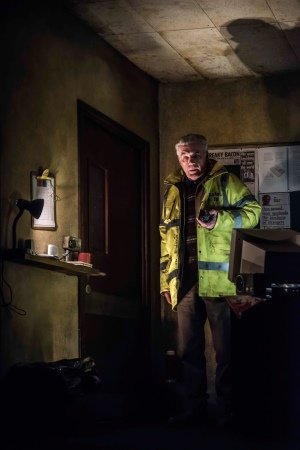
Our stage is set in a call centre/general office set up, while dilapidated from the ranging weather conditions of the destructive World outside, it is like any we would normally see. And when our volunteers come in, it would be hard to think that, once their gas masks come off and the door is closed on the wind, the snow, the gas, that this is set at any time but a usual, current day in England.

Throughout the play we see the volunteers take calls, make tea, eat doughnuts, bide time during the quieter times but ultimately get to know them individually and their growing friendship. Full of comedy, we easily connect with the character’s and laugh at the daily menial issues.

But entwined within this, there are times of sorrow, of pain, where their happy persona’s for the calls goes away and they are people in need of help and to talk themselves. We easily relate to this, showing that no matter the development of the World, we are all still scared, all facing family or other problems and that we can only adapt.

The performers are completely flawless – there is a real feeling to them; their character’s are well defined, they are perfected and they interact with one another with ease, making us feel as if we are looking through a 1 way mirror into their office.

As we get to know them more, we get to know the state of the World more; parts of the building begins to fail and fall, making us jump, and there is a slight uneasy feeling at this possible reality, while the 4 volunteers get on as if it is nothing.

You Stupid Darkness! is heartwarming, but also quite frightning in topic. While making a point on a climate/global level, we also learn a lot about friendship, love and enjoying the little things in life.

Ali Wright

Review: Still No Idea, Bunny Productions, Southbank Centre by Hannah Goslin

 out of 5 stars (4 / 5)

You want to make a show but you don’t know what about. So where do you start? What are you tools? But even better, what if the show was about making a show?

Bunny Productions, with performers Lisa Hammond and Rachael Spence invite us to experience their thought process, their research data, which heavily includes verbatim suggestions and thoughts from the public. At times, this can be a risk, and as Bunny find out, there are a range of ideas and comments culminating in some comical but drawing a topical conclusion.

As a disabled actress, Hammond has been working in the industry for many years, seeking roles for her talent and not for her disability. Due to pain management, Hammond has an automatic wheelchair, one she is able to leave whenever she likes to. But, while the pair wanted to make a show not about disability, this seemed to be the only way to go when a public cannot get past the chair.

We learn important lessons about stereotyping with both performers, and learn about them in their reality: Hammond comes across as if like she is always up to mischief while Spence is the more demure, goody two shoes. We soon learn in life this is the other way around, but we can see that the industry and how we as an audience perceive what we see on stage and screen is often firstly aesthetics, and at times this can unjustly be what disabled artists encounter daily.

Bunny have this wonderful rapport on stage. Bouncing off one another, there is clearly a basis to the show, perfected for the stage but you also feel as if their undying trust for one another lets them have fun with the details, and while in a normal production, it would be perceived as ‘corpsing’, their break away from perhaps the ‘script’ just adds to their charm and their partnership.

The show is full of comedy, using multimedia to at times enhance this, giving it a more stage element than us being invited to chat; but this doesn’t distract from us feeling welcome, as part of their on stage presence and almost like friends. And while comedy is a huge factor, we are soon hit with the hard facts. Information of the deaths and problems disabled persons have faced with benefits being withdrawed, is a punch to the gut after laughing and smiling for 45 mins, but it is needed and really hits home all their points they have culminated and projected to us.

Still No Idea is a lot of fun, a lot of food for thought and very much a show we need in the current climate.

The Get the Chance 2019 Cultural Highlights

Sian Thomas

1) getthechance.wales/2019/10/30/review-heartsong-by-tj-klune-by-sian-thomas/. I was so excited for this book to come out and it really delivered. It’s on one of my favourite series with an exceptional way of world building and atmosphere, and the way the characters act towards each other and their surroundings is incredible. It’s funny, loving, and full of action, and I love it.

2) getthechance.wales/2019/05/02/review-every-word-you-cannot-say-by-iain-thomas-by-sian-thomas/. Another amazing book from Iain Thomas. Also it’s very new and different! Bright, too. Since the I Wrote This For You collection all have white/grey colour schemes, this one being bright blue was a lovely change. I adore it – it’s got some really powerful words in it, too.

3) getthechance.wales/2019/03/02/review-how-to-train-your-dragon-3-by-sian-thomas/. End of an era! I loved this series when I was in my early teens and kept a close hold of it all the way until the end. I cried when I saw it in the cinema, at the end, when Hiccup and Toothless went their separate ways and then saw each other again a good number of years later. An amazing film about people and creatures and their relationships. Also, visually stunning. Animation is a top tier medium.

Personal: I finished my first year of university this year, and did so well in my classes that the university gave me a cash prize. There was a chance for people to win £1000 by getting a really good mark for their first year, and I had no idea about it until I received an email saying I’d won. Which was amazing news! It made me really proud of my both my actual work and my work ethic from the first year. It was a big academic confidence boost!

Barbara Michaels

With such a cornucopia of goodies on offer theatre-wise during the past year, it isn’t easy to single out just three.  For my money, two of these have to be musical theatre productions: Kinky Boots and Les Misérables, both staged in the Donald Gordon Theatre at the Wales Millennium Centre.

First on my list has to be Les Misérables.  Cameron Mackintosh’s production, first staged
almost a decade ago to celebrate the 25th anniversary of Les Mis,
once again proved what a sure-fire winner it is. Grand theatre at its best, top
of the tree for music, lyrics, storyline et al. 
A privilege to watch, all presented by a multi-talented cast, among them
Welsh actor Ian Hughes as a nimble-footed Thenardier who brought the audience
to its feet on opening night with his uproariously funny rendering of Master
of the House. 

Closely followed, I must admit by Kinky Boots which
was, start to finish, a joy to watch.  So
much more than “Just another musical,” it has at its heart a subject which nowadays
is treated in most cases empathetically but which was by any means the case
only a few short years ago.  I refer to
transgender. Kinky Boots tackles this head on, with the
occasional heartbreak mixed with the fun and verve which is characteristic of
this amazing show, all dished out by a superb cast.

On to number three – also at the WMC, home of Welsh National
Opera who once again proved what a top-notch company they are with their new
production of Bizet’s Carmen. An operatic sizzler with wonderful
music, the story of the torrid but doomed relationship of the gypsy girl Carmen
and her solder lover is given a contemporary twist by director Jo Davies which
works brilliantly, with the added advantage of French being the native tongue of
mezzo soprano Virginie Verrez in the title role. With the mesmeric Habanera in
Act I, wonderful music and at times gut-wrenching libretto, this Carmen is
proof – if, indeed, proof was needed – that a new slant on an old favourite can
actually work.

And now to the best “Cultural experience.”  I am going to go off piste here, for to my
mind it has to be the film Solomon and Gaenor, given a twentieth
anniversary screening at Chapter with the film’s writer/director Paul Morrison,
producer Sheryl Crown and leading lady Nia Roberts on stage afterwards for a Q
and A.  The Oscar-nominated and BAFTA
award-winning film, with dialogue in Welsh, English and Yiddish, set in the
Valleys back in the time of the Tredegar riots, tells the story of forbidden
love between a young Jewish peddler and a young girl from a strict Chapel going
family. 

Pinpointing how attitudes have changed, despite still – as Morrison commented during the discussion afterwards – having a way to go, Solomon and Gaenor, shown as part of the Jewish Film Festival, is riveting from start to finish in a drama that is upfront and unique in its presentation.

Barbara Elin

2019 was a brilliant year for Welsh theatre, a real
abundance of riches across the stages of Cardiff. American Idiot started off
the year with a bang, Peter Pan Goes Wrong brought comedic chaos, and Curtains
brought the kind of vintage charm you can only usually find among the bright
lights of Broadway and the West End. Narrowing it down is a tricky task, but
there were a few shows that stood out among the rest for me…

#3: The Creature (Chapter Arts Centre)

In what daily seems like an increasingly unkind, apathetic world, The Creature was a beam of hope in a dark time that didn’t shy away from trauma or tragedy but which held with it the promise of a better future – if we fight for it. It seemed perfectly tailored to me and my research interests – a modern take on the criminal justice system via a pseudo-Frankenstein adaptation, it hooked into my soul and still hasn’t let go. I’m eagerly anticipating the future endeavours of this fantastic creative team.

#2: Cardiff Does Christmas – Cinderella (New Theatre) and
The Snow Queen (Sherman Theatre)

The Christmas shows this year were the best I’ve had the privilege of seeing in quite some time. Cinderella was the show that reignited my long-dormant love of panto and saw the season in with festive cheer, while Sherman Theatre’s The Snow Queen was brimming with Christmas magic and a sweet tale of friendship, courage, and the fight against seemingly-insurmountable odds – a message we could all use about now.

#1: Hedda Gabler (Sherman Theatre)

It’s become increasingly apparent to me that the Sherman is
the soul of contemporary Welsh theatre – consistently producing creative,
fascinating and timely plays ‘rooted in Wales but relevant to the world’, as AD
Joe Murphy said of his artistic vision. Their staging of Ibsen’s Hedda Gabler was
an utterly stunning adaptation that haunts me to this day – and Prof Ambreena
Manji and I were blessed to be able to bring our Law and Literature students to
the production as we’re studying the text this year. You know it’s a roaring
success when the students want to write their coursework on Hedda!

Reviewing for Get the Chance has been my cultural highlight, which includes being continually in awe of the kindness and generosity of the Sherman, New Theatre and Chapter: the future of Welsh Theatre is in good hands indeed!

Losing Home, My 2019 Highlight, Les Misérables, Eva Marloes

As 2019 comes to a close, so vanishes the last hope of stopping Brexit. It is decided. Parliament has agreed our ‘divorce’ from the EU. Some feel elated, some relieved, some dejected. The morning after the 2016’s referendum, some people in Britain woke up and felt stripped of their very identity. The EU question was never about rules and regulations, trade agreements or sovereignty; it was about identity. In the political debate, only the Leave side appealed to identity. The European identity of many Remainers was and still largely is neglected. This is what makes Mathilde Lopez’s interpretation of Victor Hugo’s Les Misérables so poignant. It gave voice to the emotional attachment to the EU some people have always felt or have begun to feel once that belonging came under threat.

The beauty of Lopez’s take on Hugo’s masterpiece lies in interweaving the ‘small’ lives of individuals with the ‘big’ events of history. It is personal and political. It speaks of today by reaching into the past. With Les Misérables, Lopez brings together the battle of Brexit with that of Waterloo. It is a tragi-comedy that makes the lives of ordinary people part of history. Amidst the blood of Waterloo, the crisps devoured while listening to the referendum results, and the summer music of holiday-makers, we experienced the banality and significance of the Brexit decision.

The play was fun and moving. It was original, innovative, and thoughtful. It wasn’t perfect and wasn’t the best show I’ve seen in 2019 (that should go to WNO’s Rigoletto), but it was the most significant of what the country is going through. By mixing the escapism of the holiday feel with the horror of Waterloo and the shock of people watching the referendum results coming in, Les Misérables captures the closeness and distance we feel when caught in events of historical significance.

In one night, something changed radically. For European citizens in Britain, Brexit has created insecurity about their status, brought extra costs to get documentation that might allow them to stay, and has made them vulnerable to attack and insults. They don’t belong. The nostalgic identity the ideologues of Brexit have conjured is too narrow and homogeneous for some British people too. They too don’t belong. As Britain seeks to close its borders and refashion a nationalistic identity, some of us have lost their home.

In my review of Lopez’s Les Misérables, I wrote that the play appealed to faith, hope, and love. It was an acceptance of defeat without despair, a search for strength in love, not distance. Hugo described Waterloo as ‘the beginning of the defeat.’ As the first phase of Brexit concludes, it is tempting to use Hugo’s words for Brexit as the defeat of the dream of an inclusive and welcoming society, but it is not over. Nostalgia is incapable of meeting the challenge of the present, let alone of envisioning a future. That is for us to do. It is for all of us to imagine our future and rebuild our home. It begins now.

(My behind the scene article on the production Les Misérables can be found here)

Rhys Payne

Bodyguard at The WMC

The biggest and boldest production I have ever seen with music that has become iconic.

Meet Fred, Hijinx Theatre Company

A fantastic piece of theatre thy showed the true meaning of inclusivity while also showing an unique art form of puppeteering.

Stammer Mouth

A fantastic and modern piece of theatre that literally gave a voice to someone who doesn’t have one.

Gareth Williams


Pavilion, Theatr Clwyd 

A sharp and witty ode to small town Wales, Emily White has produced a great piece of engaging drama out of the mundane, the everyday. With recognisable characters brought to life by a hugely talented cast, this represents an excellent debut for a Welsh writer whose talent is sure to be noticed. 

35 Awr 

Writer Fflur Dafydd continues to demonstrate why she is one of Wales’ foremost scriptwriters with this intriguing mystery drama. Her intimate characterisation and weaving narrative kept viewers gripped right to final moments of its eight-part run.

Anorac

A really important and culturally significant film, providing a fascinating insight into the Welsh language music scene. Huw Stephens deserves huge credit for spearheading it. I urge you to see it if you can’.

Samuel Longville

Cotton Fingers, NTW by Rachel Trezise and On Bear Ridge, NTW by Ed Thomas, both at Sherman Theatre, Cardiff. Having returned from University in Brighton this year, it was brilliant to see the Sherman Theatre flourishing as much as it was when I left Cardiff 3 years ago. The detail that went into Cai Dyfan’s set design for On Bear Ridge was incredible to witness. His level of craftsmanship, often only found in commercial and west end theatres, was a delight to see on a smaller, regional stage.

Meanwhile, a more stripped back Cotton Fingers let its script do all the talking and was skill-fully delivered by actor Amy Molloy.

Shout out must go to Katherine Chandler for her play Lose Yourself, also at the Sherman Theatre. Although I did not review this play, it was definitely one of my highlights of 2019. Gut-wrenching for all the right reasons, its finale left the audience silent. I’ll never forget heaviness in the air at the end of play felt by everyone in the audience who just experienced something very important together.

Personal cultural event of 2019: Slowthai at Glastonbury – never before have I been so instantly hooked on an artist I’ve never listened to before. The way he riled up the crowd with his boisterous, unapologetic stagemanship was incredible to witness and I haven’t stopped listening to him since.

Richard Evans

Christmas Carol, Theatr Clwyd

A thoroughly enjoyable interactive performance that communicated much of what Dickens intended yet had a lightness of touch, an impish humour and a sense of occasion that made it well suited to a Christmas show.

Yes Prime Minister,Theatr Clwyd