Category Archives: Theatre

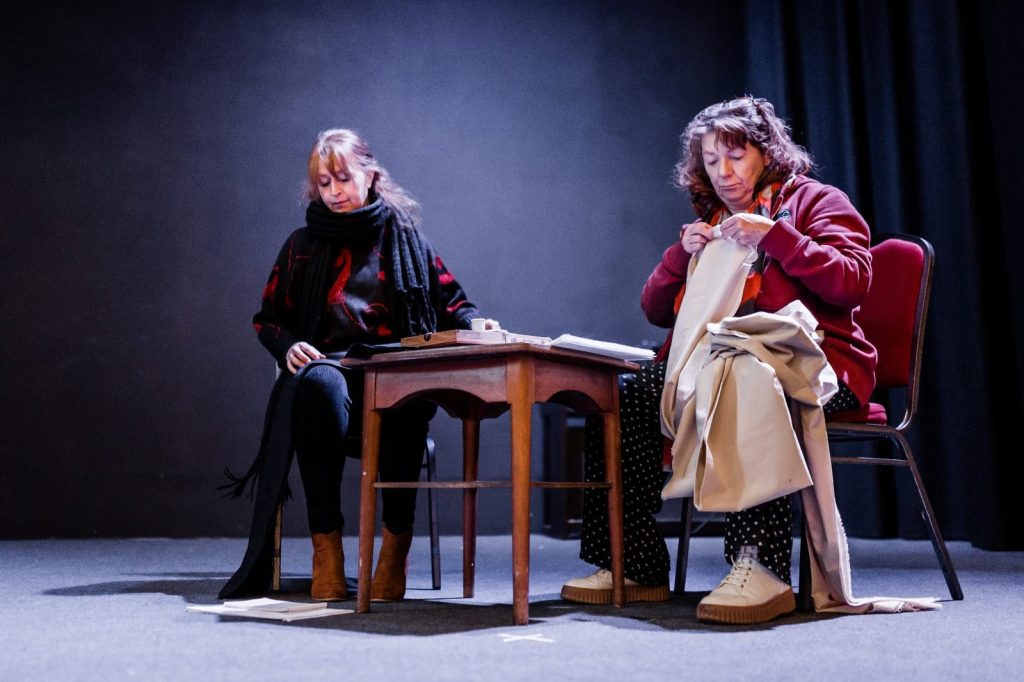
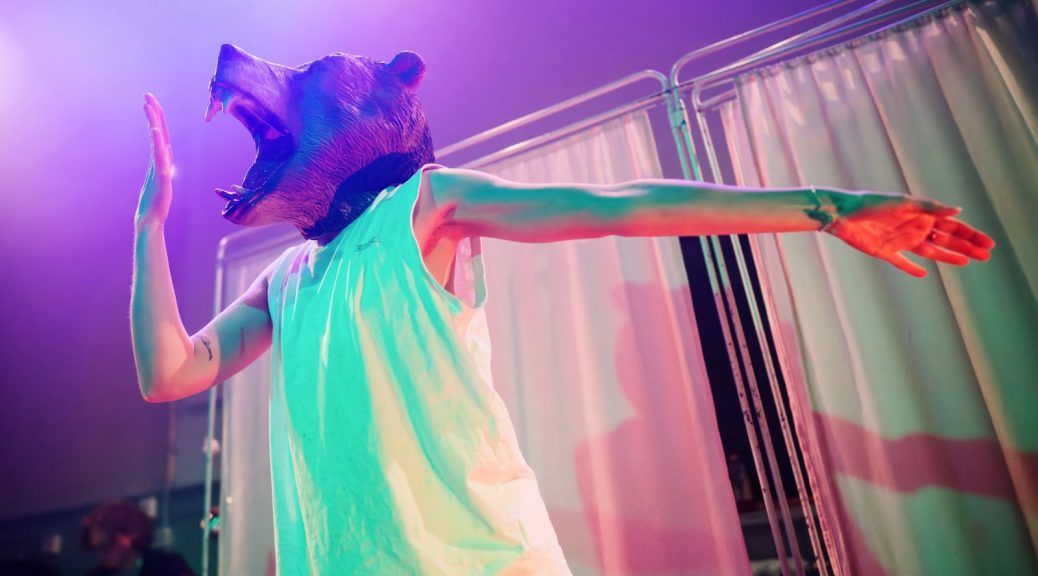
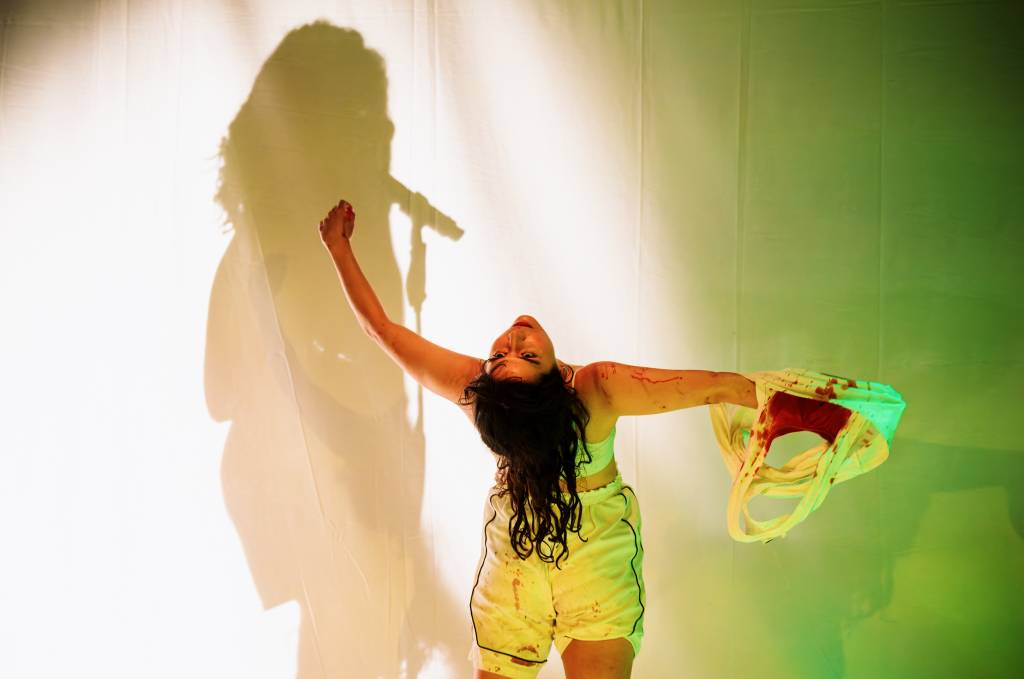
Review The Death & Life of All of Us, Victor Esses, Camden People’s Theatre by Tanica Psalmist

The Death & life of All of Us explores themes of identity, self-judgement, sexuality, acceptance, loss, growth, transformation. Whilst touching on indifferences when born into families with long-standing cultural traditions and morally influenced cultural beliefs that no longer serve us, therefore, battling internal-conflict to rebuild identify through adaptations and changes as we navigate through our destined life path.

From video recordings projected onto three different screens set like a cubicle around the stage to a live sound mixer joined with Victor on the stage, the audience were taken into the mysterious yet curious enchanting world of Victor, who from young wanted to escape from the confinements of his politically correct world where he could feel truly liberated and be honest with himself and his loved ones without feeling guilty as a heterosexual man from both Jewish & Arab descent.

The Death & Life of us All; initiates up close and personal incentives as we dive into his world of trust, love, intimacy, family secrecy and privacy. Victor’s preserved footage documented the openly loving yet securely enclosed connection he shared with his self-disciplined great aunt Marcella, the more she shared during the short clips about her past affiliations, left you hungry and eager to know and hear more! Due to the highlights of political powers intervening due to her past love interests working in elite jobs, and harassment/stalking from officials within governmental affairs and more – we could only sympathise and emotionally connect with her to gain sufficient support & protection during the rest of her chosen secluded life.

This play explores the unknown emotional turbulences we can all experience as a result of what we are made to identify as due to cultural/traditional beliefs and upbringing, confrontation of self as we mature due to no longer wanting to identify or follow what we have been indoctrinated or conditioned into from birth. Death and life serves as a metaphor where we are consciously taken through the maze of our own lives to acknowledge the concept of our past, present and future to simultaneously remind us that time is not linear and that the past is constantly flowing into now back & fourth.

Towards the end of the play we see how Victor gets lost in dance and rhythm as the music genres Dub mixed with Lebanese traditional sounds combine. The ambience increased as Victor’s dancing became exaggerated, eventually wearing him out. How our energy can slowly deflate as we reveal our heart, release personal stories, unleash nuances and strive to maintain the newly found sequences to our much preferred routine, structure and lifestyle choices with or without our family approval.

The melody of this play is packed with Victor’s humour, sarcasm and wittiness as you simultaneously ponder the duality and the significance of death & life.

Review Come From Away, Wales Millennium Centre by Bethan England

 out of 5 stars (5 / 5)

Come From Away has been called one of the ‘best new musicals of the century,’ which is high praise indeed when you consider the sheer choice and variation of shows and, in particular, musicals, when you consider attending the theatre. This assessment, however, is truly well deserved, proven by the instantaneous standing ovation at the end of the opening night of Come From Away at the Millennium Centre.

The plot focuses on the true-life story of the town of Gander. Once the biggest airport in the world, Gander International was at the forefront of aviation, perfectly placed for planes to land to refuel during their transatlantic flights. Since those glory days, however, there’s talk of tearing down the airport as planes can now make their journeys on a single tank. However, the peaceful lives of the residents of Gander are shattered as 38 planes were diverted there due to the airspace being closed after the catastrophic terrorist attack in America on 9/11.

Starting with the staging; there is no safety curtain as we take our seats; the stage is set simply with chairs and tables. The band is on stage alongside the action. The back wall is simple, but projections create all the atmosphere we need; starting with clouds and transitioning as the show progresses to show us various locations and occurrences, such as small lights as the residents gaze up at the numerous planes landing. The simple set means that nothing detracts from the stories being told here. The chairs are moved around to create Tim Hortons where the Mayor sips a Pepsi and ‘gets the lay of the land,’ the rows in the planes or the seats in the school buses that escort the fearful temporary residents of Gander to their impromptu homes on the island. Lighting is incredible, with several moving tableaus perfectly highlighted by the creative placement and tones.

The music is uplifting, joyous and the hooks are infectious. The musicians being on stage and sometimes involved in the action is the perfect way to ensure that the music is well and truly integral to the piece. The pace is non-stop, the harmonies are perfectly placed, the voices are excellent and so heartfelt. Particular favourites of mine were ‘Welcome to the Rock’ which is a rousing opener, ‘Prayer’ which shows the diversity of the passengers on those flights so perfectly, ‘Me and the Sky’ which is Beverley Bass’ homage to her journey to becoming a pilot, and the hilarious ‘Screech In.’

The cast was wonderful and it’s hard to pick out one member as this is such an ensemble piece where every actor is equally as important. However, special mention must be made to Kirsty Malpass, the resident co-director and choreographer, who stepped in to play ‘Bonnie and Others.’ It really shows the importance of understudies, covers, and swings and epitomises that the ‘show must go on.’ Every cast member play multiple parts; the residents of Gander initially, then numerous, various passengers and the pilots and crew on those 38 flights. Each transition is seamless. You are never in doubt of which character is speaking; the change in accents is impressive, as is the Brechtian technique of adding a hat, jacket, or similar, to show that we are now seeing the story of a new character.

What Come From Away does so well is these stories. You feel for every single person delivering their tales. The real characters are presented with sensitivity and truth. The fictional ones too, show what those people went through being so far from home, maybe alone, scared, wondering about their loved ones and appalled at the visions unfolding before them on television screens. It does not shy from showing us the difficult things; the fear and suspicion of the Muslim Egyptian passenger, the difficulty with understanding one another’s language and culture, the overcoming of those issues and coming together because, when it comes down to it, we all ‘come from away’ and all deserve to feel loved, for our stories to be heard, for someone to hold our hands when we feel isolated.

So, is Come From Away truly one of the ‘best new musicals of the century’? It more than earns this accolade, in every note, every story portrayed, the way that we can still learn from it, even over 20 years after that terrorist attack. If anything, we need this musical more than ever, as it shows us that even as we stand ‘on the edge of a moment,’ perhaps in need or feeling alone, there is someone ready to make you feel like you belong, whether that is one person, or a whole community.

Review Things I Know To Be True, A48 Theatre Company, Llanover Hall Arts Centre by Peter Gaskell

Andrew Bovell is a world renowned Australian playwright with whose work A48 Theatre Company founder Ray Thomas became familiar when he toured a collaborative Welsh and Australian production of “Do Not Go Gentle”, starting at Chapter Arts Centre and finishing at The Drill Hall Theatre in New South Wales in 2017.

After the success of “When The Rain Stops Falling” at Chapter in 2022, A48 Theatre Company chose “Things I Know To Be True”, another of Andrew Bovell’s plays, for the current production which runs from March 25-30th at Llanover hall arts centre, Romilly Road, Cardiff .

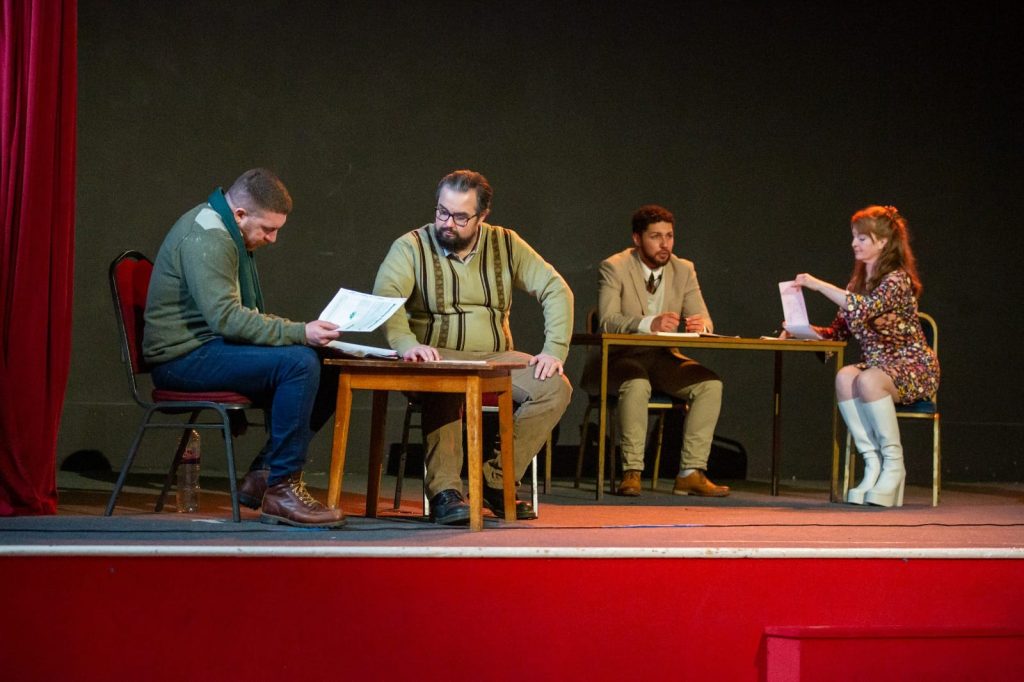
The play is bookended by night-time scenes at the Price family home when the ringing living-room phone wakes up the household. There is speculation among the younger members of the family before father Bob lifts the receiver and answers ‘hello’. Before we know the significance of the call which comes at the close, action then proceeds to the front of the stage where the youngest, Rosie, gives the first monologue.

If you were thinking that the play’s title suggested a catalogue of didactic rants according to one or other characters, it wasn’t going to be this one. Rosie is telling us how she went travelling to discover love and life. Thinking she had got a result, we are shocked to hear the outcome of her encounter with Spanish heart-throb Immanuel in Berlin. When the scene cuts to her arrival at the family home to find solace, we are then diverted from the expectation she will receive a sympathetic hearing as her family appear and pepper us with quick-fire banter relating to past behaviours, some fond memories, others more resentful (e.g “I spend good cash on buying you a coffee-machine, Dad, but you never use it!”) that all but side-lines poor Rosie whose tale of loss and romantic disappointment is ignored.

The play explores the tensions created in the family relationships as each of Fran and Bob’s offspring reveal the singular deep and personal crises in their young adult lives. Bob is a prematurely retired car-worker while Fran still works as a hospital nurse, both have always been scrupulous about raising their children well and morally, to be able to leave the nest one day to create careers and family life of their own. The drama lies in how the revelations put a strain on the prospect of a happy dotage for the parents as their children reach adulthood. Such revelations force Fran to admit she has put small portions of her earnings aside in case she felt she had to leave Bob, to his consternation, while Bob has retired to grow his roses but finds it difficult to spent all his hours usefully satisfying as he had hoped.

The set is simple, tables and chairs behind the house-frame viewed from the garden area with a display of Bob’s beloved roses. Much is made of the tree beyond the fourth wall to illustrate character. Against it Fran beats her head out of frustration; Mark climbs it to observe the life around him, detached as he is from any sense of ease with norms of family and society. His brother Ben skits into view and out again to establish himself as a character evading the focus of others as he masquerades behind a facade of being as well-heeled as the privileged crowd he is trying to impress at work. Status and the value of wealth are hereby explored to a satisfying extent. Financial settlement at career end often results in a paltry amount considering the years of service someone like Fran has given.

When Ben confesses to mounting debt due to false accounting practices to fund his lifestyle, one parent is predictably outraged, the other unpredictably pragmatic. Ben’s brother Mark has decided he identifies as a woman and has booked gender-change surgery. Their sister Pip, a successful corporate career woman, is giving up the intimate care of her children in favour of leaving her husband for another man (also married). All these crises of the young adults throw the stability and hopeful expectations of their unprepared conventional parents into disarray.

The outcome is not surprising but still comes as a shock. Rosie’s second monologue is an inspired piece. Bovell writes it as if Rosie is imagining the thoughts in the overburdened mind of her mother as she leaves her hospital shift in the early morning hours for the last time, not for the first time her absorption in the case of a patient she has cared for being pertinent to her fate. The finale concludes with a wonderful silent episode where the children are dressing their father when all had been in nightwear moments earlier. Mark is now Mia and convincingly dressed and styled as such.

If the intensity of family dynamics is appropriately tense, the script is leavened with humour for some relief. The actors were admirably up to the challenges of some long speeches and fast repartee, if in monologue their voices dropped on occasion, making it hard to hear. A satisfying if unsettling drama, “Things I Know To Be True” is well produced in set and action, and recommended viewing if you can get tickets via a48theatrecompany.com

THEN THERE WERE NONE, NEW THEATRE, CARDIFF BY JANE BISSETT

 out of 5 stars (4 / 5)

From the pen of the Queen of Crime, Mrs Agatha Christie, Then There Were None, was written in 1939 and has become the best-selling crime novel of all time. In this novel, as well as others, Christie immortalises the county of her birth by allowing the Devon landscapes and coastlines to inspire her.

Playing to a full house, the play is a cautionary tale, a murder mystery and a horror. It is the story of what happens to those who evade justice and believe themselves to be above the law and beyond reproach.

Lured to an Island off the Devon coast, a group of ten seemingly unconnected individuals find themselves the terrorised victims of an undetected murderer. They cannot leave the island as the weather has closed in and there are no available communications with the mainland, until the supply boat returns.

Will anyone be alive to tell what has transpired? Or as the poem about the Ten little soldiers suggests each of them, one by one, will meet a grizzly death.

Expertly cast the characters themselves were believable with the exception of Miss Emily Brent’s rather distracting knitting. Clearly not a knitter, rather than occupying her hands, it manifested as agitated fumbling and I just wanted her to put the needles back into the bag. This was a shame as Katy Stephens’ portrayal of Brent was spot on.

I also enjoyed Lucy Tregear as Rogers, not what I was expecting but brilliant.

For those who know the story well this production was a joyful combination of inspired set design and direction, teamed with sound and lighting.

The set was confined to one area of the mansion and the approach. This was limiting as we didn’t really get the full sense of mounting fear as the guests tried to discover, what was actually happening, how they could escape and who they were escaping from.

Sadly, there was not a full enough understanding of the back stories (flashbacks) of the ten and it made the story telling, as a whole, a little fragmented.

The play concluded with one of the most dramatic endings I have seen and I knew what was coming.

Then There Were None plays at the New Theatre until Saturday 23 March.

Review, Mr Jones by Liam Holmes, Theatr Soar, Merthyr Tydfil by Bethan England

 out of 5 stars (4 / 5)

A pair of muddy trainers, a tan rucksack and jumper are the only items that sit upon the stage of Theatr Soar. The atmosphere was set by soaring Welsh anthems such as Green Green Grass of Home and Yma O Hyd filling the eaves of the converted chapel.

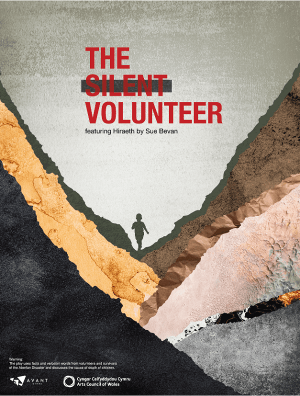
Liam Holmes as Stephen Jones, enters, in a square of light. His natural cadence and natural ability mean he instantly won over the audience’s hearts. Asking where his rugby boots are to an off stage unknown person, the moments of silence and glances towards this unknown character are poignant and we are immediately aware of something unspoken. The entreaty to ‘talk about it,’ leading to the awkward admittance of this ‘being a bit weird’ sets the scene perfectly for this moving piece about the pain of the Aberfan Disaster for families of the village and that inability to fully express the pain and trauma of that traumatic event.

The simple stage and lighting transports us from house in Aberfan to the waterlogged rugby pitch where Stephen is practising his kicks after his winning penalty against Dowlais in the semi-finals. The stage is used ably, the space filled by Liam and Tanwen Stokes as Angharad. The ‘in the round’ space allows Liam and Tanwen to fully immerse us in the story; Angharad watching from the audience, berating Stephen for being on the pitch rather than at home with dad or entertaining his younger brother, Dafydd. Throughout the play the space is used to great effect, bringing the audience truly into the action.

The sound is also excellent. From the soaring sounds of the crowd as Stephen steps up to take his winning kick, the rumbling of the ‘thunder’ that turns out to be the starting of the waste coal sliding down the mountainside, to the haunting spoken records of Dafydd and the parents of the lost children from the school. In particular, I enjoyed the use of Owen Sheers’ ‘The Green Hollow,’ echoing throughout the space and reminding us of the very human loss of this disaster.

I especially enjoyed the use of Welsh phrases throughout, which were used particularly evocatively during the description of the coal duff slipping down the side of the mountain. Hearing the Welsh then echoed with the English, or vice versa ensured that the script was still accessible to all. I would have liked to hear even more as I thought that this was an excellent device used in an innovative way by the writer.

The pair are ably directed by Michael Neri, clearly they have been told to not be afraid of weighted silences which leave the audience breathlessly waiting for the next line. The humour peppered throughout captures the essence of the valleys village, that easy natured way of speaking to each other which is balanced with what is not said, the glances unseen and words unspoken. With barely any props or set, we are transported between the different scenes of the action; the pitch, the mountain top, the bustling hospital of St Tydfil’s and the dark home of Stephen, Dad and Gramps.

The final scenes perfectly counterbalance the earlier humour and playfulness between Stephen Angharad. There wasn’t a dry eye in the house as Liam delivers the final lines to that unknown voice, his dad, as the two desperately struggle to come to terms with what they have lost. The final cry from Stephen of ‘I’m still here Dad!’ as the lights fade brings the story to its heartbreaking conclusion, leading to a well deserved standing ovation.

The piece was particularly poignant in Merthyr Tydfil but the themes of loss, family, friendship and unspoken love will be met with universal acclaim no matter where this is viewed. I highly recommend Mr Jones, but do make sure you take those tissues along with you!

“It’s not the reports that are going to change the world; it’s taking a plate of food to your neighbour and listening to music together.”

In this short article Priscilla Addey-Blankson, Race Council Cymru, Windrush Cymru Elders, Project Officer gives an overview of the collaborative work of Race Council Cymru and Royal Welsh College of Music and Drama to connect communities through the arts.

Hi I am Priscilla, I work for Race Council Cymru and hold the role of Windrush Cymru Elders Project Officer. I am originally from Ghana and I have dedicated the past year and a half to working closely with the Windrush Elders community.

In my capacity, I act as the primary point of contact for the RCC, Windrush Elders and their associated projects. My responsibilities extend to planning and coordinating various events and activities for the Elders, actively collaborating with them to develop, promote, and implement enriching projects. I am deeply committed to supporting and enhancing the well-being of the Windrush Elders community through my role.

The Race Council Windrush, Cymru Elders meet every Thursday at RWCMD, the group often have speakers and share information about activity in their community. The group recently had a visit from Anna Mudeka who played the role of of legendary South African singer and activist Miriam Makeba in Mama Afrika which was performed in College recently.

Anna shared the compelling narrative of her life journey, delving into her musical pursuits and cultural heritage. She captivated everyone with the introduction of the Nyunga-nyunga, a traditional musical instrument, explaining its details and how it works, gladly fielding the Elders’ inquiries.

Ms. Mudeka shared her personal challenges, drawing inspiration from her icon, Miriam Makeba, and emphasizing the profound impact Makeba had on her own musical journey.

The session unfolded with Anna Mudeka’s enchanting Swahili music, actively involving the elders in the Hakuna Matata song. The interactive nature of the performance allowed The Elders to proudly shout out their countries of origin.

In a delightful moment, Anna Mudeka introduced The Elders to the distinctive click sounds used in her songs, offering a brief tutorial and incorporating it into her performance. The session further featured a recitation of poignant poems by Nelson Mandela and Miriam Makeba, concluding with the lively Dance Pata-Pata music that had The Elders joyfully swaying.

Anna said of the activity “I really enjoyed meeting The Elders and I knew straight away that this would be a learning experience for me too. I loved listening to them talk about their love for Wales. It was a joy to share some time with them all.”

Anna Mudeka centre and the RCC, Windrush Cymru Elders

The entire experience evoked nostalgic reflections, with Elders sharing amusing childhood stories. A particularly resonant quote emerged from the session: “It’s not the reports that are going to change the world; it’s taking a plate of food to your neighbour and listening to music together.”

You can find out more about the Race Council Cymru, Windrush Cymru Elders here

You can find out more about the work of the Communities Engagement Partner at RWCMD here

Review ‘Wife of Cyncoed’, Sherman Theatre by Katie Berrisford

Image Mark Douet

This was an absolute celebration of so many aspects of life that can be easily missed; self-love (in all manners of the word), companionship and reconnection. This one woman show gracefully took us through a myriad of scenes, drawing us into Jane’s life and leaving me on the edge of my seat. Carrying a multitude of character can be very tricky, and indeed could have at times been slightly clearer, but Vivien Parry’s performance was a triumph that garnered a standing ovation at the end.

April Dalton’s set at first looked incredibly simple but tuned out to be perfect- a little dull at first but hiding a lot of light and fun. The carpet was the perfect background for Jane’s transformational experiences and was elevated by Katy Morison’s lighting and Sam Jones’ sound designs, transporting us from Roath Park to London to dancing naked in Caerleon.

Hannah Noone’s direction was understated but allowed Parry’s sensuality to shine and roam around the whole stage space.
To me, the show felt like it would hit every audience member differently. There was a lot I could relate to, but a lot that would hit differently depending on the time of life you saw it.

One of the main messages that I took away from Matt Hartley’s script was that it’s never too late. Never too late to find yourself, have those conversations that are needed or to become a better person. It was a subtle story of redemption for all the characters, and I left wishing every character we met the best as they carry on their life well after we’ve left the auditorium.

Sherman Theatre is known for its young plays and dynamic work, so seeing a story of an older woman was a breath of fresh air, I just hope that younger audiences aren’t put off from attending as they would be missing out. It runs at The Studio until March 23rd with a range of prices for all ages.

REVIEW: THE WIFE OF CYNCOED, SHERMAN THEATRE, CARDIFF BY BARBARA MICHAELS

Image Mark Douet

Writer: Matt Hartley

Director: Hannah Noone

Designer April Dalton

Composer and Sound Designer Sam Jones

 out of 5 stars (4 / 5)

Reviewing a new play – and, furthermore, a one-woman play – is guaranteed to send a frisson of excitement down the spine of even the most seasoned of reviewers. The Wife of Cyncoed does that in spades, an added bonus being that the monologue is played out by none other than Vivien Parry – and what a tour de force it is for this Welsh actress!

On stage non-stop in a monologue that lasts for one and a half hours with no interval, Parry – who performed in a preview on her 60th birthday – gives it all she has got from start to finish. Taking place in the upmarket Cardiff suburb of Cyncoed and the atmospheric Lakeside area, this – the first production of the season for the Sherman – has a make-or-break quality about it, in reference to both the plotline and the setting.

Fear you not – this monologue from the pen of writer Matt Hartley could be set pretty well anywhere. The story – that of Jayne, a newly divorced woman whose life takes an unexpected turn, offering her an opportunity that she may or may not be brave enough to take – manages to be both entertaining and poignant, a tale of self-discovery, and second chances, of a road that may or may not be taken.

A monologue is a genre that depends not only on the writing but on the delivery (think Alan Bennett’s Talking Heads and the iconic Thora Hird). In Hartley’s monologue, the multi-talented Parry, seen recently in Cabaret in London’s West End and well-known to Welsh audiences for her sterling work with Theatr Clwyd, steps up to the challenge head on. Parry taking command of the stage from her first entry. Not only does she become Jayne but in using different voices with maximum effect changes character to reflect other people in her story, in particular her two grown up children, with whom- to say the least of it – she doesn’t always see eye to eye.

Parry gives a brilliant and empathetic performance, but could do with slowing down her delivery a tad at times in the first hour. Having said that: full marks and more for amazing movement and dance, giving full justice to the underlying message, described by Hartley as “A a howl of rage against how older women are perceived and overlooked.,” and getting under the skin of the character warts and all.  Staging is at a minimum (not even a chair) but Katy Morison’s clever lighting and Sam Jones atmospheric sound track provide this with effect while remaining unobtrusive when necessary.

Could this be one for Edinburgh Fringe? Yes. For Hartley’s monologue – the story of a woman of a certain age with the message that life is for living – could be set anywhere.

Runs until 23rd March 2024 at Sherman Theatre, Cardiff

THE HOUND OF THE BASKERVILLES, THE CRIMES AND COMEDY COMPANY, GWYN HALL, NEATH – A REVIEW BY KEVIN JOHNSON

 out of 5 stars (4 / 5)

A production by the Crime and Comedy Theatre Company created on the 120th anniversary of the story, this is presented as a radio-play live on stage. Starring Colin Baker, Terry Molloy and Dee Sadler, it’s been adapted and directed by Martin Parsons.

One of the most famous cases faced by Sherlock Holmes, it’s actually based on Conan Doyle’s third novel, and sees the detective consulted by Dr Mortimer on behalf of her friend Sir Charles Baskerville, who has just inherited the title after the strange, untimely death of his father. She reveals the dark, centuries old curse on the family and asks for Holmes help to prevent the new heir suffering the same fate as the last.

Maybe it’s the concept, the classic story or even the way the actors and director convey the story, but there is something so warm and old fashioned about this production. A merging of a theatrical play and a radio mystery broadcast, it works as both. In fact, I enjoyed closing my eyes and listening to the sound effects of the countryside, the birds, the animals and even the weather. It gives a much richer atmosphere to the play and adds an extra dimension to the story. Such sounds are not immediately apparent with your eyes open, it really evokes the eeriness of the moor, and brings the story to life. In fact, for people who have loved ones who are blind or partially-sighted, this is an excellent opportunity to see things from their perspective, to share a performance you can both enjoy equally. My late mother lost her sight in old age, I think she would have loved this show.

There’s a vein of humour running through it to relieve the tension, some tongue in cheek, and plenty of in-jokes and references to other stories for Holmes fans, including one of the most famous and chilling lines from the stories: “Mr Holmes, they were the footprints of a gigantic hound.”
The cast of seven are excellent, and a special mention must go to Martin Parsons for the adaptation. Although a Holmes fan I’ve never really cared for this story, but it’s made me reassess my opinion. Go see it, enjoy it, maybe even close your eyes, but remember, whatever you do, don’t try to cross the moor at night….

You can find out more about this production here

Review: The Wizard of Oz, Venue Cymru by Richard Evans

Venue Cymru, Llandudno March 5th – 9th 2024, Wales Millennium Centre, Cardiff July 23-28th and touring

 out of 5 stars (4.5 / 5)

Produced by Michael Harrison and Gavin Karin Productions. By arrangement with the Really Useful Group Limited. Adapted by Andrew Lloyd Weber from the 1939 Motion Picture.  Book by L. Frank Baum

Somewhere over the rainbow… in a land that I heard of once in a lullaby

Why has this film and subsequent musical retained its attraction?  In the preface to his book, L. Frank Baum describes the book as a modernised fairy tale in which the wonderment and joy are retained and the heartaches and nightmares are left out.  It is this fantasy and escapism that has proved enduring, for the same reason, Star Wars has retained its appeal. 

The storyline starts with a petulant Dorothy who feels a common teen angst where she feels neglected.  On running away, she is transported to a fantasy land and seen as a hero for accidentally killing the wicked witch of the east.  She then embarks on a journey to Oz, to see the wizard and gain the means to go home.  She encounters various characters and makes firm friends with the brainless scarecrow, heartless tin man and cowardly lion.  In order to earn her passage home and to find respectively a brain, a heart and some courage, the intrepid four are sent on an arduous task, to bring the broomstick to the wizard of the wicked witch of the west.  

This story is well known and ranks among many peoples favourites so it is a challenge to bring it to the stage once again in a fresh way.  This production adds a bit of glitz and glamour to do this, the props are minimalistic, but the music and video backdrop add plenty of pizazz to proceedings. Some of the visuals are stunning, notably the tornado scene which was highly effective, and in general they are used imaginatively to set the scene and augment the action.  

The cast have a couple of celebrity names, Gary Wilmot gives an assured performance as Professor Marvel and the Wizard while The Vivienne, winner of the first series of Ru Paul’s drag race makes a threatening, devious Wicked Witch of the West.  However, the show is carried by Dorothy, played by Aviva Tulley.  She made ‘Somewhere over the rainbow’, the signature song, her own and was a lively presence throughout.  The supporting cast were energetic and committed, making this a fast paced, joyful experience.  

The musical is faithful to the original story and incorporates most of the favourite songs from the 1939 film as well as some more contemporary numbers from its recent revival.  However, the production lacks the simplicity and innocence of the film, replacing it with the loud score and striking visuals.  Does is loose some of its allure in this process?  

There is plenty of enduring meaning here, not least, your heart, brain and courage are latent inside you.  Dorothy learns to appreciate home when she understands what she is missing.  But it is in joyful escapism that this story comes to life.  It is a colourful interlude from the mundane, gritty reality of life.  This may explain its appeal to marginalised groups in our society but there is enough here for anyone to identify with and makes this a warm, feel good experience that is well worth seeing.