
Photo credit: Julian Guidera/LPO
 (4 / 5)
Beethoven and his impact has never gone away. How do artists today still react and honour him? What came next with the London Philharmonic Orchestra was a UK premiere from Tan Dun: Choral Concerto: Nine.
Originally meant to be heard in 2020, we are finally hearing Dun’s inspiration of Beethoven’s 9th Symphony. This melding of ancient Chinese poetry and the German composer comes a work, which on first glance felt uneven, weightless and a little clichéd. We hear quotes from said symphony, the wise words of Lao Zi, Li Bai amongst others, who unite nature with our humanity. All this should perfectly pair with the words of Schiller in the Beethoven. Written for the same forces as the 9th, this technically in not true as there is from Dun’s demands) a fascinating array of percussion: massive drums, stones, tubular bells and more.
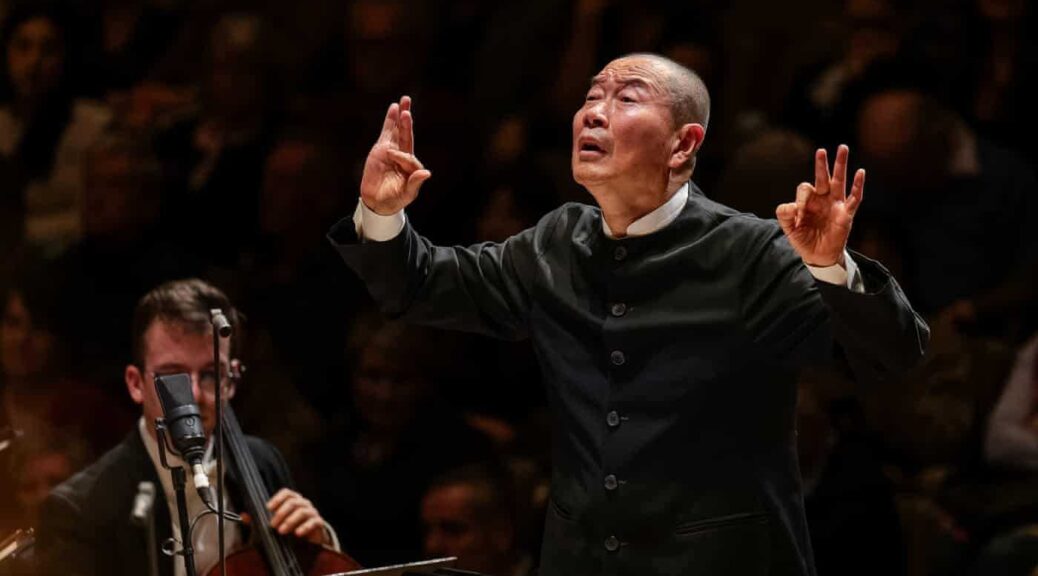
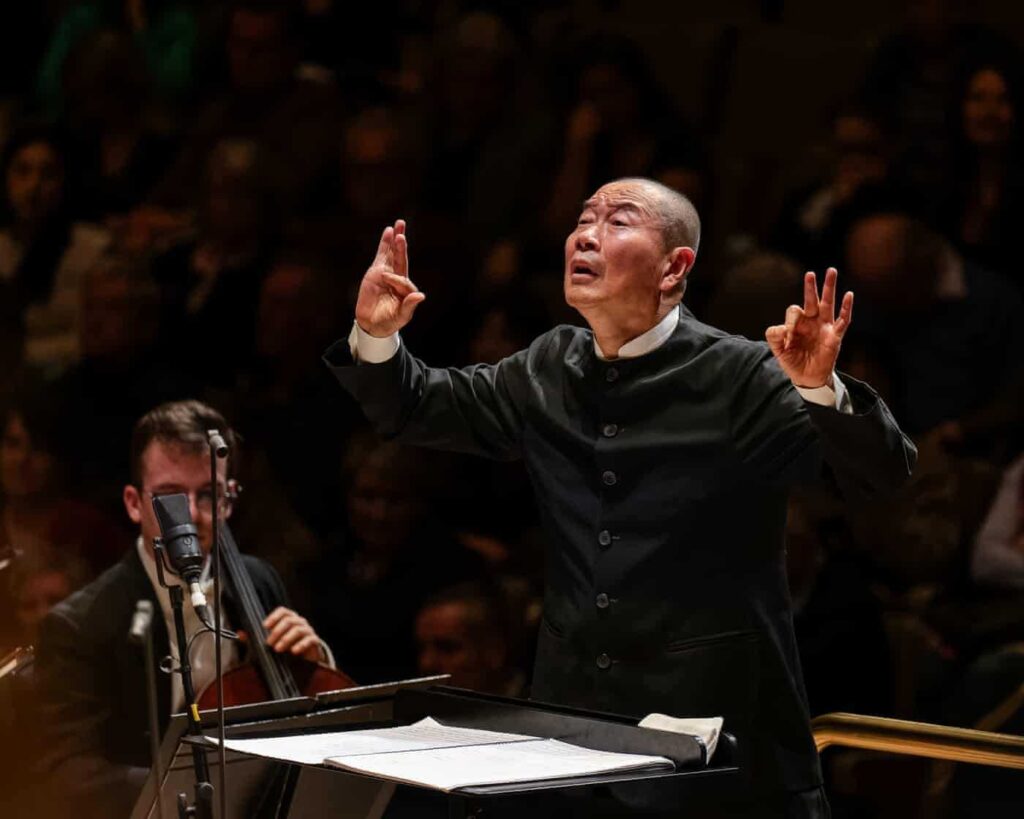
Each movement is dubbed ‘Jiu’ in the Chinese, yet each has it’s own translation in order of: ‘Nine’, ‘Wine’ and ‘Time’. The united forces of the London Philharmonic Choir and London Chinese Philharmonic Choir got to whisper, meow, lip smack and mediate on other transient actions. As the piece went on, it built momentum and had the ideal of a fun, focused work. The image alone, of Dun’s hands in a state of prayer, before conducting his own piece may have been the most profound moment.
It is no bold claim that Beethoven’s 9th Symphony, also dubbed the ‘Choral’, is considered the greatest off all symphonies. The punch in the face of its impact never wains, Dun was back to conduct and still spry in his mature years. Elegantly performed, the LPO not afraid to get down and dirty in moments of raw, heavy metal emotion. The four soloists of Elizabeth Watts, Hongni Wu, John Findon and Matthew Rose (replacing Dingle Yandell) sat below the organ console with the chorus. They felt quite far back, more than I would have liked, such is the awkwardness of having soloists pop into an hour long piece in its last third. All sung graciously, Rose as understudy, opened with a towering directness. The Ode to Joy was soaring and touching, even if I most likely heard it better before. Thorough its thoughtful pleasantries, cascading melodies, brooding tones and jubilant send off, I’m proud to say this is one of my all time favourites.