
 (4 / 5)
Upon closer inspection, this concert looked intriguing. A puny title would see much love for Poland and the Czech Republic, in a dizzying programme. I know little of Grażyna Bacewicz, a female composer from Poland, her Overture from 1943 came the most turbulent time for the continent in the last century. A pressing snare and various actions are heard in the orchestra, less a sense of jubilance and more of the uncertainty of the time.
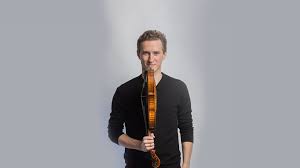
Bohuslav Martinů fled to America during the same conflict and continued to write alarming music of acclaim. With soloist Josef Špaček, his Violin Concerto is interesting for a few reasons. The sense of urgency in his work is lesser held here, the slow middle being less effective. Evocations of his native Czech homeland are frequently produced. The violin of Špaček is resounding, his model looks, firm musicianship and audience pleasing tendencies are what make him a star. He shone in the outer fast movements with finesse. An encore of Dvořák’s Humoresques is typical for the themes, if one piece I simply cannot stand. Yet with this fine violinist, I was easily won over by it.
My Polish plus one recalls Witold Lutosławski living over the road in Warsaw. With an extensive career, one of his last commissions saw one from the Los Angeles Philharmonic in 1993. His 4th Symphony is sparse and compelling work has room to inhale, as the strange orchestration leads with jolting dynamics and timbres. Ever an original voice, there might have been an influence of John Cage upon this brief symphonic work. It commanded the hall and Edward Gardner as conductor had a total grip over all. Myself and my plus one agreed it was the most interesting piece of the night.
A wrap up with Janáček’s Taras Bulba, based on the Gogal’s Cossack novella. Ever the Russian culture vulture, the Czech composer is a true one off. This odd piece has highlights for pipe organ and tubular bells, the strings and percussion also remain strong. Perplexing jumping rhythms aside traditional folk songs and absurdly dramatic attacks are Janáček’s forte. I personally don’t think this is his best work, yet it is a gateway to his brilliance. This inspired concert saw a variety of tones, colours and textures and paid off successfully.