
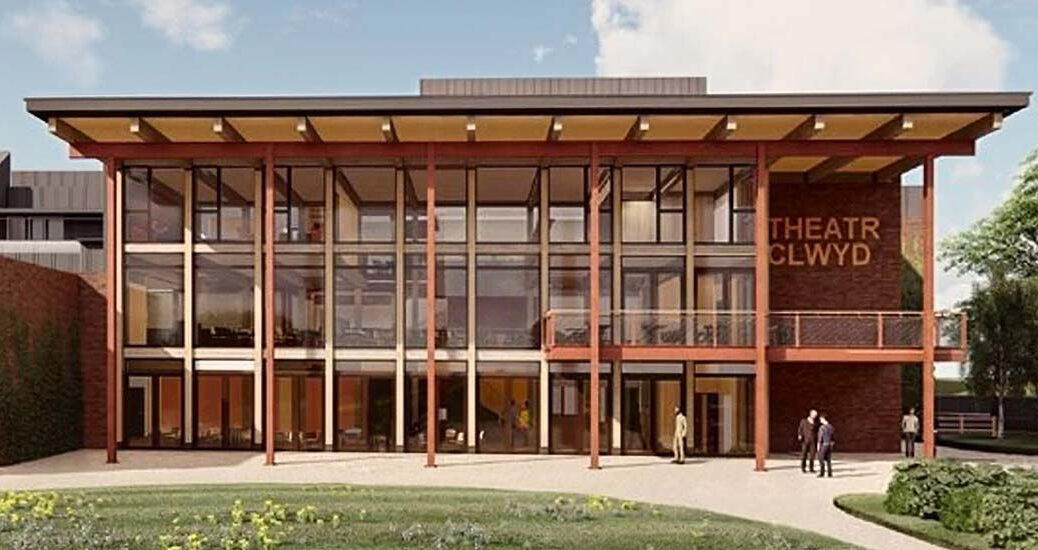
We have missed the steady stream of thoughtful, original productions from Theatr Clwyd while it has undergone a major refit and renovation over the past four years. Whether it is an in-house production where all the costumes and scenery are made on site or from a visiting company the theatre has a long history of distinctive and entertaining performances. It is therefore a real pleasure to witness the reopening of Wales’s largest producing theatre.
It was in 2010 that a survey revealed that the building was reaching the end of its working life. Structurally it was becoming unsound and increasingly expensive to maintain. In 2016, a water pipe bursts flooding the dressing rooms. In 2017, snow fell through the top floor ceiling. The catering facilities needed upgrading, the kitchens not suitable to fuel a restaurant and the conveniences needed improvement. People joked about finding a skeleton in the lift it had taken
so long to reach the top floor.
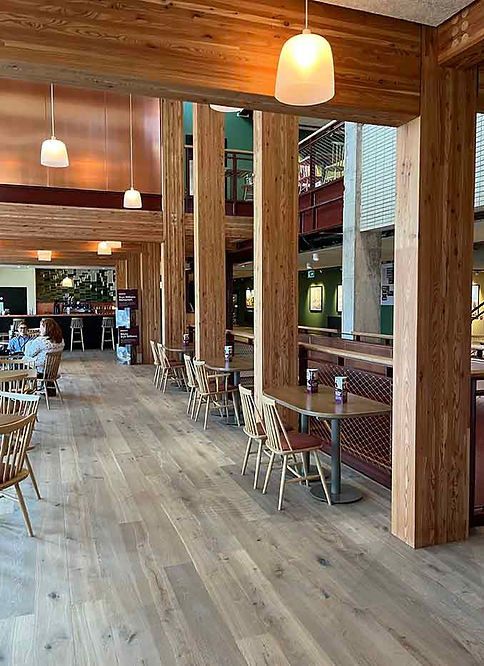
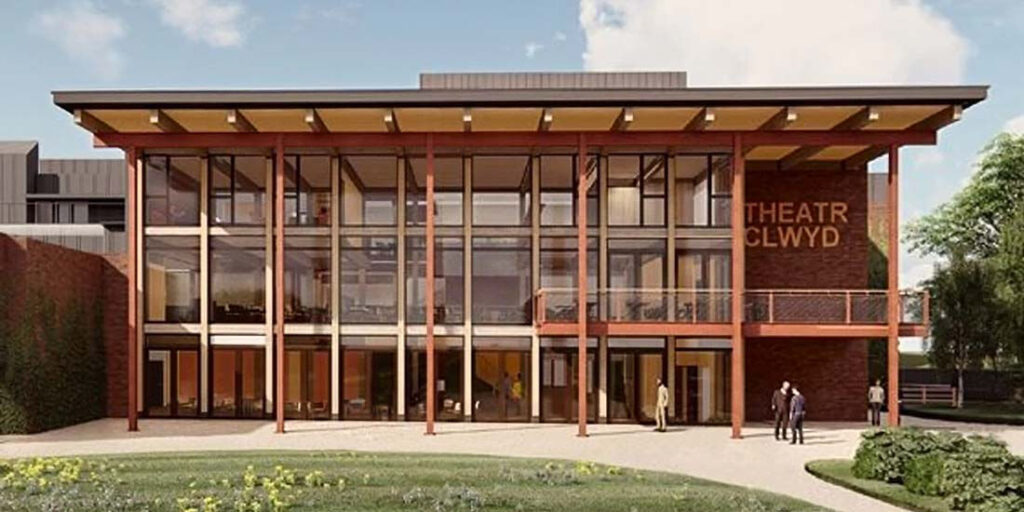
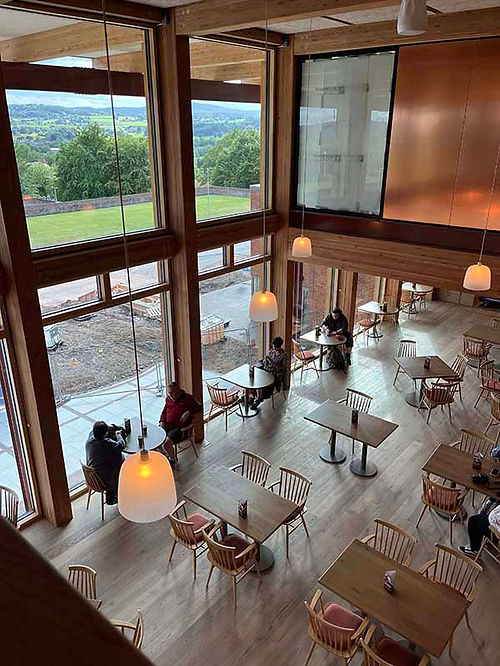
After the appointment of Tamara Harvey as Artistic Director and Liam Ford Evans as Executive Director an ambitious project to save the theatre and renovate it was tabled. The plan sought to update and future proof the building and diversify its range of uses. It would have an extension to the front, a new terrace and restaurant on the first floor with stunning views of the Clwydian Hills, a new double height rehearsal room, renovated production spaces for costumes and sets and updated backstage facilities to attract the highest quality talent. The outdoor performance space would be moved to front of the building.
The theatre has built strong links with the community in recent years and the renovation has sought to facilitate that further. There is a new arts and health suite suitable especially for young families with a play area both in and outside the building as well as a well-being landscaped garden. There is a programme of activities to help support people with health conditions through the arts. The theatre has become a Theatre of Sanctuary supporting those seeking refuge or asylum.
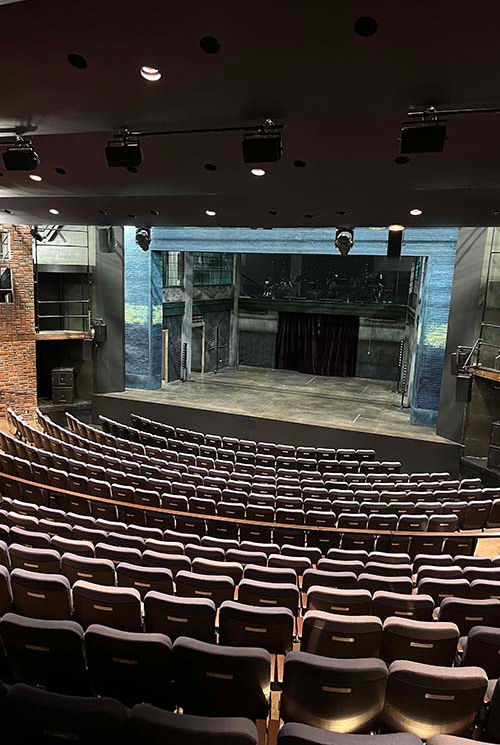
There is attention to detail within the renovation. Despite working with an older building, the place seeks to be environmentally aware, being gas free, harvesting rainwater and working towards carbon neutrality. The shape of the main auditorium has not changed, there is not a bad seat in the house anyway and the acoustics are great, but the seating, staging, orchestra pit and wings are all new. There is a safe viewing space for neurodivergent customers and a dedicated youth hub area where young people can rehearse, learn and play.
These plans could not be achieved without the support of the Welsh Government, Flintshire County Council and the Arts Council of Wales. This still left a daunting sum of £5 million to be raised by the theatre itself. It is a testimony to the affection for the theatre felt locally that it has been able to raise 80% of that figure, but you can still purchase a seat for £100 and name it