
Photo credit: Mark Allen
 (3 / 5)
I’ll handle this review with care. In the first review of the year. A London stop off would see a highly stimulating crossover of cultures at the Barbican. The Theatre of Kiribati and the Britten Sinfonia defied borders and cultural barriers to present Sea Beanth the Skin/Song of the Earth.
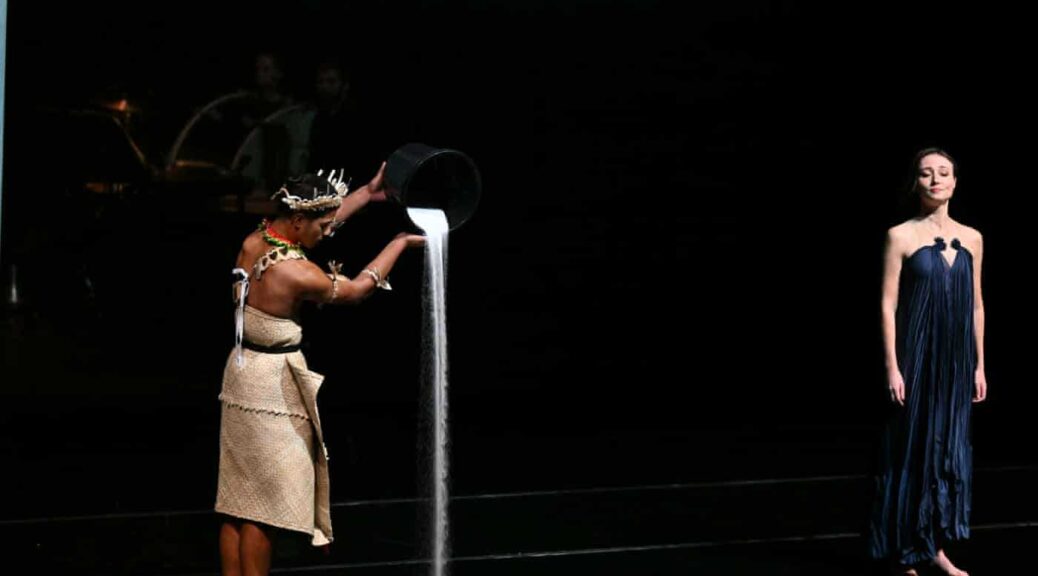
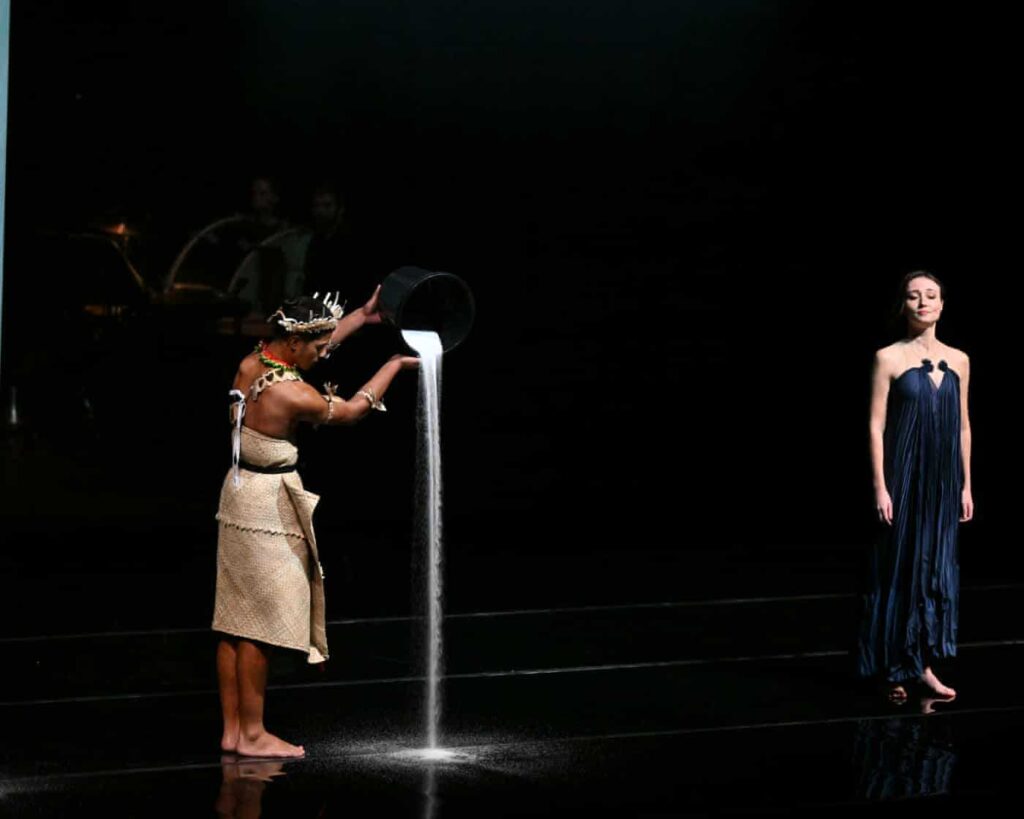
The damnation of climate change has deeply impacted Kiribati, the island country profoundly. Polynesia has been under threat for years and recent political upheaval can only increase further tentions. This hefty cry is mirrored rather bizarrely with Mahler’s The Song of the Earth. The stage is tranfixed into a Samoan dwelling, through the aid of lighting, two pillars and other auras. We would hear this German language song cycle spread out over the near two hours, as chants and dances are interspersed.
Jarring would be one word to use here. Yet to see the spiritual offerings from countries so far away from our own was touching. Bone chilling moments came with shrieks, proclamations, fluttering gesticulation and lucid foot work. We wouldn’t be seeing these remarkable moments were it not for this collaboration, yet this is broadly two seperate events stitched together. The theme of nature never evaded Mahler (the words are settings of Chinese verse), this final masterpiece is often heavy as a standalone.
The songs feel very idle in this context, as if a Euorpean ignorance of the bigger picture. There is a wink to the late Robert Wilson, harsh lighting, slow lingering bodies and such. Lemi Ponifasio as director has chosen depth and atmosphere as the most telling markers and this is effective. The Britten Sinfonia appear muted behind the screen, at the back of the stage in their own lone isle. Conductor Nuno Coelho is strong with the reduced ensemble for these songs. Tenor Sean Panikkar get the drunk and lively numbers, with vocal delivery often sharp and ringing. Mezzo Fleur Barron has the bulk of the narrative songs, her delivery often perfumed and touching, with a command of stage presence. The final Farewell song is one of Mahler’s best moments. Rich in horn, winds, harp, celesta and tam-tam phases, it remains extremely impactful. Barron got the stage alone for herself for most of its demands, she caught the wistful acceptance of it all wonderfully.
Curious how this would end (it also was 30 minutes longer than billed), the circle was closed as The Theatre of Kiribati returned with final spiritual honouring’s with more dance, as the stagey sand poured on the floor earlier began to be spread around due to busy feet. Whale song and dreamy sleep would be the finale, as we gently blacked out and wrapped up.
Whilst flawed in principle, this fascinating show sees our small world can come together and perform, play and prove we are all alike.