
Photo Credit Kirsten McTernan
Rice is water.
It’s a statement that makes sense once you stop asking it to behave. It’s also an excellent way into Meet Fred — a show that invites us to loosen our grip on certainty, definition and systems that insist on being right. Walking into the space to a David Bowie track immediately helps me feel settled. It’s a small act of care that signals this is a room where arrival matters, where bodies and minds are allowed to take their time.
Meet Fred is a quietly assured piece of theatre that reflects Hijinx Theatre’s long-standing commitment to reimagining how learning disability is understood, represented, and lived with on stage.
Rather than negotiating with the disability models, the production rejects that school of thought entirely, exposing how institutional frameworks repeatedly fail the very people they claim to support.
At its heart, the show is about identity — how we find out who we are, and how others decide who we should be. Fred reminds us that we can be more than one thing simultaneously.
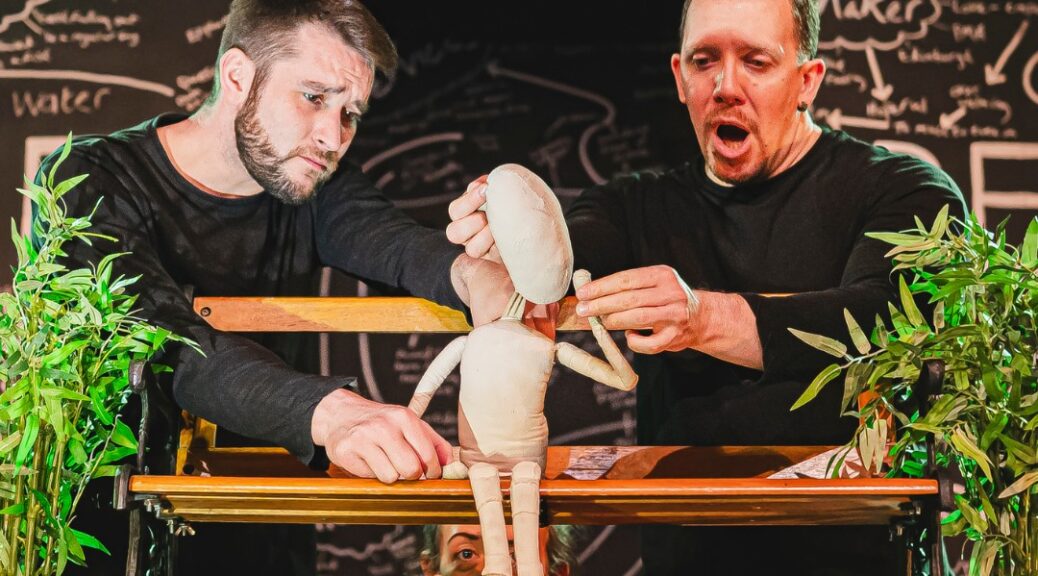
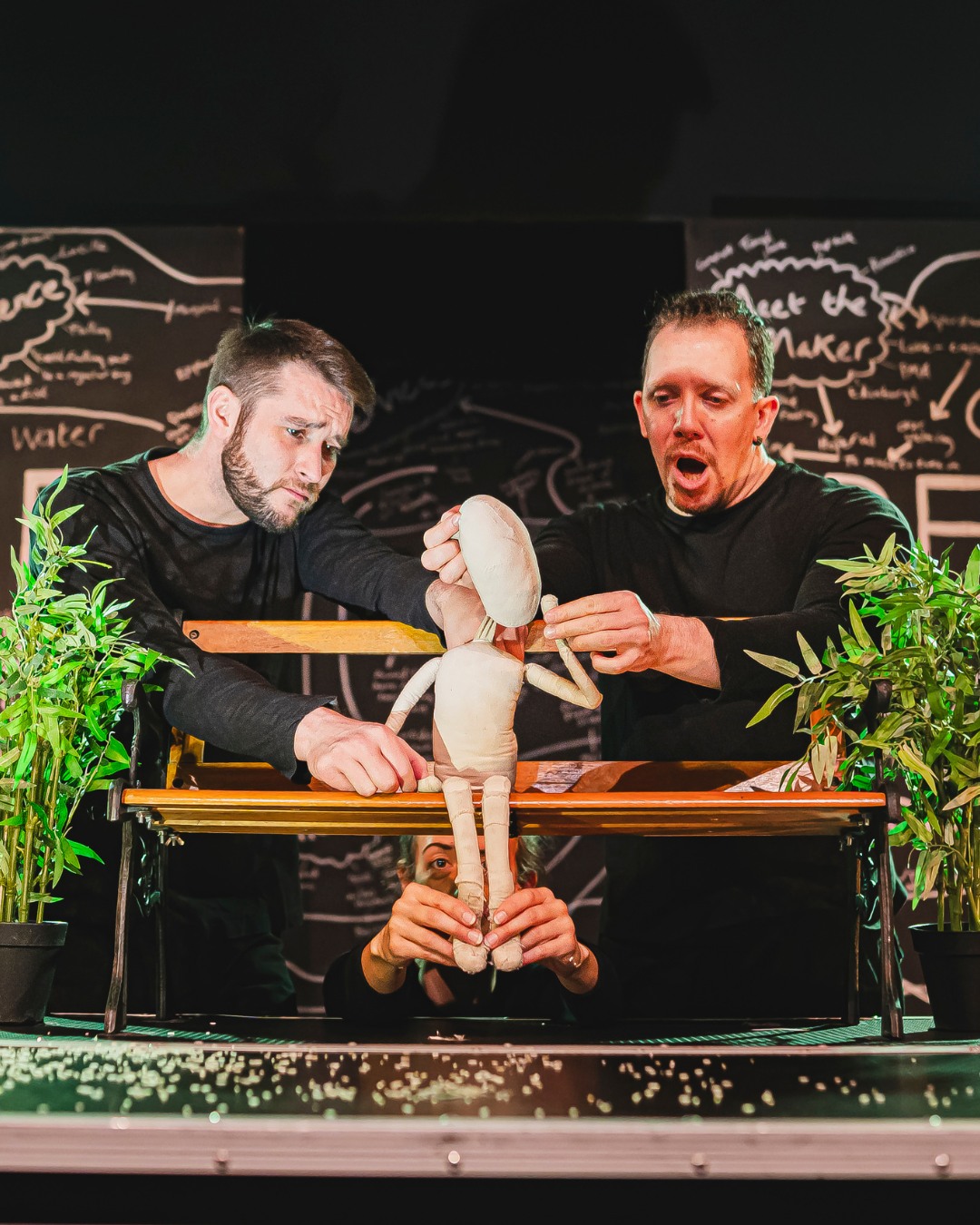
He is a puppet, (who f*****g loathes the Muppets and don’t get him started about children) He is also sensitive and kind (his attempts to compliment are legendary), foul-mouthed and funny, fearful of change and incandescent with anger at systems that do not work for him. His fury, particularly when directed at the DWP — reimagined as the Department of Work and Puppets — lands with sharp humour while pointing clearly to institutional failure rather than individual deficit.
Structure becomes a form of care. The board outlining each plot point serves as a reminder of what is to come — reassuring, steady, and revealing how much comfort there can be in knowing what happens next. Routine here is not mocked or overcome; it is respected. Access is not added on but fully integrated. The interpreter is woven into the show, moving through the space and responding to the cast in real time.
Responding to subtitles is strange at first — a productive strangeness — reminding us that genuine integration requires adjustment from everyone, to feel at home having 3 languages available simultaneously, not just those most often asked to adapt.
The use of music carry cases is remarkably simple and yet transformative. As they move, the space reshapes itself, demonstrating how environments are continually constructed — and how small shifts can radically change experience.
Each performer is given moments of focus, paying homage to the collective labour and care that animates the piece. I found myself noticing how white the room and the stage were.
It didn’t undo the care or intelligence of the work, but it did linger — a reminder that access and representation are not the same thing, and that some stories are still easier to tell than others. Those moments on stage hold humour, tenderness, and fury — particularly the anger that comes when a support system is removed or withdrawn. This rage is not softened or made palatable; it is held as a justified response to systemic neglect. Silence is one of the production’s most powerful tools. Here, silence feels safe, not abandoning. It slows time, holds the space, and allows us to root for Fred without explanation. Even as a faceless bunraku-style puppet, he feels profoundly human — shaped by attention, care and collective effort.
For those familiar with Housemates, Meet Fred feels like a continuation of Hijinx Theatre’s essential work. It does not ask for a better world — it demonstrates one, and trusts the audience to recognise it.
Meet Fred left me thinking about how often we celebrate access without interrogating who that access is currently working for.
The production models care, patience and integration with clarity and confidence, yet the lingering whiteness of the space suggests that inclusion is never a finished task — even within work that resists dominant systems. This doesn’t diminish the power of the piece. If anything, it sharpens its relevance.
By rejecting institutional logic around disability, Meet Fred opens the door to further questions about race, visibility and whose bodies are most often permitted to take up space — gently, slowly, and without having to explain themselves. Like the show itself, this reflection isn’t a demand. It’s an invitation: to notice, to stay with the discomfort, and to imagine how care might expand if we keep asking who is still missing.
You can find our more about the production and book tickets for the current tour at the link here