
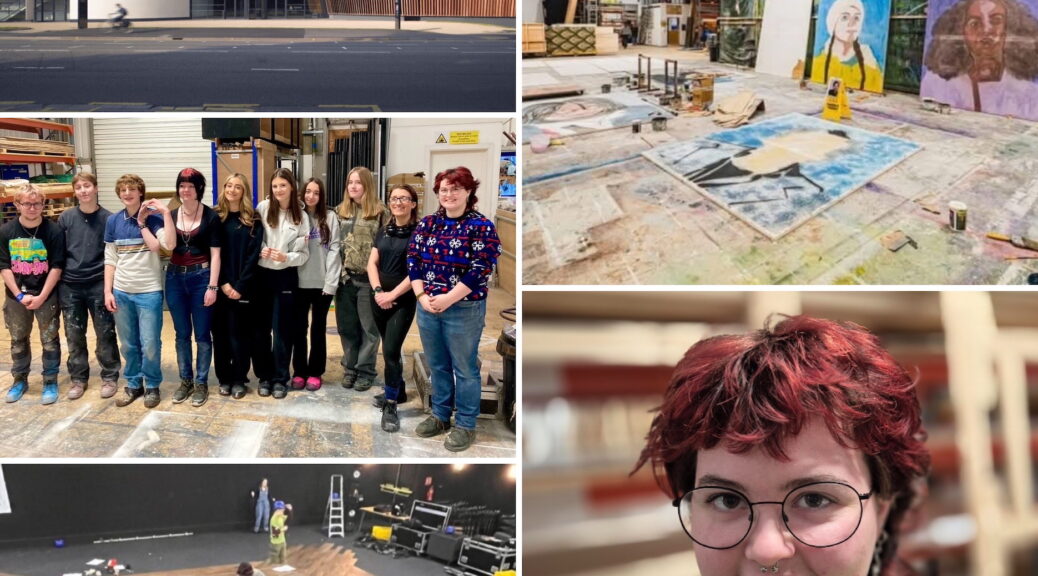
Royal Welsh College of Music & Drama, BA (Hons) Design for Performance, student, Bea Massey studied at Radyr Comprehensive School, Cardiff. She recently arranged with the school teaching staff, for Radyr pupils to attend the RWCMD workshops in Llanishen for an exciting hands on workshop to give an insight into the types of course of study at college. In this interview Bea gives us an overview of this activity.
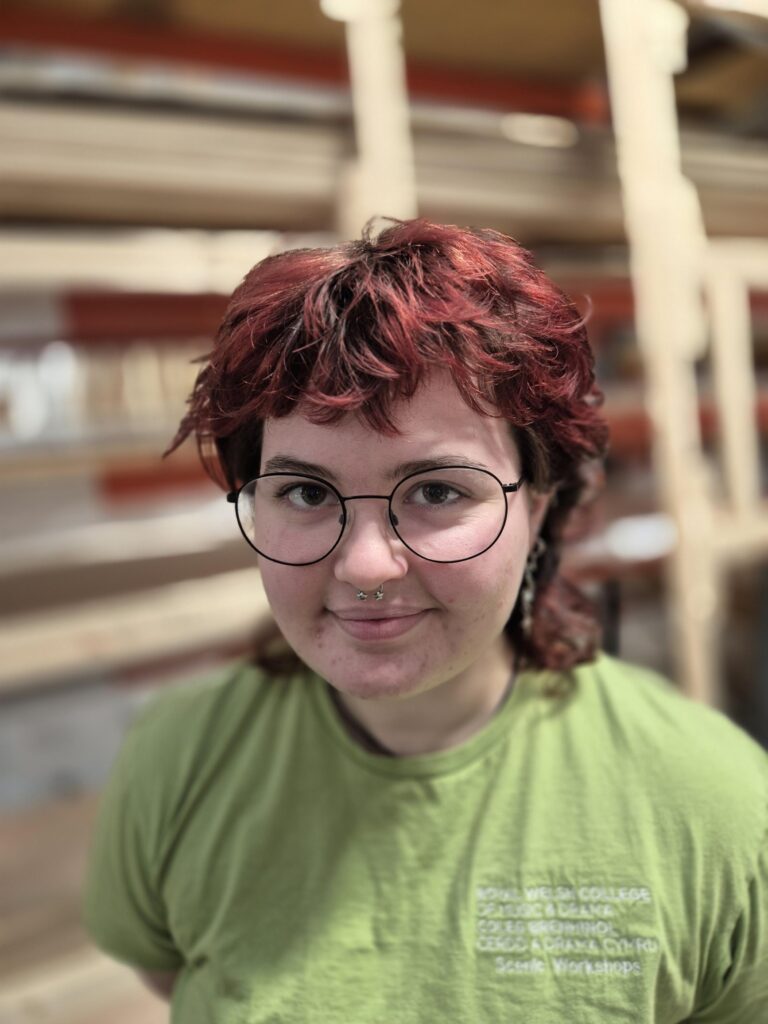
Hi Bea, you are currently studying Foundation Scenic Construction on the Design for Performance degree at RWCMD — what first sparked your interest in scenic construction and working behind the scenes for live performance?
After leaving 6th form at Radyr Comprehensive school I went straight into a Foundation Degree in Scenic Construction at Royal Welsh College of Music and Drama. I graduated that two-year course in the summer, and I am now completing the optional 3rd year which allows me to graduate with a full BA degree qualification in Design for Performance
Credit Kirsten McTernan
I have always loved the theatre. Even from a young age, my mum and I would go to see plays, ballets, operas, and musicals whenever we could, which led me to take drama as a GCSE at Radyr Comp. I never really liked to be on stage though; I was more interested in what happened behind the scenes. At my first high school I joined the Drama club being a stagehand, and when I was doing the practical element of my drama GCSE, I opted to do the lighting for my group instead of acting. I was one of the only students to ever do this at Radyr, but I was so happy when they allowed it and encouraged me to explore this option more.
When it came time to think about universities, I hated the thought of doing an academically centred course, I wanted to work with my hands with a more practical course. I had some thoughts of doing an apprenticeship with the construction company my dad worked for, but then Screen Alliance Wales (SAW) came to give a presentation, and they talked about all of the careers you could have in film, TV or theatre and this really appealed to me.

I started looking into courses that did theatre lighting, as that was the only thing I had any experience in, and I found an Open Day at RWCMD for stage management and scenic construction. I went and immediately fell in love with the vibe of the college. I saw the theatre spaces and the sets they had set up but then I went to the Llanishen workshop, and I knew I HAD to get onto the scenic construction course!
Credit Kirsten McTernan
You have arranged for students and teaching staff from your old school, Radyr Comprehensive to visit the RWCMD workshop. What inspired you to create this opportunity?
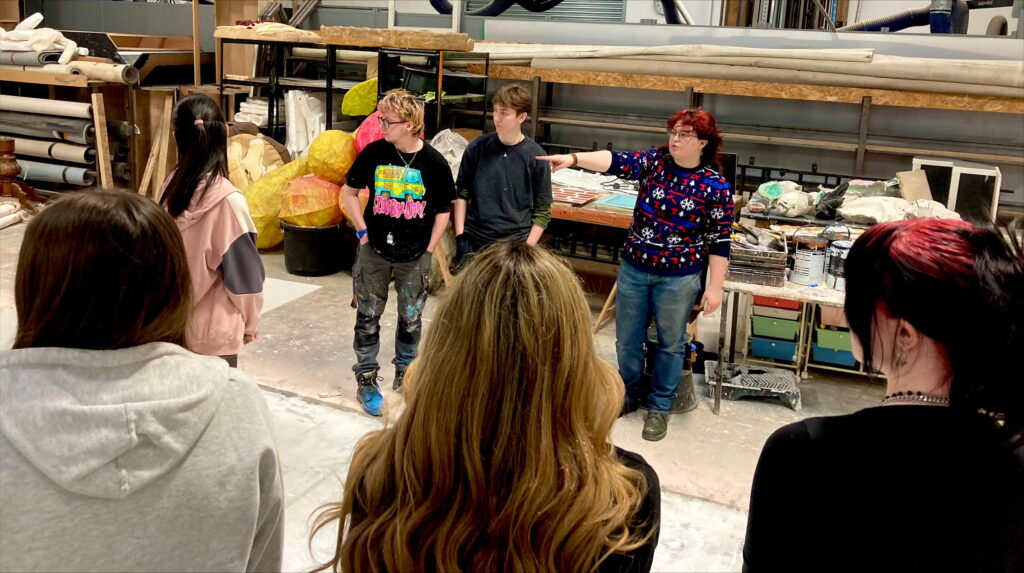
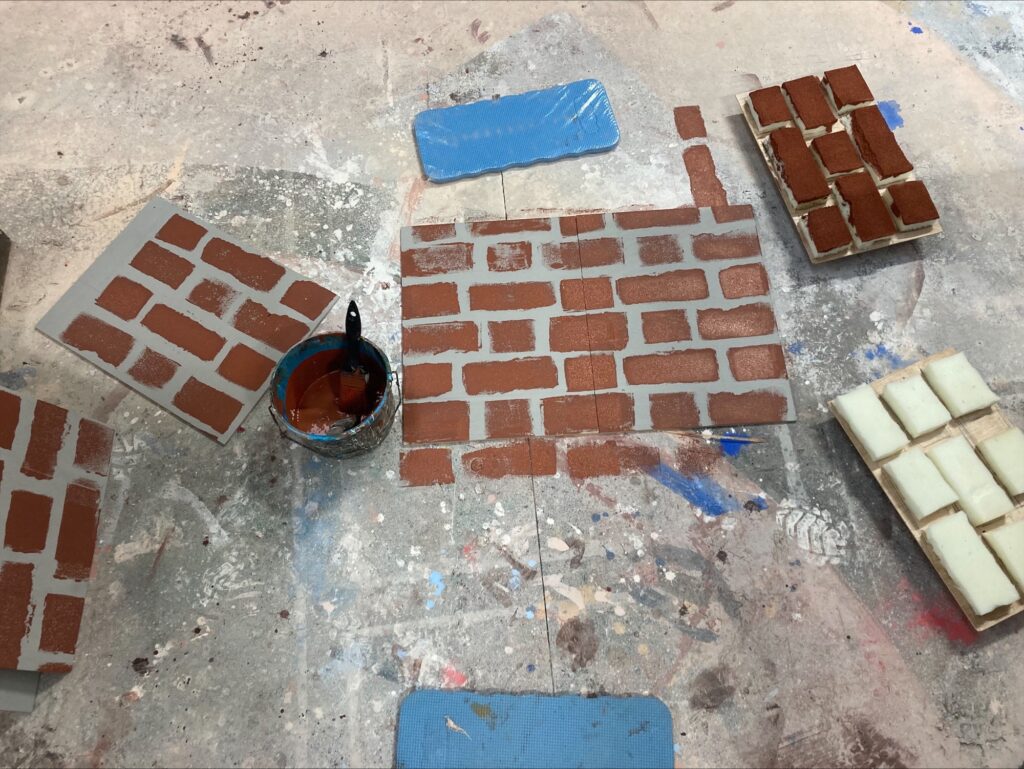
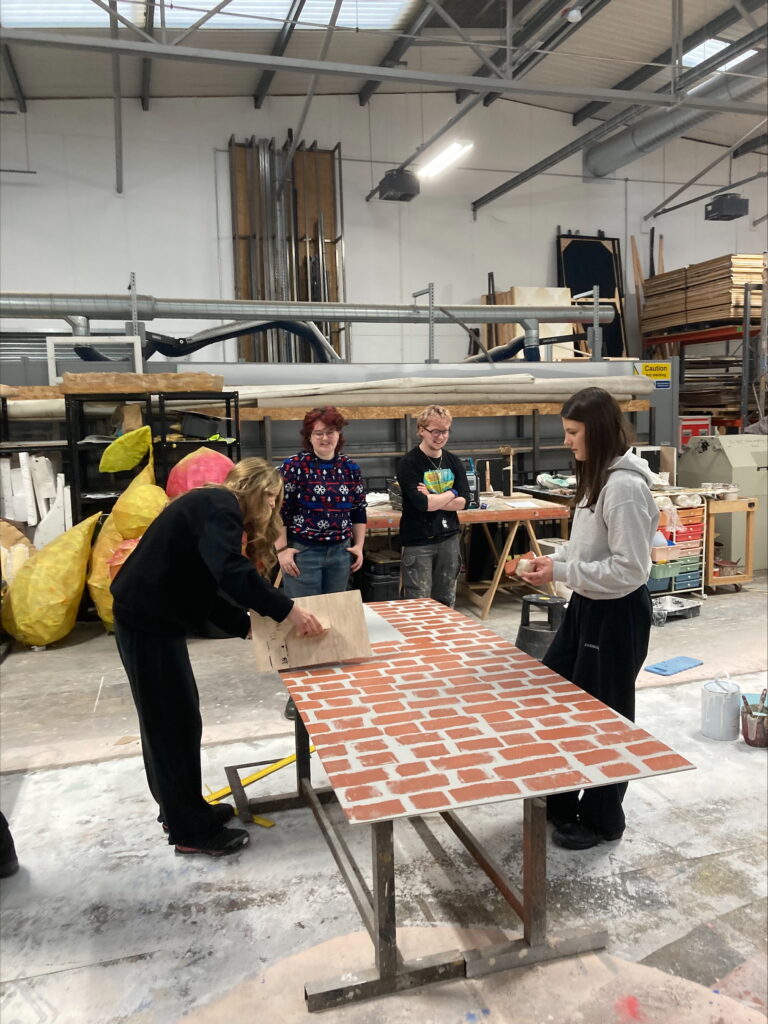
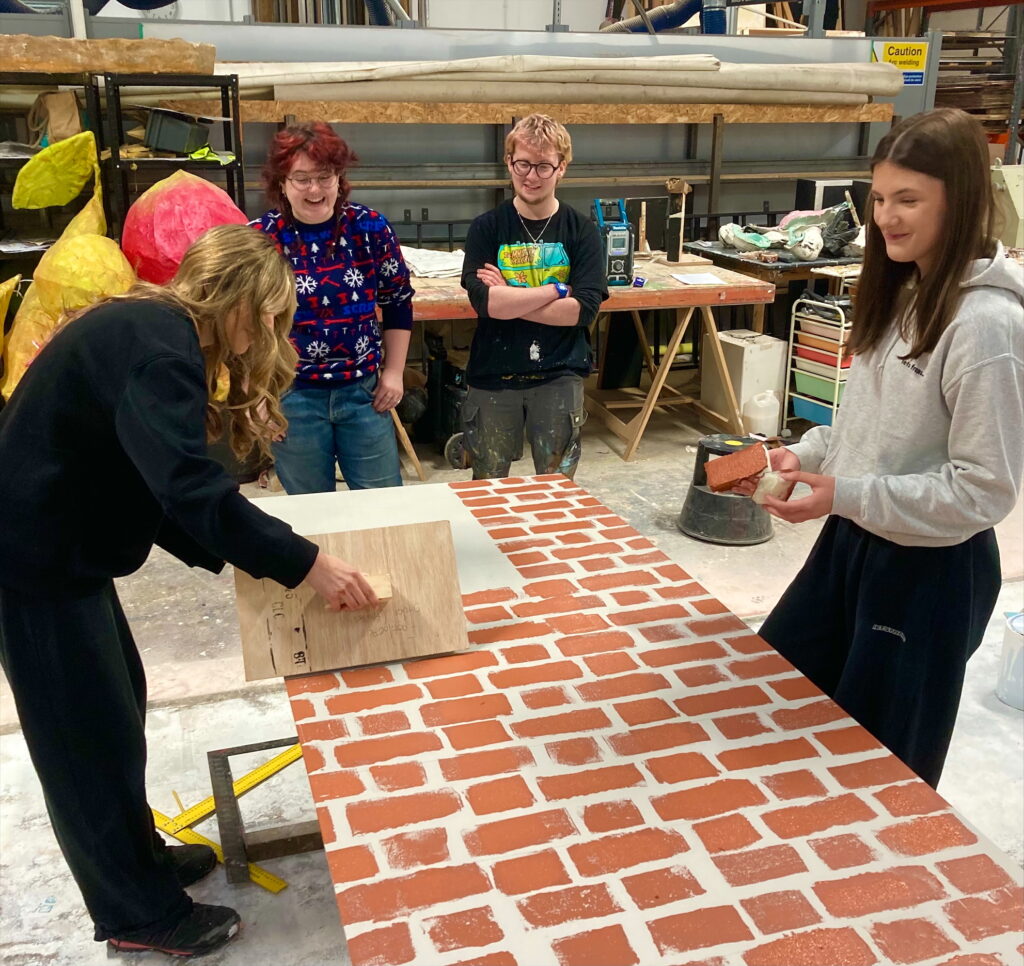
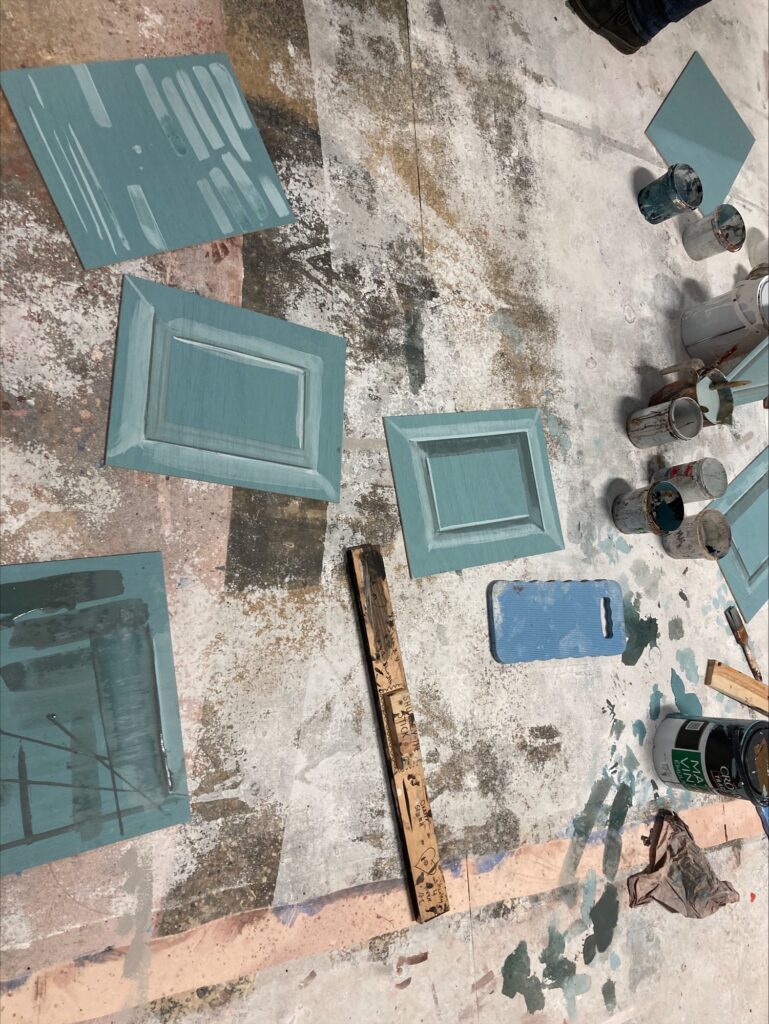
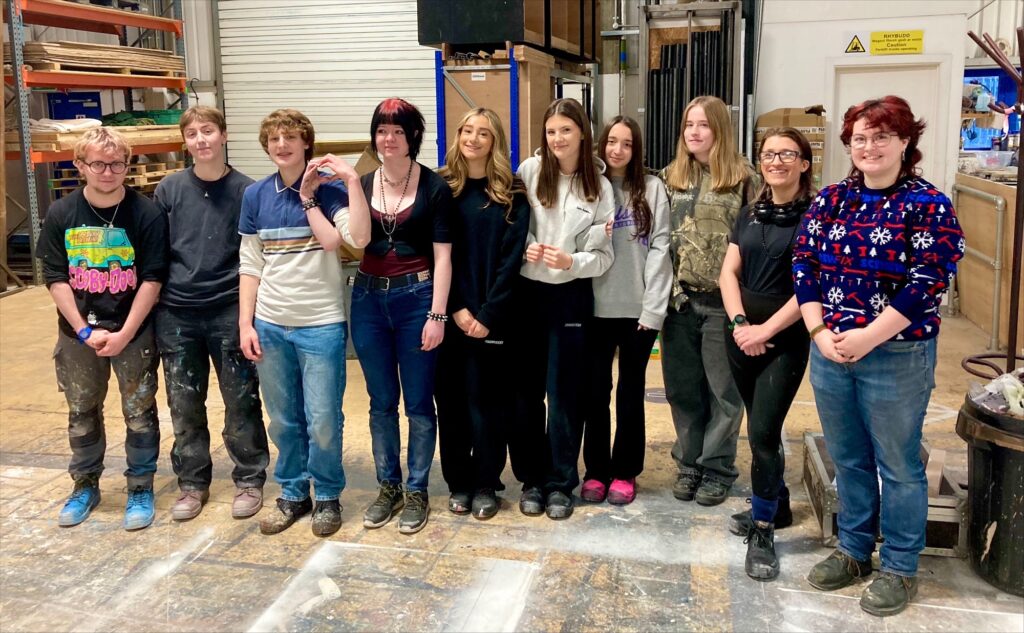
Inviting Radyr students to the workshop began as a way to include them in the making of the set for their Footloose production and giving them a better understanding of what goes into set building and painting. The College workshop has a relationship with the Drama Dept at school and this was a great way to develop it. I also wanted to give young people an opportunity to see what other career paths are available (like SAW did for me) and for them to see that these options are available to anyone.
Many young people don’t realise how many career paths exist in the creative industries. What do you wish you had known about scenic construction or backstage careers when you were in school?
I wish I had known that these kind of university and career paths were available at an earlier age. When you are younger, and in schools, your perception of theatre and the arts is purely in the acting and performance side. Very rarely do schools push for opportunities to work on the production side of shows so it is hard to visualise these as a career opportunity. I was lucky at Radyr as they allowed me to go down the lighting route for my drama GCSE which eventually led me to my university course in scenic construction, but I feel like it was a rough path to get to this point. If I had known about stage management and scenery making, then I may have found myself here sooner with more experience under my belt.
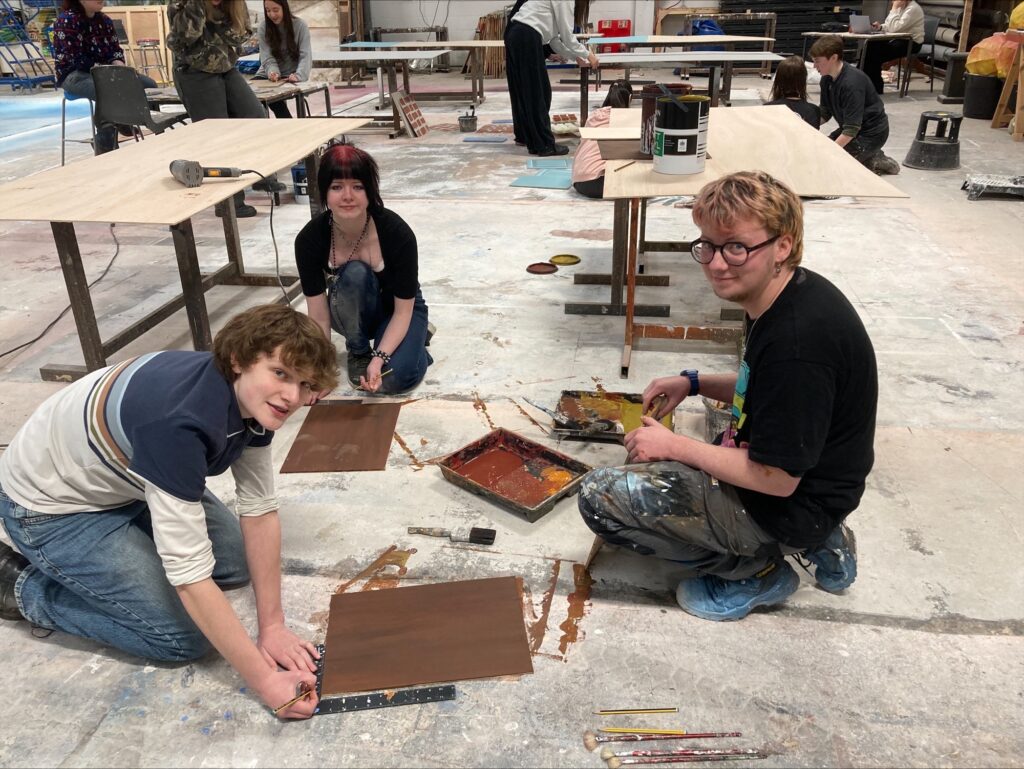
The Llanishen workshop is a huge, state-of-the-art space. For someone who hasn’t visited before, what’s it like to walk into that environment for the first time?
Walking into Llanishen workshop really is a breath-taking moment. For me it secured my decision to go to RWCMD for the Foundation Degree in Scenic Construction. I just knew that I wanted to learn in that environment and eventually work in similar environments! The workshop showcases so many previous students work that it feels very exciting that you could one day be making sets and props at that level for programmes like Dr Who or His Dark Materials
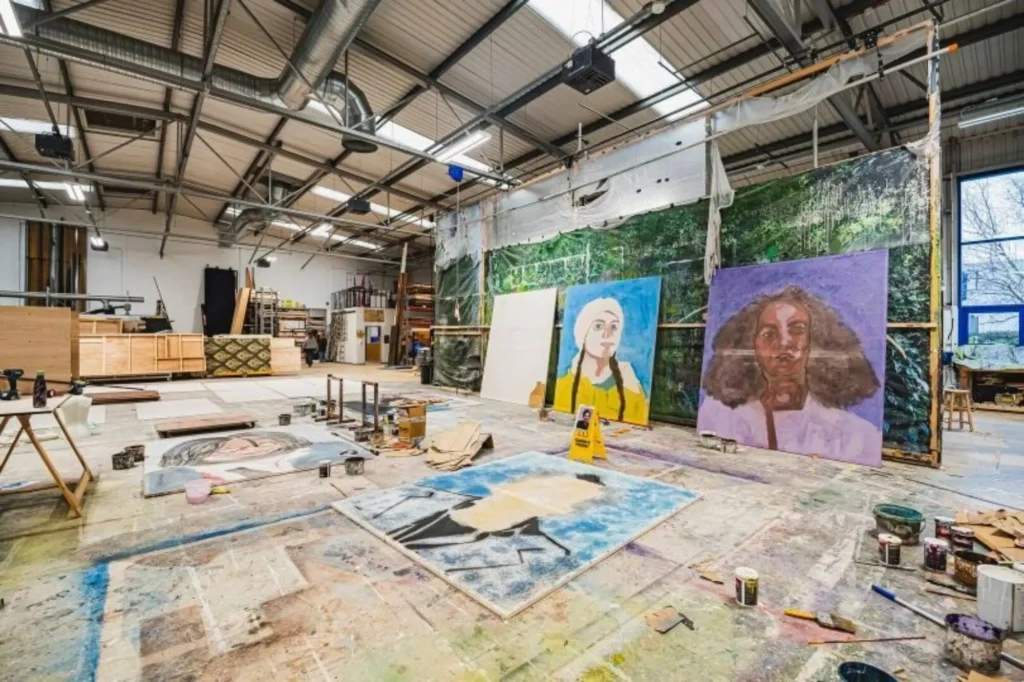
Credit Kirsten McTernan
How important is hands-on learning in your course? Can you share an example of a practical task or project that really changed the way you think about the craft?
The Foundation degree in Scenic Construction and the Foundation degree in Scenic Arts, are both almost entirely hands on work. This makes it ideal for kinaesthetic learners, and you tend to pick up skills quicker as it is a fair amount of repetition of skills. A key moment of both courses which really change your view of the craft is the first time you work on a production block – working on sets for college shows. You really understand the flow and pace a workshop requires and the speed and quality required of your skills.
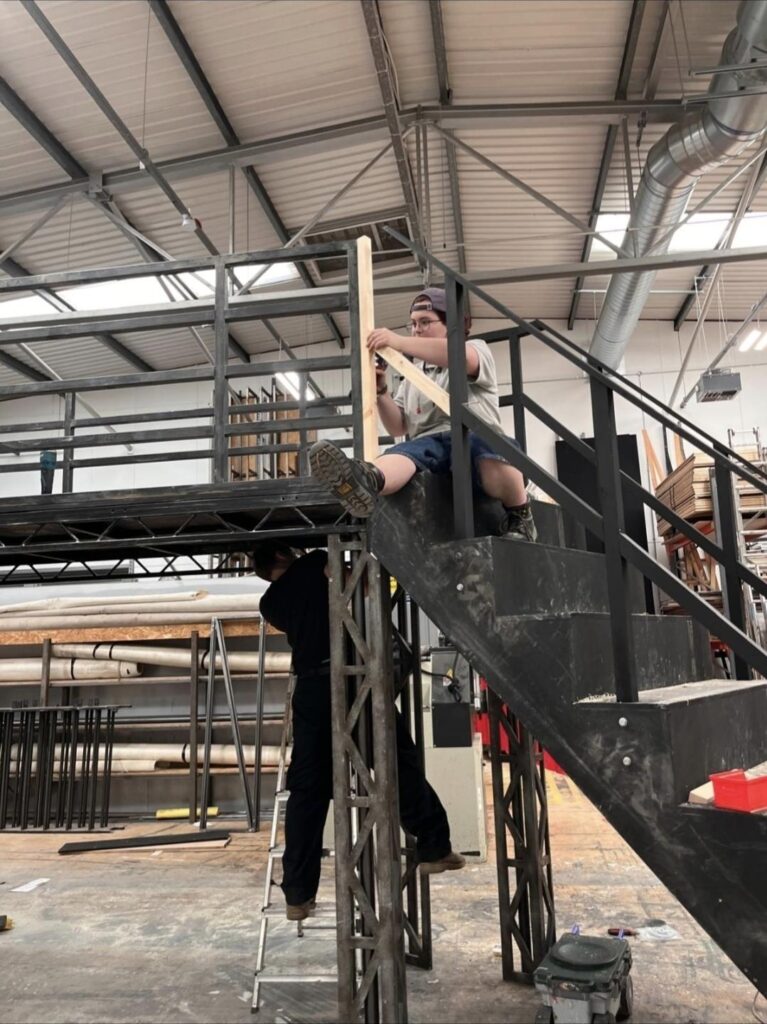
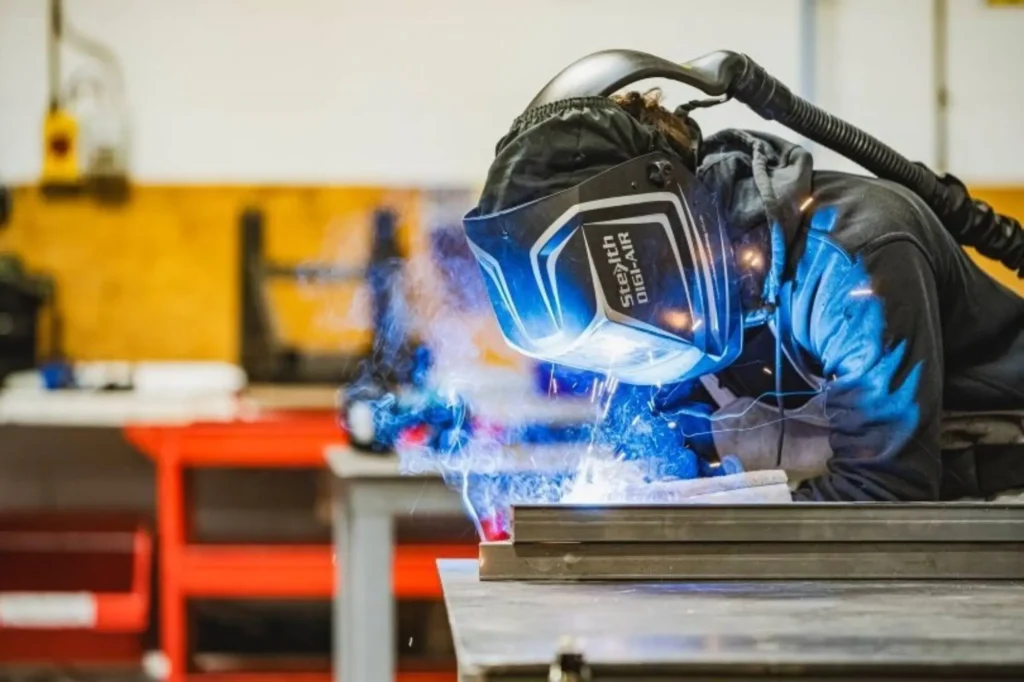
Bea working on a set at the RWCMD Llanishen Workshop
What do you hope the visiting Radyr students take away from their time in the workshop? Are there any specific skills or “lightbulb moments” you’d love them to experience?
We hope that the students will walk away from their visit to our workshop with a realistic view on what a career in the creative arts could look like. That they can see that there is more to art courses and more to drama courses than is widely known, and that there are many more options for them after high school! Ideally, we hope that a few would take an interest into specifically the courses that our college provide, however a wider horizon for their futures is the main goal.
A lot of 16–25 year olds worry that creative careers aren’t “real jobs.” As someone training for a specialist backstage role, how would you respond to that concern?
I think that as a society we have put a lot of pressure for young people to want so called “real jobs” but in actual fact all paid work is a real job! You do not have to be a doctor or a teacher to feel good about your career, if your work excites you and you are paid your worth, then any job is a valued one. I mean some people pay the rent by kicking a ball around! The path I am heading down may not always mean financial/job security, as I may need to work freelance, but this is a possibility I am willing to take on to do a job I enjoy and find fulfilling. Also, at RWCMD we have lectures about finance, being a freelancer, how to apply for grants, and other useful topics for entering the work force after college.
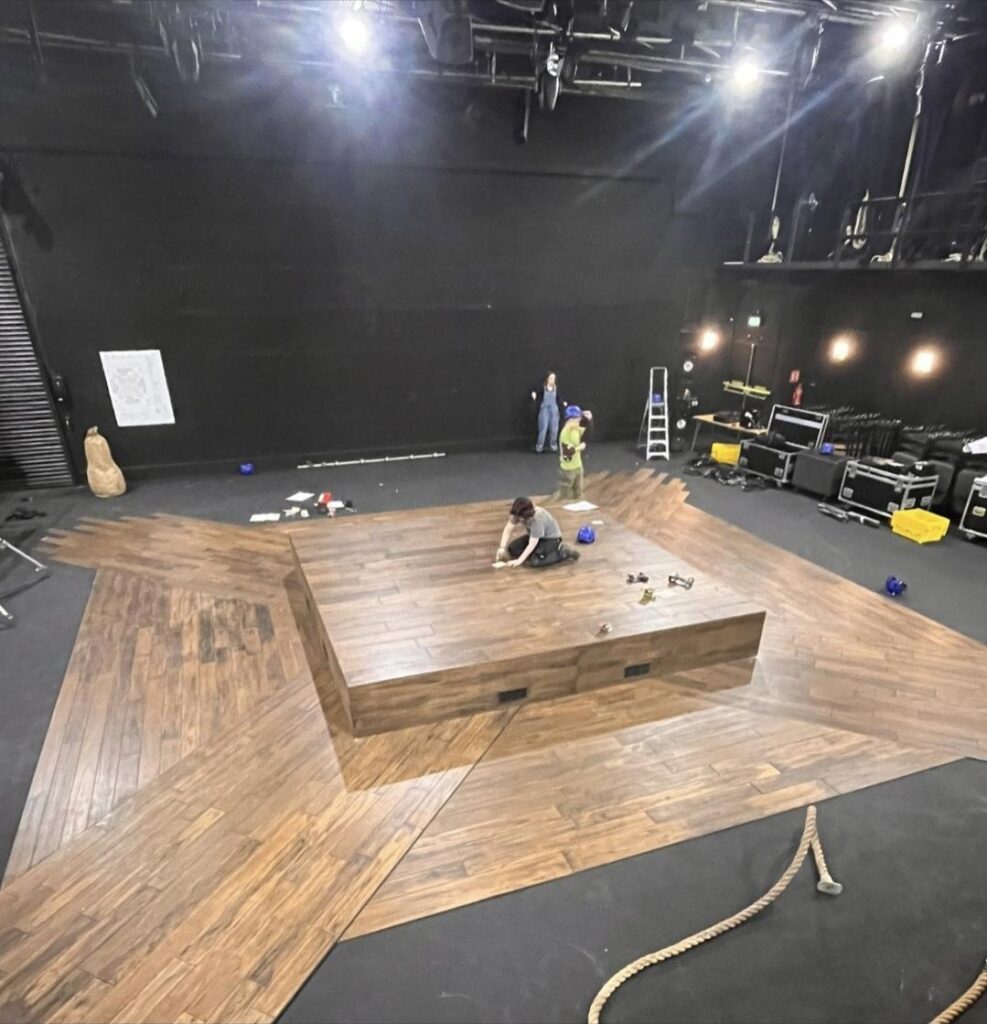
Bea working on the get in for The Sweet Science of Bruising in the Bute Theatre at RWCMD.
If a young person reading this is curious about backstage work but isn’t sure where to start, what would you suggest they do next — any courses, experiences, or first steps you’d recommend?
I would recommend going to as many open days as possible and gain a good understanding on every niche backstage role you could work towards. I would also recommend looking at Screen Alliance Wales’s website as they provide tours, courses, and shadow placements for a wide variety of workplaces.
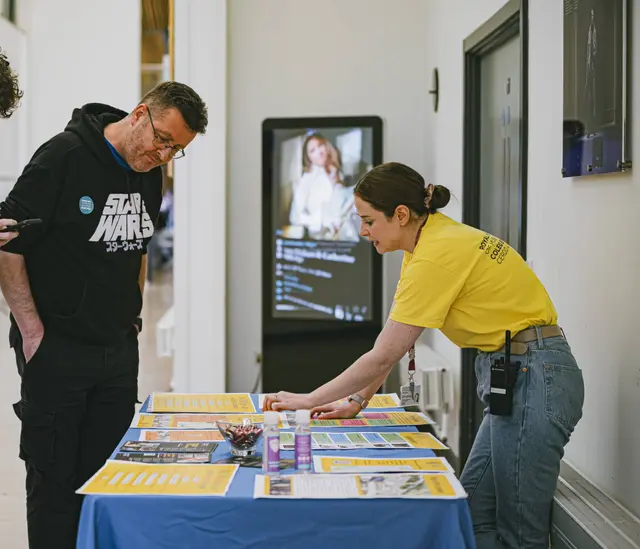
The visit was supported by Mrs Power, Head of Music at Radyr, Comprehensive School, she kindly chatted with us about the workshop.
Mrs Power, what made you feel this was RWCMD Workshop was an important opportunity for your students?
An insight into options post A level will inspire our young people in the areas they could get involved with as a possible career. Its a great opportunity for our students from the Art Music and Drama Departments to mix and work with young people slightly older themselves who are training for careers in the Creative Industries, its gives them some ownership of their future career pathways.
For many young people, the backstage world feels hidden. Why do you think it’s valuable for students to experience hands-on creative work rather than just hearing about it?
Its real, authentic and engaging, our students will definitely remember today! We value the informal conversations between the groups of young people today. It great for them to speak to Bea who is so enthusiastic.
Why is it important for schools and creative institutions like RWCMD to work together when it comes to showing young people the full landscape of creative industries in Wales?
As a teacher you are there to deliver the curriculum every week, we very much value these types of opportunities today, it inspires and invigorates our students to achieve in school as they can see what’s possible as they develop and mature. We have been lucky enough o have music students and lecturing staff to come into school and share their knowledge with our staff and students. They provide life changing opportunities.