
‘Where the dreamers still belong’: ‘Carducci Caravan’
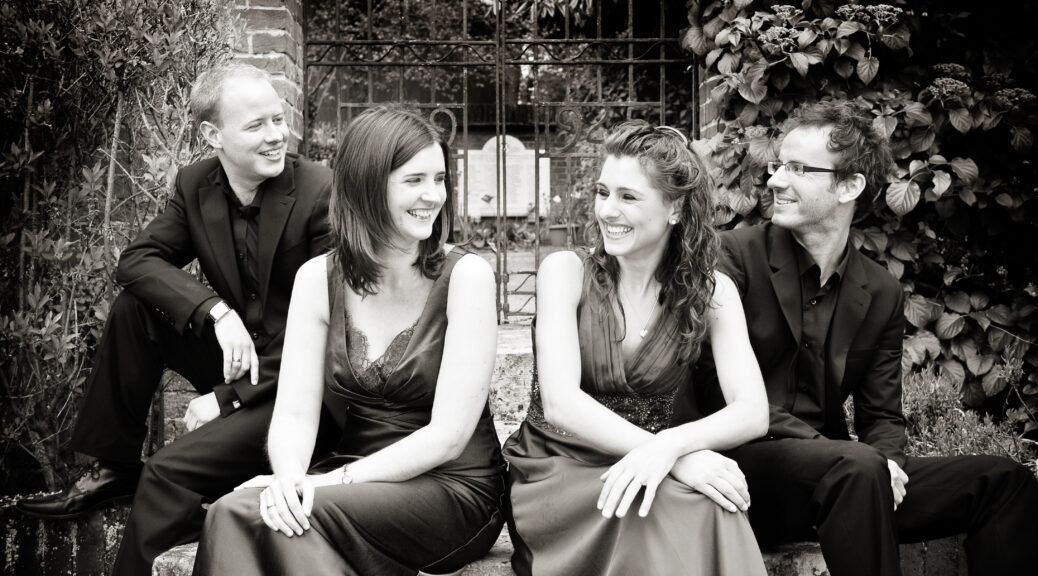
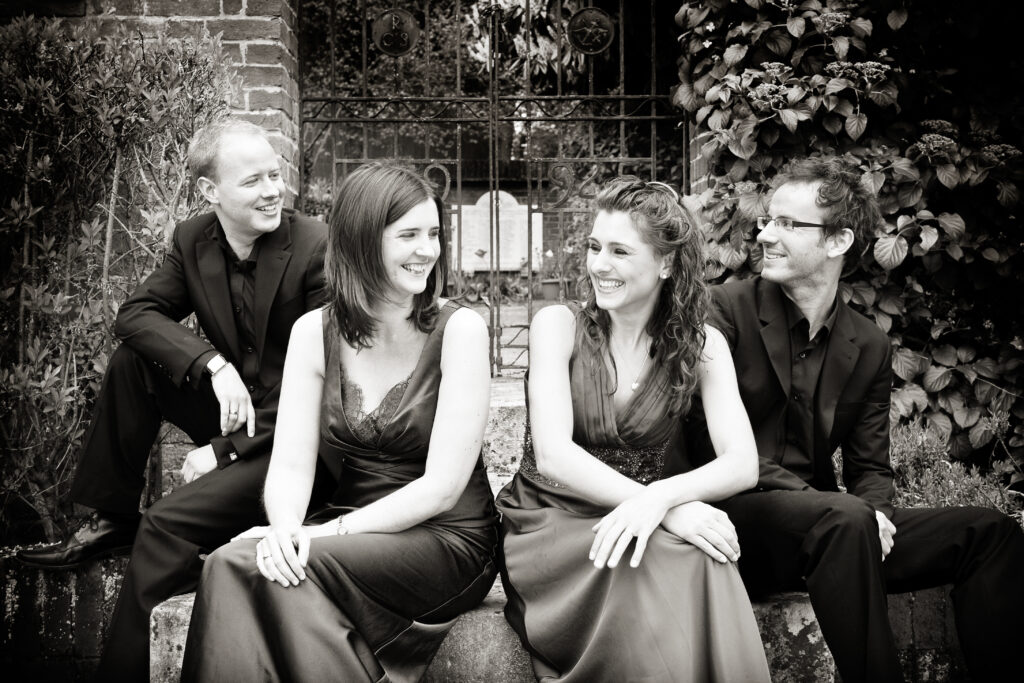
Matt Denton – violin, Michelle Fleming – violin, Eoin Schmidt-Martin – viola, Emma Denton – cello
‘They are expecting you,’ I overheard Andrea Jones, the head of undergraduate studies at the Royal Welsh College of Music & Drama (RWCMD), say to a visitor ahead of the much anticipated ‘Carducci Caravan’ concert. An unexpected phrase to hear before a concert, one could say, considering that ticketed entry has been a hallmark of public performances since their emergence in the eighteenth century. Laughter, and enthused quiet chatting followed, as I turned to see groups of primary school children, orderly lined up, walking towards the stage doors. Many had never attended a world-class concert venue before, and this may have been their first time hearing a string quartet live. While the students would have been introduced to the fame of the Carducci Quartet by their teachers, the novelty of the experience itself, combined with their dream-centred view of the world, may have overshadowed the factual biographical details they had been told. To college students as much as to older visitors, the ‘internationally acclaimed’ and ‘award-winning’ Carducci Quartet needed no introduction. The young special guests were to be the sincerest critics of the night.
It was not long after the Carducci Quartet took the stage that the audience, who had been expecting a normative concert format with a series of pieces played in turn, realised they were in for a treat. ‘No borders bound, no paths confined, a world of music we will find… so come abroad – no need to pack – the Carducci Caravan won’t look back’, Bella Cerely, one of the four RWCMD actors who joined the quartet for the evening, announced to begin the concert. The reassurance offered by the opening poem, titled ‘Wanderer’s Melody’, was soon to be subverted by the Carducci’s innate theatricality. Playfully misguiding the audience through the fourth movement of Haydn’s Joke quartet, they repeatedly encouraged the belief that the movement had ended ahead of time, although the young guests were particularly good at not being tricked from the second time round!
Following the distinct, gypsy-influenced tone pallets of Bartók’s Six Romanian Folk Dances, Clarissa Mondeh read a translated poem by Tao Yuanming. Portraying how that which makes a place feel like home is not determined by environmental features, but is guided by the heart, the soaring lines of Puccini’s Crisantemi continued the narrative of the poem. Matt Denton’s poignant solo alluded to the intangibility of seeking for the out of reach, while the quartet’s remorseful ends of phrases reflected the narrator’s dissolving, ‘fleeting truths’.
The next piece in the programme – Huang Ruo’s The Flag Project: String Quartet No. 2 – introduced a soundscape so close yet so far away from the unanimous timbral quality which has long been attributed to the string quartet genre. As the Carducci’s took turns to welcome Tibetan finger-cymbals to the ensemble, the pure, sonorous and resonant timbre of the percussion instrument complemented both the penetrative high registers of the violins and the depth of Emma Denton’s rich harmonies. A sound world shaped by Ruo’s vivid imagination and the artistry of the quartet unfolded to captivate the audience.
With the ‘Carducci Caravan’ symbolising one’s journey through life, the invincible upheavals that toy against humanity were depicted through an account titled ‘Chaos instead of Music’ (Pravda, 1936). Condemning and denouncing Shostakovich for the nature of his music, Alex Johnson read how it was conceived as ‘a wilderness of musical chaos… that may end very badly’. Paradoxically, the Carducci’s sinister tone evoked through the preceding Four for tango by Piazzolla was alleviated for the beginning of Shostakovich’s Wrong Note Polka. Their shimmering fast vibrato infused buoyancy to the theme which was first stated plucked before its bowed reprise at the end the movement. With the closing of the piece delayed by an interspersion of dissonant chords, the programme continued with a shift in mood from anger to desolation as Rory Stroud narrated ‘The Dark Hills’ by Edwin Arlington Robinson.
‘Dark hills at evening in the west… fade – as if the last days were fading, and all wars were done’ was remarked before the opening harmonies of Elgar’s Nimrod filled the room with an apologetic depth of feeling. The quartet’s carefully crafted phrasing and frequent returns to stillness rendered the optimism of the rising passages short-lasting, mirroring the narrator’s enduring difficulty in comprehending man-made destruction. A final utterance of the thematic material, which was inspired by one of Elgar’s close friends, seamlessly led onto a recent partnership formed between the Carducci Quartet and 18-year-old composer Sam Snook. Winner of the 2025 Carducci Young Composers Competition, Sam’s Bloom furthered the emotional landscape of Elgar’s Nimrod as frequent tremolo passages united members of the quartet and strength was born from the movement’s sorrowful melodies. In the time span of a few minutes, musical, metaphorical, and literal synergies had been ignited between the past and the present.
Having experienced feelings of reassurance, unease, heart ache, wonder, devastation and unity, ‘we end with fire, and full of light’ was exclaimed ahead of the quartet’s final piece. Composed by the Danish String Quartet, Shine you no more is inspired by John Dowland’s Flow my tears. Yet, it goes on to tell a story beyond that which the narrator of the song is capable of seeing. Contrasting to Dowland’s lament of intense sadness and misfortune, Shine you no more alludes to a detachment from the world’s unfathomable nature. Music guided the narrator to find brilliance and joy as the quartet’s palpable enthusiasm drew the concert to a close.
During the interval, audience members from all walks of life had gathered in the bustling RWCMD foyer, as champagne glasses adorned the circular tables and heads of departments hurried around to greet the many visitors from afar. While the young special guests were nowhere to be seen, it was assumed that the quartet were backstage preparing for the second half of their performance, as is customary at classical-music concerts. Little did many know that the Carducci Quartet had other plans for the interval. Moments after leaving the stage to place their instruments backstage, the quartet returned to the hall – this time off-stage – to meet, greet and thank their smiley, bright-eyed unexpected visitors. As the primary school children cheered and congratulated the quartet with a standing ovation at the end of the concert, it was clear that the Carducci Quartet had succeeded in inviting everyone present into their world. A world, as ‘The Lark’s Song’ by William Allingham noted during their performance, ‘where the dreamers still belong’.